Archive | August, 2012

The Sad Story of Alan Hill

31 Aug

Alan J. Hill seemed destined for the major leagues.

Nicknamed “Mooney,” he had a mediocre first season as a 20-year-old with the Richmond Colts in the Virginia League (Thirty-five year-old teammate Chief Bender went 29-2 with a 1.06 ERA for the Colts that season).  Hill followed that up with three excellent seasons with the Toledo Mud Hens in the American Association.

As a reserve outfielder in 1920 he hit .366.  In 1921, playing in the same outfield as Jim Thorpe, Hill hit .318 in 137 games, and hit .296 in 152 games in 1922 for a terrible Mud Hens team that went 65-101.

Hill moved to the Columbus Senators in 1923 and was the starting centerfielder.  A month into the season he was struggling, hitting .204 through 23 games when he suffered a nervous breakdown.

Nothing is known about the cause of his illness or what his prognosis might have been.  Hill was committed to the Woodville State Hospital in Collier Township, Pennsylvania.

On February 25, 1924 Hill wandered away while working on the grounds with other residents.  The next morning his body was found on the train tracks of the Pennsylvania Railroad.  He was 25.

Hill was most likely buried among the nearly 700 graves marked only with numbers on the grounds of the hospital, which was closed in 1992.

Update:  As noted in the comments, a relative of Alan Hill informed me that he is buried at McKeesport and Versailles Cemetery in McKeesport, Pennsylvania.

More “Chief” Johnson

30 Aug

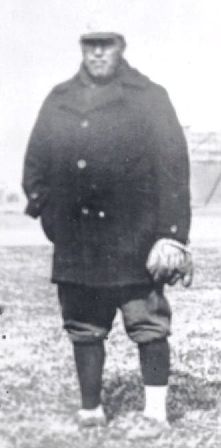
Last week I told you about George “Chief” Johnson’s release from the Chicago White Sox in the spring of 1913, allegedly because of his affiliation with the Winnebago (Ho-Chunk) Native-American Tribe.

Cincinnati Reds owner August Garry Herrmann and manager Joe Tinker were apparently more concerned with a good arm than the so-called “Winnebago ban,” and signed Johnson.
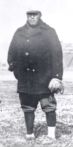
George “Chief” Johnson

Through the first month of the season, Johnson was the only effective Reds pitcher, winning three games (including two shutouts) for a team with a record of 5-16.

The New York Times took notice in an article, the racist tone of which was typical of the era:

“Big Chief Johnson of the Winnebagos [sic] is copper-colored and fat. At bat he displays as much activity as the wooden Redmen who hold forth at the doors of countless cigar stands. But on the mound this latest Indian to edge his way into the select circles of major leaguedom can deal out ciphers with as much success as the more illustrious Johnson of Washington.”

Johnson ended the season 14-16, with a 3.00 ERA for a team that finished 25 games under .500.

In 1914, the Federal League came calling.  Otto Knabe, Manager of the Baltimore Terrapins sent a telegram to Johnson asking for his terms.  According to Knabe, Johnson replied with a telegram sent collect saying “Will sign for $10,000 bonus and reasonable salary.” Knabe telegrammed Johnson collect “Asked for your terms, not Walter Johnson’s”
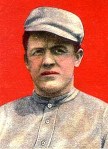
Otto Knabe

Johnson signed the following month with the Federal League Kansas City Packers for a more modest $3000 advance and $5000 salary; the only problem was that Johnson had already signed a contract with the Reds for 1914.

Johnson’s 1914 season was highlighted by a series of injunctions and court rulings that kept him sidelined for much of the season while organized baseball battled the upstart Federal League.  (The saga of the Federal League has been rehashed in numerous books and blogs, no need to reinvent the wheel here—I recommend this book)

Johnson played for Kansas City in 1914 and 1915 posting records of 9-10 and 17-17.  Throughout his tenure in Kansas City Johnson had numerous run-ins with the law over his drinking and was cited for desertion and non-support of his wife. Additionally, his weight ballooned to well over two hundred pounds.

Johnson’s major league career was over after 1915, but he pitched three more seasons in the Pacific Coast League.  Pitching for the Vernon Tigers near the end of the 1916 season Johnson was so out of shape that it was reported in the Los Angeles Times that the Portland Beavers chased him from a game in the third inning by having several hitters in a row lay down bunts that the overweight pitcher was unable to field.

Johnson reportedly returned in better shape in 1917 and was 25-23 pitching for Vernon and the San Francisco Seals.  Johnson returned  in 1918, posting a 2-6 record, and was joined in San Francisco for a short time by his brother John who appeared in one game for the Seals.

After his release by San Francisco Johnson barnstormed with a variety of teams throughout the Midwest and West and sold “snake-oil” in a traveling tent show.  On June 11, 1922, Johnson was in Des Moines, Iowa with his tent show when he was killed in a dispute over money during either a dice or poker game (news accounts varied).  Johnson’s killer, an African-American gambler named Ed Gillespie, was originally charged with first-degree murder, but the charges were reduced to manslaughter based on eye-witness accounts that claimed Johnson was “drunk and belligerent.”  He was buried at the Winnebago Cemetery in Winnebago, Nebraska.

A postscript.

A few days after Johnson’s death a small item appeared in Iowa newspapers; it was about a druggist in Des Moines who had agreed to put a display in his store window to promote Johnson’s tent show. The story said:

“Anyone anxious to own a nice horned rattlesnake may have one by taking the one left in his show window by the late Mr. Johnson.”

Filling in the Blanks—Fletcher Hodge, Fletcher Hodges

29 Aug

Baseball Reference lists Fletcher Hodge, a pitcher for Cleveland, Tennessee in the Appalachian League in 1921 and Grand Rapids in the Michigan-Ohio League in 1924, and Fletcher Hodges appearing in six games with the Rochester Tribe in the International League in 1924.   He was the same player, with a life that spiraled out of control after an arm injury.

Born Ernest Fletcher Hodge (various sources give his birth date between 1898 and 1900) in Advance, Missouri, Hodge pitched for local teams around Sikeston, Missouri. There’s no record of how big Hodge was, but newspaper stories described him as “The giant righthander.”

He went 8-11 in the Appalachian League in 1921 and there is no record of him in professional baseball again until 1924.  Hodge was 9-6 with 3.00 ERA in 16 games at Grand Rapids when his contract was purchased by Rochester.

Hodge appeared in six games with Rochester.  Although no statistics exist, it is clear Hodge did not pitch well in the International League.  When his contract was sold to Terre Haute in the Three-I League in August the Rochester Journal said “In all his starts with the Tribe he was wild as a tornado.”  Hodge also reportedly injured his arm while with the Tribe.

Shortly after his contract was sold to Terre Haute, Hodge had his first confirmed brush with the law; he was arrested in Cincinnati for attempting to pass several bad checks drawn on a Rochester bank.  There’s no record of the disposition of the case, but it was reported that Rochester owner Walter Hapgood had interceded to get the charges either reduced or dropped (depending on the source).

In either case, Hodge never played for Terre Haute or Rochester and it appears he never played professionally again, although there were at least five pitchers identified only as “Hodge” who pitched for various teams from 1925-27. (here, here, here, here, and here)

By 1930 Hodge was living in Sikeston, Missouri.  On the evening of June 13 he went to a rooming house in Blytheville, Arkansas where his wife was visiting her mother.  Hodge shot and killed his wife Anna and fired four shots at his mother-in-law, who escaped injury.  He escaped to Sikeston and then Poplar Bluff, Mo before being taken into custody.

Hodge’s trial was scheduled to begin on November 4, 1930 when he instead pleaded guilty and was sentenced to life in prison.  There is no record of Hodge’s death, or if he was ever released from prison.

Nath McClinic—Negro Leaguer, Southern Lawman

24 Aug

Nathaniel “Nath” McClinic (often incorrectly referred to as “Nat”) was humble about his abilities.  Every Negro League contemporary of McClinic I had the opportunity to speak with over the years described him as being one of the best centerfielders of the post-integration era Negro Leagues, possessing great speed and an excellent arm.

McClinic would simply say “I could run and throw, but I couldn’t hit the curveball.”

Born in Georgia in 1924, McClinic served in the Army on Iwo Jima and led the Army baseball team to island championships before his discharge in 1946.

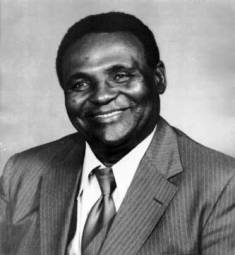
Nathaniel “Nath” McClinic

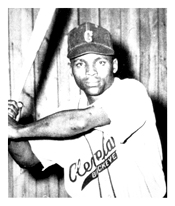
Upon his return from the service, McClinic and fellow Georgian Earnest Long were signed by the Chattanooga Choo Choo’s in the Negro Southern League.  McClinic also spent time with the Cleveland Buckeyes and Birmingham Black Barons in the Negro American League.  The only official records for McClinic are two at bats with no hits for Cleveland in 1948.

McClinic settled in Rome, Georgia after his professional career, managing and playing for the Lindale Dragons in the semi-pro Georgia Negro State League—also called the Josh Gibson League—Lindale was one of the best semi-pro clubs in the south throughout the late forties and early fifties, and had great success against local white teams.

In 1965 McClinic became the first African-American police officer in Floyd County Georgia, a year later he became the first African American graduate of the Georgia State Police Academy.

McClinic often told the story of one of his first arrests after joining the force.  He and the only other African-American officer arrested a white man for public intoxication.  Upon bringing the man to the police station, McClinic was told, “Don’t ever arrest a white man, regardless of what you see him doing.” Later that year a new police chief was appointed and the order was rescinded.

McClinic served as an officer and investigator for the next twenty years, retiring in 1986.

Nath McClinic

After his retirement, McClinic was a regular attendee at Negro League reunions and was honored in Cooperstown in 1991 as one of the “Living Legends of the Negro Leagues.”

McClinic passed away April 3, 2004, in Rome, Georgia.

“Chief” Johnson and the “Winnebago Ban”

23 Aug

George Howard “Chief” Johnson was born on the Nebraska Winnebago (Ho-Chunk) Reservation to an Irish father and a mother who was likely only half Native American, yet like almost all players of his era with any tribal blood, he was branded “Chief.”

Johnson began his pro career at age 23 in 1909 with Sioux City and Lincoln in the Western League, after having played for several seasons with Guy Green’s barnstorming Nebraska Indians team.

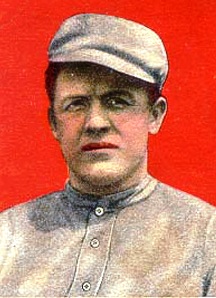
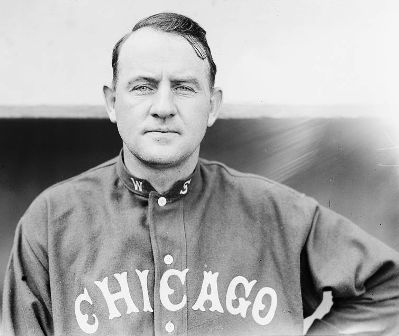
Chief Johnson

Chief Johnson

Johnson constantly battled weight and alcohol issues; “The Chief is not noted for the care he takes of himself,” is how The Milwaukee Sentinel put it—but after a 23-10 record for the Saint Joseph Drummers in 1912, he was purchased by the Chicago White Sox.

Johnson appeared destined to make the Sox pitching staff according to The Chicago Tribune and Chicago Examiner, but was released before Opening Day by the Sox and signed with the Cincinnati Reds.  His release by Sox Manager Jimmy “Nixey” Callahan was explained the next season in several newspapers, including The Milwaukee Journal:

“The Chief…had shown ability and class; he had behaved well, but when Callahan learned that he was a Winnebago he decided to turn him away.”

The story, a tour de force of early 20th-century bigotry, went on to say:

“For many years the Winnebago tribe has been under a blacklist by all circuses, Wild West shows and film companies.  There are plenty of Winnebagoes, very conveniently located; they are fine-looking people, and, as a rule educated, so they would be the finest material for show purposes.  Nevertheless, the reputation of the tribe for love of firewater has been such that managers shun their reservation, and they can’t get work in the professions which yield big wages to the Sioux, Pawnees and Chippewa’s.”

White Sox Manager Jimmy “Nixey” Callahan

I’ll include another chapter in George Johnson’s short and eventful life next week.

Filling in the Blanks–D. Rambo

22 Aug

Baseball Reference lists D. Rambo as a first baseman for Greenville in the South Atlantic League in 1919, and for St. Petersburg and Tampa in the Florida State League during the 1920s.

Dexter Lovelle “Legs” Rambo was born in Sumter, South Carolina on April 10, 1900.

Rambo hit .146 in 13 games with Greenville in 1919 and became one of the original St. Petersburg Saints in 1920.

An excellent fielder with a weak bat, Rambo was a fan favorite in St. Petersburg and played on and off for the Saints until the team disbanded after the 1928 season.

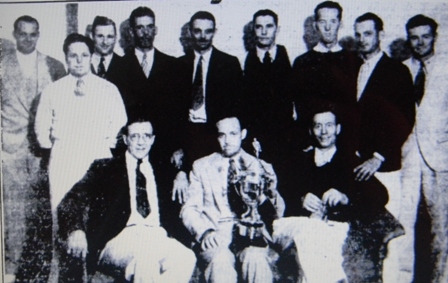
Rambo was also was a pioneer in the popularization of “Diamond Ball” or softball in Florida.  Rambo managed and played for the St. Petersburg Saints Diamond Ball team throughout the 1930s, including the state championship team in 1931.

Dexter Rambo (Standing 5th from left) with his Florida State Diamond Ball Championship team

Rambo worked for the United States Post office until his death on September 2, 1952 in St. Petersburg.

Caught a Bullet

16 Aug

Elmira Pioneers Centerfielder Milt Joffe made an unusual catch at the start of the top of the sixth inning in an Eastern League game against the Hartford Chiefs on May, 15, 1952.

A .22 caliber bullet ripped the glove off Joffe’s hand and lodged in the webbing.

Shaken but unhurt, Joffe stayed in the game which resumed after a short delay.

Police found a group of kids with the .22 rifle near the ballpark, they claimed they were firing at a target and missed.

“The Phlinging Pharmacist”

15 Aug

In addition to having one of the best names in the history of organized baseball, Phifer Fullenwider had one of the best nicknames also.

A minor league pitcher for 13 seasons, Fullenwider went to spring training with the New York Giants in 1912 after a 26-9 record the previous season for the Columbia Commies in the Sally League.

Phifer Fullenwider

A Pharmacist in the off season, Fullenwider was a fan favorite in Buffalo, where he pitched four full seasons and part of a fifth for the Bisons in the Eastern League, including a 20-win season in 1913.

The Buffalo fans and sportswriters tagged him with the sobriquet “Phifer Phullenwider the Phlinging Pharmacist.”

Fullenwider pitched until 1923 compiling a record of 192-135.  Born in Rowan, North Carolina December 13, 1886, after his playing days he returned to North Carolina where he died in Durham on June 15, 1982.

Charlie Dexter, and the Other Charlie Dexter

14 Aug
Last week I told you about Charlie Dexter, former major leaguer, and one of the heroes of Chicago’s Iroquois Theater fire.  Not to be confused with the other Charlie Dexter, a minor league outfielder and first baseman of the same era.  The two were often conflated in contemporary newspaper accounts.

Charlie Dexter

The other Charlie Dexter, the career minor leaguer (1904-09), was born Oscar Schoenbecker in Ohio and was killed in a hunting accident in November of 1909 in Mount Holly, Ohio.  According to his obituary, in The Cincinnati Commercial Tribune he changed his name “fearing the jests of the old people in case he failed,” as a player.

Reading contemporary accounts of the major league Charlie Dexter is a study in dichotomies.  A year and a half before his heroics at the Iroquois theater were recounted in papers across the country, numerous papers echoed the sentiments of the Pittsburgh Press that Dexter’s release by Chicago had more to do with his being a “trouble maker” than his .227 average.

Numerous stories over the years hinted, or outright said that Dexter, like many players of the era, had a serious drinking problem. He was released by Boston after the 1903 season and returned to the minor leagues for the first time since 1895.
The end of line seemed to come in October of 1905 in Des Moines, when during what was described as a “Drinking binge” Dexter stabbed his friend, Milwaukee first baseman Henry “Quait” Bateman.  The earliest reports from Iowa papers and wire services said Bateman was either dead or near death and that “(Dexter) slashed Bateman across the breast, the blade cutting into the lung.”

Quait Bateman

Dexter was immediately arrested.  But within days the wire services were reporting that Bateman was not seriously injured and had refused to file charges.  Dexter was released from custody.  Other players who were present (none were named is stories) “Dexter and Bateman are on the best of terms and that their little quarrel had done nothing to mar their friendship.”  Without Bateman’s cooperation, a grand jury elected not to indict Dexter.

He played two more seasons in Des Moines, taking over as manager from Mike Kelly 20 games into the 1907 season and managing the team through 1908.

Dexter stayed in Iowa and was occasionally mentioned in local papers over the next few years in connection with amateur and semi-pro leagues.  Dexter shot himself in 1934 in Cedar Rapids, Iowa.  Bateman Died in Milwaukee on January 18, 1937.

One more story about the aftermath of the Bateman stabbing next week.

“King of the Sandlots”

13 Aug

Not every baseball legend had a long professional career.

“King of the Sandlots” and “Pittsburgh’s Satchel Paige” is what they called Ralph “Felix” Mellix when the former Negro League and barnstorming pitcher announced his retirement from the Semi-pro 18th Ward Team in Pittsburgh’s South Hills League.  Mellix retired every year for a decade only to return again the next season until he was 60.

Ralph “Felix” Mellix

 Almost all of the statistics compiled by Mellix are lost to history, “officially” Mellix appeared in two professional games in his late 30s, one for the Newark Dodgers in 1934 and another the following season for the Homestead Grays, posting an undistinguished ERA of 12.54. Mellix was said to have spent short stints with the Chicago American Giants in 1915 and the Pittsburgh Crawfords in the early 30s, where he was said to be Paige’s roommate, but no records exist of his time with either team.  He pitched for the Crawfords a few times in the 40s in exhibition games, including one against the Chicago Brown Bombers in Milwaukee in 1944.

Like many African American players who began their careers during the first two decades of the twentieth century, Mellix barnstormed and played semi-pro ball for most of his career.  Mellix toured with Jesse Owens when the Olympic Heroes’ was barnstorming with his Toledo Crawfords in 1939.

Born in Atlantic City, New Jersey in 1896, Mellix began playing for his father’s Mellix A.C. Stars semi-pro team at 12 years old.  Mellix began his career as a pitcher in 1915 and spent the next 40 years pitching in an estimated 1500 games, winning more than 600 according to James A. Riley in his book The Biographical Encyclopedia of the Negro League Baseball Leagues.

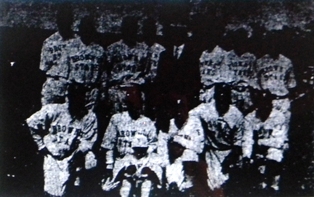
Mellix starred for the powerful Brown’s Colored Stars team in Youngstown Ohio during the mid-20s, sharing mound duties with George Brannigan and Admiral Walker, who also had short professional careers in Negro League baseball.

Brown’s Colored Stars 1924

At the close of his semi-pro career in Pittsburgh, Mellix continued to barnstorm, billing himself as “Baseball’s Oldest Pitcher,” including an appearance with Paige at Forbes Field in 1965 when Paige was traveling with the New York Stars.

Mellix will never haves a bust in Cooperstown, but the Hall of Fame does include his papers and mementos, including a 1946 contract offer from the Brooklyn Brown Dodgers, Joe Hall’s Hillsdale Club transplanted to Brooklyn at the behest of Branch Rickey.  Mellix, employed by the city of Pittsburgh, said he didn’t want to jeopardize his pension to play pro ball at 49 years of age.

Mellix remained a legend in Pittsburgh until his death on March 23, 1985.