Archive | March, 2015

Lost Pictures–The Princeton Pitching Gun

6 Mar

princetonpitchinggun


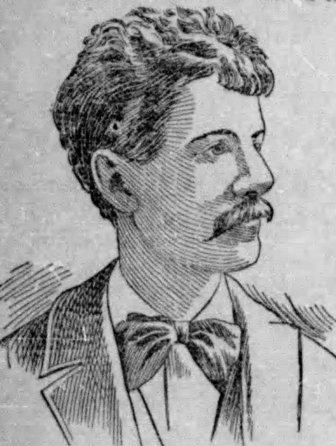
The illustration above–from The Chicago Times-Herald in the summer of 1897–depicts the Princeton University team’s first use of The Pitching Gun–the invention of Mathematics Professor Charles Howard “Bull” Hinton, a member of the Princeton faculty.

The Times-Herald said of the gun:

“A test was recently made at Princeton in three games played on the college ball field, and the machine is said to have given satisfaction, although there was some delay caused by the necessity of loading the canon.”

The paper said there were no problems “regulating the speed of the ball, nor in causing it to curve or drop as if thrown by a human being.”

The illustration is inaccurate, the device was not fired like a gun, but rather, according to The New York Sun, it was “discharged by the batsman, who, when ready for the ball to be delivered, steps upon an electrical intercepting plate, connected by wires which trigger the cannon.”


The success of the new invention, which Hinton had been testing for more than a year, was likely overstated as well.

A trial of the gun in Newark, during an exhibition game between the Newark Field Club and the Orange Y.M.C.A., did not go as well.

The New York World said:

“Prof. Hinton and his so-called pitching gun were on exhibition at Newark yesterday…Fifty-seven persons were on hand to see the performance.”

The paper said it took Hinton more than an hour and a half to set up the gun, which used gunpowder to discharge the ball.  The players on both teams feared stepping up to the plate against the gun.

The World concluded:

“(Hinton) is thoroughly in earnest about the practicability of a pitching gun, although his experiences by this time should have convinced him that his invention, even if perfected, will never be of the slightest use to the world.”

Charles H. Hinton

Charles H. Hinton

Hinton moved from Princeton to the University of Minnesota in 1898 and continued trying to perfect his invention, but The Philadelphia Press declared it “impracticable for regular use.”

Hinton finally abandoned his quest to create the first viable pitching machine when he went to work at the United States Navel Observatory in 1900.

“A Pork Jinx on the Club”

4 Mar

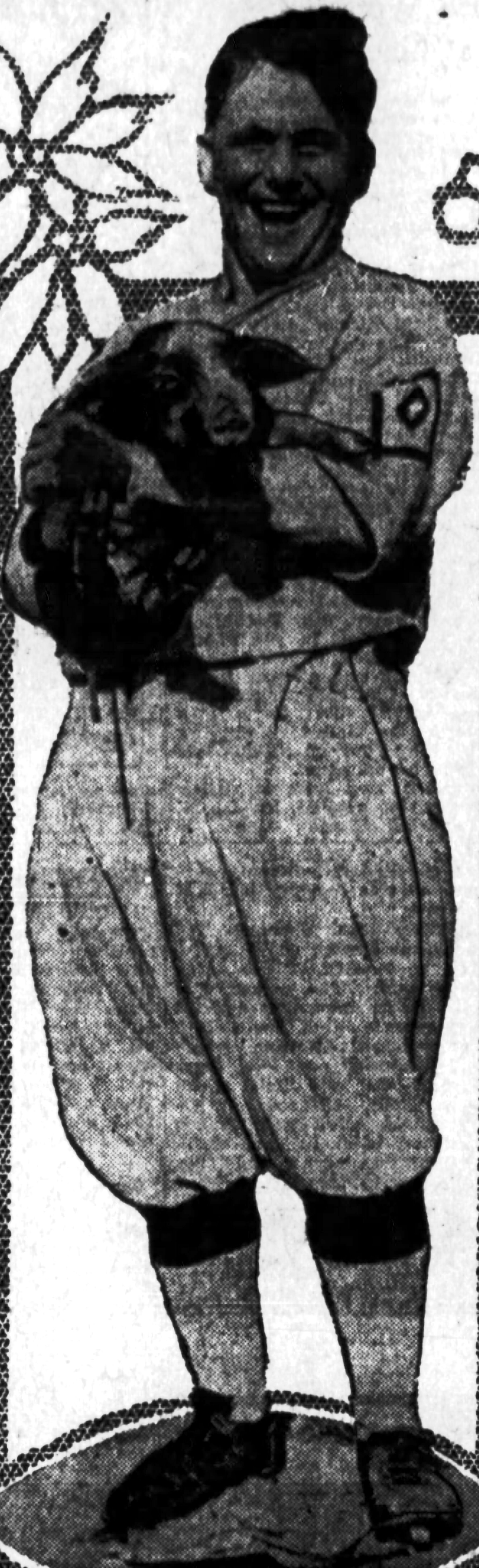
To mark the Oakland Oaks 1916 home opener, J. Cal Ewing, generally known as “The Godfather of the Pacific Coast League” presented Oakland Manager Harold “Rowdy” Elliott with a gift:  The Oakland Tribune said:

“Ewing gave to the Oaks a mascot in the shape of a real ‘rooter,’ a yearling pig, which was kept on the players’ bench throughout the game.”

The Oaks cruised to a 10-2 victory over the Portland Beavers in front 15,000 enthusiastic Oakland fans, and the superstitious among the ball club and their fans attributed the win to “Margaret,” the new mascot.

The Oaks played well in April, and were in first place until the end of the month, but by mid May they were 16-21, fifth place in the six-team league—and it was noticed that no one had seen “Margaret” for some time.

Rowdy Elliott with Margaret

Rowdy Elliott with Margaret

The Tribune was convinced the disappearance of the pig was responsible for the team’s decline:

“Suffering Pigs!  A Pork Jinx on the club!…The wrathful shade of a female porker is responsible for the Oaks’ slump.  Maggie the Pig was compelled to shuffle all her porcine coil to the accompaniment of roast apples and cranberry sauce, which is no nice way to treat an emblem of Good Fortune.”

The paper also noted that the club’s secretary also worked as a cook, and Ewing should have “had sense enough” to take that into account before presenting the team with a pig.

And, the paper composed a poem:

O Maggie, dear, and did ye hear

   The news that’s goin’ round?

The Oaks are losing day by day

   And soon they won’t be found.

They’ve ingestion badly.

   And they’re looking for the hook

They can’t play ball at all, at all

   Since you went to the cook.

It became a bit of a scandal.

The Oaks quickly denied that the pig had been eaten:

“They say the trouble is that they haven’t eaten her pigship.  Margaret was given to the ground keeper to preserve, and that personage refuses to produce the pig.”

Rowdy Elliott was quick to tell The Tribune the reason for the club’s slump had nothing to do with the team mascot.  He said the blame was clearly the result of another team’s mascot:

“Elliott says the Oaks’ slump can be attributed to no less a personage than Erasmus Pinckney Johnson.”

Johnson was the mascot for Frank Chance’s Los Angeles Angels—The Los Angeles Times said the young African American boy had been found, on Chance’s orders, in late April in order to break a week-long losing streak. The Times routinely described “the good luck charm” in the most racist terms.

Part of the “luck” Johnson brought was derived from rubbing the young mascot’s head.  Elliott claimed during the Oaks’ last series in Los Angeles he had rubbed the Johnson’s head “the wrong way.”

“Since that moment Rowdy has had little luck, winning only two games out of the last fourteen played.  Erasmus hasn’t been doing much for the Angles of late, for Chance’s crew has been in a slump, but he has at least succeeded in wrecking the Oakland club.”

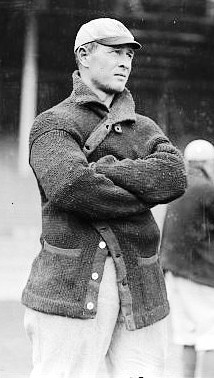
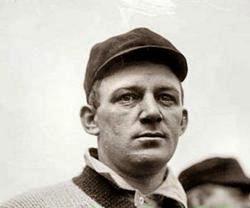
Frank Chance

Frank Chance

So desperate were the Oakland fans for answers that The Tribune enlisted two prominent fans, an Alameda County Circuit Court judge and a local doctor to do a “psychological study of the team.”

“Judge Wells…has come to the conclusion that the team has worked itself into a jinx, and needs the aid of the pig mascot they had in the opening game to pull them through.  Dr. Halsey agrees that hits, pitching fielding and psychology and all may have something to do with it, but the real reason, according to the doctor, is that the boys are suffering from a nervous breakdown that followed shortly after seeing such an enormous crowd at the opening game.”

Things quickly got worse for the Oaks. Elliott was suspended for several days for throwing a ball at umpire Jack Doyle, and the team continued to lose in June, and then for the rest of the season.

At the end of July Elliott was sold to the Chicago Cubs, George “Del” Howard, who had purchased the club during the season, replaced him as the Oaks’ manager.

Oakland finished 1916 in last place with a 73-136 record.  Chance’s Angels overcame their May slump and easily won the championship with a 119-79 record.

Margaret the pig was never heard from again.

“There were Absurd Errors, Collisions, Accidents, Spectacular Batting”

2 Mar

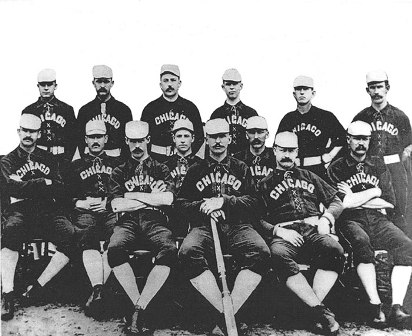
William Henry “Josh” Reilly had a memorable big league debut for the Chicago Colts in 1896.
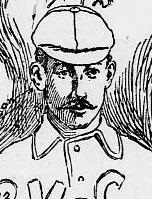
Josh Reilly

Josh Reilly

Reilly filled in at shortstop for Bill Dahlen in a May 2 game against the St. Louis Browns.  The Chicago Tribune said Dahlen was “(E)ngaged at home in holding a hot water bag against a turbulent tooth.”

While the toothache story was reported in the Chicago papers, The Sporting Life was not sold on the reason for the hard-drinking Dahlen’s absence:

“Dahlen laid off—was sick, or—well, you know Dahlen.”
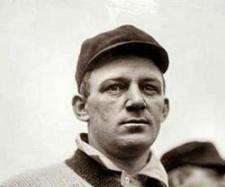
Bill Dahlen

Bill Dahlen

The Chicago Inter Ocean called the game “Worse than cough medicine,” and said:

“Of all the untabulated, unscheduled, unexpected, terrible, heartrending, frayed-out exhibitions of something or another that must be classed under the head of baseball, yesterday’s game with St. Louis was the worst.”

The Tribune said:

 “There were absurd errors, collisions, accidents, spectacular batting.”

Reilly was responsible for three of those “absurd errors,” and some of the “spectacular batting,” going 2 for 6 in his debut; he was also responsible for what The Tribune called “The electrifying feature of the game.”

The Inter Ocean described what happened:

(Monte) Cross got to first because (Chicago first baseman) George Decker thought his arm was as long as the legs of a man who has to stand on a ladder to comb his hair.  His arm was short by about six feet.  Then (Tom) Parrott made a single to center… (Duff) Cooley knocked a hot liner, and everybody started to sprint.  Reilly was playing at short, and stuck his finger nail into a loose stitch just as the ball shot past him.  He slammed it to (Harry) Truby, where Cross should have been, but was not, and Truby in turn, tossed it over to Decker to fondle while Parrott endeavored to correct himself.”

That game was the only highlight in Reilly’s major league career.  He played a total of nine games in Chicago—the other 8 at second base—and made a total of 11 errors.  And, after going 2 for 6 in his debut, he was just 6 for 36 thereafter.   Then, in late May Reilly became ill—accounts varied regarding what the illness was, The Sporting News said it was typhoid fever, The Sporting Life, and The Chicago Daily News said pneumonia.

Reilly returned home to the West Coast.  By September, his debut heroics were long forgotten, The Tribune simply said:

“(Reilly) was a disappointment and he was released.”

Despite his brief and relatively inauspicious big league career, Reilly was a popular minor leaguer for more than a decade.

An often told story about him, alleged to have taken place the year before his short trial in Chicago, illustrates just how superstitious 19th Century players could be.

The earliest telling was in 1897 in The Tribune, and it appeared on several occasions, in several papers, over the next 15 years with various embellishments.  There was no byline on the original story, but it was likely written by Hugh Fullerton–who retold it himself several times.

Reilly spent the 1895 season in Texas, playing with the San Antonio Missionaries and the Fort Worth Panthers in the Texas-Southern League.  Reilly opened the season with the Missionaries, who got off to a horrible start; they won just three of their first 28 games:

“The team was discouraged and sore.  They held a meeting and were on the verge of firing their mascot or committing violence upon his person when Josh Reilly…came to the rescue with a new proposition.  The mascot was put into a full dress coat, with gray baseball trousers and a silk hat, and the bats, some half a score of them, were pulled upon his back.  Then the team formed in line and marched down to the hotel, where “The Divine Healer,” Schlatter was stopping.”

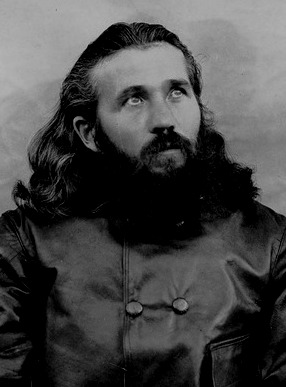
Francis Schlatter was, at that time, walking across the American Southwest gaining fame and followers.  Three years earlier he had come to believe he received a “directive from God” to heal the sick, and became a messianic figure for many during his brief time in the spotlight.
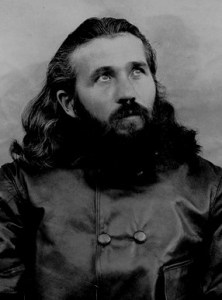
Francis Schlatter

Francis Schlatter, “The Divine Healer”

“The divine was brought forth and made to pronounce a blessing upon the bats…and through all the season those inspired bats continued to give out base hits., and the team went close to the top of the league.”

While Reilly never disputed the story–and seemed to tell it himself on occasion–Fullerton’s ending was pure fiction. San Antonio continued to struggle and blessed or not, the Missionaries’ bats were mostly silent all season–the team never left the cellar and was 21-72 in August when they disbanded.
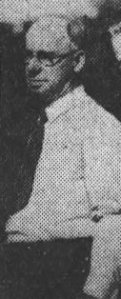
Josh Reilly, 1930--he died in San Francisco in 1938.

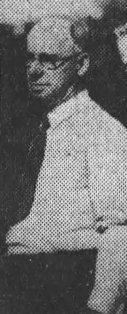
Josh Reilly, 1930–he died in San Francisco in 1938.

In different versions of the story, it was claimed that Reilly still used one or more of the “blessed bats.”  In another, Reilly “Hit .344” with one of the bats “and after he broke that bat he hit .189 for the rest of the season.”

Fullerton had one more Reilly story that he told often–first appearing in 1906 but recycled frequently for two decades–this one about his fielding troubles during his brief stay in Chicago and the impact the ire of fans has on a struggling player:

“(Reilly) was pretty bad as a fielder, and getting no better rapidly.  the jeers, hisses and hoots of the crowd merely made him mad.  He wanted to fight back.  His Irish blood was boiling.  For a time it seemed as if he would win and prove himself a great ball player merely by his nerve in playing at all under such a constant shower of criticism.  But one day Josh got through.  I found him frothing at the mouth out at the club house.  He was done.  He never would play again–unless he got a chance to kill a certain man.  When he grew calm enough.  I discovered the cause of it.

“‘He was a big man sitting in the bleachers’ said Josh.  ‘While they were all yelling at me for booting a hot one, he sat still.  I saw him and  said to myself ‘there’s one friend of mine up there.’  He never said a word until the seventh inning.  Then he stood up, stretched himself, walked down two or three steps and yelled:  ‘Reilly, you’re a disgrace to the Irish!’  If I had him I’d killed him.'”