After explaining some of Frank Chance’s best virtues in a 1910 article in The Chicago Herald, Johnny Evers got down to explaining why he felt his manager was superior to the manager of the Cubs’ World Series opponent:
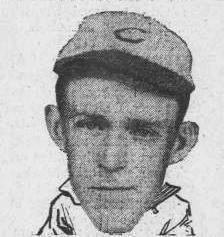
Johnny Evers
“Connie Mack, and my information comes from men in the American League, directs the play of his team by a series of signals given from the bench.
“We will say, for instance, that a Philadelphia player reaches first. From that moment he has two things to do. First, he must watch the pitcher. And with a man like (Mordecai) Brown on the slab, this alone is sufficient to keep a man busy. In addition to this, he must also watch Connie Mack, who, by a signal, given with a scorecard, by the crossing of his legs or something of the sort, tells him that he must steal on the next ball, that the hit and run will be tried, or signals some other play. That method keeps the base runner’s attention divided between the bench and the pitcher. He dares not take his eyes off of either.
“With Chance it is different. He has his signals so perfected that all the base runner must do is to watch the man following.
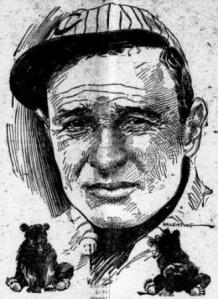
Frank Chance
“Say that Cub player reaches first. When the next batter goes to the plate he has been instructed as to what is expected of him and also what is expected of the base runner.
“And it becomes his duty to signal the man on the bases concerning his duty.
“Maybe Chance has told the man going up to try the hit and run on the second ball. The batter slips the signal to the man on the base…And since (the batter) and the pitcher are on a line, you can see that the whole process is simplified.”
Evers said Chance’s system was better because “it makes it all the more difficult” for opponents to steal signs.
He said his manager was also not rigid in his orders, which “won him the enduring friendship of his men.” And Chance rarely sent players to the plate “with ironclad instruction.”
Evers said:
“He tells you to do the unexpected, and that if you believe you can catch the enemy unawares to do it. That is the reason that the Cubs ‘pull off’ plays.”
Evers said of managers in general:
“I have played under the playing manager and under the man who manages from the bench, and I can’t for the life of me see where the latter is nearly as effective as the playing leader.
“(Frank) Selee was a bench manager and a good one in his prime. Yet he was never part of the play as Chance is, and the reason was because he was not on the field. Even after the ball is hit the playing manager has an opportunity of instructing his players.
“He can tell where to make the play. It’s utterly impossible for a bench manager to do this. Again, the playing manager at a critical stage of the game, and especially if he is playing an infield position, as Chance does, can issue instructions to the pitcher, telling him what and where to pitch. He can do this in a natural manner and without attracting the attention of the crowd.”
Evers noted that for Mack to do the same:
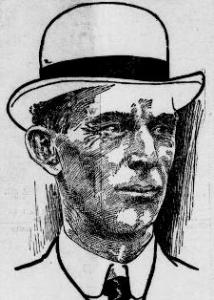
Connie Mack
“(H)e would have to stop the game and send some player to the diamond. That procedure never did any pitcher any good.
“Say that there is a man on second or third and that a dangerous man is up. I have heard Chance tell the pitcher to make the batter hit a bad one, and if the man at the plate refused that it would be alright if he was passed. Mack could not do this. It would be too complicated for signals. About all he could do would be to signal the pitcher to pass the man.
“Connie Mack may have excellent judgment in the selection of his pitchers and in appraising the value of his men, but I am confident that he has nothing on Manager Chance in this department of the game.
“The Chicago man is adept at picking the man who is ‘right.’ Time and again I have known the fellows to pick a certain man to pitch and Chance would select some other. But he usually picked the right one, and there is absolutely no doubt in my mind but that he will pick the right ones in the big series.”
The bench manager beat the playing manager in the 1910 series; Mack and the Athletics beat Chance and the Cubs four games to one.
Tags: Chicago Cubs, Connie Mack, Frank Chance, Frank Selee, Johnny Evers, Mordecai Brown, Worlds Series




 Baseball History Daily