“Think quick, act quickly, claim everything in sight and watch every point. Run out every hit, take any kind of chances on the bases, make the other side throw.”\
“That is the way to win in baseball.”
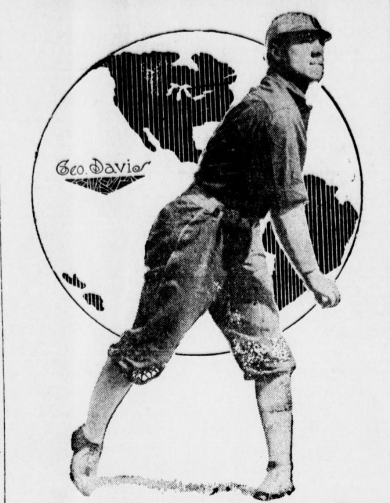
Said George Davis, as part of a series of syndicated articles by Chicago journalist Joseph B. Bowles which asked some of baseball’s biggest stars to talk about “How I Win.”
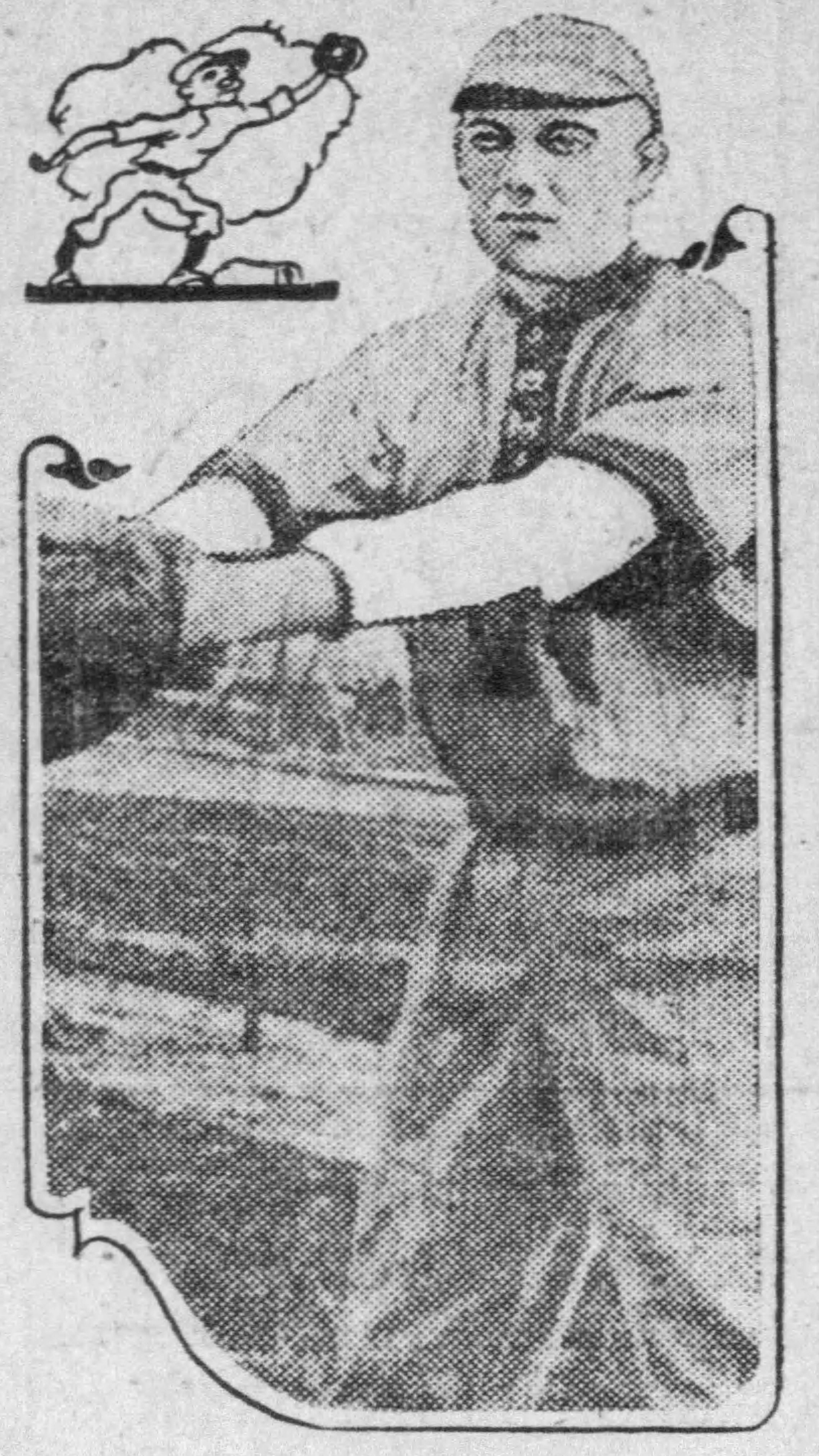
George Davis
Davis’ 20-year major league career had come to an end the previous season, and he was preparing to manage and play for the Des Moines Boosters in the Western League in 1910.
He said forcing the pace was key.
“(Making) the other club to give ground, assumes the aggressive end of the game and throws the other team on the defensive right at the start.”
He said during his time with the 1906 world champions, people “used to call the White Stockings ‘lucky’” because the team won close games:
“To one outside the game it really did look as if we were lucky, but the ‘luck’ was of our own making. We attacked so hard and steadily that the other teams threw away the game to us. That was one of the main reasons they called us the ‘Hitless Wonders.’ We did not rely so much on making base hits as we did upon forcing the other side to blunder.”
That, and pitching:
“One of the principal causes of victory to a pennant winning team is in the selection of pitchers to work against certain teams on certain days. The condition of the sky is studied, the lights and shadows on the grounds, the condition of the grounds and the force and direction of the wind before a final selection is made.”
David said he thought he understood “inside baseball and teamwork” before joining Chicago in 1904 and having the chance to “work with two such generals and (Charlie) Comisky and (Fielder) Jones.”
By 1906, he said:
“I do not think there ever was a team as perfect in defensive and aggressive teamwork as the White Stockings were under Jones. Our system of signals was perfect, and besides that we had men with wonderfully acute powers of observation, and everyone worked together. It would be betray secrets to tell how much our men knew of the opposing team. Everything we know was either from experience or from observation and the study of men.”
Yet, it could all be attributed to chance:
“And, after that is all done, and the manager has thought and worried gray hairs into his head, an umpire may miscall one strike and turn the entire game, which shows how much anyone really knows about how to win.”
Davis might have been presaging his tenure in Des Moines. The 39-year-old hit just .192 and led the club to a 72-96, seventh place finish. He never played or managed again.
The quiet town of Hingham is in turmoil over a proposed addition to its population.
The Boston Globe said:
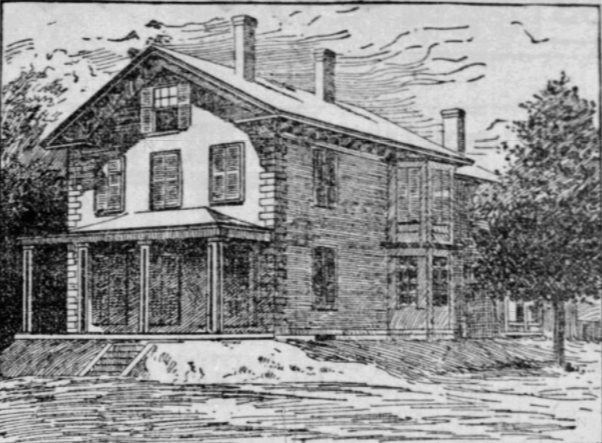
“Enveloped in a maze of spreading branches of beautiful elm and Rock Maple trees is a quiet corner of the quiet town of Hingham, stands the elegant residence to be presented to M. J. Kelly, the famous ballplayer.”
The New York World said:
“The great ballplayer and enthusiastic Brotherhood man was presented with a house and lot valued at $10,000 and containing furnishings and adjuncts worth at least $3500 more.”
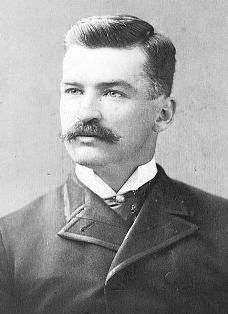
King Kelly had been feted on August 12, 1890, “After being cheered to the echo,” that day at the Congress Street Grounds; Kelly’s Boston Reds lost to Ward’s Wonders but maintained a one and a half game lead in the Payers League pennant race.
Mike “King” Kelly
After the game:
“King took a train for Hingham. He was followed by about 50 of his personal friends in a special train.”
A dinner was held the Cushing House; a then more than 200-year-old home that is one of the town’s earliest and was added to the National Historic Register in 1973.
After the dinner, speeches were made by Kelly, “General” Arthur Dixwell—the Boston super fan, Hugh Fullerton called ‘the greatest” “crank” of all-time. John Montgomery Ward, Arthur Irwin, Julian B. Hart, the director of the Boston club, and John Graham—of the Boston Athletic Club, who, seven years later, helped originate what became the Boston Marathon—also spoke.
“King, in the course of his speech, remarked that he was overpowered, thanked his friends in San Francisco, New York, New Orleans, Chicago, and Boston who had contributed to the gift, and promised a ‘small bottle on the ice’ to any and all who might call during the winter months. After the speech making, the entire party were conveyed to the new home.”
The House
The Philadelphia Times‘ Boston correspondent said, “this present has been arranged by his friends as a tribute to him not only as a brainy ballplayer, but an all-around good fellow, ever ready with his last dollar to aid a friend.”
Kelly’s generous nature, even towards rivals, was the subject of a story that same month in The Cleveland News. Patsy Tebeau was badly injured by a batted ball during a July game with Kelly’s Reds:
“In the game in which Pat met with the accident in Boston, which laid him up for a couple weeks, Kelly was playing, and, as Kelly often does, he was chafing Tebeau all through the game.
“When Tebeau dropped senseless, after being struck by the ball, Kelly, thinking it one of Tebeau’s tricks, called out ‘Never touched him.’ When the third baseman failed to rise, however, he hurried to where he was lying on the ground and helped carry him to the carriage.”
Tebeau was confined to bed for five days.
“Naturally enough, he was blue and almost heartbroken at not being able to play. No one had been near him all morning, and in his own language he was ‘all broken up.’ He had hardly time to think over the situation when there was a knock on the door and in walked King Kelly. He carried in his hands a big basket of fruit of all sorts, and after leaving it within Tebeau’s reach he left with a few words of cheer.
“’I’ll tell you,’ says Pat, ‘the way that man treated me brought tears to my eyes.’”
Not to be outdone, friends of heavyweight champion John J. Sullivan decided to buy him a home in Hingham.
That was a bridge too far for the residents. The Boston Post said:
“The inhabitants of the puritanical old town, who swear by their lineage and recognize only blue blood, being as conservative as any people on the New England coast, are much disturbed over the prospect of having a pugilist in their midst, and they freely give vent to their indignation. They swallowed Kelly with a grimace, but Sullivan is too much for them, they say, and steps are being taken to purchase the property and any other that Sullivan’s friends have in view.”
John L. Sullivan
Sullivan never got his home in Hingham, Kelly, who he called, “the greatest ball player in world,” didn’t spend a lot of time in his.
In April of 1893, The Boston Globe said the home, which also included a stable and a two acre lot, was sold for back taxes of $123.
Kelly died of pneumonia the following year; he died like lived, broke; primarily because, as The Fall River (MA) Daily Herald said:
“His many kindly acts to his fellows in want or illness endeared him to the baseball world, and hosts of friends will mourn his loss.”
In 1923, Bill Byron again didn’t make it out of April without being pelted by bottles. During a game between the Oaks and the Salt Lake City Bees in Oakland. The Salt Lake Telegram said:
“The smiling and sarcastic indicator…was the target for a volley of pop bottles and cushions in the eighth inning of the morning game, when he made what the fans thought a rotten decision. As a matter of fact, it wasn’t much good.”
The Oakland Tribune said Byron’s decision—he called a player out at second on a force when the fielder was, according to the home team and visiting team’s local papers, “fully eighteen inches off the bag,” which led to the incident–“the worst decision ever witnessed at a Coast League game.”
This led to the third attempt since 1920 by Oakland management and fans in, “petitioning prexy McCarthy against Byron, claiming he is unjust to Oakland.” McCarthy made no response.
Byron’s long history of bearing the brunt of a physical attack from a player continued during a July game Between Sacrament and Seattle. The Sacramento Star said:
“Fred Mollwitz got himself into an awful jam…And the worse of it all was that Fred was right, DEAD RIGHT, in his argument. Not right in smacking Lord Byron one in the kisser but right in protesting that majestic gentleman’s decision at first base.”
The paper said Mollwitz had tagged Seattle’s Jimmy Welsh who was picked-off first base:
“Welsh’s hand was a good distance (from first base). Byron promptly waved him safe. Mollwitz held Welsh pinned to the ground and called for Byron to come over and look at it.”
Byron ignored him. After allowing Welsh up, Mollwitz got in a “hot argument” with the umpire and was ejected and began to leave the field.
“It couldn’t be determined from the grandstand whether or not Byron said something or not, but, for some reason Molly turned around and poked him in the jaw.
“It took half the Seattle Aggregation and a whole assemblage of Solons talent to drag the battling first baseman off. After that it was a riot of nearly ten minutes.”
The San Francisco Chronicle reminded readers that Byron’s “favorite hobby (is) putting a chip on his shoulder,” and many suggested the umpire was to blame for the incident.
The Salt Lake Telegram labeled Byron “a player baiter,” and said, “Bill usually gets busted once or twice a year. Molly’s action isn’t at all unusual.”
Mollwitz
A group led by the Sacramento Chamber of Commerce petitioned the league president to punish Byron, their letter read in part:
“Byron’s attitude toward Mollwitz Friday was so provocative that any red-blooded American under similar circumstances would probably have done just as Mollwitz did.”
League president McCarthy once again ignored criticisms of Byron and said:
“Mollwitz’ act was cowardly and I am sorry I cannot fine him several hundred dollars and suspend him for a month.”
Instead, he fined Mollwitz $100 and suspended him for a week and chastised Mollwitz’ supporters:
“When the people of Sacramento cool down, they will find that Mollwitz was wrong and Byron was right. The suspension stands and I will continue to employ Byron.”
Whether it was his animus towards Oakland or something else, Byron showed rare compassion for a player late in the 1923 season, a pitcher for the Vernon Tigers named Merrill “Heine” File was on the mound against the Oaks. The Oakland Tribune said:
“An Oak on second and Heinie File was pitching. He made a couple of balks and the Oaks howled loud. The squawking became so boisterous that Lord Bill Byron raised both hands in the air and in a loud voice said: ‘He’s only a young pitcher trying to break in!’ Then Byron went to the pitching box to show the young pitcher how to stand on the rubber. The kid balked again and then umpire Ward behind the plate stepped into the diamond and called a balk.”
Oaks manager Ivan Howard asked Byron:
“How old a pitcher must be before a balk can be called on him, and Ivan refused to tell anyone what Byron told him, but we understand it was something about how old a fellow must be to know how to run a ball club.”
By the end of the 1923 season, the Tigers, not withstanding Byron’s attempt to help File, joined the chorus of people asking the league to part ways with the singing umpire:
The Los Angeles Record team owner Ed Maier and Secretary Howard Lorenz felt the umpire, “lost $1700 insurance for the Tigers and the Beavers, robbed Vernon of a ball game and deprived spectators of a right to secure rain checks,” during the team’s series in Portland.
Lorenz told the paper:
“The game was tied when we finished the fourth. Rain was pouring down. Manager (Jim) Middleton of Portland urged Byron to call the game, but he refused. A Portland player made a home run in the fifth and Byron called the contest as soon as they finished their half.”
In December McCarthy was replaced as PCL president by Los Angeles Express sportswriter Harry Williams; The Sacramento Star said, “Byron announces he will quit the league.”
Byron sat out 1924 but missed the PCL and apparently, despite everything, the league missed him. He agreed to come back in 1925 but broke his leg and could not return. The Sacramento Bee said while team officials in that town had been among the umpire’s biggest detractors, they would have supported his return:
“Just to show Bill that Sacramento did not have any hard feelings against him. Edwin Bedell, chairman off the baseball committee had planned to have a ‘Byron Day’ when Bill first appeared here.”
Byron never worked as an umpire again. He spent the rest of his life in Detroit and died in 1955.
Abe Kemp, who spent decades at The San Francisco Examiner and was the only sportswriter still working on the West Coast who covered Byron’s stormy four years in the PCL, wrote:
“Bill Byron was my friend. He was not a man who made friends easily. He was a dedicated man; a man dedicated to the profession of umpiring baseball…He went out of his way to inflame (fans). As on occasions he went out of his way to inflame ballplayers.”
Kemp told a story about Byron that explained Byron better than any other ever written during his life:
“’This blue uniform,’ he turned on towering ‘Truck’ Hannah one afternoon at Recreation Park, ‘has got to be respected.’
“From his lofty height of six feet four, Hannah carefully inspected Bryon’s sacred blue uniform.
“’You know Bill,’ he said slowly, ‘I would have more respect for your blue uniform if it didn’t have a patch in the seat of the pants.’
“Theatrically, Byron waved Hannah out of the ball game.”
The other umpire, Bill Guthrie scolded Byron for throwing Hannah out of the game:
“Byron leveled his ejection finger at his partner. “’Hannah cast aspersions on the sacred cloth.”
Bill Byron resigned as a National League umpire after the 1919 season but “The singing umpire” couldn’t stay away.
He accepted a position with the Pacific Coast League (PCL) for 1920. The (Portland) Oregon Daily Journal said he was the only umpire in the PCL who did not have a reserve clause in his contract.
Byron was partnered with another former National League umpires, Mal Eason. The Los Angeles Evening Express said:
“This pair throws players out of the game on the least provocation.”
Byron
Byron cemented his reputation for throwing out players shortly after joining the PCL.
The Los Angeles Examiner said after he ejected five players during a May game between the Vernon Tigers and the Sacramento Senators:
“Byron, according to all accounts, is rapidly approaching that stage of popularity with everybody that caused him to be dropped from the National league.”
While his exit from the National League appears to have been voluntarily, The Sporting News later made the same claim The Examiner did, telling readers the umpire’s “chip in shoulder attitude caused his dismissal from the National staff.”
In September, Byron called Lu Blue of the Portland Beavers out at the plate on a play that would have tied the score in an eventual 1-0 loss to the Seals:
Blue
The San Francisco Examiner said Blue grabbed Byron, the umpire broke away and punched Blue in the nose, then:
“Lu hit Bill with a left hook and by that time every ball player, ‘copper,’ and umpire in the league were mixed up in one grand shoving contest.”
Blue got to Byron again and punched him in the eye. After that, Portland’s Dick Cox, “grabbed the ump around the neck and dragged him halfway around the park, while Bill’s nose proceeded to pick up stray hunks of pop bottles and rocks.”
Blue was fined $100 and suspended for a week, Cox managed to escape with neither.
Portland manager Judge McCredie was said to be “chafing under” Blue’s suspension, telling The Oregonian Blue acted in self-defense and that Byron should have been punished as well.
A month after the incident, Seals pitcher Sam Lewis yelled to the Byron:
“Hey, Bill, I know you are the king of umpires, for I saw Lu Blue of the Portland club crown you.
The Oregonian concluded:
“Even Byron had to laugh.”
When he was retained by the league for the 1921 season, The Evening Express said:
“Byron had an opportunity to return to the National League but preferred to remain on the Coast.
“Important if true.
“If true, it is too bad he didn’t accept (National League President) John Heydler’s offer.”
Byron was no less controversial his second year on the West Coast. In May, Oakland Oaks third baseman, and future National League umpire, Babe Pirelli knocked him down “with a blow over the eye,” after he ejected Pinelli for disputing a call.
Most of the players and fans–including one famous fan, actor Al Jolson–told The Oakland Tribune that Byron threw the first punch:
“Al wired President McCarthy of the Coast League at once, declaring that the umpire and not the player was to blame.”
Pinelli missed several games with an injured hand but was never officially suspended and was fined $50 by McCarthy who said, “he didn’t place all the blame,” on the player for the incident.
Shortly after the incident with Pinelli, Byron drew the ire of San Francisco fans for indecision on a ball hit by Morrie Schick of the Seals in a game against Oakland. Jack James of The Examiner described the play:
“He looked up. It wasn’t there.
He looked down. It wasn’t there.
He looked at both sides. It wasn’t there.
“He decided to call in an expert for advice.
‘”Where did it go?’ says to the Oakland third baseman a Mister White, temporarily taking the place of Mr. Pinelli, who recently assaulted Mister Byron, they do say, with cause.
“’Foul!’ Says Mr. White.
‘”Foul it is then,’ says Mr. Byron.”
Despite that call in their favor, the Oakland management—J. Cal Ewing and Del Howard—sent a letter to McCarty, asking the league president to not assign the umpire to Oakland games:
“Byron has our players feeling like a lot of spanked kids who are afraid to make a false move or stand up for their rights for fear that will get tossed out of the ball game and then be further punished by having a fine slapped on them.”
The request was ignored.
Soon after, Byron attempted to pull the trick he once pulled on John McGraw on San Francisco Seals manager Charlie Graham—pulling out his watch and giving his a minute to leave the field after an ejection. Graham, said The Sacramento Bee:
“Graham grabbed the time piece from the indicator man…Byron tried to to wrench his watch from Graham’s hand but he could not do so. The crowd gathered around and finally Graham gave the ‘umps’ back his watch and left the field.”
Graham drew a five-game suspension and $50 fine.
Within days, Los Angeles Angels manager Wade Killefer was fined $50 and suspended for five games, and two of his players—George Lyons and Red Baldwin–were fined and suspended. Baldwin was ejected and given “thirty seconds” to leave the field, Killefer and the rest of the Angels came out on the field and “surrounded” the umpire, who promptly “declared the game forfeited” to the Seattle Rainers:
The San Francisco Chronicle said:
“Byron should demand a commission, for he fines more players than all of the other umpires combined.”
After Byron’s active first half of the season, The Express noted on August 1:
“Bill Byron didn’t suspend anyone yesterday.”
Byron’s reputation was such, that The San Francisco Examiner headlined a story about a riot involving players, umpires, and fans at an International League in Buffalo that resulted player arrests:
“Here’s one that Bill Byron Missed”
The Chronicle referred to him and partner Jake Croter as “the demon umpires.”
The Los Angeles Record said, “the much-abused umpire” had also taking up singing on the field again:
“When a player protests a called strike too vehemently, Bill will drone in a sing-sing voice:
‘”Can’t hit the ball with the bat on your shoulder; can’t hit the ball with the bat on your shoulder!’
“And when a player tells Bill things that Bill doesn’t think he is paid to hear, Bill grabs the whiskbroom and starts dusting the plate to the accompaniment of:
“’Some one’s going to the clubhouse; some one IS going to the club house!’”
Not everyone thought Byron was bad for the league. Carl “Boots” Weber” spent more than 30 years in the front office with the Los Angeles Angels and later served as treasurer for the Chicago Cubs. Shortly after Byron’s dust up with manager Wade Killefer and the two Angles players, The Los Angeles Examiner recounted a conversation between Weber and Byron:
“You’re an absolute attraction,’ Weber told Byron, ‘and I’m for you. You help to draw the people through the gate.’
“’Yes, and I help draw them on me,’ replied Byron.
“that’s just the point,’ enthused Weber. ‘Keep them on you. The more they get on you the more they will come out to see you, and that, after all, is the first and main consideration.”’
Byron, not particularly wisely, might have taken Weber’s comment to heart. In mid-August, The Bee said the umpire endured a “pop bottle shower” after making a call at the plate that cost the Beavers the tying run in a game with the Sacramento Senators:
“Senatorial ball players say that Bill Byron showed a lot of courage…it is said he never retreated an inch, nor did he look toward the stand from where the barrage was coming. Bill walked up and down the line never flinching…There was a little too much courage in the umpire’s manner according to the players, who say if one of the bottles had hit Bill on the head, he might have been through for the season, and perhaps forever.”
The Bee also reported that after the bottle throwing incident, a rookie pitcher named Carroll Canfield was told by his teammates to “tell Bill” that an opposing player missed first base. The paper said the players meant Canfield to tell manage Bill Rodgers; the 18-year-old instead approached Byron:
“(Canfield) in a meek way, went out and told the umpire about the runner missing the sack.
“’You get back to that bench kid,’ roared Bill, ‘and watch those other fellows play for a coupe of years more before you ever come out and talk to me.”
Despite two seasons of controversy, PCL President William H. McCarthy enthusiastically retained him for the 1922 season, telling The Associated Press:
“Byron is as good an umpire as there is in baseball and the Coast League is fortunate to have him numbered among its list of officials.”
The Singing Umpire didn’t make it through the first week of the 1922 season before being pelted with pop bottles. During the April 15 game between the Oaks and the Seals, The Oakland Tribune said Byron called Dee Walsh of the Seals out on a close play at third base in the 10th inning; then reversed himself and ruled Walsh safe, “after a flock of Seals charged him from the dugout.”
The paper called what happened next, the biggest baseball riot witnessed here since the days at old Freeman’s park,” which the Oaks vacated nearly a decade earlier. After changing the call, Byron was showered with bottles and “surrounded” by Oaks players. Calm was restored and Walsh scored on a sacrifice fly.
When the Oaks came to bat in the bottom of the tenth, Byron ejected Oakland’s Ray Brubaker and Ray Kremer who were heckling him from the dugout; the ejections resulted in another round of bottles throw at the umpire. When the final Oaks batter was retired:
“(F)ans dashed from the stands as a flock of gray-coated policemen sought to give Byron protection. Pop bottles and cushions were heaved through the mob and the dressing room was wrecked by the angered fans.”
He continued ejecting players at a clip that caused The San Francisco Examiner to say after a June game between the Seals and Oaks:
“Umpire Bill Byron gave the crowd a little taste of the unusual when he failed to prescribe an early afternoon shower for a single player. This was without doubt, the most notable feature of the game.”
Late in the 1922 season, he stopped what could have been an ugly incident and received unusual praise in The Los Angels Times. During the September 30 game between the Vernon Tigers and Seattle Indians, Vernon pitcher Jakie May hit Seattle third baseman Tex Wisterzil with a pitch, for the second time in the game, this one struck the batter behind the right ear:
“Tex was plainly out of patience, and started for the box in a brisk walk, bat in hand. Jakie awaited the impending onslaught with folded arms, fearless, dignified, and Napoleonic. Just when everybody expected the spark to be struck with the bat which would inflame the whole world, Bill Byron, the great pacifier, made a flying tackle from the rear and nailed Wisterzil’s elbows to his floating ribs. Thus, crisis was averted.”
Edward F. Ballinger of The Pittsburgh Post described Bill Byron thusly:
“(He) is looked upon among the players as the man who rendered more peculiar decisions than any other official in diamond history.”
Honus Wagner singled out Byron for rendering “the worst decision I ever saw.”
Wagner included the incident in his 1924 series of articles about his career for The North American Newspaper Alliance. He said he was stealing third in a game against the Giants:
“The catcher threw the ball into my feet making it impossible for Devlin—I think it was Devlin— [Note: It was Milt Stock] to pick it up. We both got in a tangle as I slid through a cloud of dust. The ball was bound under my arm where nobody could find it.”
Byron
While the Giants looked for the ball, Wagner headed towards the plate:
“About ten feet from home the ball dropped on the baseline. Now here’s where McGraw got in his fine work. He rushed up to umpire Byron, who had run down to third base to make the decision and told him I carried the ball to the bench in my hand.
“’If you don’t believe it, go to the bench and make them give it to you,’ he urged Byron.
“About this time McGraw’s attention was called to the ball lying on the base path.”
McGraw then told Byron, “That proves it. See! Wagner just rolled it out.”
Wagner said a confused Byron called him out for, “Carrying the ball to the bench with your hand.”
Wagner’s recollection was a bit faulty, in addition to forgetting who was playing third base. The incident happened on July 17, 1914, during the sixth inning of what would turn out to be a 21-inning 3 to 1 victory for the Giants. The game was, to that point, baseball’s longest game and both pitchers, Babe Adams and Rube Marquard pitched complete games.
As for the play, Wagner was not attempting to steal; he was advancing to third from first on a hit by Jim Viox and the throw came from center fielder Bob Bescher.
Contemporaneous accounts in The Pittsburgh Press, The Dispatch, and The Post all said that when the ball fell from Wagner’s uniform, it was immediately picked up by Marquard who threw to third trying to retire Viox who was called safe, rather than Wagner’s version where McGraw called Byron’s attention to the ball.
McGraw, said The Press, came out on the field at that point, “and told Byron Wagner was out.” The umpire agreed and also sent Viox back to second The Post said:
“The Pirates gathered around the umpire and raised a hubbub. (Fred) Clarke read the riot act and was motioned off the lot by umpire Byron.”
Pittsburgh protested the game, but Byron’s ruling was upheld.
Fred Mitchell, manager of the Cubs, was also not a Byron fan, and told Billy Evans in 1920:
“He hasn’t improved much since the summer (1917) he gave a decision that cost me $100 and the game. We were playing in St. Louis and big Mule (Milt) Watson was on the rubber. Art Wilson was at the plate. Watson, as he started to pitch, stubbed his toe and in trying to hold back on the ball threw it wildly and hit Wilson in the back of the neck. Byron would not let him take his base, saying it was a slow ball. I protested and consequently was chased and later fined $100.”
Mitchell’s details of the September 3 game were all correct, except for the outcome of the game. The Cubs beat the Cardinals and Watson 6 to 5. Mitchell had also, “had a mix-up” with Byron the previous day, according to The Chicago Tribune, when the umpire had initially called Tom Long of St. Louis out on a play at the plate, “then called him safe, although (catcher Rowdy) Elliott held the ball.”
Cardinals owner John C. Jones held the same opinion Mitchell did off Byron. Earlier that same season, Byron made another questionable call on another play involving Tom Long. The Cardinals outfielder hit a ball off Eppa Rixey that appeared to be fair for a double. Byron, despite “the fact that a gap in the whitewash marked the spot,” where the ball hit called it foul.
Long was called out on strikes on the next pitch The Cardinals lost 3 to 2 to the Phillies.
So incensed was Jones at the umpire, whom The St. Louis Star called, “a good plumber’s helper but an inferior umpire,” that he wrote an open letter to fans that appeared in St. Louis papers. He told fans who were present, “The good of the game demands,” that they wire league president John Tener about “Byron’s judgment.”
Jones’ message resulted in bottles and other items being thrown at Byron the following day. Two fans were injured. Cardinal President Branch Rickey disavowed Jones’ comments:
“I strongly advised against it. In fact, both (manager) Miller Huggins and myself wired President Tener that the message did not officially express the club’s sentiments.”
Despite his comment that he did not support the club owners’ position, Rickey was more critical of the umpire in his telegram to Tener than Jones had been in his message to the fans:
“(His) attitude and manners generally were extremely antagonistic to the crowd…If Byron will keep his face to the filed and not parade about in front of the stands, he will have no trouble.”
The previous season, Byron “wrote” an article for The Pittsburgh Press. He said he became an umpire in 1896 only because he couldn’t find enough work in his “first love, steamfitting.” Over two decades he worked his way from the Michigan State League to the National League.
Before steamfitting and umpiring, Byron had briefly played minor league ball:
“As for myself, I am frank to admit that I was the worst ball player that ever broke into the Texas League. I managed to hold my job with the Dallas club for a while, but the race was too fast. It nearly ruined a good steamfitter. Afterward I played semi-professional ball occasionally in Michigan but gave up the game—and what was baseball’s loss was the plumbing trade’s game.”
After four seasons in the Michigan State League, he worked his way up to South Atlantic League, then the Virgina League, followed by International League and finally the Eastern League before his big-league career began.
He became well known—and versions of the story were told for the next two decades—for a call he made on August 31, 1909. In an Eastern League pitchers duel between the second place Newark Indians, with manager Joe McGinnity on the mound and Big Jeff Pfeffer pitching for the fourth place Toronto Maple Leafs.
The game was scoreless in the sixth inning with Newark batting:
The Detroit News said:
“Two were out and the batter (Joe Crisp) raised a high foul within the easy reach of both the Toronto catcher and third baseman.”
Toronto Third baseman Jimmy Frick and catcher Fred Mitchell both stopped when Newark “coacher” Benny Meyer yelled “I’ll take it.”
“The catcher backed away and the ball fell on the Dominion of Canada. Great glee broke out among the Newark contingent, who seemed apparently to conclude that the strategy of the coacher had won the batsman another chance to connect. But they reckoned without Mr. Byron.
“’Batter out!’ yelled the ump.”
McGinnity and “his entire team” came out on the field.:
Byron told the Newark manager:
“’He’s out on interference.’
“This set McGinnity fairly crazy and he frothed at the mouth, ‘But there wasn’t a man within 10 feet of Mitchell when he backed away,’ he screamed.
‘”He’s out on vocal interference; get into the field and finish the game.’ And Byron pulled his watch.”
Pfeffer and McGinnity both went the distance in a 13-inning game won by Toronto 1 to 0. McGinnity filed a protest with the league, but Byron’s decision was upheld.
Byron said the “secret of umpiring” was that “The umpire must keep his head and let the other man lose his.”
The umpire retired before the 1920 season saying he could make more money at his first love. Evans said of his seven seasons in the National League:
“Like the rest of the umpires, he had his faults. No umpire is infallible, so Bill made mistakes like the rest of us, but they were always honest mistakes.”
He said Byron “always looked trouble in the eye,” and “no gamer fellow” ever wore a mask.
Despite his contentious relationship with McGraw, Evans told a story about a game in New York. The previous day while making a ruling on a play involving fan interference, “the umpires were criticized” by reporters for their long deliberation. The following day:
“At an amusement park near the Polo Grounds, it was customary for an aviator to do a series of stunts. Usually the aviator paid the Polo Grounds a visit before landing. On this occasion, he flew unusually low over the grounds, so that it was easily possible to see him greet the big crowd with a wave of the hand. Evidently Bill Byron had given some thought of the criticism of the day previous unjustly heaped on the arbitrators for what was called a needless delay.
“Calling time and turning toward the New York bench, he addressed manager McGraw of the Giants thusly.
“If the ball hits the airplane, John, while it is flying over fair territory, it is good for two bases. If it lands in some part of the machine and stays there while flying over fait territory, the runners shall stop at the base last touched when such thing occurs. If the ball lands in some part of the machine while the machine is outside playing territory, it will be good for a home run. Play.”
Evans said McGraw “was shaking with laughter.
The press box was as well:
“Byron’s retort courteous to their slam had not gone over their heads.”
L. C. Davis of The St. Louis Post-Dispatch said of Byron’s retirement:
“It will always be a moot question whether Lord Byron was greater as a singer or an umpire. But whether singing or umpiring the fans agree that he displayed all the earmarks of a good plumber.”
After National league umpire Tim Hurst died in 1915, his American League counterpart Billy Evans said in his nationally syndicated column:
“In the passing of Tim Hurst, baseball lost the quaintest character of the diamond. It was believed there would never be another one to approach him., but in Bill Byron baseball has a pocket edition of Timothy Carroll Hurst.
“No more fearless umpire ever held an indicator than Tim Hurst. Bill Byron runs him a close second.”
Evans said before coming to the National League in 1913, Byron was the subject “of many stories of wild minor league riots, in which Bill played the leading role without so much as mussing his hair.”
Fearless was one adjective used about Byron, but there were many others. After the 1911 season, Ed Barrow, president of the Eastern League removed Byron from the league’s staff. The Baltimore Sun said many celebrated the move:
“Byron’s chief fault is his stubbornness, and he, as well, is a bit dictatorial and oversteps his authority on the diamond…For the good of the game–in the face of many prejudices–Barrow has acted wisely in giving him the ‘can.'”
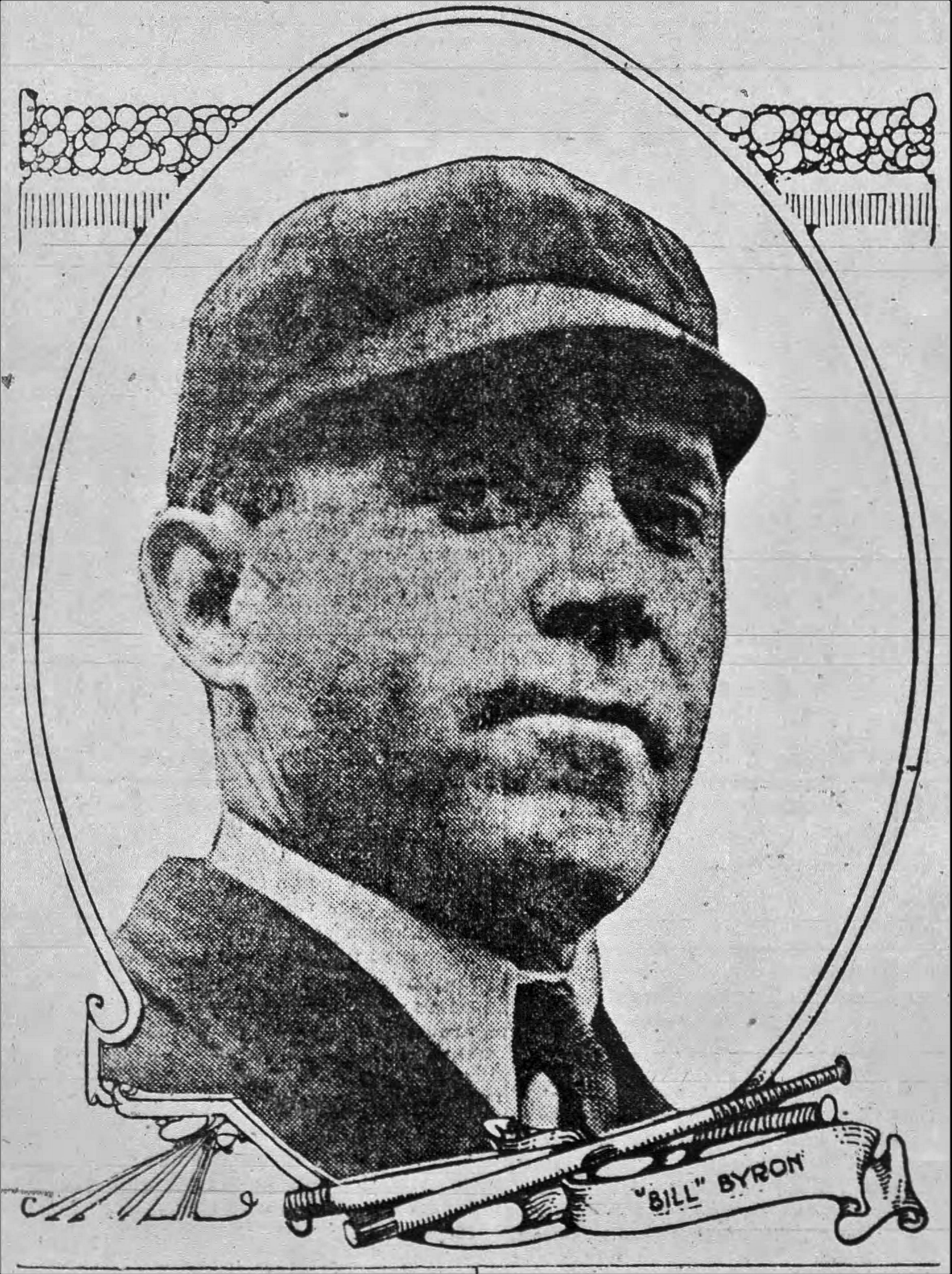
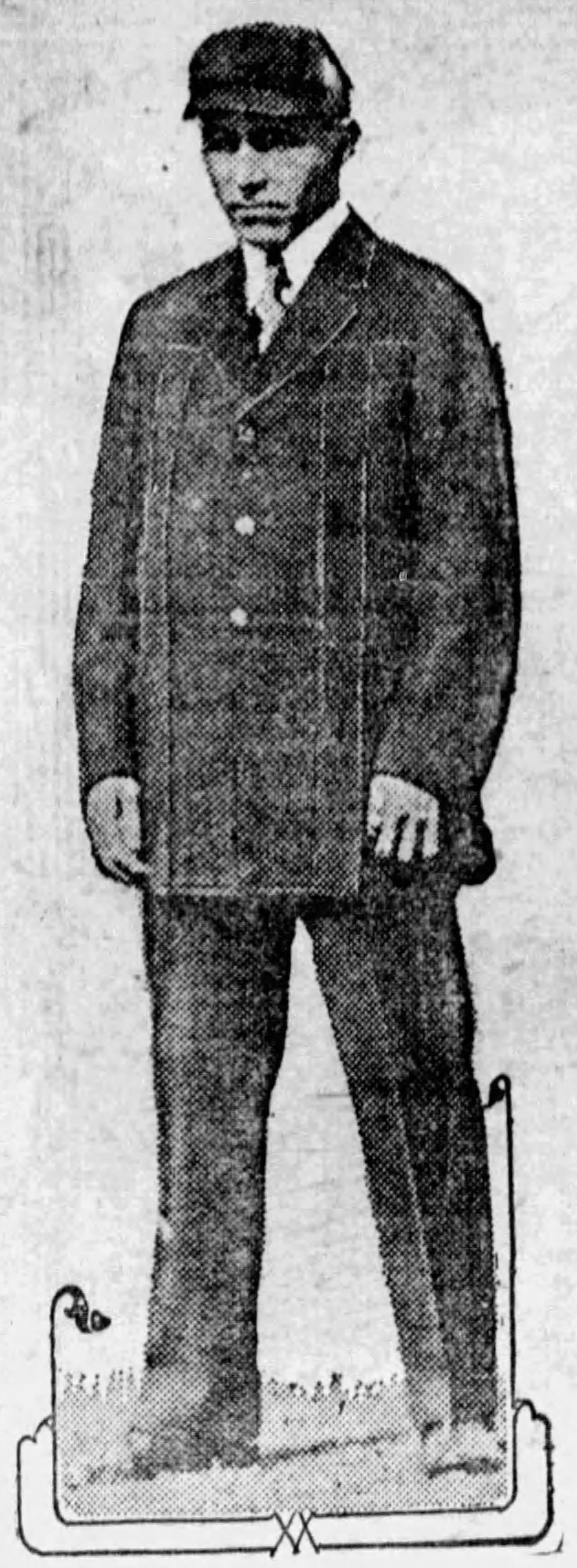
Bill Byron
Known as the “singing Umpire,” Byron’s “little ditties” were so well known that writers like L.C. Davis of The St. Louis Post-Dispatch and Willian Phelon of The Cincinnati Times-Star both wrote columns suggesting new songs for the umpire.
Davis suggested that when the Cubs Heine Zimmerman argued a call:
Heinie, Heinie, I’ve been thinking,
I don’t want none of your slack;
To the clubhouse you’ll go slinking,
If you make another crack.
Johnny Evers complained to Phelon:
“How can a guy tend to his batting when the umpire’s warbling in his ears?”
John McGraw was Byron’s biggest foil and foe, and Byron had a song for the manager of the New York Giants:
After the incident, McGraw provided a signed statement admitting to punching Byron, but blaming the incident on the umpire:
“Byron said to me: ‘McGraw, you were run out of Baltimore.”
When the umpire repeated the charge, McGraw said he “hit him. I maintain I was given reason.”
When Byron arrived in St. Louis the day after the incident to work a series between the Cardinals and Phillies, he refused to answer when asked by a reporter from The Philadelphia Inquirer if McGraw had punched him, instead:
“Bill pointed the right hand to the jaw. There was dark clot—which indicated that something landed as early as 20 hours ago.”
McGraw’s justification for the attack notwithstanding, he was fined $500 and suspended for 16 days.
McGraw responded, claiming to be “discriminated against personally,” by league President John Tener,” and that “Byron was more to blame than I was.”
He said the action taken against him would result in:
“Umpires with Byron’s lack of common intelligence and good sense, will now be so overbearing with players there will be no living with them.”
But the feud had been brewing since the umpire entered the league.
In August of 1914, in a game where the Reds scored five runs in the eighth to beat the Giants 5 to 4, The Cincinnati Enquirer said:
“The character of McGraw was shown by his getting into an insulting ruction with Umpire Byron…He was so angered at losing out that he pelted the official with vicious expletives and delayed the game for several minutes.”
In 1915, Sam Crane, the former player turned baseball writer for The New York Journal, and a close friend of McGraw, chronicled a clash between the two during a September 25 game between the seventh place Giants and sixth place Cardinals in St. Louis:
Byron was being taunted from the New York bench and decided utility infielder Fred Brainard was the culprit and ejected him:
“Brainard (in a startled voice: ‘Who me/ Why, I didn’t open my mouth, did I boys?’
“Chorus of players: ‘No, he didn’t.’
“A mysterious voice from a far corner of the dugout: ‘’Byron, you can’t hear any better than you can see. You’re rotten.’”
At this point, Byron walked to the Giants bench and gave Brainard one minute to leave.
McGraw responded, “You have pulled another boot Byron,” and accused the umpire of once ordering a player off the bench who was coaching at first base, and asked how he knew it was Brainard:
“Umpire Byron (turning pale): ‘I caught Brainard with his mouth open.’”
The Giants bench laughed at the umpire and McGraw accused him of always “guessing” at his decisions.
At this point Crane said Byron, “five minutes after he had given Brainard one minute,” removed his watch from his pocket and again gave Brainard a minute to leave and told McGraw he would be ejected as well. The manager responded:
“Why should I be put out of the game? I haven’t done anything. Neither has Brainard. You’re all tangled up. Do you know the rules? What time is it by that tin timepiece you have got there?”
Byron repeated the order and threatened to forfeit the game to St. Louis. McGraw said:
“Go ahead and forfeit. You will be in very bad if you do. Every one of my players here say Brainard did not say a word. You will be in a nice fix with Tener, won’t you. You will have a fat chance to umpire the world’s series. Go ahead and forfeit the game.”
Byron then summoned three police officers to remove Brainard, but according to Crane, the police sergeant said,” I will have to take the umpire along, too.”
This elicited more laughter from the Giants bench.
Crane’s story ends with McGraw chastising the umpire while finally telling Brainard to go, and Byron returning to homeplate while singing:
“Oh, I don’t know. The multitude and the players are enraged at me; but I gained my point. Oh, I don’t know; I ain’t so bad.”
And the game “then proceeded, and smoothly throughout.”
Crane claimed the whole ordeal took at least 15 minutes.
The Post-Dispatch didn’t mention police, implied that Byron clearly won the encounter, and said, “five minutes were consumed in this senseless argument.”
The paper scolded the umpire for the “bush league trick” of pulling out his watch, but said:
“In time, however, McGraw relented under the threat of a forfeiture, which means a fine of $1000, and Brainard went his way.”
McGraw might have gotten the better of Byron in their 1917 fight in Cincinnati, but in 1915 the umpire “landed twice” on Boston Braves third baseman Red Smith after the game when Smith renewed an earlier argument over balls and strikes September 16 in Chicago. Smith attempted to get at Byron after being hit but was stopped by the other umpire, Al Orth.
Byron and McGraw continued to butt heads and the umpire’s combative style and singing continued to draw attention.
George Moriarty, the Detroit Tigers infielder, turned American League umpire—who also wrote songs—and often included poems about players in the nationally syndicated column he began writing in 1917, said—in part–of Byron:
“It’s wonderful the way you face the throng of maddened players all season long;
While other umps get busted on the bean you pacify the athletes with a song.
You know that music charms the savage beast, and as they rush to stab you in the vest,
And tell you how they’ll tear you limb from limb, you sing like John McCormack at his best.”
When Tris Speaker died in 1958 it was noted that he earned $50 a month with the Cleburne Railroaders in the Texas League in 1906.
Speaker
Jesse “Doak” Roberts signed Speaker to that first contract and disputed the amount. Roberts was a prominent figure in Texas baseball. He was the two-time president of the Texas League (1904-’06 and 1920-’29) and had an ownership stake and managed clubs in the Texas and North Texas Leagues.
Before his death in 1929, Roberts often told his version of Speaker’s signing, as recounted by The Associated Press:
“Roberts had driven in his bright new buggy to the field where Speaker was playing a semi-pro game. He called Tris over to talk contract and Speaker, wearing baseball spikes climbed onto the hub of the buggy. Roberts noted he had scraped some of the paint off, so he signed Speaker to a contract of $40 a month. Roberts had meant to make it $50 but held back the $10 to repair the buggy.”
The year before Speaker’s death, he told Jim Schlemmer—the sports editor of The Akron Beacon Journal—how he started the season in Cleburne and ended it in the outfield, while at spring training with Indians in Tucson:
“I was a good pitcher in my first six, although I didn’t win any. In one of these I allowed only two hits but lost because Benny Shelton, our player-manager, failed to cover first base on a grounder.
“I bawled him out and he called me the freshest busher he had ever met.”
Shelton took his revenge during Speaker’s seventh loss—in Speaker’s telling he had given up “22 doubles and 22 runs” to the Fort Worth Panthers:
“Shelton kept yelling ‘Stay in there, kid, they haven’t got a single off you yet.’”
Speaker always said he was 0-7 with Cleburne, but was actually 2-7.
Four years before his death, he told a similar version of the story is Ed Sullivan’s “Little Old New York” column in The New York Daily News which included how he ended up in the outfield:
“In the next game, Cleburne’s right fielder Dude Ransom, suffered a broken cheekbone, so Speaker became an outfielder.”
Julian “Dude” Ransom was struck in the face by a pitch during a game with the Waco Navigators on May 22, 1906 by pitcher Carl Hiatt, which, according to The Houston Post, “shattered and caved in his upper jawbone.”
Ransom’s professional career ended that day, but he continued to play and held ownership stakes in several teams based in Corsicana, Texas—including the one of the greatest team names in baseball history, the 1922 and ‘23 Corsicana Gumbo Busters– and became a prominent businessman in the town.
Ad for Ransom’s 1923 Corsicana Gumbo Busters home opener in the Texas Association versus th Marlin Bathers
Ransom earned his nickname because “He was always a neat dresser,” was for many years the “unofficial stout” for any clubs Roberts owned in Texas. The Post said:
“In Doak’s opinion, Ransom would have proved one of the greatest outfielders in the game but for the accident at Waco.”
After hitting just .285 in 1897, and not managing the Colts to a finish better than fourth place in eight seasons, Cap Anson’s career in Chicago was coming to an end at age 45. His contract had expired and Albert Spalding had made no effort to sign him.
Cap” Anson
But Ned Hanlon of the Orioles said he was not convinced Anson’s career was over and offered him a contract. The Baltimore Sun said:
“Adrian C. Anson will play first base for Baltimore the coming season if he will consent to do so, Manager Hanlon will offer him every inducement that he can afford to have the ‘Grand Old Man’ come to Baltimore.”
Hanlon told the paper:
“I believe he would be a good man for Baltimore, and I shall write him at once for his terms…Anson is good for some years yet on the diamond. I consider his ability much underrated. With the things he had to contend with in Chicago it is a wonder to me he played as well as he did. With the Orioles he would bat .350 and be like a colt again.”
Ned Hanlon
Spalding, who was in the process of organizing a “testimonial” for Anson, intended to raise $50,000 for his retirement, told The Chicago Tribune Anson signing with Hanlon would be a mistake:
“(I)t will be a case of a big flash in the pan. Two or three months of praise and then, ‘Get out, you big dud.’ It is always the way, for a man of 47 [sic] cannot expect to play good ball for ever. Besides an error from Anson would not be excused. He would have to play perfect ball or be a failure.”
Orioles captain Wilbert Robinson agreed, saying that while Anson might help the Orioles with his bat:
“I think he is too slow and too poor a fielder and thrower and baserunner to fit such a team as the Baltimores.”
In The Sun, Orioles third baseman John McGraw disagreed with Spalding and Robinson:
“I should be greatly pleased to see Anson come to our team, and if he should I believe it would be a case of Dan Brouthers and ’94 over again. When Brouthers came to Baltimore everybody said he was too old to play ball and no good, and you know how he played that year.”
Brouthers hit .347 and drove in 128 runs for the pennant winning Orioles in 1894 but was just 36 years old.
McGraw was skeptical about Dan McGann, who Hanlon had traded for to play first for the Orioles, and noted that Hanlon’s experiment the previous season had failed:
“McGann may be all right, and again he may not. In the minor leagues there are few who can hit the ball harder and oftener than George Carey, but in a club like ours he was nervous. Every time he went to bat his hand shook from nervousness. McGann may not be that way at all; I do not mean to say he would be, but he might.”
Carey hit .261 in his one season with Baltimore in 1895.
The Baltimore American reported that Hanlon said his proposal was “a joke,” but Hanlon immediately denied that and told The Sun:
“I had no interview in which I denied my intention of trying to get Anson, or did I in any way make light of that intention.”
The Chicago Journal was concerned that local “enthusiasts never would get over it,” if Anson made good in Baltimore.
The Chicago Post said:
“(T)hose who think they know how (Anson) feels say he will not entertain any such proposition.”
The Chicago Daily News said:
“Many of the veteran’s friends believe he will be glad of the chance to go with another club, especially such a team as Baltimore’s.”
The Tribune talked to Anson’s father in Iowa. Henry Anson said he wanted his son to retire so he could:
“(C)ome back to Marshalltown, the land of his birth, and assist me in the upbuilding of the city.”
While Anson remained silent about whether he would continue playing and refused to comment on whether he would go to Baltimore, he had a letter read at Spalding’s meeting at the Chicago Athletic Club to plan the “testimonial;” the letter was printed in The Daily News::
“I refuse to accept anything in the shape of a gift. The public owes me nothing. I am not old and am no pauper. I can earn my own living. Besides that, I am by no means out of baseball.”
After nearly two weeks, Anson sent a letter to Hanlon, The Sun said:
“Anson neither accepts nor declines the offer but says he has not yet decided upon his future plans., and until he does, he does not care to talk business with anyone.”
Anson told Hanlon:
“In the event I should care to do business with any club outside of Chicago, I should be pleased to negotiate with you. However, I do not care to do business with anyone just at this time.”
Anson stayed out of baseball until June when he signed to manage the New York Giants. The Tribune said:
“Anson has been one of the few admirers of (Giants owner Andrew) Freedman. He admired him because of his stubbornness. Freedman has been an admirer of Anson. When their wishes clash something will break.”
Anson managed the Giants for just 22 games; guiding New York to a 9-13 record before he quit. He told The Tribune:
“My experience as manager? I simply and shortly discovered that (Freedman) did not want me to manage the team. I wanted to manage it, as that was what I understood they wanted me to do. They didn’t really want me to, and so I resigned.”
“Baseball, on the whole, isn’t a profitable game to magnates,” wrote Frederic Patrick O’Connell in The Boston Post in 1906.
“More men have been ruined by baseball than one can imagine. Only a few clubs make money. Every season several minor league clubs go to the wall.
Frederic O’Connell
While many more minor league clubs were organized with the understanding that the team would lose money:
“In the smaller towns, men can always be found who will take a chance, and who, for the sake of the sport are willing to lose money. Most of the minor league teams have the backing of the street railroads. The railroads make big money out of baseball and are willing to help out some.”
O’Connell asked his readers to, “think of the money made” by the Boston Elevated Railroad “in this city,” the previous season:
“At the very lowest the L Road received around $25,000 from the fans who witnessed the big league games…The L Road owns the Huntington Avenue park. (Americans owner) John I. Taylor pays around $7500 rental.”
Further complicating the finances of teams, O’Connell said, was that, “There isn’t one club in the two big leagues” that didn’t exaggerate attendance numbers:
“They do it at the South End (home of the National League Beaneaters) and they do it at Huntington Avenue, but at Huntington Avenue they pad the figures less perhaps than any other city. In Chicago and St. Louis, the figures given are farcical.”
Why they insisted on padding attendance was, “hard to explain” because it caused harm to the magnates who padded figures:
O’Connell said how can players be blamed “for kicking” about salaries when “Daily he reads the attendance figures.”
But despite “how ruinous baseball has been” to many owners, “You will always find men willing to take a chance.”
O’Connell warned that anyone wanting “to hold public office had better leave baseball alone,” because the rabid fan “seldom forgives and never forgets.”
He said, he was stopped on the street the previous week by a fan angry for an error O’Connell, as official scorer, charged Freddy Parent in a game three years earlier.
“It took me off my feet, and while the game had long ago been forgotten by me, my new friend went into every detail, telling me just how it was played and who scored the runs.
“It is now some time since (Boston) Mayor (John F. ) Fitzgerald desired to buy the local American club. Does anyone for a moment suppose he would now be mayor if he happened to own the Collins team last summer?”
The Americans, under manager Jimmy Collins, were never in the race and finished in fourth place, 16 games behind the Philadelphia Athletics.
Jimmy Collins
Had the mayor owned the club:
“Not a single fan would have forgiven him because he didn’t make Collins take out (Norwood) Gibson one day last August, because he didn’t order Collins to send someone to bat for (George) Winter another day…Mayor Fitzgerald has no doubt congratulated himself for this. He is now mayor of the city, and as owner of a losing team he would have surely been beaten, for nearly every voter in Boston is a fan, and nearly every fan one meets has a grievance.”
The ire that Fitzgerald avoided by not buying the team was visited upon the manager, said McConnell:
“When Jimmy Collins won the world’s series from Pittsburg he was hailed as the greatest ever by fandom…How different now.”
Collins lasted until August 25 in the 1906 season, he was let go with a 35-79 record.
McConnell came from a prominent Massachusetts family; his brother Joseph helped organize the first football team at Boston College and served two terms in Congress.
He became baseball editor at The Post at the age of 23 but died just three years later.
He was with the Americans in the spring of 1907 in West Baden, Indiana when he contracted pneumonia and died after a three-week illness.
Boyden Sparkes worked on newspapers in Cincinnati, San Francisco, Chicago, and New York, and later became a feature writer for “The Saturday Evening Post,” and was the author of several fiction and nonfiction books. In 1922, he asked the question in The New York Tribune, “Is the home run a menace to baseball?”
Sparkes talked to Brooklyn owner Charles Ebbetts about Babe Ruth and the increase in home runs.:
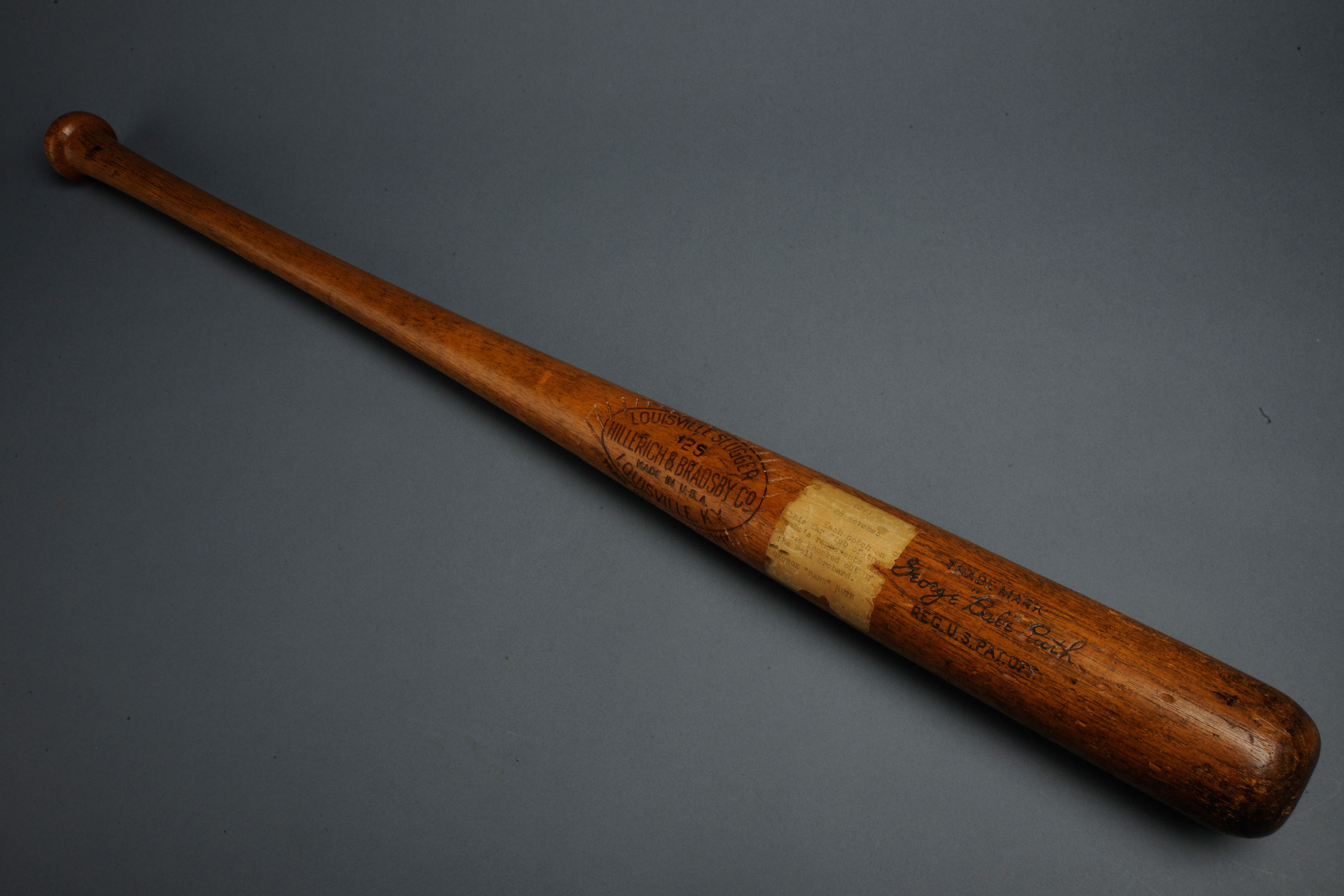
“All of the home runs are to be accounted for by heavier bats. I don’t mean that the bat actually weighs more, but there is more of the body of the wood down where it meets the ball.
“Rule 15 says the bat must be round and no longer than forty-two inches and no thicker than two and three-quarter inches and didn’t concern themselves so much with heft or thickness. Now they are mostly using bludgeons…I’d say 85 percent of the increased number of home runs is due to this.”
Ruth’s Bat
Sparkes then sought out:
“(A) mortal with a perspective on the true merits of the rise in the home-run market…But where is one to find a baseball star who was lost from the firmament a decade ago?
“It is not so difficult when the star is (Willie) Keeler and information is sought in Brooklyn, a few months ago in an invalid’s wheelchair he was trundled off the boat that ferries between Sheepshead Bay and Rockaway Point.”
Keeler, just 50, was only months away from death:
“(H)is friend and physician, Dr. Charles Wuest watches with tender solicitude while the old ballplayer who used to go from home to first like a flash doles out a precious energy ration for a short walk on the beach.”
Asked what the “old boy” thought of Babe Ruth, Keller said:
“He’s got a beautiful swing. Yes, he’s got a beautiful swing. Ruth is better than anyone. I don’t mean that he is a scientific hitter (Billy shook his head here), but he certainly is a wonder with home runs.
“I don’t know whether the ball is anymore ‘live’ or not. I’ve only seen one game—the last championship—since they claim the ball has been changed, and I couldn’t judge by that, but there are several factors that have altered the chances of the pitchers and the batters.”
Keeler
Keeler called those factors “a changing struggle.”
He said:
“Every baseball player who studies the game is really an inventor seeking ways to alter it. It’s like the centuries-old contest between the makers of armor and the makers of projectiles…It’s the same way with bank burglars and bank vaults.”
Keeler said outlawing the spitball was a key factor in aiding hitting:
“The spitball was one I couldn’t figure. I never did approve of it either. It doesn’t look right to see fellow spitting on a ball. It’s unhealthy, too, as far as that goes. Then they got to using all sorts of tuff on the ball, rubbing it with emery paper and putting paraffin on it.”
Noting the many changes in baseball’s rules over the years, Sparkes said, “Other countries do not change the rules of their national sports as Americans do. A bull fighter of today could use the swords of a matador of a century ago.”
This, he said was true of cricket as well and spoke to Harry Rushton, secretary of New York’s Metropolitan District Cricket League, who said:
“What? Revise the rules of cricket! Why, my dear sir it wouldn’t be cricket.”
Rushton said:
“The revision of rules in cricket is usually for clarification. The only change that I can recall which altered the balance of chance between the batsman and the bowler was really due to the American influence, I should say, and England, of course, has never accepted the change.”
Rushton said a “movement among American cricketers” attempted to “increase and ‘over’ from six to ten balls.” A change from six to eight was made in Australia, but “the Briton at home clings to the six ball over.”
After talking to Ebbetts and Keeler, and the cricketer, Sparkes arrived at the conclusion that many have when faced with another radical change to the game:
“Clearly, if baseball is to remain baseball. The men who control it will have to stop tampering with it.”




 Baseball History Daily