Tag Archives: American Association

The Curve and The Spitter

26 Jun

Hugh A. “Hughey” Reid only appeared in one professional game; he went 0-4 and played right field in a game for the American Association’s Baltimore Canaries against the White Stockings in Chicago in August of 1874,  as was the practice at the time, Baltimore recruited Reid, a local semi-pro player to fill in for the injured Oscar Bielaski.

Reid wasn’t known in the amateur and semi-pro leagues in Chicago as an outfielder.  He was considered one of the best pitchers in town, and played for the Chicago Aetnas, one of the premier teams in the city, and according to The Chicago Tribune “The champion amateur team of 1869.”
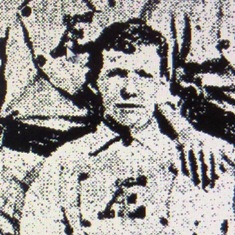
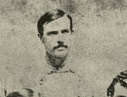
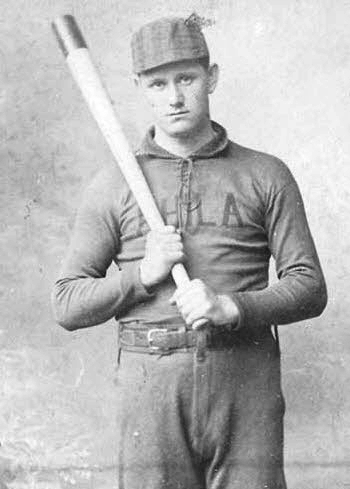
Hugh Reid

Hugh Reid

Among Reid’s teammates with the Aetnas were future big leaguers Jimmy Hallinan and Reid’s brother-in-law and catcher Paddy Quinn.

Reid worked as a stereotyper (made metal printing plates), for The Chicago Evening Post after his career ended.

In 1920, Reid was interviewed by Alfred Henry “Al” Spink, founder of The Sporting News.  By 1920, Spink, who had played amateur baseball in Chicago against Reid with a team called the Mutuals (named for the more famous aggregation in New York), had relocated to Chicago and was writing for The Evening Post.
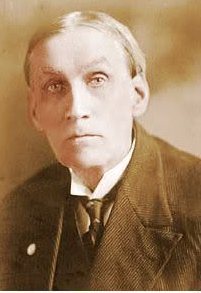
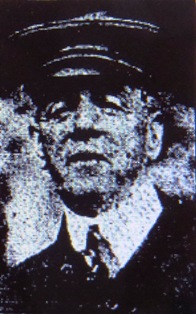
Al Spink

Al Spink

The occasion was “field day exercises of the old timers” at Pyott Park at the corner of Lake Street and Kilpatrick Avenue in Chicago; the days events were followed by a banquet.  “Cap” Anson, Charles Comiskey, Hugh Nicol, and Fred Pfeffer were among the dozens of former pro, semi-pro, and amateur players who attended.

Spink described the 70-year-old Reid; “same old smile, same old swagger, same old don’t care a tinker’s, same old Hughey.”

Nine years earlier Spink had credited William Arthur “Candy” Cummings with originating the curveball in his book “The National Game,” but by 1920 others were making the case for different candidates.  Spink asked Reid his opinion:

“Without a doubt Cummings was the first pitcher to put the curve on the ball.

“As Cummings was using the outcurve as early as 1867, and Bobby Matthews only broke into the game at Baltimore in 1869, there is very little doubt as to who discovered the art of curving.

“In fact, it was not until years later, when the rules allowed the pitchers to raise their arm above the waist, that Matthews became master of the curve.”

Candy Cummings

Candy Cummings

Reid also talked about the pitch Mathews did introduce:

“I am quite sure that Mathews was the first to work the delivery mow bearing the insanitary name

“Before delivering the ball he would rub it hard on his trousers, always on the same spot, where the seams are the farthest apart…he would draw his two fingers across his lips, take the ball with two fingers and a thumb and send it in with only fair speed.  He had perfect control and usually sent the ball about waist-high for a player calling for a low ball.  The break came just in front of the plate and the ball usually went into the ground or very high in the air.  Few line drives were made off of Mathews.”

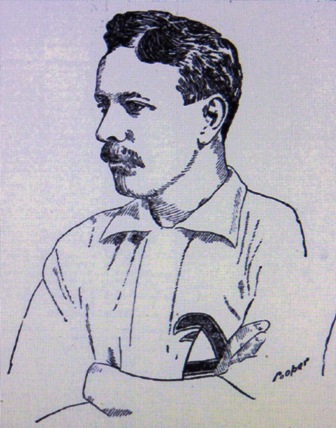
Bobby Mathews
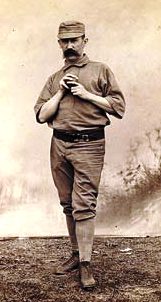
Bobby Mathews

Reid also talked about Alphonse Case “Phonney” Martin.  At the same time that Spink was making the case for Cummings in “The National Game,” Martin told William Aulick of The New York Globe that he developed the pitch. Aulick concluded:

“Some people say this was the first cousin of the curve ball, but they don’t say this when old Alphonse Martin is around.  He insists it wasn’t anyone’s cousin–it was Mister Curve himself.”

Reid disagreed, he described Martin’s pitch as a “freak ball,” and said:

“I first saw Martin pitch down on the old lake front grounds in Chicago against the original White Stocking team.  He simply threw a slow lob ball that came so slow you had to nearly break your back to hit it.  But, at that, his delivery was a success, and most of the balls hit from it went high in the air and came down in some fielder’s hands…He threw a slow teaser that reached the plate about shoulder-high and dropped while still spinning.”

Alphonse "Phonney" Martin

Alphonse “Phonney” Martin

Reid insisted Martin’s pitch was not a curve:

“Cummings and Cummins alone was the originator of the curve.”
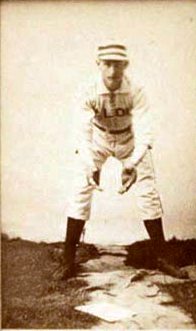
Browning and Delahanty

25 Jun

John Anthony “Honest Jack” Boyle played in the American Association, Players League and National League from 1886 to 1898.

Boyle’s career was on the decline by the end of the 1898 season (he had only appeared in six games with the Philadelphia Phillies that year), but was effectively ended in November when he was the victim of a mysterious knife attack in his hometown of Cincinnati.

The Cincinnati Commercial Tribune said Boyle was “attacked from behind by an unknown man, who, before the player could defend himself, plunged a knife into his shoulder.”

A piece of the knife broke off in Boyle’s shoulder and he didn’t play regularly again until 1905 when he appeared in 101 games for the Toledo Mud Hens in the American Association ; he was a player-manager for the Terre Haute Hottentots in the Central League the following season.

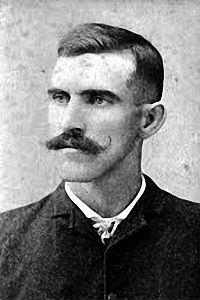
Jack Boyle

Jack Boyle

By 1910 Boyle, who was operating a saloon in Cincinnati, told William A. Phelon of The Chicago Tribune that the two best hitters he ever saw were Pete Browning and Ed Delahanty, and provided a window into the minds of two of the biggest stars of the 19th Century:

“(T)here never were two men more radically different in their ideas of and their opinions of the game than these two great sluggers.  They looked at the game from totally different angles, and they regarded their occupation with widely varying views.

“Pete Browning was an artist.  To him baseball was an art or a profession and batting an absorbing passion.

“Delahanty was a workman.  Baseball to him was labor or a trade, and batting simply part of the daily toil.

“When Browning left the field the game wasn’t over.  He continued to talk batting, theorize on batting, figure out new ideas on batting, and I think, dreamed of batting all night long.

Pete Browning

Pete Browning

“When Delahanty left the ballpark the game was all through for the day, exactly as if he was a laborer going home to supper.  He ceased to think baseball.

Ed Delahanty

Ed Delahanty

“If Browning failed to make a hit at the time of need, he would have tears in his eyes and would bitterly bewail his misfortune.  If Delahanty fell down in the pinch, he shrugged his shoulders, hoofed back to the bench and began to talk racing or the weather.

“When an outfielder galloped to the fence and pulled down one of Browning’s mighty drives, Pete would regard it as a personal insult, and glower at the outfielder like a baffled tiger.  When a fielder robbed Del of a home run, Ed would grunt ‘Good catch, boy, didn’t think you’d get it’ and forget it forever.

“If you had told Pete Browning that the business was losing money, and that you would have to cut his salary next season, he would have accepted the money rather than lose the chance to play the game.  If you handed that talk to Delahanty, he would have sneered scornfully and remarked that you’d have to come up with 500 more beans before he’d even look at a contract.

“Neither Pete nor Del cared much where their teams finished on the season.  Pete thought only of hits and the glory of making them.  Del thought of a comfortable winter life on the money he had made in the summertime.”

Boyle said the only thing the two really had in common was an inability to bunt:

“Del wouldn’t simply try.  Pete, with much groaning and protestation, would be coaxed to make the attempt, but his attempts were fizzles.”

Boyle, or Phelon, omitted the other thing the two had in common: serious drinking problems that hurt them on and off the field and contributed to their early deaths.

Boyle died in Cincinnati in 1913.

“To be Hissed and Hooted at in the East is too much”

20 Jun

In 1886  Thomas Jefferson “Tom” York retired after a fifteen-year career.   As a 20-year-old he joined the Troy Haymakers in the National Association in 1871, he was with the Hartford Dark Blues for the National League’s inaugural season in 1876, and finished with the Baltimore Orioles in the American Association; he also served two brief stints as a player/manager with the Providence Grays.

York, who suffered from rheumatism, had considered retiring before the 1894 season after the Cleveland Blues sold him to the Orioles, but The Baltimore American said he was induced to continue playing with a $5000 salary and “the scorecard and cushion (concession)” at Oriole Park.  After hitting just .233 in 1884, he was only able to play in 22 games the following season before calling it quits.

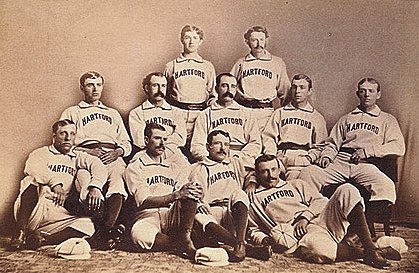
Tom York, middle row, far right, with the 1876 Hartford Dark Blues

Tom York, middle row, far right, with the 1876 Hartford Dark Blues

Just before the beginning of the 1886 season York was hired as an American Association umpire.  After the May 22 game in Baltimore which the Orioles lost 2-1 to the Louisville Colonels, The Baltimore Sun said:

“(York) received a dispatch yesterday ordering him to Brooklyn.  Instead of going he telegraphed his resignation.  His reason for doing so was the abuse he received from some of the spectators of Saturday’s game.  In fact, he was nearly equal to that of John Kelly, ‘the king of umpires.’  He declared (Pete) Browning’s hit near the foul line a fair hit.  He was in the best position to know, but, as it was made at a critical point, some of the audience objected, and York came in for pretty severe abuse.”

The paper said York also made a “questionable decision,” when he “evidently forgot that it was not necessary to touch a runner in a force,” and incorrectly called a runner safe at second:

“York became discouraged and the Association lost a good umpire.”

Within weeks York became a National League umpire; that didn’t last long either.

On June 30, the Kansas City Cowboys lost at home to the New York Giants 11-5, The Chicago Inter Ocean said York “was escorted from the grounds by the police on account of disapproval manifested over his umpiring.”

Less than a month later, after York was “roundly hissed” at the Polo Grounds after making “some very close decisions against the New Yorks,” in a July 22 game against the Philadelphia Quakers, he sent a telegram to National League President Nicholas Young resigning his position.  York told The New York Times:

“I have been badly treated in the West, but to be hissed and hooted at in the East is too much.  I have often heard that an umpire’s position was a thankless one, but I have never realized it before.  It’s bad enough to be hissed and called a thief, but in the West when the local club loses an umpire in fortunate if he escapes with his life.  Of all the cities in the league Kansas City is the worst.”

York said there was another incident Kansas City the day before he was escorted from the field by police:

“On June 29 when the New York men beat the Cowboys 3 to 2 (William “Mox”) McQuery hit a ball over the fence, but it was foul by 25 feet, and I declared it so.  After the game Vice President (Americus) McKim, of the Kansas City club wanted to know how much money I would get from the New Yorks fir That decision.  I remarked that I received my salary from the league and did not take a penny from the New Yorks or any other none.  Then he grew furious, and said he would end my days.  This in conjunction with other things incidental to the life of an umpire has made me tired of the business, and I intend to make room for some other victim.”

Despite quitting both leagues within two months, The Baltimore American said the American Association sent York a telegram in two months later “asking him if he wanted an appointment as umpire.”  The paper said “York replied no, emphatically, as his past experience was sufficient to justify his remaining at home.”

York remained at home for the rest of the season and the next, but while he never worked as an umpire again he returned to baseball in 1888 as manager of the Albany Governors in the International Association.  Over the next decade he was connected with several East Coast minor leagues, including the Connecticut State League, the New York State League and the Eastern Association, as a manager and executive.

York retired to New York where he became one of the many former players employed at the Polo Grounds at the behest of manager John McGraw.  In 1922 The New York Telegraph described his position:

“York has the pleasant post of trying to keep the actors, tonsorial artists and plumbers out of the press stand.  It is old tom who examines your pink paste board and decides whether you are eligible for a seat in the press cage.”

Tom York, 1922

Tom York, 1922

In February of 1936, as preparations were being made for York, along with James “Deacon” White, George Wright, Tommy Bond,  to be honored that summer at the  All-Star Game  as the last four surviving players from the National League’s first season, the former player, manager, executive and umpire died in New York.

“Atlanta’s Baseball Bullies”

17 Jun

During the 1885 season, Lewis Henke of the Southern League’s Atlanta Atlantas was killed during a game; the death was attributed to on-field rowdyism by the Southern press who hoped the death of the popular player would help end brawling behavior in the league.

In January of 1886, the Atlantas hired a new manager, William Aloysius “Blondie” “Billy” Purcell.   Purcell had split the 1885 season between the Philadelphia Athletics in the American Association and the Boston Beaneaters in the National League, hitting .279 in 87 games.  The Sporting Life said:

 “Billy will make a good manager, and is capable of securing a team—even at this late date—to win the championship. “

William "Blondie" Purcell

William “Blondie” Purcell

Purcell came to Atlanta with an excellent reputation, The Philadelphia Inquirer described him as being “Of a genial, happy disposition,” who was very popular when playing for the Athletics, and in 1883 and ’84 as a member of the Quakers.

That changed quickly, just two weeks into the season The Macon Telegraph said under the headline “An Alleged Conspiracy against Purcell,” that the new manager had incurred the wrath of his players by “ruling the team with an iron hand.”

After the rough start, the team appears to have turned their wrath towards their opponents and became the most hated team in the league.

Over the course of the next four months, Southern papers chronicled the bad behavior of the Atlanta squad.

It started with a game against the Charleston Seagulls when Purcell was accused of cheating, The Charleston News and Courier said:

“Manager Purcell was playing in the left field and the Charleston team was at the bat.  During the inning one of the Charleston team batted a ball to left field.  It went over the fielder’s head and, after striking the fence, rebounded and then went into the ditch.  The fielder started for it, but after running only a short distance took a ball from his shirt pocket and through it to the diamond.  The remarkable rapidity with which the ball was fielded was loudly applauded at the time…The fielder subsequently went to the ditch, picked up the ball and tossed it in the diamond…The incident was witnessed by several people, and the statement can be substantiated if the proof is demanded.”

Cheating turned to “bullying” as the season progressed.

The Savannah Times dubbed the team “Purcell’s Plug-Uglies,” and said of them after a July game:

“From the start of the game yesterday the Atlantas began their rowdyism, (Tom) Lynch was running to first in the first inning, the ball got there just ahead of him, Lynch deliberately struck (Jim) Field with his fist…from then on the whole team began to kick and try to hack the umpire.  In this Purcell was ably assisted by (John “Monk”) Cline and (John “Cub”) Stricker, two of the rowdiest  ball players that have been seen on our field…The conduct of the Atlanta club was most reprehensible, and has placed them in an exceedingly unenviable light.”

Tom Lynch, one of Atlanta's bullies

Tom Lynch, one of Atlanta’s bullies

Earlier that month after a couple of close wins over the Seagulls, The News and Courier again criticized the Atlantas saying the team “ought to be kicked out of the league,” and said:

“(T)here was an immense crowd present to witness the game, but their afternoon’s pleasure was completely spoiled by the disgusting behavior of the visitors, whose kicking and sharp practices are sufficient to drive any respectable audience from a ball field.”

After another game in Charleston, The News and Courier said Purcell’s team used “blasphemous and obscene language,” and:

“Those who attended the game this afternoon are outspoken in their condemnation of the disgraceful behavior of the Atlanta team, and declare that either they should not be allowed to continue in the league, or that they should be made to behave themselves at least decently in the presence of the communities where they have to play.”

The Macon Telegraph called the team “Atlanta’s Baseball Bullies,” and said after a game in which Purcell was fined $10 “for his ungentlemanly remarks,” that Atlanta played “good ball,” but that it was “marred” by their conduct.  The paper also said:

“The Atlanta team is evidently akin to the bulldozing idea.  The bullies and braggarts who compose the team have evidently been taught that an umpire is a very insignificant personage and to be influenced by blackguardism.”

Similar charges of “rowdyism” and “bullying” were made throughout the season.

The Atlanta Constitution saw nothing wrong with the team and blamed the criticisms from the papers in other Southern Association on “jealousy” over the team’s success.

With Atlanta holding on to a small lead for the league championship, the most serious charges would wait until the final weeks of the season, and include two of Atlanta’s most prominent citizens …tomorrow.

Gus Dorner’s Spitball

7 Jun

dorner1 dorner2

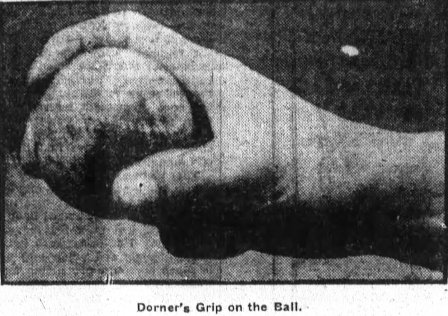
Augustus “Gus” Dorner suddenly became a successful pitcher in 1904.  He had brief trials with Cleveland in the American League in 1902 and ’03, he was 6-6 and control was a problem; on May 23, 1903, walked 11 batters in a game against the Philadelphia Athletics.  He finished the 1903 season with the Columbus Senators in the American Association posting a 7-7 record.

The next two seasons in Columbus Dorner was 18-10, and 29-8.  The Fort Wayne Daily News said:

“The big German attributes his success to condition, control, study of the batsman and mastery of the spitball.”

Dorner said, “I use the spitball a great deal.”  As a result of his new pitch he said:

“(I) have not had the slightest trouble with my arm this year.  I have worked hard to get control and perfect the spit ball.”

The magic was short-lived.  Dorner earned a return to the big leagues in 1906 but was a combined 8-26 with the Cincinnati Reds and Boston Beaneaters.  Overall he was 29-62 in parts of four seasons with Boston.

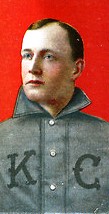
Gus Dorner

Gus Dorner

He didn’t fare much better in the minor leagues, going 25-29 his last three seasons as a professional.  After his release from Boston in May of 1909, he finished the season with the American Association’s Kansas City Blues with a 9-18 record.  The last two years of his career were spent with the Wilkes-Barre Barons in the New York State League and the Harrisburg Senators in the Tri-State League.

“A Man Can’t Play Ball When He ain’t Getting no Money for it”

29 May

In January of 1890 Louis Rogers Browning, Pete, “the Gladiator,” the biggest star, even if no longer the best player, of the 27-111 Louisville Colonels of the American Association, jumped to the Cleveland Infants in the Players League.

Browning, illiterate, alcoholic, superstitious, and nearly deaf as a result of an untreatable ear condition, had quickly become popular among his hometown fans—despite being called out for on-field drunkenness as early as 1882 by The Louisville Courier-Journal.

Browning had won two American Association batting titles (1882, 1885), but had slipped to .313 in 1888 and .256 in 1889 playing in 99 and 83 games.

The New York Sun said the signing caused a “sensation” in Louisville despite that:

“(I)t has been said for two years that he had lost his usefulness by reason of his  defective eyesight and intemperate habits.”

Browning’s “defective eyesight” was said to be the result of his belief that stating into the sun would improve his “lamps.”

Pete Browning

Pete Browning

The Sun said Browning provided a “funny explanation” (all grammar errors are from the original text) for leaving his hometown to sign with Cleveland:

“I have been waiting for this chance for four years.  They ain’t treated me right here since 1886.  I used to play great ball for ‘em till they put the screws on me so hard, then I just quit.  I don’t mean that I didn’t play honest ball, but I just got discouraged and couldn’t do it.  A man can’t play ball when he ain’t getting no money for it.  I tell yer they have been socking it to me ever since 1886.  I’ve been fined so heavy that my salary ain’t ever been over $1,000, when I could have been making $2,000 and $3,000 from other clubs.  Newspapers have done me up so that people in the East have thought I was no more good.”

Browning said that after financially troubled owner Mordecai Davidson turned the Louisville franchise over to the American Association in July of 1889, and the league secured new, local ownership, he thought his situation would improve.

“They said my peeps was out of condition and I couldn’t hit a balloon.  Well, you ought to a ‘seed me line ‘em out.  They couldn’t put the ball nowhere I couldn’t get ‘em.  I played the game of my life.  I knocked the cover off the ball right along.  When I come home (from a road trip in August) I thought they would meet with a brass band.  Well I got a letter from (the Colonels new management) sayin’ I was laid off.  The papers said I had been drinkin’ when I hadn’t touched a drop for months.  They wouldn’t give old Pete a chance.”

In the fall of 1889 Browning played for a team in Knoxville, Tennessee, The Sporting Life’s “Louisville correspondent” said he had stayed out of trouble:

 “I understand that Pete’s conduct while recently with the Knoxville Club was quite exemplary, and tat be drank nothing but water.  Since his return to Louisville he has behaved himself in the same manner. Pete, however, always had a strange way of keeping sober during the winter and getting drunk in the spring when it was time to play ball.”

Browning told The Sun that his performance in Knoxville had earned him several offers from other teams, that he was in great shape, and that Louisville management was to blame for a lot of his problems:

“I give you my word of honor I haven’t touched a drop of anything for seven months.  I know that I have gone wrong sometimes, but if they had come to me an’ talked to me like gentlemen, I’d a done anything for ‘em: but they don’t do it, an’ they run off to the papers with another story of old Pete bein’s on a tear.  That just made me worse.  Do you think I’ve got no feelin’s left?

“Well I’m goin’ away, an’ you just watch me.  Talk about my peeps, there was never nothin’ the matter ‘em.  It was my nerve that was weak…Pete knows his biz, and he’ll get a chance someday.  An’ he has.  Keep an eye on me this season.”

Presumably Browning’s “peeps” were not completely ruined yet by his staring into the sun; he hit .373 and won the Players League’s only batting championship.

He would play through the 1894 season, compiling a lifetime .341 average.  The sad story of Browning’s post-baseball life and his death in Louisville in 1905 are well documented elsewhere.

Erastus Wiman’s Trophy

20 May

A trophy presented to the 1886 American Association Champions was created as a peace-offering to heal bitter feelings in the wake of one of professional baseball’s early controversies.

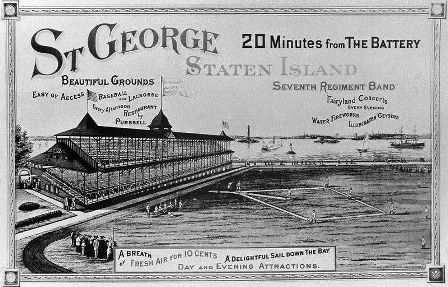
Erastus Wiman was a former Canadian journalist who had become a railroad, ferry and entertainment magnate on Staten Island.  Wiman, who promoted Buffalo Bill’s Wild West show and a circus at his Staten Island Amusement Company, wanted to add baseball, at the adjacent St. George Cricket Grounds, to the entertainment offerings on the island in order to increase commuter traffic.


The St. George Cricket Grounds--home of the 1886-87 Metropolitans. The Giants would play a handful of home games there in 1889.

The St. George Cricket Grounds–home of the 1886-87 Metropolitans. The Giants would play a handful of home games there in 1889.

In December of 1885 he purchased the American Association New York Metropolitans from John Day for $25,000; Day also owned the New York Giants in the National League.

The other American Association owners claimed the sale was merely a scheme to take the Mets out of Manhattan and thus weaken the Association, and immediately expelled the team and began making arrangements to assign the team’s players to other organizations.

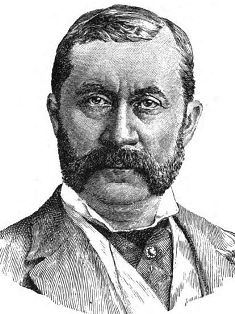
Erasmus Wiman

Erasmus Wiman

Wiman went to court in Philadelphia and was granted an injunction.  His new players stood with him and agreed not to seek contracts with other teams until the issue was resolved, and George F. Williams, the general manager of his company, accused American Association owners of being the schemers, telling The New York Times:

“The real motive was a scheme on the part of Charles Byrne, of the Brooklyn club.  He knew that a strong club on Staten Island would lessen the attendance at Washington Park, in Brooklyn, and besides this he was anxious to secure two of players (first baseman Dave) Orr and (outfielder James “Chief”) Roseman…the only way in which to gain his point was to act in concert with others who are also anxious to get the services of some of our men.”

Later in the month, Judge Martin Russell Thayer ruled that there was no merit to the American  Associations’ expulsion of the Mets, The Times said:

“(Thayer) sent the ‘Mets’ all the way around the bases, and landed them safely home in the association, there to stay as long as the organization holds together as an aggregation of baseball clubs.”

Despite the victory in court, bad feelings between Wiman and the other owners remained throughout the winter and spring.

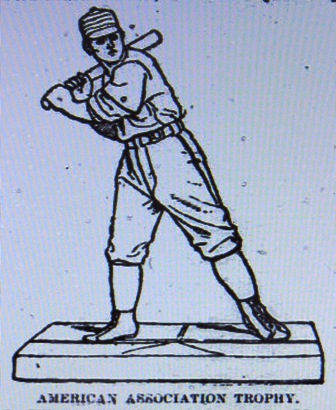
In April Wiman announced that he had ordered a trophy, described by The Sporting Life as “solid silver, 26 inches high, representing a batsman in position to bat a pitched ball. The whole will be enclosed in plate glass case.”

Newspaper drawing of Wiman's Trophy

Newspaper drawing of Wiman’s Trophy

Various reports put the trophy’s value between $1,000 and $2,000.

According to a wire service article that ran in several papers across the country, Wiman ordered the trophy for two reasons:

“(F)irst, to show that he had no ill feelings towards the members of the association because of the bitter legal fight which he encountered on entering it, and second, as a stimulant to extraordinary exertion by the various clubs in order that they might possess so valuable a work of art.”

Wiman’s Metropolitans would never have any hope of winning his trophy.  They finished in 7th place in 1886 and 1887, never drew well on Staten Island, and disbanded at the end of the ’87 season.

Brooklyn’s Charles Byrne got the last laugh; he purchased the team’s remaining assets to protect his territorial control and acquired seven Mets players, including Orr, Darby O’Brien and Paul Radford, who helped lead the team to a second place finish in 1888.  O’Brien, Brooklyn’s captain, would lead the team to a championship in 1889

Wiman would quickly fall upon hard times.  By 1893, the man who was reputed to have been worth between $2 and $3 million, was nearly broke.  In 1894, he was arrested for forgery and embezzlement, and according to The Times “was locked up in the tombs (NYC’s House of Detention).”  Wiman was found guilty, but the conviction was reversed.

The Times said that despite attempts to start businesses “He never recovered his ability to engage successfully in business after these reverses…and he died a poor man”

There are no references to the trophy after an 1886 mention in The Sporting Life that it was presented to the St. Louis Browns.

Lewis Henke

3 May

Lewis Henke played first base for the Atlanta Atlantas in the Southern League in 1885. The Atlanta Constitution said:

“He was the swiftest and most baring baserunner on the Atlanta nine.”

And

“(A) favorite not only in Atlanta, but wherever he was known…perhaps the most popular player in the Southern League.”

On August 14 Atlanta was hosting the Nashville Americans, when according to The Macon Telegraph:

“In the fourth inning Henke, in making the first base, ran violently against the knee of (Charles “Lefty”) Marr, of the Nashvilles, the knee joint striking him apparently full in the stomach. Henke showed immediately that he was badly hurt, and in a moment was lying stretched out almost on the base. He was carried from the field to the dressing room…Although he had clearly made his base after heavy hit, no one of the players, no one of the great crowd looking on, knew that the infallible umpire above had decided differently, and called him out.”

Henke’s liver was ruptured in the collision and the Cincinnati native died of the injury the following day.

The New York Times blamed the death on “Bad feelings” between the two teams, which resulted in “much ugly work on the field, such as tripping each other, etc..”

Henry “Red” Bittman was Henke’s teammate, fellow Cincinnatian and best friend; they had come to Atlanta together in 1884 to play for the city’s entry in the Georgia State League. He was at his friend’s bedside.

According to The Times:

“Henke observing his friend by his side this evening whispered to him: ‘Bitt, do not play today; I feel that I am dying.’ ‘What shall I tell your wife for you?’ Bittman inquired. ‘Just tell her I got hurt in yesterday’s game and died from it,’ he replied as he again closed his eyes, and in three minutes he was dead.”

The Telegraph said that later that evening:

“At half past ten the manager (Gus Schmelz) escorted the remains to the depot, and walked beside the undertaker’s team through the streets with barred (sic) heads. The dead man’s comrades, rough and hard, were deeply afflicted, and some of the cried like children over the coffin…Henke, the dead baseballist, was carried west on the 10:40 train tonight on the Western and Atlantic to Cincinnati.”

???????????????????????????????

Lewis Henke, standing–Henry “Red” Bittman, seated

While some attributed Henke’s death to the “bad blood” and “ugly work on the field,” no one publicly singled out the popular “Lefty” Marr for blame. Years later, Edward Cuba Bruffey, a long-time reporter and editor for The Atlanta Constitution said:

“The death of Henke completely prostrated Marr, and it was several days before he was able or willing to return to the game. I am not certain now, but I think Marr was one of the men who accompanied the body to Cincinnati for the funeral.”

The Southern League owners pledged to play benefit games to raise money for Henke’s wife and child.

Tickets for the Atlanta benefit went on sale the final week of August. The Constitution said:

“Henke’s wife and child are destitute. There is not one of the thousands who have seen him play and applauded him his pluck and skill who could not afford to buy tickets to the benefit…every dollar taken in will go to his family.”

The benefit became a bit of a scandal in Atlanta; and it’s unclear whether games were played throughout the league as promised.

The Atlanta game raised $159.85 for the widow, but it took more than six months for the money to get to her. Ownership of the Atlanta franchise changed hands after the 1885 season and the former management of the club never gave the money raised from the game to Henke’s family.

In February of 1886 The Macon Telegraph said the new chairman of the Atlanta Baseball Association, Steve Ryan had advanced the money to the widow and “received a guarantee that he will be reimbursed” by the former owners. According to The Telegraph:

“(Ryan) saved the old directorship from a very ugly legal squabble. With the remittance Mr. Ryan forwarded to Mrs. Henke a spicy and sympathetic letter…It would be rich and rewarding reading as it touches up the old directorship interestingly. “

Henke’s best friend Henry Bittman played five more seasons in the minor leagues; including 87 games as “Lefty” Marr’s teammate with the Nashville Americans in 1886. In 1889 he appeared in four games with the Kansas City Cowboys in the American Association. He died in Cincinnati in 1929 at the age of 67.

Charles

Charles “Lefty” Marr

Marr played professional ball until 1898, including parts of four seasons in the American association and National League. His best seasons were with the Columbus Solons in 1889 and the Cincinnati Reds in 1890. The left-hander played 129 games at third base and 29 at shortstop in the big leagues. He died in Connecticut in 1912.

“California Wonder”

30 Apr

Two West Coast ballplayers dubbed “California Wonder” by the press made their Major League debuts less than a week apart in 1887.  One went on to be one of the best leadoff hitters of his era; the other remains almost completely unknown.

George Van Haltren was a 21-year-old left-handed pitcher, outfielder and first baseman who had played two seasons with the Oakland franchise in the California and California State Leagues.

James McMullin, birth date unknown, had pitched for Mike Finn’s San Francisco Pioneers in 1886.

Mike Finn, manager, San Francisco Pioneers

Mike Finn, manager, San Francisco Pioneers

Van Haltren’s rights were acquired by the Pittsburgh Alleghenys, but because of his mother’s illness he said he would instead play for the San Francisco Haverlys.  The Chicago White Stockings traded for Van Haltren in April, but he still refused.  The Sporting Life said “the California Wonder will not come east,” quoted him saying:

“No, I will not play with Chicago this season; but if my left arm holds out and my parents are blessed with good health I will be open to Eastern engagements next season.”

The White Stockings threatened to have him blacklisted for not reporting but Van Haltren dug his heels in; only changing his mind after his mother passed away in May.

The Chicago Inter Ocean announced that he had arrived in town on June 25 and would be making his debut for the White Stockings on the two days later:

“(Van Haltren) at one time retired the Pioneer Club of San Francisco with a hit, and struck out seventeen men.  If he can continue this record here the Chicagos will come out of the race this season with another set of figures to put on the big flag at the park.”

Van Haltren’s debut was not good.  He walked 16 Boston Beaneaters and lost 17 to 11.  He finished the season 11-7, and would spend one more season as a full-time pitcher; going 13-13 in 1888 (he was 15-10, splitting time between the mound and outfield with the Brooklyn Ward’s Wonders in the Players league in 1890).  Van Haltren would distinguish himself as one of the game’s best leadoff men, hitting better than .300 every year from 1889-1901, except for 1892 when he hit .293.

Van Haltren ended his career in 1903 with 2544 hits.

George Van Haltren

George Van Haltren

McMullin’s debut was no better than Van Haltren’s.

He began the 1887 season with the Pioneers, but was acquired in June by the new York Mutuals of the American Association.

When McMullin joined the club The Sporting Life said:

“The Mets have got their new California pitcher and like him well in practice.  He has plenty of speed.”

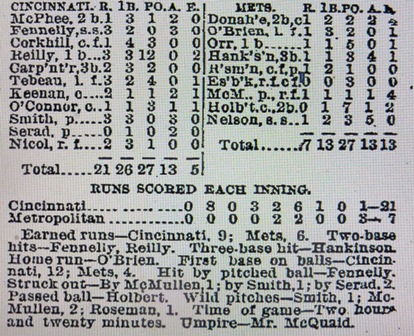
McMullin made his debut on July 2 against the Cincinnati Red Stockings.  The New York Times said of his performance, under the headline, “A ‘Wonder’ Exploded.  The Mets’ California Pitcher A Failure:”

“The debut of McMullen, the ‘California Wonder,’ was made (in Cincinnati) today in the presence of nearly 7,000 people, who went into hysterics from laughing at the awful exhibition given by the Wonder and his support.  He was utterly unable to get the ball over the plate and was miserably supported in the field.  After the third inning he retired to right field and there made a couple of errors.”

He gave up eight runs, made four errors and had two wild pitches in a 21-7 drubbing.

The box score from McMullin's debut.

The box score from McMullin’s debut.

McMullin only made two more appearances for the Metropolitans, and while he was credited with wins in both games his performance was no better; in his eight-day, three-game career he pitched 21 innings, gave up  25 runs (18 earned),  25 hits, walked 19, and struck out 2.  He made a total of five errors, and had one hit in 12 at bats.  The Mets released him on July 10.

And with that McMullin disappeared—there is no record of him having pitched anywhere after he left New York, there’s no record of whether he  threw and batted left-handed or right-handed, no pictures survive, and no record of when or where he died.  Another enigmatic figure of professional baseball’s early years.

“The Greatest Team Ever Organized”

24 Apr

Hopes were high for The Players League, and for Chicago’s franchise, the Pirates, in the newly formed baseball brotherhood.

Rumors had been reported for more than two months, but finally on January 18 The Chicago Daily News said that Charlie Comiskey “came to town yesterday morning, and at 4 o’clock signed…for three years,” to serve as captain and manager; the contract was said to be worth “$5,000 per annum.”

President Charles A. Weidenfelder had built a strong ballclub, with major assists from Fred Pfeffer, Chicago White Stockings second baseman, who encouraged most of that team to jump to the new league, and Frank Brunell, a former Chicago newspaper man who was secretary of the new league, and traveled to St. Louis to encourage Comiskey to jump to the brotherhood.

There was an embarrassing moment in March when Chicago newspapers reported that the carpenters union was complaining that non-union labor was being used to build the team’s ballpark at Thirty-Eighth Street and Wentworth Avenue.    The secretary of the union was quoted in The Chicago Tribune saying  Brunell had “promised to make it right.  But he didn’t.”

Despite the  irony of a league borne out of the game’s first labor movement betraying organized labor (there were similar difficulties in Boston and Philadelphia), enthusiasm for the new league was high; in Chicago the expectations were higher.  A week before the season opened The Chicago Tribune said:

“The elements which go to make up a great team are united in the Chicago Brotherhood Club, which, on paper, is the greatest team ever organized.”

Comiskey’s club opened the season on April 19 in Pittsburgh.  According to The Chicago Inter Ocean:

“It was a great day for the Players League…There were 9,000 people by the turnstiles’ count to see the fun…It was by all odds the biggest crowd that had ever turned out to witness an opening game of ball in Pittsburgh.”

The pregame festivities included a parade through the streets of Pittsburgh featuring both teams, league officials and a Grand Army of the Republic brass band.

“(Pittsburgh) Manager (Ned) Hanlon was presented with an immense floral horseshoe, Comiskey with a big floral ball on a stand of floral bats, Pfeffer with a basket of roses…(Chicago’s Arlie) Latham ‘stood on his head, with a smile well-bred, and bowed three times’ to the ladies.  (He had) the legend ‘We are the people’ in great black letters on (his) broad back.”

After the fanfare, “Pfeffer and the boys played a particularly brilliant game,” as Chicago defeated Pittsburgh 10-2.

Box Score--Chicago Pirates/Pittsburgh Burghers, Opening Day, 1890.

Box Score–Chicago Pirates/Pittsburgh Burghers, Opening Day, 1890.

Opening Day was the high point for Chicago. The league as a whole struggled financially and attendance dropped sharply after the initial excitement wore off.  Only eight games into the season, barely 500 people attended Chicago’s game in Cleveland on May 1.

Comiskey’s “greatest team ever organized,” was never able to keep pace with the league champion Boston Reds and finished fourth in the eight team league, 10 games back.

The Chicago Times lamented the team’s poor showing and blamed it on a “lack of discipline,” (the article appeared in slightly different form in several newspapers):

“The outside world cannot fully realize the bitter disappointment felt here over the poor showing made by Comiskey’s team during the season just closed.  Surely it was strongest aggregation of players ever collected in one club, but its lack of success was mainly from two causes—lack of discipline and the miserable condition of certain members of the club.

“There has been absolutely no discipline in the team, and some of the men paid as much attention to Comiskey’s orders as they would to a call from some church congregation.  An order to sacrifice was met with a smile of scorn, and the ball was hammered down to an infielder, who made an easy double play.”

The Times said “(Tip) O’Neill, Latham, Pfeffer, (Jimmy) Ryan and others utterly ignored Comiskey’s mandates, and in consequence there was continual disorder.”

The paper’s primary target was shortstop Ned Williamson.  The criticisms might have been unjustified: the former White Stockings favorite had struggled with the knee injury he sustained on the 1888-89 world tour, and might have already been ill as his health would decline rapidly, and he’d be dead by 1894; the victim of tuberculosis:

“Williamson played a game of which an amateur should have been ashamed, and was thirty pounds overweight throughout the season.”

The paper promised “there will be numerous, changes in the club, provided the players League is still in existence,” in 1891.

It was not to be.  By November league secretary Brunell told The Chicago Herald:

“The jig is up.  We are beaten and the Brotherhood is no more.”

Brunell attempted to put a positive spin on the news, telling the paper it was mistaken to infer the “Brotherhood has weakened.”  Rather “we began to see that the interest in baseball was on the wane, and in order to prevent it from dying out entirely…we finally concluded that a consolidation of forces (with the National League and American Association) would be better for all concerned.”

The Herald wasn’t buying Brunell’s statement:

Brunell’s talk has finally let in the light on a subject previously enveloped in darkness.  It appears now that the Players League folks actually courted a knockout, and bankrupted themselves from pure patriotic motives.  The ex-secretary is a funny little man.”

Brunell would go on to found The Daily Racing Form in 1894.

Comiskey returned to the St. Louis Browns in the American Association.  Tip O’Neill, who also jumped the Browns to join the Players League, returned to St, Louis with his manager.

Comiskey (8) was joined in Chicago by three members of his American Association championship teams in St. Louis.  Arlie Latham (7), Tip O'Neill (11), and pitcher Silver King (14) who posted a 30-22 record.

Comiskey (8) was joined in Chicago by three members of his American Association championship teams in St. Louis. Arlie Latham (7), Tip O’Neill (11), and pitcher Silver King (14) who posted a 30-22 record.

Fred Pfeffer stayed in Chicago, spending one more turbulent season with Cap Anson, before being traded to the Louisville Colonels.

Arlie Latham, “The Freshest Man on Earth” went to the Cincinnati Reds in the National League.

Ned Williamson never played again.