Tag Archives: Boston Beaneaters

“I was Large and McCarthy was Quick Tempered”

16 May

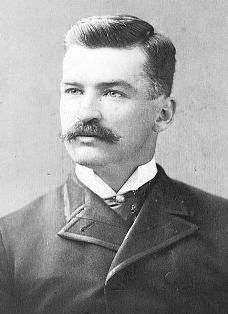
In 1912, Pennsylvania Governor and former major league pitcher John Tener, told William Phelon of The Cincinnati Times-Star about how a minor league team made a payroll during his playing days.

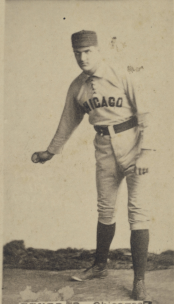
John Tener

John Tener

 “Such a thing as one day’s pay wouldn’t exactly break or worry me, that is wouldn’t worry me know, and it has been some years since I have had occasion to fret about losing one day’s wages.  Yet believe me there was once a time when I was robbed of one day’s salary, and that one day’s salary seemed to John K. Tener, as big as the First National Bank to the average young clerk at the present time.  And—just to show what strange things happen in this world—the man who took away John K. Tener’s poor little one day’s pay was in the after years Justice (William Henry) Moody, of the (United States) supreme court bench—that’s how life really happens in this republic of ours, and, I’m sure, the one day’s pay he saved on me looked as big to him right then as half a million did a few years subsequently.

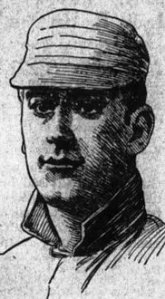
“It was long, long ago when the world was very young, and I was a pitcher for the Haverhill team (1885) Tommy McCarthy, who afterwards grew so renowned as one of the headiest players of the champion Bostons, was one of the Haverhill outfielders, and Justice Moody was one of the chief officials of the Haverhill club.  The season was drawing to a close, the Haverhill team was losing money, and it seemed doubtful whether the exchequer could be so replenished that everybody would get what was coming to him at the final settlement.

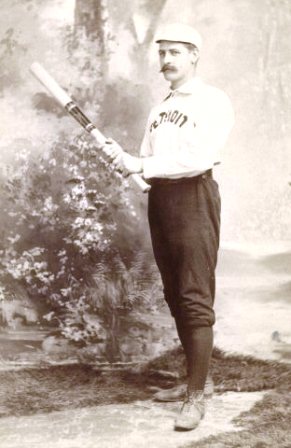
Tommy McCarthy

Tommy McCarthy

“The days ran along and finally but one more day remained.  That night the stockholders of the club held a meeting, inspected the books, and did some great figuring as to ways and means.  Towards 11 o’clock, they found that they would lack only a few dollars of enough to settle up—but where were they going to find those few dollars?  That was the question, and they were debating on passing the hat when a great thought struck Mr. Moody.  ‘Gentlemen,’ he said, ‘I have it!  Upstairs, in the hotel, our two highest salaried players, Tener and McCarthy, are now asleep.  If we could save one day out of their wages we would have just enough to see us through.  Let’s release them and save tomorrow’s salaries.

“The stockholders carried the suggestion by acclamation, and releases were duly carried out.  Then a glance at the clock showed it was 11:30.  In half an hour or more it would be too late—a new day would begin, and we would have to have our full day’s pay.  Mr. Moody was deputed to bring us the news—which was considered a ticklish task, as I was large and McCarthy was quick tempered.  Somewhat bashfully, he came upstairs, woke us up, and gracefully handed us our releases.  Then he fled before Tom and I could get our heads clear and realize the situation.

“And, believe me, in those days I was so short of money that it just about broke my heart to lose that one day’s pay.  But I had to lose it, just the same, and Mr. Moody was the winner.  Did I ever get it back?  Not the money I didn’t—but I have often made Justice Moody buy enough good wine to pay for that several times over.”

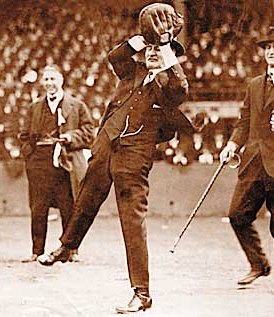
Tener served in the United States House of Representatives, was Governor of Pennsylvania and President of the National League, but his short career as a player remained important to him.  A story made the rounds in many newspapers (although at least a decade after he left office) that when signing a bill into law while governor, a legislator said:

“Governor Tener, I think that’s one of the best things you ever did.”

Tener was said to have replied:

“You’ve got it all wrong–I once shut out the Giants.”

On his 81st birthday, July 25, 1944, The Associated Press asked about the “move to get Tener’s name added to the roll of immortals in Baseball’s Hall of Fame.”  Tener, and another former National League President, John Heydler had been an early and ardent supporter of the establishment of the Hall of Fame.

“(Tener) laughs that off.  ‘I don’t belong there.'”


“Radbourn would only Accept the Money on Condition that the Money be bet on him”

28 Feb

Like most 19th-Century players, Arthur Irwin was convinced the game didn’t get any better after he played.  He talked to a reporter from The Buffalo Times in 1906 and said there still had never been a pitcher who was better than one of his former teammates.

Arthur Irwin

Arthur Irwin

Irwin said:

“In my opinion (Charles “Old Hoss”) Radbourn was the greatest pitcher the world ever saw and I doubt if his equal will appear.  He had a spit ball and worked it to perfection, only it was not known under that name.”

Irwin’s recollections of Radbourn highlight how open gambling was in 19th Century baseball:

“I remember on one occasion when we (the Providence Grays) were playing the Boston team one of our stockholders came to the hotel the night before the game and said he had wagered $6,000 on the Providence club.  Then he told Rad that he would give him $500 if he would pitch.  Radbourn would only accept the money on condition that the money be bet on him and the $500 was so placed.  The afternoon of the game found Radbourn in grand form and he made the Boston players look like a bunch of minor leaguers, not one of them scoring.”

If the story is not apocryphal, it could refer to Radbourn’s 4-0 shutout of the Beaneaters on August 12, 1884 in Boston—it was his only shutout there while he and Irwin were teammates.

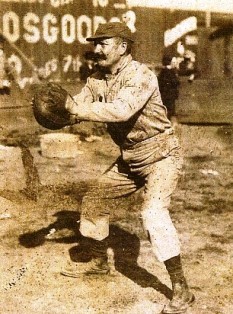
"Old Hoss" Radbourn

“Old Hoss” Radbourn

Irwin also told the reporter about an exhibition game in 1884 against the Toledo Blue Stocking in the American Association:

“When we arrived the night before the game we found that they were betting $10 to $7 against us.  That same evening the mayor of a small town some few miles away drifted into the hotel and during the conversation remarked that he guessed we were not very anxious to win the game.  Naturally, we asked why he said that and he said the odds were against us, with no Providence money in sight, but he was willing to bet $2,500 on us if Radbourn pitched.  It was not Radbourn’s turn, but when the mayor supplemented his remarks by offering to give Rad $100 if he went into the box, the offer was snapped up.  Toledo had such stars as Curt Welch and (Tony) Mullane.  Welch, who was the first man up, got to first base.  After that there was nothing to it and not another man reached first during the entire game.”

Not only were no current pitchers as good as Radbourn, Irwin said no current catcher was nearly as tough as another of his teammates with the Worcester Ruby Legs in 1880:

“One of the most remarkable exhibitions of catching I ever saw was performed by Charles Bennett…As you know, we did not use gloves in those days and the pitcher was allowed to take a hop and step before throwing the ball from the box, which was only 45 feet from the batter.  On three successive days Bennett caught 14, 15 and 16-inning games without any protection.  The following day we were booked to play New York and Bennett went in to catch.  After half a dozen balls had been pitched , Charley suddenly dropped his hands and walked away from the plate.  I at once ran over to him and a glance at his hands told me all I wanted to know.  Both hands were black and blue from the base of the fingers almost to the wrist and the bruises went clear through the hands.  Of course it was impossible for him to continue, but imagine the torture he must have suffered before he was forced to quit.  I don’t believe you could find a catcher today who would go through that experience.”

Charlie Bennett

Charlie Bennett

Irwin also didn’t have much use for the belief that the game had progressed in terms of strategy since his playing days:

“It is amusing to hear (John) McGraw and other talk about the wonderful progress made in playing scientific baseball.  I am sure we put up just as clever a game in the 80s as they do today, but we did not have fancy names for our plays.  We worked the squeeze, hit and run and other tricks.  When I first came to the Philadelphia club (1886) I worked the trap play and got away with it.  There were men on first and second and the ball was hit into short left field.  I yelled for (George) Wood to let me have it, although it was his ball.  Then I let it drop through my hands and the bleachers let out an unearthly holler.  I picked up the ball; shot it to second in time to tag the man there and then the other man was easy.  We had taken our places on the bench before the crowd got wise to the play and then the cheers more than made up for their hisses.”

“Show yourself a man, Borchers, and Leave Boozing to the Weak Fools”

10 Feb

After defeating the Boston Beaneaters and “Old Hoss” Radbourn in his major league debut, George Borchers returned to the mound five days later in Chicago and beat the Philadelphia Quakers and William “Kid” Gleason 7 to 4.

With two wins in two starts the 19-year-old Borchers was, according to The New York Evening World, one of the most sought after players in the National League:

“There are several league clubs who would like to get hold of Borchers, the latest Chicago wonder, the only thing in the way of his acquisition is the $10,000 (the White Stockings were asking).”

Chicago probably should have sold Borchers while there was interest.  He injured his arm sometime in June, missed most of July, and according to White Stockings Manager “Cap” Anson “lacks the heart to stand heavy punishment.”
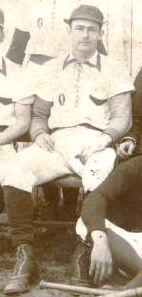
George Borchers

George Borchers

After his fast start, Borchers was just 4-4 in 10 starts when Chicago released him and Chicago’s other 19-year-old “phenom” Willard “Grasshopper” Mains (1-1 in 2 games) on September 6.

The Chicago Tribune said Borchers was on his way to Cincinnati to play for the Red Stockings, “he has plenty on speed and good curves, and it will not be surprising if he makes a success in the American Association.”

After the Cincinnati deal failed to materialize, Borchers accepted $100 in advance money to join the Stockton franchise in the California League.  After receiving the money he never showed up in Stockton.

No less a figure than the “Father of Baseball,” Henry Chadwick held out hope that Borchers would eventually be a successful pitcher:

“There is a chance that a first-class pitcher, who played in the Chicago team last season, is going to reform the bad habits which led to his release by Captain Anson in August (sic) last. I refer to Borchers.   (John Montgomery) Ward told me that Borchers was a very promising pitcher, and had he kept himself straight be would undoubtedly have made his mark. I learn that be is going to try and recover his lost ground, and if be shows the possession of the moral courage to reform, and the intelligence to keep temperate, he will yet find his way to fame and fortune. Show yourself a man, Borchers, and leave boozing to the weak fools of the fraternity who indulge in it at the cost of a fair name and of pecuniary independence.”

Borchers didn’t appear ready to “reform.”  Between the 1888 and ’89 season, according to The San Francisco Chronicle, he signed a contract to play for the Canton Nadjys in the Tri-State League, receiving $100 in advance money and also signed a contract with that Kansas City Cowboys in the American Association, receiving a $300 advance.

In February of ’89 Borchers was awarded to Canton.  Kansas City offered to purchase his contract.  Canton Manager William Harrington said in The Sporting Life that “Borchers will play in Canton or not at all.”

Borchers left for California.

Upon arriving in Sacramento Borchers was arrested as a result of the Stockton contract.  The Los Angeles Herald said:

“George Borchers, the well-known baseball player, was arrested this afternoon on a warrant from Stockton, charging him with having received money by false pretenses.”

Borchers pleaded guilty and paid a fine in March.  In April he attempted to sign with the Sacramento Altas.  The San Jose Evening News said:

“Sacramento being in need of a pitcher, induced Borchers to agree to play there and asked the Stockton Club to allow him to do so.  This President Campbell (of Stockton) refused and the league directors have sustained the action.”

The California League ruled Borchers ineligible for the season.

With too much time on his hands, Borchers couldn’t stay out of trouble.  The Associated Press reported on June 27:

“Shortly after 11 o’clock tonight a barn belonging to Mrs. Borchers, mother of George Borchers, the well-known baseball pitcher, was destroyed by fire, causing a loss of nearly $1000.  When the Fire Department arrived on the scene George Borchers tried to prevent the firemen from fighting the flames.  He was drunk and very boisterous.  Finally Chief Engineer O’Meara ordered his arrest.  When two officers took him in custody he fought desperately, and had to be handcuffed and placed in a wagon before he could be got to prison.”

The story said Borchers, who “has been loafing about town (Sacramento) for several months, drinking heavily” had made threats that he’d burn down the barn because his mother would not give him any more money.  Mrs. Borchers had “recently expended a large sum of money to get him out of trouble at Stockton.”

Whether his mother paid his way out of this or not is unknown, but the charges against Borchers went away, and he spent the remainder of the 1889 baseball season pitching for a semi-pro team in Merced, California.

He returned to the California League on March 23, 1890 when he pitched for Stockton in the season opener against the Haverlys at San Francisco’s Haight Street Grounds.  Borchers and Stockton lost 11 to 5.

His time in the league would be short.

In Early May he began complaining of a sore arm; The San Francisco Call said that “Borchers is known to have received an offer from the New York Brotherhood (Players League) Club and the Stockton directors think he’s playing for his release.”

On May 11 Borchers, according to The Sacramento Bee arrived at the ballpark in Stockton, on horseback and “extremely drunk.”  Catcher/Manager Mike DePangher sent Borchers home.  Borchers instead went on a bender that ended the following evening in a Stockton restaurant where he was arrested for being drunk and disorderly.

The Call said:

“If he took this means to sever his connection with the Stockton Club and join the Brotherhood, he not only brought disgrace in more sense than one upon himself, but has probably ruined his chance of an Eastern engagement.”

Borchers was fined $10 in court, the Stockton club fined him $100 and suspended him for the remainder of the season and sold his contract to Portland in the Pacific Northwest League–but not before the Sacramento Senators attempted to use him in a game.  The Call said Stockton protested:

“(Sacramento) Manager (George) Ziegler thought it best not to play him.  When George was informed that he was not to play he good-naturedly said:  ‘All right, old man,’ and then added, ‘One suspension, one release, all in two weeks.’”
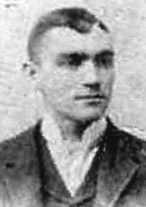
George Ziegler

George Ziegler

On June 1 he won his first start for Portland, beating Spokane 7 to 6.  The Oregonian said “Borchers pitched a splendid game for the Portlands.”

Borchers split the remainder of the season between Portland and Spokane, compiling a 14-14 record with a 1.44 ERA.  When the Pacific Northwest League season ended Borchers returned home to play in the California League again; The Sacramento Record-Union printed a letter from his manager at Spokane, William “Kid” Peeples:

“Borchers has been pitching ball out of sight, and has not tasted a drop of liquor while up north.  He says he is going to stay straight, and finish the season with the Sacramentos.  He will have all the California boys guessing, as he did here.”

The San Francisco Call said Borchers was “a dismal disappointment” after he lost his first two starts for the second place Senators—both losses were against the league-leading San Francisco Haverlys.  San Francisco Manager Mike Finn filed a protest with the league, claiming Borchers should be declared ineligible because he was still on the reserve list of the Spokane club.
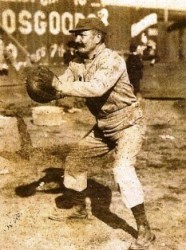
Mike Finn, manager, San Francisco Haverlys

Mike Finn, manager, San Francisco Haverlys

In his third start Borchers allowed Stockton to score three runs in the first inning on five walks and a wild pitch, but settled down and won 7 to 6. He beat Stockton again three days later, 15 to 10. The Record-Union criticized all four of his performances and said he had reverted to “his old ways.”

The 21-year-old finished the 1890 season with a 2-2 record for the second place Senators; San Francisco won the championship.  At the end of the season the California League upheld Finn’s protest over Borchers and fined Sacramento $500.

The rest of the George Borchers story on Wednesday.

The Adventures of George Borchers

7 Feb

George Bernard “Chief” Borchers was a West Coast phenom.  The Sacramento native was so good as a 16-year-old in 1885 that the town’s two professional teams battled for his services.  After pitching half the season for one club, The Sacramento Record-Union said:

“George Borchers, heretofore pitcher for the Alta Baseball Club, has resigned his position in that club and will hereafter pitch for the Unions.”

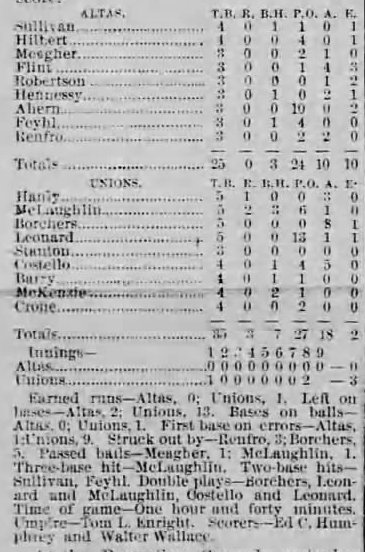
Box score for Borchers' first start for the Sacramento Unions (July 26, 1885) after jumping the Sacramento Altas.  Borchers beat his former team 3 to 0.

Box score for Borchers’ first start for the Sacramento Unions (July 26, 1885) after jumping the Sacramento Altas. Borchers beat his former team 3 to 0.

He played for the California League’s Sacramento Altas in 1886 and the Oakland Greenhood & Morans in the same league in 1887. The Sporting Life said of him:

“Borchers is possessed of Herculean strength, great endurance, and is a heavy batsman.”

The Sacramento Bee said Borchers “would soon rank as one of best pitchers on the coast,” if he got “command of the ball and his temper.”

Before the 1888 season the 19-year-old became the subject of a bidding war.  He pitched several games against the New York Giants during John Montgomery Ward’s barnstorming/honeymoon tour of the West Coast in the winter of 1887.

Ward told New York reporters that Borchers was the best pitcher in the California League.  The Sporting Life called him “Ward’s especial favorite,” and “Ward’s find.”  By January The Boston Post said he turned down an offer from the Beaneaters, The San Francisco Chronicle said he rejected the Detroit Wolverines, and The Philadelphia Times said “(Athletics Manager Bill) Sharsig is hopeful to sign Borchers.”  The Times also said Ward’s Giants had made an offer but:

“The young man wanted a mortgage on Central Park and a large chunk of Coney Island.”

The San Francisco Chronicle said Borchers came from a wealthy family (his father owned a brewery) and were “opposed to his playing ball.”

Whatever the reason, Borchers opened the 1888 season with the Greenhood & Morans.  He pitched at least four games for Oakland before it was announced on May 2 that the 19-year-old had signed a major league contract.  The  Chronicle said:

“The baseball world was thrown into a state of excitement yesterday when the press dispatches made the unexpected announcement that George Borchers prize pitcher of the Greenhood & Moran club, had been signed to pitch for the Chicagos.”

The paper said when White Stockings President Al Spalding sent a telegram to Borchers asking his terms, the pitcher, “treated the telegram as more of a joke than anything else, and in the spirit of fun telegraphed back” asking for $3000, with a $500 advance.

“He never dreamed of receiving a favorable answer, and his surprise can well be imagined when a few hours later the answer came accepting his terms.”

Despite being what The Chronicle claimed was the “largest salary ever paid to a California player in the East,” Borchers immediately regretted the agreement:

“He says he does not feel much like leaving here and would like to back out if he could, but, knowing that he is legally bound by his act, he will of course stand by it.”

The pitcher arrived in Chicago on May 13 to great fanfare.  The Chicago Tribune said “if he equals the reports of his ability that precede him, the team will be as nearly invincible as it is possible for a baseball organization to be.”

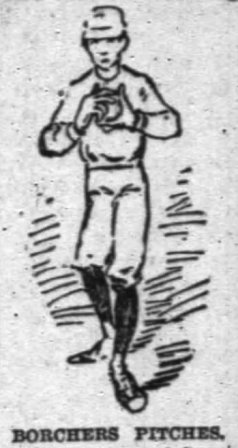
Caricature of Borchers from The Chicago Tribune--1888

Caricature of Borchers from The Chicago Tribune–1888

White Stockings shortstop Ned Williamson, who batted against Borchers on a West Coast trip, compared him to another California pitcher who made his big league debut at age 19:

“He pitched more like Charley Sweeney than any other man I ever saw, and Sweeney was as good as any that ever stepped in the box.”

Borchers made his debut on May 18.  The Chicago Inter Ocean said:

“Another wonder has been discovered and the Chicago Ball Club has it.  The wonder is George Borchers, the California pitcher.  He was put in the box to pitch for the Chicagos yesterday against the Bostons in the closing game of the series.  The result is manifest in the score—13 to 0…Borchers was made the hero of the hour.  He has come to stay, and his work yesterday is a guarantee of his ability to keep his place.”

The Chicago Tribune was more subdued than The Inter Ocean:

“(Borchers) has an easy delivery. Good curves and great speed, but his command of the ball remains to be determined.  Yesterday he was wild.  Three wild pitches were charged to him, and with a less active and reliable man than (Tom) Daly behind the bat more would have been recorded.  Those that got by Daly were extremely wild.  Still he was effective.”

The game, played in the rain at West Side Park, in what The Chicago Daily News called “practically a swamp,” was called after five innings.

The papers couldn’t agree on the attendance either–The Inter Ocean said it was 3000, The Tribune, 1500 and The Daily News 2000.

Borchers allowed just three hits and beat Charles “Old Hoss” Radbourn in his first major league game.

Things went downhill from there; the rest of Borchers’ story on Monday.

Samuel H. Apperious

6 Jan

Samuel H. “Sam” Apperious (incorrectly identified as William Apperious  on Baseball Reference and other sources) led two separate boycotts that contributed to keeping William Clarence Matthews out of organized baseball—four decades before Jackie Robinson broke the color barrier.

Apperious was born in Montgomery, Alabama; fellow Alabamian Matthews was born in Selma (some contemporaneous accounts wrongly claimed both were born in Selma).

The wealthy Apperious attended Georgetown University.  Matthews, after studying, and playing baseball and football, at Tuskegee Institute and Phillips Andover, enrolled at Harvard University.

Apperious was part of Georgetown teams (1900-1904) that sent several players to the big leagues, including Leon “Doc” Martell, James “Hub” Hart, Charles Moran, and Art Devlin.  Apperious, who was first a catcher and later a center fielder, was considered one of the team’s best prospects.

In 1903, the Boston press reported that Boston Americans manager Jimmy Collins, in need of a second catcher, “tried to get Sam Apperious, of Georgetown, but he declined to enter the professional ranks.”  The following year The Sporting Life said among college players, Apperious was “the hardest-hitting outfielder of them all.”

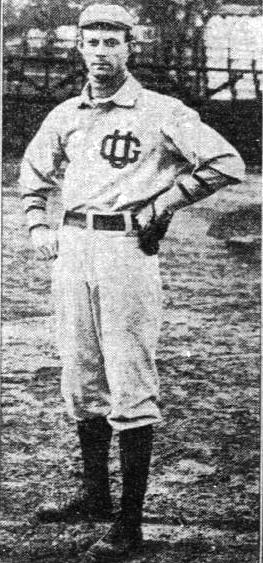
Sam Apperious

Sam Apperious

Matthews played shortstop at Harvard and received equally as glowing reports.  Samuel McClure’s “Outing” magazine, a monthly sports publication, said Matthews was the best shortstop in college baseball each year from 1903 through 1905.  The Boston Post said he was “the best infielder” in Harvard’s history—this included teammate Eddie Grant who went on to a 10-year big league career.

Apperious and Matthews met for the first time on April 18, 1903.  When the Harvard team arrived in Washington D.C. for a game, Apperious, the Georgetown captain, refused to play.  The Associated Press said in addition to Apperious’ boycott “There were some wild demonstrations of displeasure at the Negros’ appearance in the field but Matthews won the crowd by his brilliant plays.”

The Colored American said:

“Mr. Apperious is no doubt feeling pretty mean, that is, if he is capable of such a sensation.  His want of hospitality, his conspicuous rudeness and their absolute futility must be subjects of unpleasant recollections to him.”

The paper noted that Apperious’ name “indicates his un-American traits,” and said after Matthews demonstrated his talent, several of the other Georgetown players “grew ashamed of their conduct and acclaimed Matthews as heartily as they had sneered at him, but this foreign importation was not sure enough of his own status to imperil it in a contest of brawn and skill with a colored gentleman.”

Harvard won the game 8 to 0.  Apperious would also choose to sit out two additional games against Harvard (one later that season and one in 1904) which led to a short rift between the schools, and a suspension of scheduled games.

In 1905, Apperious was appointed Graduate Coach of the Georgetown team.  He summed up his coaching philosophy to The Washington Times:

“In short the choice of men must be wholly on the man’s worth for the position for which he is trying.”

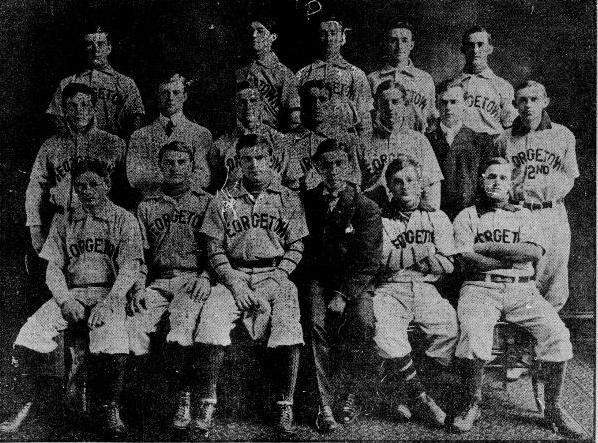
1905 Georgetown baseball team. Apperious is second from left in the center row

1905 Georgetown baseball team. Apperious is second from left in the center row

Later that year Apperious failed to apply his philosophy to Matthews.

In the summer of 1905 Apperious went to Vermont, as he had the previous summer, to play in the state’s “outlaw” Northern League—the league was notorious for having multiple college players performing under assumed names to retain their eligibility.  Apperious played both seasons for the Montpelier-Barre club (known in the local press as the Inter-Cities or Hyphens).

During his first summer in Vermont,  Apperious had raised some eyebrows on July 21, 1904, when he did not participate in an exhibition game between the Inter-Cities and the barnstorming Cuban X Giants.  The Bennington Evening Banner said the “Southerner refused to play against the colored team.”

Matthews joined the Burlington club at the end of June 1905 to immediate controversy.  The Montpelier Argus said a pitcher named Smith “from the south” had left the team as a result, and Apperious made it known he would not play on the same field as Matthews.  When the Burlington club arrived in Barre for a July game with the Inter-Cities, Apperious made good on his threat and watched the game from the bleachers.

Apperious was condemned in the Vermont press:

The Newport Express and Standard:

“(Matthews) may be his equal in every respect: not only in intelligence, but in performing the part of a gentleman as well.  Certainly so in this instance, so far as Mr. Apperious  is concerned, the much aggrieved white individual in this case…Mr. Apperious had better retire to those places where peonage is still in practice—where he can still vent his spite on the Negro as his little, narrow-minded, measly soul desires.”

The St. Albans Messenger:

“If Apperious wants to show his loyalty to and affection for his native Southland, which is a commendable thing in any man, he could do it better by helping his generation t forget some rank nonsense that used to pass for ultra-refinement and chivalry.”

The Poultney Journal:

“(Apperious) Hails from a state where the best citizens” burn people alive…Good chap.  Too good to play ball with a graduate of Harvard college.  If he goes to heaven will want a box stall all to himself.  Scat! Vermont has no use for him—believes in the doctrine “all men were created free and equal.” Apperious is as good as a colored man—if he behaves himself as well.  Better wash and go South.”

  The Wilmington Times:

“Vermonters like to see good, clean ball, and they are not fussy as to the color of the player who can deliver.”

One of the few exceptions in Vermont was The Montpelier Argus which said Apperious was simply following his “traditions, sentiments and interests,” and “it is rank foolishness to expect everyone to bend to our ideas.”

Apperious also found support from The Washington Post which said: “The college players in the Vermont League (sic) are following the lead of Sam Apperious in ‘cutting’ Negro Matthews.”

The paper also repeated an allegation that Matthews “had played (professional) summer ball every year since he entered Harvard.”  While Matthews had played four seasons on the baseball team and graduated from Harvard, The Post, with no evidence, alleged Harvard “dropped Matthews,” because of the allegations.

Despite Apperious’ refusal to play against him, and reports throughout the season that, as The Boston Globe said,  some opponents were “laying for “ Matthews and he “had been spiked several times,” he completed the season with Burlington. But after a quick start (.314 through 14 games) his average dropped off to .248.

There were rumors in the Boston press that summer that Matthews might become a member of the National League’s Boston Beaneaters, but he never played professional baseball after his controversial season in Vermont and his second run-in with Sam Apperious.

Matthews became an attorney, was actively involved in politics and served as legal counsel for Black Nationalist leader Marcus Garvey.  He died in 1928.

William Clarence Matthews with Harvard Baseball Team

William Clarence Matthews with Harvard Baseball Team

The rest of Apperious’ story on Wednesday.


Burns “Put the Punishment on Phyle”

20 Nov

After holding out over a temperance clause the Chicago Orphans added to his contract, Bill Phyle finally signed in late March of 1899.  He reported to spring training in New Mexico anywhere from 10 to 30 pounds overweight (depending on the source) and struggled all season to regain the form he showed the previous season.

On April 17 he was beaten 8-0 by the Louisville Colonels in first start.

On April 25 he lost 3-2 to the St. Louis Perfectos.  The Chicago Tribune said “Phyle gave away the game by distributing bases on balls in just the spots where timely hits followed and transformed the favors into tallies that gave the victory.”

William Phelon, The Chicago Daily News baseball writer, disagreed.  He said Phyle’s “work was of sterling quality.”

Regardless, Chicago Manager Tom Burns didn’t give Phyle another opportunity to pitch for more than a month.

Phelon said it was a mistake for Burns to not use Phyle.  The Chicago Inter Ocean said after the team lost seven of nine games in May “it is passing strange that young Phyle is not given a chance.  On last year’s form Phyle is as good as, if not better than (Jack) Taylor.  The paper called Phyle’s performance in the St. Louis game “gilt-edged” and blamed the loss on “comrades that gave the victory to the enemy.”

Finally, on May 28 Phyle pitched again.   He lost 4 to 3 to the Washington Senators; he gave up three runs on five straight hits with two outs in the ninth.

He lost again on June 1, 7-1 to the Philadelphia Phillies.  Phelon’s opinion of the pitcher was unchanged, and said the losses were simply bad luck:

“Phyle has now lost four straight games.  It is Phyle’s luck to be stuck in whenever the other pitchers have won about three straight, and the team is just about unavoidably due to lose.”

On June 5 Phyle did his best pitching of the season–a victory he is not credited with in the record books.

With the Orphans trailing the Baltimore Orioles 3 to 2 in the third inning, pitcher Clark Griffith was ejected for arguing a called ball.  The Chicago Tribune said:

“It was a queer game.  Phyle pitched after Griffith had been benched…holding the Orioles helpless.”

Chicago won 9 to 4.  And while the Chicago newspapers credited the victory to Phyle, the record books do not.

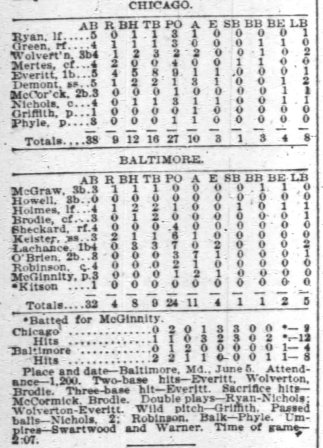
Box score for June 5 game.  Phyle relieved Clark Griffith in the 3rd inning.

Box score for June 5 game. Phyle relieved Clark Griffith in the 3rd inning.

Phyle became ill later the same week, (some sources said it was recurring malaria), a week later he fell off a bicycle and missed two more weeks.  When he returned to the team on June 22, the Boston Beaneaters beat him 5 to 1.

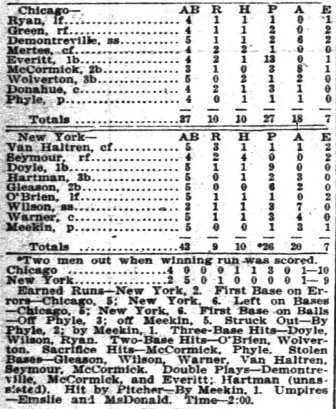
He was credited with his first “official” win on July 1—a game The Inter Ocean called “a comedy of errors,” and a “depressing exhibition.”   He beat the New York Giants 10 to 9, allowing 10 hits and giving up seven runs in the first two innings.  Each team committed seven errors.

Box score of Bill Phyle's only "official" victory of 1899.

Box score of Bill Phyle’s only “official” victory of 1899.

Chicago went into a slump that would last for the rest of the season; after Phyle’s July 1 win the team was 38-24, in third place, and went 37-49 the rest of the way finishing eighth.

Phyle lost again on July 9 and July 24, and rumors began to circulate that he would be released or traded back to Charlie Comiskey’s St. Paul Saints.

On August 6 Phyle lost 10 to 9 to the Cleveland Spiders.  One week later while the team was on the road, The Inter Ocean reported that he “was sent home by manager Burns.”

The Tribune called Phyle “the scapegoat” and said he and three unnamed teammates  “celebrated after beating a horse race at Washington and Manager Burns, to call a halt, put the punishment on Phyle.

Phelon wrote in The Daily News:

“When the club started for Philadelphia he was told to go home ‘You are through young man, go back to Chicago,’ said Burns, and Phyle went back.  He went back in a rage too, and says he will tell (team president) Jim Hart a lot of things. He says that he has been held up to public derision as a drunkard, all season, and that Burns plays favorites, allowing his friends to jag up as much as they wish and turning all the trouble on others.”

Phelon remained supportive of the pitcher in The Daily News, but in The Sporting Life he reported that Phyle, a former boxer, had deserted the team in early August to go to “St. Louis to see a prize fight, and was not on hand when sorely needed.”

While the relationship between Hart and Burns was strained, and Burns would be replaced at season’s end, Phyle’s complaints went nowhere with the team president and he was suspended without pay.

Ten days after Phyle was suspended Phelon reported that the Baltimore Orioles had offered to trade for or buy Phyle,” (John) McGraw has taken quite a fancy to the young pitcher.”  Hart refused to make a deal.

Phyle never pitched for Chicago again, he is credited with a 1-8 record and 4.20 ERA.

The last Bill Phyle chapter—tomorrow.

Adventures in Barnstorming—“Their Conduct was Disgraceful”

30 Oct

After the 1887 season John Montgomery Ward was celebrating his marriage to one of the most popular actresses of the era, Helen Dauvray, by touring the South playing exhibition games with the New York Giants–primarily made up of New York players but also included Mike “King” Kelly (who also brought his wife Agnes) of the Boston Beaneaters and Jerry Denny of Indianapolis Hoosiers.

John Montgomery Ward

John Montgomery Ward

The team arrived in New Orleans on October 29 and was greeted with a reception at the St. Charles Hotel.

The first game against the Southern League’s New Orleans Pelicans was played the next day at Sportsmen’s Park in front of 6000 fans.  New York’s Tim Keefe held the Pelicans to just two ninth-inning runs, in a 7-2 victory.   Ward had three hits.

The New Orleans Times-Picayune said:

“It was far from an ideal day for ball playing, for the weather was almost freezing and the wind blew in cutting blasts.  But those who admire baseball in this city were undeterred.”

The following day the Pelicans managed an 8-inning 4-4 tie:

“(The Pelicans) put up a game that would have done credit to any aggregation, and the only excuse for their not having bounced the Giants, was the fact that (Bill) Geiss and (Ed) Cartwright made inexcusable errors at the commencement that let in two runs.”

The Times-Picayune left out a large part of what happened that day.

Two days later the whole story appeared in papers across the country, The New York Times said:

“(S)everal members of the New York Baseball club were intoxicated when they entered the grounds to play with the New Orleans nine on Monday last.  Their conduct was disgraceful, and (Pelicans) Secretary (Maurice) Kaufman called on a police officer to eject them from the grounds.”

A wire report from New Orleans, that appeared in The Chicago Daily News said:

“There are several men in the New Yorks who have been drinking freely ever since they arrived in the city, and were not of course, in condition to play ball.”

Giants’ catcher William “Buck” Ewing, and Jerry Denny were identified as drunken players, but it was King Kelly who was most often singled out.  The wire report said when police attempted to arrest a drunken fan who had accompanied the players to the ballpark:

“Kelly jumped into the stand and tried to prevent the arrest, claiming the man was a friend of his…During the entire game the unseemly exhibition was kept up.  At one time Kelly climbed into the stand and drank beer with his friends, while the other men of the nine had already taken positions in the field to begin an inning.”

King Kelly

King Kelly

During the game Ward “took his wife from the grounds, and placing her in a carriage, sent her to the St. Charles Hotel, because of the disgraceful exhibition of some of the players.”

The game scheduled for November 2 was cancelled and The New York Times said the tour would be disbanded.

By the end of the week all parties were trying to downplay the incident.  Ward said members of the club “misbehaved in no way,” and instead said the cancellation was because it was discovered that Pelicans players had received $5 each for the games, and the Giants players only received $3.  The Pelicans and The Times-Picayune had a revised version of the events:

“The whole story is that a couple of the members met too many friends with tempting ways and reached the field in no condition to play ball.  The majority of the visitors were all right and were heartily ashamed of the conduct of their comrades.”

The paper said that the “New Yorks are in good trim again, however and at their own request a game was arranged for (November 4).”

The Giants won that game 5 to 3—New York catcher Buck Ewing pitched a complete game for the Giants (he pitched 47 innings during his major league career, with a 2-3 record and 3.45 ERA), beating the Pelicans best pitcher John Ewing.  Only 500 fans attended the game.

The series ended on November 6 with the Giants winning two games; a 3-1 morning game with “a very small crowd,” and an evening game in front of more than 6000 won by the Giants 5-4.

While the rest of the Giants continued on to Texas, Ward returned to New York for meetings to negotiate the recognition of the Brotherhood of Professional Baseball Players by the National League.  He rejoined the team on the West Coast later that month for a six-week barnstorming tour.

The Ward/ Dauvray marriage went about as well as the honeymoon in New Orleans—their divorce just six-years later was a very public, scandalous affair.  Ward, who was accused of being a serial philanderer, was actually barred from ever remarrying during Dauvray’s lifetime as part of the divorce decree.  He was able to get the ruling reversed in 1903 and remarried.

“You can try to Refine and Civilize Baseball all you want”

21 Oct

In 1912, Joe Kelley, former player and manager (and future Hall of Famer) told William A. Phelon, sports editor of The Cincinnati Times-Star, a story about the lack of civility in baseball and a game Kelley claimed took place when he was with the Baltimore Orioles in the 1890s:

“You can try to refine and civilize baseball all you want and you can make a parlor game out of it by giving the umpires power of life and death, but you can’t kill off the players’ tongues unless you stun ‘em with an ax.

“Years and years ago, I well remember, two ball clubs tried to pull a polite and courteous ballgame, just to see how things would work.  The old Baltimores and the old Bostons (Beaneaters)—which were real ball clubs both of them—held a conference one afternoon.  There had been a lot of talk and newspaper criticism about rough house work and bad language—and we wanted to show the press and public that we could be good, decent people after all.  We agreed to try out the polished conversation and Golden Rule stuff for this one occasion, and Tim Hurst, who was slated to umpire, agreed to help the good work along.”

——

Joe Kelley

Joe Kelley

“The first half inning went by something lovely.  Even when Tim called a strike on Tom McCarthy that was a foot over his head, there was no outbreak.  Say Tom, very gently, ‘Wasn’t that ball a trifle high, Mr. Umpire?’  And says Tim, all courtesy, ‘I fear I may have erred in judgment, Mr. McCarthy.  Kindly overlook it, if you will.’ And in our half, when Jack Doyle went down to second in a cloud of dust, and Tim said ‘Out,’ Jack jumped up, and red in the face, yelled ‘What the —-‘ and caught himself in time.  ‘Pardon me,’ says Jack, ‘but I honestly thought that Mr. Long failed to touch me.’  And says Herman Long, equally polite, ‘I am under the impression that I did touch Mr. Doyle.

“And in the very next inning the blow-off came.  Three on and two gone with Hughey Jennings batting.  (Heinie) Reitz made a dash for home on what he thought was a passed ball.  The Boston catcher (Charlie Ganzel) recovered it, but as he dove for the putout, Jennings wandered against him and knocked him 10 feet away.  ‘Out fer interference,’ yelped Hurst—and then everybody arrived at the plate all in a bunch.

Tim Hurst

Tim Hurst

Kelley said there was a chaotic scene at home plate.  Reitz was screaming at Hurst while Jennings and Ganzel nearly came to blows:

“’Fer Moses sakes remember,’ I interposed, ‘that this is supposed to be a polite courteous game, just to show how well we can behave—‘ and somebody hit me across the map with a catching glove.

“’I can lick every wan av yez,’ howled Tim Hurst, and I’ll do it, too, if you’re not back in your places inside a half-minute.’

“’You’re a cheap crook,’ said John McGraw.

“’You’re all a bunch of yellow dogs,’ said Herman Long, addressing the whole Baltimore team, sort of impersonally.

“and when the police arrived the rules of etiquette had been fractured so badly I never heard of their being reinstated.  That was, I think, the first, last and only time that a courteous ball game was staged in big league company.”


“He Would let a Fast one hit him Square in the Chest”

11 Sep

Charlie Bennett was one of the best catchers of the 1880s, and is credited with inventing the chest protector.  Bennett always gave the credit for the invention to his wife. The Detroit Free Press told the story in the 1914:

“It was a constant source of worry to Mrs. Bennett to watch her husband being made a target for the speed merchants of thirty years ago.  And she fully realized the pressing necessity of some kind of armor to prevent the hot shot sent through by these speedy slabmen from caving in a rib or two which belonged to her better half.

“So she and her hubby proceeded to contrive some means of saving the aforementioned ribs.  After much deep thinking and considerable labor they gradually shaped out something that had a faint resemblance to the protector worn today.  A crude but very substantial shield was made by sewing strips of cork of a good thickness in between heavy bed ticking material.   After much hard work and many dove like spats they had it ready for trial.  Charlie didn’t have the nerve to wear it outside his shirt for fear of the fans roasting him about being chicken-hearted, so he wore it under his baseball shirt.”

Charlie Bennett

Charlie Bennett

The article said after Bennett began wearing the protector in games sometimes “he would let a fast one hit him square in the chest.  The ball would rebound back almost to the pitcher, much to the amazement of the fans and players, who weren’t on to the hidden cause.”

Bennett’s career came to an end after the 1893 season.  While taking a train with former Boston Beaneaters teammate John Clarkson for a hunting trip, Bennett slipped while getting off a moving train to speak to a friend, when the train began moving he tried to climb back aboard, slipped and fell under the wheels.  Bennett lost his left leg at the ankle and his right at the knee.

Johnny Evers, in his book “Touching Second: Science of Baseball” written in 1910 with Hugh Fullerton, told a story about Bennett watching a game years after his accident:

 “He was watching a game at Detroit when a young base runner, trying to steal second, slid straight at the baseman, who was reaching to take a high throw.  The baseman blocked him with one leg, caught the ball and touched the runner out. “’I could have beaten that myself,’ muttered Bennett in disgust. “’Without legs, Charlie?’ inquired a friend. “Yes—without legs,’  Snorted Bennett angrily, ‘for I would have had brains enough not to slide where he could block my feet.’”

Charlie Bennett threw out the first pitch at every Detroit Opening Day from 1896-1926...he died in February of 1927.

Charlie Bennett threw out the first pitch at every Detroit Opening Day from 1896-1926…he died in February of 1927.

“Base Ball has cured more Cases of Insanity than any other Outdoor Sport or Amusement”

10 Sep

A small item in The Sporting Life in 1905, although vague on details, highlighted a growing trend in the first decade of the 20th Century, fielding amateur baseball teams made up of mentally ill patients:

 “Score another point in favor of the greatest of sports, base ball.  Dr. Harmon, superintendent of a famed insane asylum near New York has discovered that playing base ball has cured more cases of insanity than any other outdoor sport or amusement. The other day the trustees wanted to till all the soil belonging to the asylum, but Dr. Harmon insisted on enough ground being left intact for a base ball park. “This game has worked wonders in many cases of insanity,” said Dr. Harmon, “in that it gives these unfortunates healthful exercise and diverts their minds from the channels into which their maladies have sunk them.”

The “asylum near New York” mentioned was probably The Buffalo State Hospital,  “Dr. Harmon” was most likely Frank W. Harmon, who was not from New York, but rather superintendent of Cincinnati’s Longview Hospital, a facility that was well-known for strong teams.  They were two of many state and private asylums throughout the country to have teams; many participated in amateur leagues and received regular coverage in the local press.

The baseball team from The Government Hospital for the Insane in Washington D.C. circa 1909 (now St. Elizabeths Hospital)

The baseball team from The Government Hospital for the Insane in Washington D.C. circa 1909 (now St. Elizabeths Hospital)

The idea wasn’t entirely new; in 1890, The New York Times reported that the State Hospital in Middletown, New York considered “indulging in the national game,” the “best and most exhilarating” outdoor activity for patients.  But by 1905, the trend had exploded.

One team, from the Northern Indiana Hospital for the Insane, in Logansport, issued a challenge “to play any similar team in the United States.”    The challenge received a great deal of coverage in Midwest papers, and included the claim that the team’s star pitcher was “a young man committed from South Bend who was one of the most noted players in the Central League.”

The player was not named  but was probably Homer Tobias, who had posted a 2-0 record for the South Bend Greens in 1908.  In April of 1909, Tobias, who The Sporting Life said “was expected to be a star member,” of the team disappeared for several days and was eventually located and committed at Logansport.  He never played professionally again.

William O. Krohn, a former University of Illinois Psychology professor who left the school to become a physician at the Kankakee State Hospital used baseball as a treatment for patients.  One of his assistants was a former University of Illinois student named Francis Xavier “Big Jeff” Pfeffer, who worked with the doctor when he wasn’t pitching for the Chicago Cubs and Boston Beaneaters.

"Big Jeff" Pfeffer

“Big Jeff” Pfeffer

In a 1911 article in The Warsaw (IN) Daily Union, Krohn said:

“You might say without departing from the literal truth that baseball makes the insane sane and the sane insane.  At least the sane often give manifestations of violent insanity while the insane seem rational while under the influence of baseball.”