Tag Archives: Chicago Cubs

“Greatest Baseball Game Ever Contested”

13 Feb

The Philadelphia Record headline called it the “Greatest Baseball Game Ever Contested, “ the September 1, 1906 game at Boston’s Huntington Avenue Grounds between the Philadelphia Athletics and the Boston Americans:

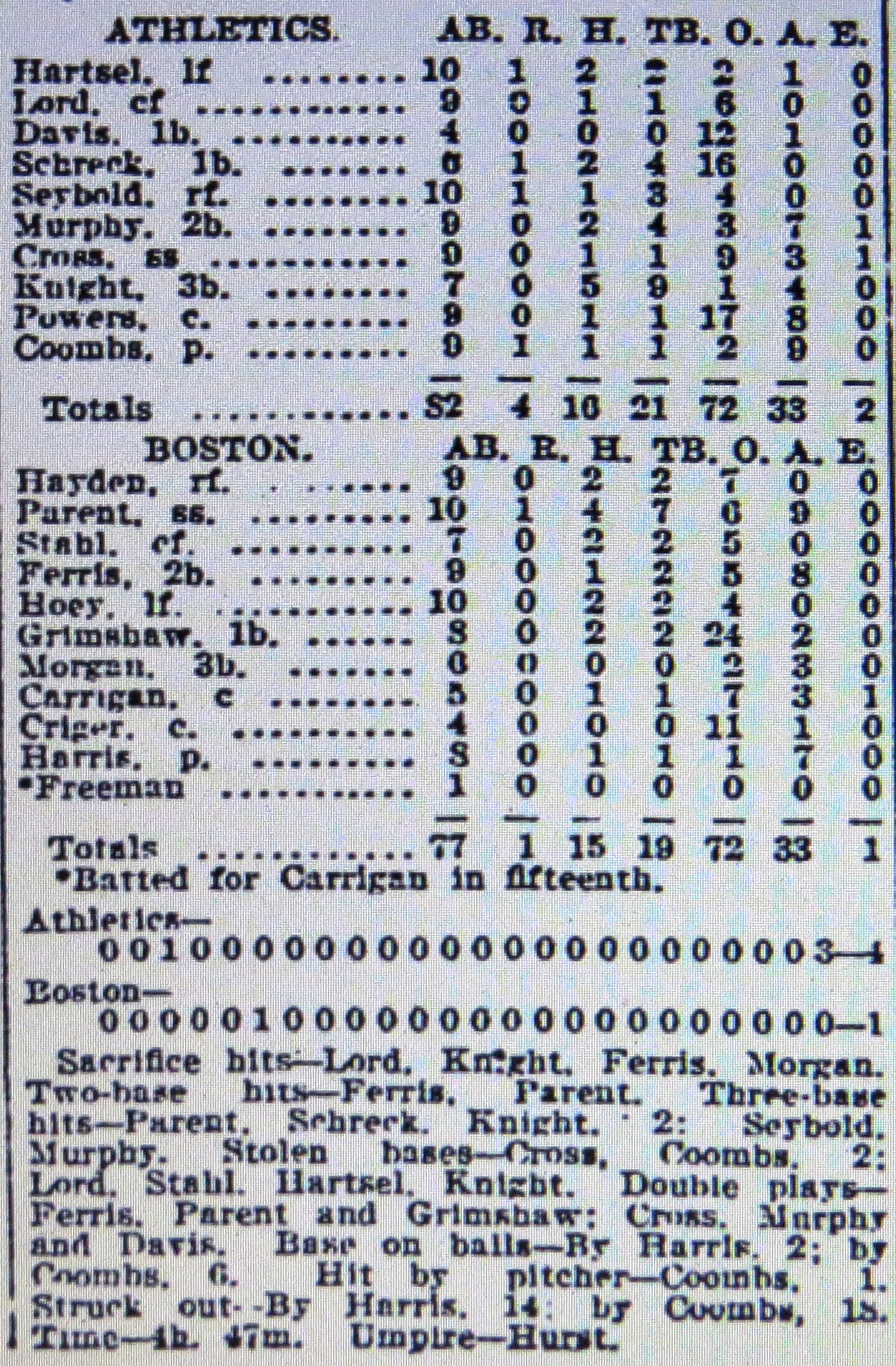
“What will go down in history as the most remarkable ball game ever played in a major league lasted 4 hours and 47 minutes to-day, and the champion Athletics beat the Bostons 4 to 1 in 24 innings.  It was a heart-breaking struggle all through, and to the astonishment of 18,000 people who saw the contest, the pitchers hung on until the last gun was fired.”

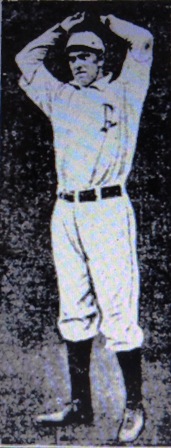
Rookie Jack Coombs pitched for Philadelphia, Joe Harris was on the mound for Boston.

Philadelphia scored a run in the third inning; Boston tied the game in the sixth:

“After that plenty of opportunities were offered, but owing to fast fielding and good pitching neither side could cross the plate.

“In the twenty-fourth, when darkness was fast covering the field, (Topsy) Hartsell led off with a single.  (Bris) Lord struck out, but Hartsell stole second…Shreck (Ossee Schrecongost) sent him home with a single over second.”

The Athletics added two more Runs as “The immense crowd filled out around the field.”

Coombs closed the Americans out in the twenty-fourth and “was cheered to an echo, some of the fans wanting to carry him on their shoulders from the field.”

The box score:

???????????????????????????????

“It was well that the game was concluded as it was, for it was too dark to go another inning, and the crowd began to murmur that the light was too dim when the last round began.  But the players themselves interposed no objection, for they were all deeply anxious to fight it out.”

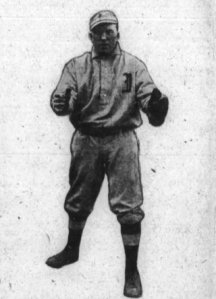
Jack Coombs, 1906

Jack Coombs, 1906

Coombs would go on to a long career, highlighted by a 31-9 record, and three more wins over the Chicago Cubs in the World Series for the champion Athletics in 1910; overall he was 5-0 in World Series play.  He also pitched for the Brooklyn Robins and Detroit Tigers.

Harris is one of the ultimate hard-luck pitchers in the history of baseball.  He ended the 1906 season with a 2-21 record (the Americans were shut out 8 times when he pitched).  His Major League career was over after he went 0-7 in 1907; Harris ended his career with a 3-30 record.

A Thousand Words–Satchel Paige, Chicago White Sox

6 Feb

???????????????????????????????

What if?  Satchel Paige in a White Sox uniform.  From 1938-1947 the Sox never finished better than 3rd, add Satchel Paige to those teams, which already had some good pitching including Ted Lyons, Eddie LopatThornton Lee, Monty Stratton and Orval Grove, and Sox fans might have had something to cheer about.  But of course, by the time Paige had a chance to play in the Major Leagues he was at least 42-years-old.  Paige would have helped at the box office as well.  For example, on July 18, 1942 the Sox drew slightly better than 24,000 for a doubleheader with the Detroit Tigers, across town at Wrigley Field a nearly identical amount came out to watch Paige pitch the first five innings for the Memphis Red Sox against the New York Cuban Stars.

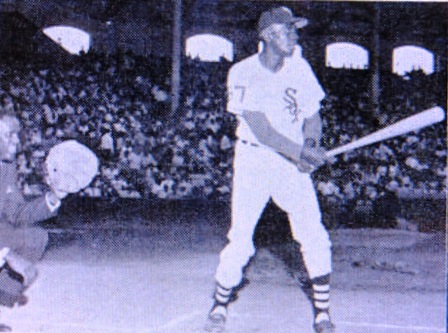
Instead, all White Sox fans have is this rare photo taken in 1965 when Paige appeared with the Indianapolis Clowns at Comiskey Park (Chicago Cubs outfielder George Altman is the catcher in the picture).

——-

in 1935, Gene Coughlin, a sports writer for The Los Angeles Evening Post-Record wrote a column that went largely ignored, calling on organized baseball to break the color barrier which “not only makes (baseball) look ridiculous but is at the same time passing up increased business.”  Coughlin predicted that if a Pacific Coast League team were to sign Paige, it “would be good for an extra 10.000 in attendance every time he goes to the mound.  And he became good despite the inane prejudice that drives the colored baseball player to the sandlots and keeps him there.”

Coughlin’s column concluded:

“When you come right down to it, that baseball doesn’t give a darn whether it is pitched or caught by a white hand or a black one.  It is a symbol of game, a sport, and not a symbol of class distinction or color.”

Twelve years later organized baseball finally agreed.

Stan Musial 1920-2013

20 Jan

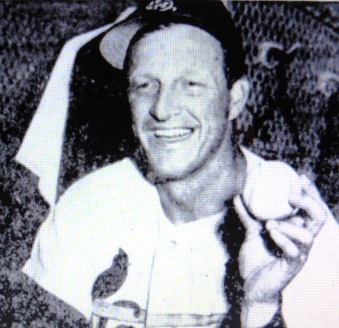
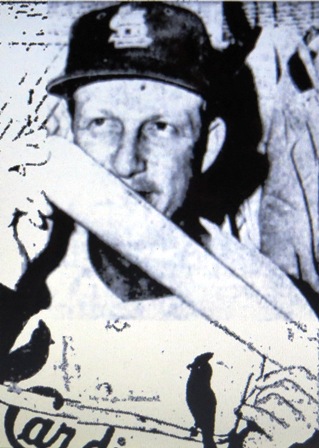
stanPosing with bat and ball after his 3,000th hit, May 13, 1958, off Moe Drabowski at Wrigley Field.

“I love to play this game of baseball – I love putting on this uniform.”

Stan Musial

stan2

Dero Austin

10 Jan


dero

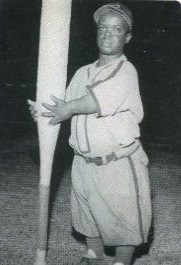
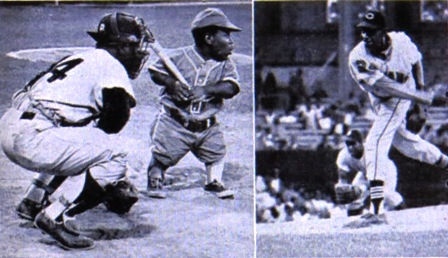
Dero Austin Jr. was one of the few Negro League “players” who was born too late; he was added to the Indianapolis Clowns in 1964 to try to recreate the fame of one of his predecessors, Spec Bebop, who had top billing with the team well into the 1950s.

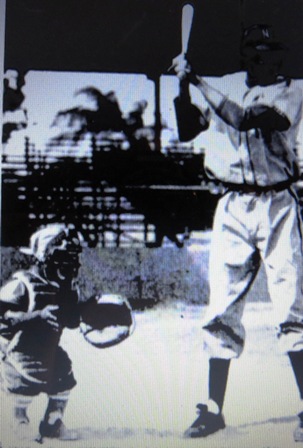
Spec Bebop, circa 1952

Spec Bebop, circa 1952

Austin quickly joined  James “Nature Boy” Williams as one of the most popular members of the barnstorming team, but the Clowns were well past their heyday when they filled ballparks across the country.  Occasionally they still drew well, in Austin’s first season, 1964, 15,797 fans saw the Clowns in Chicago’s Comiskey Park on July 10; across town 13,556 fans watched the Cubs play the San Francisco Giants.

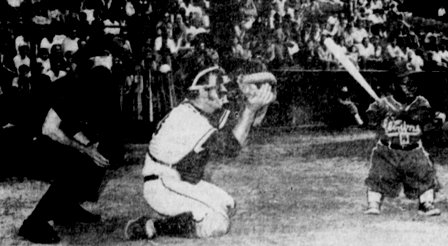
Austin would usually bat first in each game, replicating Eddie Gaedel’s appearance for Bill Veeck’s Saint Louis Browns in 1951–occasionally Satchel Paige would pitch to Austin.  While he appeared in publicity photo’s playing the field, he never appeared in the field during a game.

Satchel Paige pitching, Dero Austin at the plate.  Comiskey Park 1966

Satchel Paige pitching, Dero Austin at the plate. Comiskey Park 1966

Austin never became as popular as Bebop, and the Clowns continued playing to smaller crowds in smaller towns until they disbanded in the 1980s.

dero

Austin stayed with the Clowns well into the 70s and by 1974 was billed as the team’s manager.  The 31-inch tall Grandfield, Oklahoma native died in July of 1987 at age 39.

Larry McLean

8 Jan

At 6’ 5” John Bannerman “Larry” McLean is still the tallest catcher to have played in the Major Leagues nearly a century after his final game.  Born in New Brunswick, Canada, McLean’s ability was mostly overshadowed by his frequent off-field troubles during his career.

McLean bounced between the minor leagues, semi-pro teams, and trials with the Boston Americans, Chicago Cubs and Saint Louis Cardinals from 1901-1904.  McLean joined the Portland Beavers in the Pacific Coast League in 1905 and it was here that he developed into a good ballplayer and a first-rate baseball character.

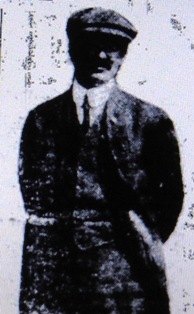
Larry McLean

Larry McLean

McLean hit .285 in 182 games with Portland in 1905, but also started to show signs of the troubles that would plague him for the remainder of his career; Portland added a “temperance clause” to his contract and McLean, who had originally planned on a boxing career, loved to fight.

In 1906, while hitting .355 for Portland, and catching the eye of the Cincinnati Reds who would purchase his contract in August; McLean announced that he was going to become a professional fighter.

The wire report which ran in The Bakersfield Daily Californian said:

“McLean the giant catcher of the Portland team…He is so big that umpires walk out behind the pitcher so they judge balls and strikes…announces that he will fight any man in the world, Big Jeff (Jim Jeffries) not barred.”

The story said McLean was training with Tom Corbett (older brother of “Gentleman Jim” Corbett) and Corbett said he “has a ‘sure ‘nuff’ champion in the big catcher.”

Talk of a ring career temporarily ended when McLean joined the Reds, but McLean’s legend grew.  In November of 1906, he caught a murderer while in a subway station with his wife.  The Boston Post said the suspect:

“Was seen to pull a gun and pump five bullets (into the victim)…Larry started after him and collard him just outside the entrance.  (McLean had the suspect) pinioned so he could not move.  The police soon arrived and took charge of McLean’s prisoner.”

McLean was a huge hit with Havana fans the following winter when the Reds touring Cuba; The Sporting Life said:

“Larry McLean was the favorite and every time he caught a ball the crowd applauded. McLean has been dubbed by the baseball fans ‘Chiquito.’”

McLean and Chicago White Sox pitcher Frank Smith were mentioned at various times as possible opponents for heavyweight champion Jack Johnson; boxing writer Tommy Clark said in 1910 that McLean “Thinks he has a good chance of lowering Johnson’s colors.”

But while McLean was a fan favorite he regularly ran afoul of Cincinnati management and none of the managers he played for was able to keep him out of trouble.

While with the Reds McLean was arrested at least four times–for disorderly conduct, passing a bad check and two assaults.  In one case, at the Savoy Hotel in Cincinnati, McLean knocked a newspaper man from Toledo unconscious after the man “Reproved McLean for using a vile name.”

While serving a suspension for breaking team rules in 1910 McLean Said:

“When I get back to Cincinnati there will be 25,000 fans at the depot waiting to shake hands with me.”

Frank Bancroft, Reds secretary and former manager said in response:

“Twenty-five thousand, why, they’ve not that many barkeepers in Cincinnati”

McLean had worn out his welcome by 1910, but Cincinnati was not able to find any takers for the catcher.  Pittsburgh Pirates owner Barney Dreyfuss said, “I wouldn’t give 30 cents for Larry McLean.”

McLean stayed with the Reds for two more seasons, but when Joe Tinker took over the team one of his first moves was to sell McLean to the Saint Louis Cardinals in January of 1913.  McLean said he had finally learned his lesson and promised to behave with the Cardinals:

“They didn’t want me around because they said I was a bum. Now I’m going to fool Tinker.”

McLean did behave himself in Saint Louis and seemed to appreciate the opportunity he was given by his former Reds teammate, manager Miller Huggins, even earning a “good behavior” incentive in his contract, and was hitting .270 for the Cardinals, but the cash-strapped team went with the younger, cheaper Ivey Wingo behind the plate and traded McLean to the New York Giants for Pitcher Doc Crandall.

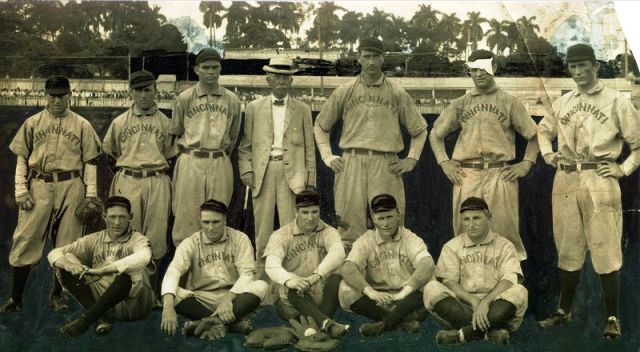
Larry McLean, standing end right, Miller Huggins, standing end left, and Frank Bancroft, standing middle (in suit) on the 1908 Cuban tour.

Larry McLean, standing 5th from left, Miller Huggins, standing end left, and Frank Bancroft, standing middle (in suit) on the 1908 Cuban tour.

The rest of the McLean story tomorrow.

Filling in the Blanks—F. Bassett

7 Jan

Baseball Reference lists the manager of the 1903 Hopkinsville Browns of the Kentucky-Illinois-Tennessee League simply as F. Bassett—something of a slight to a man whose obituary in The Chicago Tribune called him “The Father of the Kitty League.”

Dr. Frank Houston Bassett was born in Stephensport, Kentucky in 1873, and grew up in Hopkinsville.

Bassett, who came from a wealthy family, played with semi-professional teams in Hopkinsville in his 20s.  Late in 1902 Bassett began trying to line up cities in Kentucky, Illinois, Tennessee and Indiana to form a new professional league; by February of 1903 the eight-team league was formed.

Frank Houston Bassett

Frank Houston Bassett

Bassett owned, managed and played for the Browns.

Very few records survive for the Kitty League’s first season and no statistics for Bassett can be found.  The only reference to his abilities as a player came years later in an article in The Kentucky New Era which included a quote from Scott Means.  Means, a well-known amateur and professional player in Hopkinsville who played in the Kitty in 1913, saw Bassett play:

“Doc Bassett was a very good fielder.  Only trouble was he couldn’t hit.”

Bassett continued to own the Hopkinsville franchise, renamed the Hoppers for 1905 until the team was dropped from the league in July in order to keep a balanced schedule after the Henderson Hens disbanded.  The first incarnation of the league ended the following season.

Bassett maintained the Hoppers as a semi-professional team for the 2nd half of 1905 and all of 1906.  He then became an umpire in the Cotton States League and the Southern Association.  He also entered medical school.

In the spring of 1909, Bassett was the subject of a feature in The Chicago American after he had umpired an exhibition between the Cubs and the Nashville Volunteers.  The article said Bassett was worth more than $100,000 and had an income from investments of “$500 a month…and umpires for the love of it.”

The American noted that Bassett owned a car, “a forty horsepower French machine,” and drove it 72 miles from Hopkinsville to umpire Southern Association games in Nashville.  Bassett said:

 “I run over in the machine every day before the game and return in the evening.”

In 1910 Bassett helped to resurrect the Kitty League and was named President before the 1912 season; as he would continue to do throughout the league’s many incarnations Bassett used his personal fortune to keep the league afloat by financing the Evansville Yankees.

Frank Houston Bassett

Frank Houston Bassett

He was re-elected president for the next two seasons, but the financially troubled league folded again after the 1914 season.  An attempt to revive the league in 1915 failed, and after being revived again for 1916 the league folded in August.

Bassett seems to have temporarily lost interest in professional baseball in Kentucky and turned to politics.  He became a city commissioner in Hopkinsville in 1916 and became mayor in 1918; he served until 1922 when he was elected Court Clerk of Christian County.

In 1922, he again helped to revive the Kitty league; this version lasted for three seasons but was plagued by the same financial difficulties that doomed its predecessors.

Bassett tried again after a decade and was the driving force in reorganizing the league in 1935.  He was named president, secretary and treasurer of the new six-team league.

Bassett served for three seasons as president.  The league meeting after the 1937 season was contentious and several league owners felt Bassett had been a weak leader, and objected to his indifference in maintaining accurate statistics for the league and his opposition to night baseball.

There are a number of versions of what transpired.  Most sources say that after being re-elected Bassett left the meeting and team owners then voted him out; others say he, in effect, resigned by leaving—sometimes even the same source disagrees.  Some accounts in The Kentucky New Era said Bassett was ousted; others said he “became disgusted” and resigned.

In either case, night baseball was the primary issue that ended Bassett’s presidency.  The league would not survive without it and Bassett was dead set against it.   The New Era said:

 “The good doc contends that if baseball was supposed to be played after supper, nature would have made it light enough to see.”

With the exception of a few occasions when he was honored in Hopkinsville, Bassett seldom attended games after 1937 citing his hatred for night baseball.

He continued to serve as Christian County’s court clerk until his death in 1950.

Two weeks after Bassett’s death the Hopkinsville Hoppers held a memorial for him before their game with the Owensboro Oilers—it was a night game.

Fighting Jimmy Burke

2 Jan

James Timothy Burke had a stormy tenure with the Saint Louis Cardinals from 1903-1905, including a disastrous 35-56 record as player-manager in 1905, replacing Kid Nichols (who remained on the pitching staff)—Burke resigned in August, and the Cardinals were in such disarray that owner Stan Robison eventually took over the team for the remainder of the season.

Burke had been with five teams from 1898 through 1902 before being traded to the Cardinals.

Jimmy Burke

Jimmy Burke

During his time with the Cardinals Burke had various fights and feuds, it was said he was the ringleader in a group of players trying to undermine manager Patsy Donovan in 1903; he had a long-standing feud with shortstop Dave Brain and the two seldom spoke, and he feuded with Robison throughout his short tenure as manager.  After his resignation he said:

“When I took charge of the team it was with the understanding that I was to be manager or nothing.  I have suffered as Donovan and Nichols with too much interference.”

Burke also had trouble with a Saint Louis sportswriter named Joe Finnegan.  Their contentious relationship came to a head at the Victoria Hotel in Chicago in September of 1904 after Finnegan had written an article in which he called Burke “a cow’s foot,” (apparently those were fighting words circa 1904).

The Pittsburgh Press provided the colorful blow-by-blow of the fight:

“First round–Burke hit Finnegan in the lobby, and followed the blow with a left hook on the back of the neck, breaking the scribe’s collar.  Burke pressed the advantage and struck Finnegan near the cigar stand.  Finnegan blocked cleverly, uppercut with the left and caught Burke in the snout.  Finnegan crossed his right and landed on Jimmy’s potato-trap.  Burke jolted Finnegan in the rotunda and followed with a short swing near the Turkish parlor.  Finnegan shot the right to the ear, and the left to the lamp.  They clinched.  Terrific short-arm fighting, completely wrecking Finnegan’s collar and cuff.  Johnny Farrell separated the men. Time.

“Second round—The house detective threw both fighters out in the alley.  Time.  Decision to Finnegan.”

Burke’s Major League career ended after the 1905 season.  New Cardinal manager John McCloskey said he wanted to retain Burke as his third baseman, but Robison, against his manager’s wishes (and continuing the pattern which led papers to call Cardinals managers “figureheads”) waived Burke.

Burke became a successful minor league manager and returned to the Major Leagues as a coach with the Detroit Tigers in 1914.  He also served as a coach with the St. Louis Browns and managed the team for three seasons.

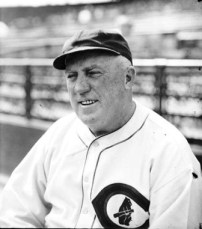
Jimmy Burke, Cubs coach

Jimmy Burke, Cubs coach

Burke served as Joe McCarty’s right hand from 1926-1930 with the Chicago Cubs and followed him to the New York Yankees where they continued together until a stroke necessitated Burke’s retirement after the 1933 season.  McCarthy had played for Burke with the Indianapolis Indians in the American Association in 1911.

Burke died in St. Louis in 1942.

Mique Malloy

10 Dec

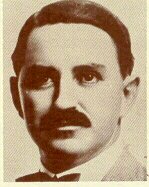
John Michael “Mique” Malloy has at least three different listings under various forms of his name on Baseball Reference.

Malloy was born in Chicago in 1885, and played mostly amateur and semi-pro ball in Illinois, Wisconsin and Minnesota, but had a brief professional career as a player and manager in the Wisconsin-Illinois and Minnesota-Wisconsin Leagues.  The few statistics that survive include a .301 batting average in 133 at bats as a player-manager with the 1913 Wausau Lumberjacks–Malloy fractured his ankle in June and was released in July.

With his playing career over Malloy joined the Chicago Cubs as a scout, but left after the 1913 season to scout for the Chicago franchise in the Federal League.

Malloy became a footnote in the battle between the Federal League and the American and National Leagues, when in April of 1914 according to The Chicago Examiner he filed a $2000 lawsuit against the Cubs claiming he was not paid by the team for helping to sign Zip Zabel and Fritz Mollwitz.

It appears the suit was settled amicably and Malloy returned to the Cubs scouting staff after the Federal League folded.

He stayed with the Cubs with several years, but after World War I entered the business for which he was best known.

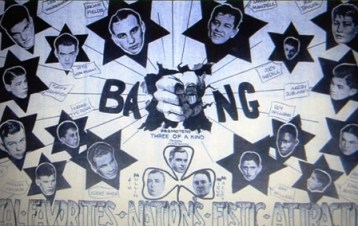
Throughout the 1920s and 30s Malloy was one of the most prominent boxing promoters in Chicago.  Malloy, Paddy Harmon, the man responsible for building Chicago Stadium, and Jim Mullen had a piece of every major fight that took place in Chicago.

1930s poster featuring promoters Mique Malloy, Jim Mullen and Paddy Harmon, and some of their stable of fighters.

1930s poster featuring promoters Mique Malloy, Jim Mullen and Paddy Harmon, and some of their stable of fighters.

In August of 1930, The Chicago Daily News said Malloy offered Washington Senators First Baseman Art Shires “(A) guarantee of $50,000 (and) two-thirds of the gate over expenses,” if he returned to the ring–Commissioner Kennesaw Mountain Landis had ruled that no Major League player would be permitted to box after Shires’ five fights  in December of 1929 and January of 1930—Shires, at the height of celebrity failed to cash in on the offer and found himself broke and returning to the ring for two much less lucrative fights in 1935.

John Michael "Mique" Malloy, 1922

John Michael “Mique” Malloy, 1922

Malloy, at various times, was closely associated with champions Primo Carnera, John Henry Lewis and Henry Armstrong.  It was a rift with Armstrong that led to the worst publicity of Malloy’s career.  After a February 1938 bout Malloy promoted at the International Amphitheater, Armstrong vowed never to fight for Malloy again and claimed that the promoter had seated fans in segregated sections.  There is no record of whether or not Malloy responded to the charges.

Malloy continued to promote boxing and wrestling cards in Chicago until he retired in 1947; he died in Chicago in 1952.

Another Malloy story tomorrow.

Alonzo Hedges and the Hunting Dog

31 Oct

In 1903 Alonzo Hedges briefly became a baseball sensation.

“Pongo” Joe Cantillon, manager of the pitching strapped Milwaukee Brewers in the American Association acquired fellow Kentuckian Hedges in August from the Paducah Chiefs in the Kitty League (no roster exists for the team, but Hedges is listed in multiple box scores in Kentucky newspapers).

Said to be a 19-year-old, Hedges started his first game for Milwaukee the day after his arrival and shut down the Columbus Senators–he took a no-hitter into the ninth inning, giving up a single with two outs.

After another shutout in his second game, Hedges, “The Boy Pitcher of Milwaukee,” appeared headed for stardom.  He wasn’t.

Alonzo Hedges

First, The Chicago Tribune revealed in mid August that “The ‘boy pitcher’, whom a number of clubs are after, is really 23-years-old.”   Then Hedges faltered.  While posting a 5-4 record he was hit hard in last 11 games with Milwaukee, after being nearly unhittable in the first two.

Back in the Kitty League with the Springfield Hustlers in 1904, Hedges was effective and helped lead the team to the league championship (again, no statistics survive), but he was no longer mentioned seriously as prospect.

Newspaper accounts indicate he was the “Hedges” who appeared in four games for the Webb City Goldbugs in the Missouri Valley League in 1905—although an arm injury ended his career early in the season.   Hedges signed with the Springfield Senators of the Three-I League in 1906, but it appears that he never played for the team.

How Hedges ended up with Springfield after his brief time in Milwaukee is the real story.

One of the stories that has been told and retold about the colorful Joe Cantillon is that in 1915, while part owner and manager of the Minneapolis Millers, he traded a player, “outfielder Bruce Hopper,” to the Chicago Cubs for a hunting dog.

There are two problems with the oft-repeated story:  “outfielder Bruce Hopper”  is actually pitcher Bill “Bird Dog” Hopper, and contemporaneous accounts mentioning that Hopper was once traded for a dog provide no details of the transaction and predate Hopper’s tenure playing for Cantillon.

Joe Cantillon

However, such a trade might have taken place, but it happened more than ten years earlier and the player traded was Alonzo Hedges.

A 1910 article in The Milwaukee Sentinel mentions that Milwaukee Brewers owner Charles Sheldon Havenor kept a photo of Cantillon on his desk, along with a letter.  The letter read:

“The mother of the dog in the picture is the one I received in exchange for Alonzo Hedges, the pitcher.”

The story went on to tell the story of the trade:

“Cantillon went to Springfield, IL, to see a friend of his who owned the Springfield club and ran a cafe on the side.  During the course of the afternoon the friend showed Joe a couple of dandy setter puppies.”

Later in the discussion when the Springfield owner mentioned his need for pitching, Cantillon offered to sell him Hedges, and Cantillon said “I’ll let you have the fellow for one of those dogs.”

The Sentinel concluded:

“Mr. Hedges may not have been much of a bear cat as a pitcher, but he probably has the distinction of being the only ball player in captivity ever traded for a dog.”

One more note on Hedges.  The Chicago Tribune might have been wrong, the 23-year-old “Boy Pitcher,” might have actually been 26-years-old.  While Hedges grave lists his birth date as 1880, all extant records, including Hedges’ death certificate and census data, indicate he was born on 1877.

Hedges passed away January 12, 1928 in Paducah, Kentucky.

Murphy Calls Out an Umpire

12 Oct

Three years before Chicago Cubs President Charles Murphy ousted legendary manager Frank Chance, he picked a fight with the most powerful and respected umpire in baseball.

In September of 1909 the second place Cubs had just taken three of five games from the league-leading Pirates in Pittsburgh.

On September 9 Murphy filed a formal protest with the league over the fourth game of the series (won by the Pirates 6-2) charging that umpire Bill Klem “(D)eliberately acted as a conspirator, robbing the Cubs of any reasonable chance for victory.”

The Cubs had argued several calls by Klem during the game and Manager Frank Chance and Cubs’ infielders Joe Tinker and Harry Steinfeldt were fined for comments made to the umpire.

Murphy questioned Klem’s honesty and demanded that he not be allowed to serve as umpire in any games played by his team and that the game be replayed.

Klem was an unlikely person to have his integrity questioned.  Generally credited with professionalizing umpiring, he had come forward with fellow umpire Jim Johnstone the previous season to report they had been offered a bribe to help determine the outcome of the October 8 Cubs game with the New York Giants to decide the pennant (the make-up game for the September 23 “Merkle’s Boner” game).

While the league never released specific details of the bribe attempt, the allegations made by the umpires were found to be true and barred the “unnamed conspirators” from any Major League ballpark. Both umpires were commended by the league for demonstrating to the “American public the honesty and integrity of our national game.”

League President John Heydler (appointed after the suicide of Harry Pulliam) immediately announced his support for Klem in the dispute.  Murphy responded by announcing he would ensure Heydler would not be reappointed president of the league that winter—Murphy would be successful spearheading the effort to replace Heydler.

Murphy was never able to cite any specific reasons for his charges and was pressured to drop the protest, which he eventually did, but Klem remained indignant and asked to have his name cleared.  According to newspaper reports:

“The umpire does not propose to let the matter rest.  He considers that his reputation has been attacked, and he therefore will ask the league to investigate him.”

There’s no record that the investigation was ever conducted.

Klem attended that year’s winter meetings in order to be on hand when Murphy was pressured to make a formal, public apology.

Chicago Cubs President Charles Murphy

More on Murphy and his feuds in the coming weeks.