Tag Archives: Chicago Cubs

Demon Rum–or Demon Rum as an Excuse to Replace a Popular Manager

8 Oct

The 2011 Boston Red Sox were only the latest in a long history of alcohol taking the blame for a team’s poor performance.

As the Chicago Cubs faded into third place during the waning days of the 1912 season, team president Charles Murphy issued an order for “total abstinence” and all players would have a temperance calls in future contracts.

The move was not unprecedented—since 1909 Barney Dreyfus of the Pittsburgh Pirates had required his players to sign a temperance pledge.  What made Murphy’s order so newsworthy was that over the course of several days he issued numerous, often contradictory, “clarifications” and because it quickly became apparent the move was a intended to wrest control of his ballclub from Manager Frank Chance.

Murphy’s original statement said that “loose living and training methods” led to the team’s poor finish. At the same time he provided cover for popular Cub outfielder Frank Schulte who had been suspended by Chance in September his nighttime activities during a crucial August road trip in Cincinnati.  The Cubs lost three of four games to the Reds and fell out of contention.    Murphy’s statement presented Schulte as a man incapable of any personal responsibility:

“I desire to say that in my judgment Schulte has been more sinned against than sinner…from what I could gather he was a victim of too many so-called friends…if we had a rule similar to that in vogue in Pittsburgh this player could not have been led into temptation.”
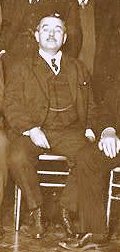
Chicago Cubs President Charles Murphy

The implication being that Chance had perhaps overreacted by suspending “the more sinned against” Schulte.  This statement was further complicated by Murphy’s several “clarifications,” some of which seemed to support Chance’s decision while some did not.

Chance quickly defended his players and his reaction to Murphy revealed just how bad the relationship was between the team president and his manager:

“Murphy only thinks of the team when it’s winning…his statement reflects upon me personally, and I have been in the business too long to allow Murphy or anyone else to insult me.”

Making matters worse, and calling Murphy’s motives into question was that Chance issued his response from a hospital bed in New York.  As a result of being hit in the head by numerous pitches throughout his career, Chance had developed a blood clot near his brain and had undergone surgery just a few days earlier.

Murphy didn’t hesitate to use Chance’s health issues against him.

A month earlier, plagued by doubts about his condition and suffering from severe headaches, Chance had suggested to Murphy that he might not be able to manage the Cubs in 1913.  At the time Murphy told his manager to wait until after the surgery to make a decision about his future.  Now he was using that conversation to assert that Chance had issued his resignation.

Once Murphy began claiming Chance had, in effect, quit in August the Chicago media which had almost universally supported the “abstinence pledge” called foul.  The Chicago Tribune and Chicago Examiner both said Murphy was using the conversation and the pledge as cover to run the legendary Chance—who led the Cubs to four pennants and two World Championships—out of town.

Chance went.  But he didn’t go quietly.

The manager had acquired 10 percent of the Cubs, shares Murphy had been trying to purchase for more than a year.  Chance sold the shares to Harry Ackerland a Pittsburgh investor who President Murphy did want owning part of his team.  Despite Murphy’s efforts to block the sale, it went through.

Chance was claimed on waivers by Cincinnati, but after the Reds acquired Joe Tinker from the Cubs and named him manager, Chance was waived to New York, where he became manager of the Yankees.

Chance led the Yankees for two losing seasons, managed the Los Angeles Angels in the Pacific Coast League in 1916 and ’17, and closed out his career with one dismal season in Boston; the Red Sox finished 61-91 under Chance.
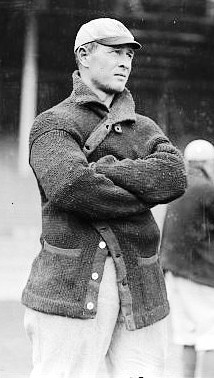
Frank Chance

Johnny Evers was named Cubs manager for the 1913 season—the Cubs again finished third.

From the day Murphy issued his initial statement until Chance died in 1924, “The Peerless Leader” never missed an opportunity to take a shot at Murphy.

When the Cubs were sold to Cincinnati publishing magnate Charles Phelps Taft (President William Howard Taft’s half-brother) before the 1914 season Murphy claimed that he had made more than a half million dollars on the deal.  Chance and former Cubs pitcher Mordecai Brown (who had his own feud who Murphy who released him after the 1912 season, allegedly without giving Brown money he was owed for playing in that year’s “City Series” with the Chicago White Sox) quickly responded.  Both players confirmed what had long been rumored—that Murphy had been bankrolled by Taft who retained a majority of the shares.   Murphy, said Chance, “Never owned more than fifteen or twenty percent of the club stock.”

Both players also charged that Murphy’s treatment of his players was a primary reason for the formation of the upstart Federal League—at best an oversimplification of the conditions which led to Major League Baseball’s last “third league.”

Another Charles Murphy feud later this week.

.
11-Inning No-Hitter

24 Sep

Harry Wormwood played seven seasons in the New England League with Worcester, Fall River and Portland.  His statistics are incomplete but he was basically a .500 pitcher and weak hitting utility infielder with a fairly uneventful career until June 9, 1910.

Pitching for the Fall River Indians Wormwood pitched an 11-Inning no-hitter against his former team, the Worcester Busters.  Game summaries mention that Fall River did not commit any errors, but don’t say whether Wormwood walked any batters.

The Eastern press couldn’t ignore the fact that just one year earlier in the Bluegrass League Fred Toney of the Winchester Hustlers had thrown a 17-inning no-hitter against the Lexington Colts, so the papers referred to Wormwood’s feat as “The Eastern record for a no-hit game.”

Toney of course would become famous for another no-hitter in 1917 when he was with the Cincinnati Reds—he and Chicago Cubs pitcher Jim “Hippo” Vaughn hooked up in one of baseball’s greatest pitching duels, with neither allowing a hit through nine innings.  Vaughn would allow a hit in the 10th and lose the game 1-0.

But back in 1910 Toney was not well known and was referred to in the New York Times and other papers simply as “Pitcher Torrey (sic) of Winchester, KY,” in the coverage of Wormwood’s no-hitter.

The following season Wormwood nearly duplicated his feat.  He held the Lawrence Barristers hitless for 10 2/3 innings; Wormwood gave up three straight singles in the 11th, but retired the side without giving up a run.  He held Lawrence hitless for two more innings and the game ended in a 0-0 tie after 13 innings.  1911 was Wormwood’s best season, he posted a 20-15 record and hit .289.

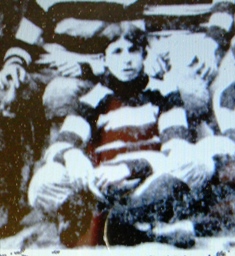
Harry Wormwood, from a picture of his high school football team in Auburn, ME

Wormwood finished his career with the Portland Duffs in 1913—newspaper reports from 1914 and 1915 say he spent time with the Lewiston Cupids in the New England League and the Hartford Senators in the Colonial League, but there are no records to confirm this.

Wormwood passed away January 9, 1955 in Auburn, Maine.

Charlie Dexter, and the Other Charlie Dexter

14 Aug
Last week I told you about Charlie Dexter, former major leaguer, and one of the heroes of Chicago’s Iroquois Theater fire.  Not to be confused with the other Charlie Dexter, a minor league outfielder and first baseman of the same era.  The two were often conflated in contemporary newspaper accounts.

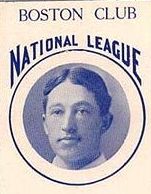
Charlie Dexter

The other Charlie Dexter, the career minor leaguer (1904-09), was born Oscar Schoenbecker in Ohio and was killed in a hunting accident in November of 1909 in Mount Holly, Ohio.  According to his obituary, in The Cincinnati Commercial Tribune he changed his name “fearing the jests of the old people in case he failed,” as a player.

Reading contemporary accounts of the major league Charlie Dexter is a study in dichotomies.  A year and a half before his heroics at the Iroquois theater were recounted in papers across the country, numerous papers echoed the sentiments of the Pittsburgh Press that Dexter’s release by Chicago had more to do with his being a “trouble maker” than his .227 average.

Numerous stories over the years hinted, or outright said that Dexter, like many players of the era, had a serious drinking problem. He was released by Boston after the 1903 season and returned to the minor leagues for the first time since 1895.
The end of line seemed to come in October of 1905 in Des Moines, when during what was described as a “Drinking binge” Dexter stabbed his friend, Milwaukee first baseman Henry “Quait” Bateman.  The earliest reports from Iowa papers and wire services said Bateman was either dead or near death and that “(Dexter) slashed Bateman across the breast, the blade cutting into the lung.”

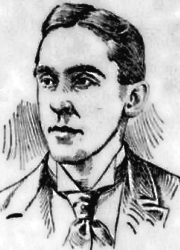
Quait Bateman

Dexter was immediately arrested.  But within days the wire services were reporting that Bateman was not seriously injured and had refused to file charges.  Dexter was released from custody.  Other players who were present (none were named is stories) “Dexter and Bateman are on the best of terms and that their little quarrel had done nothing to mar their friendship.”  Without Bateman’s cooperation, a grand jury elected not to indict Dexter.

He played two more seasons in Des Moines, taking over as manager from Mike Kelly 20 games into the 1907 season and managing the team through 1908.

Dexter stayed in Iowa and was occasionally mentioned in local papers over the next few years in connection with amateur and semi-pro leagues.  Dexter shot himself in 1934 in Cedar Rapids, Iowa.  Bateman Died in Milwaukee on January 18, 1937.

One more story about the aftermath of the Bateman stabbing next week.

Heroes of the Iroquois Fire

7 Aug

The deadliest single-building fire in US history took place at the Iroquois Theater on Randolph Street in Chicago, December 30, 1903.  The  “absolutely fireproof” theater, as it was billed, caught fire just six weeks after opening.

At least 605 people died, although the actual number has never been confirmed.

Two heroes that day, credited with saving numerous lives, were former Chicago ballplayers.

Charlie Dexter, who played with Boston in 1902 and 03 after being released by the Orphans in July 1902, and John Franklin Houseman who had played for Chicago and St. Louis is the 1890s, were seated together in a box with their families when the fire broke out.

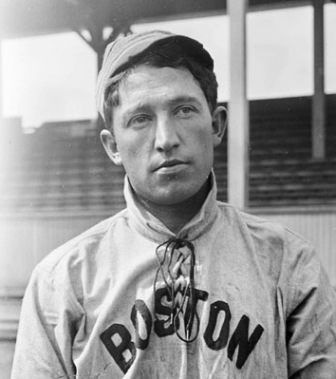
Charlie Dexter

The fire, ignited by a malfunctioning stage light, spread quickly and the estimated 2000 people in the audience panicked.

Contemporary newspaper accounts highlighted the heroics of three individuals in particular: Actor Eddie Foy, who stayed on the stage trying to calm the panicked crowd until finally escaping through a sewer, and the two ballplayers.

Several people had already jumped from the balconies as the fire spread, and Dexter and Houseman were credited with having forced open two doors on the north side of the theater and clearing away bodies to create a path to the exit.  When they were finally forced by the flames to leave their stations at the doors, where both stayed to usher people out, Houseman caught a woman jumping from a window in the theater’s gallery to the alley below.  According to reports, she was uninjured.

John Franklin Houseman

Both Dexter and Houseman downplayed their roles in the aftermath of the fire and credited Foy with “Saving hundreds of lives,” but their heroism likely saved as many lives and has, for the most part, been forgotten.

Houseman, born January 10, 1870, was the first Dutch-born major league ballplayer, he died November 4, 1922 in Chicago.

More on Charlie Dexter next week.