Tag Archives: Chicago White Stockings

“The most Extraordinary of the Championship Contests so far”

8 Feb

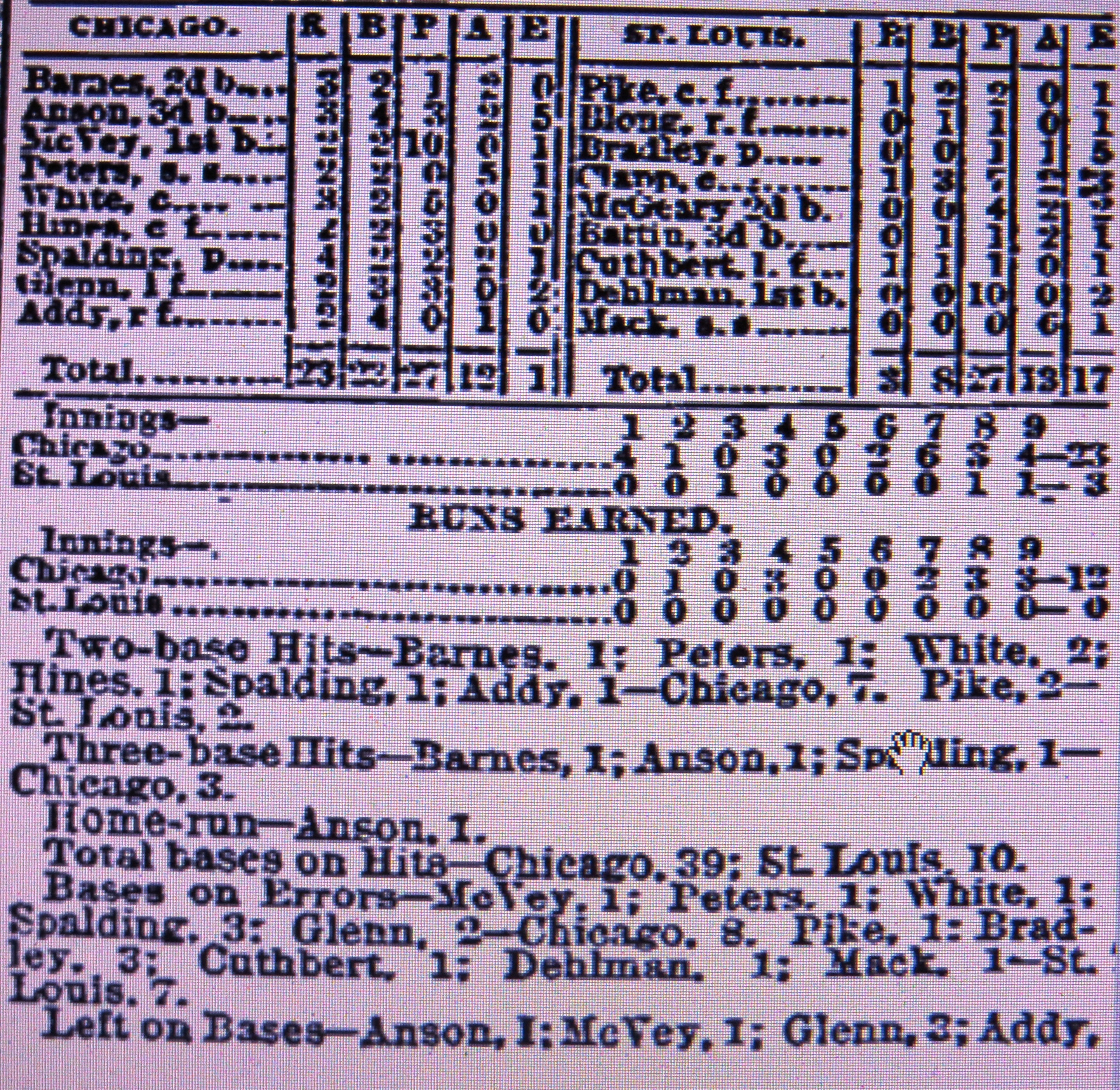
A game recap and box score from the National League’s inaugural season.  On August 26, 1876, the Chicago White Stockings defeated the St. Louis Brown Stockings 23-3 in Chicago.
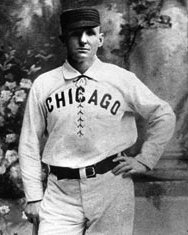
Cap Anson, 50 errors in 1876

Cap Anson, 50 errors in 1876

Among the game highlights, White Stockings 3rd baseman Cap Anson made five errors, on his way to 50 for the season, Brown Stockings pitcher George Bradley also committed five (he only had 12 for the season) and the two teams combined for 28 errors.

The Chicago Inter-Ocean said the game was the turning point of the season in the White Stockings drive for the first league championship in a breathless, meandering report:

“The closing game of the Chicago-St. Louis series which was played Saturday at the Twenty-Third Street grounds, proved to be by all odds the most extraordinary of the championship contests so far.  As if determined to wipe out every record of the St. Louis having ever won a game from them, the Chicagos turned themselves loose and broke Bradley’s heart…Nearly 5,000 witnessed the game, and the enthusiasm rose at times to fever-heat.”

The story said Anson redeemed himself for his errors “two or three” of which were “comparatively easy balls,” by hitting a triple and a home run:

“Obtained on a terrible drive to right field which went clear to the fence…The Chicago batting was tremendous, and the visitors were kept on a continual hunt for the ball.”

The box score:
???????????????????????????????

Albert Spalding, Chicago’s manager, and pitcher, who batted 7th started all but six of the White Stockings 66 games in 1876. Bradley, who batted third, started all 64 of the Brown Stockings games and pitched 573 of the 577 innings played by St. Louis—outfielder Joe Blong pitched 4 innings in one game.  Bradley also pitched the National League’s first no-hitter against the Hartford Dark Blues on July 15.  As expected with the number of errors, Bradley gave up 151 unearned runs for the season.
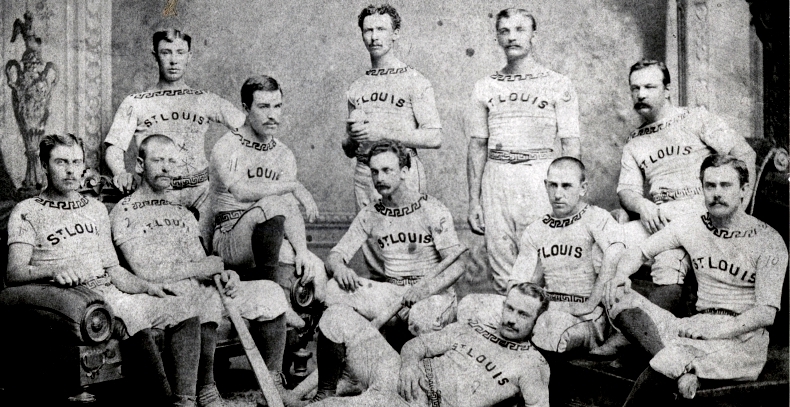
1876 St. Louis Brown Stockings, George Bradley

1876 St. Louis Brown Stockings, George Bradley, standing center, Joe Blong, standing left

After his 45-19 season for the third-place Brown Stockings, Bradley was acquired by the White Stockings in 1877, with Spalding moving to 1st base.  The White Stockings finished 5th with a 26-33 record, Bradley was 18-23.

St. Louis finished fourth, Blong split time between the outfield and the mound and went 10-9 for the Brown Stockings.
 

Henry Fabian

21 Jan

Like John Bradley and George Kittle, Henry Fabian was a member of the 1888 Dallas Hams, champions of the Texas League and the Texas Southern League.  Unlike those two, when someone fired a shot at him he missed.

Fabian was born in New Orleans, in 1864 or 1866, depending on the source.  He began his career in 1886, catching and playing first base for both of his hometown teams in the four-team Gulf League: the Robert E. Lee’s and the team that became the New Orleans Pelicans.

Fabian had his fingers broken by a foul tip before the beginning of the season.  A 1913 article by former Major Leaguer turned sportswriter Sam Crane told the story:

“It was such a serious injury that there was no possibility of his playing again that season and rather than release him his manager (Thomas Brennan) asked him to become groundskeeper at the same salary he was getting as a player.”

That experience would stay with him.

By November of 1887 he had recovered enough to play in games against the Chicago White Stockings and Saint Louis Browns when their post-season barnstorming tour stopped in New Orleans.

In 1888 Fabian came to Texas as a member of the Galveston Giants, but was with Dallas by June. While statistics are spotty for his career, and non-existent for 1888, The Dallas Morning News said of him:

“Though not a brilliant player, Henry has always been a hardworking courageous one.”

Fabian continued playing until 1903, spending his entire career in Texas and Louisiana with the exception of 1891 when he played for the Cedar Rapids Canaries in the Illinois-Iowa League where he played with John McGraw, who became one of his closest friends.

Fabian was the subject of two strange stories.  In a July 1892 a headline in The Dallas Morning News said:

“Henry Fabian Shot At.  A Case in Which a Base Ball Man Dodged a Bullet.”

The story said a local carpenter named Parker had fired a shot at Fabian.  Fabian told a reporter for the paper that “an article appeared in The Kansas City Sun about which he wanted an explanation from Parker.”  The article said “Mr. Fabian’s description of the article The News is not privileged to report at this stage of the proceedings.”

There was never another reference in any Dallas paper to the incident or about what the Kansas City story might have been.

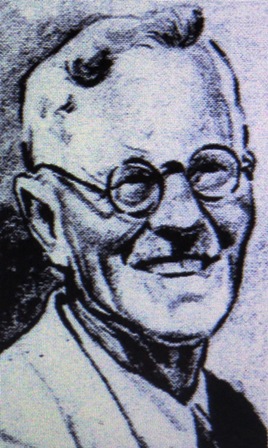
Henry Fabian, circa 1930

Henry Fabian, circa 1930

In 1904 an Associated Press article appeared in several newspapers under the headline “Joy Restores Her Sight:”

“Sight has been miraculously restored to the stone-blind eyes of an aged mother by the voice of her son who returned unheralded after an absence of 18 years.  The woman is Mrs. Sophie Fabian of New Orleans and the son is Henry.”

The rest of the story did not completely live up to the headline or lede; Mrs. Fabian was told her sight might come back and the story conceded “the recovery was not complete,” but nonetheless, the paper’s treated it as some kind of miracle

Fabian returned to baseball in 1905 as part owner and president of the Waco Tigers in the Texas League, and while there he was the catalyst for changing a Texas law that helped make Texas League baseball profitable.

That, and Fabian’s other claims to fame, tomorrow.

The League That Billy Sunday Helped Shut Down

12 Nov

The Eastern Illinois League began with great promise in the spring of 1907 to fill the void created by the collapse of the first incarnation of the Kitty League.  Joe “Wagon Tongue” Adams, an Illinois native who appeared in one game for the 1902 St. Louis Cardinals, was said to be the guiding force behind  the league, he was also manager on the Pana Coal Miners.  Adams had helped create the Central Illinois League two years earlier with teams from many of the same cities—unlike the 1905 effort, the Eastern Illinois League was granted membership in the National Association.

The six-team league had franchises in Centralia, Charleston, Mattoon, Pana, Shelbyville and Taylorville, and elected Charles Welvert, a Pana businessman  league president.  Midway through the 1907 season the Centralia team relocated to nearby Paris, Illinois, and replaced Welvert as league president by Louis A. Godey Shoaff (often incorrectly spelled “Schoaff”), editor and publisher of The Paris Gazette.

The teams in Charleston, Mattoon, Pana and Paris were supported, as The Associated Press said, “In great part from saloon interests.”

The league made news in August, when during a heated series between the Mattoon Giants and the Pana Coal Miners, The Sporting Life reported that Mattoon second baseman Fred Wilson during a dispute with  Pana manager Adams:

“Wilson put Adams down with a straight jab on the jaw. The manager came up, but another blow in the same place fractured his chewing apparatus.”

The Mattoon Giants won the 1907 championship, led by the pitching of future Major Leaguer Grover Lowdermilk, who posted a 33-10 record with a 0.93 ERA.  Although records for the league are nearly nonexistent, contemporary newspaper accounts mention other past and future Major Leaguers who appeared in the league including Harry Patton, Joe Yeager (after his release from the St. Louis Browns in 1908), Cecil Coombs, and Hosea Siner.

The league appeared to be in good shape heading into 1908, adding teams in Danville, Illinois and Vincennes, Indiana.  But as it prepared for the beginning of its second season other forces were ensuring it would be its last.

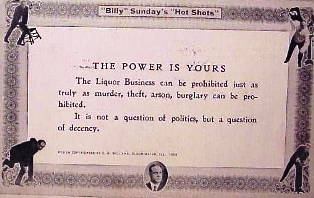
William Ashley “Billy” Sunday, the former outfielder for the Chicago White Stockings, Pittsburgh Alleghenys and Philadelphia Phillies, turned evangelist and temperance supporter was spending the early months of 1908 holding a five-week long  revival in Decatur, Illinois and advocating for citizens throughout Illinois to vote their towns dry during local option elections in April.

Sunday’s revival was a huge success, according to The Associated Press “there were 5,843 conversions;” and the service “on ‘booze’ was attended by 8,000 enthusiastic local optionists.”

When the polls closed on April 7, six of the league’s eight towns were voted dry.  The Associated Press said:

“With the saloons out of business, subscriptions of new stock (in the teams) will be cancelled in many instances.”

The league was in trouble.  It got worse worse when Sunday moved his revival to Charleston in April and began a new crusade against playing games on Sunday.

The 1908 season was chaotic.  New investors were scarce.  Some Sunday games were played, but attendance was down.  In July the Danville Speakers relocated to Staunton and the Pana Coal Miners moved to Linton, Indiana (incorrectly listed on Baseball Reference as Linton, Illinois).  Early in August the Mattoon Giants were on the verge of collapse.  The league finally disbanded on August 20, 1908, the Speakers were declared 1908 champions.

Professional baseball never returned to Charleston, Pana, Linton, Staunton, and Shelbyville.  Taylorville had a team in the Illinois-Missouri League in 1911.  Vincennes was part of the reformed Kitty League in 1910-11 and 1913.  Beginning in 1910 Danville was in and out of the Three-I League for the next forty years.  Mattoon did not have a professional team again until 1947, Paris until 1950.

Fall from Grace

24 Oct

Grayson S. “Gracie” Pierce played parts of three seasons in the major leagues and was a National League umpire selected to preside over the final game of the 1886 championship series.  It went downhill from there.

Pierce was born in New York City in 1860.  Nearly every contemporaneous newspaper account referred to him as “Grace,” not “Gracie.”

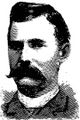
Grayson Pierce

Pierce hit .186 playing for five different teams in the American Association and National League during his brief big league career; he was only slightly more successful during his single minor league season playing with the Hartford Babies and Binghamton Bingoes in 1885.

During his playing career there are references to Pierce occasionally serving as an umpire in college and professional games, and according to The Cincinnati Commercial he worked as a longshoreman in New Orleans each winter; he became a National League umpire in 1886,

In October of 1886, The Chicago White Stockings of the National League met the St. Louis Browns in the 1886 World Series.  Pierce was selected to serve as umpire in game 5, but according to The St. Louis Globe- Democrat, “(H)e was not on the grounds, as a long search revealed.”

Pierce got his chance the following day—with St. Louis leading the series 3-2, he was again selected to serve as umpire.  It didn’t go well for the White Stockings or Pierce.

Chicago blew a 3-0 lead in the eighth inning and lost the game in the tenth.  Pierce’s performance was universally panned.  The Globe-Democrat said:

 “For Umpire Grace Pierce of the League staff had been selected.  His judgment was weak and his decisions throughout the game gave rather poor satisfaction.”

The Globe-Democrat’s assessment was echoed elsewhere as well.  The Chicago Inter Ocean said that among the crowd:

“There was much loud talking and opinions of Pierce were quite freely expressed.”

Pierce was not a member of the National League staff the following year and instead worked in the International Association.  In September, a variety of charges were made against Pierce by the owner of the Syracuse Stars.  The complaint, filed with the league, said Pierce was drunk at games in Syracuse and Newark, and also claimed as reported by The Rochester Post-Express:

 “(Pierce) had forced Con. Murphy (Cornelius Murphy) to drink against the latter’s will and that he took (Tom) Lynch out of bed at 10 o’clock at night and started out ‘to do the town’  both returning in the morning ‘boiling drunk.’”

Pierce denied the charges saying Murphy concocted the story after Pierce had ejected him from a game and fined him $3 in Newark.  The Post-Express sided with Pierce and said:

“Grace is not a total abstainer, but in his long career on the ball field he has never been charged with drunkenness.  So far as Con. Murphy is concerned it has never been known before that he would have to be forced to take a drink.”

As for the charges regarding the drinking binge with Lynch, Pierce said:

“I was going home I found Lynch drunk in the street, I took him home and put him to bed.”

There is no record of what became of the charges, but Pierce did continue working as an umpire on the East Coast through the 1891 season.

The Sporting Life reported that Pierce did not have a position with a league for the 1892 season.

He disappeared for two years and  was not heard from again until July of 1894 when The New York Times reported:

“(Pierce) formerly a baseball player and umpire, was arraigned before Justice Burke in the Harlem Police Court yesterday morning charged by Barney Brogan a liquor saloon keeper…with stealing $35 from his cash drawer after the saloon was closed.”

Pierce, who The Brooklyn Daily Eagle described as being “in a half-dazed condition” in court,   denied the charges but was unable to post the $1000 bond.  He was sent to Blackwell’s Island (the prison located on what is now Roosevelt Island). He became ill and died at City Hospital on Blackwell’s Island six weeks after his arrest.

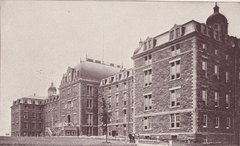
City Hospital, Blackwell’s Island