Tag Archives: Chicago White Stockings

“If I was to Catch Again I’d Laugh at Shin Guards”

14 Apr

Harry Salsinger was the sports editor at The Detroit News from 1907 until his death in 1958. During spring training in 1928 he wrote:

“E.A. Krebs is deeply interested in the pictures of catchers that are sent from the southern training camps. He would like to know why the modern catcher is fitted out like one of the armored knights of King James’ court. His interest is legitimate. Mr. Krebs used to be a catcher himself.”

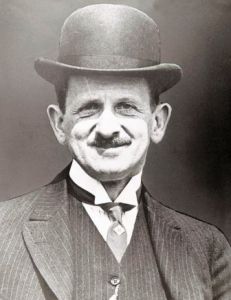
Edward Adam Krebs caught for teams in the Central Association, Iowa League of Professional Baseball Clubs, Three-I, and Cotton States Leagues from 1902 through 1909.
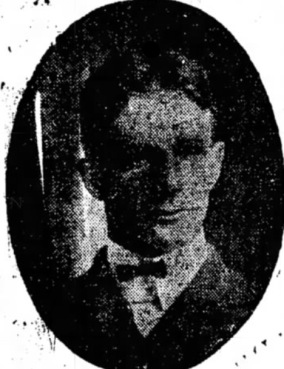
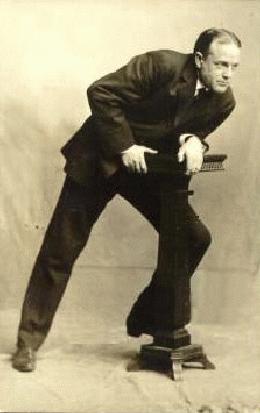
krebs05

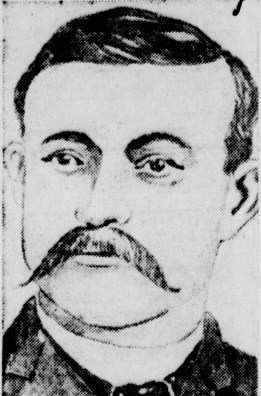
Ed Krebs

Salsinger said Krebs:

“(B)elonged to what is now known as a the ‘old school’ and the men of his school have a habit of snickering at modern baseball. When their evidence is given full consideration there seems sound reason for their snickering.”

Krebs, in a letter to Salsinger, said:

“The only protection we had was the mask, and air-filled chest protector and a catcher’s mitt. But the air-filled chest protector was a real joke after the first month of the season. It wouldn’t hold air any longer, but we buckled it on just the same, for appearance sake, I guess. We might just as well had a piece of Brussels carpet hanging on us.”

He was also annoyed by the use of shin guards:

“We didn’t use them in those days. They weren’t used before my day, and they weren’t used long after my day.”

He said he had the scars to show for it:
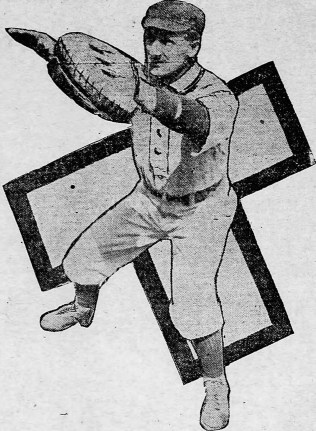
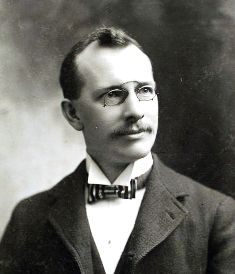
krebs7

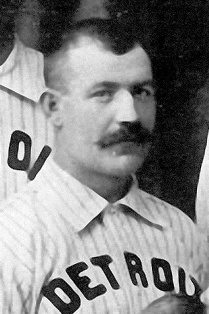
Krebs 1906

“No runner in my days could touch home plate unless he cut me up, for I had home plate completely blocked. I had both feet right on the line, between the runner and the plate. I have been cut from knee to toe many times.

“I have caught some of the fiercest outlaw pitchers the game has known. They were so wild that they could never reach the big leagues. Once in awhile I got a rap on the skin with a wild pitch, but not often, and a kid full of knots doesn’t mind a rap on the shin once in a while.”

Krebs said current pitchers threw no harder than when he played, nor was the ball “any harder,” so, “If I was to catch again (I am 48) I’d laugh at shin guards.”

A Wisconsin native, Krebs said he caught Addie Joss at Sacred Heart College in 1888, although he said he was primarily a shortstop, and the regular catcher was Red Kleinow, who played eight seasons in the major leagues between 1904 and 1911.
krebs9

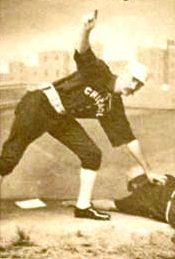
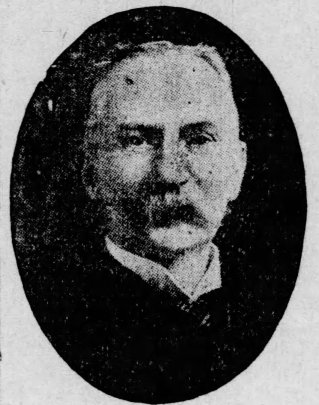
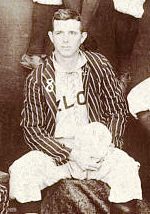
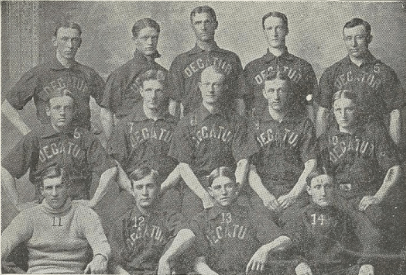
Krebs, 2nd from right, center row, with Decatur, 1903.

During his first season in professional baseball, Krebs played for Fred Pfeffer during the former Chicago White Stockings’ only year as a minor league manager—with the Decatur Commodores in the three-I League in 1902:

“(Pfeffer) was the best second baseman who ever played around or anywhere the bag. I have seen Fred, while he was with us at Decatur and when he was 51 years old [sic 42], go high in the air, pull down a line drive and whip the ball to first for a double play. His throw was half done before he got back to the ground. Many times, I have seen him go deep, scoop up a grounder and slap the ball backhanded to the first baseman.”

Of Pfeffer on the base paths he said:

“I have seen Fred score from third when the catcher stood at the plate waiting for him, the ball in his hand. His body would be pointed straight at the grandstand and his toe would be touching home plate. He would be laying flat on the ground. When the catcher made a stab for Fred, he just wasn’t near the spot where the catcher thought he was.”

Krebs worked as a plumber and died in Burlington, Iowa in 1937.
“Quit Chasing Baseball Flies to Chase the Devil”

8 Apr

Rodney C. Wells was the editor of The Marshalltown (IA) Times-Republican; in 1909 he interviewed the world-famous evangelist, and second-best player to have gotten his start in Marshalltown; Billy Sunday.

billysunday

Billy Sunday

The article appeared in “The Literary Magazine,” a Chicago-based syndicated newspaper insert that appeared primarily * in newspapers in smaller (20,000 to 40,000 population) markets.

Wells said:

“Although since Billy Sunday quit chasing baseball flies to chase the devil he has been tremendously busy preaching the gospel and saving the souls of tens of thousands of men and women, the is still a thoroughbred ‘fan,’ and there isn’t a devotee of the great national game anywhere who keeps in closer touch with it than he.”

Sunday was asked the perfunctory question about the quality of the modern game versus the 19th Century:

“The individual ballplayer of today is no better than he was twenty or twenty-five years ago. In fact, I believe that taking everything into consideration, the fellows of a quarter of a century ago excelled in some ways. To be true what a man does nowadays counts for more in a game, for now they have teamwork down to perfection. In the old days we hardly knew what ‘teamwork,’ as the word applies today, was. We knew nothing about a hit and run game or the double steal—that was all unknown dope to us. Consequently, playing more as individuals, more rested on us as individuals. Hence my reason for saying that, perhaps in some ways, the boys of the old days excelled the stars of today.”

Wells told the story of Sunday coming to Marshalltown after being recruited from his home in Nevada, Iowa—where he was known as a fastest runner in town–to come to Cap Anson’s hometown to participate on the hose team of the local fire department in the state tournament.  Sunday was required to live in town for a month in order to compete with the local fire department.

“Incidentally, Sunday liked to play ball, and he was out in the pasture for practice regularly. He began to command attention in this line, not so much for his proficiency in the game, as his fleetness of foot and his great base running.”

He was recommended to Anson who “looked Sunday up and down and made him a proposition,” to join the White Stockings.  Sunday said upon his arrival:

“The first thing they ran me up against in Chicago was Fred Pfeffer, the crack second baseman of the then celebrated White Stockings. Pfeffer was the fastest man on the bases in Chicago and one of the fastest in the league. Anson had told some of the boys about my running, and they were inclined to doubt the old man’s word. It didn’t take long to settle matters, however, and the first thing I knew I was matched with Pfeffer in a foot race. It is needless to for me to go into details, but I made Pfeffer look like and ice wagon.”

pfeffer

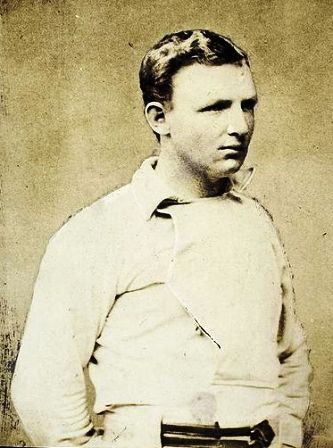
Fred Pfeffer

Sunday acknowledged he “won a place” with Chicago “even though I wasn’t much of a batter,” because of his speed.

“Then, we hardly ever had a sub, and it was seldom that a fellow was not in his position. We played season after season with eleven or twelve men, while now it is not uncommon to see as high as thirty men in the big-league teams. Why, they carry nearly as many pitchers alone in these modern days as we did in our entire team then.”

Sunday asked:

“Where do you find a ballplayer today who was Cap Anson’s equal at all-around ball when Anson was at his best? And where can you find a catcher who would beat old Mike Kelly?

“While I consider Johnny Kling perhaps the best catcher in professional baseball today, I do not believe he was a better catcher than Mike Kelly. And Kelly wasn’t only a great catcher, but he could play anywhere. If needed he could go on any base and be perfectly at home, or he could make good in the outfield. And he was a cracking good base runner, too, even though he was heavy.

“Then there was our other catcher, Frank Flint. I shall never forget him. Grit? One never saw his equal. We didn’t wear the big mitts in those days, and a catcher behind the bat, although he was getting just as swift balls as the catchers of today, had much less protection on his hands. I saw Flint get a hard one on his left hand, that split the poor fellow’s fingers down a clean inch. Quick as a flash he reached for his shirt pocket, grabbed a rubber band, snapped it around his bleeding fingers, and gave a signal for another ball. Every finger on both of poor old Flint’s hands had been broken at some time or another, and there was never a man who played baseball who had as many marks to show for the game.”

Sunday said he regretted that “the bunting game” was not “down to the science that it is now there were a few of us who could have made good.”

He said when he played in Philadelphia he and Billy Hamilton could “do 100 yards in 10 seconds” and batting first and second in the order and would have benefited from more bunting.

Sunday told Wells he had no regrets about retiring when he was 27 years old to begin evangelizing:

“Of course, Billy Sunday is glad he left baseball, for he felt his duty in life lay elsewhere. While the evangelist has a large income from his preaching, and much larger than he would ever have had in baseball, it was not so when he voluntarily gave up baseball for his religious work.”

billysunday

Sunday

Sunday was paid $83 a month when he first began working at Chicago’s YMCA.

“This was true self-sacrifice on Sunday’s part, for he knew not what the future held in store for him.”

Things I Learned on the way to Looking up Other Things #40

1 Apr

Minor League Salaries, 1897

In 1897, Ren Mulford of The Cincinnati Times-Star compiled a list of the average monthly salaries in some of the minor leagues:

“Eastern League–$100 to $180 for youngsters, $200 to $250 for stars.

“Western League–$75 to $150 for young men, nominal–$200 limit—real limit, about $300.

“Western Association–$65 to $115.

“Southern League–$70 to $100.

“Texas League–$60 to $100

“New England League–$75 to $125.”

ren-mulford

Ren Mulford

Mulford said:

“Most of the minor league contracts are from four and one-half months. While they are in force the players have their boards and traveling expenses paid when away from home. Seven months in the year these players can earn money doing other work. And yet they are down-trodden! There are many business and professional men who would be willing to be as down-trodden as are ball players.”

Small Market Woes, 1887

Horace Fogel was the third manager of the Indianapolis Hoosiers in 1887; the last place club finished the season 37-89; 20-49 under Fogel.

fogel2

Horace Fogel

After the season Fogel told The Indianapolis News:

“(I)t is a fact that it is impossible for a weaker League club to compete against such clubs as New York, Chicago, Detroit, or Boston when one of these begins to negotiate with the players. There is no use trying to get him by the offer of more money, for it will do no good. The young players would rather play on the big clubs for $500 less than they would get in the Indianapolis club. They do not recognize they would have a chance for improvement in a weaker club, while in one of the big clubs they must be on an equality with the best or they cannot stay. Young ball players will learn that they will have to begin at the foot of the ladder.”

Indianapolis, under manager Harry Spence finished 50-85 in seventh place in 1888.

Barney’s Favorite Scout, 1910

Barney Dreyfuss told The Pittsburgh Press in 1910 that the “best scout in the country” worked for him despite having “never secured a ballplayer.”

dreyfuss

Barney Dreyfuss

Dreyfuss said, “And as long as he wants to stay on my payroll, he can do it.”

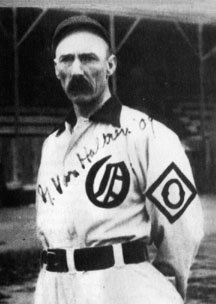
The scout was Pittsburgh’s man on the West Coast, George Van Haltren. Dreyfuss said:

“He is an excellent judge of ballplayers, When we are tipped off to some player who is said to be a wonder, George hikes out and takes a look at him.”

vanhaltren15683011790852769907.jpg

Van Haltren never signed a prospect for the Pirates but remained Dreyfuss’ favorite scout.

Salaries, 1885

23 Mar

Before the 1885 season, The Pittsburgh Dispatch asserted:

“It was confidently claimed at the close of last season’s play that salaries would not go higher, and if any changes were made they would rather be in the other direction, but recent contracts do not justify that assertion”

The paper then told readers who would be the best paid players in baseball:

“The highest salaried ballplayer in the profession for 1885 will be James O’Rourke, late of the Buffalo team. After receiving flattering offers from the Cleveland, Boston, Detroit, Providence, St. Louis, and Athletic clubs he finally signed in New York for $6500.”

o'r

Jim O’Rourke

The Spalding Guide placed his salary at $4500.

The paper said Tony Mullane had signed with the Browns for $3500 with a $500 advance from owner Chris von der Ahe; Mullane would also “sign” with Cincinnati which drew him a suspension for the entire 1885 season:

“(Mullane) went before a notary and entered into an agreement with the St. Louis club…The Cincinnati managers offered him $5000 for this season’s work with $2000 advance money, and the great flopper flopped.”

Other salaries reported by The Dispatch differed with the Spalding Guide:

“(John Montgomery) Ward of the New York League team gets $3400 next year ($3000), and Buck Ewing $3000 ($3100).”

jmward

John Montgomery Ward

The paper claimed that Old Hoss Radbourn, who was reported to have made $4000 for the 1885 season, “had an offer of $6000 for his services,” but did not say who had made the offer,

Louisville’s Guy Hecker, Cincinnati’s Pop Snyder, Buffalo’s Pud Galvin, Pittsburgh’s Ed Morris; Barney Gilligan of Providence, and John Morrill and Jack Burdock of Boston were are to receive $2500 according to The Dispatch.

Cap Anson was to receive $3000 in Chicago; Frank Mountain, acquired by Pittsburgh with the rest of his Columbus Buckeye teammates after that club folded, was said to have been signed for $3300 for the 1885 season.

Sam Barkley of St. Louis, Joe Gerhardt of New York, Charlie Bastian of Philadelphia, and Jim Manning and Mert Hackett of Boston “and several more players will receive $2000, while the number receiving $1500 and upward are entirely too numerous to mention.”

sambarkley2

Sam Barkley

The Dispatch concluded:

“From the above figures it would seem that, instead of decreasing, the salaries of good players are going higher and higher each season.”

“Fifty bucks, Buck”

10 Feb

Hugh Fullerton of The Chicago Tribune called Buck Ewing “the greatest of them all,” after Ewing died in 1906.

Fullerton said, “Ewing stories will be told for generations,” and shared one about a bet with Mike “King” Kelly.

”It happened back in the days when the players of the different clubs were friendly and met at night to discuss and argue over their games instead of sulking separately and discussing their woes.”

ewing

Ewing

He said that day, Kelly had stolen two bases “off the king of catchers,” and Kelly, “kept harping on it until Buck was a bit nettled.”

Ewing told Kelly:

“Well Mike, if Danny Richardson plays second tomorrow, I’ll bet you $50 you don’t steal a base.”

Kelly took the bet, and Fullerton said the following day “three or four of us who knew of the bet sat together in the stands.”


kelly

Kelly

Kelly singled in the third inning:

“(O)n the first ball pitched; he tore for second with a fair start. Buck threw. The ball went like a shot, straight towards the bag, perhaps three feet up the line towards first, a perfect throw to catch any runner—except Kelly. Richardson got the ball five feet ahead of the runner. He was stooped over and swung his body quickly to tag Mike, he expecting the King to make one of his famous twisting slides. Instead, Kelly leaped, jumped clear over Richardson, and lighted flat on his back on top of second base.

“Above the roar of the crowd arose Kelly’s voice, and what he said was this:

“Fifty bucks, Buck.”

“He Threw his bat at the Contemptible Coward”

22 Jul

George Van Haltren was popular with the Chicago press during his three years with the White Stockings from 1887-1889; that changed when, after jumping to the Players League, he returned to Chicago with the Brooklyn Ward’s Wonders on July 28 of 1890.

vanhaltren15683011790852769907.jpg

Van Haltren

In the opening game of a three-game series, Van Haltren, said The Chicago Tribune “got himself disliked in the seventh” inning:

“He was at the bat when a swift inshoot from Silver King landed clearly on his right shoulder (other papers said the pitch struck him in the ribs). Van Haltren glared at the pitcher for a moment and then deliberately threw the bat at him.”

The Chicago Inter Ocean said:

“(H)e turned and threw the bat with all his force at King. A bat is an unwieldy thing to throw and it miscarried several yards.

“’Loafer!’ ‘Viper!’ ‘Sneak,’ yelled the crowd. ‘Put him out!’ ‘Put the loafer out.’

“Van Haltren was unmolested. He should have been fired out of the game so quickly that he would have suffered asphyxiation but umpire Pearce [sic, Grace Pierce] was meek and lowly. Such a tongue-lashing from a crowd, however, a man has not suffered in a long time.”

The Chicago Herald was most outraged:

“To Van Haltren: If you were punished as you have deserved to be punished you would be ruled out of professional baseball forever. You have broken the greatest and the best of baseball laws. Men like Van Haltren should limit themselves to huckstering, street cleaning, or sewer digging. In those vocations the thug element is properly restrained, and the labor is dignified.”

The Tribune dismissed Van Haltren’s claim that King had thrown at him on purpose as “ridiculous” because:

“To show that it was an accident King hit (Bill) Joyce in the back with the next ball pitched. Joyce didn’t throw the bat at King; he threw him a reproachful look and wandered off to the bag.”

silverking

Silver King

Most New York newspapers ran the Chicago papers’ version of the story, but The Brooklyn Eagle would not let it pass that King hit Van Haltren by accident, or that the outfielder was in the wrong.

The paper said:

“The New York papers have not done justice to Van Haltren…In the sixth inning King apparently tried to hit (Dave) Orr with the ball, and Van Haltren on the coaching line called out, ‘Never mid that, Dave, it won’t hurt you.’ King turned to Van Haltren, and in the hearing of all, including the umpires, said, ‘I’ll knock your head off when you come to bat again.’

“Thinking to pass it off jokingly Van replied with a smile: ’Oh, no, Silver, you can’t hurt me; you haven’t speed enough.”

The Eagle said, King purposely threw both pitches at Van Haltren—the pitch that hit him being “a terrifically fast ball,” which:

“(C)aught poor Van in the ribs. It was too much for even his gentlemanly disposition, and almost crazed by pain he threw his bat at the contemptible coward.”

King took the mound again against Brooklyn in the final game of the series on July 30. Brooklyn scored three runs in the first inning.

The Chicago Tribune said:

“(T)he first ball pitched after Van Haltren had tripped up to the plate in the second inning struck the batsman on his right shin bone. Of course, everybody expected to see Van Haltren draw a knife on King, but he didn’t. He placed his bat gently on the grass and limped off to first base. He may have done some thinking, but he didn’t do it out loud.”

“I was in Sort of a Trembling Condition”

19 Jul

When George Van Haltren joined the Chicago White Stockings as a pitcher in June of 1887, California newspapers followed his progress closely.

After a disastrous first start on June 27, Van Haltren was used in relief and in right field until July 5, when he started for Chicago against the New York Giants.

vanh

Van Haltren

The Chicago Tribune said that likely “not one of each hundred of the 7000” fans in attendance thought the White Stockings would win with the rookie on the mound:

“(T)here were many who feared that the Giants would ‘get into’ the young man and hammer out a victory.”

Van Haltren beat the Giants 15-3, allowing just one earned run in the ninth inning when he experienced a bout of the wildness that plagued his first start, and walked three batters.

The Sacramento Daily Record-Union sent a reporter to Chicago who provided West Coast fans with the first interview of “The California Wonder” since he headed East:

“George Van Haltren, hot, tired, and dusty, but with a most excusable look of triumph on his face, walked into the White Stockings clubhouse at close of today’s ‘toying’ with the New York Giants and seated himself in a chair. The crowning test of his ability as a pitcher had come and been triumphantly met.”

The reporter asked “the well-tried young pitcher,” about to embark on his first road trip with the club, how he was being accepted in Chicago:

“I’ve been treated like a prince and feel sorry that we are going away even for three weeks. Talk about Southern hospitality, if it’s anything better than what I’ve experienced here, I want to go South.”

Van Haltren was asked to compare baseball on the West Coast to the National League:

“Oh, players are very much more finished, of course, and in some respects the game is almost a new one to me. There is fielding, for instance; why, if my old partners in San Francisco could see the way the ball comes into the diamond from the field in Chicago, it would make their hair stand on end.”

But, said Van Haltren, he wasn’t necessarily having a harder time in Chicago:

“On the contrary, I’ve been most agreeably surprised in that respect. You see, there I was almost expected to strike three out of every five men who faced me, and when I came here, of course, I expected that against famous sluggers of the National League I should have to get down to just so much harder playing. Shortly after my arrival here, however, Captain Anson told me that I was not expected to do anything of the sort. There are outfielders in the Chicago nine, he said, and it was part of their business to look after balls that were knocked into the field. All I was expected to do was play good ball, and if batsmen knocked me hard, men on the outside of the diamond were to attend to the rest.”

He said he was treated well by his teammates:

“I was a stranger, and they took me in and treated me in such a way that now I feel perfectly at home. They are gentlemen from way back, and I would not ask for better company.”

Anson then interjected:

“The satisfaction is mutual my boy, and don’t let it slip your memory.”

Van Haltren was then asked about his disastrous first start—after four strong innings, the rookie walked 14 batter and hit four, although most sources said umpire Herm Doescher did the pitcher no favors:

 “Well, that was a bitter dose. When I went on the ground that day my heart was in my throat and stayed there until I had struck out the first Boston batsman to face me (Joe Hornung), the it went down nearer its natural place, but all through the game I was in sort of a trembling condition. It might not have been so bad if Doescher had given me a fair show.”

He said by the end of the game:

“I wished that I had never come East of the Rocky Mountains. That was an awful roast.

‘”Should say it was,’ growled big Edward Williamson, the Chicago shortstop, who was gravely killing flies on the wall, smashing them with his baseball pants. ‘It is a wonder the colt didn’t break down entirely,’ and the speaker made a vicious lunge at an unusually big bluebottle fly.”

He said he had just one regret; he had been informed that day that Tom Daly would no longer be his catcher for his starts. The Tribune said of his performance during the game with the Giants that, “Daly’s work behind the bat was little short of phenomenal and was best ever seen on the grounds.”

daly

Daly

Van Haltren told the California reporter:

“I am only sorry I am going to lose Daly, who has been catching for me. He is the greatest man behind the bat I ever saw, and I think that he’s the only man can hold (Mark) Baldwin’s terrific delivery, and so I am to have (Dell) Darling. He of course is a first-class man, too, but Daly caught first for me and I am sorry to lose him.”

In closing he asked the reporter to:

“Be sure to tell my California friends that I am enjoying myself.”

Van Haltren was 11-7 with a 3.86 ERA as the White Stocking’s third starter; he also played 27 games in the outfield and hit .206 for the third place White Stockings.

Things I Learned on the way to Looking up Other Things #36

17 Jul

Bancroft on Radbourn

In 1900, in The Chicago Record, Frank Bancroft said of one of his former players:

“Charlie Radbourn did more scheming than any man that ever played baseball. When I had him in Providence, he always was springing something new and some of his ideas were exceedingly far-fetched.

“I remember on one occasion and at a critical period in a game Rad drew back his arm as if to pitch, then instead of delivering the ball to the batsman he threw it around his back to Joe Start, who was playing first base for us. It was only by the greatest effort that Start managed to get the ball. Had it gone wild the game would have gone against us as there were several men on the bases. When I questioned him regarding the throw, he claimed that it was a new idea, and that if Start had been watching himself he would have retired the runner on first.”

rad

Radbourn

National League Facts, 1880

The Chicago Tribune reported before the 1880 season that every National League charged $15 for a season ticket, except for the Providence Grays who charged $20.

The paper also calculated the miles each team would travel during the season (listed in order of finish):

Chicago White Stockings 6,444

Providence Grays 6,200

Cleveland Blues 5,592

Troy Trojans 4,990

Worcester Ruby Legs 6,470

Boston Red Stockings 6,240

Buffalo Bisons 5,356

Cincinnati Reds 6,294

Dan Brouthers and “Dude Contrivances”

In 1893, The Buffalo Courier reported that Brooklyn Grooms manager Dave Foutz told his players “there was nothing better than good bicycle practice to keep in condition.”

Dan Brouthers said back home in Wappinger’s Falls, New York, people “never would recognize him again if they heard he had been riding one of those dud contrivances.”

brouthers

Brouthers

The paper corrected the first baseman: “Dan evidently needs a little education in cycling. The day has passed when a rider was regarded in the light of a dude.”

“I am not Fool Enough to Give $25,000 for one man”

12 Jul

A.G. Spalding sold Abner Dalrymple, George Gore and King Kelly before the 1887 season. Having sent the message that no player on the Chicago roster was untouchable, William Albert Nimick, owner of the Pittsburgh Alleghenys approached the White Stockings owner with an offer on September 23.  In a letter to Spalding, printed in The Pittsburgh Post, Nimick wrote:

“Dear Sir—If there is any truth in the rumors that A.C. Anson’s release can be obtained, the Pittsburgh baseball club, knowing his ability as manager, captain and player, is willing to pay for his release, the largest sum ever offered for a single player, viz: $15,000. Be kind enough to let me know at once if you will consider this offer.”

nimick

Nimick

Spalding responded to Nimick:

“Dear Sir—Yours of the 23rd inst. Containing the unprecedented offer for the release of Captain Anson just received. I confess to some surprise at the amount named and if we seriously thought of releasing Anson it would prove a very tempting proposition. My personal relations with him have always been of such a satisfactory nature that I would hate to lose him. About all that I can say at present in reply to your offer is that should we decide to release him you will be advised of that fact before anything is done.”

anson

 Anson

Nimick told The Post he took Spalding’s letter as an indication that “There is still some hope of our getting Anson.” He said if he could not get Anson, he would be able to acquire either second baseman Fred Pfeffer or shortstop Ned Williamson. The Post said:

“The prevailing opinion in Chicago is that the three players named cannot all remain in the Chicago club harmoniously, and that one or more of them must be transferred.”

The Chicago Tribune asked Anson about the potential of his playing elsewhere in 1888:

“I know the offer has been made and am surprised that such a sum should be offered for a baseball player. I am, of course, sorry that baseball men are sold by the different managers as so much material, without considering what they have to say in the matter, but it gives me satisfaction to know I am worth so much as a baseball player. If Nimick should buy my release from Spalding for that sum he would have to settle with me afterwards before I would play with the Alleghenys. I never expect to play with any other than the Chicago club. As long as I remain in the baseball world I hope to be where I am at.”

One month after the original offer was made, The Post reported that the Pittsburgh owner was not giving up and had made “the most sensational offer for a player on record.”

The paper said Nimick increased the price to $25,000, but the Pittsburgh magnate denied the story the following day. He told The Pittsburgh Leader:

“I am not fool enough to give $25,000 for one man.”

Nimick also denied a rumor that he had offered $10,000 for Chicago pitcher John Clarkson, who would be sold to Boston for that price six months later. He told the paper Pittsburgh was, “fixed as well if not better than any other club” for pitching.

The Pittsburgh papers and Nimick held out hope of acquiring at least one of the three Chicago stars until November, when Spalding was quoted in The Press putting an end to the speculation:

“(Nimick) offered $15,000 for Anson and would have given more if he could have been bought. He won’t leave Chicago, however. I have 16 players signed or it least equal to it.”

Anson, Williamson, and Pfeffer all remained in Chicago.  Nimick bought Fred Dunlap from Detroit, Al Maul from Philadelphia, and Billy Sunday from Chicago—the three were secured for roughly half of what was offered for Anson.

The Alleghenys were 62-72 and finished sixth for the second straight season; Anson guided Chicago to a 77-58 second place finish.

Things I Learned on the way to Looking up Other Things #35

1 Jul

Comiskey versus Anson

In 1888, Ren Mulford, writing in the Cincinnati Times-Star compared Charlie Comiskey to Cap Anson:

Charles Comiskey

Charles Comiskey

“Charlie Comiskey, who for several years has successfully piloted the St. Louis Browns to victory, possesses many of the characteristics which made Anson famous. He teaches his men to sacrifice everything in order to advance the interests of the club, but unlike Anson he never humiliates his men on the field. When it is necessary to reprimand any of them for an error or misconduct, he does it quietly. He uses good judgment in picking up players but lacks patience in developing the men.”

Latham on Comiskey

Arlie Latham and Charles Comiskey were together with the St. Louis Brown from 1883-1889, and Latham jumped the Browns to join the Players League with Comiskey in 1890, helping to form the Chicago Pirates–“The greatest team ever organized.” But from the beginning the team was beset with discipline issues and struggled.

lathampix

 Latham

Comiskey benched Latham, who was hitting just .229, in July.  The Chicago Tribune said several attempts were made to trade Latham, and when nothing materialized, he requested to be released and he was on July 29.

Latham returned to the National League, joining the Cincinnati Reds, then aired out his grievances with his former boss and friend when he was with the Reds in Boston in August. The Boston Globe’s Time Murnane said Latham was at the United States Hotel talking to members of the Pittsburgh Burghers who were in town playing Boston’s Brotherhood club:

“Some of Pittsburgh’s Players League boys were anxious to know why Latham was released from Chicago.

“’Comiskey did it,’ was his answer. ‘He has been after me for some time, and said I was playing crooked ball. I was laid off in St. Louis last season for the same thing, but this year Commie was cross and ugly all the time.’

“’You see, he has plenty of money and can afford to be stiff. I dropped three short fly balls in the last game I played in Chicago and Comiskey came and told me that he was on to me and would stand it no longer.’

“’I asked for my release and got it that night. My arm was very sore, but the other men would not believe it. I wanted to stay in the Players’ League and sent word to Al Johnson (owner of the Cleveland Infants) saying I was open for engagement.’”

Latham alleged that Comiskey or someone connected with the Chicago club had a role in blackballing him from the league:

“’I heard from (Johnson) once and then he stopped. I suppose the Chicago people interfered.’”

The Chicago Tribune said Latham actually received an offer from Cleveland but joined the Reds when they offered more money.

Murnane said when Latham arrived in Cincinnati, in an attempt to “get some good work out of the ‘Dude,’” that Reds manager Tom Loftus made him captain:

“(Latham) has been known for years as one who could keep the boys all on the smile while he shirked fast grounders.”

But Murnane claimed he had already worn out his welcome with some of the Reds:

“Since Latham’s release by Chicago he has taken pains to run down the Players’ League until the members of that organization have soured on him (two days earlier) he went out of his way to abuse the Brotherhood, and the result is that he is already getting himself disliked by several level-headed members of his own team.”

Latham stayed with the Reds with five seasons, and Comiskey again became his manager from 1892-1894.

Blame it on Hulbert

After winning the inaugural National League pennant in 1876 with a 52-14 record, expectations were high for the Chicago White Stockings in 1877.

hulbert

Hulbert

After a 26-33 fifth place finish, The Chicago Evening Post said the blame rested in one place:

“There are a great many men in America who do not know how to run a ball club, and Mr. (William) Hulbert, President of the Chicago club, appears to be one of the most conspicuous. The public is familiar with the fact that this year’s White Stocking Nine was more of a disgrace to the city than a credit and there was a considerable wonderment as to why a nine that in 1876 swept everything before it, was in 1877, obliged to content itself with the last place in the championship struggle [sic, Chicago finished fifth in the six-team league).

“From all that can be learned, it would seem that part of the season’s ill success should be attributed to the manner in which the men have been treated by Mr. Hulbert. There are complaints that he was continually finding fault, until the men became discouraged and lost heart in their work. Just how true this is The Post does not propose to determine, but simply gives publicity to a letter from Mr. Hulbert to Paul Hines, in which he distinctly charges Hines with not trying to play.”

According to The Chicago Tribune, the letter, sent in July, suggested that Hines was not “playing half as well,” in 1877 as he had the previous season—Hines’ average dropped from .331 to .280.

The Post said the letter showed how little Hulbert knew:

“To those who have attended the games this season this charge will bring a smile, as Hines is notoriously one of the hardest working and most reliable ballplayers in the country.”

The White Stockings finished fourth the following two seasons, but won back-to back pennants in 1880 and ’81, the final two before Hulbert’s death in April of 1882—the White Stockings won their third straight pennant that year.