Tag Archives: Cincinnati Reds

“Good day—Double Crosser”

30 Jul

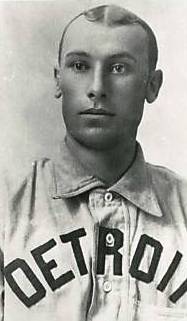
Hap Myers’ abrupt exit from the Boston Braves was never fully explained; the Boston press said he simply didn’t get along with manager George Stallings, Myers said it was because of his activities as one of the leaders of baseball’s most recent labor movement.
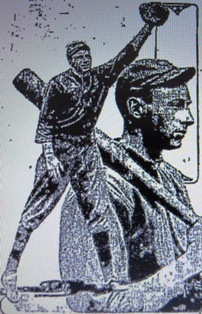
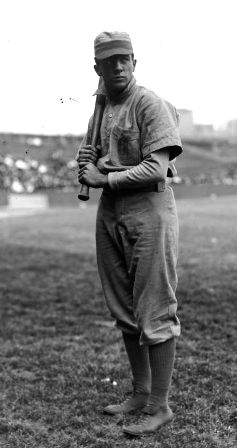
"Hap" Myers

“Hap” Myers

Two articles from The Associated Press about George Stallings that appeared after the braves won the World Series might have shed some light on the relationship between the two—one mentioned an incident that took place during a game, and the other had to do with Stallings’ well-known and strange superstitions.

The first article was about “a game played in Boston in the summer of 1913,” (box scores indicate it was most likely, the second game of a double-header with the Cincinnati Reds on July 22).

“Two men were out and the Braves had a man on first and another on second…A long hit would either tie the score or win the game.  ‘Hap’ let the first one pass—and bunted the second.  He was thrown out by at least 10 feet and the game was over.  The Braves had lost.

“’Hap’ in terror over a possible rebuke…escaped into the clubhouse.  Stallings was there, enshrouded in deepest gloom.  Baseball never knew a harder loser that Stallings.  But Stallings never said a word to Myers then, and Myers ducked out.

“The next morning found Stallings at Myers’ home.  Myers had just gotten up.”

When Myers answered the door, Stallings asked him why he had bunted with two on and two out.  Myers told his manager that he thought he’s “double-cross the other fellows…catch ‘em asleep.”

Stalling blew up at the first baseman:

“Well, let me tell you this Myers, if you ever again try any of that ‘double-crossing’ stuff there’ll be a funeral in this particular neighborhood.  Good day—double crosser.”

The second article said that during a losing streak in June of 1913 the superstitious Stallings blamed the “jinx” on a colorful necktie Myers wore—the only tie the first baseman owned.  According to the article, Stallings told his equally superstitious owner James Gaffney:

“That necktie of his—that horrible looking sight, that drapes down from his collar.  No wonder we can’t win.  No wonder we are jinxed.  That necktie would hoodoo anybody.”

The story said Stallings stole the tie from Myers, and after the Braves won the following day told Gaffney:

 “Told you so, didn’t I?”

The Boston Globe told a slightly different version of the story in 1931 in an article about Stallings.

By the time these stories were published, Myers was in his second season with the Brooklyn Tip-Tops in the Federal League.  He hit a disappointing .220 in 1914, but stole 43 bases.  In 1915 he hit .287 and was suspended for several days in June after he and Chicago Whales player-manager Joe Tinker “exchanged blows.”
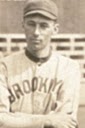
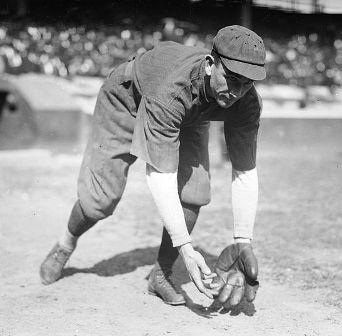
"Hap" Myers Brooklyn Tip-Tops

“Hap” Myers Brooklyn Tip-Tops

When the Federal League folded Myers returned home to California and signed a contract with the San Francisco Seals, who already had veteran William “Chick” Autry at first.  When Myers arrived in San Francisco, The San Jose Mercury News said:

“The fight for the job will be a battle which will be watched with more than passing interest by San Jose fans, for most of them remember Myers as an elongated youngster who wielded a ferocious bat when he first broke into professional ball in this city.”

Myers hurt his arm and the battle never took place; he only appeared in three games, and was hitless in two at bats.  He would never play organized baseball again.

Where Myers spent the remainder of the 1916 season is unknown; The Mercury-News said he went to Ray, Arizona to join the Tri-Copper League, but no reference to Myers can be found in league statistics—whether he played in Arizona or not, he did spend time in the Southwest that year.

In November of 1916 Myers and two other men were arrested in Los Angeles on a warrant from El Paso, Texas.  The Associated Press said Myers was “wanted by the El Paso Police on a charge of highway robbery…one resident (was robbed of) a $1500 diamond ring and $48 in cash, and another resident, a diamond ring valued at $325,”

In January of 1917, when the trial took place, highway robbery was punishable by death in Texas.

On January 23 Myers and his co-defendants were acquitted.

Myers, now a free man, remained in the Southwest and went to work as a metallurgist with a copper mining company in Grant County, New Mexico.

In 1918 the 31-year-old Myers enlisted in the military; joining Company B of the Field Signal Battalion at Camp Lewis, Washington.   He played baseball at Camp Lewis and in France with the United States Army—among Myers teammates were professional players Ten Million, “Coaster Joe” Connolly, Howard Mundorff and Charlie Schmutz.

After returning from France Myers worked as an insurance adjuster in Seattle and later in automobile financing back in his hometown of San Francisco.

“The elongated first baseman” died in San Francisco in 1967 at age 80.
Butcher Boy Schmidt

25 Jul

Charles John “Butch” “Butcher Boy” Schmidt was credited by Connie Mack with being the catalyst for the Boston Braves World Series upset of Mack’s Philadelphia Athletics in 1914; one year later Schmidt walked away from baseball in his prime.

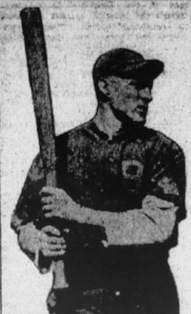
Butch Schmidt

Butch Schmidt

He was born in Baltimore in 1886, and played amateur ball while working in the family meat market, which earned him his nickname.

Schmidt signed as a pitcher with the Baltimore Orioles  in the Eastern League and assigned to the Holyoke Papermakers in the Connecticut State League, where he posted a 10-9 record.  In late August the Orioles recalled him, and he went 5-1 in 11 games with Baltimore.

The New York Highlanders drafted Schmidt and the 22-year-old pitcher started the 1909 season in New York.  He appeared in only one game, on May 11, giving up 10 hits and eight runs, four earned, in five innings.  Early in June he was returned to the Orioles.

After appearing in eight games on the mound with the Orioles, Schmidt was moved to first base.  After hitting .244 for the remainder of ’09, he hit .292, .291, and .274 the next three seasons, and was sold to the Rochester Hustlers in the International League, where he hit .321; he was purchased by the Boston Braves on August 22, and hit .308 in 22 games playing in place of Ralph “Hap” Myers.

At the end of the 1913 season Boston sold Myers’ contract to Rochester; The Boston Post reported that Braves manager George Stallings simply didn’t like Myers.  (Myers had a different theory for his release—that story next week)

Schmidt was installed as the Braves first baseman in 1914, and as Boston made their improbable run to the National league pennant Schmidt   hit .285 with 71 RBI and .990 fielding percentage, and finished 16th in the voting for the Chalmers Award, for the most valuable player in the National League; teammates Johnny Evers and Rabbit Maranville finished first and second in the voting.

Grantland Rice said in The New York Tribune:

“There are few greater first basemen in baseball and none who is steadier or a better fighter.  For Schmidt is also of the aggressive type and a hustler every second.”

The New York Times didn’t think quite as highly of Schmidt and on the eve of the World Series said the “advantage favors the Athletics” at first base:

(John “Stuffy”) McInnis makes exceptionally brilliant plays…has been through Worlds Series fire and proved just as cool as if he were playing an exhibition game in the springtime.  Schmidt has yet to face the strain and tension of the big baseball classic…While Schmidt is not a scientific batsman, he is a free swinger and hits the ball hard, but he doesn’t hit it often.”

The pressure of the series didn’t seem to bother Schmidt, the Braves first baseman hit .294 with five hits, two runs and two RBIs in the four game sweep of the Athletics; McInnis hit just .143.

In game one he made a play in the first inning that Connie Mack said set the tone for the series and “sparked the Braves.”  With runners on first and second with one out, Athletics third baseman Frank “Home Run” Baker hit a foul pop-up into short right field.  Athletics outfielder Eddie Murphy tagged up and attempted to go to third; The Associated Press said Schmidt made a “great throw…from a difficult angle,” to third baseman Charlie Deal to retire Murphy.

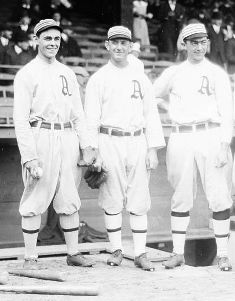
Stuffy McInnis, Eddie Murphy and "Home Run" Baker,

Stuffy McInnis, Eddie Murphy and “Home Run” Baker,

Early in the 1915 season Braves manager George Stallings called Schmidt “The best first baseman in the game,” but his performance at the plate slipped.  Schmidt hit just .251 with 60 RBIs.  The Braves again found themselves in 8th place in July, and while they made another strong run, finished 2nd, seven games behind the Philadelphia Phillies.

Despite the mediocre season at the plate, it was assumed the 28-year-old Schmidt would remain the Braves first baseman.  Schmidt shocked Stallings, Boston fans, and all of baseball when he announced in January of 1916 that he was retiring from baseball.

Butch Schmidt at bat

Butch Schmidt at bat

The Associated Press said Schmidt was leaving “to devote his entire time to his private business.”

Grantland Rice said Schmidt’s business included “six meat markets in Baltimore,” and that he earned $8000 a year from his stores.

The Sporting Life said it was just as likely that Schmidt, listed at 200 pounds, retired because:

Hard work in that old rubber shirt to get down to weight, especially when the extra weight comes off slowly, more slowly each succeeding season, is a trial that anyone would like to sidestep if he could. “

Boston manager George Stallings filled the void left by Schmidt by purchasing Ed Konetchy from the Pittsburgh Rebels from the newly defunct Federal League.

The Boston Post said the change at first base would not hurt the Braves:

“Konetchy, a heavier hitter than Schmidt, is just about as capable in other ways.”

Despite the confidence of The Post, Stallings was not convinced and continued to try to induce Schmidt to return; his efforts were unsuccessful.

After Konetchy hit .260 for the third place Braves in 1916 it was reported that Schmidt would return to the team.  After several weeks of speculation, Schmidt told The Boston Globe “no offer” could induce him to return to Boston.

Konetchy hit .272 and .236 the next two seasons, and each off season it was rumored Schmidt would return, and every year he stayed home where he continued to run his business and play semi-pro ball in Baltimore’s Inter-City League.

Before the 1919 season Konetchy was traded to the Brooklyn Robins and the Braves acquired Walter Holke from the Cincinnati Reds.  Holke hit .292 for the Braves in 1919, but rumors continued that Schmidt, out of organized baseball for four years, would be returning to Boston.  The Associated Press said:

“George Stallings of the Boston Braves is trying to get Charlie “Butch” Schmidt, the Baltimore butcher boy who played first base for the world’s champions of 1914, to return to the Boston Braves.  Schmidt is reported to be in wonderful condition as he has kept in practice since his retirement.”

Schmidt never returned to professional ball, and was finally removed from Boston’s reserve list in 1922.

Butch Schmidt walked away from professional baseball and never looked back; he died in 1952 of a heart attack while inspecting cattle at the Baltimore Union Stock Yards.

“Is the Best the Game has Known”

23 Jul

Joining the Boston Braves for the 1914 season provided second baseman Johnny Evers with the opportunity to appear in one more World Series, and gave him the chance to take a very public swipe at one of his most famous former teammates, shortstop Joe Tinker.

In December of 1912 the Chicago Cubs traded Tinker to the Cincinnati Reds, and depending on which version of the story was to believed, Tinker and Evers had not spoken a word to one another for either five or six years.

Johnny Evers

Johnny Evers

Tinker said the two stopped talking in 1908 after Evers jumped in a horse-drawn cab leaving Tinker and other teammates behind before an exhibition game in Indiana leading to an on-field fight between the two later that day; Evers said a year earlier Tinker initiated the bad blood between the two by throwing a ball so hard to the second baseman on a force play that it injured his finger.

Evers said years later:

“I yelled to him, you so-and-so. He laughed. That’s the last word we had for-well, I just don’t know how long.”

The 1914 Braves got off to a horrible 4-18 start, and were still in eighth place on July 18, but surged to second place by August 10, winning 18 of 21 games.  By September 2 the Braves had first place to themselves, and ended up running away with the pennant, beating the second place New York Giants by 10 ½ games, and sweeping Connie Mack’s Philadelphia Athletics in the World Series.

Evers, named Boston’s captain by manager George Stallings, led National League second basemen in fielding; hit .279 for the season, and .438 in the World Series.  Evers received baseball’s last “Chalmers Award,” a forerunner of the Most Valuable Player Award, which was presented from 1911-1914.  The award was sponsored by the Chalmers Motor Car Company and was presented to Evers along with a new car.

The runner-up for the Chalmers Award was Evers’ teammate, shortstop Walter James Vincent “Rabbit” Maranville.  Maranville, Evers and first baseman Charles “Butch” Schmidt were an excellent double-play combination throughout the season; Evers participated in a career-high 73 twin killings, more than he’s ever turned in a season with Tinker and Frank Chance.

Years later Maranville said of Evers:

“It was just Death Valley, whoever hit a ball down our way.  Evers with his brains taught me more baseball than I ever dreamed about.  He was psychic.  He could sense where a player was going to hit if the pitcher threw the ball where he was supposed to.”

Two days after the Braves won the World Series; Evers took the opportunity to take a swipe at his former teammate Tinker.  Evers told William Peet, sportswriter for The Boston Post that:

“(Maranville’s) the best shortstop the game has ever known.

“Better than Joe Tinker; your old side partner?

“Yes, he’s better than Tinker.”

Joe Tinker

Joe Tinker

Peet sad:

“Evers has been given credit for making Maranville the great player he has shown himself to be this season, but Johnny declares this s untrue, stating that Maranville learned the game and all its fine points unaided.”

Peet said Evers’ claim that Maranville “is a greater shortstop than Tinker is about the highest praise anyone can shower on the peppery little chap who was such a prominent factor n the Braves’ victory.”

Rabbit Maranville

Rabbit Maranville

Evers and Peet failed to mention where Honus Wagner would be ranked if Maranville was, in fact, “the best shortstop the game has ever known.”

No response from Tinker was recorded.

Evers and Tinker would not speak again for another decade.  In 1924, the two finally spoke when they were summoned to California by Chance, their former teammate and manager, who was dying.

Tinker, Evers and Chance

Tinker, Evers and Chance

Tinker, Evers and Chance were inducted into the Hall of Fame together in 1946 by the veterans committee; Maranville was elected by the Baseball Writers Association of America in 1954.

“He was Not Crazy as Reported”

18 Jul

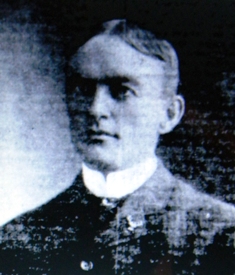
Ervin Thomas “Erve” “Dutch” Beck hit the first home run in the American League; on April 25, 1901, the second day of the season, as a member of the Cleveland Blues; Beck homered off White Sox pitcher John Skopec at Chicago’s South Side Park.

It was a highlight in a short, promising career, like many at the turn of the 20th Century, destroyed by alcoholism.

Beck was considered the best young player in Toledo, Ohio when he joined the Adrian Reformers in the Michigan State League as a 16-year-old in 1895, then for the next five seasons, he was the star of his hometown Toledo Mud Hens in the Interstate League.  For the two seasons in Toledo for which complete records survive, Beck hit .298 in 1898 with 11 home runs and, a league-leading .360 with 15 home runs in 1900.

Erve Beck

Erve Beck

Earning the Nickname “Home run Dutch” in the Toledo papers, Beck was credited with 67  during his five seasons with the Mud Hens;  he would remain the team’s all-time career home run leader until 2007 when Mike Hessman (currently with the Louisville Bats in the International League) hit his 68th as a Mud Hen.

Beck also had a brief trial with the Brooklyn Superbas in the National League in 1899, hitting .167 in eight September games.

It’s unclear exactly when Beck’s problems with alcohol began, but according to fellow Ohioan Ed Ashenbach (alternately spelled Ashenback by several contemporary sources), a minor league contemporary who wrote a book in 1911 called “Humor among the Minors”,  it was well-known during Beck’s career that he was “addicted to strong drink,” and as a result suffered from “hallucinations.”

Ed Ashenbach

Ed Ashenbach (Ashenback)

Before the 1901 season, Beck, whose rights were held by the Cincinnati Reds, jumped to the Cleveland Blues in the newly formed American League; the twenty-two-year-old hit .289 and accounted for six of Cleveland’s twelve home runs.

Beck jumped back to the Reds before the 1902 season and received rave reviews early in the season.  The Cincinnati Tribune seemed to like him more at second base than veteran Heine Peitz:

“Erve Beck looks more like a second baseman than anyone who has filled the position since (Bid) McPhee went into retirement (in 1899).  He covers the ground, seems to know where to play and is capable of swinging the bat with some effect.”

His teammate, pitcher Frank “Noodles” Hahn claimed Beck hit the ball “harder than (Napoleon) Lajoie.”

Beck hit better than .300 playing second base in May but went to the bench when Peitz, who was filling in behind the plate for an injured Bill Bergen returned to second.

In June first baseman Jake Beckley missed a week with an injury and Beck filled in there; The Cincinnati Enquirer’s Ren Mulford said:

“(Beck) played the bag in splendid style…In handling ground balls Beck is as good as Beckley, and he is a better thrower… Beck gave another display of his versatility by plugging up a hole in right field.  He made one catch that was a lollapalooza…Most players would have lost heart when benched as Beck was, but he remained as chipper as a skunk during his term of inactivity, and gladly accepted the opportunity to get back into the swim. Beck is a phlegmatic soul, who takes life, as he finds it without a growl.”

In spite of a .305 batting average in 48 games and the great press he received, Beck was released by the Reds in July.  Whether the release was simply because he was the odd man out with Peitz, Beckley and right fielder Sam Crawford healthy or as a result of drinking is unknown.

Beck was signed almost immediately by the Detroit Tigers where he took over at first base after Frank “Pop” Dillon was sent to the Baltimore Orioles.  He hit .296 in 41 games but was again released at the end of the season.

Beck would never return to the big leagues.

In 1903 he .331 for the Shreveport Giants in the Southern Association, he jumped Shreveport the following season and played for the Portland Browns in the Pacific Coast League.   He returned to the Southern Association with the New Orleans Pelicans in 1905.  After starting the 1906 season in New Orleans, he was released in July and signed by the Nashville Volunteers; his combined average with both Southern Association teams was .211.

Beck’s drinking was, according to Ashenback and contemporary newspaper accounts, common knowledge by the time he wore out his welcome in Nashville in August and was sold to the Augusta Tourists in the South Atlantic League.

That stop would last for only one game.

The 27-year-old, four years removed from the American League, played first base for the Tourists on August 6.  Augusta second baseman Ed McKernan said, “It was evident when he reported there was something amiss with him,” and claimed Beck chased “an imaginary flock of geese away from first base” during the game.

The following day, according to The Augusta Chronicle, Beck “created a sensation in the clubhouse…causing all but two of the players to leave the house.”  As a result, Augusta released him.

The following day The Chronicle said:

“(Beck) ran amuck this morning and created great excitement on the street.

“While in a room on the third floor of the Chelsea hotel the big infielder suddenly began to see things and sprang from the third story window to the ground below.  Only two intervening telephone wires and a rose bush saved his life.

“He then darted down an alley and hid himself in a store.  He was finally captured and came quietly back to his room with a policeman and (Tourists outfielder Frank) Norcum.”

The Sporting Life assured their readers that Beck “was not crazy, as reported, but only suffering from the effects of a (drunken) spree.”

McKernan said “During his convalescence…Beck would smilingly avow his determination to abstain from strong drink.”

There were varying reports regarding the extent of his injuries, and it’s unknown whether he was physically able to play after the fall, but Beck would never play professionally again.

He returned to Toledo where he operated a tavern and appears to have been unable “to abstain from strong drink;” he died in 1916 of Articular Rheumatism complicated by Hepatic Cirrhosis.

The National League versus Horace Fogel

8 Jul

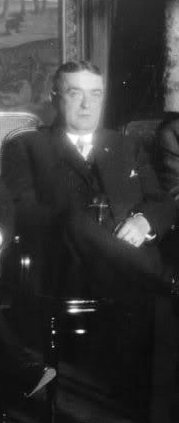
In 1912 Horace Fogel, president and owner of the Philadelphia Phillies and umpire William Thomas “Bill” Brennan were at the center of baseball’s biggest controversy: Fogel  accused Brennan and others with favoring the pennant winning New York Giants.

Fogel first suggested that St. Louis manager Roger Bresnahan was “pulling for” New York after the Giants won two of three games from the sixth place Cardinals in August.

Less than a month later Fogel would turn his attention to the umpires, and National League President Thomas Lynch.  Fogel was not a fan of the league president to begin with; the previous December The New York Times said that Fogel had been coerced by Cincinnati Reds owner August Herrmann into supporting Lynch’s reelection at the league meeting in New York:

“It was reported about the Waldorf yesterday that… (Chicago Cubs President Charles) Murphy and Fogel would not vote against Mr. Lynch because President Herrmann had in his possession a letter which was sent to him by mistake from Fogel, when it should have been sent to Murphy.  Mr. Fogel, it seems, put Mr. Murphy’s letter in the envelope addressed to Mr. Herrmann.  It is said to contain something important about the relations of the Philadelphia and Chicago clubs.”

Horace Fogel

Horace Fogel

On September 7 Fogel wrote a letter to Lynch attacking the league’s umpires in general and Brennan specifically, and  according to The Philadelphia Inquirer “hinting that Lynch had some influence in their poor officiating.”

A week later an article, said to be authored by Fogel, appeared in The Chicago Evening Post that repeated the charges made in the letter to Lynch.  Fogel also sent Herrmann a telegram telling the Reds owner he felt the National League pennant race was “crooked.”

Brennan was the first umpire to respond.  He sent a letter to the National Baseball Commission on September 30 demanding an apology from Fogel for impugning “the impartiality of National League umpires.”

Fogel repeated his accusations again in letters sent the following week to the seven other National League team presidents, and promised to “make startling disclosures.”

On October 17 The Associated Press said his counterparts voted to “formally draw up charges against President Fogel of the Philadelphia club for his remarks reflecting on the integrity of National League umpires.”

Brennan told reporters that he would be filing a libel suit against the Phillies owner.

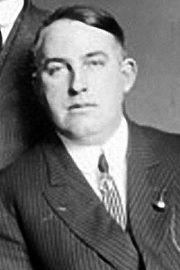
William "Bill" Brennan

William “Bill” Brennan

A hearing was scheduled for November 26.  President Lynch said:

“If the charges can be proved, then the umpires in question should be blacklisted and the president of the league should step down in disgrace.  If the charges are not true, some step should be taken to see that this man no longer represents a club in the National League.”

Fogel responded:

“I probably will begin an action for criminal libel against (Lynch) at an early date.  I have retained Hughey Jennings (the Tiger manager was also an attorney in Scranton, PA) as one of my lawyers, and I intend to have several of the best men in Philadelphia.”

As the members of the National League executive committee gathered at New York’s Waldorf Astoria Hotel to determine whether he should be expelled from the league, the Philadelphia magnate attempted and end run; he announced that he had relinquished day-to-day operations of the team VP Albert D. Wiler.  By doing so Fogel’s attorney (Jennings did not represent him at the hearing) claimed the league “had no right to try Fogel, as he was no longer an officer of the National League.”

The proceedings went forward with Fogel facing seven specific charges:

  1.  The accusation against Bresnahan

  2. An allegation that he told reporters on September 5 that the pennant race was fixed.

  3. The letter to Lynch attacking the umpires and hinting that Lynch was influencing their decisions.

  4. The article in The Chicago Evening Post repeating the charges made in the letter to Lynch.

  5. The telegram to Herrmann.

  6. The letters to the other seven club presidents.

  7. The allegations Fogel made both publicly and privately, about Brennan.

The Philadelphia Inquirer said:

“Fogel denied charges one and two and maintains that charge three was a privileged letter and not for publication.  While he did not actually deny writing the article that appeared in The Chicago Evening Post, he declared that the statement was not authorized and said it must have been misinterpreted.  He said he simply wanted to see reforms made and was not attacking anybody or anything in connection with baseball.  He denied outright the charges that he had said anything derogatory to umpire Brennan and claims privilege of the letters and telegrams.”

Besides Fogel,  three New York reporters testified that Fogel made the statements attributed to him in the press, while “Fogel had a flock of Philadelphia scribes who politely but forcibly insisted the New York men were romancing.”

After a six-hour hearing over two days the committee unanimously found Fogel guilty of five of the charges (the letter to Lynch and telegram to Herrmann were deemed privileged and those counts were dismissed).  The League ruled that Fogel was “forever excluded from participation,” in the National League.

The Inquirer said:

“Mr. Fogel had no sooner read the decision than he countered it with a defiant statement.  Before the meetings began he had expected such a decision, he declared.  ‘The jury was packed against us, ‘he asserted, and he practically told the magnates who had expelled him from their councils that he would pay no attention to their findings.”

Fogel did have his defenders, author, and Heart Newspaper correspondent,  Damon Runyon said:

“As we understand the matter, Horace Fogel has been found guilty of  conversation in the first degree.”

Damon Runyon, supported Fogel

Damon Runyon, supported Fogel

Fogel’s defiance and threats against Lynch, the league, and the magnates who had ousted him.  The Chicago Evening Post reported in February of 1913 that Fogel “has accepted an offer of $10,000 to write a series of articles in which he will later attempt to prove that baseball is a crooked game.”

Instead he launched a magazine, rumored to be funded by Charles Phelps Taft, brother of the President, who had bankrolled Fogel’s initial purchase of the Phillies. “Baseball Weekly” began publication in  March, 1913, and over the course of the next several months set out to discredit the game, focusing on two points, which had been and would continue to be the major criticisms of organized baseball.

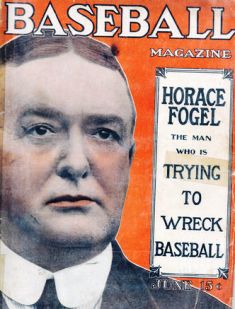
Fogel railed against the reserve clause, calling it “virtual baseball slavery,” and argued that organized baseball violated the Sherman Antitrust Act,  earning him the June 1913 cover of rival  “Baseball Magazine,” and the title, “The Man who is Trying to Wreck Baseball.”

Fogel would remain a baseball gadfly for the next decade.  Took ill in the early 20s and died in Philadelphia in 1928.

June 1913 edition of "Baseball Magazine"

June 1913 edition of “Baseball Magazine”

His interest in the team was purchased by a group led by William H. Locke, former secretary of the Pittsburgh Pirates.  When Locke died in October of 1913, his uncle, former New York Police Commissioner William Baker took control of the Phillies, leading the team until his death in 1930.

Brennan announced after Fogel was banned that he would drop his proposed $10,000 libel suit, telling The Associated Press:

“I am satisfied, I immediately demanded a hearing before the National League heads and Fogel’s trial was brought about as a result of my demands.”

Later this week; an allegation that Fogel was a patsy, and umpire Brennan’s other battle in the City of Brotherly Love.

“Said–Tinker to Evers to Chance”

5 Jul

???????????????????????????????

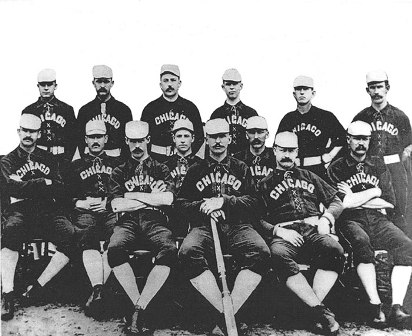
Franklin Pierce Adams’ famous poem “Baseball’s Sad Lexicon” appeared in The New York Evening Mail in 1910 and immortalized Chicago Cubs shortstop Joe Tinker, second baseman Johnny Evers and first baseman Frank Chance—within three years, the above cartoon appeared in newspapers along with a new, less well-known, poem written by Adams’ colleague at The Evening Mail, James P. Sinnott.

By 1913, baseball fans became aware that Tinker and Evers had barely spoken to each other since 1905, and the rivalry among the three exploded in public.  The former teammates, now all managers, Tinker with the Cincinnati Reds, Evers with the Cubs, and Chance, the recently deposed Cubs manager, with the New York Yankees.

In February Chance told reporters that Tinker was a better player than Evers; Evers responded and accused Tinker of trying to “tamper” with pitcher Larry Cheney and other members of the Cubs, as for Chance he said:

“I do not know whether Chance is jealous of my getting the position of leader, and I do not like to think so, but from the remarks he is making, I am forced to.”

By March, Hugh Fullerton said in The Chicago Examiner that Evers was unable to control his players; he said “Chance could whip any man on (the) team—Evers can’t,” and predicted a fourth place finish for the Cubs (they finished third).  Tinker’s Reds finished seventh in the National League; Chance’s Yankees were seventh in the American.

Sinnott’s poem appeared at the end of September:

“A Manager’s life is tough!

Said Tinker to Evers to Chance—

‘A manager’s road is rough!’

Said Tinker to Evers to Chance—

‘Here are we three, a lookin’ on

The big world’s series game,

In which we once were principals,

In which we gained our fame’

‘A manager’s life is no cinch!’

Said Tinker to Evers to Chance—

I’d almost as soon be Lynch!’

Said Tinker to Evers to Chance.”

“Lynch” was Thomas Lynch, who was about to be replaced as president of the National League.

It would not be until 1924, shortly before Chance’s death that the three reconciled.  Chance had been hired to manage the Chicago White Sox, but became too ill and returned home to California; he was replaced by Evers.

Chance summoned his former teammates to California that spring, where the three spent several days together.  Chance died in September.  Tinker, Evers and Chance, were inducted into the Hall of Fame together in 1946.

Tinker, Evers and Chance

Tinker, Evers and Chance

“The Deterioration in the Morale of the Players”

10 Jun

The Chicago Tribune had had enough:

“The deterioration in the morale of the players has been followed by deterioration in that of the spectators.  The latter relish the obscene profanity and the slugging exploits of the hulking brutes of the baseball field.”

The Tribune provided an “account of the more disgraceful of the many rows witnessed by spectators of baseball games,” during the just-ended 1899 season:

“May 2—Row at Pittsburgh—St. Louis game.  (Frank) Bowerman was put out of the game.  (Jack) O’Connor was taken off the field by the police, and the crowd chased umpires (Tom) Burns and (William) Smith.

May 19—Umpire Burns put (Giants’ William “Kid”) Gleason out of the game at St. Louis.  Gleason’s protest was so strong Burns forfeited the game to St. Louis.

June 1—Row on the grounds at Washington.

June 16—After a long wrangle and continued rowing on the field at New York.  Umpire Burns forfeited the game to Brooklyn.

June 16—(Fred) Clarke and (Clarence “Cupid”) Childs fight on the field in Louisville.

June 27—Rowdy action of players caused the crowd at the Pittsburgh game to mob umpire (James “Chippy”) McGarr.

July 18—(Tommy) Corcoran slugged (John) McGraw at Baltimore after being first attacked, and his action started a riot.

July 26—(Emerson “Pink”) Hawley, (Fred) Tenney, and (Hugh) Duffy engaged in a game of fisticuffs at Cincinnati.

Aug 16—(Oliver “Patsy”) Tebeau, McGraw and (George “Candy”) LaChance fought at Baltimore

Aug 18—Riot at Baltimore game started by (Tim) Donahue throwing a handful of dirt at (Steve) Brodie’s face.

Sept 1—Childs and Aleck Smith fight on the field in Louisville.

Sept 7—Riots at St. Louis and Brooklyn.

Sept 15—Clarke taken off Philadelphia grounds by police.

Sept 16—Chicago players jerked (Ed) Swartwood around the diamond because he called the game in the eighth inning on account of darkness.

Oct 9—(George “Win”) Mercer assaulted (Al) Mannassau at Washington.

Oct 14—(Jimmy) Scheckard assaulted umpire (John) Hunt, refused to retire, and Hunt forfeited the game to Brooklyn.”

Cupid Childs, repeat offender

Cupid Childs, repeat offender

Al Mannassau, assaulted by Win Mercer in Washington

Al Mannassau, assaulted by Win Mercer in Washington

In addition to the fans, The Tribune blamed team owners:

 “For the multifarious minor acts of blackguardism and rowdyism of which the hired men of the club owners were guilty there is no room.  It is sufficient to say that they, like the graver offenses mentioned above, did not wound the feelings or jar on the nerves of the proprietors of these baseball roughs.  Those proprietors seem to have come to the conclusion that audiences like these ruffianly interludes.”

Like hundreds of predictions before and thousands more to come over the years, The Tribune saw dire consequences for baseball given the current state of the game:

“There was a time when Chicagoans went to see the games of the Chicago club because they had a feeling of proprietorship in that organization.  That day is over.  Men do not go to see games out of local pride, nor do they go to see fine playing.  They go to listen to the language of the slums and to witness the horseplay and brutalities of the players or performers.  When these have lost their attractions professional baseball will disappear. “

Gus Dorner’s Spitball

7 Jun

dorner1 dorner2

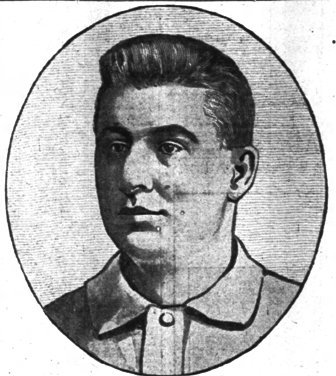
Augustus “Gus” Dorner suddenly became a successful pitcher in 1904.  He had brief trials with Cleveland in the American League in 1902 and ’03, he was 6-6 and control was a problem; on May 23, 1903, walked 11 batters in a game against the Philadelphia Athletics.  He finished the 1903 season with the Columbus Senators in the American Association posting a 7-7 record.

The next two seasons in Columbus Dorner was 18-10, and 29-8.  The Fort Wayne Daily News said:

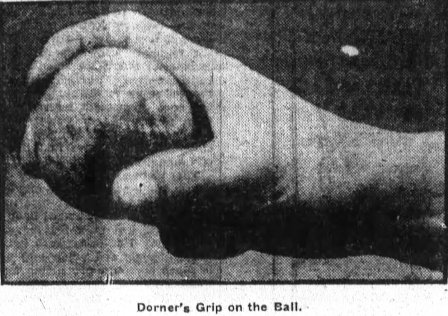
“The big German attributes his success to condition, control, study of the batsman and mastery of the spitball.”

Dorner said, “I use the spitball a great deal.”  As a result of his new pitch he said:

“(I) have not had the slightest trouble with my arm this year.  I have worked hard to get control and perfect the spit ball.”

The magic was short-lived.  Dorner earned a return to the big leagues in 1906 but was a combined 8-26 with the Cincinnati Reds and Boston Beaneaters.  Overall he was 29-62 in parts of four seasons with Boston.

Gus Dorner

Gus Dorner

He didn’t fare much better in the minor leagues, going 25-29 his last three seasons as a professional.  After his release from Boston in May of 1909, he finished the season with the American Association’s Kansas City Blues with a 9-18 record.  The last two years of his career were spent with the Wilkes-Barre Barons in the New York State League and the Harrisburg Senators in the Tri-State League.

“Calvo has been the Victim of a Cruel and Merciless Conspiracy”

4 Jun

When he signed 18-year-old Jacinto “Jack” Calvo Gonzalez, Washington Senators manager/owner Clark Griffith was no stranger to Cuban players, having managed Armando Marsáns and Rafael Almeida with the Cincinnati Reds, but Calvo’s signing was the beginning of Griffith’s 40-plus year commitment to signing players from Cuba.  During his tenure the Senators signed more than half of the 63 Cuban players in the major leagues.

Calvo was “discovered” while playing with Almendares in the Cuban National League, where he hit .342 in 19 games.  He made even more of an impression during a series Almendares played against the New Orleans Pelicans of the Southern Association, Calvo hit .400 and his older brother Tomas hit .385.

???????????????????????????????

He also hit .400 during a six-game series with the Philadelphia Athletics, The Associated Press said he didn’t compile those numbers facing minor league pitchers picked up for the series, but “against (Eddie) Plank, (Jack) Coombs, and (Charles “Chief”) Bender.”

When rumors circulated that Washington might have signed Calvo, Bender said:

“I never saw a faster youngster in my life; he can hit too, and looks for the entire world like a class ball player…If Griffith has signed him he will never regret it, for there is no chance for him to be a failure.”

By December of 1912 Griffith had Calvo under contract.  The Pittsburgh Press said:

“The young Cuban sent a letter to Griff, written in Spanish.  ‘They did not teach Spanish where I went to school,’ said The Old Fox, ‘so I can’t translate the missive.  However, as he signed his contract I guess everything is alright.’”

The Boston Red Sox signed Tomas Calvo later in December.

While Tomas never made it in Boston, Jacinto made his debut with the Senators on May 9; he hit only .242, but everyone noticed his arm.  After a June game with the St. Louis Browns, The Associated Press said:

“The youngster astonished the bugs yesterday with his remarkable throwing arm.  At one time he heaved the ball from the right field fence directly to (Germany) Schaefer’s hands at second.”

On August 13 Calvo was sent to the Atlanta Crackers in the Southern Association and made his first appearance with the team the following day, batting seventh, going 1 for 4.  The Atlanta Constitution said “He’s fast, fields pretty well, throws like a shot and meets the ball squarely.”

Calvo only lasted 10 days in Atlanta.  He was hit on the right arm with a pitch thrown by Charles “Curly” Brown of the Montgomery Rebels.  He was returned to the Senators and did not appear in another game that season.  (Some sources show Calvo with the Long Branch Cubans in the New York New Jersey League—it was most likely his brother Tomas, an infielder, rather than career outfielder Jacinto, who played shortstop for the team in 94 games).

Calvo started the 1914 season with the Los Angeles Angels in the Pacific Coast League.  After only 11 games (he was 4-8 with one double, one triple and a stolen base) he was sent to the Victoria Bees in the Northwestern League.  Later in the season a story came out explaining his abrupt departure from Los Angeles.

Calvo with the Washington Senators

Calvo with the Washington Senators

The Spokane Spokesman-Review said, “Calvo has been the victim of a cruel and merciless conspiracy,” despite the fact that “in the exhibition games last spring against the White Sox Calvo loomed up head and shoulders above the other Angel gardeners, out hitting them by a wide margin and displaying more speed on the bags than the whole Angel team combined.”

The paper claimed that a female reporter:

“(o)n one of the local papers…dragged out of him the fact that his father was a rich sugar planter in Havana, and that he played baseball for fun and not for money…That was the beginning of the end for little Calvo. “

The story said fans began harassing Calvo, and:

“Instead of coming to his rescue, the players on the Angel team ‘rode’ the boy unmercifully.  It was pathetic to see the friendless little Cuban trying to get into the good graces of his teammates.  One day, in the clubhouse the boy sat down on a bench and cried before them all.  His spirit was broken.”

Calvo hit .289 for Victoria in 1914, and spent the spring of 1915 with the Senators before being release before the beginning of the season.  After his release he played with his brother Tomas for the Long Branch Cubans, by then a member of the Independent Negro League; he also played for Havana in the Cuban-American Negro Clubs Series.

Calvo next played for the Vancouver Beavers in the Northwestern League and the San Francisco Seals in the Pacific Coast League, hitting .329 in 1916, and slipping to .263 in 1917. After the 1917 season, the outfielder returned, unsigned, the contract sent to him by Seals owner Charlie Graham.

Calvo had been very popular in San Francisco during his nearly two seasons with the Seals, but was criticised by fans and local press for his holdout, especially because he was holding out on the even more popular Graham.  The San Francisco Chronicle said:

“He sent his terms, and as they were exactly what he asked for before.  (Charlie) Graham is wondering why the Cuban went to the trouble to wire at all.”  The paper criticised Calvo for “asking for more money than he got last year,” while “better players than he have submitted to a salary slash on account of war conditions.”

San Francisco Seals owner Charlie Graham

San Francisco Seals owner Charlie Graham

The Chronicle lamented the fact that Seals outfielder Biff Schaller would miss the entire season with an injury, otherwise “Calvo could have stayed in Havana for all that anyone here cares.”

As it turned out, Calvo did stay in Havana.  For all of 1918 and ’19, not returning to the states until 1920.  Tomorrow–Jacinto Calvo’s return.

Memorial Day—Major League Baseball’s First World War Casualty

27 May

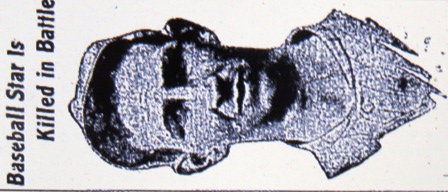
By the time he enlisted in the United States Army in July of 1917, Edward Leslie “Harvard Eddie” Grant had retired from baseball to practice law in Boston.

He attended Harvard, but only played baseball as a freshman; he was declared ineligible after being paid for playing with a semi-pro team.  After that Grant played intramural baseball at Harvard and played with Northeastern outlaw teams during the summer.

In 1905 Grant made his Major League debut when the visiting Cleveland Naps recruited him to fill in for two games at second base for Hall of Famer Napoleon Lajoie against the Boston Americans—he was 3 for 8 and made one error.

He was with the Jersey City Skeeters in the Eastern League in 1906, hitting .322, which earned him a contract with the Philadelphia Phillies.  He would spend the next nine seasons in the National League, also playing for the Cincinnati Reds and New York Giants.  Grant was never a star, but he was popular with fans and the press.  The New York Times said:

“He was a handy utility player and could fill in any position on the infield.  While never a heavy batsman, he was skillful fielder and a smart baserunner.”

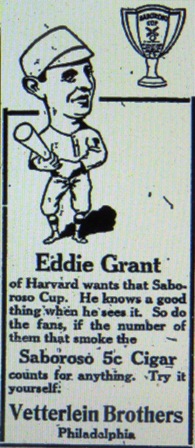
1910 Advertisement for the  Vetterlein Brothers Cigar Company; the Saboroso Cup mentioned in the ad was presented to the phillies or Athletics player with the highest batting average.

1910 Advertisement for the Vetterlein Brothers Cigar Company; the Saboroso Cup mentioned in the ad was presented to the Phillies or Athletics player with the highest batting average.

Grant was among the first wave of prominent athletes to join the military, making his enlistment news.  A wire service article under the headline “Eddie Grant Joins Uncle Sam’s League” appeared in numerous papers across the country.

On October 5 1918, he would become the first Major League player to be killed during World War I, The Associated Press said:

“Captain Edward Grant, former third baseman of the New York National League Club, and attached to the 307th Infantry, was killed by a shell when leading a unit to the aid of the famous ‘Lost Battalion.’

“The battalion was surrounded for five days in the Argonne Forest and Captain Grant was killed in one of the attempts to reach it.”

Grant was originally buried in the Argonne Forest, and his body was later moved to the Meuse-Argonne American Cemetery.