Tag Archives: Cincinnati Reds

Brief Bios–Ferris and Angier

24 Oct

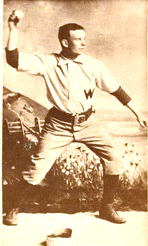
Doc Ferris

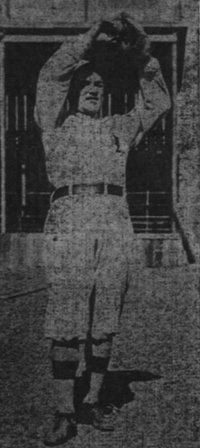
Ernest H. “Doc” Ferris won 20 games twice over eight seasons in the low manors between 1913 and 1923, and posted a respectable 109-86 record.  The otherwise forgotten right-hander also pitched one of the most efficient games in baseball history.

Ferris was born on September 7, 1887 in Blue Ash, Ohio; the youngest of 13 children.  There is little information about his early life on his father Solomon’s farm, with the exception of a few brief mentions in Cincinnati newspapers of his being active in the Hamilton County Ohio Farmer’s Alliance.

The first reference to him related to baseball was when the 25-year-old signed a contract with the Durham Bulls of the North Carolina State League in 1913.  After two sub .500 seasons –10-12 in 1913, 9-16 with the Asheville Tourists—he had his best season in 1915, when he won 27 games (he lost 12) for Asheville.

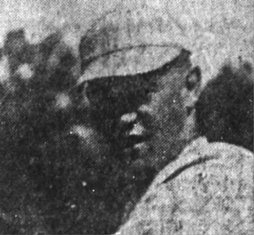
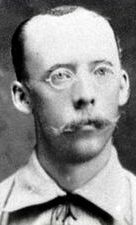
Ernest "Doc" Ferris

Ernest “Doc” Ferris

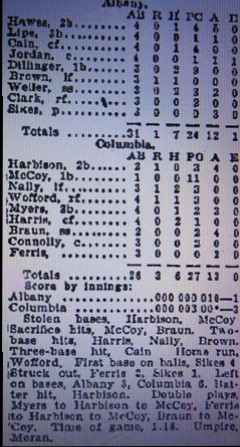
In 1916 he was signed by the Columbia Comers of the South Atlantic League.  The Highlight of Ferris’ 18-15 season was during a 3 to 1 victory over the Albany Babies on July 18.  The Columbia State said:

“Doc Ferris probably made a new record for the league by going through the game with only 73 pitched balls, 14 of which were balls and 59 strikes…the Columbus pitcher did not issue a pass…Ferris set up a record that will probably stand for many moons.  To go through nine innings pitching only 73 balls is a remarkable feat.  The smiling hurler was seldom in the hole, going to three balls on only one batter.”

The game was completed in 78 minutes.

The Box Score

The Box Score

(Charles “Red” Barrett of the Boston Braves set the major league record for fewest pitches in a game, when he shut out the Cincinnati Reds 2-0 in Crosley Field on August 10, 1944–he threw just 58 pitches–Barrett’s game was also three minutes shorter than Ferris’ effort.)

After pitching for and managing the Asheville Tourists and Hagerstown Terriers in 1917 and 1918, Ferris quit baseball for two years, and according to The Durham Morning Herald accepted “a responsible position with a manufacturing concern.”

In 1921 he returned to the diamond, pitching three seasons for the Greensboro Patriots in the Piedmont League—after going 20-9 in his first season, he slipped to 6-9 and 4-5, before retiring for good after the 1923 season.

After baseball Ferris operated a company that manufactured and installed canvas awnings.  When he started the business he told The Greensboro Daly News:

“During the eight years I sweated in the blazing sun, I often thought of the advantage it would be to have and awning overhead, so when I finally decided to quit the diamond I naturally gravitated into selling the things that looked so attractive to me while I was pitching.”

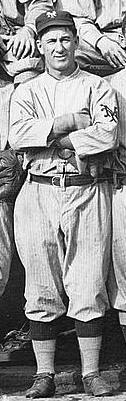
Doc Ferris

Doc Ferris

Ferris died in Greensboro on November 11, 1964.

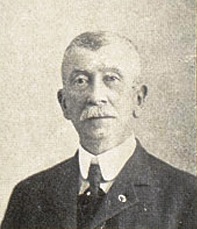
Shorty Angier

Malbourne Addison “Shorty” Angier was a teammate of Doc Ferris with the Durham Bulls in 1913.   Angier was born in Chattanooga, Tennessee in 1892, but grew up in Durham. His grandfather, and namesake, was a prominent Durham merchant.

Angier made a name for him himself as a teen in the Piedmont League—before 1920 various quasi-professional/industrial league incarnations of the Piedmont operated; he played for Durham Hosiery in 1911 and 1912.

When he was signed by the Durham Bulls in 1913, The Charlotte Evening Chronicle said he “hit around .400 in the Piedmont League last year,” and had turned down offers from two other North Carolina State League teams, the Charlotte Hornets and Greensboro Patriots.  The expectations were high:

“Those that have seen Angier play predict that he will make good in the league and that the next few years will see him in the big company.”

The Charlotte Observer described his physical appearance:

“(S)tocky torso, the hefty underpinning, and abbreviated neck.”

Whatever ability he had with the bat in the Piedmont League left him as a professional.  Angier hit just .199 during his first season at Durham in 1913.  After a hot start the following season—he was hitting nearly .400 in July—he finished with a .268 average.  In 1915 he hit .175.

Although a weak hitter, he  was one of the best athletes in the North Carolina League—during the league’s “Field Day” activities in 1914 The Charlotte News said he “easily won” the distance throwing competition and his 15 and 1/5 second time circling the bases was the league’s best.

He split the 1916 season between the South Atlantic League Columbia Comers (where he was again teammates with Doc Ferris) and Jacksonville Tarpons; he hit a combined .175 for the year.

The following spring The Durham Morning Herald reported that Angier was in a local hospital in critical condition after “the young man swallowed poison.”

The Greensboro Daily News said Angier drank from a bottle that he was not aware contained “poisonous medicine,” but the paper said “attempted suicide was discounted,” by his friends.

Whether the poisoning was a contributing factor or not, Angier did not play in 1917, and went to work at a tobacco store he co-owned in Durham.

After volunteering for military service in the fall of 1917—he was a second Lieutenant in the cavalry, stationed in Columbia, South Carolina—he returned to his business in Durham.

Each season from 1919 through 1921, North Carolina newspapers reported that Angier would be joining the Durham Bulls; although he does not appear in any surviving team records, Angier played in a handful of games for the team in September of 1921.

He never played again after his brief return to the diamond in 1921.  Angier owned several tobacco and grocery businesses in and around Durham and later relocated to Green Cove Springs, Florida where he died in 1937.

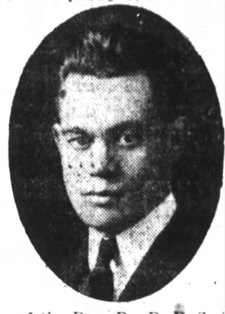
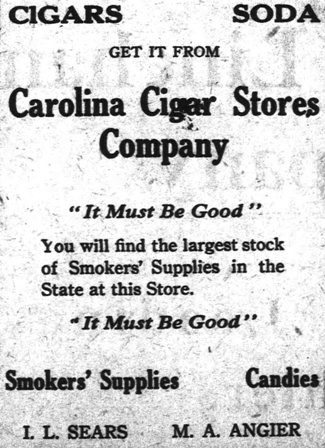
Advertisement for Angier's cigar store

Advertisement for Angier’s cigar store

Harley Parker

20 Oct

Harley Park Parker was a renaissance man; a physician, an ambidextrous golfer, a billiard player who trained champions, in addition to being a major league pitcher—he was 5-8 with a 5.90 ERA in parts of four seasons with the Chicago Colts and Cincinnati Reds.

He is also responsible for what might be the worst single game pitching performance in professional baseball history.

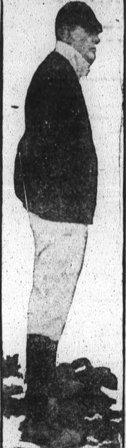
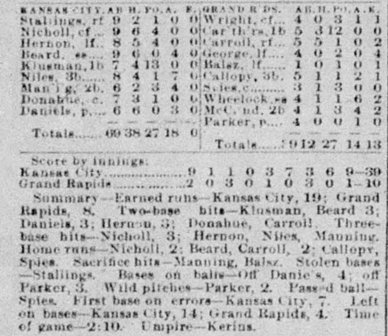
The 22-year-old Parker was pitching for the Grand Rapids Rippers (several newspapers in other in the other Western League cities called the team the Rustlers) against the Kansas City Blues (newspapers were split between referring to the club as the Blues or the Cowboys) on July 25, 1894.

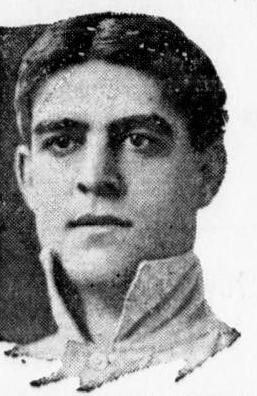
Harley Parker circa 1895

Harley Parker circa 1895

The Kansas City Gazette said:

“The ball bats of the Kansas City Blues in the game against Grand Rapids collided with Pitcher Parker’s curves thirty-nine times yesterday, and yielded as many runs.”

The Blues actually had thirty-eight hits, to go along with 13 Grand Rapids errors.

The Kansas City Star said:

“(The Blues) hit him at will yesterday, for singles, doubles, triples and home runs.  It was a slugging match, the like of which had never before been seen in a professional game at Exposition Park, and while the Rustlers did some very sloppy fielding, there was world of free, sharp and hard hitting.”

Every member of the Kansas City line up had at least two hits, and three players, Sam Nicholl, Ollie Beard, and pitcher Pete Daniels, collected six each.

The final score was 39 to 10.

The Box Score Grand Rapids vs Kansas City

The Box Score Grand Rapids vs Kansas City

The game was indicative of Parker’s season; he finished with a 15-18 record with a 6.23 ERA—in addition to the 193 earned runs he gave up in 278.2 innings, his team gave him horrible support, and he allowed 194 unearned runs.

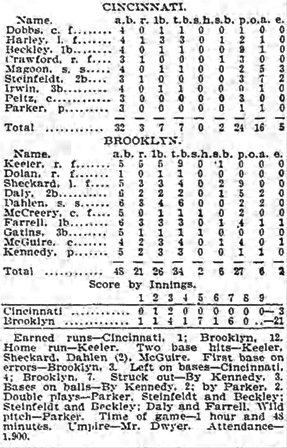
Parker had a similarly disastrous day as a major leaguer seven years later.  While pitching for the Reds against the Brooklyn Superbas on June 21, 1901 Parker allowed 21 runs on 26 hits in a complete game loss—“Wee Willie” Keeler was 5 for 5 with a rare home run (he hit just 33 during his 19-year career).

The Box Score Cincinnati vs Brooklyn

The Box Score Cincinnati vs Brooklyn

During his five minor league seasons Parker was only above.500 once; 5-4 in 1898 with the Minneapolis Millers; he was 5-8 as a major leaguer.

Parker briefly owned a Central League franchise in 1911, the club moved from Grand Rapids, Michigan to South Bend, Indiana, but even with the move he was forced to sell the team at mid-season because of financial difficulties.

That same year he also had a short stint as an umpire that ended with a trip to the United States Capitol.

In August, after one of Umpire Jack Sheridan’s frequent resignations—he returned to his position days later—American League President Ban Johnson hired Parker to the league staff.

Less than a month into his tenure Parker was on the field for one of William Herman “Germany” Schaefer’s stunts.  On August 4, Schaefer’s Washington Senators were playing the Chicago White Sox.  With the score tied in the ninth inning Schaefer stole second, hoping to draw a throw to allow Clyde Milan to score from third base; Sox catcher Fred Payne did not throw to second.  Schaefer then led off second base on the first-base side and returned to first on the next pitch.

The Washington Herald said:

“Umpire Harley Parker, who was officiating on the bases, was near first at the time.  When he saw Schaefer coming back to first Parker accosted the comedian ball player with the query: ‘What are you doing here?’

“’I have stolen second.  Now I am stealing first,’ said the Nationals’ troublemaker.

“’Well, if you stay down here I’ll call you out,’ said Parker.

“(White Sox) Manager (Hugh) Duffy in the meantime had ordered Doc White to throw the ball to John “Shano” Collins at first.  Germany thought discretion the better part of valor, and made a dive back toward second.  In the meantime Milan was tearing down toward home.  Collins wheeled and threw home, Milan being tagged out at the plate.”

Germany Schaefer

Germany Schaefer

Duffy was standing in the middle of the diamond arguing with Parker and home plate umpire Tommy Connolly as Milan was thrown out at home—Washington protested that “the play shouldn’t go because Chicago had ten men on the field.  Manager Duffy having stayed out to the middle of the diamond.”

Connolly and Parker finally ruled that Milan was out.  Washington went on to win the game 1 to 0 in 11 innings.

Harley Parker, 1910

Harley Parker, 1910

The following month Parker was again in Washington working a series between the Senators and the White Sox when, while sitting in the lobby of Washington’s Driscoll Hotel, according to The Washington Star he was approached by an “officer from the United States Senate,” who told Parker “I have a warrant for you.”

Parker was taken to the United States Capitol.

“The officer of Uncle Sam marched the arbitrator up to the desk of Vice President (James Schoolcraft) Sherman in the senate, the most august assemblage in the United States.

“’I guess I’ve got your man at last,’ said the officer as he introduced Parker to the vice president.

“’I sent for you to inquire about that play when Germany Schaefer went back to first after stealing second,’” said Sherman and Parker drew a sigh of relief.

“It was just like eating pie for Parker to explain the play and he did so to the satisfaction of all concerned.  Sherman admitted the play bothered him more than any problem that had come up in the extra session of congress and that was going some.”

Parker did not work as an umpire again after the 1911.  He returned to Chicago to practice medicine and teach billiard; contemporary newspaper accounts said he trained two champions—Calvin Demarest and Welker Cochran.

He died in Chicago in 1941.

Stewart Strader

11 Aug

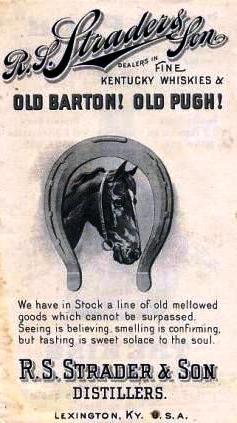
Stewart W. Strader was the son of a prominent business leader in two of Kentucky’s signature businesses.  His father, Colonel Robert Stuart Strader operated a distillery and was a prominent breeder of Standardbred Trotters.  In 1875, the elder Strader moved the family from Boone County, Kentucky to Lexington where he was involved in the founding and management of The Red Mile—the world’s second oldest harness racing track.

Advertisement for R.S. Strader and Son Distillery. The "Son" was Stewart's older brother Wilson.

Advertisement for R.S. Strader and Son Distillery. The “Son” was Stewart’s older brother Wilson.

Stewart Strader was born in Lexington in 1882, one of seven sons.  By the age of 20 he had become an important figure in baseball circles in and around Lexington, as owner, manager and one of the best players on Lexington’s local semi-pro team.

Before the 1903 season The Lexington Leader said Strader was attempting to get his team accepted into the Central League and “Lexington’s application for a franchise is looked upon quite favorably,” but days later The Lexington Herald said Strader “decided most of the cities composing the Central League were too far to enable his club to play them with profit.”  He instead entered his team in Cincinnati’s Sunday League and played against other independent teams during the week.

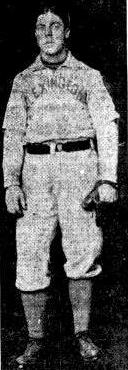
Stewart Strader 1903

Stewart Strader 1903

His reputation quickly spread, and while there were rumors in the press that he would be signed by the Cincinnati Reds, they did not materialize, but he did receive a letter from William Henry “Bill” Watkins, president and manager of the Indianapolis Indians of the American Association.  Watkins wrote:

“I thought I would write you and see if you had any idea of going into the professional end of the game next season.  If you will consider a trial with us, I would like to hear from you.”

Strader accepted the offer, but by the time he reported to Indianapolis in late March, Watkins had left Indianapolis to manage the Minneapolis Millers.  In his first game with the Hoosiers, an exhibition against Purdue University, Strader played right field and was 3 for 3 with a triple.  The Indianapolis News said, “Strader is a hitter of merit and with a little more work should develop into a strong fielder.”

Two days before the beginning of the regular season Indianapolis purchased left fielder Ed “Pinky” Swander from the St. Louis Browns, and right fielder George Hogriever, who had refused to sign after hitting .330 the previous season, agreed to terms with the Hoosiers.   Strader was released to the Greenville Cotton Pickers in the Cotton States League.  His hometown paper, The Herald, said he “had been holding down right field with due credit,” but Indianapolis Manager Bill Phillips felt “he was too young for the fast company.”

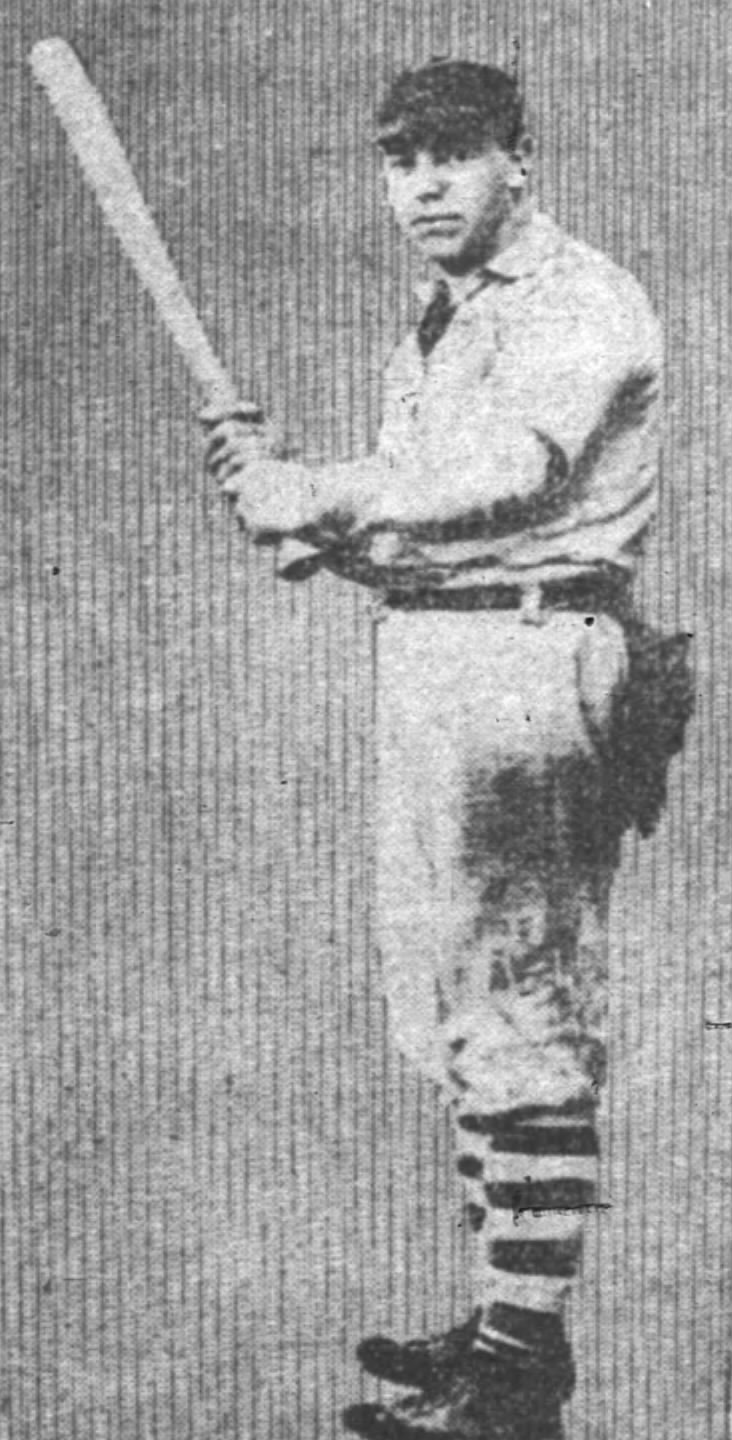
Strader 1904

Strader 1904

After hitting .309 for Greenville in 81 at bats, he was sold to the Macon Highlanders in the South Atlantic League where he hit just .200 in 130 at bats.

Strader spent the next five years making brief stops with seven different minor league teams, buying and selling the independent Lexington club at least twice, and tending a saloon he opened in 1905.


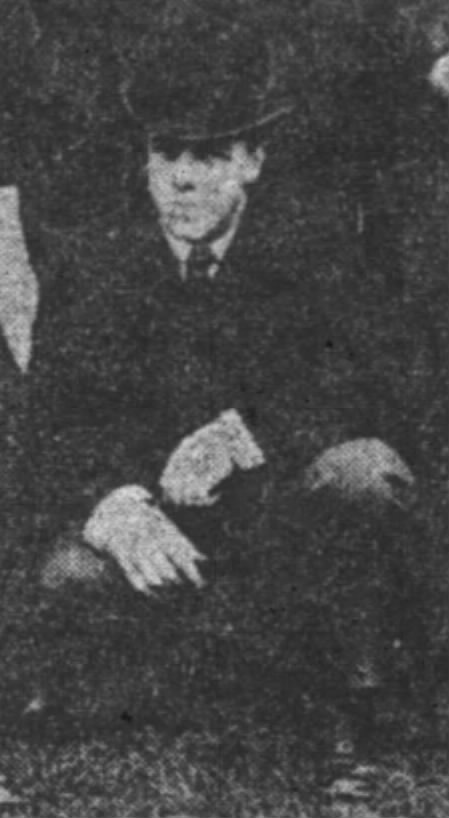
Stewart Srader

Stewart Srader

In 1908, Lexington became part of the newly formed Blue Grass League.  It was the city’s first team in organized ball in more than a decade, and Strader may, or may not, have been involved in an attempt to wrest control of the team from owner and manager Thomas Sheets.

Strader opened the season in the Virginia State League, where he appeared in 10 games for the Richmond Colts and Danville Red Sox.  In late May, he returned to Kentucky and signed a contract with Sheets’ Lexington Colts.  On May 31 he played center field for the Colts and was 0 for 3.  The following day he was released.

The Herald speculated that another player, Warren Fieber (who had purchased the independent Lexington team from Strader two years earlier and later sold it back to him) would also be released:

“Sheets admitted that an effort had been made to undermine him in the last two days, but would make no further statement.”

Fieber, who was hitting .320 on June 1, remained with the team, but his batting average plummeted to .222 by the season’s end.  Strader stayed in the Bluegrass League and signed with the Shelbyville Grays; he had the best season of his pro career, hitting .324.

Strader played his final season of pro ball the next year with the Frankfort Statesmen.  In June The Herald said:

 “Lexington fans have noted with considerable satisfaction that Stewart Strader a Lexington boy now with Frankfort is leading the Blue Grass League in batting.”

Strader was hitting .410 as late as June 23, but slumped badly in the second half of the season and finished with a .264 average.  At the end of the 1909 season Strader and Patrick Downing, a former minor league player, were appointed deputies by the Fayette County Sheriff.  The Leader said the two deputies they replaced “apparently would not play ball.”

Strader signed with the Davenport Prodigals in the Three-I League in the spring of 1910 but was released before the season began.

During the last several years of career, and the first decade after he left the diamond, the Strader family was regularly mentioned in the local press for things other than baseball.

Two brothers died tragically, one, according to The Leader, by his own hand after shooting a woman in Lexington’s “Tenderloin District.” The other was murdered during a dispute while hunting.

Strader began operating taverns and restaurants in Lexington in 1905, and the family spent the better part of a decade bringing various lawsuits against each other involving the failure of the distillery after their father’s death and other business disputes.  During one dispute Strader’s older brother W.P. had him arrested claiming Stewart Strader “would do bodily harm or injury to him.”

Despite the family drama, Strader remained a successful businessman and prominent member of Lexington society.  He owned the Berlin Café—which he originally purchased with one of his brothers in 1905–until 1940 and for seven years in the 1920s operated Third Avenue Motor Company in Louisville, which sold the Anderson Six—produced by the Anderson Motor Car Company in South Carolina.

Strader died in Lexington on August 9, 1948.

Big Six versus The Hoosier Thunderbolt

6 Aug

Christy Mathewson had only pitched five full seasons when Sam Crane of The New York Journal said in January of 1906 “there is a great diversity of opinion” regarding whether Mathewson or Amos Rusie was the better pitcher.

Crane said “Old-time lovers of the game” said Rusie, “The Hoosier Thunderbolt”, whose career ended in 1901 after being traded to Cincinnati for “Big Six” Mathewson,  was the best ever, “and refuse to acknowledge that the young college man who won the world’s championship so easily last fall…is his superior.”   While, “the younger generation of enthusiasts say there was never but one Mathewson and point to his wonderful record to prove their point.”

Amos Rusie

Amos Rusie

Crane said two famous New York baseball figures—and future Hall of Famers– disagreed on the point:

George Davis, the crack shortstop of the Chicago White Sox, and one of the best players who ever wore ‘New York’ across his shirt front, met Clark Griffith, manager of the Yankees (Crane was one of the earliest to call the then “Highlanders” the “Yankees”), yesterday at the headquarters of the New York American club, and argued over the much mooted questions of pitching superiority between the two crack box artists.  Both Davis and Griffith agreed that Mathewson and Rusie were two of the best, but differed as to which was entitles to the premier position.”

Davis thought Mathewson was better.

“Both have excelled all other Boxmen.  I have never batted against Matty in a game, but I have met his curves in practice and I want to say that he has just as good control of the ball as Rusie.  Matty’s most effective ball is a straight drop, but his speed is a great factor as well as a wonderfully controlled slow ball.  He uses his forearm and elbow and winds up in such a manner that a batsman is sure to be puzzled.  Rusie, on the other hand, depended on an out drop, which he controlled with remarkable skill, in addition to his fast ball; but he had very little preliminary motion and used his shoulder almost exclusively.  Rusie probably had the better physique, but in head work and vitality Mathewson outclasses the big Hoosier.”

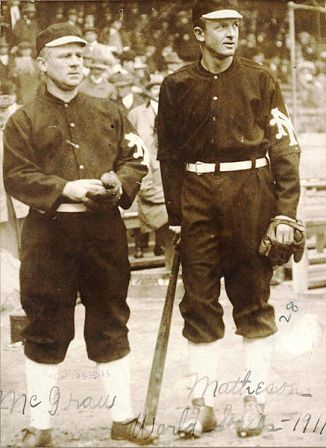
Christy Mathewson with John McGraw

Christy Mathewson with John McGraw

Griffith disagreed:

“Rusie in his prime was the best twirler that ever stepped into the box.  His curves, speed and control were the best assortment I ever looked at, and no pitcher has ever approached him in class since he made his departure from baseball.”

Crane cast the deciding vote, declaring:

“Rusie never had a peep in with Mathewson as a box artist.  Rusie relied mostly on brute strength until his arm began to show symptoms of crystallizing, then he accumulated a good slow ball; but for head work, pure good judgment, with a delivery or series of deliveries to back up his well-balanced brain, Mathewson is superior to any pitcher who ever wore shoe plates.”

Crane’s analysis was prescient.

Rusie’s greatness is undisputed—his speed was primary reason for moving the pitching distance from 50‘ to 60’ 6”—but his best days were behind him before he turned 24-years-old.  His season-long holdout in 1896 and the arm injury that effectively ended his career at 27 after the 1898 season (except for three games he pitched for the Cincinnati Reds in 1901) make him one of baseball’s great “what ifs?”  He still finished his career 246-174, and was elected to the Hall of Fame in 1977.

Mathewson won twenty games for nine straight seasons after Crane declared him “superior to any pitcher.   He finished 373-188 and was part of the Hall of Fame’s first induction class.

“Go to Providence”

18 Jul

After Ned Hanlon guided the Brooklyn Superbas to horrible back-to-back seasons in 1904 and ’05 (56-97 sixth place, 48-104 eighth place) it was time for a parting of the ways between Hanlon and Brooklyn—it was announced that Hanlon had signed to manage the Cincinnati Reds in 1906.

Ned Hanlon

Ned Hanlon

During fifteen years with the franchise (eight in Baltimore, seven more in Brooklyn) Hanlon led them to five pennants and three second-place finishes, and according to The Brooklyn Eagle his departure “caused no end of regret among the wide circle of friends he had gained during his seven years stay here as head of the Superbas.”

But, the paper said, one man “learned of the change with greater dismay than anybody else.”  John Montgomery Ward, the former player, manager and leader of the Brotherhood was, by then, a successful Brooklyn attorney.

Ward and Hanlon were long-time friends and Hanlon had been an active member of the Brotherhood, but Ward said, more than that, he “owed my start as a successful ballplayer,” to Hanlon.

John Montgomery Ward

John Montgomery Ward

“I had begun my career as a professional that year with the Binghamtons, but along about June the club disbanded.  I received offers from Rochester and Providence to finish the season in the box. For I was pitching in those days, and went to Rochester to look over the field.  I was a boy of eighteen then, and inexperienced, and I was taken aback when the manager and players clamored for me to sign immediately.  Hanlon was captain of the team and he joined in the request for me to sign.  I asked them to give me a little time to think it over and went back to the hotel for that purpose.  Hanlon, and a well-known player of those days, Ed Caskin, followed me there, and continued their importunities.

“’I told them that it was my first year in the game, and then turning to Hanlon said ‘Mr. Hanlon, put yourself in my place and tell me what to do.  Advise me just as if you were speaking to a brother.’

“’Hanlon flushed up, looked at the floor, then at Caskin.  Then he turned to me.’

“’Go to Providence.’ He said.  Caskin coincided, and I took my bag and went to Cincinnati where the Grays were playing.  I made good with them (22-13 1.51 ERA) and gained fully five years of my career because of the sacrifice of Hanlon, who wanted me in Rochester.  We’ve been firm fiends ever since, the bonds being strengthened during his stay here.  I’m sorry he has gone, but I am confident he will have better success with the Reds.”

Despite Ward’s confidence, Hanlon was only slightly more successful with the Reds in 1906 and ’07 than he had been during his final two seasons in Brooklyn–64-87, 66-87, sixth place finishes.

“I Remember Well the First Day Latham Coached”

11 Jun

Arlie Latham “The Freshest Man on Earth” is generally credited as the first full-time third base coach.  Even before John McGraw hired him to coach third for the New York Giants in 1909, Latham’s antics as a “coacher” were already legendary—in 1907 Ted Sullivan, one of baseball’s pioneers and Latham’s manager with the St. Louis Browns, told The Washington Evening Star about Latham’s first time.

Ted Sullivan

Ted Sullivan

“’I remember well the first day Latham coached,’ said Sullivan.  ‘It was in Cincinnati in 1883.  I must confess I never had much use for a ‘fresh’ player, and soon after Latham reported I was not backward in telling him he was too d— fresh, but  I later discovered that he was a wonderful player, and that his freshness was of a most harmless and hilarious nature.  But after I gave him the reprimand I noticed he was a little timid about saying anything, but was still of good cheer.

“One day in Cincinnati Will White had the Browns on his staff with his little stingy rise ball.  My best men were on the bases and there was no one on the line.  I asked the men on the bench, ‘Is there no one here able to coach a little?’ Latham speaks up and says, ‘I will coach if you want me.’”

Never one for understatement, Sullivan said what happened next:

“Well, if Gabriel had entered a graveyard and blown his trumpet, and the tombstones had loosened their grip on the dead, it would not have created more of a sensation.  Latham walked out to the home plate and to the consternation of umpire, players and myself, delivered this talk to pitcher White:

‘My Dear Mr. White, we have been very courteous to you during the game, but as the Browns need a few runs we will have to be rude to you for awhile,’ and then stalking off to third base went through those gyrations that afterward made him famous all over America.  White was dumbstruck at the flow of words that afterward fell from Latham, and he became so rattled that the Browns batted him out of the box and won the game.”

Will White

Will White

No Browns game in Cincinnati that season matches well with Sullivan’s initial account—he continued to tell the story to reporters for more than a decade and sometimes said instead the game was “against Cincinnati—the game that best fits Sullivan’s description was a 9 to 5 Browns win over the Reds on May 16. But, contemporary accounts attribute White’s faltering, which led to the Browns come from behind victory, to a knee injury rather than any “flow of words” from Latham.

“Latham was the original funny man in the coacher’s box, and he stood in a class entirely by himself.  He has had many imitators, but they have never reached the position that Latham occupied, for he was a genius in the work and never used language that would offend the ears of the most prudish.

“Many years ago it used to be Latham’s great aim to get out on the coaching line here in Washington in the games that local pet—Win Mercer—was to do the pitching.  It will be recalled that Mercer was an extremely handsome fellow, and often it fell to his lot to pitch on Ladies’ Day.  Latham took the greatest delight in endeavoring to disconcert Mercer, the large number of ladies being mad enough to pull his hair, while at the same time they were convulsed with laughter at his sayings and antics.  He and Mercer were great chums, and when Latham was secured by the Wagners (J. Earl and George) to travel with the Washingtons (in 1899) for coaching purposes alone the two were inseparable, thus showing that though a thorough minstrel and actor, his chaff never broke into bitter personalities  or severed friendships.

“We have our Hughey Jennings and others of today, but in the history of baseball there has only been one ideal coacher from the line—Arlie Latham.”

Latham with the New York Giants

Latham with the New York Giants

When McGraw hired Latham two years later, Bozeman Bulger, sports writer for The New York Evening World said the Giants’ new third base coach had just as much fun as a minor league umpire as he did when coaching—Bulger was a writer for The Birmingham Age-Herald while Latham was working in the Southern Association:

“I had the fun one time of traveling with Latham while he was an umpire in the Southern (Association).  On one of those days the Birmingham club was playing at Little Rock, and Pat Wright was playing first for Little Rock, and Pat Millerick, of Birmingham was at the bat.  He hit a little grounder toward short, and for a moment it was fumbled.  Pat went lumbering down to first.  Seeing that he couldn’t quite make it on the run, he slid for the bag.  Pat Wright at the same time got the ball a little wide and slid for the bag himself, so as to beat the runner.  The feet of both hit the bag at about the same time.”

Latham made no call on the play.

“’Judgment!’ yelled Millerick, as he threw up his hand.

“Everybody waited for Latham to make a decision.

“’Wait a minute,’ said Arlie, ‘I want to do this thing right.’  He then rushed into the clubhouse and came out with a tape measure.  While the crowd sat in suspense Latham deliberately measured the feet of the two Pats—Millerick and Wright.  It was shown that Wright’s foot was one inch longer, and Millerick was promptly declared ‘Out!’  Nobody had the nerve to question the decision.”

Jack Grim

2 Jun

John J. “Jack” Grim never amounted to much as a player.  Statistics are nearly nonexistent for his playing career, and those that do survive are unimpressive; primarily a catcher, he played for all, or parts of nine seasons from 1894 until 1902.  The Cincinnati native made his mark, now all but forgotten, as a manager and executive.
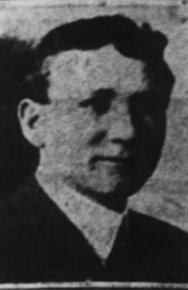
John J. "Jack" Grim

John J. “Jack” Grim

Often confused with former major league catcher John Helm “Jack” Grim—for example, most sources list John H. Grim as the manager of the 1904 Columbia Skyscrapers in the South Atlantic League, it was John J. Grim who managed that team, and during that season might have made his greatest contribution to the game.

Grim’s first managerial appointment was with the Anaconda Serpents in the Montana State League in 1900.  He guided the team to a second-place finish in the first half, and the club was in first place in the second half race on August 11, when Grim abruptly resigned.  The Anaconda Standard said Grim sent a letter to the team directors in which he charged “there is a feeling in certain quarters, against me.” He said:

“I cannot do myself justice while laboring under these conditions.”

Arthur “Dad” Clarkson, brother of Hall of Famer John Clarkson, replaced Grim; the team finished the second half of the season in second place under Clarkson.  Grim became an umpire in the league for the remainder of the season.

In 1901 Grim went to the West Coast with William H. Lucas, a former minor league pitcher who had been president of the Montana State League, to join Dan Dugdale to reestablish  the Pacific Northwest League; Lucas served as league president and Grim managed the Portland Webfoots to the championship, winning the pennant by 16 games.

The league expanded from four to six teams for 1902, and Grim was hired to manage the Spokane franchise, which had finished in last place (41-67) under three different managers in 1901.  The Sporting News said:

“(Spokane’s) stockholders have given (Grim) full power to act in signing players.”

The Sporting Life said Spokane fans were “feeling confident that (Grim) will this year sustain his reputation for always piloting winners.”  Despite the free reign, and high hopes, Spokane struggled, finishing in last place with a 46-75 record.

The following season, as a result of the West Coast baseball war—the California League expanded to the Pacific Northwest, becoming the Pacific Coast League—the Pacific Northwest League expanded into California and became the Pacific National League.  Grim managed the Portland Green Gages.

On July 1 the Portland franchised was, according to, The Oregon Journal “transferred bag and baggage to Salt Lake City.” In Salt Lake City Grim quickly wore out his welcome.

After it was reported in late July that Grim might be let go, six players, including the team’s star shortstop Charles “She” Donahue, went on strike.  They missed two games, but returned after the team’s president said: “he has no intention of letting Grim out.”  The harmony didn’t last and just weeks later Grim was released and fined $100 for what The Salt Lake Herald called “starting a mutiny within the ranks of the club.”

The trouble in Salt Lake wasn’t over.  Near the end of the season, Donahue’s contract was sold to the St. Louis Cardinals.  The sale was reportedly engineered by Grim after he was let go as manager.

The Herald said:

“What kind of a con game is Jack Grim trying to work on the Salt Lake ball club?  What right had Jack Grim, who was fired…got to sell Donahue to the St. Louis club?  How many more of the Salt Lake’s players is Grim trying to dispose of in the same way?  What did Grim do with the money he received from (Cardinals President Benjamin) Muckenfuss of the St. Louis team?”

Grim told The Cincinnati Enquirer he entered into negotiations with the Cardinals over Donahue on September 14. But The Herald noted:

“At that time Grim’s sole business in Salt Lake was to hang around with the ballplayers and try his best to create discord among them.  He had been fired long before.”

The National Commission ruled the sale/signing legal.  Garry Herrmann, chairman of the commission, said that in the contract he signed with Portland for 1903 “Donahue had a specified agreement that he was not (placed on the reserve list)” despite the fact that the Salt Lake team claimed he had already signed a contract for the following season.  As a result, there was nothing stopping Grim from delivering Donahue to the Cardinals, and the money he received—the amount was never reported—was his.

Grim was again involved in a new league in 1904, when he and fellow Cincinnati native Ed Ashenbach, helped form the first incarnation of the South Atlantic League—Grim managed the Columbia Sky Scrapers and Ashenbach managed the Charleston Sea Gulls in the six-team circuit.  Grim only lasted until mid-July as manager and finished the year as an umpire in the league.

It was that season that that he claimed he made his great contribution to the game.  According to Grim, he was the first person to alert the Detroit Tigers about a 17-year-old outfielder for the Augusta Tourists named Tyrus Raymond Cobb.

While Cobb was not sold to the Tigers until August of 1905, some credence for the claim was provided by Cobb himself in 1910, when an article appearing under his name—likely ghostwritten by Roger Tidden of The New York World—said Grim had tried to purchase his contract when he was struggling at Augusta, shortly after “I left home to show up the league.”

In 1905 Grim was one of the principal organizers of the Virginia-North Carolina League and managed the Greensboro Farmers—Grim lasted less than half a season and by August The Sporting Life said he was scouting for the Cincinnati Reds.

Grim finally found some stability in 1906.  He again helped found a league and owned and managed a club.  Grim’s Lynchburg Shoemakers won the Virginia League pennant in 1906—the team was led by pitcher Walter Moser (24-8), who would make the jump from the C-league Shoemakers to the Philadelphia Phillies in August.   But after a fifth-place finish and 1907, and a slow start the next season, Grim sold the team in July of 1908.
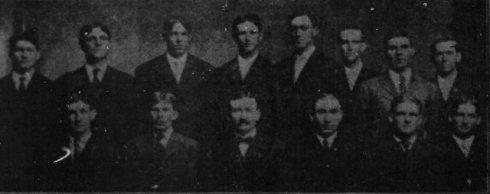
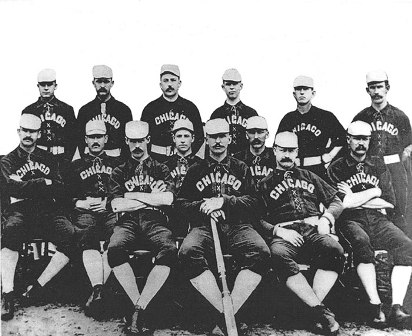
1906 Lynchburg Shoemakers, Virginia League champions. Grim is third from left on the bottom row.

1906 Lynchburg Shoemakers, Virginia League champions. Grim is third from left on the bottom row.

Just after selling the team, Grim’s wife reported him missing.  She told police in Louisville, Kentucky that she hadn’t heard from him for three weeks and thought he might be in Louisville after visiting family in Cincinnati.  Al Orth, the New York Highlanders pitcher, said he saw Grim in New York and told The Associated Press “He did not look like a man who was missing from anywhere.”
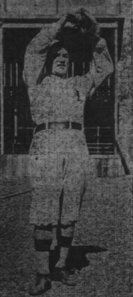
Al Orth

Al Orth


Grim eventually returned to Virginia and his disappearance was never explained.  Orth, who was from Lynchburg, returned there later that summer purchased an interest in the team and managed the club until early 1909 when he returned to the Highlanders.

For the next four years Grim bounced back and forth from team ownership (he managed, and owned part of two more Virginia League franchises (Portsmouth in 1910 and Newport News in 1912) and real estate speculating on the West Coast and in Virginia.

At the beginning of the 1912 season a small item in The Richmond Times-Dispatch hinted that there was trouble ahead:

“Jack Grim has a combination of troubles.  One is of the financial variety—well the other is nobody’s business.”

The financial troubles came to a head in August.  The Times-Dispatch said:

 “Because Manager J.J. Grim would not pay their salaries, all of the players of the Newport News baseball club except (Frank) ‘Deacon’ Morrissey, struck just before the scheduled double header between Newport News and Petersburg.”

After the game was awarded to Petersburg by forfeit, Grim’s co-owners removed him—outfielder William “Buck” Hooker was named manager for the remainder of the season.

At the end of the 1912 season, Grim found himself in an odd predicament.  The Cincinnati Enquirer said:

“Though minus a franchise, Jack Grim, formerly of Cincinnati, has a ball team under reservation, for he owns title to the players of the Newport News club…It develops that in the adjustment of the club’s affairs in August, Grim who was manager and part owner, got out without losing title to the players, though he lost the franchise.”

As a result, when the Cleveland Naps drafted third baseman Ray Bates from Newport News after the 1912 season, the draft price went to Grim.

It was the last good thing to happen to him; from there, Grim’s life spun out of control.

In October, he attended the World Series in New York (his wife later said he attempted to kill her during that trip).

In November of 1912 the Virginia League turned down his attempt to secure a franchise for 1913; next his effort to start a new league with teams in Virginia and the Carolinas fell through.

In addition to being unable to secure a franchise and running out of money—an effort to secure the New York-New Jersey League franchise in Kingston, New York also fell through–Grim’s wife had him arrested  during the first week of March 1913, and told a Lynchburg judge he had repeatedly “threatened Mrs. Grim with bodily harm.”  Grim was held in jail, but according to The Times-Dispatch “is doing everything possible to effect a reconciliation with his wife.”

Grim was released on bond after a week, but quickly rearrested, and by March 23 The Times Dispatch said:

“That a commission of lunacy will be summoned early this week to investigate the Sanity of john J. Grim, the well-known minor league baseball magnate , seems now to be a foregone conclusion…Since his incarceration Grim’s condition has grown so bad that there is no doubt in the minds of the jail attaches that he is insane…Grim has not had his clothes off in a week, and he spends his time in his cell singing, shouting, talking and pacing up and down, begging to be liberated.”

The “commission of lunacy” found Grim insane based on the testimony of Grim’s wife and a doctor named Albert Priddy, and ordered him sent to Virginia’s Southwestern State Hospital in Marion.  It was in front of the commission that Mrs. Grim related the story of the “attempt to murder her with a razor in New York City.”
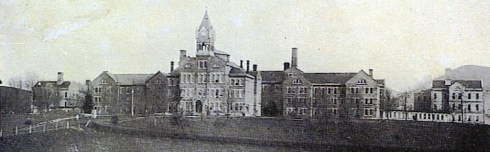
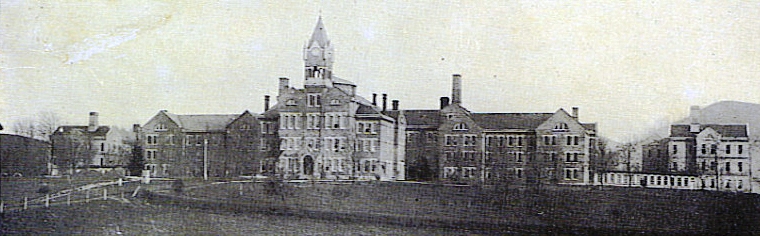
Southwest State Hospital, Marion, Virginia

Southwest State Hospital, Marion, Virginia

Contradictory reports about Grim’s condition came out during the next year.  The Associated Press said in August Grim was “A raving maniac…not far from death.”  A December story in The Cincinnati Enquirer said “he is improving rapidly and probably will be discharged at an early date…Grim expects to return to Cincinnati.”

Almost a year later, he was still in the hospital, and The Enquirer reported that “Grim is improving in health and expects to visit his Cincinnati friends soon.”

That item was the last newspaper reference to Grim; he was never released and died in the state hospital.

The doctor who testified that Grim was insane, Albert Sidney Priddy, was superintendent of the Virginia State Colony for Epileptics and Feebleminded in Madison Heights, Virginia.  The doctor, and that institution became infamous in the case of Buck v. Bell (the case was Buck v. Priddy until Priddy’s death in 1925; Bell was his successor at the State Colony).  The Supreme Court’s decision in the case–upholding the Virginia’s compulsory sterilization law– resulted in the forced sterilization of more than United States citizens in Virginia and states that enacted similar laws.

Franz Hosp

19 May

Franz Philip Hosp Jr. was born in Cincinnati in 1884 (some records, including cemetery documents and his grave say 1883).  His father was a well-known landscape architect and horticulturist who moved the family to Riverside, California in 1888.

The elder Hosp was responsible for many projects in the Southwest and Southern California; he is probably most famous for his landscaping of Victoria Avenue in Riverside, which remains a tourist attraction and is listed on the National Register of Historic Places, and for planting the gardens at the El Tovar Hotel in Grand Canyon National Park.

The family also ran a successful nursery in Oceanside, California  and Hosp worked with his father while playing baseball in the San Diego area.

Franz Hosp

Franz Hosp, 1909

In December 1906 he pitched for the San Diego Pickwicks (sponsored by San Diego’s Pickwick Theater) of the California Winter League.  Hosp quickly caught the eye of West Coast professional teams; according to The Los Angeles Times he had a streak of thirty-one scoreless innings that winter and “fanned as many as eighteen men in a single game.”

The Los Angeles Herald said two teams, The Butte Miners and the Seattle Siwashes of the Northwestern League, had already “tried hard to secure his services,” when he pitched against the Los Angeles Angels of the Pacific Coast League (PCL) in a February exhibition game in San Diego.

The Associated Press said the game

 “(W)as the first time in which he allowed as many as seven hits, and after doing, he took a brace and fanned out an equal number of Los Angeles’ best artists, with the result being that the Angels’ manager (Henry ”Hen”  Berry) lost no time in annexing Hosp to his own aggregation.”

Hosp said he chose to play with Los Angeles so he could continue working at the family business in Oceanside.

The pitcher was a popular member of the Angels.  The Los Angeles Herald said:

“Pitcher Franz Hosp is not only one of the best twirlers in the coast league, but he is also one of the most genial boys who ever donned a baseball uniform.  Hosp has forgotten more baseball, young as he is, than many of the swell headed players who roar at decisions have ever learned.”

The Times said of Hosp, who also played second base and shortstop:

“His work in the field and at the bat is equal to his performance in the box making him one of the best all-around men in the business.”

Hosp was 12-7 with a 2.73 ERA for the PCL champion Angels in 1907; he also played 13 games in the infield, hitting just .105.

franzhosppix

Franz Hosp

The following season Hosp (22-14 2.02), William “Dolly” Gray (26-11, 2.12), and Walter “Judge” Nagle (24-10, 1.94) led the Angels to another league championship.  On July 26 he had the most embarrassing moment of his career during a game with the San Francisco Seals.  The San Francisco Chronicle said:

“Hosp of the Angels established a unique and startling record yesterday afternoon, one that bids to stand a long time in baseball circles.  Not only did he literally pitch the game away, but in one inning—the fourth—he walked six men and hit two more, forcing in five runs across the plate without a hit by the Seals.  Not a ball was hit out of the diamond.”

(Just more than a year later, August 28, 1909, Hosp’s former teammate Dolly Gray, now a 30-year-old rookie with the Washington Senators, set the major league record by walking eight Chicago White Sox batters in one inning).

Hosp was 16-14 in August of 1909 when he was signed by the Cincinnati Reds for 1910.  Within a week he hurt his arm and did not pitch again for the remainder of the season.

By the spring of 1910 there were conflicting reports about the condition of Hosp’s arm.

The Times reported that according to Angels pitcher Andy Briswalter:

“Franz Hosp, whose clever pitching resulted in his purchase by the Cincinnati Reds, may never play ball again.”

The Herald said Hosp:

“(D)enied with considerable indignation the story purporting to be an interview with Andy Briswalter.  According to this story, Hosp’s arm was said to be in such condition that he might never play ball again.  While Hosp was overworked last season, when his sensational work with the Seraphs resulted in his being purchased by the Cincinnati Reds, he stated that he never felt better and that the rest of the past winter overcame any inconvenience or ill effects.  Hosp says he hasn’t seen Briswalter in six months.”

Hosp joined the Reds in Hot Springs, Arkansas, and was first tried in the outfield.  The Cincinnati Enquirer said after his debut:

(Ward) Miller and (George “Dode”) Paskert will have a dangerous rival for the right field job in the person of Franz Hosp, the recruit from the coast, who was signed as a pitcher but will try out as a fielder…He is a right-hand hitter, a good-sized, well-built fellow, and meets the ball square on the nose.  He came to bat five times; made a double and two clean singles…He showed a lot of speed on the bases and appears to be a kid who will bear watching.”

When finally given a chance to pitch, against the Boston Red Sox on March 25, after two scoreless innings, he gave up four singles and doubles to Harry Lord and Tris Speaker, in the third, resulting in three runs and was lifted for a pinch hitter the following inning.

Hosp was also tried in the infield where he “has made a fine impression.”  But it wasn’t enough to stick with the Reds.

The Herald reported in early May:

“Franz Hosp, one of the best pitchers who ever worked in the Coast League and who was released to Los Angeles by Cincinnati almost ten days ago because his pitching arm is kafluey for a time is warming up with the Angels every day and Hen Berry thinks he will get back into pitching form again soon.  He is a crack infielder too, and a heavy sticker, so it is dollars to cents that he will not be idle long.”

Hosp made his mound debut for the Angels on May 20; he pitched a complete game, losing 5 to 3.  The Herald said:

“Hosp showed excellent form for a pitcher who has been out of the game as long as he, and with a weak and sore arm, and he should be able get back to his best form with a little patience and careful slab work until his arm is ripe again.”

The paper was wrong, the extent of Hosp’s activity as a pitcher after that game was four innings in three games over the next year and a half.

Hosp was released by the Angels on June 15, along with Briswalter, who The Times claimed four months earlier had said  Hosp’s arm was shot; Briswalter had not recovered from a hip injury sustained during the 1909 season, he developed Tuberculosis of the injured bone and died in 1912.

Andy Briswalter

Andy Briswalter


Hosp continued to play for a decade.

Within weeks he was signed to play shortstop for the Vernon Tigers.   He hit just .240 for the Tigers, but The (Portland) Oregonian called him “a nifty fielder.”

Hosp became the team’s regular shortstop, through their move to Venice, California.  He hit .261 in 1911, and 1912, .255 in 1913, and then slipped to .208 in 1914.  He was released before the 1915 season and played for the Wichita Witches in the Western League.  He returned briefly to the PCL at the end of 1915, but was released by the Oakland Oaks prior to the 1916 season.  He returned to the PCL in 1918, playing for four teams over the next three seasons, ending his career after 56 games with the Salt Lake City Gulls in 1920.

Hosp returned to Southern California where he played and managed for semi-pro and industrial league teams and lived in Los Angeles.

On June 30, 1928 he was killed in a car accident on Coast Highway (US 101) 16 miles north of Oceanside.

Birmingham Sam— The Last Great Star of the Indianapolis Clowns

9 May

Richard “King Tut” King’s illness, which led to his retirement in the spring of 1959, left a void with the Indianapolis Clowns— James “Nature Boy” Williams, was popular, but the barnstormers needed someone with Tut’s charisma. They finally found him in 1962; his name was Sam Brison

The St. Petersburg Times described one of his early appearances:

“A limber fellow raced across the diamond in an Indianapolis Clowns uniform and bowed in the direction of teammate first baseman extraordinary Nature boy Williams. Minutes later fans were acclaiming a new star…he shows signs of becoming one of the all-time greats”

Given his resemblance to King Tut; Clowns owner Syd Pollock originally billed Brison “King Tut Jr.” The excellent book “Barnstorming to Heaven: Syd Pollock and his Great Black Teams,” by Pollock’s son Allan and James Riley told the story of how he was renamed. Brison approached Pollock and said he had a problem with the name:

“Problem is, I didn’t even know the man. Seen his picture on the bus. He musta been popular as God. Fans keep asking me, ‘How your Daddy?’ and I got no answer. Ain’t gonna lie, ain’t gonna say, ‘My Daddy fine, I’ll tell him you be asking.’ These people feel strong about King Tut.”

When Pollock asked if he just wanted to be called by his name, Brison said:

“No, I figure Birmingham Sam be good. People ask me about how Birmingham is. I can answer that.”

“Birmingham Sam” would be the team’s biggest draw during his 16 years with the team. Following the example of many members of the clowns throughout the team’s history, Brison also spent his winters playing basketball, first with Goose Tatum’s Harlem Road Kings, then with the Harlem Globetrotters—on the basketball court he said he “had a lot of showmanship about me…I did a lot of hollering.”

Never one for understatement, some of Pollock’s press releases described Brison as “one of the best fielders in baseball and hailed as the greatest comedian in sports history. “ The six-foot-two-inch Brison would often begin performances by “unpacking” two-foot-seven-inch Dero Austin from a suitcase at home plate.

In 1969 The Associated Press reported that Brison had secured a spring training tryout with the Boston Red Sox’ Carolina League Winston-Salem franchise, Brison told the wire service:

“I just want to get to Florida and show my stuff.”

Brison said an injury earlier in the spring had led to the cancelation of a tryout with the Cincinnati Reds—there’s no record of the whether the Red Sox try out ever took place. The Associated Press story incorrectly said the 29-year-old Brison was only 23—his real age would have made it especially difficult for him to break into organized ball in 1969.

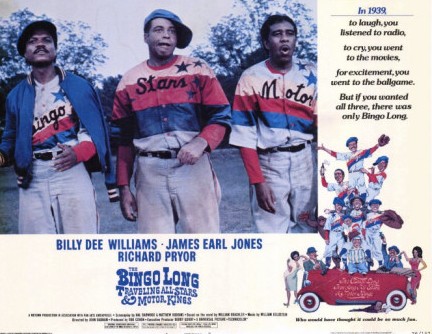
In the mid-1970s, during the beginning of the end for the Clowns as a viable business, Negro League Baseball was becoming the subject of renewed interest. In 1976, the barnstorming tradition of teams like the Clowns made the big screen with the release of “The Bingo Long Traveling All-Stars and Motor Kings.”

In order to add authenticity to the baseball scenes stars Billy Dee Williams, James Earl Jones and Richard Pryor were joined in the cast by Leon “Daddy Wags” Wagner (two-time American League all-star), Jophrey Brown (pitched in one game for the 1968 Chicago Cubs, then became a well-respected Hollywood stuntman), and “Birmingham” Sam Brison.

“Bingo Long” movie poster

Brison played shortstop Louis Keystone in the movie.

“Birmingham” Sam Brison is seventy-two-years-old and lives, appropriately enough, in Birmingham, Alabama.

Update: “Birmingham” Sam Brison passed away in April of 2014.

Miah Murray

7 May

Jeremiah “Miah” Murray appeared in only 34 major league games, with four teams between 1884 and 1891.  In 31 games a catcher, he made 29 errors and was charged with 28 passed balls.

During that short career, he also became the subject of two stories which highlighted his shortcomings behind the plate.  Both stories appeared after the fact, so are subject to the usual caveats of 19th-century baseball stories.

Jeremiah "Miah" Murray

Jeremiah “Miah” Murray

In 1894 The New York Sun wrote about the most embarrassing episode Murray’s career—said to have taken place during his rookie season, 1884:

“(Murray) tells about a game he once caught in at Buffalo when he was a member of the Providence team.  There were three men on bases and he threw to (Jerry) Denny to catch a man napping, but the ball never got there.  It hit Jim O’Rourke, who was the batsman, on the side of the head and bounded into the grandstand, three men scoring and winning the game for Buffalo.  Jim staggered and cried out with pain, but the crowd simply cried with glee, O’Rourke’s hurt being entirely lost sight of in the enthusiasm.”

Murray’s manager during that 1884 season was Frank Bancroft who led Providence to the National League championship and a three games to zero victory over the New York Metropolitans of the American Association earning for the first time the title “World Champions” from The Sporting Life.

Frank Bancroft

Frank Bancroft

Bancroft compiled a 375-333 record over parts of nine seasons as a big league manager, before becoming an executive with the Cincinnati Reds.

It was while serving as the Reds’ Business Manager that Bancroft related another story about Murray’s brief time with Bancroft’s championship team.  The story first appeared in The New York  American in 1915:

“’Take it from me,’ said Frank Bancroft, while some of the fans were discussing famous bonehead plays, ‘the old timers pulled some bones that had all you youngsters blocked off the map.  Best I recollect, right now, was sprung by Miah Murray when he was catching for me…With a runner on first Miah steamed back to the stand a made a magnificent catch of a foul fly.  The crowd broke into roars of applause; Murray, leaning against the stand, took off his cap and bowed right and left—and the runner, sizing up the situation, lit out from first, kept right on going, and came all the way around while Miah kept bowing and the rest of the team were screeching and raving, all in vain.”

Murray later became a National League and college umpire; he was also a prominent boxing promoter and matchmaker in Boston where he operated the Lincoln Athletic Club of Chelsea, and later the Armory Athletic Club.  He died in Boston in 1922 at age 57.

Bancroft retired as business manager of the Reds in January of 1921; he died two months later at age 74.