Tag Archives: Clark Griffith

“Calvo has been the Victim of a Cruel and Merciless Conspiracy”

4 Jun

When he signed 18-year-old Jacinto “Jack” Calvo Gonzalez, Washington Senators manager/owner Clark Griffith was no stranger to Cuban players, having managed Armando Marsáns and Rafael Almeida with the Cincinnati Reds, but Calvo’s signing was the beginning of Griffith’s 40-plus year commitment to signing players from Cuba.  During his tenure the Senators signed more than half of the 63 Cuban players in the major leagues.

Calvo was “discovered” while playing with Almendares in the Cuban National League, where he hit .342 in 19 games.  He made even more of an impression during a series Almendares played against the New Orleans Pelicans of the Southern Association, Calvo hit .400 and his older brother Tomas hit .385.

???????????????????????????????

He also hit .400 during a six-game series with the Philadelphia Athletics, The Associated Press said he didn’t compile those numbers facing minor league pitchers picked up for the series, but “against (Eddie) Plank, (Jack) Coombs, and (Charles “Chief”) Bender.”

When rumors circulated that Washington might have signed Calvo, Bender said:

“I never saw a faster youngster in my life; he can hit too, and looks for the entire world like a class ball player…If Griffith has signed him he will never regret it, for there is no chance for him to be a failure.”

By December of 1912 Griffith had Calvo under contract.  The Pittsburgh Press said:

“The young Cuban sent a letter to Griff, written in Spanish.  ‘They did not teach Spanish where I went to school,’ said The Old Fox, ‘so I can’t translate the missive.  However, as he signed his contract I guess everything is alright.’”

The Boston Red Sox signed Tomas Calvo later in December.

While Tomas never made it in Boston, Jacinto made his debut with the Senators on May 9; he hit only .242, but everyone noticed his arm.  After a June game with the St. Louis Browns, The Associated Press said:

“The youngster astonished the bugs yesterday with his remarkable throwing arm.  At one time he heaved the ball from the right field fence directly to (Germany) Schaefer’s hands at second.”

On August 13 Calvo was sent to the Atlanta Crackers in the Southern Association and made his first appearance with the team the following day, batting seventh, going 1 for 4.  The Atlanta Constitution said “He’s fast, fields pretty well, throws like a shot and meets the ball squarely.”

Calvo only lasted 10 days in Atlanta.  He was hit on the right arm with a pitch thrown by Charles “Curly” Brown of the Montgomery Rebels.  He was returned to the Senators and did not appear in another game that season.  (Some sources show Calvo with the Long Branch Cubans in the New York New Jersey League—it was most likely his brother Tomas, an infielder, rather than career outfielder Jacinto, who played shortstop for the team in 94 games).

Calvo started the 1914 season with the Los Angeles Angels in the Pacific Coast League.  After only 11 games (he was 4-8 with one double, one triple and a stolen base) he was sent to the Victoria Bees in the Northwestern League.  Later in the season a story came out explaining his abrupt departure from Los Angeles.
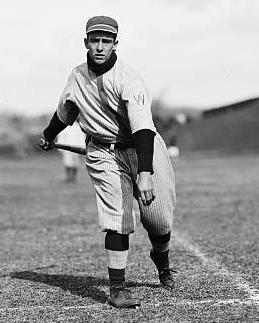
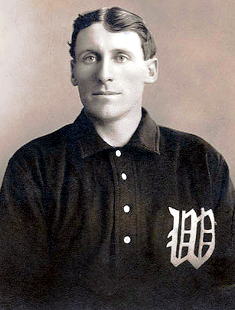
Calvo with the Washington Senators

Calvo with the Washington Senators

The Spokane Spokesman-Review said, “Calvo has been the victim of a cruel and merciless conspiracy,” despite the fact that “in the exhibition games last spring against the White Sox Calvo loomed up head and shoulders above the other Angel gardeners, out hitting them by a wide margin and displaying more speed on the bags than the whole Angel team combined.”

The paper claimed that a female reporter:

“(o)n one of the local papers…dragged out of him the fact that his father was a rich sugar planter in Havana, and that he played baseball for fun and not for money…That was the beginning of the end for little Calvo. “

The story said fans began harassing Calvo, and:

“Instead of coming to his rescue, the players on the Angel team ‘rode’ the boy unmercifully.  It was pathetic to see the friendless little Cuban trying to get into the good graces of his teammates.  One day, in the clubhouse the boy sat down on a bench and cried before them all.  His spirit was broken.”

Calvo hit .289 for Victoria in 1914, and spent the spring of 1915 with the Senators before being release before the beginning of the season.  After his release he played with his brother Tomas for the Long Branch Cubans, by then a member of the Independent Negro League; he also played for Havana in the Cuban-American Negro Clubs Series.

Calvo next played for the Vancouver Beavers in the Northwestern League and the San Francisco Seals in the Pacific Coast League, hitting .329 in 1916, and slipping to .263 in 1917. After the 1917 season, the outfielder returned, unsigned, the contract sent to him by Seals owner Charlie Graham.

Calvo had been very popular in San Francisco during his nearly two seasons with the Seals, but was criticised by fans and local press for his holdout, especially because he was holding out on the even more popular Graham.  The San Francisco Chronicle said:

“He sent his terms, and as they were exactly what he asked for before.  (Charlie) Graham is wondering why the Cuban went to the trouble to wire at all.”  The paper criticised Calvo for “asking for more money than he got last year,” while “better players than he have submitted to a salary slash on account of war conditions.”
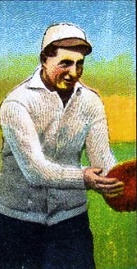
San Francisco Seals owner Charlie Graham

San Francisco Seals owner Charlie Graham

The Chronicle lamented the fact that Seals outfielder Biff Schaller would miss the entire season with an injury, otherwise “Calvo could have stayed in Havana for all that anyone here cares.”

As it turned out, Calvo did stay in Havana.  For all of 1918 and ’19, not returning to the states until 1920.  Tomorrow–Jacinto Calvo’s return.

Dave Altizer

4 Apr

David Tilden Altizer did not begin playing professional baseball until 1902 when he was 25; he made his debut with the Washington Senators four years later.  A member of the US Army, he was in China for the Boxer Rebellion and the Philippines during the Spanish-American War; he began playing baseball while in the service.

Most recent mentions of Altizer list his nickname as “Filipino,” but while his service was often mentioned, this nickname is rarely found in contemporaneous stories; rather he regularly referred to by the nickname “daredevil.”

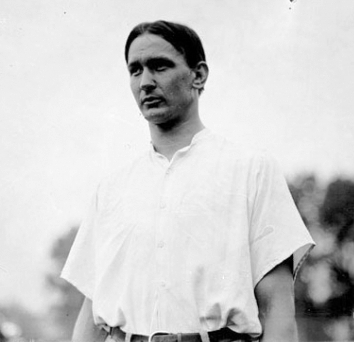
Dave Altizer 1909

Dave Altizer 1909

Altizer was one of the more colorful figures of his era and made good copy, but many of the stories have been lost for years.  Here are a few:

In 1910 Altizer was drafted by the Cincinnati Reds from the Minneapolis Millers of the American Association.  Unaware he had been drafted; Altizer went to Chicago at the close of the millers’ season and disappeared.  The Associated Press said he thus became “the only ballplayer who has been ‘found’ with a newspaper want ad.”

The story said Reds manager Clark Griffith, unable to find Altizer, contacted “Nixey” Callahan, who was playing in Chicago’s City League, and asked him to put an ad in Chicago newspapers to find Altizer.

“This was done and in the early hours of the morning some unknown person called Callahan and gave him Dave’s number.”

Altizer appeared in three games for the Reds after he was located; he had six hits in 10 at bats, walked three times and scored three runs.

Altizer had been the starting  shortstop for the Senators in 1907.  In December The Pittsburgh Press ran a wire service story from Washington under the headline “Dave Altizer is Dead Broke:”

“Dave Altizer, the most popular player on the local team, recently fell victim to a pickpocket, and was relieved of his year’s savings.”

The story said Altizer, alarmed by the “financial stringency (the Panic of 1907)…has carried his savings on his person, not wanting to take any chances of having them tied up in a bank.”

Altizer went to sleep in a Pullman car on a train to California with “$1,475 in large bills” in his vest pocket and discovered when he awoke that the money was gone.  It was never reported if the money was recovered of if the thief was caught.

Altizer with Washington

Altizer with Washington

Gabby Street claimed he saw Altizer do the dumbest thing he had seen in a game, and “topped (Fred) Merkle,” while they were teammates in Washington:

“St. Louis had us beat, 3 to 2, and there were two outs in the ninth.”

Altizer was batting with two strikes and runners on second and third.

“The next strike came over and (umpire John) Sheridan called it a strike.  The ball whizzed right through (Tubby) Spencer’s mitt and bounded up against the grandstand and shot off at an angle, while the chubby Spencer pursued it.  Both of the Washington runners on the bases scored easily.

“But all the time Altizer refused to leave the plate.  He was in a hot argument with Sheridan and insisted the ball wasn’t over the plate and was two feet wide.  In the meantime Spencer got the ball.  There was no chance to get either of the runners at the plate, but he fired to first and retired Altizer.  It made the last out of the game and Altizer’s failure to run cost us the two runs and lost the game for Washington.  And they talked about Merkle.”

Gabby Street

Gabby Street

After Altizer finished his Major League career with the Reds in 1911, he returned to Minneapolis where he played until 1918.  He played and managed two more seasons with the Madison Grays in the South Dakota and Dakota Leagues, before retiring from baseball at age 44.  He died in Pleasant Hill, Illinois in 1964 at age 87.

Ernie Diehl

18 Mar

Ernest Guy “Ernie” Diehl’s entire professional career consisted of less than 60 games.

Every year from 1900 to 1911 he was offered contracts by professional teams and despite his time with two National League teams and two minor league teams he never earned a penny as a ballplayer.

By the time the 25-year-old Diehl made his first professional appearance with the Pittsburgh Pirates in May of 1903, he was already a well-known player. Diehl was the star of the perennial powerhouse Avondale team in Cincinnati’s semi-pro Saturday League, which The Sporting Life called “a fast, clean league.”

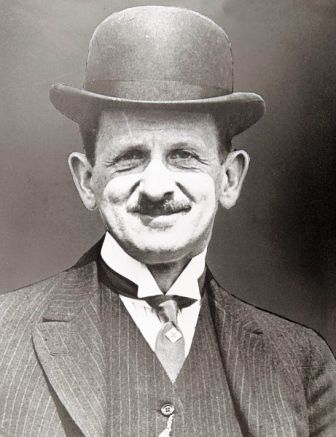
diehl

Ernie Diehl

Diehl was born in Cincinnati in 1877, the scion of a Cincinnati distillery empire; His father Adam G. Diehl had made a fortune in the whiskey business with his brother-in-law; together they founded The Edgewood Distilling Company.

He attended the University of Cincinnati and established a reputation as one of the area’s best athletes.  Perhaps even better at tennis than baseball, Diehl was a prominent amateur tennis player during the first decade of the 20th Century.

In May of 1903 when the Pirates arrived in Cincinnati for a series, the team was decimated with injuries and Diehl joined the team for one game, playing left field on May 31, he went 1 for three in a 3-2 pirate victory.

Despite being offered a contract with Pittsburgh, Diehl chose to return to the distilling business and the Saturday Baseball League.

In 1904, with several Pirate players hurt, Diehl was again asked to join the team; this time for 12 games.  The Pittsburgh Gazette said Diehl also spent time with the Pirates in Hot Springs, Arkansas that spring.

The Baltimore American ran a story before the Pirates arrived in New York in August:

“New Yorkers who attend the games between the Brooklyn and Pittsburgh teams will be treated to an opportunity of seeing the work in the field of a millionaire ballplayer.”

While he hit just .162 for the Pirates in 1904, that did not diminish Pirate owner Barney Dreyfuss’ desire to sign Diehl.

Before the 1905 season Dreyfuss told The Pittsburgh Press:

“The one player I would like to get on the team is beyond my reach… His name is Ernest Diehl…He is one of the best baseball players I ever saw.”

Dreyfuss also called Diehl “One of the best all-around athletes,” he had seen.  The Press said that although Diehl was required to sign a contract for his time with the Pirates in 1903 and ’04:

“Diehl never received a penny of salary from President Dreyfuss.”

Barney Dreyfuss

Barney Dreyfuss

Dreyfuss, and every other owner who offered Diehl a contract was unsuccessful in securing him for the 1905 season; Diehl spent the season playing in the Saturday League and in several tennis tournaments across the country.

He again played tennis and semi-pro ball in 1906, until August when the Boston Beaneaters came to Cincinnati. Shortstop Al Bridwell was injured, and Diehl was signed (again for no salary) to play for Boston in the three-game series.

The Associated Press reported:

“’Ernie’ Diehl, a wealthy young distiller of this city, an enthusiastic athlete, long known as a brilliant baseball player on local amateur teams, distinguished himself in the series just played…He played three games in the Boston ranks…He made five hits in eleven times at bat…Diehl could not afford to enter professional ball if he desired, at the highest salary paid in the organization, on account of his business, but is delighted and satisfied with his experience…Besides his heavy batting, his fielding was strictly up to the professional standard.”

Just as he had in Pittsburgh, Diehl turned down an offer to stay with Boston for the remainder of the 1906 season.

In 1907, Diehl appeared in 21 games for the Toledo Mud Hens in the American Association, hitting .405.  The Toledo News-Bee said Diehl was spending “His vacation…helping out the Toledo club.”  The Associated Press said that as in the past, “Diehl is wealthy and refused to accept pay for his services.”

In addition to his business interests, amateur tennis and baseball career, and professional baseball “vacations,” Diehl also served on Cincinnati’s city council from, roughly, 1906-1910.

In 1909 Diehl played in one game of a doubleheader for the Boston Doves on August 12 against the Reds, he was 2 for 4 with a double—it would be his last in the National League

Diehl then joined the eventual American Association champion Louisville Colonels, at the request of his friend and fellow Cincinnatian, manager Heinie Peitz.  (Baseball Reference lists a player as “Diehl,” with no first name on the 1909 Louisville roster, with a .226 average in 20 games).

The Sporting Life said Diehl “figured very prominently in Louisville’s winning the championship of the A.A. will again be in Colonel garb,” in 1910; Diehl did not play for Louisville, or any other professional team again.

In 1911 The Associated Press and Cincinnati newspapers said the 33-year-old Diehl had a deal in place with Reds manager Clark Griffith to join the team at some point during the season; as with Louisville, that deal never materialized either.

Diehl was briefly mentioned as a candidate to replace Griffith as Reds manager in 1912, the job eventually went to Hank O’Day.

Diehl’s career was summed up well in a 1914 Baseball Magazine article by William A.  Phelon:

“For ten years it has been a tacitly accepted fact, around the big leagues and whenever players or managers assembled, that Ernie Diehl was not only of major league quality, but what might be called super-quality—the Wagner-Lajoie-Cobb variety.  He could hit, run, and break up a defense with anybody, and was a versatile artist in five or six positions.  Business held him; there never was a chance for him to spend a full season in the game; year after year, in short vacation frolics, he showed the professionals what he could do—and now, getting on in years, with business still gripping him, he sadly gives it up, and lays aside the bat and glove he never had a fair chance to use.”

Diehl’s Edgewood Distilling Company seems to have been dissolved sometime around 1918, and he eventually settled in Miami where he died in 1958.

Zimmer and The Players Protective Association

21 Dec

Charles “Chief” Zimmer made one more important contribution to the game as founding member and first president of the Baseball Players Protective Association.

When the organization was formed in June of 1900 Zimmer said:

“The players realize that the sport needs a stirring up, and will cooperate with the club owners in the good work.”

In retrospect it was an admirable, but naive statement.

Nearly 100 players attended the first meeting and elected Zimmer.  Hughie Jennings was elected secretary and William Clarke treasurer.  The attorney for the Association was former Major Leaguer Harry TaylorClark Griffith was later name vice president.

In December the association presented their five point plan to the owners:

  1. “Club owners (would) mot have the right to ‘reserve’ players at a salary less than that provided for the ensuing year, nor for more than three years.”

  2. “Not to buy, sell, assign, trade lend, accept, select or claim service of any player for any period in any way without his written consent.”

  3. “Club owners to pay physicians’ fees for injuries received in actual play.”

  4. “No player to be suspended without pay more than three times a season or two weeks at a time.”

  5. “The appointment of a committee of arbitration, one member to be chosen by the owners, one by the players, and a third (agreed upon to mediate disputes)”

The demands were met with silence.  The Baltimore Morning Herald said:

“Club owners will hardy accede to the requests—no communication yet established with the new organization.”

Part of the reason the association was largely unsuccessful was because early on it was made known they would do nothing to leverage their demands.  Harry Taylor told The New York Times:

“Well, this is a conservative organization.  There is nothing revolutionary about it, and we don’t propose to keep men from playing ball.”

While some short-term gains were made as a result of the creation of the American League as a Major League in 1901, allowing players to jump contracts for terms from AL clubs, the association was all but broken after the American and National League’s made peace in 1903.

Charles "Chief" Zimmer

Charles “Chief” Zimmer

It would be more than 50 years before players again seriously considered taking collective action, but Zimmer’s organization provided one of the early, small steps to challenging the reserve clause.

June Cass

17 Sep

World War I cost Daniel June Cass his shot to play in the Major Leagues.

Born in Scotland, South Dakota June 25, 1894, Cass hit .336 in 28 games for the Des Moines Boosters in the Western League in 1916. After hitting .284 the following season with Des Moines Cass was purchased by the Washington Senator.

Cass joined the Senators in Augusta, Georgia for Spring Training and according to the Associated Press was set to make the Clark Griffith’s team, but for his draft status:

“Based on the fact that he is in class 1 of the draft and his number in the order of liability is so low, being in the first 400, that there is no assurance he would be able to remain with the Griffmen more than a month or two…if retained the Washington club would have to pay $3000 for Cass under the agreement with Des Moines, and the pilot (Griffith) figures it would be poor business policy.”

Although the article went on to say Cass would probably not be able to displace any of the starters, his speed alone would have benefitted Washington’s aging outfield.  (No stolen base records survive for his Western League tenure, but Cass was always mentioned as one of the best base stealers in the league in contemporaneous newspaper accounts)

Cass was returned to Des Moines and hit .327 in 24 games before reporting to Great Lakes Naval Training Station in Illinois on June 6.  Cass served the remainder of the year.

Cass returned to Des Moines for 1919 season, and got off to a good start hitting .308 and leading the league in stolen bases through 80 games.  It was also reported by the Associated Press that the Senators again had an interest in purchasing Cass.

In late July 0f 1919 Cass developed a case on tonsillitis, developed quinsy and died on July 28.