Tag Archives: Detroit Tigers

Superstitions

4 Oct

Baseball history is rife with stories of superstitions, “hoodoo” and all manner of irrational beliefs meant to improve performance and win games.

George Mullin who won more than 200 games in the first two decades of the 20th century, primarily with the Detroit Tigers, was well known to seek things to bring him luck and avoid “hoodoo.”

It’s a fairly well-known story that Mullin was one of the Tiger players who believed that team mascot Ulysses Harrison, an orphaned African-American child taken in by Ty Cobb and called “Lil Rastus,” brought him luck.  After Harrison was dismissed as Tiger mascot Mullin was one of the players instrumental in bringing the youth back for the 1909 season, and on at least one occasion “kidnapped” Harrison from Cobb’s room and had him stay in his in order bring him luck on the mound the following day.

Surely Mullin’s 29-8 record in 1909 helped to cement his belief in “luck.”
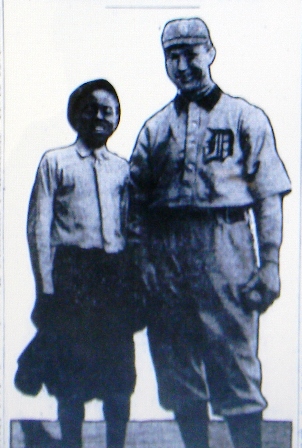
Tiger mascot Ulysses Harrison with pitcher George Mullin

Another of Mullin’s superstitions is less well known.

According to the Fort Wayne News Mullin was convinced that “For a pitcher to have his mug taken after twirling a winner means a defeat sure in the next game.”

Mullin had very particular rules for having his photo taken:

“If one day is allowed to pass by after the victory the hoodoo is powerless.  By the same token it is safe to have the picture taken just before he starts to pitch.”
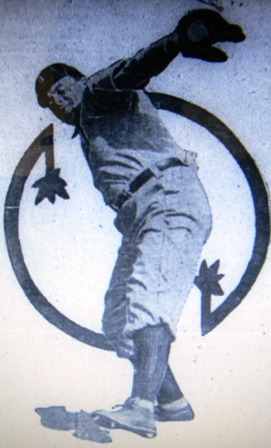
George Mullin, in a photograph presumably not taken the day after a victory.

After retiring in 1915, Mullin became a police officer in Wabash, Indiana and died there in 1944.

Who is the Real Jack Rowan?

10 Sep

John Albert Rowan was born in New Castle, Pennsylvania in 1886. After compiling an 18-10 record for Leavenworth in the Western Association, the twenty-year-old earned a one-game audition with the 1906 Detroit Tigers. Rowan gave up eleven earned runs on fifteen hits and five walks in a 13-5 loss to the Chicago White Sox. He made it back to the big leagues with Cincinnati in 1908 and pitched parts of 7 seasons in the Major Leagues with the Reds, Phillies, and Cubs.

Rowan was more or less forgotten by July of 1958 when a small Associated Press item announcing his death in his room at a Detroit hotel appeared in newspapers.

Jack Rowan

For the previous 20 years Rowan had spent his summer days at Briggs Stadium, the site of his Tiger debut in 1906 (Bennett Park, the Tigers’ stadium from 1895 to 1911 was on the same site. Replaced by Navin Field in 1912, renamed Briggs after the 1935 expansion). The Tigers were planning on honoring the former pitcher at an upcoming game.

One problem:

The day after the announcement of Rowan’s death a man in Dayton, Ohio told reporters he was the real Jack Rowan.

The Detroit Rowan had his supporters. One of his pallbearers swore he saw him pitch that game for the Tigers, although he remembered it as “1907 or 8.” Bishop John Donovan of the Detroit Catholic Diocese was certain the man whose funeral he presided over was Rowan; the bishop had interceded on the Detroit Rowan’s behalf years earlier to help him get a baseball pension.

Win Clark, secretary-treasurer of the Association of Professional Ball Players of America, was also sure the Detroit Rowan was the real Rowan; after all, they had been sending him pension checks for years.

But many said his stories were inconsistent and that he gave his age at 85 years old, 13 years older than Rowan’s listed age.

The Dayton Rowan insisted he was the real Rowan and had his own supporters. Dayton sports writers were sure the local man was the former pitcher, who had finished his career in Dayton in 1917—but the Dayton Rowan gave his age as 68, four years younger than Rowan should have been.

Neither man had any living family to back up their claim.

Ultimately, the living Rowan, the one in Dayton, prevailed. It was generally determined that he was the former Major League pitcher, the Detroit Rowan deemed an imposter.

The Dayton Rowan showing reporters a photo of the 1910 Cincinnati Reds

The Dayton Rowan died in 1966 and is buried there—interesting given that one of his arguments for his legitimacy after the Detroit Rowan’s death in 1958 was, “If he is the real man why isn’t he being buried in New Castle along with the rest of his family?”

Murdered by an Actor

3 Aug

In 1905 Arthur Brown was a promising first baseman from Wilkes-Barre PA.  He had been discovered by Walter Burnham who managed east coast minor league teams for more than 20 years.  After spending the ’05 season with his hometown team in the New York State League.

He played for Burnham with Newark in the Eastern League the following season, and despite a .235 average he was purchased by the Detroit Tigers and then sold to Montreal.  After a .239 season with Montreal in the Eastern League and a spring training Trial with the St. Louis Browns, Brown played for Milwaukee in the American Association in 1908, hitting .192.  In 1909 he played for Trenton in the Tri State League and moved on to Albany in the New York State League in 1910.

On June 15 of 1911 Brown was in his second season with Albany, hitting .187.  He was living in Albany with an actress named Mildred Barre; the problem was she was still married to an actor from New Orleans named John V. McStea.  McStea entered the house on Pearl Street  in Albany and after being hit by Brown pulled a revolver and shot the 1st baseman four times.  Brown died that night.

McStea was convicted the following year, his wife testified for the prosecution.