Tag Archives: Eastern League

Salaries–1897

15 Nov

After Amos Rusie ended his year-long holdout, the issue of salaries was, as it has been throughout the history of the game, hotly debated—some thought ballplayers were grossly overpaid during a period when the average annual salary in the United States was just under $675.

Amos Rusie

The Fort Wayne Gazette published the following in an effort to address “much questioning as to the salaries paid young players at the present time.”

According to The Gazette National League players averaged $175 to $250 a month “all the way up to $5000 for veterans.”

Other league salaries:

Eastern League: $100-$150 for young players $200-$250 for stars

Western League: $75-$150, up to $300 for stars

Atlantic League: $75-$250

Western Association: $65-$115

Southern League: $75-$100

New England League: $75-$125

Interstate League: $65-$150

The Gazette came down on the side of the players:

“It is customary to speak of the high salaries and easy lives of National League players but the kickers seldom realize that the man who now supports his little family in comfort on $300 a month—probably had to slave two years for perhaps $75 a month, $450 a year…and a probable loss of salary whenever the little league he played with disbanded in arrears.”

Filling in the Blanks–Yeager

14 Nov

Baseball Reference lists “Yeager” appearing in three games 1884 Reading Actives in the Eastern League.

Edward Yeager was born in Reading, Pennsylvania on July 26, 1859.  He played on several local amateur teams including the Keystones of Reading.   In 1884 Yeager signed a contract with the Houston Nationals in the Texas League.  According to the Reading Eagle, who called Yeager “a star third baseman and hard hitter,” he returned home near the end of the season and joined the Actives.

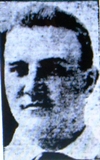
Edward Yeager, circa 1884

Yeager appears to have returned to amateur baseball in 1885.  At the same time he joined the fire department and became active in local politics.  Yeager served three terms in the Reading city council and was the Democratic candidate for mayor in 1899, losing by 58 votes.

Yeager ran again in 1902 and was elected Reading’s 24th mayor, serving until 1905 (at the time Reading mayors were limited to one, three-year term).  He attempted to run again in 1908, but was defeated.  Yeager served as city treasurer after his tenure as mayor.

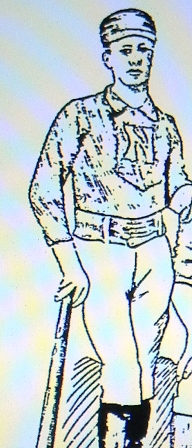
Yeager, 1898

He passed away in Reading April 30, 1933.

A Thousand Words–New Orleans Pelicans

13 Nov

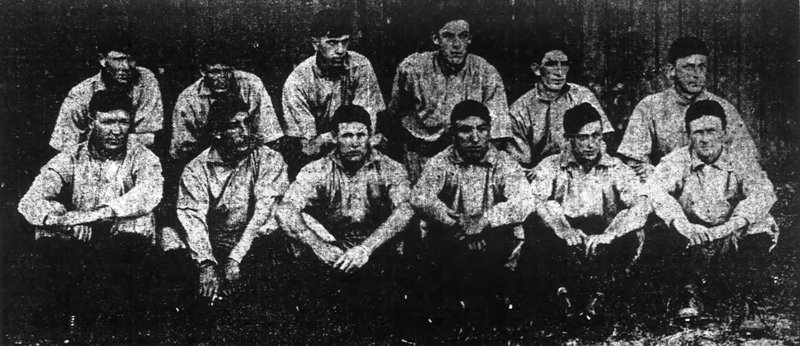
Another picture I’ve never seen published before—the 1906 New Orleans Pelicans of the Southern Association.

Top, Left to right.

Bill Phillipshe spent seven seasons in the Major Leagues with a 70-76 record; and won 256 games in a minor league career that began in 1890 and ended in 1909.

Mark “Moxie” Manuelwas said to have appeared as a both a left and right-handed pitcher for New Orleans in 1906 and 07, Manuel was a combined 37-26, earning him a second trip to the Major Leagues in 1908, where he posted a 3-4 record in 18 appearances for the Chicago White Sox.

Milo Stratton—a weak hitting (career .185) catcher who played in the minor leagues from 1903-1914.

William O’Brien—a .215 hitting first baseman in 1905 with the Toronto Maple  Leafs in the Eastern League and with the Pelicans in 1906.

Jake Atz—played for the Washington Senators in 1903 and the Chicago White Sox 1907-1909, a minor league manager for 21 seasons he won more than 1900 games.

Art Brouthers—a third baseman who played in 37 games for the 1906 Philadelphia Athletics, Brouthers managed the 1913 Paducah Indians to the Kitty League championship.  After his baseball career he was a hotel detective in Charleston, South Carolina.

Front, left to right

Whitey GueseGuese had several strong seasons in the minors, but in his lone Major League season with the Cincinnati Reds in 1901 he was 1-4.  The Youngstown Vindicator said, “He is a twirler who belongs to the disappointing species known as ‘morning glories.” And, “Seemingly has a heart like a canary.”

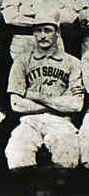
Joe Rickert—“Diamond Joe” Rickert stole 77 bases for the Pelicans in 1904; he played 15 games in the Major Leagues with the Pittsburgh Pirates and Boston Beaneaters.

William Blake—an outfielder with 13 different minor league teams from 1902 to 1910 and native of Louisville, Kentucky, little else is known.

Punch Knoll—another long-time minor league manager.  Knoll appeared in 79 games for the 1905 Washington Senators, he appeared in 3 games as a pinch hitter, collecting one hit, at 48-years-old while managing the Fort Wayne Chiefs in the Central League

Chick Cargo—brother of Major Leaguer Bobby Cargo, Charles “Chick” Cargo was a shortstop and 3rd baseman who played 19 seasons of minor league ball.

George Watt—Watt had three good seasons for the Little Rock Travelers, with a 53-34 record from 1902-1904.  He slipped to 20-37 in 1905-06 with Little Rock and New Orleans.  By 1907 he had dropped from “A” ball to “D” ball with the Zanesville franchise in the Pennsylvania-Ohio-Maryland League.  In 1908 he pitched for the Zanesville Infants in the Central League, was release in August after posting a 6-15 record and disappeared.

Sammy Strang

5 Nov

Samuel Strang Nicklin, “The Dixie Thrush,” was one of baseball’s great renaissance men.

Born in Tennessee in 1876, he was the scion of one of Chattanooga’s most prominent families.  His father John Bailey Nicklin served in the Union Army during the Civil War, moved to Chattanooga in 1866, and served as mayor from 1887-1889.
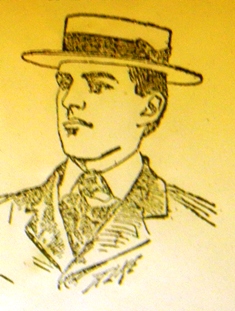
Sammy Strang

Samuel Nicklin spent one year at the University of Tennessee where he starred on the football and baseball teams. He also had two short stints in professional baseball 1893 and 1896, which included 14 games with the Louisville Colonels in the National League when he was 19.  Late in 1896, he enlisted as a private in the Tennessee Volunteers, served in Spanish-American War and rose to the rank of captain.

After leaving the service, Nicklin signed a contract with Cedar Rapids Bunnies in the Western Association and dropped his last name; he was known as Sammy Strang for the rest of his career.

The Milwaukee Journal said of the name change:

“(Strang) came of a rich southern family with deep prejudices against professional ball.”

This “prejudice” likely had nothing to do with it given that in addition to serving as Chattanooga mayor, the elder Nicklin was active in professional baseball, serving as president of the Southern Association in the 1890s.

A career .269 hitter, Strang was best known for being one of baseball’s first regular pinch-hitters while playing for John McGraw’s New York Giants from 1905 until June of 1908.  According to The Associated Press:

“McGraw noted the regularity with which he hit in pinches.  So he called him a ‘pinch hitter’—and the term stuck.”

During the 1909 season, Strang began coaching the baseball team at West Point.  He retired from baseball after playing from 1908-1910 with the Baltimore Orioles in the Eastern League, to study opera.
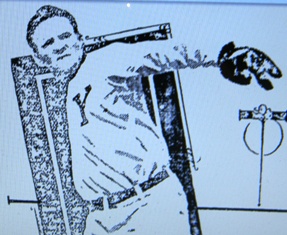
Sammy Strang

During his baseball career, Strang was known for writing songs and singing but decided to seriously pursue a music career in 1910.  He traveled to Paris where he trained under Jean De Reszke, one of the greatest male opera stars of the 1890s.

Upon returning from Paris, he chose not to accept an offer to join an opera company and instead returned to West Point, where he continued as coach until 1917.

Strang returned Tennessee shortly before his father’s death in 1919 to manage and take over ownership of the struggling Chattanooga Lookouts in the Southern League.  While the Lookouts did not win a league championship during Strang’s tenure, he was credited with turning the franchise around and sold the team, for which he paid nothing 1919, for a reported $75,000 in 1927, while retaining ownership of the stadium, Andrews Field.

Unfortunately, Strang’s most ambitious plan–to sign Satchel Paige in 1926–never materialized.

According to Larry Tye’s book “Satchel Paige: The Life and Times of an American Legend,”   Strang failed in an attempt to sign Paige for $500 to pitch a game against the Atlanta Crackers. Paige said of the deal:

“I just had to let him paint me white.”

Samuel Strang Nicklin died in Chattanooga in 1932.

Tom Colcolough

26 Oct

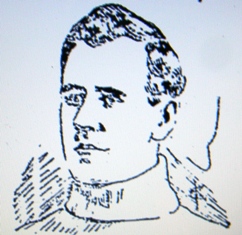
Thomas Bernard “Coke” Colcolough (his name was pronounced “Cokely”) posted a 14-11 record in parts of four seasons in the National League with the Pittsburgh Pirates and News York Giants.

His greatest baseball achievement has been lost to history.

Before the 1893 season, professional baseball eliminated the five and a half by four-foot pitcher’s box and replaced it with the rubber, while moving the distance to the current 60 feet, six inches.  Intended to increase offense the change had the desired effect increasing batting averages throughout baseball.

Not everyone immediately took to the new rule.  The Boston Globe and Cleveland Plain Dealer predicted the rule would be eliminated.  They were wrong, it was there to stay.

One consequence of the new rule was the sharp decline in no-hitters.  In the National League seven no-hitters were thrown between 1890 and 1892.  From the beginning of the 1893 season until Cy Young’s in September of 1897, there was but one:  On August 16, 1893, Bill Hawke of the Baltimore Orioles no-hit the Washington Senators.

Hawke’s was not the first professional no-hitter after the change.  That belonged to Charleston Seagulls pitcher Tom Colcolough on June 23 against the Montgomery Colts in the Southern Association.  The Sporting Life said:

“Colcolough, the rising young pitcher of the Charleston Club, has the honor of being the first pitcher under the new rules to dispose of an opposing team without a safe hit in a full game.  He accomplished the feat against the hard-hitting Montgomerys.”

Colcolough was 16-11 for Charleston and earned his first trip to the Major Leagues.   Prone to wildness (166 walks in 319 1/3 Major League innings), Colcolough was returned to the minor Leagues in 1895, pitching for the Wilkes-Barre Coal Barons in the Eastern League from 1895 through 1898.

Tom Colcolough

Colcolough earned one more shot in the National League with the Giants in 1899 posting a 4-5 record.  He was sent to Jim O’Rourke’s Bridgeport Orators in the Connecticut League in July and was released at the end of the season.

Colcolough returned to Charleston, South Carolina and served as a city councilman.  He passed away there in 1919.

Cooney Snyder

22 Oct

“Cooney” Snyder‘s Major League career lasted only 17 games for the 1898 Louisville Colonels in the National League.

Born in Canada in 1873, Abraham Conrad Snyder was most frequently identified as “Frank” Snyder during his career.

Snyder played in the Western Association in 1884 and he is mentioned frequently in contemporaneous news stories as a member of the 1885 Guelph Maple Leafs in the Canadian League, although no records survive.

Snyder earned his shot in the Major Leagues after hitting .333 for the London Cockneys in the Canadian League and .340 for the Toronto Canucks in the Eastern League in 1897.

The Sporting Life said, “Snyder is credited with an extraordinary throwing arm as well as a strong swing as a batsman,” and attributed his strength to the job he held before playing professional ball:

 “Snyder acquired this strength in a peculiar way.  Before he became proficient in base ball “Cooney” was a keeper in a Canadian insane asylum. His daily task was to wrestle with the patients who showed a desire to buck against the rules of the institution.”

Snyder was Drafted by the Washington Senators, then sold to the Colonels before the 1898 season.  After hitting a disappointing .164, Snyder was released by Louisville and returned to the Canucks, then finished the season with the St. Thomas Saints in the Canadian League.

Snyder finished his career with the Reading Coal Heavers in the Atlantic League in 1899.

“Cooney” Snyder, 1899

After the 1899 season, it was reported by The Reading Eagle that Snyder had accepted a job at a hotel owned by former major leaguer, and Reading resident Larry Ressler.  The article said Snyder was “Considering offers from several Eastern League teams,” but it appears he never played again.

Snyder made the news one more time before eventually returning to Canada and passing away there in 1917; in December of 1899 when The Reading Herald reported on Snyder’s heroic actions during a factory fire at the Nolde and Horst Hosiery Mill:

 “For nearly an hour he stood under a burning building breaking the fifteen-foot fall of many factory girls, who were penned in the blazing structure like rats in a trap. His position was one of the greatest peril, as red hot brick and burning embers were failing all around him.”

The Reading Times said he caught at least six women in this manner.

A Really Complete Chronology, and Quite a Reason to End up on the Disabled List

10 Oct

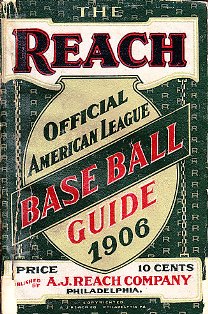
The Reach Guide, founded by Major Leaguer turned sporting goods magnet Alfred Reach in 1883, along with the Spalding Guide, founded by Major Leaguer turned sporting good magnet Albert Spalding in 1878, were the annual bibles of baseball.

Both publications prided themselves on providing the most complete chronology of the previous season.

An example of just how complete the Reach Guide could be is found in the 1906 edition.

The entry is about a young pitcher named Gus Bonno.

Bonno was born November 27, 1882 (Baseball reference incorrectly lists his birth year as 1881) in Ohio.  Records for his career are spotty.  After playing for a semi-pro team in Urbana Ohio in 1901 and part of ’02, late that season Bonno appeared in two games with the Toledo Mud Hens in the American Association.  Bonno returned to semi-pro the following season and played for the Paducah Indians in the Kitty League in 1904.

Bonno pitched for the Newark Sailors in the Eastern League and Norwich Reds in the Connecticut State League in 1905.

The Kentucky New Era referred to the Bonno as: “The handsome black haired, black-eyed debonair Italian twirler.”  In fact, nearly every contemporaneous newspaper article about Bonno referred to his ethnicity, which underscores the domination of players of Irish and German heritage in 19th and early 20th Century baseball.

Back to the Reach Guide.

On page 160, for the date September 23, 1905:

“Pitcher Gus Bonno at Cincinnati broke his ankle jumping from a second story window of a young woman’s home to avoid being shot by a jealous rival suitor.”

1906 Reach Guide

Bonno recovered enough to join the Augusta Tourists in the South Atlantic in the spring of 1906, but was sold to the Norfolk Tars of the Virginia League at the beginning of season.  He continued to pitch until 1911 with stops in the Western League and Bluegrass League.

He passed away in Cincinnati in 1964.

“Champ” Fertsch

5 Oct

A bullet nearly ended Edward “Champ” Fertsch’s career before it really got started.

Fertsch was born in Moorestown, New Jersey (birthplace incorrectly listed as Reading, PA in Baseball Reference) in 1874. The 5’ 10” 175 pound righthander played with the Carlisle Colts of the Cumberland Valley League in 1895, then pitched for Salisbury in the unaffiliated Peach Tree League in Maryland and Taunton in the New England League—records are incomplete or nonexistent for these seasons.

Fertsch joined the Reading Coal Heavers of the Atlantic League in 1898 and played two seasons, winning 14 games in 1899.  In 1900 Fertsch split time between New Castle in the Interstate League and Buffalo Bisons in the then minor league American League.  Fertsch’s contract was purchased by the Brooklyn Superbas, but he never had the opportunity to report the following spring.

That fall Fertsch was hunting with a friend, as the friend climbed a fence his gun discharged and Fertsch was hit the left arm.  Initially the arm was to be amputated, but Fertsch implored doctors to save it.

Assuming his career was over Brooklyn released Fertsch, but he sufficiently recovered to rejoin the Coal Heavers for the 1901 season.

According to the Reading Eagle “Fertsch cannot use the limb very well in delivering or batting, but it does not seem to hinder his twirling.”

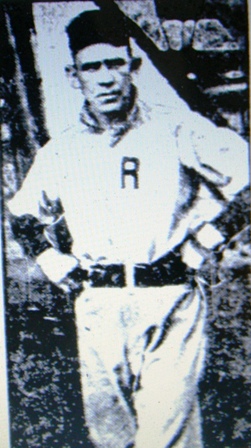
“Champ” Fertsch

No records survive for the 1901 season, but Fertsch pitched well enough coming off the shooting to earn another shot in the Eastern League; splitting time with the Providence Grays and the Jersey City Skeeters Fertsch posted a 17-11 record.

Fertsch remained in the Eastern League for the next four seasons (no statistics survive for 1902 or ‘03), after 9-10 and 11-14 seasons in 1904 and ’05, Fertsch played the next four seasons with the Lancaster Red Roses and Reading Pretzels in the Tri-State League.

Again no complete records are available for those years, but Fertsch was frequently referred to in the Eagle as Reading’s and the Tri-State’s “Highest paid professional ballplayer.”

Fertsch was plagued by arm injuries after returning to the Tri-State and retired at the close of the 1909 season.  He became an umpire in the Tri-State League in 1910, but only served for one season because of a league rule change which no longer allowed umpires to be residents of one of the Tri-State club’s cities.

Fertsch again attempted to pitch for Reading in 1911, but only appeared in one game.

After baseball Fertsch was considered one the best bowlers in Pennsylvania.

He died in Reading in 1964.

Jack Ogden

28 Sep

John Mahlon Ogden had limited success in three stints in Major League Baseball, but for an eight year period he was one of the greatest minor league pitchers in history.

Born in 1897, Ogden played baseball at Swarthmore College (where his brother, Major League pitcher Warren “Curly” Ogden also played), and went directly to John McGraw’s New York Giants.  The 20 year old appeared in five games for the Giants before being shipped to the Newark Bears in the International League where he went 5-5 with a 1.48 ERA.  Ogden spent 1919 with the Rochester Hustlers posting a 10-13 record with a 2.37 ERA.

His career took off the next season with the Baltimore Orioles.  The 22 year old Ogden led the International League champions with a 27-9 record—future Hall of Famer Lefty Grove was 12-2 for the O’s that year.  Egan followed that up with an incredible 31-8 record with a 2.29 ERA in 1921.  Beginning on May 10 Ogden won 18 straight decisions, finally losing 3-2 to the Jersey City Skeeters on July 22.  Ogden then won his next five starts.  Baltimore won their third of seven straight IL championships (Grove was 25-10 with a 2.56 ERA).

Over the next six seasons Ogden went 133-63, including a 28-win season in 1925, the last championship in Baltimore’s domination of the International League.

Jack Ogden

Ogden made it back to the Major Leagues with the Saint Louis Browns in 1928 and ’29 where he was a combined 19-24 with an ERA above 4. Ogden was acquired by Cincinnati for the 1930 season, but due to an illness he announced his retirement and took a high school coaching job.

Ogden attempted a comeback in 1931, going a combined 6-10 for the Reds in ’31 and ’32, followed by two more minor league stints with Rochester (after being traded by the Reds to Cardinals) and Baltimore.  He retired for good in 1934 and accepted the position of Vice President and General Manager of the Orioles and became assistant to Philadelphia Phillies President Gerald Nugent in 1939.

In 1941 Ogden bought controlling interest of the Elmira Pioneers in the Eastern League.  His son, John Jr., also a star pitcher and basketball player at Swarthmore, helped Ogden operate the team until he was drafted in 1943.   PFC John Mahlon Ogden Jr. was killed in France on August 8, 1944. Ogden sold the Elmira franchise shortly after his son’s death.

Ogden continued in baseball serving as a scout for a number of teams and managed high school and college teams.  He passed away in 1977 in Philadelphia.

Ogden is a member of the International League Hall of Fame.

Caught a Bullet

16 Aug

Elmira Pioneers Centerfielder Milt Joffe made an unusual catch at the start of the top of the sixth inning in an Eastern League game against the Hartford Chiefs on May, 15, 1952.

A .22 caliber bullet ripped the glove off Joffe’s hand and lodged in the webbing.

Shaken but unhurt, Joffe stayed in the game which resumed after a short delay.

Police found a group of kids with the .22 rifle near the ballpark, they claimed they were firing at a target and missed.