Tag Archives: John McGraw

Crazy Schmit in Cleveland

10 May

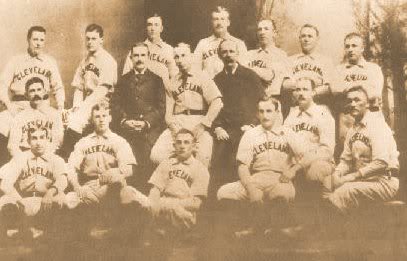
Crazy Schmit pitched for the Cleveland Spiders in 1899; compiling a 2-17 with a 5.86 ERA for the 20-134 last place team (in Schmit’s defense the 1899 Spiders were one of the worst teams in history, losing 24 straight at one point, and Schmit’s ERA was a half of a run better than the team ERA).

The pitcher had grown tired of his nickname “Crazy,” and of references to his behavior as “tacky.”  After being called both by The Cincinnati Enquirer in August, he responded:

“I have stood this sort of thing just about long enough.  I am neither tacky nor crazy, and without wanting to throw any flowers at myself, I will make the statement that there is not another left-handed pitcher in the business who used as good judgment when pitching as I do.

“Furthermore, I am the only left-hander in the business who has an effective slow ball.  Some of these ten-thousand-dollar beauties and phenoms look like thirty cents to me.  I can also swell up and say that I threw the Phillies down this year.  I beat that hard-hitting gang by a score of 6 to 2.”

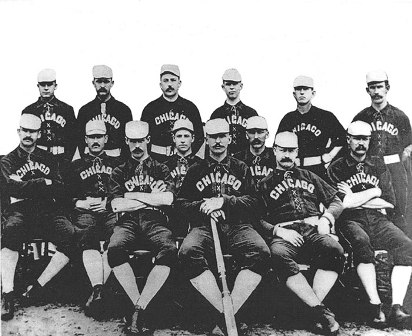
1899 Cleveland Spiders--finished 20-134

1899 Cleveland Spiders–finished 20-134
Within weeks Schmit was let go by Cleveland;  The Baltimore American reported on the release of the former and future Oriole:

“Pitcher Schmit, that queer and original baseball character, was yesterday given his ten days’ notice of release by the Cleveland club management and afterward notified that he had been fined for insubordination.”

The American quoted Schmit:

“I was released I suppose because it had been reported that I was not doing my best to win and because the owners were displeased with me for several accidents that happened to me.  I missed the train in Chicago, and while I was riding into Cincinnati from one of the suburbs with a young lady who may one day be Mrs. Schmit, lightning struck the trolley wire and I missed the train again.  I guess that is why I was fined.  They wished to make an example of me.  I do not mind the release, as I can easily get another and better position, but I hate that $50 fine, because my salary is not quite as high as that of some bank presidents.”

Despite his release and his record, Schmit still considered himself a great pitcher, blamed his career statistics on the teams he played with, and the more he spoke the more valuable he became as a player:

“I have in my career pitched for fourteen tail-end clubs and I am done with them.  Unless I can pitch for some club that can win a game occasionally I will stop pitching ball.  The longer I pitch the more stuck I am on myself as a pitcher.  I have pitched good ball for Cleveland, but who could win with six and eight errors behind him, and misplays that are far worse than errors and that go as hit.

“I am the most popular player on the circuit and the only man who knows how to coach as a science.  If some of these managers knew something of the theatrical business they would wire on and advertise I am to pitch a certain game.  When it is known I am to pitch I have often brought enough into the box office in a single game to pay my whole salary for the season several times over.  We played before 14,000 people in Chicago and of that number fully 5,000 came to see me.”

Schmitt did not “easily get another or better position” in 1899 or 1900—he sat out the remainder of 1899 and spent 1900 in the Interstate and New York State Leagues.  Schmit opened the season at 2-3 in five games with the Columbus Senators before being released; there are no surviving records for his New York State League games with the team that split the season between Elmira and Oswego.  The next season John McGraw would give him a chance to pitch in the American League.

More Crazy Schmit next week.

Crazy Schmit

9 May

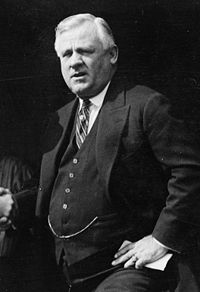
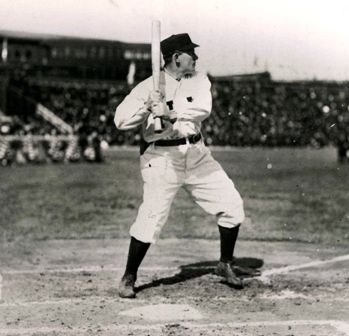
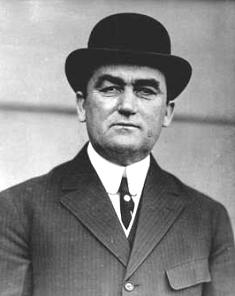
In 1913, Giants manager John McGraw, wrote an article that ran in newspapers across the country, in which he made the case that baseball had “practically eliminated the ‘bad actor,’” citing the World Series and the development of the game as a business as the primary factors.

McGraw said many of the players of his day “had paths worn from the ballpark to some favorite saloon and back to the grounds.”  McGraw singled out one player in particular to make his point.

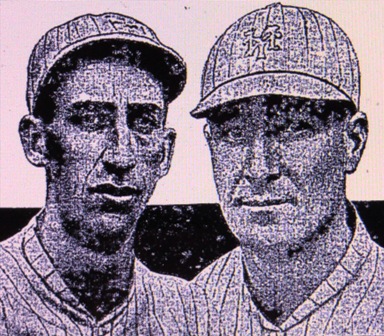
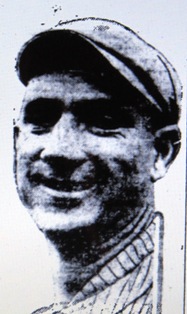
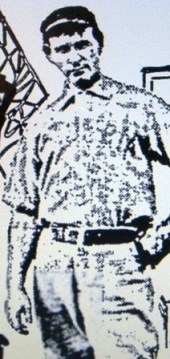
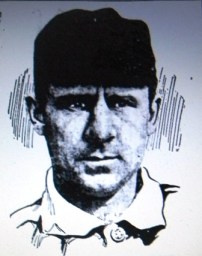
Frederick “Crazy” Schmit pitched for parts of five seasons for five different American and National League teams from 1890-1901, posting a career record of 7-36.  (Schmit’s name was almost universally misspelled by contemporary newspapers–the misspellings have been corrected in quotes that reference him).

Crazy Schmit

Crazy Schmit

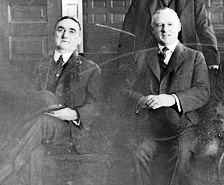
McGraw wrote (and likely embellished) about Schmit, who was his teammate in 1892 and ’93 and who he managed in 1901 with the Baltimore Orioles:

  “(W)e had a pitcher named Schmit generally and aptly called ‘Crazy’ Schmit.  His habits were nothing for a temperance society lecturer to dwell upon as an example…I called (Schmit) into a corner the day before the first game (of a series with the Cleveland Blues) and told him that I wanted him to pitch the next afternoon and asked him to get into good shape.  He said he would be out there with everything on the ball.  That was one thing about him—he never knocked his own ability.

“But Schmit’s notion of preparations did not coincide with mine.  I learned afterwards that he went directly from my lecture to his favorite loafing place and remained there telling his friends what he would do to Cleveland the next day.”

McGraw claimed that Schmit fell down on the mound (there’s no contemporary report o confirm it) and:

“Those were the days of quick action, so I rushed into the box from third base where I was playing, sore enough to do anything.

‘Get out of here.’  I yelled at him ‘You are released.’

“He laboriously regained his feet, and with ludicrous dignity walked out of the pitcher’s box and toward the exit of the park.  As he left he whirled on me and exclaimed dramatically: ‘I go to tell the world that the great Schmit has been released.”

McGraw said the pitcher only made it as far as the same tavern he had been at the day before, “and we had to send his clothes to him.”

John McGraw

John McGraw

McGraw wrote that before he released Schmit he used a tactic he later tried with “Bugs” Raymond; withholding money from the pitcher to keep him from spending it on liquor:

“After a time I began to miss baseballs in great numbers from the clubhouse and my suspicions were aroused, so I followed Schmit when he left the grounds one night…Schmit proceeded to a corner and mounted a soapbox which he produced from the bushes nearby, and then he pulled five or six league balls, partly used, out of his pocket and began to auction them off as ‘genueen leeg balls.’  For some of them he got as high as $5 apiece.  Or rather, he received $5 for the first one, and then I interrupted him and took the rest away.”

Schmit was released by the Orioles on June 10, 1901; he continued to pitch in semi-pro and outlaw leagues for more than a decade and worked as a scout–for the New York Giants, managed by John McGraw.

Another “Crazy” Schmit story tomorrow.

“A Heart-Breaking Play, Engineered by Wagner”

29 Mar

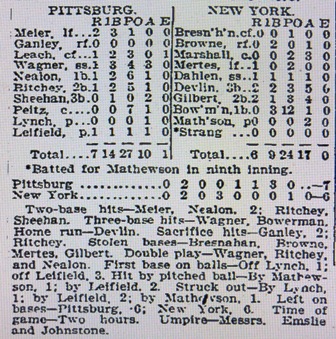
The defending World Series Champion New York Giants had gotten off to a fast start in 1906; on May 15 they were 19-7, the Chicago Cubs were 21-9, when they arrived in Pittsburgh for a four game series.

The Giants were shut out by the Pirates in the first two games.  In the third game of the series Christy Mathewson blew a three-run lead and the Giants trailed 7-5 heading into the top of the eighth inning..

Outfielder Sam Mertes walked, moved to second on Bill Dahlen’s single and scored on a two-out single by second baseman Billy Gilbert.  The Giants were behind 7-6 with runners on first and second; manager John McGraw was about to send Sammy Strang to pinch hit for Mathewson, when, according to The New York Times:

“A heart-breaking play, engineered by (Honus) Wagner in the last second of the eighth inning, beat the Champion New Yorks…It was a hard game to lose, and might not have been lost had Dahlen not fallen a victim to the wiles of Wagner.  The big Dutchman was guilty of the trick of hiding the ball, and when Bill stepped off second base, thinking (pitcher Albert “Lefty”) Leifield had the ball, Wagner, who had concealed it, touched Dahlen, which made the third out.”

Bill Dahlen

Bill Dahlen

The Pirates held on to win 7-6; The Times said of Dahlen:

“The New York shortstop felt so bad that he fairly wept.  McGraw, too, was angry, and it was said tonight he fined Dahlen heavily for his bit of carelessness.”

The Giants were unable to keep pace with the Cubs who finished 20 games ahead of New York for National League Pennant.

The Box Score

The Box Score

Kauff and Perritt

29 Jan

Benny Kauff and Pol Perritt were two of the reasons why the New York giants won the National League Pennant in 1917.  Kauff led the team with a .308 average and Perritt was 17-7 with a 1.88 ERA.  Both came to the Giants by way of the Federal League, and with the help of “Sinister Dick” Kinsella, John McGraw’s right-hand man.

"Sinister Dick" Kinsella

“Sinister Dick” Kinsella

Kinsella was the former baseball magnate of Springfield, Illinois who went east to serve as McGraw’s chief scout.  He was a key player in the incident that led to Giants’ catcher Larry McLean’s banishment from organized baseball.

After the 1914 season, McGraw set his sights on the Indianapolis Hoosiers’ Kauff, who was being called the “Ty Cobb of the Federal League.”  Kauff led the league with a .370 average, 120 runs, 211 hits and 75 stolen bases.

When the debt-ridden Hoosiers were transferred to Newark for the 1915 season Kauff’s contract was sold to the Brooklyn Tip-Tops, and he joined the team in Browns Wells, Mississippi.

At the same time, Perritt coming off a 16-13 season was prepared to jump the St. Louis Cardinals and join the Pittsburgh Rebels in the Federal League.

Pol Perritt and Benny Kauff, 1917

Pol Perritt and Benny Kauff, 1917

Sportswriter Frank G. Menke of Hearst’s International News Service picks up the story:

“Dick Kinsella, scout for the Giants, according to the story we get, hustled to Browns Wells and got a job on a plantation…Kinsella didn’t dare to put up at the same hotel because he was known by Manager Lee Magee, Business Manager Dick Carroll and others of the Brookfeds.”

Kinsella, according to Menke, was pretending to be a farm hand and also observing Kauff’s workouts and reporting back to McGraw who, along with Jack Hendricks of the Indianapolis Indians in the American Association (who held Kauff’s rights) was sending coded telegrams to Kauff signed “Father.”  Kauff received telegrams saying, “Mother wishes to see her boy,” and “All is forgiven.”

According to Menke, the telegrams were intended to inform Kauff that McGraw wanted him with the Giants and:

“The “everything forgiven” telegram was to tip Kauff off that if he jumped the National Commission probably would let him play.”

While Kauff was in Mississippi, Pol Perritt was in the process of  jumping to the Federal League.

According to Menke, Kinsella left Mississippi in the middle of the operation to secure Kauff in order to talk to Perritt.  What Kinsella said to Perritt is unknown, but Perritt’s meeting with Pittsburgh manager Rebel Oakes pretty much put an end to any chance of joining the Federal League.  The Associated Press said:

“Pitcher ‘Pol’ Perritt who jumped to the Pittsburgh Federal recently had a fist fight with Manager ‘Rebel’ Oakes…Those who saw the fight say that the pitcher delivered one blow that knocked Oakes over a chair…Friends and acquaintances interceded and hushed up the whole affair before police arrived on the scene.”

The story said Perritt was meeting with Cardinals’ management to “flop back to organized ball,” within weeks the Cardinals sold Perritt’s contract to the Giants, The AP said:

“Carefully guarded by “Sinister Dick” Kinsella…Perritt was delivered to John J. McGraw this noon…Kinsella brought his man in from Shreveport without struggle, and states that he did not even sight a Federal submarine during the entire journey.”

An alternate version of the story, published in The New York Times said it was McGraw who met with Perritt rather than Kinsella and highlighted the manager’s journey to meet the pitcher:

“McGraw had to travel forty miles on one railroad, nine miles on another, and then drive nine miles through the mud to get to Perritt’s home in Louisiana.”

Perritt was in the fold.  After a 12-18 season in 1915, he would win 18, 17 and 18 from 1916-18.

Kauff would be a bit more complicated.

While Kinsella was gone from Mississippi securing Perritt, Kauff signed a $6000 contract with Brooklyn, which he immediately regretted and contacted McGraw.

kinsellamcgraw

Dick Kinsella and John McGraw, 1920

According to Menke, Kauff:

“Related the difficulty he had with Robert B. Ward, president of the Brookfeds, over the contract.  The Giants people thought that owing to Kauff’s trouble—or alleged trouble—over the Brookfed contract that he was not legally under contract.”

Menke said the Giants signed Kauff for $7000 a year for three years with a $7000 bonus.

National League President John Tener voided the contract and Kauff was forced to return to the Tip Tops; he again led the league with a .342 average.

McGraw finally got his second man at the close of the 1915 season.  After the Federal League folded and Kauff was reinstated to organized baseball he signed a two-year contract for $6500 a season and a $5000 bonus with the Giants.

New York had finished in eighth place in 1915. They improved to fourth in 1916 and won the pennant by 10 games in 1917. McGraw’s Giants lost the to the Chicago White Sox four games to two in the World Series.  Perritt appeared in three games in relief, and Kauff hit a disappointing .160, despite two home runs in the Giants’ game four victory.

After the 1917 World Series Perritt and Kauff faded fast.

Perritt was 18-13 in 1918, but would only win four more games over the following three seasons with the Giants and Detroit Tigers; he was out of professional baseball before his 30th birthday.

Kauff’s demise is better known; his professional career came to an end at age thirty, the result of allegations of his involvement with gamblers, in general, and 1919 World series fixer Arthur Rothstein in particular.  Kauff, who owned an automobile accessory business with his half-brother and Giant teammate Jesse Barnes, was charged with stealing and reselling an automobile.  Although he was acquitted at trial, Kenesaw Mountain Landis banned Kauff for life.  Kauff’s oft-told story is told best in two excellent books by David Pietrusza:  Rothstein: The Life, Times, and Murder of the Criminal Genius Who Fixed the 1919 World Series and Judge and Jury: The Life and Times of Judge Kenesaw Mountain Landis.

Perritt died in Shreveport, Louisiana in 1947; Kauff died in Columbus, Ohio in 1961.

“Father of Sunday Ball”

22 Jan

After becoming president of the Waco Tigers in the Texas League, Henry Fabian allowed himself to be arrested in order to challenge a law that was costing Texas League owners money: The blue law that didn’t allow them to play games on Sunday.

The state statute forbade “Sunday amusements” that charged admission.  Texas League teams had lost money in each previous incarnation of the league and the inability to schedule games on Sunday was a contributing factor.

Whether challenging the law was part of Fabian’s plan from the beginning is unknown, but by June his Tigers had played three Sunday home games, and three times Fabian was arrested for violating the statute, posting $60 bond on each occasion.

After being found guilty at the local level Fabian challenged the statute in Texas’ Court of Criminal appeals, arguing that the law was passed before baseball became a professional sport and did not apply to the game.  The court ruled in Fabian’s favor, and while local ordinances still prevented Sunday games in Dallas, Sunday baseball became the norm in the Texas League. In his obituary, 35 years later, The Dallas Morning News’ headline called Fabian “Father of Sunday Ball.”

Fabian sold the Waco club to local businessmen in 1906 and took a job with a sporting goods company, but it was his interest in ballpark design and grounds keeping that would become his vocation.

Fabian participated in the layout and design of several local ballparks in Texas from 1888-1910, and was credited with creating the first “ Turtle-back diamond” at Oak Cliff Park, the Dallas Hams’ home field in 1888.  The pitched design and elevated pitcher’s mound allowed for quick drainage.

By 1910 Fabian had designed diamonds in Dallas, Waco, Galveston, New Orleans and Atlanta, when he was hired as head groundskeeper for the Saint Louis Browns.  He stayed with the Browns for three seasons until his old friend John McGraw hired him to be the groundskeeper for the New York Giants

By 1915 The Sporting Life said:

“Visiting ballplayers declare that the diamond Henry Fabian has built up at the Polo Grounds is the best in the country.”

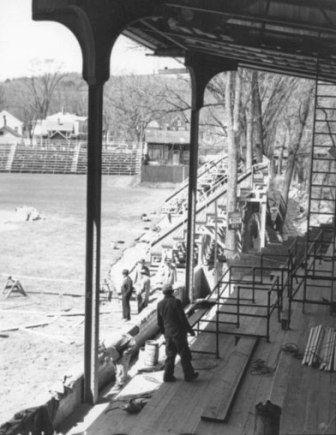
Fabian was considered the premier groundskeeper in baseball for the next 25 years and in 1939 he was put in charge of the Works Progress Administration’s (WPA) project to prepare Doubleday Field in Cooperstown for baseball’s centennial celebration.

Doubleday Field renovation, 1939

Doubleday Field renovation, 1939

Fabian died the following year on February 25, six years to the day after the death of his friend John McGraw.

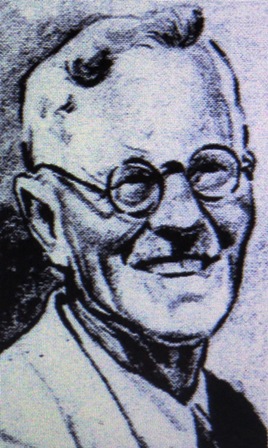
Henry Fabian

21 Jan

Like John Bradley and George Kittle, Henry Fabian was a member of the 1888 Dallas Hams, champions of the Texas League and the Texas Southern League.  Unlike those two, when someone fired a shot at him he missed.

Fabian was born in New Orleans, in 1864 or 1866, depending on the source.  He began his career in 1886, catching and playing first base for both of his hometown teams in the four-team Gulf League: the Robert E. Lee’s and the team that became the New Orleans Pelicans.

Fabian had his fingers broken by a foul tip before the beginning of the season.  A 1913 article by former Major Leaguer turned sportswriter Sam Crane told the story:

“It was such a serious injury that there was no possibility of his playing again that season and rather than release him his manager (Thomas Brennan) asked him to become groundskeeper at the same salary he was getting as a player.”

That experience would stay with him.

By November of 1887 he had recovered enough to play in games against the Chicago White Stockings and Saint Louis Browns when their post-season barnstorming tour stopped in New Orleans.

In 1888 Fabian came to Texas as a member of the Galveston Giants, but was with Dallas by June. While statistics are spotty for his career, and non-existent for 1888, The Dallas Morning News said of him:

“Though not a brilliant player, Henry has always been a hardworking courageous one.”

Fabian continued playing until 1903, spending his entire career in Texas and Louisiana with the exception of 1891 when he played for the Cedar Rapids Canaries in the Illinois-Iowa League where he played with John McGraw, who became one of his closest friends.

Fabian was the subject of two strange stories.  In a July 1892 a headline in The Dallas Morning News said:

“Henry Fabian Shot At.  A Case in Which a Base Ball Man Dodged a Bullet.”

The story said a local carpenter named Parker had fired a shot at Fabian.  Fabian told a reporter for the paper that “an article appeared in The Kansas City Sun about which he wanted an explanation from Parker.”  The article said “Mr. Fabian’s description of the article The News is not privileged to report at this stage of the proceedings.”

There was never another reference in any Dallas paper to the incident or about what the Kansas City story might have been.

Henry Fabian, circa 1930

Henry Fabian, circa 1930

In 1904 an Associated Press article appeared in several newspapers under the headline “Joy Restores Her Sight:”

“Sight has been miraculously restored to the stone-blind eyes of an aged mother by the voice of her son who returned unheralded after an absence of 18 years.  The woman is Mrs. Sophie Fabian of New Orleans and the son is Henry.”

The rest of the story did not completely live up to the headline or lede; Mrs. Fabian was told her sight might come back and the story conceded “the recovery was not complete,” but nonetheless, the paper’s treated it as some kind of miracle

Fabian returned to baseball in 1905 as part owner and president of the Waco Tigers in the Texas League, and while there he was the catalyst for changing a Texas law that helped make Texas League baseball profitable.

That, and Fabian’s other claims to fame, tomorrow.

“Big, Good-Hearted and Foolish”

9 Jan

Almost immediately there was trouble for manager John McGraw after the New York Giants acquired Larry McLean from the St. Louis Cardinals, August 6, 1913—it was one of the few times in his career when the trouble wasn’t McLean’s fault.

With Chief Meyers hurt McGraw needed a catcher and traded the popular Doc Crandall to the Cardinals for McLean.  The day after the trade The Cincinnati Commercial Tribune reported that McGraw had “exchanged fisticuffs” with five of his players:

“Crandall was very popular among the club members, and there was much bitterness felt at his loss…The players passed hot words (at McGraw), and several blows were struck.”

McGraw was left with a bloody nose from the fight, and less than two weeks later reacquired Crandall from St. Louis.

McLean thrived in New York, a United Press story said:

“The big lad has been slamming the horsehide at a terrific gait, and has been displaying wonderful form behind the plate…Larry is said to be behaving himself better than he ever has since joining the big show.”

McLean hit .320 for the pennant-winning Giants and went 6 for 12 in their World Series loss to the Philadelphia Athletics.  He earned the praise of McGraw and despite diminishing skills, remained a model citizen for all of 1914 and part of 1915.

That all changed in June of 1915.  McLean had a clause in his contract which would have earned him an additional $1000 if he did not drink during the season.  McGraw’s right-hand man, scout Richard “Sinister Dick” Kinsella, had accused McLean of drunkenness and as a result was suspended for 10 days by McGraw.

Larry McLean, 1915

Larry McLean, 1915

In the lobby of the Buckingham Hotel in St. Louis, McLean accused Kinsella of making up the charge that he’d been drinking in order to cheat him out of the promised bonus.  Words were exchanged and then a fight broke out.  There was the McGraw-Kinsella version and the McLean version.

McGraw and Kinsella said McLean was carrying a length of gas pipe, and “came into the lobby with a number of rough companions.”

Kinsella’s version was as colorful as it was questionable:

“I picked up a chair and broke it over McLean’s head.  That frightened his gang of ruffians and they fled.  McLean continued to fight until McGraw and I chased him into the street, where he jumped into an automobile filled with women and begged for protection.”

McLean told reporters “I whipped McGraw and all of his associates with my two fists, I did not use a gas pipe, and he “exhibited his bruised right hand as evidence.”

McLean was finished with the Giants.

In March of 1916 The Associated Press reported that McLean had purchased the New Haven Murlins of the Eastern League and said “Larry will manage the club and catch.”  Either the report was erroneous or the deal fell through.  McLean never again played professional baseball and spent 1916 playing with semi-pro teams in New York.

Before the 1917 season baseball writer Ren Mulford reported that McLean might be signed by the Reds:

 Wouldn’t it be odd if Big Larry would come out of the swamp and stick to his spikes into dry ground?  Larry McLean, big, good-hearted and foolish, always his own worst enemy might come back if he willed it so.”

McLean never joined the Reds.

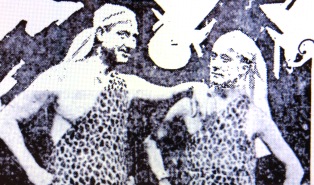
Also in 1917 several newspapers reported that McLean was becoming an actor, The New London (CT) Day said McLean “is now a real moving picture actor,” and included a picture of McLean with another actor “as Egyptian slaves in ‘The Siren,’ a movie soon to be released.”  (The film “The Siren” is described on IMDB as a western—what film, if any McLean actually appeared in is unknown)

Larry McLean, 1915

Larry McLean as an Egyptian slave in a 1917 film

In 1919 McLean was “in serious condition,” in a New York hospital as a result of burns received in a Turkish bath when he lost consciousness after entering a room.  He had been suffering from pneumonia and was in a weakened condition.”

That was the last that was heard of McLean until March 24, 1921.  McLean and a friend named Jack McCarthy were in a bar in Boston’s South End.  The bartender (John Connor) claimed McLean became enraged when he refused to give him cigarettes and threatened to “beat him up:”

 “McLean started to climb the bar to attack him.  McCarthy was helping McLean over the counter when Connor reached for a pistol, and fired… McLean staggered out to the sidewalk where he fell.”

Connor claimed that the previous evening McLean had chased another bartender “up and down the barroom…and forced him to leave to save himself from a beating.

McCarthy was also shot and died in the hospital six days later.  (Some recent sources, such as Bill James in “The New Bill James Historical Baseball Abstract” erroneously identify McCarthy as John Arthur “Jack” McCarthy, a former Major League player.  The McCarthy who was shot with McLean was John F. McCarthy.  Incidentally, John Arthur McCarthy is one of a very few Major League players for whom death information is unknown)

Connor was being held without bail at the time of McCarthy’s death and, according to The Boston Post, eventually pleaded guilty to manslaughter and was sentenced to one year in prison.

“Bugs” and Trains

28 Dec

Arthur “Bugs” Raymond was one of the most talented pitchers to end his career with a sub .500 (45-57) record.  Known more for his drinking problems and erratic behavior, Raymond was dead by 30.

John McGraw, the only manager who even for a short time, managed to get the best out Raymond, told sportswriter Grantland Rice that he had the best motion he’d ever seen and “Even half sober Raymond would have been one of the greatest.”

Rube Waddell, whose eccentricities were the standard by which all players of his era were judged, weighed in about Raymond, saying about Bugs something he could have said about himself:

“It’s a shame that fellow doesn’t take care of himself.  He would be a wonder if he would just keep in condition and pay strict attention to business.”

Bugs Raymond

Bugs Raymond

While Waddell was fascinated with fire and on many occasions assisted fire fighters (although there is no evidence supporting the long-held myth that Waddell left the mound during a game to follow a fire wagon), Raymond was enamored of trains.

According to the Hall of Fame sportswriter Hugh Fullerton III Raymond loved trains:

“The moment he enters a sleeping car he begins to take possession of the train and it isn’t long until he’s captured it.  Usually he begins by borrowing a blue coat with brass buttons and a uniform cap from some trainman or porter who admires baseball players, and arrayed in these he saunters through the train trying to collect fares, issuing orders and generally enjoying himself.”

Fullerton wrote about a 1907 road trip:

“(R)ushing through the darkness in two sections.   The St. Louis Cardinals were traveling in the rear car of the first section and the other section was following five minutes behind.  Suddenly there was a jarring of the brakes, the shrilling of air, the jar of sudden stoppage, and the second section jolted to a sudden standstill shaking sleepers out of their berths and awaking everybody.”

According to Fullerton the sudden stoppage and near accident of the following train was explained in the report issued several days later by the railroad:

“Raymond, who was looking for amusement, had stationed himself on the rear platform of the first section and amused himself touching off the red flare which is carried for use as a warning s and danger signals…the second section saw the warning and stopped.”

Hugh Fullerton

Hugh Fullerton


Actually, it Probably Wasn’t the Superstition

5 Dec

As with George Treadway, a story can get repeated throughout the decades while a large, key portion is lost in the process; such is the case with Billy Earle.

His career ended because of the superstitions of other players who thought he was “creepy,” as David Nemec described him in his excellent book “The Beer and Whiskey League.” In “The New Bill James Historical Abstract,” James credulously quotes the assertion from sportscaster Bill Stern‘s 1949 book “Favorite Baseball Stories” that Earle was:

“(F)orced out of baseball, because of nothing more than superstition, the belief that he was a hypnotist with the power of ‘the evil eye.’”

For awhile even Earle tried to use it as an excuse.

But actually, it was probably the morphine.

William Moffat Earle was at times a great player, but more often impetuous and prone to jumping contracts.

He earned his nickname “The Little Globetrotter” after being part of the 1888 world tour organized by Albert Spalding. Earle said of the trip:

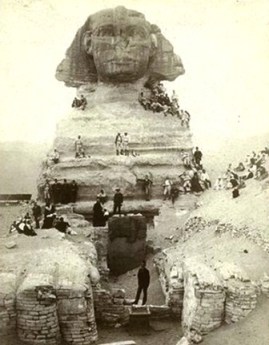
“We played everywhere from the catacombs of Rome to Cheops of Egypt, under the shadow of the pyramids and out through India and the Islands of Ceylon.”

Billy Earle and the other members of the world tour

Billy Earle and the other members of the world tour at the Great Sphinx of Giza

After returning from the tour Earle joined the Cincinnati Red Stockings in the American Association. He bounced back and forth from Major League to minor league teams for the next six years. During that time, there were a number of humorous references to Earle’s interest in hypnotism, but none claimed it was an impediment to his career; however, in 1897, upon being released after one game with the Columbus Senators of the Western League the legend began.

In September of 1897, an article appeared in The Baltimore Sun under the headline, “A Haunted Ballplayer:”

“(Earle) cannot get a position on any ball team in the country, not even the small minor league teams.”

Earle told a sad story of teammates avoiding him and fearing the “hoodoo.” He even blamed his being released by Pittsburgh after the 1893 season on it, ignoring the fact that he was only signed because of injuries to the three other Pirate catchers, Connie Mack, Joe Sugden and Doggie Miller—and emergency catcher Jake Stenzel.

That 1897 story became the story of Billy Earle.

It also said:

“He is, moreover, a pleasant, intelligent, strictly temperate man.”

The first two might very well have been true. The last was not.

The rest of the story about Billy Earle has been lost, forgotten, or just ignored.

In August of 1898, The Cincinnati Enquirer told the real story of why Billy Earle had been out of baseball. The “strictly temperate” Earle was addicted to morphine.

His friend John McGraw helped get him treatment in a Baltimore hospital; his former Cincinnati teammates took up a collection to buy Earle a ticket to Philadelphia to stay with his parents after treatment.

He kicked the habit, and then for three seasons managed and played for an independent team in Richmond, Indiana; he also coached teams in Havana, Cuba during the winters of 1900 and 1902-1904. And he returned to professional baseball; hardly the profile of a blacklisted man.

Earle signed as a player/manager with the 1903 Vicksburg Hill Billies in the Cotton States League. He continued his playing career through 1906, and either managed or worked as an umpire in Midwest-based leagues through 1911.

Billy Earle, player/manager Columbia Gamecocks 1905.

Billy Earle, player/manager Columbia Gamecocks 1905.

Billy Earle died in Omaha, Nebraska in 1946.

Were there some players in the superstitious world of 19th Century baseball who were uncomfortable playing with or against Earle? Probably. If he had hit .320 and not had a drug problem would he have had a 10-year or more major league career regardless of superstitions? Probably.

McGraw’s Maxims

4 Dec

While the New York Giants were training in Marlin Springs, Texas before the 1912 season, John McGraw wrote (his name appeared on the byline) an article published in newspapers across the country about what it took “to become a big league ballplayer.”

John McGraw, 1912

John McGraw, 1912

McGraw wrote:

“If you have speed in your legs, in your arms, if you are physically strong, know human nature, don’t use tobacco, you’ll make a ballplayer.”

Included in the article were “McGraw’s Maxims:”

Forget what you know and learn over

Don’t drink

Eat two meals a day

Don’t drink water on the field

The less training in winter the better

Indoor training doesn’t help

A steady player is better than a grandstand player

A country boy is better material than a college boy, because he doesn’t think he knows it all.

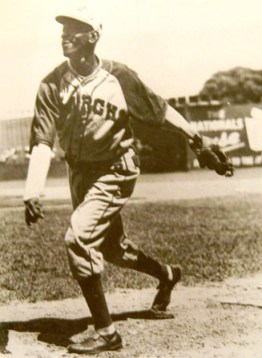
Reminiscent, if less colorful, than Satchel Paige’s “How to Keep Young,” written forty years later, (this has been reprinted everywhere for years, but any excuse to mention Satchel Paige…)

Satchel Paige, 1942

Satchel Paige, 1942

Avoid fried meats which angry up the blood.

If you stomach disputes you, lie down and pacify it with cool thoughts.

Keep the juices flowing by jangling around gently as you move.

Go very light on the vices, such as carrying on in society. The social ramble ain’t restful.

Avoid running at all times.

Don’t look back. Something might be gaining on you.