Tag Archives: Little Rock Travelers

“Demoralizing a Successful Organization For the Sake of a Few Unimportant, Mediocre Ball Players”

19 Sep

When Charlie Babb jumped from the Indianapolis Indians of the American Association to the Memphis Egyptians in the Southern Association in June of 1902, he was not alone.

Pitcher Jim St. Vrain, recently released by the Chicago Orphans and under contract with the Tacoma Tigers in the Pacific Northwest League, signed with Memphis rather than going to Tacoma.

Another American Association player, Second baseman Bill Evans of the Columbus Senators, also jumped to Memphis.  The Cincinnati Enquirer said he jumped being suspended by the Senators for being “too drunk” to take the field on June 18.

Memphis manager Charlie Frank’s three new players would be a source of controversy in the Southern Association for the remainder of the season and a continuation of an ongoing feud over the league’s salary limit which The Sporting Life said: “a majority of the clubs are known to have violated.”
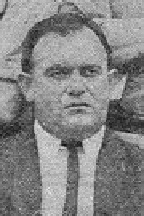
Charlie Frank

Charlie Frank

Southern Association President John Bailey Nicklin, acting on orders from Patrick T. Powers, president of National Association of Professional Baseball Leagues (NAPBL), ordered Frank not to play any of the three.  Frank not only defied the order but according to The Atlanta Constitution, gave Nicklin a “lecture in abuse,” and threatened to “break the league.”

Throughout July, the situation became increasingly absurd.

On July 11 Nicklin ordered umpire Ed Cline (the same Ed Cline who may, or may not, have initially approached Babb about jumping) to not allow St. Vrain to pitch against the Nashville Volunteers, managed by Frank’s biggest ally in the league, Isaac Newton “Ike” FisherThe Atlanta Constitution said Cline became mysteriously “sick and could not work,” although he “was upon the grounds while the game was being played.”  St. Vrain and the Egyptians beat the Volunteers 8 to 5 with “Red” Ehret and Nashville’s Bill Dammann acting as umpires.

After the game Frank was suspended for 10 games and threatened with being blacklisted if he played St. Vrain again.  Later that week Frank received a temporary injunction allowing him to continue using St. Vrain. And while Babb and Evans had been suspended by the league and were not covered by the ruling, Frank continued to put both in the lineup.  Frank also continued to manage the team despite his own suspension.

On July 25 Frank was again ordered by Nicklin not to play Babb and Evans.  This time, he complied, for one day.  The two players sat out an 8 to 4 victory over Atlanta (St. Vrain pitched for Memphis).  Both were again in the lineup the following day, and on July 27 Frank filed a suit against the league and Nicklin seeking $10,000 in damages.  He also sought and received an injunction “restraining President Nicklin from interfering with the playing of Babb and Evans.”

The Constitution began calling the team the “Memphis Injunctionists.”

The Sporting Life said Frank was:

“Demoralizing a successful organization for the sake of a few unimportant, mediocre ball players.”

Nicklin, the league, and the NAPBL blinked first.

Two days after the suit was filed an agreement was reached.  Babb and Evans would remain with Memphis and were reinstated from suspension; the fourth place Egyptians agreed to forfeit every game in which Babb and Evans participated in while under suspension—dropping the team to fifth place.

The controversy appeared to be over.  It wasn’t.

On August 4 the Egyptians arrived at Athletic Park in New Orleans to play the second place Pelicans.  The New Orleans Times-Picayune said:

“Under orders of (Pelicans) manager Abner Powell a big policeman today refused admission to St, Vrain, Evans and Babb, of the Memphis club, when they tried to enter.”

The game was canceled

The following day:

“Manager Frank again took his team to out to the park, but admission was refused to St. Vrain, Evans and Babb.”

The umpire, picked by the Pelicans, “declared the game forfeited to New Orleans,” and Powell shared with the press a telegram from the Little Rock Travelers which read:

“Congratulations upon your firm methods.  We will stand with you.”

Despite the earlier agreement, the NAPBL announced that Frank and St. Vrain were still under suspension.
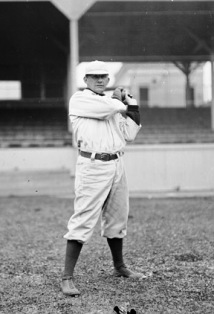
Jim St. Vrain

Jim St. Vrain

On August 9 the Shreveport Giants refused to allow St. Vrain into the ballpark for a double-header.  Memphis took the field for each game with only eight players and no pitcher.  They forfeited both games to the Giants.

Memphis was due to travel to Little Rock for a three-game series from the 11th through the 13th.  The Travelers announced that they “would not play with St. Vrain and Frank in the game.  Babb and Evans will be allowed to play (but) under protest.”

On August 12 Nicklin resigned at a meeting of league owners in Chattanooga (Memphis and Nashville refused to attend).  He said he was “almost helpless to enforce the rules of the league,” because of Frank’s numerous injunctions.  He was replaced by vice president William Kavanaugh.  A motion was passed to suspend Frank and St. Vrain indefinitely, but Babb and Evans were officially reinstated.  Again.

In response, Frank filed another $10,000 lawsuit naming every team in the league except Nashville.

On August 27 in Nashville, St. Vrain started for Memphis.  President Kavanaugh fined Nashville $1000 and “suspended that club for the balance of the season,” he threatened “drastic measures’ towards Memphis as well, but for the several injunctions that kept him from acting.  Two days later the suspension was lifted.

On August 30 a Little Rock judge enjoined Frank from “playing or attempting to play St. Vrain in any state.”

The Atlanta Constitution headline summed up the opinion of most Southern baseball fans on September 22:

To The Relief of All the Season is Now Over

As an appropriate end, Memphis beat Atlanta on the final day of the season behind the pitching of the still suspended Jim St. Vrain.

The no longer suspended Nashville Volunteers won the pennant.

The Indianapolis Indians, the team Charlie Babb jumped, won the American Association pennant.
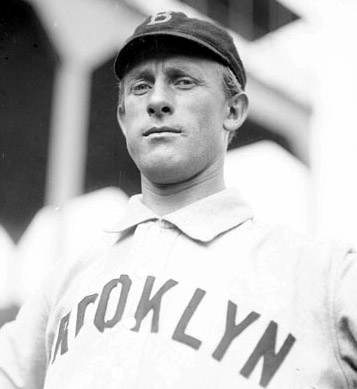
Charlie Babb

Charlie Babb

The Indianapolis papers had predicted that Babb’s career would be doomed when he jumped.  In 1903, he was purchased by the New York Giants.  He played in the National League with the Giants and Brooklyn Superbas through the 1905 season.  In 1906, he became a minor league player/manager; with the Memphis Egyptians.  He stayed with Memphis until 1910 and managed to become embroiled in one more controversy.

Jim St. Vrain was only 19-years-old during that 1902 season.  He finished 12-4 with Memphis.  He went to the West Coast in 1903.  His career was over after the 1905 season.

Bill Evans played in the Southern Association until 1906; he eventually became a member of three different teams who refused to play against him in 1902: New Orleans, Shreveport, and Little Rock.

Charlie Frank did just fine in the end.  More on that next week.
“Calvo May Come Out But No One Cares”

5 Jun

Jacinto Calvo and San Francisco Seals owner Charlie Graham were unable to come to terms on a contract for 1918, and the local press quickly turned on the outfielder.

The San Francisco Chronicle said:

“(Calvo) is a simple-minded Cuban boy…When he is hitting he can go around the bases in nothing flat.  When he has a batting slump, he develops water on the knee and can hardly limp up to the plate.”

He remained in Cuba and served as a police officer in Havana.

It was rumored again in 1919 that Calvo might return to the Seals, but The Chronicle, under the headline “Calvo May Come Out But No One Cares,” made it clear that twelve months had not softened opinions about the holdout outfielder:

“Calvo has written friends that he wants to come back, but if he stays in that dear old Havana until Charlie Graham coaxes him back, he will grow whiskers a foot long.  Graham really tried to get Calvo last year, for he was in a bad way for lack of outfielders, but if there is any coaxing to be done this year, Calvo will do it.”

Calvo

Calvo

Terms were not reached for 1919, and Calvo remained in Havana for another year.

In February of 1920 The Chronicle said Calvo, “Who bobs up every year about this time,” had written Graham saying he wanted to return to the Seals, then in March the paper reported that “The Havana World” said that Calvo “has joined the Franklin, PA independent team together with (Manuel) Cueto.”

Neither report proved true; instead, Calvo was signed by Clark Griffith for a second tour of duty with the Washington Senators.  In 17 games he had only one hit, a triple, in 23 at-bats before being sent to the Little Rock Travelers in the Southern Association in July.

Calvo could not hit American League pitching, but no one questioned his throwing arm; except teammate Stanley “Bucky” Harris.  The future Hall of Famer wrote in 1925, in a series of articles he wrote for The North American Newspaper Alliance, that his doubts about Calvo’s arm almost cost him his career:

“I thought I could hurl a baseball farther than anyone on the club and entered into a contest with Jack Calvo, an outfielder.  The Cuban has a reputation for having a great arm.  I had won a long-distance throwing contest…while with the Buffalo club.  That convinced me I could hold my own.”

Despite being warned against taking on Calvo by teammate Clyde Milan, Harris went ahead with the contest, the two stood in the infield:

“(Calvo) cut loose.  He threw the ball over the right field bleacher wall.  I realized it was a truly wonderful peg.”

Harris said he was concerned about being caught by manager Clark Griffith and rushed his throw:

“My elbow cracked as the ball left my hand.  It sounded to me as if a board had been broken across a fence…The ball dropped yards inside the park.”

Harris said for three weeks he “wondered if I ever would be able to throw a ball again.”  By the time Harris returned to the lineup, Calvo was on his way to Little Rock where he hit .306.

From 1921 through 1926 Calvo spent his summers playing baseball in the states; most notably in Fort Worth, where he helped lead the Texas league Panthers to two Dixie Series victories over the Southern Association champions in 1923 and ’24.  His winters were spent working as a lieutenant in Havana’s Harbor police and playing baseball in the Cuban League.

Calvo’s career ended abruptly in September of 1926.  The San Antonio Light reported that the former Fort Worth outfielder, then with the Memphis Chickasaws in the Southern Association “must forego baseball…and return to his job, his leave of absence was about to expire, and he packed up and beat it for a boat.”

Calvo played briefly in Cuba that winter but never played professionally again.  He was elected to the Cuban Baseball Hall of Fame in 1948 and died in Miami in 1965.

Zimmer Rules

20 Dec

After Charles “Chief” Zimmer’s single, difficult season managing the Philadelphia Phillies he briefly became a National League umpire.

Reports said the adjustment from player and manager to umpire were difficult at first.  According to a brief story that appeared in several newspapers on the eve of Opening Day:

“Chief Zimmer umpired the Pittsburgh-Little Rock game last week, but he could not resist coaching the players, for he forgot himself once in the third inning and yelled ‘Look out!’ to (Tommy) Leach when Little Rock was trying to catch him off first.”

But by May he seemed to have eased into his new position, telling reporters:

“I hesitated about taking up the work, knowing that the life of an umpire is supposed to be filled with anything but joy.  However, I can honestly say that I am more than pleased with the experience thus far.  I have had no trouble at all, and players and spectators have accorded me the best treatment.  I don’t think I’d give up my present work to go back to catching.”

In September The Pittsburgh Press said there was “No doubt (Zimmer) will be reappointed,” as a National League umpire in 1905, but by January it was announced that he had not been retained.

Zimmer entertained offers to play for the Toledo Mud Hens of the American Association and the Rochester Bronchos of the Eastern League, but instead took a position as an Eastern League umpire.

He returned as a player/manager the following season with the Little Rock Travelers in the Southern Association.

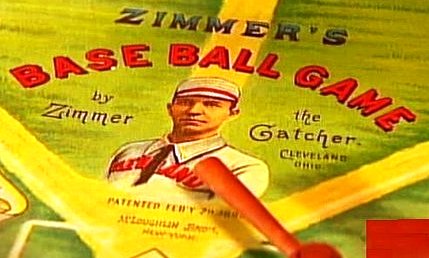
Through it all Zimmer was one of baseball’s earliest and best self-promoters.  In addition to endorsing Zimmer’s Baseball Game and his cigars, produced in what The Sporting Life said was “an extensive cigar factory in Cleveland.”  Zimmer always talked to reporters and always gave them something to write about, including his ideas for rule changes.

Zimmer's Baseball Game

Zimmer’s Baseball Game

In 1905 The Pittsburgh Press said “’Chief’ Zimmer has a scheme which he thinks would increase batting without abolishing the foul strike rule.” (The “scheme” was not Zimmer’s idea; it had been advocated by some for more than two decades, including “Cap” Anson and Zimmer’s former boss, Cleveland part owner Davis Hawley).  The plan would:

“Increase the territory of the fielders without increasing the length of the base lines…new foul lines (would be) drawn from the home plate to the fences.  At the point where they would pass first and third bases the lines would be six feet distant from the bases, gradually increasing the distance from the present foul lines as they neared the fences.”

Later he can out in favor of abolishing the foul strike rule when the issue was briefly discussed in the aftermath of the relatively low-scoring 1905 World Series.

In 1909 Zimmer suggested another rule; this one would essentially eliminate intentional walks by allowing any man on base to advance one base after a walk.  Zimmer said:

“It’s not right for a pitcher to take away Lajoie’s chance of hitting by walking him when there are men on bases.  I saw Larry passed four times in two games last fall.  He was paid to hit with the men on bases…Pitchers would have to put the ball over and the good batters would get a chance to do what they are paid for.”

Luckily like most of the other odd rule changes suggested during baseball’s first several decades, Zimmer’s “schemes” received little traction as both would have radically altered the game.  But Zimmer’s rules did succeed in accomplishing what they were most likely intended to do: they kept Zimmer’s name in the paper long after his career was over.

A final post on Zimmer and, perhaps, his greatest contribution tomorrow.

A Thousand Words–New Orleans Pelicans

13 Nov

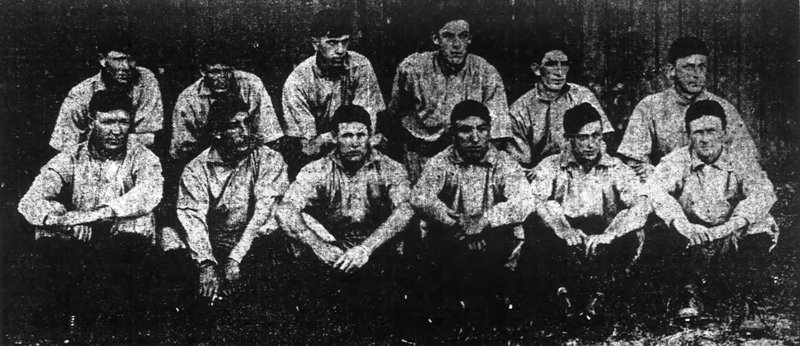
Another picture I’ve never seen published before—the 1906 New Orleans Pelicans of the Southern Association.

Top, Left to right.

Bill Phillipshe spent seven seasons in the Major Leagues with a 70-76 record; and won 256 games in a minor league career that began in 1890 and ended in 1909.

Mark “Moxie” Manuelwas said to have appeared as a both a left and right-handed pitcher for New Orleans in 1906 and 07, Manuel was a combined 37-26, earning him a second trip to the Major Leagues in 1908, where he posted a 3-4 record in 18 appearances for the Chicago White Sox.

Milo Stratton—a weak hitting (career .185) catcher who played in the minor leagues from 1903-1914.

William O’Brien—a .215 hitting first baseman in 1905 with the Toronto Maple  Leafs in the Eastern League and with the Pelicans in 1906.

Jake Atz—played for the Washington Senators in 1903 and the Chicago White Sox 1907-1909, a minor league manager for 21 seasons he won more than 1900 games.

Art Brouthers—a third baseman who played in 37 games for the 1906 Philadelphia Athletics, Brouthers managed the 1913 Paducah Indians to the Kitty League championship.  After his baseball career he was a hotel detective in Charleston, South Carolina.

Front, left to right

Whitey GueseGuese had several strong seasons in the minors, but in his lone Major League season with the Cincinnati Reds in 1901 he was 1-4.  The Youngstown Vindicator said, “He is a twirler who belongs to the disappointing species known as ‘morning glories.” And, “Seemingly has a heart like a canary.”

Joe Rickert—“Diamond Joe” Rickert stole 77 bases for the Pelicans in 1904; he played 15 games in the Major Leagues with the Pittsburgh Pirates and Boston Beaneaters.

William Blake—an outfielder with 13 different minor league teams from 1902 to 1910 and native of Louisville, Kentucky, little else is known.

Punch Knoll—another long-time minor league manager.  Knoll appeared in 79 games for the 1905 Washington Senators, he appeared in 3 games as a pinch hitter, collecting one hit, at 48-years-old while managing the Fort Wayne Chiefs in the Central League

Chick Cargo—brother of Major Leaguer Bobby Cargo, Charles “Chick” Cargo was a shortstop and 3rd baseman who played 19 seasons of minor league ball.

George Watt—Watt had three good seasons for the Little Rock Travelers, with a 53-34 record from 1902-1904.  He slipped to 20-37 in 1905-06 with Little Rock and New Orleans.  By 1907 he had dropped from “A” ball to “D” ball with the Zanesville franchise in the Pennsylvania-Ohio-Maryland League.  In 1908 he pitched for the Zanesville Infants in the Central League, was release in August after posting a 6-15 record and disappeared.

Ty Lober

27 Sep

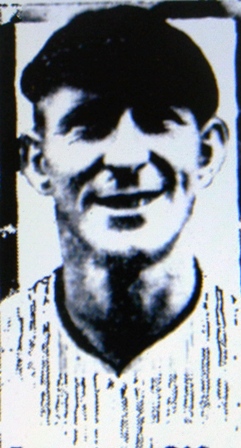
Elmer “Ty” Lober was a long-time minor league player, manager in the Wisconsin State League, served in the Army in WWI and was a central figure in a scandal that briefly rocked the Pacific Coast League in 1914.

In September of 1914 police in Portland, Oregon announced the arrest of four men, and issued a warrant for a fifth.  The men were charged with “Wholesale traffic in school girls between the age of 14 and 16.”

Two of the men arrested were Portland outfielder Lober and third baseman Bobby Davis.  Also arrested were a local jeweler and an actor named Bert Roach (Roach would go on to appear in more than 300 films).  The warrant was issued for Mission Wolves and former Major League pitcher Frank Arellanes.

Early reports indicated that the players had confessed and that there would be several more arrests.  But the “open and shut case” described by West Coast newspapers seemed to quickly fall apart, and concerns about wide spread human trafficking among Pacific Coast League players quickly faded.

Just three weeks after the arrests the grand jury came back with indictments for only two of those arrested; Davis and Arellanes.  The cases against these two quickly fell apart also and all three players were in uniform at the beginning of 1915, Lober and Davis with Portland and Arellanes with Denver in the Western League.

Lober went on to play with Lincoln in the Western League before entering the service in 1918.  He spent 1920 with an independent team in Zanesville, Ohio and was signed to play with the Milwaukee Brewers in the American Association in 1921.  He finished his career with the Little Rock Travelers of the Southern Association in 1925 (he’s misidentified as “Lobar” on Baseball Reference).

Elmer “Ty” Lober

Lober managed and occasionally played for Two Rivers in the Wisconsin State League into the early 30s

He passed away on November 6, 1946 in Two Rivers.