The 2011 Boston Red Sox were only the latest in a long history of alcohol taking the blame for a team’s poor performance.
As the Chicago Cubs faded into third place during the waning days of the 1912 season, team president Charles Murphy issued an order for “total abstinence” and all players would have a temperance calls in future contracts.
The move was not unprecedented—since 1909 Barney Dreyfus of the Pittsburgh Pirates had required his players to sign a temperance pledge. What made Murphy’s order so newsworthy was that over the course of several days he issued numerous, often contradictory, “clarifications” and because it quickly became apparent the move was a intended to wrest control of his ballclub from Manager Frank Chance.
Murphy’s original statement said that “loose living and training methods” led to the team’s poor finish. At the same time he provided cover for popular Cub outfielder Frank Schulte who had been suspended by Chance in September his nighttime activities during a crucial August road trip in Cincinnati. The Cubs lost three of four games to the Reds and fell out of contention. Murphy’s statement presented Schulte as a man incapable of any personal responsibility:
“I desire to say that in my judgment Schulte has been more sinned against than sinner…from what I could gather he was a victim of too many so-called friends…if we had a rule similar to that in vogue in Pittsburgh this player could not have been led into temptation.”
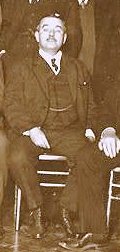
Chicago Cubs President Charles Murphy
The implication being that Chance had perhaps overreacted by suspending “the more sinned against” Schulte. This statement was further complicated by Murphy’s several “clarifications,” some of which seemed to support Chance’s decision while some did not.
Chance quickly defended his players and his reaction to Murphy revealed just how bad the relationship was between the team president and his manager:
“Murphy only thinks of the team when it’s winning…his statement reflects upon me personally, and I have been in the business too long to allow Murphy or anyone else to insult me.”
Making matters worse, and calling Murphy’s motives into question was that Chance issued his response from a hospital bed in New York. As a result of being hit in the head by numerous pitches throughout his career, Chance had developed a blood clot near his brain and had undergone surgery just a few days earlier.
Murphy didn’t hesitate to use Chance’s health issues against him.
A month earlier, plagued by doubts about his condition and suffering from severe headaches, Chance had suggested to Murphy that he might not be able to manage the Cubs in 1913. At the time Murphy told his manager to wait until after the surgery to make a decision about his future. Now he was using that conversation to assert that Chance had issued his resignation.
Once Murphy began claiming Chance had, in effect, quit in August the Chicago media which had almost universally supported the “abstinence pledge” called foul. The Chicago Tribune and Chicago Examiner both said Murphy was using the conversation and the pledge as cover to run the legendary Chance—who led the Cubs to four pennants and two World Championships—out of town.
Chance went. But he didn’t go quietly.
The manager had acquired 10 percent of the Cubs, shares Murphy had been trying to purchase for more than a year. Chance sold the shares to Harry Ackerland a Pittsburgh investor who President Murphy did want owning part of his team. Despite Murphy’s efforts to block the sale, it went through.
Chance was claimed on waivers by Cincinnati, but after the Reds acquired Joe Tinker from the Cubs and named him manager, Chance was waived to New York, where he became manager of the Yankees.
Chance led the Yankees for two losing seasons, managed the Los Angeles Angels in the Pacific Coast League in 1916 and ’17, and closed out his career with one dismal season in Boston; the Red Sox finished 61-91 under Chance.

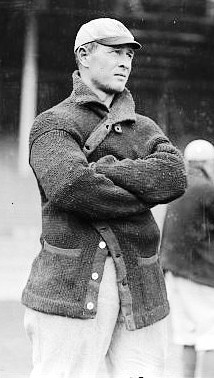
Frank Chance
Johnny Evers was named Cubs manager for the 1913 season—the Cubs again finished third.
From the day Murphy issued his initial statement until Chance died in 1924, “The Peerless Leader” never missed an opportunity to take a shot at Murphy.
When the Cubs were sold to Cincinnati publishing magnate Charles Phelps Taft (President William Howard Taft’s half-brother) before the 1914 season Murphy claimed that he had made more than a half million dollars on the deal. Chance and former Cubs pitcher Mordecai Brown (who had his own feud who Murphy who released him after the 1912 season, allegedly without giving Brown money he was owed for playing in that year’s “City Series” with the Chicago White Sox) quickly responded. Both players confirmed what had long been rumored—that Murphy had been bankrolled by Taft who retained a majority of the shares. Murphy, said Chance, “Never owned more than fifteen or twenty percent of the club stock.”
Both players also charged that Murphy’s treatment of his players was a primary reason for the formation of the upstart Federal League—at best an oversimplification of the conditions which led to Major League Baseball’s last “third league.”
Another Charles Murphy feud later this week.
.
Tags: Barney Dreyfus, Boston Red Sox, Charles Murphy, Charles Phelps Taft, Chicago Cubs, Chicago White Sox, Cincinnati Reds, Federal League, Frank Chance, Frank Schulte, Joe Tinker, Johnny Evers, Los Angeles Angels, Mordecai Brown, New York Yankees, Pacific Coast League, Pittsburgh Pirates

 Baseball History Daily