Tag Archives: Nap Lajoie

“Gallant Larry Lajoie and his Bludgeon Knouted and Lashed the Mackmen”

22 Jul

In the summer of 1913 the editors at The Chicago Record-Herald said they were tired of the “vernacular slang” that accompanied most baseball stories, and proposed that their readers vote about whether they would prefer “the use of correct English” in baseball stories.

As the example of the overuse of slang, clichés and “baseballese” The Record-Herald presented this “horrible example” from Gordon J. MacKay of The Cleveland Leader:

“Gallant Larry Lajoie and his bludgeon knouted and lashed the Mackmen into submission this afternoon at Shibe Park, and in the swirl of the attack by the Gallic Goliath the myrmidons of the lean leader were tumbled in a gulch of whitewash.”

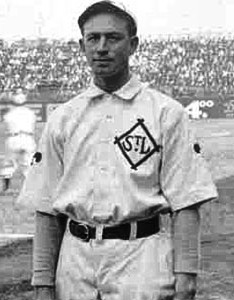
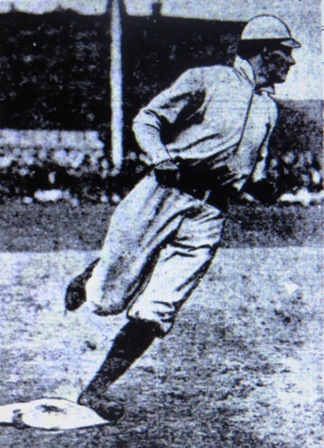
Napoleon Lajoie
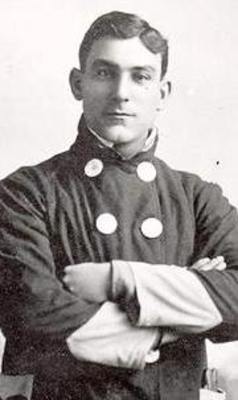
Napoleon Lajoie

While the paper’s readers were sending in their votes the newspaper was polling baseball men and college professors, who according to The Philadelphia Inquirer were “going at one another hammer and tongs,” over the issue.

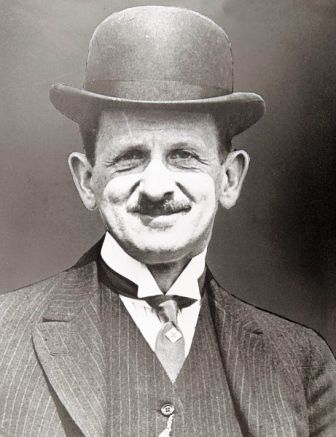
Chicago White Sox owner Charles Comiskey was on the side of “plain English,” telling the paper:

“What readers want to know is who won the game and how it was won.  When the facts are covered up with a lot of useless words the reader is apt to grow tired.”

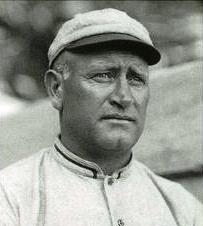
Charles Comiskey, against slang in baseball stories.
Charles Comiskey, against slang in baseball stories.

Most of the players, managers and executives polled by the paper were in agreement with Comiskey.

The professors were nearly unanimously on the side of slang.  Nathaniel Butler of the University of Chicago said:

“I think it would be pretty tame to report baseball in plain, ordinary English.  There is a species of humor on the sporting page which is enjoyable. “

After a month of opinions from baseball and academia, and newspapers across the country, the result of The Record-Herald’s balloting were made public.  The New York Times said:

“Slang as a means of the proper description of baseball games in the newspapers came out a little behind straightforward English, according to the verdict of several thousand readers in a test vote taken in a Chicago newspaper.”

By a close margin of 2004 to 1926, readers voted for “the English proscribed by the dictionaries,” but The Times said the results were:

 “(Q)ualified by several thousand voters who expressed themselves in favor of the use of a moderate amount of snappy, descriptive phrases, not limited necessarily to dictionary words, however.  Many voted in favor of slang, but advocated the elimination of nicknames.”

Vaudeville comedian and songwriter Junie McCree, writing for “Baseball Magazine” presented his version of how all baseball stories should be presented as a result of the vote:

The first athlete of the opposing aggregation was unable to locate the exact proximity of the ball and smote thrice in vain.

The next member was more fortunate in his endeavor and expelled the ball with such force that its destination was problematical to the guardian of latitude left, so the runner with some exertion and much rapidity voyaged to the third station without being molested.

At this point an urchin in one of the open stands requested vehemently that the home pitcher should be escorted to the suburbs of the enclosure and someone of animation be installed in his stead. His request was unheeded, much to his chagrin.

The third station being occupied by an invader caused the infielders to become more intimate with the domestic china to prevent foreign registration.

At this moment an attempt was made to execute the famous “Caress Play,” and in the unbiased opinion of the populace was frustrated by the marvelous dexterity of the “receiving teller” of the home team, but the magistrate of strikes and balls decided to the contrary, thus bringing on himself much verbal abuse. Among the ensuing verbiage one individual intimated in stentorian tones that the umpire was a facsimile of the principal ingredient in lemonade.

The contest from here on was uneventful until the seventh inning, at which time it becomes the duty of the resident assemblage to arise en masse and exercise the elasticity of limb and body.

While the home aggregation were at bat the visiting hurler became excited and ascended into nature’s oxygen.  A florid-faced individual in the grandstand arose and shouted all sorts of adjectives until someone volunteered the recommendation that he “lease or engage an auditorium.”

The various stations were congested before a single demise had occurred. A huge gentleman of pure American birth, reservation, extraction and much muscular appurtenances approached the plate and poised himself in a very hostile attitude; he attacked the sphere with a savagery known only to the ancient Romans, and with one blow the leathered globule wandered forth into undiscovered regions of remotest territory, thereby cleansing the stations of its human debris, and totaling a quartet of tallies to the frantic delight of those present.

This gave the Hosts an advantage which their guests were unable to overcome, and the contest was decided in favor of the natives. Score, 4 to 1.

P. S.—The same gentlemen participate in another exhibition on the morrow.
“He was Not Crazy as Reported”

18 Jul

Ervin Thomas “Erve” “Dutch” Beck hit the first home run in the American League; on April 25, 1901, the second day of the season, as a member of the Cleveland Blues; Beck homered off White Sox pitcher John Skopec at Chicago’s South Side Park.

It was a highlight in a short, promising career, like many at the turn of the 20th Century, destroyed by alcoholism.

Beck was considered the best young player in Toledo, Ohio when he joined the Adrian Reformers in the Michigan State League as a 16-year-old in 1895, then for the next five seasons, he was the star of his hometown Toledo Mud Hens in the Interstate League.  For the two seasons in Toledo for which complete records survive, Beck hit .298 in 1898 with 11 home runs and, a league-leading .360 with 15 home runs in 1900.

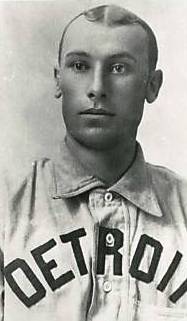
Erve Beck

Erve Beck

Earning the Nickname “Home run Dutch” in the Toledo papers, Beck was credited with 67  during his five seasons with the Mud Hens;  he would remain the team’s all-time career home run leader until 2007 when Mike Hessman (currently with the Louisville Bats in the International League) hit his 68th as a Mud Hen.

Beck also had a brief trial with the Brooklyn Superbas in the National League in 1899, hitting .167 in eight September games.

It’s unclear exactly when Beck’s problems with alcohol began, but according to fellow Ohioan Ed Ashenbach (alternately spelled Ashenback by several contemporary sources), a minor league contemporary who wrote a book in 1911 called “Humor among the Minors”,  it was well-known during Beck’s career that he was “addicted to strong drink,” and as a result suffered from “hallucinations.”

Ed Ashenbach

Ed Ashenbach (Ashenback)

Before the 1901 season, Beck, whose rights were held by the Cincinnati Reds, jumped to the Cleveland Blues in the newly formed American League; the twenty-two-year-old hit .289 and accounted for six of Cleveland’s twelve home runs.

Beck jumped back to the Reds before the 1902 season and received rave reviews early in the season.  The Cincinnati Tribune seemed to like him more at second base than veteran Heine Peitz:

“Erve Beck looks more like a second baseman than anyone who has filled the position since (Bid) McPhee went into retirement (in 1899).  He covers the ground, seems to know where to play and is capable of swinging the bat with some effect.”

His teammate, pitcher Frank “Noodles” Hahn claimed Beck hit the ball “harder than (Napoleon) Lajoie.”

Beck hit better than .300 playing second base in May but went to the bench when Peitz, who was filling in behind the plate for an injured Bill Bergen returned to second.

In June first baseman Jake Beckley missed a week with an injury and Beck filled in there; The Cincinnati Enquirer’s Ren Mulford said:

“(Beck) played the bag in splendid style…In handling ground balls Beck is as good as Beckley, and he is a better thrower… Beck gave another display of his versatility by plugging up a hole in right field.  He made one catch that was a lollapalooza…Most players would have lost heart when benched as Beck was, but he remained as chipper as a skunk during his term of inactivity, and gladly accepted the opportunity to get back into the swim. Beck is a phlegmatic soul, who takes life, as he finds it without a growl.”

In spite of a .305 batting average in 48 games and the great press he received, Beck was released by the Reds in July.  Whether the release was simply because he was the odd man out with Peitz, Beckley and right fielder Sam Crawford healthy or as a result of drinking is unknown.

Beck was signed almost immediately by the Detroit Tigers where he took over at first base after Frank “Pop” Dillon was sent to the Baltimore Orioles.  He hit .296 in 41 games but was again released at the end of the season.

Beck would never return to the big leagues.

In 1903 he .331 for the Shreveport Giants in the Southern Association, he jumped Shreveport the following season and played for the Portland Browns in the Pacific Coast League.   He returned to the Southern Association with the New Orleans Pelicans in 1905.  After starting the 1906 season in New Orleans, he was released in July and signed by the Nashville Volunteers; his combined average with both Southern Association teams was .211.

Beck’s drinking was, according to Ashenback and contemporary newspaper accounts, common knowledge by the time he wore out his welcome in Nashville in August and was sold to the Augusta Tourists in the South Atlantic League.

That stop would last for only one game.

The 27-year-old, four years removed from the American League, played first base for the Tourists on August 6.  Augusta second baseman Ed McKernan said, “It was evident when he reported there was something amiss with him,” and claimed Beck chased “an imaginary flock of geese away from first base” during the game.

The following day, according to The Augusta Chronicle, Beck “created a sensation in the clubhouse…causing all but two of the players to leave the house.”  As a result, Augusta released him.

The following day The Chronicle said:

“(Beck) ran amuck this morning and created great excitement on the street.

“While in a room on the third floor of the Chelsea hotel the big infielder suddenly began to see things and sprang from the third story window to the ground below.  Only two intervening telephone wires and a rose bush saved his life.

“He then darted down an alley and hid himself in a store.  He was finally captured and came quietly back to his room with a policeman and (Tourists outfielder Frank) Norcum.”

The Sporting Life assured their readers that Beck “was not crazy, as reported, but only suffering from the effects of a (drunken) spree.”

McKernan said “During his convalescence…Beck would smilingly avow his determination to abstain from strong drink.”

There were varying reports regarding the extent of his injuries, and it’s unknown whether he was physically able to play after the fall, but Beck would never play professionally again.

He returned to Toledo where he operated a tavern and appears to have been unable “to abstain from strong drink;” he died in 1916 of Articular Rheumatism complicated by Hepatic Cirrhosis.

Memorial Day—Major League Baseball’s First World War Casualty

27 May

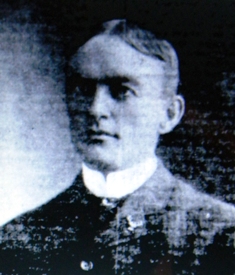
By the time he enlisted in the United States Army in July of 1917, Edward Leslie “Harvard Eddie” Grant had retired from baseball to practice law in Boston.

He attended Harvard, but only played baseball as a freshman; he was declared ineligible after being paid for playing with a semi-pro team.  After that Grant played intramural baseball at Harvard and played with Northeastern outlaw teams during the summer.

In 1905 Grant made his Major League debut when the visiting Cleveland Naps recruited him to fill in for two games at second base for Hall of Famer Napoleon Lajoie against the Boston Americans—he was 3 for 8 and made one error.

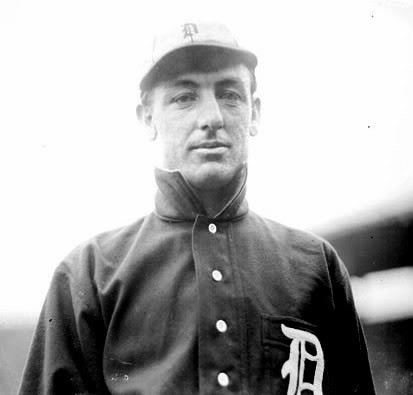
He was with the Jersey City Skeeters in the Eastern League in 1906, hitting .322, which earned him a contract with the Philadelphia Phillies.  He would spend the next nine seasons in the National League, also playing for the Cincinnati Reds and New York Giants.  Grant was never a star, but he was popular with fans and the press.  The New York Times said:

“He was a handy utility player and could fill in any position on the infield.  While never a heavy batsman, he was skillful fielder and a smart baserunner.”

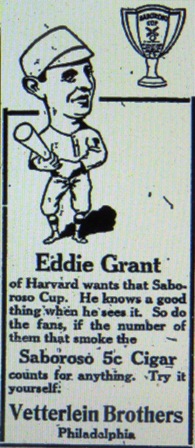
1910 Advertisement for the  Vetterlein Brothers Cigar Company; the Saboroso Cup mentioned in the ad was presented to the phillies or Athletics player with the highest batting average.

1910 Advertisement for the Vetterlein Brothers Cigar Company; the Saboroso Cup mentioned in the ad was presented to the Phillies or Athletics player with the highest batting average.

Grant was among the first wave of prominent athletes to join the military, making his enlistment news.  A wire service article under the headline “Eddie Grant Joins Uncle Sam’s League” appeared in numerous papers across the country.

On October 5 1918, he would become the first Major League player to be killed during World War I, The Associated Press said:

“Captain Edward Grant, former third baseman of the New York National League Club, and attached to the 307th Infantry, was killed by a shell when leading a unit to the aid of the famous ‘Lost Battalion.’

“The battalion was surrounded for five days in the Argonne Forest and Captain Grant was killed in one of the attempts to reach it.”

Grant was originally buried in the Argonne Forest, and his body was later moved to the Meuse-Argonne American Cemetery.

Crazy Schmit Stories

13 May

Fred “Crazy” Schmit was widely considered to be the first pitcher to keep a “book” on hitters, it was mostly attributed to his poor memory, and the pitcher kept an actual book in his pocket listing the weakness of each hitter.  The earliest reference to Schmit’s book was in The Sporting Life in 1894, but the story was repeated in newspapers for the next thirty years, usually as a story told by John McGraw or Hughie Jennings.

The article said Schmit kept:

“(A)n account of the weakness at bat of his opponents, setting them down in a small book, which he always carried with him on the diamond…One day when he had the Chicagos as opponents (it was the season that Captain Anson led the League in batting), Anson came to the bat. “Crazy” Schmit looked at the big first baseman, then went down into his pocket, and, taking out his book, read “Anson, base on balls.”

Over the years the story changed—the batter was sometimes Elmer Flick, Nap Lajoie, Ty Cobb, Honus Wagner, Tris Speaker, and as Jennings said in 1926, “Every good hitter since Anson’s day, but Anson is the player whose weakness was reported to be a base on balls.”

"Cap" Anson

“Cap” Anson

Jennings also claimed that during the 1890s as part of a prank by teammates aboard a ferry, Schmit’s suitcase, with his book inside, fell overboard, and said:

“Schmit was a losing pitcher from that time on.  He won a few games but lost a great many more…The bottom of Hudson River held his ‘pitching arm.’”

Pitcher turned sports cartoonist Al Demaree said Schmit “used to warm up with an old water-soaked ball that weighed several pounds—at a distance of 75 feet, and not the regulation 60 feet from his catcher.”

Al Demaree's Schmit cartoon--as with most references to the pitcher, his name is spelled incorrectly

Al Demaree’s Schmit cartoon–as with most references to the pitcher, his name is spelled incorrectly

After his final game with the Baltimore Orioles in 1901, Schmit continued to play with semi-professional and quasi-professional teams for more than a decade.  His antics continued to make the papers.

In 1906 Schmit joined Jim “Nixey” Callahan’s Logan Squares in the Chicago City League.  The Sporting News’ Revere Rodgers told a story (complete with Schmit speaking in a comic German accent) about the team going to Joliet, Illinois for a game:

“(The Logan Squares) knew the umpire was a ‘homer’—a man who couldn’t see a close decision without giving his team the best of it.  He stopped before the grandstand, hat in hand, and announced (the batteries)…’Crazy’ Schmit was right behind him and when (the umpire) finished Schmit took off his cap and making a sweeping bow said: ‘Laties and schentlmen, der umpire for der game today vill be Mister Miller of Joliet and he vill as usual slightly favor der home glub mit his decision.”

According to The Chicago Tribune’s Hugh Fullerton Schmit was deeply disappointed at the end of the 1906 season when Callahan did not allow him to pitch in the Logan Squares victories against the World Champion White Sox, and National League Champion Cubs.

Schmit continued to play in the Midwest and also did some scouting for John McGraw’s New York Giants.  A story that appeared in The Duluth News-Tribune said Schmit pitched a few games for the Fond du Lac in the Wisconsin-Illinois League (Schmit’s name does not appear on any Fond du Lac roster in either of the two years the other player mentioned in the story was with the team (1909, 1911)so the story may be apocryphal):

“Along about the seventh inning, with Rockford leading by 6 to 4 the first man up got on.  Schmit pitched out three times in an attempt to get the runner going down to second base, but the runner made no attempt to purloin the sack.  With the count three and nothing on the batter he grooved the next one, only to have the batter lean on it and drive it over the left field fence for a homerun.

“After the runners had circled the bases the umpire threw up another ball.  Schmit took it, shook his head and walked over to Bobby Lynch, who was playing third base…and said to him ‘Say, Bobby, no wonder I can’t beat these fellows.  I won’t pitch against them any longer.  I quit right now.  They don’t know how to play baseball and yet they are leading in this league.  The runner that was on first base just let me waste three balls and yet he does not attempt to steal; then when I put one over for the batter who has three balls and no strikes, he hits it.  Tell me, how can a man of my intelligence and baseball knowledge pitch a game of baseball against such boneheads and unscientific playing of the game?”

“Crazy” Smith died in Chicago in 1940.

Superstitions and Eccentricities

19 Mar

A 1912 wire service article that appeared in The Lexington Herald revealed some of the “superstitions” and “eccentricities” of several ballplayers:

Nap Lajoie always draws a line in the dirt in the batter’s box before taking his position.  He will not face the batter without this preliminary.”

Napoleon Lajoie

Napoleon Lajoie

Bill Donovan dislikes to strike out the first batter.  He believes it the forerunner to bad luck.”

Bill Donovan

Bill Donovan

Barney Pelty must throw a curve ball just before starting to pitch.  His last to the catcher when warming up between innings is always a curve.”

Barney Pelty

Barney Pelty

Rube Oldring insists on the little mascot of the Athletics standing in a certain place when he is at bat.”

Rube Oldring

Rube Oldring

Heinie Peitz, when manager of the (Louisville) Colonels, was averse to having any pictures taken of his team.  He believed it hoodooed the game.”

Heinie Peitz

Heinie Peitz

Rabbit Robinson never touches the plate with his bat, but he says he is not superstitious.”

William Clyde "Rabbit" Robinson

William Clyde “Rabbit” Robinson

Ernie Diehl

18 Mar

Ernest Guy “Ernie” Diehl’s entire professional career consisted of less than 60 games.

Every year from 1900 to 1911 he was offered contracts by professional teams and despite his time with two National League teams and two minor league teams he never earned a penny as a ballplayer.

By the time the 25-year-old Diehl made his first professional appearance with the Pittsburgh Pirates in May of 1903, he was already a well-known player. Diehl was the star of the perennial powerhouse Avondale team in Cincinnati’s semi-pro Saturday League, which The Sporting Life called “a fast, clean league.”

diehl

Ernie Diehl

Diehl was born in Cincinnati in 1877, the scion of a Cincinnati distillery empire; His father Adam G. Diehl had made a fortune in the whiskey business with his brother-in-law; together they founded The Edgewood Distilling Company.

He attended the University of Cincinnati and established a reputation as one of the area’s best athletes.  Perhaps even better at tennis than baseball, Diehl was a prominent amateur tennis player during the first decade of the 20th Century.

In May of 1903 when the Pirates arrived in Cincinnati for a series, the team was decimated with injuries and Diehl joined the team for one game, playing left field on May 31, he went 1 for three in a 3-2 pirate victory.

Despite being offered a contract with Pittsburgh, Diehl chose to return to the distilling business and the Saturday Baseball League.

In 1904, with several Pirate players hurt, Diehl was again asked to join the team; this time for 12 games.  The Pittsburgh Gazette said Diehl also spent time with the Pirates in Hot Springs, Arkansas that spring.

The Baltimore American ran a story before the Pirates arrived in New York in August:

“New Yorkers who attend the games between the Brooklyn and Pittsburgh teams will be treated to an opportunity of seeing the work in the field of a millionaire ballplayer.”

While he hit just .162 for the Pirates in 1904, that did not diminish Pirate owner Barney Dreyfuss’ desire to sign Diehl.

Before the 1905 season Dreyfuss told The Pittsburgh Press:

“The one player I would like to get on the team is beyond my reach… His name is Ernest Diehl…He is one of the best baseball players I ever saw.”

Dreyfuss also called Diehl “One of the best all-around athletes,” he had seen.  The Press said that although Diehl was required to sign a contract for his time with the Pirates in 1903 and ’04:

“Diehl never received a penny of salary from President Dreyfuss.”

Barney Dreyfuss

Barney Dreyfuss

Dreyfuss, and every other owner who offered Diehl a contract was unsuccessful in securing him for the 1905 season; Diehl spent the season playing in the Saturday League and in several tennis tournaments across the country.

He again played tennis and semi-pro ball in 1906, until August when the Boston Beaneaters came to Cincinnati. Shortstop Al Bridwell was injured, and Diehl was signed (again for no salary) to play for Boston in the three-game series.

The Associated Press reported:

“’Ernie’ Diehl, a wealthy young distiller of this city, an enthusiastic athlete, long known as a brilliant baseball player on local amateur teams, distinguished himself in the series just played…He played three games in the Boston ranks…He made five hits in eleven times at bat…Diehl could not afford to enter professional ball if he desired, at the highest salary paid in the organization, on account of his business, but is delighted and satisfied with his experience…Besides his heavy batting, his fielding was strictly up to the professional standard.”

Just as he had in Pittsburgh, Diehl turned down an offer to stay with Boston for the remainder of the 1906 season.

In 1907, Diehl appeared in 21 games for the Toledo Mud Hens in the American Association, hitting .405.  The Toledo News-Bee said Diehl was spending “His vacation…helping out the Toledo club.”  The Associated Press said that as in the past, “Diehl is wealthy and refused to accept pay for his services.”

In addition to his business interests, amateur tennis and baseball career, and professional baseball “vacations,” Diehl also served on Cincinnati’s city council from, roughly, 1906-1910.

In 1909 Diehl played in one game of a doubleheader for the Boston Doves on August 12 against the Reds, he was 2 for 4 with a double—it would be his last in the National League

Diehl then joined the eventual American Association champion Louisville Colonels, at the request of his friend and fellow Cincinnatian, manager Heinie Peitz.  (Baseball Reference lists a player as “Diehl,” with no first name on the 1909 Louisville roster, with a .226 average in 20 games).

The Sporting Life said Diehl “figured very prominently in Louisville’s winning the championship of the A.A. will again be in Colonel garb,” in 1910; Diehl did not play for Louisville, or any other professional team again.

In 1911 The Associated Press and Cincinnati newspapers said the 33-year-old Diehl had a deal in place with Reds manager Clark Griffith to join the team at some point during the season; as with Louisville, that deal never materialized either.

Diehl was briefly mentioned as a candidate to replace Griffith as Reds manager in 1912, the job eventually went to Hank O’Day.

Diehl’s career was summed up well in a 1914 Baseball Magazine article by William A.  Phelon:

“For ten years it has been a tacitly accepted fact, around the big leagues and whenever players or managers assembled, that Ernie Diehl was not only of major league quality, but what might be called super-quality—the Wagner-Lajoie-Cobb variety.  He could hit, run, and break up a defense with anybody, and was a versatile artist in five or six positions.  Business held him; there never was a chance for him to spend a full season in the game; year after year, in short vacation frolics, he showed the professionals what he could do—and now, getting on in years, with business still gripping him, he sadly gives it up, and lays aside the bat and glove he never had a fair chance to use.”

Diehl’s Edgewood Distilling Company seems to have been dissolved sometime around 1918, and he eventually settled in Miami where he died in 1958.

Filling in the Blanks—Eastman, Huntington 1913

18 Feb

Baseball Reference lists “Eastman” as a player with the 1913 Huntington Blue Sox in the Ohio State League— he quickly became one of the biggest baseball stories in the spring of 1913, and just as quickly disappeared from the game.

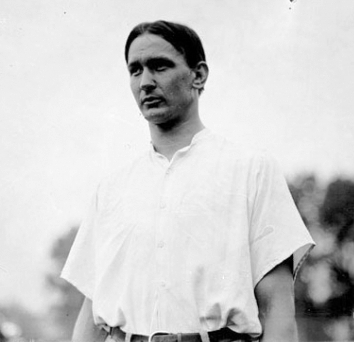
George A. Eastman was born in South Dakota.  In 1862 his grandfather was one of the 284 Santee Sioux warriors who participated in the  Dakota War and  had their death sentences commuted by Abraham Lincoln—38 others were hanged in Mankato, Minnesota.

His father John Eastman was a farmer and Presbyterian minister in Flandreau, South Dakota and his uncle, Dr. Charles Alexander Eastman was a prominent writer, nationally known lecturer and activist.

Exactly when Eastman began playing baseball is unclear, but in 1912 he played on a semi-pro team in Sisseton, South Dakota with former Pittsburgh Pirate pitcher Homer Hillebrand.  According to The Pittsburgh Gazette-Times Hillebrand “Considered him very promising material,” and recommended Eastman to Pirate manager Fred Clarke, the paper said “Clarke says Indian players are the style, and the Pittsburgh club will be in style.”

George Eastman in Hot Springs, 1913

George Eastman in Hot Springs, 1913

When Eastman joined the Pirates in Hot Springs, Arkansas, The Gazette-Times, who of course dubbed him “Chief,” said:

“Eastman is a well built fellow, from the baseball standpoint.  He is 5 feet 10 ½ inches tall, weighs 150 pounds and is very fast.”

The paper said Eastman’s preacher father “does not know much about baseball, and does not think very well of it as a profession.”

A shortstop, Eastman quickly became the source of great interest in Hot Springs.  The Associated Press said even the Pirates best player took notice:

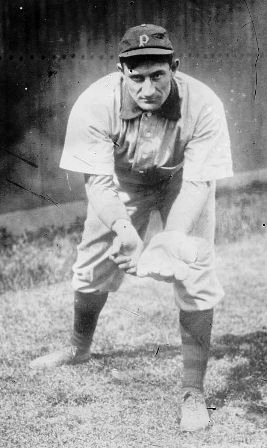
“Honus Wagner has taken more than a passing interest in the Indian Chief Eastman.  (Wagner) isn’t given to indulging in extravagant statements and when he says a recruit is a ‘mighty good ballplayer’ it means something…and he added that “chief throws like Mickey Doolan (Doolin) and fields just like Jack Miller.”

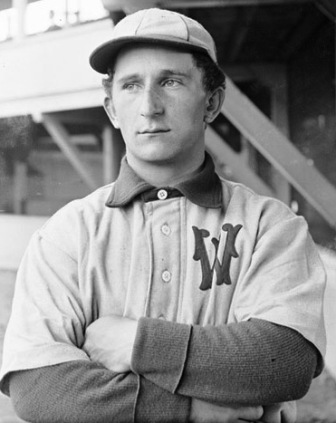
Honus Wagner

Honus Wagner

The Associated Press said:

“(A) Sioux Indian is burning up things around short field at Hot Springs with the Pittsburgh Pirates and Fred Clarke probably will retain him as an understudy to Hans Wagner.”

The Sporting Life thought he was bound for stardom:

“The Pittsburgh players are very enthusiastic over George Eastman, the Sioux Indian player, now being tried out at short. They say that he is a wonderful natural ball player, including hitting ability. They say he is sure of a place on the team, as he can play most any position and can ‘outhit Larry Lajoie.’

Despite the fanfare, Eastman did not make the team and was released to the Steubenville Stubs of the Interstate League.  It’s unclear whether Eastman ever appeared in a game with Steubenville, and was returned to the Pirates in early May; he was then sent to Huntington for the remainder of the 1913 season.

Eastman hit .210 in 57 games for Huntington.  There is an Eastman who appeared in 18 games in the Central League in 1914, but there’s no evidence that it’s George Eastman, who is never mentioned in connection with professional baseball again.

In fact, the trail for Eastman goes cold from the end of the 1913 until 1937 when he became the first tribal president of the Flandreau Santee Sioux Tribe.  He served seven terms as tribal president before his death in 1954.

George Eastman, circa 1937

George Eastman, circa 1937

Zimmer Rules

20 Dec

After Charles “Chief” Zimmer’s single, difficult season managing the Philadelphia Phillies he briefly became a National League umpire.

Reports said the adjustment from player and manager to umpire were difficult at first.  According to a brief story that appeared in several newspapers on the eve of Opening Day:

“Chief Zimmer umpired the Pittsburgh-Little Rock game last week, but he could not resist coaching the players, for he forgot himself once in the third inning and yelled ‘Look out!’ to (Tommy) Leach when Little Rock was trying to catch him off first.”

But by May he seemed to have eased into his new position, telling reporters:

“I hesitated about taking up the work, knowing that the life of an umpire is supposed to be filled with anything but joy.  However, I can honestly say that I am more than pleased with the experience thus far.  I have had no trouble at all, and players and spectators have accorded me the best treatment.  I don’t think I’d give up my present work to go back to catching.”

In September The Pittsburgh Press said there was “No doubt (Zimmer) will be reappointed,” as a National League umpire in 1905, but by January it was announced that he had not been retained.

Zimmer entertained offers to play for the Toledo Mud Hens of the American Association and the Rochester Bronchos of the Eastern League, but instead took a position as an Eastern League umpire.

He returned as a player/manager the following season with the Little Rock Travelers in the Southern Association.

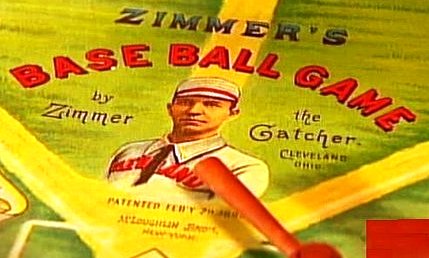
Through it all Zimmer was one of baseball’s earliest and best self-promoters.  In addition to endorsing Zimmer’s Baseball Game and his cigars, produced in what The Sporting Life said was “an extensive cigar factory in Cleveland.”  Zimmer always talked to reporters and always gave them something to write about, including his ideas for rule changes.

Zimmer's Baseball Game

Zimmer’s Baseball Game

In 1905 The Pittsburgh Press said “’Chief’ Zimmer has a scheme which he thinks would increase batting without abolishing the foul strike rule.” (The “scheme” was not Zimmer’s idea; it had been advocated by some for more than two decades, including “Cap” Anson and Zimmer’s former boss, Cleveland part owner Davis Hawley).  The plan would:

“Increase the territory of the fielders without increasing the length of the base lines…new foul lines (would be) drawn from the home plate to the fences.  At the point where they would pass first and third bases the lines would be six feet distant from the bases, gradually increasing the distance from the present foul lines as they neared the fences.”

Later he can out in favor of abolishing the foul strike rule when the issue was briefly discussed in the aftermath of the relatively low-scoring 1905 World Series.

In 1909 Zimmer suggested another rule; this one would essentially eliminate intentional walks by allowing any man on base to advance one base after a walk.  Zimmer said:

“It’s not right for a pitcher to take away Lajoie’s chance of hitting by walking him when there are men on bases.  I saw Larry passed four times in two games last fall.  He was paid to hit with the men on bases…Pitchers would have to put the ball over and the good batters would get a chance to do what they are paid for.”

Luckily like most of the other odd rule changes suggested during baseball’s first several decades, Zimmer’s “schemes” received little traction as both would have radically altered the game.  But Zimmer’s rules did succeed in accomplishing what they were most likely intended to do: they kept Zimmer’s name in the paper long after his career was over.

A final post on Zimmer and, perhaps, his greatest contribution tomorrow.

Chief and Cy

19 Dec

Charles “Chief” Zimmer caught Denton True “Cy” Young’s first Major League game; an 8-1 victory for the Cleveland Spiders over Cap Anson’s Chicago Colts.

Years later, Davis Hawley, a Cleveland banker and hotel magnate who also owned a minority share of the Spiders and served as the team’s secretary, related a story about Young’s debut:

“The night of Young’s first National League game, he complained to me that although he had let Anson’s team down with a few hits, he had not had his usual speed.”

Hawley who had watched him pitch in the Tri-State League asked why he felt that way.

“Well, down in Canton the catchers could not hold me I was so fast, but this man Zimmer didn’t have any trouble at all, so I guess I didn’t have much speed.”

Zimmer would go on to catch 247 of Young’s starts through 1898, including 19 shutouts; second in both categories to Lou Criger, who played with Young in Cleveland, St. Louis and Boston.

Zimmer would catch Young a few more times after 1898.

In 1921 the 54-year-old Young pitched two shutout innings, with the 60-year-old Zimmer catching, in a game between Cleveland Major League legends and amateur stars staged as part of Cleveland’s 135th anniversary celebration.  In addition to Young and Zimmer, Nap Lajoie, Earl Moore, Bill Bradley, Charlie Hickman, Nig Cuppy and Elmer Flick were among the participants.

Earl Moore, Cy Young, Bill Bradley, Charlie Hickman, Nap Lajoie and Chief Zimmer at the 1923 game.

Earl Moore, Cy Young, Bill Bradley, Charlie Hickman, Nap Lajoie and Chief Zimmer at the 1923 game.

The game was such a success that for the next four years it became an annual event at League Park (called Dunn Field during the 1920s); Young pitched the first two innings of each game with Zimmer catching. The event benefited the Cleveland Amateur Baseball Association medical fund.

Young always shared credit for his success with his catchers.  In the 1945 book “My Greatest Day in Baseball As told to John P. Carmichael and Other Noted Sportswriters,” he said:

“Every great pitcher usually has a great catcher, like Mathewson had Roger Bresnahan and Miner Brown had Johnny Kling. Well, in my time I had two. First, there was Chief Zimmer, when I was with Cleveland in the National League, and then there was Lou Criger, who caught me at Boston and handled my perfect game.”

A little more “Chief” tomorrow.