Tag Archives: National League

“The Contest is going to be the Hottest in the History of Baseball”

6 Jun

Just weeks into the 1892 season, National League president Nick Young declared the newly expanded league, which absorbed four franchises from the defunct American Association and included the only scheduled split-season in major league history, an unqualified success.
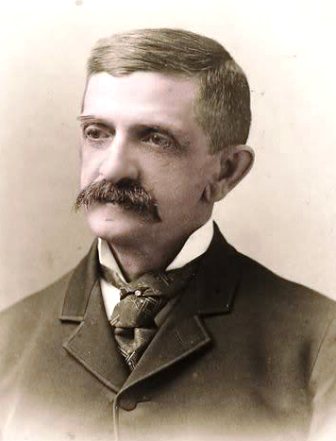
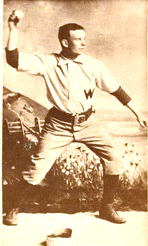
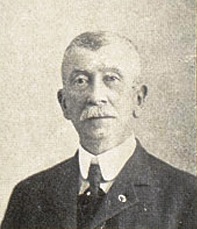
Nick Young

Nick Young

The schedule, which called for the first half to end on July 15, and the second in later October, necessitated starting league play two weeks earlier than 1891 resulting in a large number of early season games being played in inclement weather.

Young spoke to a reporter named Max Ihmsen, who usually covered politics for The Pittsburgh Dispatch, about the state of game

“(T)here is no doubt of the overwhelming success of the new deal.  Considering the wretched weather that prevailed everywhere during April the showing, both financially and as to skill displayed, has been remarkable.  Everyone is making money, and I look for the most successful season ever known in the history of the game.  The reconciliation of the clashing interests, a reconciliation effected during the past winter, has been the salvation of the sport…This year there is every prospect of each club quitting a big winner.  Never before have such games, as are now being put up, been seen.”

Young said an April 19 doubleheader in Chicago, which brought in $4,000 accounted for the league’s highest single-day gate receipts of the season so far.

As for the pennant race Young said:

“The contest is going to be the hottest in the history of baseball.  Everybody is ‘out for blood,’ and at the close of the season I anticipate seeing a tie for every place up to fourth or fifth.  A difference of 10 or 15 games between the highest and lowest clubs will reflect no discredit on the lowest club…All the clubs are in good shape and I expect quite a number of absolutely errorless games will be recorded before the season closes.”

Young got nearly everything wrong.

At the close of the season, Ernest J. “Ernie” Lanigan said in The Philadelphia Record that only two teams (Cleveland and Pittsburgh) operated in the black.  He said their profits were less than $20,000 combined while “ten clubs have lost in the neighborhood of $150,000.”

O.P. Caylor said in The New York Herald the league’s financial state was a “disaster more astonishing than any which have preceded it and knocks the hot air out of President Nick Young’s prosperity balloon, which went sailing up so grandly.”

At a June meeting in New York team owners agreed to cut rosters from 15 to 13, and the salaries for the remaining thirteen players were cut (as much as 40 percent).  At the same time, they increased to 12 ½ percent the 10 percent of gate receipts each club was assessed to pay off the debt incurred to buy out the American association franchises that were not absorbed into the league.

Caylor said salaries would continue to fall and “This is the year when the owners of huge blocks of baseball stock are not classed with the Vanderbilts, Goulds, Astors, and Rockefellers.  Every one of the holders has been ‘touched’ heavily, more or less, by the financial disappointments of the year.”

The Baltimore Sun put it more succinctly:

“The season has been a failure financially.”

The Boston Beaneaters won the first half (52-22) over the Brooklyn Grooms (51-26), after the June roster and salary reductions, the Cleveland Spiders (fifth place with a 40-33 record in the first half) won the second half (53-23) over the Beaneaters (50-26).

Initially, Boston owner Arthur Soden said his team would not meet Cleveland in a post-season series as a result of charges in Boston that his team tanked the second half.  He told Caylor:

“You cannot make a large number of our patrons believe that the Boston club has not purposely lost the last championship for the sake of making money out of a series of finals.  That belief has hurt us to the extent of thousands of dollars during the last half of the season, and unless it be removed will hurt us equally as much next season.  The only way we can remove the wrong impression is by refusing to play.”

Caylor said at the October owners meeting “the rest of the league took up the case and literally forced the Boston club to play…Boston’s refusal to play would do more harm to the interests of the League at large than the Bostons could possibly suffer by the playing of the games.”

The nine-game championship series began with an 11-inning pitching duel between Boston’s Jack Stivetts and Cleveland’s Cy Young that ended in a 0-0 tie.  Boston swept the next five games.
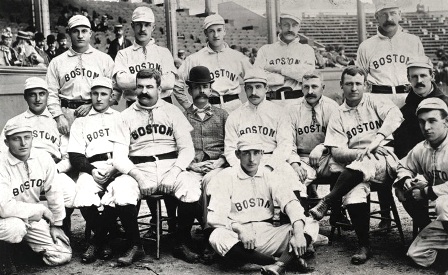
The Boston Beaneaters

The Boston Beaneaters

The split schedule and the resulting longer season were dropped for 1893.

Max Ihmsen, the reporter Nick Young spoke with, became city editor of The New York Journal, a William Randolph Hearst paper, in 1895.  Ihmsen went on to manage Hearst’s unsuccessful campaigns for mayor of New York City and governor of New York; he was also the Hearst-backed candidate for Sheriff  of New York County in 1907, a race he lost to the Tammany Hall-backed candidate.

Ihmsen later became the managing editor of another Hearst paper, The Los Angeles Examiner.  He died in 1921.

“I am thoroughly Disgusted with the Business”

12 May

Robert Vavasour “Bob” Ferguson shares claim, with Brooklyn Atlantics teammate Jack Chapman, to the nickname “Death to Flying Things,” although it will likely never be resolved which had the name attached to him first.

Bob Ferguson

Bob Ferguson

What is clear is that Ferguson was an important figure in 19th Century baseball –a player, manager, umpire and executive, and the game’s first switch hitter.

Ferguson was, given the reputation’s of 19th Century  umpires, uniquely popular.

The St. Louis Republican said he was “about the most brilliant of any…He never allowed his word to be questioned and was the most successful umpire in that regard ever in the profession”

The Louisville Post said “Ferguson plays no favorite from the time he calls play.  He sees all men alike and tries to do justice to them.”

The Sporting Life said he was “The only umpire who can satisfy New York audiences.”

In May of 1886 Ferguson resigned from the American Association’s umpire staff to manage the New York Metropolitans, until May of 1887, when he was let go by New York and returned to the association staff.  The Philadelphia Times said his services were so sought after that he was offered “$1200 for the remainder of the season.  This is much in excess of the regular umpire’s salary, but (the Cleveland Blues, Brooklyn Grays and St. Louis Browns) have agreed to stand the additional expense if Ferguson will accept the position.”

Even when criticizing Ferguson for possessing “a whole barrel full of that commodity known as mulishnessThe Cincinnati Enquirer said, “There is no disputing his honesty.”

Intractability was the one major criticism of his work, but Ferguson thought it an asset.  Shortly after returning as an umpire in 1887 The Washington Evening Star said during a game between New York and Philadelphia, a runner starting from second base, noticing Ferguson’s back turned after a passed ball cut third base and scored easily.  Ferguson was alleged to have said:

“I felt morally certain that he did not go to third base, as he scored almost as soon as the base runner who was on third at the time.  But before I could do anything in the matter the crowd began to hoot and I declined to change my decision.  Let an umpire be overcome just once by the players or the crowd and he never will be acknowledged afterward.”

But, despite the respect he sought and received, on and off the field, in 1888 Ferguson told  a reporter for The New York Mail and Express—which said Ferguson was noted for his “bluntness and firmness” as a player– how he really felt about being an umpire:

 “I did not choose it; that is to say, I did not seek it very earnestly.  I had been active on the ball field for so many years that I knew it would be only a question of a short time when my efficiency as a player would be impaired to the extent of my being forced to retire, and the position of umpire being possible for me to obtain and in fact offered to me, I accepted it that I might surely be able to continue upon the field, where I have spent most, and in a general way the happiest years of my life.

“How do I like it?  I do not like it at all.  An umpire, not withstanding newspaper talk regarding his being master of the field, is practically a slave to the whims of players.  He does not, as is generally supposed, go upon a field, and upon the slightest provocation fine a player to any amount simply because that man does not act in accordance with his ideas.  He is not there for that purpose.  He is simply the representative of the officers of the association in which he happens to be employed.

“I give all clubs, whether weak or strong, an equal chance.  The position of an umpire is one that no self respecting man can hold long without wondering whatever possessed him to accept it, and wishing to be free from it.

“But everyone has to earn a livelihood, and I am endeavoring to earn mine, but I will say I am thoroughly disgusted with the business and will welcome the day when I can say: ‘Robert, you are free; your slavery days are over; you can now enjoy the fruits of your labor.’  Don’t misquote me now and say that I am disgusted with the national game, for it would be utterly untrue.  I am fond of baseball, as my many years on the diamond will attest; but to be a player, which position I loved, is one thing; to be an umpire is another.”

Ferguson remained in the American Association through 1889, then joined the Players League as an umpire in 1890, and returned to the American Association for the 1891 season, his last; The Sporting Life said “the Association soured on him” because “his expense bill” was much larger than any other umpire.”

Ferguson tried to get a position with the National League in 1892, but according to The Chicago Tribune he “does not seem to be much sought after.”

Ferguson retired to Brooklyn where he died in 1894 at the age of 49.

Oliver Perry Caylor said in The New York Herald said he was “an umpire of recognized fairness and merit…His honesty was always above suspicion, and scandal never breathed a word against his upright life professionally.”

Miah Murray

7 May

Jeremiah “Miah” Murray appeared in only 34 major league games, with four teams between 1884 and 1891.  In 31 games a catcher, he made 29 errors and was charged with 28 passed balls.

During that short career, he also became the subject of two stories which highlighted his shortcomings behind the plate.  Both stories appeared after the fact, so are subject to the usual caveats of 19th-century baseball stories.

Jeremiah "Miah" Murray

Jeremiah “Miah” Murray

In 1894 The New York Sun wrote about the most embarrassing episode Murray’s career—said to have taken place during his rookie season, 1884:

“(Murray) tells about a game he once caught in at Buffalo when he was a member of the Providence team.  There were three men on bases and he threw to (Jerry) Denny to catch a man napping, but the ball never got there.  It hit Jim O’Rourke, who was the batsman, on the side of the head and bounded into the grandstand, three men scoring and winning the game for Buffalo.  Jim staggered and cried out with pain, but the crowd simply cried with glee, O’Rourke’s hurt being entirely lost sight of in the enthusiasm.”

Murray’s manager during that 1884 season was Frank Bancroft who led Providence to the National League championship and a three games to zero victory over the New York Metropolitans of the American Association earning for the first time the title “World Champions” from The Sporting Life.

Frank Bancroft

Frank Bancroft

Bancroft compiled a 375-333 record over parts of nine seasons as a big league manager, before becoming an executive with the Cincinnati Reds.

It was while serving as the Reds’ Business Manager that Bancroft related another story about Murray’s brief time with Bancroft’s championship team.  The story first appeared in The New York  American in 1915:

“’Take it from me,’ said Frank Bancroft, while some of the fans were discussing famous bonehead plays, ‘the old timers pulled some bones that had all you youngsters blocked off the map.  Best I recollect, right now, was sprung by Miah Murray when he was catching for me…With a runner on first Miah steamed back to the stand a made a magnificent catch of a foul fly.  The crowd broke into roars of applause; Murray, leaning against the stand, took off his cap and bowed right and left—and the runner, sizing up the situation, lit out from first, kept right on going, and came all the way around while Miah kept bowing and the rest of the team were screeching and raving, all in vain.”

Murray later became a National League and college umpire; he was also a prominent boxing promoter and matchmaker in Boston where he operated the Lincoln Athletic Club of Chelsea, and later the Armory Athletic Club.  He died in Boston in 1922 at age 57.

Bancroft retired as business manager of the Reds in January of 1921; he died two months later at age 74.

“There is a Constant fear that Someday the Men will Decline to go on the field.”

31 Mar

The St. Louis Maroons were a big league franchise for just three seasons.  After winning the inaugural (and only) Union Association championship in 1884, the team was absorbed into the National League and was a dismal 36-72 in 1885, and 43-79 in 1886.

The club disbanded after the ’86 season and throughout the winter there was speculation about whether the franchise would end up in Kansas City (where local businessmen were looking to replace the Cowboys, who also went broke after the ’86 season) and Indianapolis.

The deal was finalized on March 8 when the franchise and nine players were sold to Indianapolis.  The Indianapolis News announced on the front page:

The Base Ball Deal

It Is Finally Completed

The story said:

“There is general rejoicing about the city over the certainty of having a league baseball club here.”

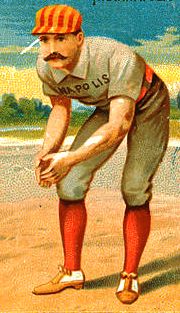
The team would be called the Hoosiers, and play at the Seventh Street Grounds, a ballpark owned by local businessman John Tomlinson Brush.

John T. Brush

John T. Brush

Brush was the driving financial force behind the deal and had been involved in local baseball in Indianapolis for several years, first having financed and organized a local amateur league in the city in order to promote his business—the When Store, and later the When Clothing Company—he was also an investor in the short-lived 1884 incarnation of the Hoosiers who struggled through one twelfth-place (29-78) season in the American Association.

The Hoosiers first year was unsuccessful and chaotic.

The first manager was George Walter “Watch” Burnham, who had been a National League umpire for 41 games in 1883 and one in 1886.  His role in the effort to acquire the franchise, his selection as manager, and the manner in which he acquired his nickname, gave some pause about the seriousness of the Indianapolis operation.

"Watch" Burnham

“Watch” Burnham

The Chicago Tribune said:

“The promoter of the Indianapolis movement is George W. Burnham, known as “Watch” Burnham.  At Cleveland, in 1883, while acting as a league umpire, he endeavored to establish himself in the public esteem by buying a watch, having ‘Presented to George W. Burnham by his friend and admirers’ inscribed on it, then having it sent out to him on the field during the progress of the game.  It is not surprising that some of the league people are suspicious of the Hoosier effort.”

Brush was not the team’s original president, that duty fell to a local attorney named Louis Newberger who spent his entire two-month tenure in the position complaining that he had no time to run the team; Brush took over as president in late May.

The Hoosiers limped to a 6-22 start—no doubt aided by 22 straight road games from May 5 through May 30.  Burnham resigned once, just five games into the season, but returned a few days later.  By mid May, as the team struggled through their endless road trip, The Chicago Tribune said a mutiny was expected:

“The dissatisfaction on the part of the players with Burnham, the manager, amounts almost to insubordination and there is a constant fear that someday the men will decline to go on the field.”

The Tribune said Burnham had fined “the entire team,” and Captain Jack Glasscock “said he would be black-listed before he would play again under the management of Burnham, but was finally prevailed upon to do so.”

Jack Glasscock

Jack Glasscock

Upon the team’s return to Indianapolis Burnham was replaced with team secretary Fred Thomas.  Thomas, like Burnham, had no professional experience as a player or manager, and his tenure was not much more successful.  The club lost 18 of 29 games with him at the helm.

The team’s third manager also had no previous professional experience.  Horace Fogel was a sportswriter for The Philadelphia Press when he was tapped to be the third manager.  The Indianapolis News said hopefully:

“Mr. Horace Fogel, the new manager, is a good-looking young man, and makes a favorable impression on a stranger.  He is evidently very anxious to make the club a winner.”

The same July day The News opined on Fogel the paper also noted that maintenance of the ballpark had also angered some fans:

“Very unwisely the management had the chairs in the gallery varnished recently and yesterday several ladies had their dresses ruined.”

Things were no better under Fogel.  The Hoosiers went 20-49 under their third manager, and finished their inaugural season in eighth place with a 37-89 record.

The News said:

“Staring out under unfavorable circumstances…with inefficient management throughout the season, and many more defeats than victories, the club nevertheless, was accorded a generous support.”

The 1888 season became a matter of civic pride for the team’s ownership, local businesses and the newspaper.

In January it was announced that the Hoosiers would have a manager with at least some experience.  Harrison “Harry” Spence had played and managed in, among others, the Eastern, Northwestern and New England Leagues.  The News said of the new manager:

“A number of ball players of various clubs, who know Harry Spence…speak very highly of him.  Sam Thompson says he is a thorough gentleman, well liked by the players, and a fine manager.”

The News said the success of the Hoosiers was necessary for the future Indianapolis:

“Business and professional men are all interested in it, for, aside from the pleasure they derive from witnessing the games, they recognize the fact that the club is of great benefit in advertising the enterprise and prosperity of the city.”

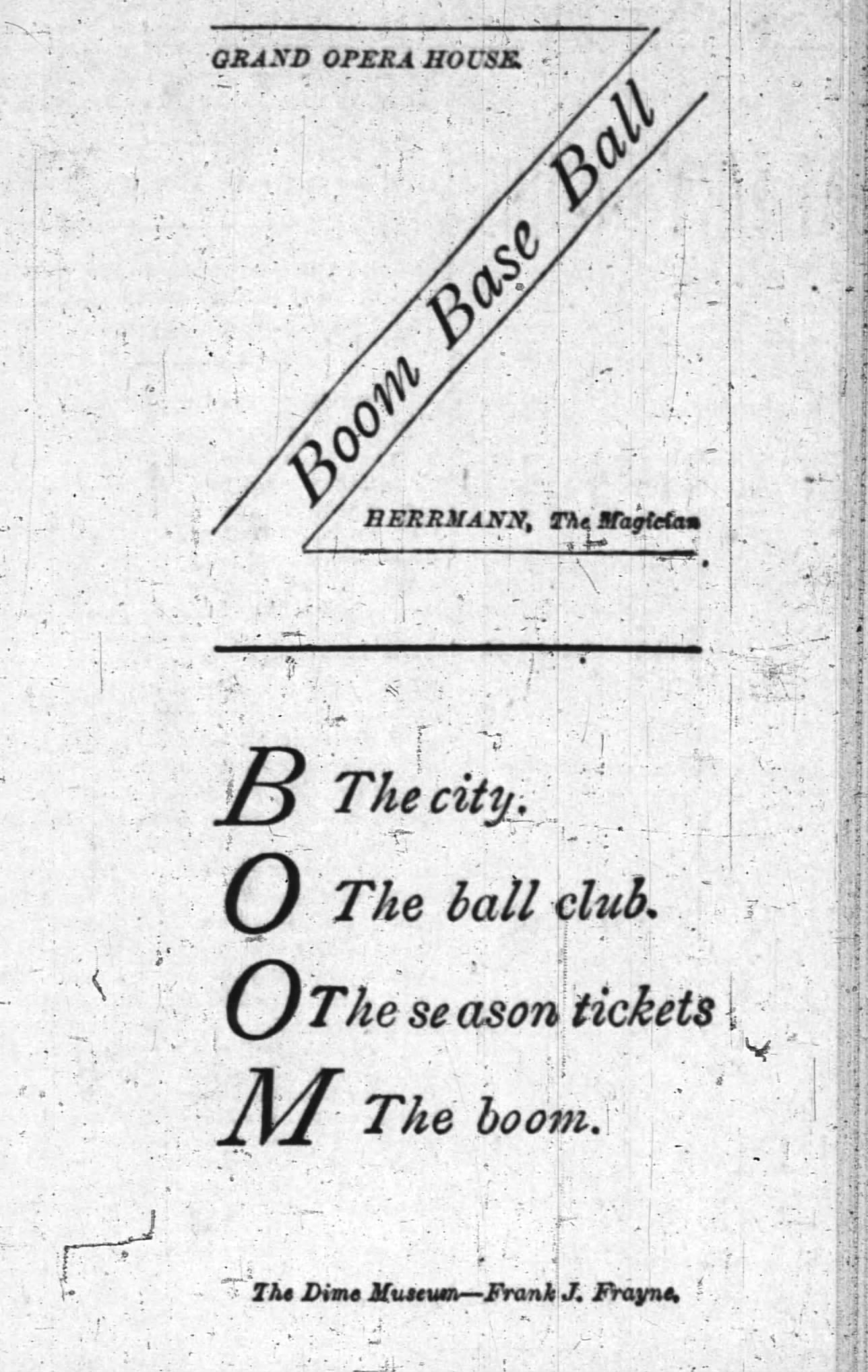
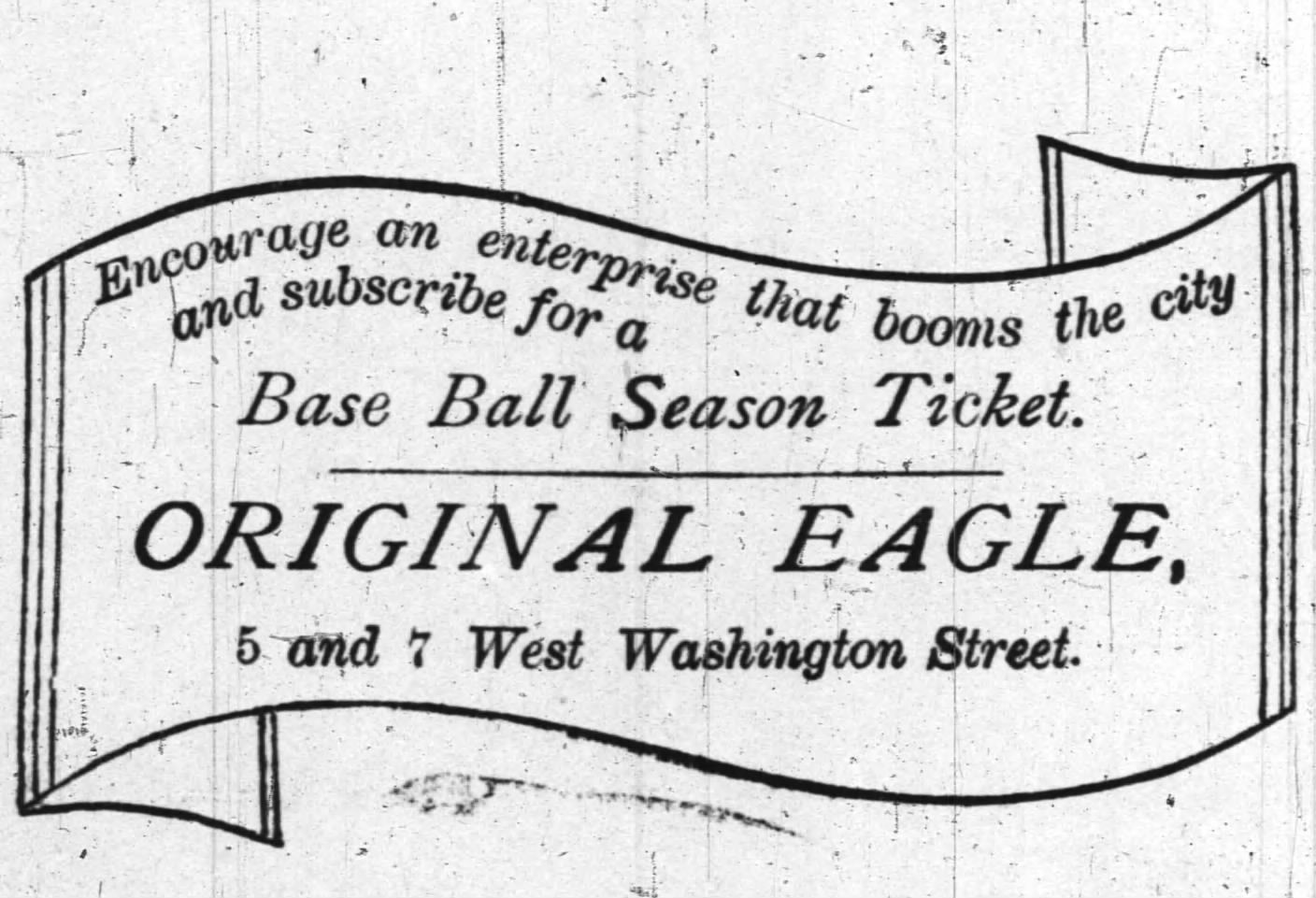
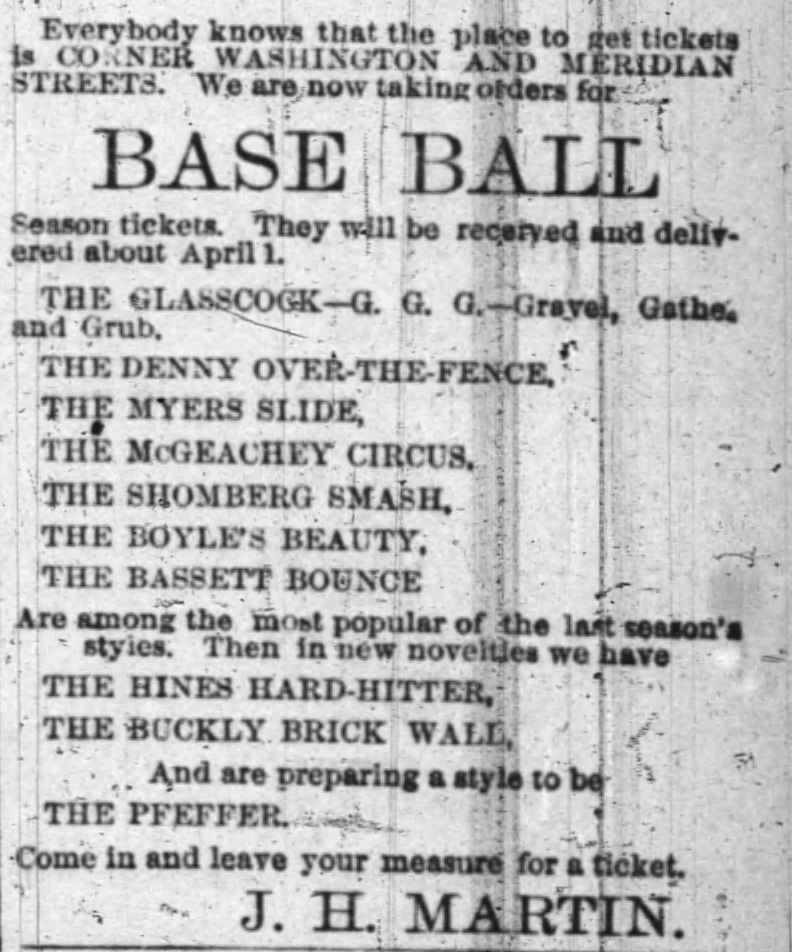
The paper organized a campaign called “Boom for Baseball.”  Sixty-eight local businessmen “representing the leading establishments in the city,” donated their advertising space back to the newspaper “for the purpose of setting forth the advantages that will accrue to the city, from the maintenance of a National League Baseball Club here.”

Brush told the paper:

“We want at least five hundred subscribers for season tickets, and with this as a guarantee, we can get the money we want.  If any such player as (Fred) Pfeffer or (Larry) Twitchell can be bought we can and will buy him, and we can get the club in first-class shape for opening the season.”

Season tickets were sold for $25 each, and Brush said “We will have a grandstand that will be a beauty, with all the latest improvements, so that there will not be one uncomfortable seat in it.  Then we will have a space set aside for carriages and a special department for ladies and their escorts.”

88indy4 88indy2

Some of the advertisements from Indianapolis' "Baseball Boom"  campaign

Some of the advertisements from The Indianapolis’ News’ “Baseball Boom” campaign

Most importantly, Brush assured the people of Indianapolis that they “would have a ballclub here that nobody would be ashamed of.”

He was wrong.

While not as bad as 1887, the Hoosiers got off to a 2-11 start, and struggled to a 50-85 seventh place finish, 36 games behind the champion New York Giants.

By 1889 Indianapolis had all but given up.  The team nearly went under before the season started.  In January a headline in The News said:

The Ball Club Gone

With debts of more than $5,000, the paper said Brush would “surrender the franchise” to the league.  Brush was able to raise enough capital to keep the club operating for one more sub .500 season (59-75), and another seventh place finish.  The only highlights for Indianapolis in 1889 was the arrival of 18-year-old Indiana native Amos Rusie, who posted a 12-10 record, and Jack Glasscock who hit .352, for the Hoosiers.

The team was dropped after the 1889 season, but not because of money.  The National League bought out Brush’s Hoosiers and the Washington Nationals.  Brush received a reported $67,000 for the team, he also received stock in the New York Giants as payment for former Hoosier players.  One year earlier when The News reported that Brush was on the verge of losing the team, the paper claimed “the franchise is now worth $15,500 cash.”  While that figure might have been low there was no doubt that Brush did well on the deal.  A year later he was president and majority stock holder of the Cincinnati Reds.

Indianapolis would only be a major league city one more time; in 1914 the Hoosiers were champions of the Federal League, but were relocated the following season, becoming the Newark Peppers.

Lost Advertisements–Opening Day, 1911

28 Mar

1911openingday

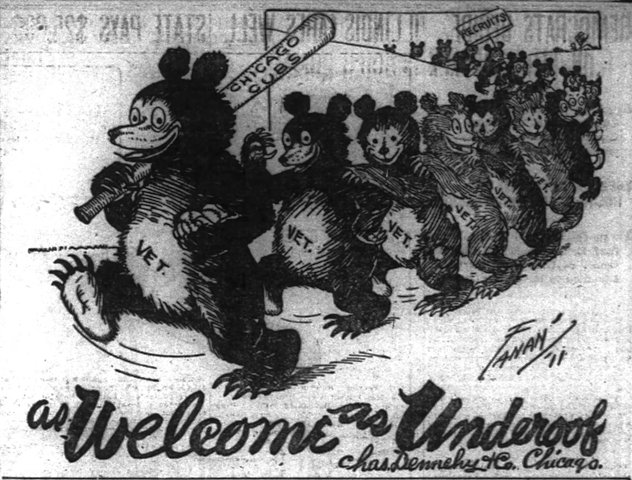
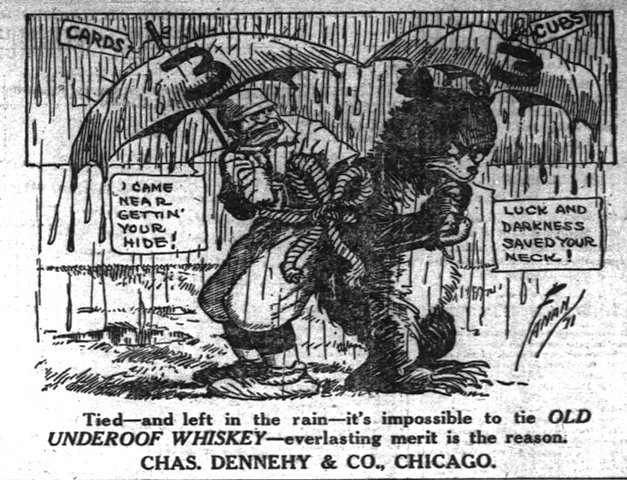
The above advertisement for Charles Dennehy Company, distributor of Old Underoof Whiskey,  appeared in The Chicago Inter Ocean on Opening Day, April 12, 1911.  The defending National League Champion Cubs met the St. Louis Cardinals at Chicago’s West Side Grounds.

The Chicago Tribune said:

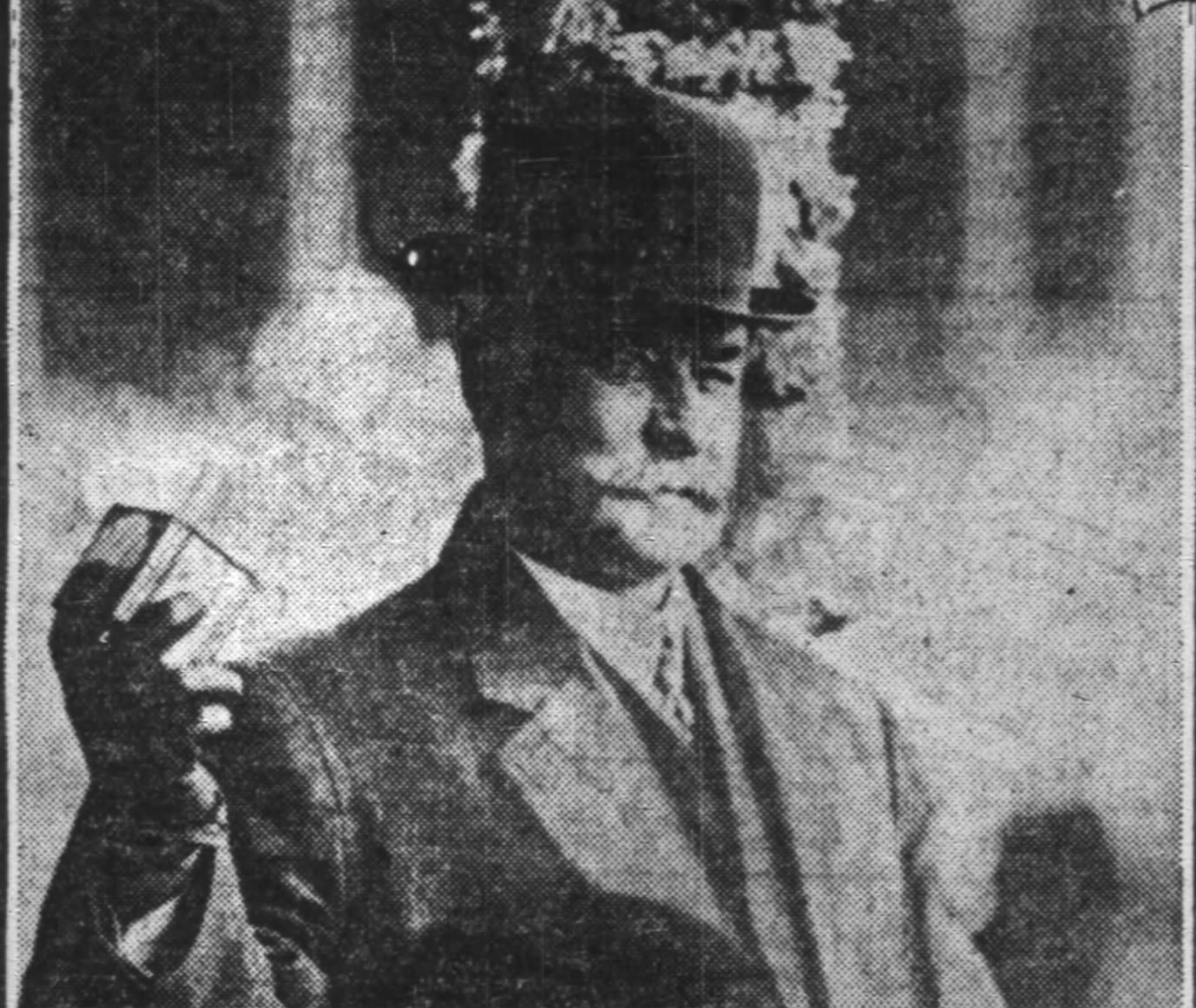
“Threatening clouds and misty atmosphere did not prevent the baseball public from of Chicago turning out for the opening.  There was almost a parkful [sic] of people there before the teams had begun their preliminary practice.  A brass band livened things up before the game started, and between innings a novelty in opening features was the presence of a woman who stood on the roof of the players’ bench and sang popular songs.  Mayor Elect Carter H. Harrison Jr.  from an upper box tossed out the ball that started the contest.  The entire park was draped with American flags.”

Carter Harrison at 1911 Cubs opener

Carter Harrison at 1911 Cubs opener

The game was called after 11 innings.  The Inter Ocean said:

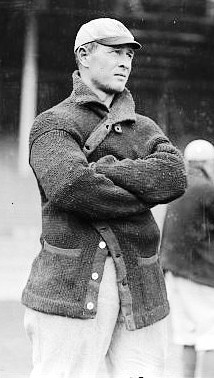
“Sometime, somewhere there may be such an opening game as was played at the West Side grounds yesterday when the thirty-sixth season of the National League was introduced with a 3 to 3 tie by the Chicago Cubs and the St. Louis Cardinals, but never again will a seventh position club of the season before hang the hoodoo on the league champions as Roger Bresnahan‘s crew did the trick on the Peerless Leader’s squad…It was a sin and a shame.”

Frank Chance, "The Peerless Leader"

Frank Chance, “The Peerless Leader”

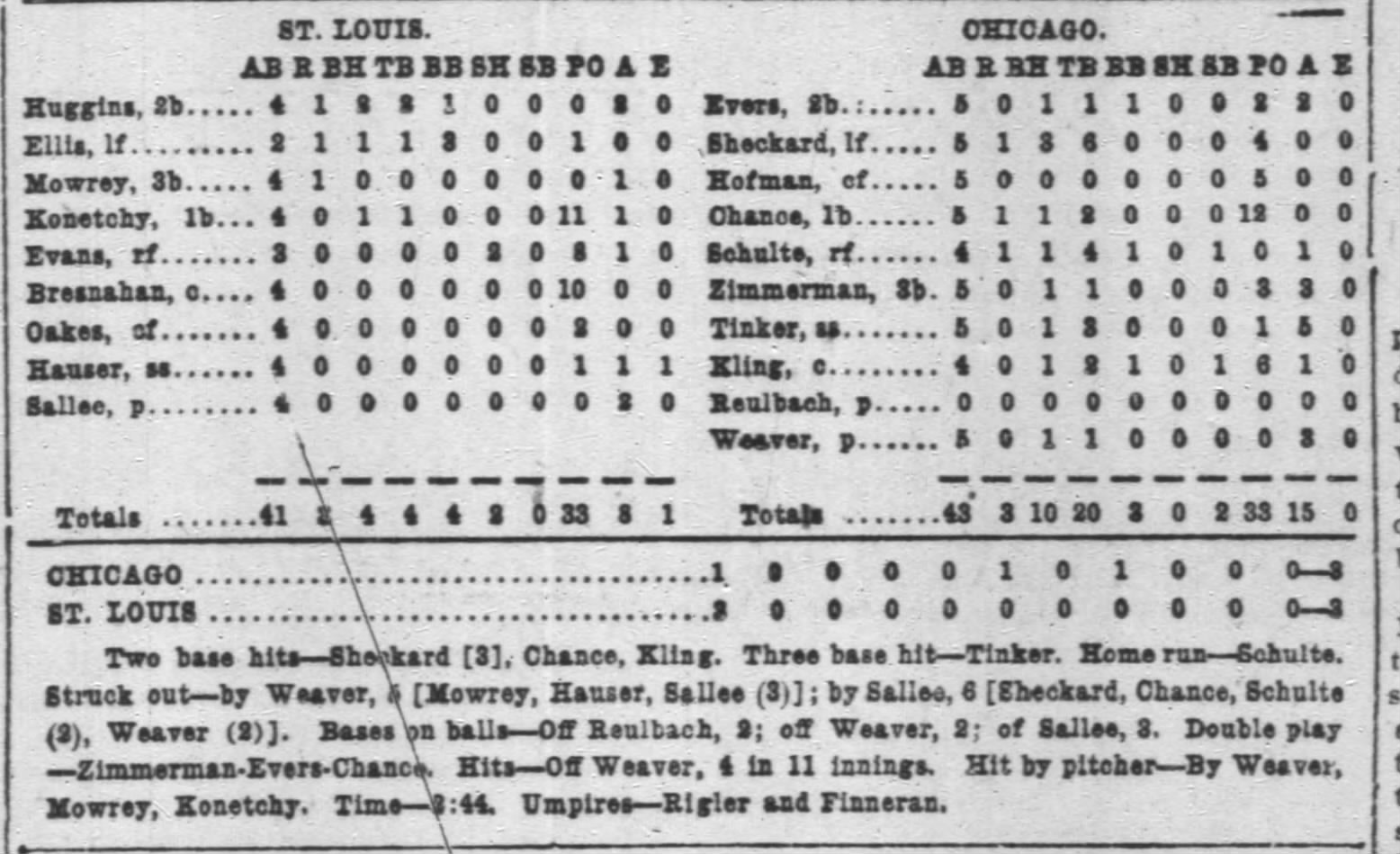
The Cardinals scored three runs in the first; starter Ed Reulbach–The Inter Ocean said he “was one wild critter–was pulled by Manager Frank Chance after throwing 10 straight balls to open the game, and was replaced by Orlie Weaver who finished the game.

The Tribune said the tie was the result of two “grievous errors of the mind.”

The first happened when Cubs third baseman Heinie Zimmerman fielded Bresnahan’s first-inning ground ball with runners on second and third:  “All Heine needed to do was toss the ball to the plate and one runner would have been caught, but he heaved to first base instead and the man coming from third (Mike Mowrey) scored, after he had actually stopped running.”

The other “grievous error” was made by second baseman Johnny Evers “incredible as it may seem, for Johnny is often talked of as the brainiest man on the team.”  Evers tried to score from first on Jimmy Sheckard‘s double in the first inning.  Cardinals first baseman Ed Konetchy took the relay throw and “there are none in the National League who can throw harder and  with greater accuracy”  Evers was thrown out by “ten feet” at the plate.

The Tribune said Chance “knows now that he acted against his better judgment in putting Ed Reulbach in to pitch the first game of the season.”  Reulbach had only appeared in 24 games in 1910 and was recovering from diphtheria (some recent references say Reulbach missed part of 1910 because his son had diphtheria–but several contemporaneous accounts say he suffered from the bacterial infection as well).

The box score

The box score


The Cubs went on to win 92 games in 1911, but finished in second place, seven and a half games behind the New York Giants.  The Cardinals finished fifth at 75-74.

Reulbach was 16-9 with a 2.96 ERA, but continued to struggle with control all season, walking 103 batters in 221 and 2/3 innings.

Below is another Old Underoof advertisement that appeared in The Chicago Examiner:

1911openingday2

Opening Day—1901

26 Mar

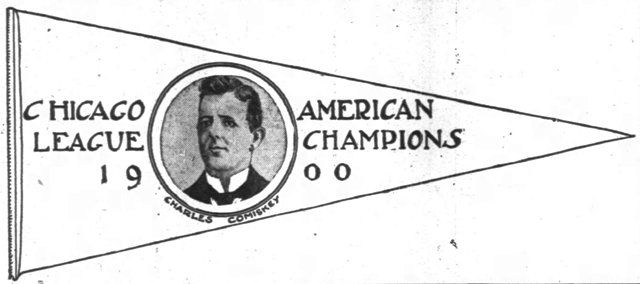
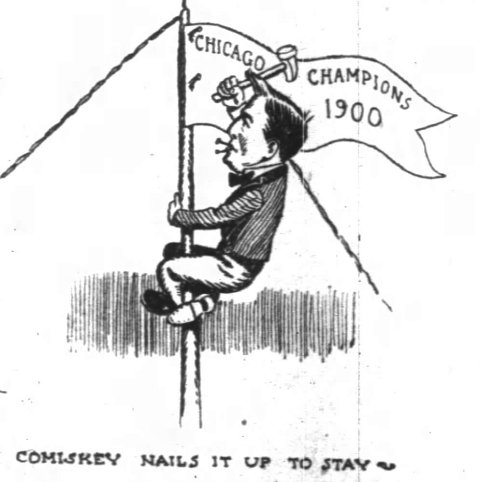
The Chicago White Sox opened the American League’s inaugural season as a major league on April 24, 1901, against the Cleveland Blues.  The three additional league games scheduled for the 24th were postponed on account of rain.

The Sox won the then-minor league American League championship the season before.

1900alchamps


Comiskey relinquished managerial duties in 1901 to Clark Griffith, the pitcher jumped from the cross-town National League Orphans for a reported $4,000; a $1,500 salary increase.

Clark Griffith

Clark Griffith

The opener at Thirty-Ninth and Wentworth included a parade, several bands, and speeches from many dignitaries—The Chicago Tribune said every member of Chicago’s City Council was on hand, but Mayor Carter Harrison, who had promised Comiskey he would appear to speak and throw out the first ball, “was kidnapped by William J. Bryan, who slipped into town unperceived. ‘Commy’s’ plans for having the Chief Executive start the opening game were shattered.”

The Tribune said American League President Ban Johnson also missed the game; he had traveled from league headquarters to attend the opener in Philadelphia “and it’s a 1,000 to 1 shot he was sorry when he found Comiskey was the only magnate who had squared himself with the weather man.”

Other than the absence of the mayor and the league president, the paper said the first game of the upstart league was a success:

 “Under the fairest skies the weather clerk could select from his varied stock of April goods; with a championship pennant floating high above them from the proudest pine of all Michigan forests; with 9,000 fans to cheer them from a pent-up enthusiasm that burst forth at every possible opportunity, the White Stockings open the American League baseball season on the South Side Grounds yesterday with a clean-cut victory over the aggregation from Cleveland.”

The Chicago Inter Ocean, which reported the attendance at 10,073 said:

“As a grand opening it was an unqualified success, something which Charles Comiskey can look back upon in after years with all the serene satisfaction of a baby who has just swallowed a tin Indian.  As a ball game it was a hideous nightmare, a cold and icy vision of the darksome night, a living horror, let loose to stalk adown a diamond field, hooting hoarsely…With pomp and ceremonial, with braying of bands and braying of fans, with an enormous audience gathered in the frapped stands, the American League season of 1901 was duly opened in Chicago, and the real champions, Comiskey’s White Stockings, began their campaign by giving the Clevelands all that was coming to them.  The afternoon was cold; the stands were Greenland, and the bleachers bore nets of icicles.  Yet 10,000 cranks and crankesses, keen devotees of the game.”

The Chicago Daily News said more than 14,000 fans were at the game:

“Promptly at 3:30 the two clubs lined up at the plate and, preceded by a “Rough Rider” band, marched to the flagpole at the south end of the field, where the championship banner was unfurled to the strains of ‘The Star Spangled Banner.’”

Cartoon of "pennant" being hoisted from The Chicago Tribune.

Cartoon of “pennant” being hoisted from The Chicago Tribune.

The Associated Press said the attendance was 8,000.

The Tribune said the crowd was enthusiastic despite the weather:

“There were cheers for everybody, from (William Ellsworth “Dummy’) Hoy, who couldn’t hear them, to (starting pitcher Roy) Patterson, the hero of many a hard-earned victory last year…there were flowers for (Dave) Brain, the youngest of the White Soxs [sic]…And at the end there was so much surplus exuberance that the bleacherites indulged in a merry cushion fight all through the concluding inning by way of celebration.”

Chicago scored two in the first and five in the second off Cleveland starter Bill Hoffer and cruised to an 8 to 2 victory behind Patterson.

The Inter Ocean said the most “ludicrous” play of the otherwise “uneventful” game took place in the sixth inning when Hoy attempted to steal third:

“(Catcher Bob) Wood threw wild, and (Bill) Bradley scooped up the ball way off from the cushion.  As Bradley, with no thought of the runner, turned to return the ball to the pitcher, Hoy, losing his balance as he ran, slid clear over third , out into the field and right into Bradley, his knee striking the ball clasped in Bradley’s hand.  It was possibly the first case on record of a man’s forcing a put-out on himself, and the crowd marveled greatly, perceiving that the science of the game had much advanced, and that there were new freckles every day.”

While the Chicago Orphans were losing their opening game in Cincinnati, The Tribune said the team’s president, James A. Hart, “was present and witnessed the game from a box at the south end of the grandstand.  He chatted with President Comiskey for some time and seemed to like the work of the players, but he did not voice his sentiments.”

Behind Griffith and his 24-7 record, the Sox won the league’s first pennant with an 83-53 record. Opening Day pitcher Roy Patterson was 20-15.  Cleveland finished seventh with a 54-82 record; Hoffer was 3-8 in 16 games when he was released in July, ending his major league career.

1901 Chicago White Sox

1901 Chicago White Sox

Comiskey and Hart were both members of their respective league’s “peace committee” at the January 1903 meeting in Cincinnati that led to the forging of the first National Agreement.


“Foster you are Released”

17 Mar

Elmer Ellsworth Foster’s career as a pitcher ended on August 26, 1884.  He had been out for three weeks with “an injury to the tendon in his right arm,” when he took the mound for the St. Paul Apostles in a Northwestern League game against the Milwaukee Brewers.  The 22-year-old was 17-19 with 1.18 ERA when he took the mound at St. Paul’s West Seventh Street Grounds.

The St. Paul Daily Globe said:

“When the popular favorite took his position in the box in the last half of the first inning the audience received him with an ovation of cheers, to which he responded by raising his cap.  A moment later he pitched the first ball, a sharp crack was heard distinctly all over the ground and the sphere went spinning ten feet to the right of the batter.  Foster turned pale, but stood in his position until the players in the vicinity reached him.”

He had “snapped the bone of the right arm just above the elbow,” and after Foster left the field a collection was taken up among the fans “A few minutes later it was announced that $172 had been collected.”

He made it to the major leagues two years later as an outfielder with the New York Metropolitans in the American Association, and played parts of five seasons in the American Association and National League.  A consistent .300 hitter in the minors, Foster hit just .187 in 386 big league at bats.

According to The Sporting Life, his manager with the New York Giants in 1888 and ‘89, Jim Mutrie considered him “one of the best fielders in the country, and the only reason New York ever let him go was because he didn’t show up well with the stick in fast company.”

Elmer Foster

Elmer Foster

Sportswriter Hugh Fullerton said he excelled at other things as well:

“The rowdy of the rowdies was Elmer Foster.  Handsome, well bred, clean cut and with it all, well educated and something of an actor.  Foster was in baseball for the fun of it.”

From the time Fullerton joined The Chicago Tribune in 1897 until he left Chicago for New York in 1919 Bill Lange was probably the only 19th Century player he wrote about more often Foster.

Foster’s  best season was 1890 (.248 in 105 at bats and 5 home runs) with Cap Anson’s second place Chicago Colts after being acquired in late August.

Foster started the season with his hometown Minneapolis Millers in the Western Association (he hit .388 in his first twelve games), but fell out of favor with Manager Sam Morton after he and a teammate named Henry O’Day were arrested and fined in Milwaukee for public intoxication in May.

Foster was benched, but the team refused to release him, and by mid-July he was ready to take the Millers to court.  The St. Paul Daily Globe said:

“(Foster) threatens to bring suit against the management to compel its members to give him his release.  His claim will be that they are unjustly preventing him from earning a livelihood.  There is a possibility that the threat may be only a bluff, but should such a trial be put on, it will be of much interest in Western baseball circles, as it will be the first of its kind in this section.”

The Millers finally chose to release Foster rather than fight a lawsuit.  Foster was rumored to be headed to several different teams, but finally signed with the Colts on August 27.

After his strong September in 1890 Foster began the ’91 season as the Colts center fielder, but it didn’t last.

Fullerton said Foster sealed his fate with Anson during the opening series:

“We were going to Pittsburgh, and just before we arrived in town on the unearthly jump from Chicago to Pittsburgh, via Cleveland, Anson came along and sat facing us.

“’Foster,’ He said ‘The next time you take a drink, or anyone on the club takes a drink with you, I’ll release you.’

“’All right, Cap,’ said Foster, cheerfully.

“We arrived in Pittsburgh, and while Anson was registering the club at the desk Foster said: ‘Let’s go have a cocktail.’

“’Better be careful, Elmer, the old man is sore,’ I remarked.

“But we went.  The mixologist had just strained the cocktails into the glasses when Foster, looking into the mirror, spied Anson in the doorway.  He turned and, bowing low, said sweetly “Captain anson, will you join us for a drink?’

“’No,’ thundered Anson.  “Foster you are released.

“And now that I am released, Captain Anson,’ said Foster, ‘will you join us in a drink?”

Unlike many of Fullerton’s story, the basic facts (if not the part where he included himself in the story) are confirmed by contemporaneous accounts.  The Chicago Tribune said on April 26 after the Colts four-game series with the Pirates:

“Elmer Foster is not with the club and he has probably played his last game with it.  He and (Pat) Luby last night at Pittsburgh were drinking and Anson fined each $25 and ordered them to go to bed.  They paid no attention to the order and the fine was increased to $50.  This morning when the team was ready to go to Cincinnati Anson gave foster a ticket to Chicago and sent him home.”

Luby was not sent home and lost to the Reds 1 to 0 the following day.  He was fined several times for drinking during the 1891 season, and after a promising 20-9 rookie season in 1890 he slipped to 8-11, and followed it up with an 11-16 season in 1892 before Chicago let him go.

Foster was suspended without pay and finally released on May 11.  He was immediately signed by the Kansas City Blues.

Foster played well in Kansas City, hitting .300 in 70 games for the second place Blues, but was released in August.  The Kansas City Star said:

“One of the sensations of today is the unconditional release of Elmer Foster whose behavior on the present trip has been disgraceful”

The paper said Manager Jim Manning was forced to make the move, not just because of Foster’s drinking, but because he “has been largely instrumental in leading other members of the team astray.”

His replacement, Joseph Katz, acquired from the Grand Rapids Shamrocks in the Northwestern league hit just .225 in the final 25 games.

In December of 1891 The Minneapolis Times said:

“Elmer Foster, the ballplayer, yesterday secured $25,000 through the will of his dead mother, and today announced his permanent retirement from the diamond. “

With the exception of one game in 1895 (he went 1 for 2) with the Millers, Foster was true to his word and quit baseball at the age of 29.

Foster retired to Minneapolis where he operated a piano and organ store with his brother, did some acting and occasionally said he was considering running for the Minneapolis City Council or the Minnesota State Legislature, although there is no record of his ever officially filing to run for office.  He also worked as a scout for the Pittsburgh, and signed Ralph Capron out of the University of Minnesota for the Pirates.

After Fullerton moved to New York and stopped writing about Foster the “The rowdy of the rowdies” faded into comfortable obscurity in Minnesota.  He died in 1946 at age 84.

Some of Fullerton’s less reliable stories about Foster on Wednesday.

Things I Learned on the Way to Looking up other Things #6

12 Mar

Umpiring “Revolutionized”

The Chicago Inter Ocean reported that an “innovation in baseball” would be introduced during the second game of a September 9 double header at Chicago’s South Side Park between the White Sox and the Boston Americans.

“The astonishing feat, an apparent impossibility, will be accomplished by the use of colors, and the inventor, George W. Hancock, expects the umpiring business to be almost revolutionized.”

hancock

George W. Hancock

Hancock was the inventor of indoor baseball in 1887; the game that evolved into softball.

“(Umpire) Jack Sheridan will wear a red sleeve on his right arm and a white one on his left claw.  For a strike he will wave the right arm, and for a ball the left one and the flash of the colors can be seen by people seated so far away that the voice even of Sheridan, the human bullfrog, would be inaudible.”

The “innovation” would likely have benefited one player, the popular center fielder of the White Sox, William Ellsworth “Dummy” Hoy, who was deaf.  But no mention was made of Hoy in the description of Hancock’s plan.

Hoy

Hoy

The “astonishing feat” turned out to be so insignificant that The Inter Ocean failed to even mention it in the summary of the double-header which the Sox swept.  Hoy did not appear in either game.  George W. Hancock’s plan was never mentioned again.

Luminous Ball

Another innovation that promised to revolutionize the game that never came to be was the luminous ball.  The Reading Times reported on the process in 1885:

“Charles Shelton, the leading druggist of Bridgeport, has discovered a compound which, when applied to a baseball, renders that object luminous.  One of the drawbacks of playing baseball at night under the electric light is the inability to see the ball when thrown or batted into the air with the black night background of sky behind it.  By saturating it with Mr. Shelton’s compound the ball while in motion is luminous.  At rest it does not retain any light.  The illuminating ball retains its meteoric irritation for 45 minutes.”

There is no record of Mr. Shelton’s invention ever being used in a professional game.

What’s a Dog Worth?

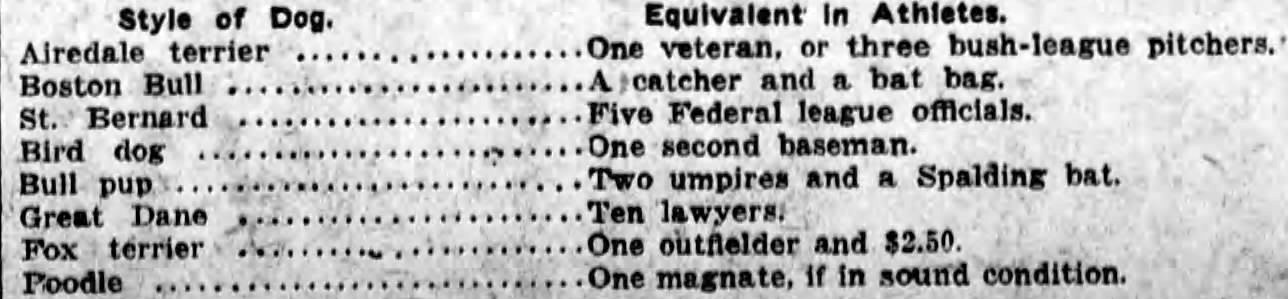
As part of the Federal League’s antitrust lawsuit against the American and National League’s affidavits were submitted from players detailing how organized baseball controlled the destiny and salary of player.  Mordecai “Three Finger” Brown, who jumped from the Cincinnati Reds to sign with the Federal League’s St. Louis Terriers, swore in his filing that players, on at least two occasions, had been traded for dogs.

William A. Phelon, of The Cincinnati Times-Star and “Baseball Magazine,” said:

“This thing of trading dogs for ball players—as outlined in the Federal affidavits—should be put upon a sane and sensible basis.”

Phelon provided a “definite standard and a set of unit values” for baseball to follow:

phelondogs

McMullin’s Long Route to the Plate

Before Fred McMullin became the least famous of the eight members of 1919 Chicago White Sox who were banned from organized ball for life, he was a popular player on the West Coast.

Fred McMullin

Fred McMullin

The (Portland) Oregonian told a story that was purported to have taken place when McMullin was a member of the Tacoma Tigers in the Northwestern League in a game with the Seattle Giants:

“He came in from third on a dead run and made a slide for the plate.  McMullin knew he didn’t touch it, but he was afraid to slide back, as the catcher had the ball in his hand.  The umpire also knew he didn’t score, but he said nothing, for that was none of his business.

“Fred dusted off his uniform and stalked nonchalantly to the bench.  A couple of Seattle players yelled for a decision.

“‘He wasn’t safe, was he?’ demanded (Walt) Cadman, who was catching for Seattle.

“The umpire shook his head no.  At that Cadman, holding the ball in his hand, dashed over to the Tacoma bench to tag McMullin.  Fred waited until he almost reached him and then slid to the other end of the bench.

“Cadman followed him, and as he did s slipped in some mud and fell to his knees.  McMullin leaped up from the bench, dashed for the plate and touched it.  The umpire called him safe.”


“Radbourn would only Accept the Money on Condition that the Money be bet on him”

28 Feb

Like most 19th-Century players, Arthur Irwin was convinced the game didn’t get any better after he played.  He talked to a reporter from The Buffalo Times in 1906 and said there still had never been a pitcher who was better than one of his former teammates.

Arthur Irwin

Arthur Irwin

Irwin said:

“In my opinion (Charles “Old Hoss”) Radbourn was the greatest pitcher the world ever saw and I doubt if his equal will appear.  He had a spit ball and worked it to perfection, only it was not known under that name.”

Irwin’s recollections of Radbourn highlight how open gambling was in 19th Century baseball:

“I remember on one occasion when we (the Providence Grays) were playing the Boston team one of our stockholders came to the hotel the night before the game and said he had wagered $6,000 on the Providence club.  Then he told Rad that he would give him $500 if he would pitch.  Radbourn would only accept the money on condition that the money be bet on him and the $500 was so placed.  The afternoon of the game found Radbourn in grand form and he made the Boston players look like a bunch of minor leaguers, not one of them scoring.”

If the story is not apocryphal, it could refer to Radbourn’s 4-0 shutout of the Beaneaters on August 12, 1884 in Boston—it was his only shutout there while he and Irwin were teammates.

"Old Hoss" Radbourn

“Old Hoss” Radbourn

Irwin also told the reporter about an exhibition game in 1884 against the Toledo Blue Stocking in the American Association:

“When we arrived the night before the game we found that they were betting $10 to $7 against us.  That same evening the mayor of a small town some few miles away drifted into the hotel and during the conversation remarked that he guessed we were not very anxious to win the game.  Naturally, we asked why he said that and he said the odds were against us, with no Providence money in sight, but he was willing to bet $2,500 on us if Radbourn pitched.  It was not Radbourn’s turn, but when the mayor supplemented his remarks by offering to give Rad $100 if he went into the box, the offer was snapped up.  Toledo had such stars as Curt Welch and (Tony) Mullane.  Welch, who was the first man up, got to first base.  After that there was nothing to it and not another man reached first during the entire game.”

Not only were no current pitchers as good as Radbourn, Irwin said no current catcher was nearly as tough as another of his teammates with the Worcester Ruby Legs in 1880:

“One of the most remarkable exhibitions of catching I ever saw was performed by Charles Bennett…As you know, we did not use gloves in those days and the pitcher was allowed to take a hop and step before throwing the ball from the box, which was only 45 feet from the batter.  On three successive days Bennett caught 14, 15 and 16-inning games without any protection.  The following day we were booked to play New York and Bennett went in to catch.  After half a dozen balls had been pitched , Charley suddenly dropped his hands and walked away from the plate.  I at once ran over to him and a glance at his hands told me all I wanted to know.  Both hands were black and blue from the base of the fingers almost to the wrist and the bruises went clear through the hands.  Of course it was impossible for him to continue, but imagine the torture he must have suffered before he was forced to quit.  I don’t believe you could find a catcher today who would go through that experience.”

Charlie Bennett

Charlie Bennett

Irwin also didn’t have much use for the belief that the game had progressed in terms of strategy since his playing days:

“It is amusing to hear (John) McGraw and other talk about the wonderful progress made in playing scientific baseball.  I am sure we put up just as clever a game in the 80s as they do today, but we did not have fancy names for our plays.  We worked the squeeze, hit and run and other tricks.  When I first came to the Philadelphia club (1886) I worked the trap play and got away with it.  There were men on first and second and the ball was hit into short left field.  I yelled for (George) Wood to let me have it, although it was his ball.  Then I let it drop through my hands and the bleachers let out an unearthly holler.  I picked up the ball; shot it to second in time to tag the man there and then the other man was easy.  We had taken our places on the bench before the crowd got wise to the play and then the cheers more than made up for their hisses.”

Alternate Realities

26 Feb

Philip “Leather Fisted Phil” Powers went from respected major league catcher to one of the National League’s most controversial and disliked umpires.

Phil Powers

Phil Powers

One of his most explosive episodes of his umpiring career involved a run in with Reds pitcher Tony Mullane in Cincinnati. The incident took place at the end of a 7 to 4 loss to the Chicago White Stockings on April 30, 1891; Mullane walked ten batters.

The Cincinnati Enquirer saw it this way:

 “Phil Powers’ Very Yellow Umpiring “

The Chicago Tribune:

“Mullane’s Cowardly Assault”

The Tribune said Cincinnati had turned on a local hero:

“That either baseball cranks are devoid of memory or that gratitude does not enter into their composition was amply demonstrated today at the Cincinnati ball park.  Back in 1882 a sallow-complexioned youth wore a Queen City uniform, and by his clever work behind the bat aided in no small way to bringing the only championship banner that ever waved over the Queen City.  That youth was Phil Powers.  Today that same man, grown gray in active service on the ball field in various capacities, was assaulted by Tony Mullane on the ball field after the game and 700 brutes in the stands urged the curly-headed twirler on in his dastardly work, and all because of fancied wrongs at Powers’ hand in today’s game.”

The Enquirer said Mullane was the aggrieved party:

“Phil Powers’ umpiring was something awful.  Mistakes were not the exception; they were the rule.  He gave Tony Mullane a terrible roast.  His miserable work was enough to rob any pitcher of his nerve, but it did not rattle Tony.  He stood up like a hero under Powers’ Jesse James tactics, and pitched ball that would have been a winner under ordinary circumstances.  The Chicagos owe their victory to Mr. Powers, not their own efforts.”

Tony Mullane

Tony Mullane

The papers couldn’t even agree on how much Mullane was fined during the game The Tribune said $75, The Enquirer said $150; the  altercation after was also given a local spin.

The Tribune version:

“After the game was over Powers started across the field with Mullane at his heels pouring out a tirade of abuse which made the air in the vicinity assume a sulfurous odor.  Powers with an expression of scorn on his face walked on towards the clubhouse.

“Mullane, like a tiger lashing itself into a fury, grew more and more angry, until finally he lost all self-control, and drawing back struck Powers in the face with a clenched fist.  The latter immediately increased Mullane’s fine to $250…The scene attracted the attention of the crowd, which, be it said to the shame of Cincinnati, encouraged Mullane’s ruffianly conduct.”

The Enquirer saw it differently:

“Tony Mullane and Umpire Powers had some trouble near the clubhouse.  Powers was to blame for the controversy.  He gave Mullane an awful deal while the game was in progress and then soaked him $150 in fines simply because Tony grumbled and asked him to come closer to the bat and pay more attention to his delivery.  On the way down to the clubhouse Powers said to Mullane in a sort of apologetic manner:  “I couldn’t rob the Chicagos to please you.’

“’Oh, get out,’ said Mullane.  ‘No one asked you to rob them.  I only wanted what belonged to me, and you robbed me bald-headed.’

“Powers said something in return and Mullane replied angrily.  Then Powers put on another fine of $100.  This so incensed Mullane that he drew back as if to assault Powers.  The latter in a most exasperating way put his face right up against Tony and said: ‘I dare you to strike me.’  It was a cowardly act on the part of Powers, for he well knew that if Mullane hit him it would mean disgrace…Mullane almost forgot himself.  It was all he could do to restrain himself.  He simply pushed Powers’ face away.  Then other players separated them.”

The papers did agree on the final total of Mullane’s fines: $250.  Mullane beat the Cleveland Spiders 7 to 4 two days later with Powers as umpire.  The game went off without incident.