Tag Archives: New York Giants

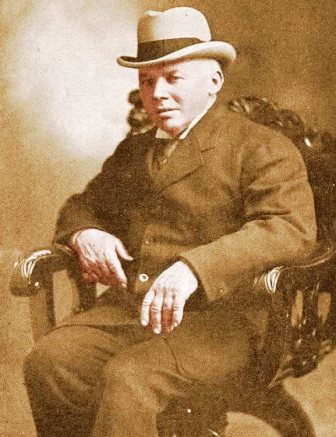
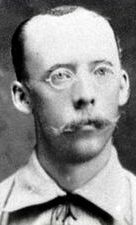
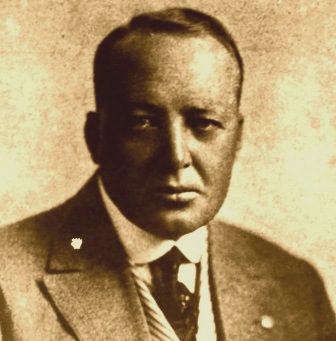
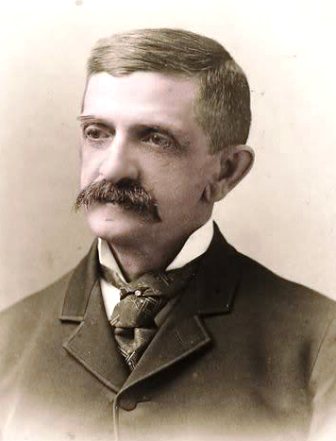
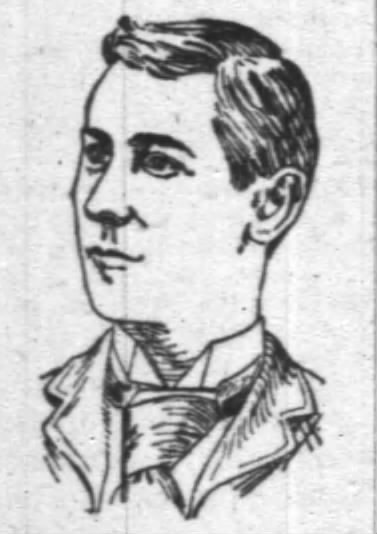
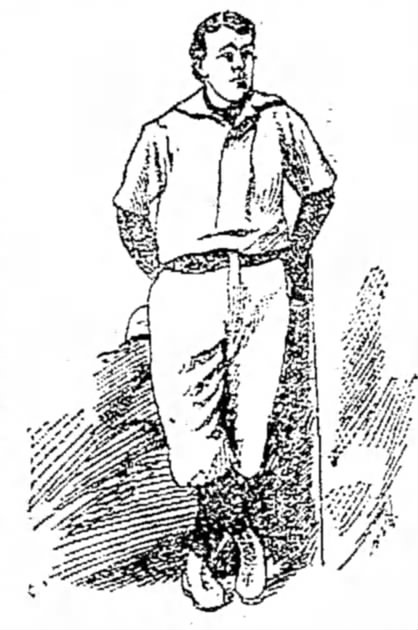
Frank Bancroft

14 Jul

When Frank Carter Bancroft died in 1921 at age 74, “Spalding’s Official Baseball Guide” said:

“His executive ability and Knowledge of Base Ball, combined with the fact that he was for sport first and the show element of Base Ball secondarily, rendered him one of the most competent of men to handle the affairs of a professional team.”

Frank Bancroft
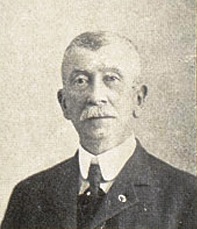
Frank Bancroft

While working in the front office of the Reds in 1892, Bancroft talked with Harry Weldon, sports editor of The Cincinnati Enquirer about some of the players who got their start with his teams.  He also didn’t seem to mind taking a swipe at a couple former players:

“Probably no man now before the public except Harry Wright or Adrian C. Anson have had a longer or more varied experience with the intricacies of the great National Game than Frank C. Bancroft.  He never wore the spangles, like a great many other managers, but he has been connected with the game in a managerial capacity since the early seventies.  ‘Bannie’ is one of the wittiest men in the profession and he has a fund of anecdotes about players and plays that are well worth hearing.  Many of the great baseball stars now before the public made their debut under Mr. Bancroft’s management.  Many of them who are now drawing $4,000 or $5,000 a season worked under Bannie for about one-tenth that amount and were glad to get it.  Bancroft was one of the leading lights in the original New England League, which graduated a great many of the stars of today.

“At the present time Mr. Bancroft is business manager of the Cincinnati Reds.  He has nothing whatever to do with the players. All of that part of the club’s affairs being under the supervision of Captain (Charlie) Comiskey.  All Bannie has to do is look after the gate, railroad rates and dates.  The other evening the veteran manager was in The Enquirer office and grew reminiscent.  His recital of the details of the debut of some of the stars is worth reproducing.

Harry Stovey, one of the greatest ballplayers today, began his professional career under Manager Bancroft.  He began his career in the pitcher’s box and graduated out of the ranks of a Philadelphia amateur team called the Defiance in 1877 (the Philadelphia Defiance were a professional team, part of the league Alliance).  Manager Bancroft heard of him, and in 1878 engaged him as a change pitcher for the New Bedfords.  G. Washington ‘Grin’ Bradley was the regular pitcher of the team, and as he was an every-day pitcher Stovey was never allowed an opportunity of displaying his pitching abilities on the New Bedford team.  He had to be content with warming the bench until fate was kind and he had a chance.

Stovey

Harry Stovey

“‘Stovey played his first game with our team at Baltimore,’ said Mr. Bancroft.  ‘we were making an exhibition tour when John Piggot, the first baseman, was taken ill, and as we only carried ten men, Stovey was called on to make an attempt to play first base.  His maiden effort was a brilliant one—so brilliant that it lost Piggott his job and made Stovey a fixture on first.  He had at least twenty putouts, no errors and several cracking hits to his credit that day.  He played the season with us, and his fame spread so that he was signed by the Worcester (Ruby Legs) League team and afterward with the Athletics Stovey’s salary the first season in New Bedford for $50 a month.  Now he is paid nearly that much a game.’

George Gore, the crack center-fieder of the New Yorks is another player who came into prominence with the New Bedfords that year.  Gore’s home was in Maine, at a little town called Saccarappa…Gore was about as green a specimen as ever stepped into the business.  He played a few games with the Fall Rivers, and then the New Bedfords got him.  He was a big, awkward country boy then, but he could run like a deer and hit the ball like a trip hammer.  Gore signed with the New Bedfords under Manager Bancroft for $50 a month, but he did not stay with them long.  His terrific batting attracted the attention of the whole baseball world, and soon the more prominent clubs were after him.  While the Chicagos were in Boston the late lamented (William) Hulbert, President of the National League, who was with them, ran up to New Bedford to have a talk with Gore.  Luck was with big George.  He had his eye with him, and made three home runs in the game.  That feat settled his fate.  Before Hulbert left New Bedford he had Gore’s name to a contract to play in Chicago in 1879 at $150 a month.  His career since that time is well known.  Today he is yet a great hitter, and reached first base as frequently as any player in the business, by either hits, errors or bases on balls.  His ability to reach first causes him to be selected to head the battery list of the New Yorks.

Arthur Irwin is another player whom Manager Bancroft put in the business. ‘He made a grand impression in his opening game with me,” said Manager Bancroft.  ‘I was then manager of the Worcester League team, and we were on the hog train for a while, owing to Charlie Bennett’s glass arm and Buck (William “Farmer”) Weaver’s faint heart.  Matters were so bad that a crisis was at hand.  A meeting of the stockholders of the club was called, and it was voted to place the team in my hands for one month, and if no improvement was shown at the end of that time I was to be given the chase.  It was a dying chance for me, and you could gamble that I had my eyes and ears open for a savior of some kind.  Arthur Irwin was then playing with an amateur team called the Aetnas, of South Boston, and I engaged him to play short with the Worcester.  (J. Lee) Richmond, the once famous left-handed pitcher, who played here with the Reds in 1886, was then with the Brown University team and he was telegraphed to come for a trial.  We played the Chicagos that day, and we shut them out, only one man getting first base.  Irwin made a great hit at short, and Richmond was a wizard.  Irwin was a fifty-dollar-a-month man, and that was the start of his professional career.  Richmond is now a physician at Geneva, Ohio.’”
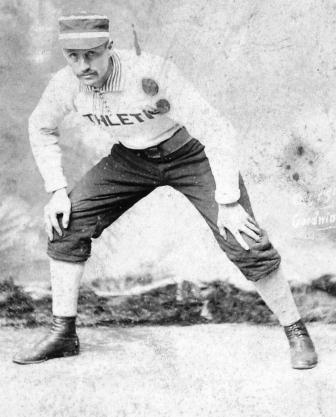
The game Bancroft referred to was an exhibition between Worcester (a member of the National Association) and the National League’s Chicago White Stockings played on June 2 in Worcester. Richmond walked the first batter, Abner Dalrymple, and then retired the next twenty-one before the game was called after seven innings.  The Chicago Tribune said Richmond struck out 8.  Worcester tagged Frank Hankinson for 12 hits and 11 runs (Chicago also committed 11 errors).  Bancroft was correct that Richmond became a physician, but by 1892, he was no longer practicing and was working as a teacher in Toledo, Ohio.
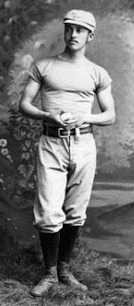
J. Lee Richmond

J. Lee Richmond

“Big Roger Connor of last season’s New Yorks, but now of Philadelphia, received his professional introduction under Manager Bancroft.  ‘It sounds queer to say that such a cracking hitter as Roger Connor was ever released for poor batting, but such was the case’ said Manager Bancroft

“’I had him with the New Bedfords in 1878, but he was hitting so poorly that I released him.  He afterward signed with the New Havens the same season, but the disbanded.  Roger left New Haven and went to Waterbury, his home, where he joined an amateur team in that city called the Monitors.  Up to that time he had batted right-handed, but he decided to turn around and try it left-handed.  The change saved his life.  He blossomed out as a great slugger, and his reputation has been growing ever since.

“Connor, like Stovey, began his professional career at $50 a month, and has since climbed to the top rung of high salaried players.  Many young players of today should look upon these as examples for honest and temperate habits have enabled them to remain at the head of the profession, while the path is strewn with a multitude of others who might have been where they are if they had not thought this world was a continuous round of gaiety and fun and discovered their mistake when it was too late.”
 

“No Exhibition was ever Received in this City with more Enthusiasm”

2 Jul

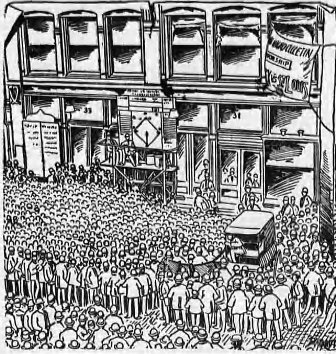
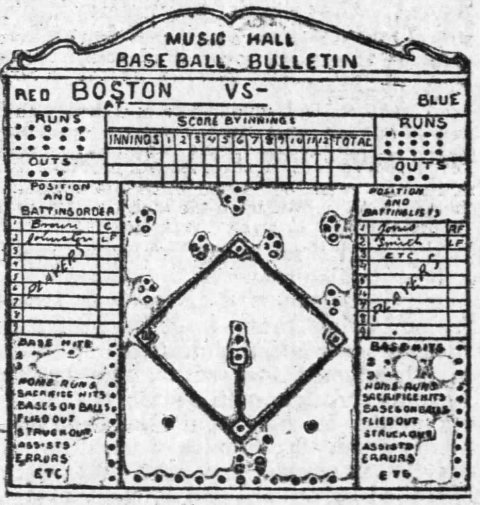
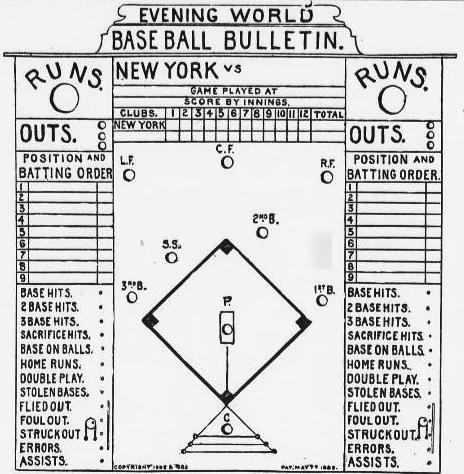
The New York World unveiled a newly updated attraction for baseball fans on August 6, 1889; the “Baseball Bulletin,” a version of which had also been introduced at the Boston Music Hall earlier that summer.

The Boston Music Hall "Bulletin Board."

The Boston Music Hall “Bulletin Board.”

The Associated Press said some fans thought the board was “an advantage over the actual game, in that it not only reproduces the plays graphically and simultaneously, but it keeps at the same time a simple and conspicuous record of the contest.”

The New York World's "Bulletin Board."

The New York World’s “Bulletin Board.”

The Boston Herald said their board measured “fifteen feet square.”  New York’s board was an improved version of one that had been used the previous October for the Giants six game to four World Series victory over the American Association’s St. Louis Browns.

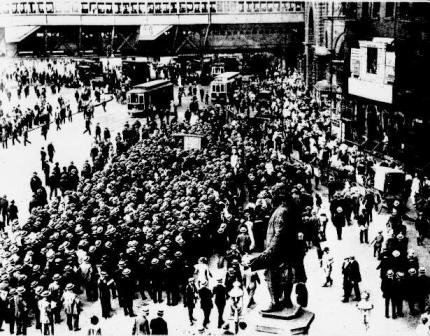
The crowd on Park Row for the 1888 World Series

The crowd on Park Row for the 1888 World Series

The board was the creation of  reporter Edward Van Zile of The World; Van Zile received a patent for the invention, although it was another member of the paper’s staff, Publisher Joseph Pulitzer’s secretary Edwin A Grozier, who turned it into a profitable enterprise. After purchasing the original rights from Van Zile, Grozier improved the design and received his own patent.

The World said the new version was a bigger sensation than the one introduced the previous October:

“’Perfection’ is the word which expressed the verdict of the baseball public who had the good fortune to witness the game between the New York Giants and Baby Anson’s team on The  World’s Baseball Bulletin Board yesterday afternoon…it is safe to say that no exhibition was ever received in this city with more enthusiasm than was the baseball bulletin.

“And the crowd too!  What a vast number!  There must have been fully 10,000 people in the audience, and the way they cheered when the Giants made a run was a sound that would have made Baby Anson sick.”

The presentation of the game took place on New York’s “Newspaper Row” (Park Row), with a crowd on the east side of the street

“(E)xtending from above The World Building to far below it (and) on the west side of the street the crowd was much larger.  There was a long line of people from Mail Street almost down to the other end of the big Federal Building.

“No point from which the game could be witnessed was left vacant.  The boys climbed up and lodged themselves in among the pillars of the Post Office…Even the lamp post was monopolized by the urchins, and when our boys made a good play they generally led the cheering.”

The “expert board operator placed the Chicago men in the field,” for the first inning, and leadoff hitter George Gore at the plate:

“When (Gore) slid down to first base the crowd were just ready to cheer, but they saw him put out and they reserved their applause for another occasion.

“They did not have long to wait, however, for (Mike) Tiernan and (Buck) Ewing  each succeeded in gaining bases, and then big Roger Connor was placed over home plate

“The crowd held its breath in anticipation of what was to come.  Their enthusiasm was drawn up to a high pitch, and was just waiting for a chance to break its bonds.  And they got it!  The little red disk representing Connor slid up to first and Tiernan slid across home plate.  Then there was a volley of cheers.  It broke forth clear and strong, and the sound could be heard blocks away.

“Up on the tops of the tall buildings in the neighborhood the cheers of the crowd could be heard resounding forth as a victorious army returning from battle.

“And it was all the same through the game. A great many people were attracted to the spot by the cries of the crowd, and when they saw the baseball bulletin they all united in declaring it to be the greatest thing they had ever seen.”

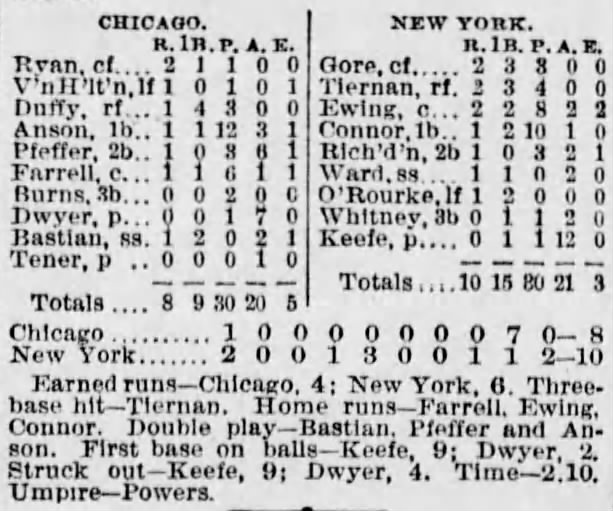
Chicago scored seven runs off Tim Keefe in the ninth to tie the score at 8.  The crowd’s “disapproval resolved itself into a continued groan.”

The Giants scored two runs in the tenth, and when the white Stockings came to bat in the last half of the inning:

“(T)he crowd watched more intently than at any time before.As each Chicago man went out there was a yell, and when they all went out without having made a run it was impossible to say a word that could be heard.”

The Box Score

The Box Score

The paper commemorated their innovation with a poem:

A boy was passing down the street,

Another lad he chanced to meet;

‘I’ll bet,’ he said, ‘we’re licked once more.

What is the score?’

A merchant coming down that way,

Lifted his bearded head so gray;

And ceased o’er book and cash to pore—

‘What is the score?’

A preacher wrestled with his text,

And wondered what he’d best say next;

Then called out through his study door;

What is the score?’

The Mayor in his office sat

And pondered over this and that,

The said: ‘I’m sure the game is o’er.

What is the score?’

If they had only chanced to go

Into the middle of Park Row,

And see the bulletin of The World,

And the glorious pennant there unfurled,

They’d never ask the question more

‘What is the score?’

The  World predicted the initial crowd was just the beginning:

“Today’s game between the Chicagos and the New Yorks will be duly recorded on the board.  There is room for everybody to see, and it is expected that the crowd will be twice as large as yesterday.”

The following day the paper did not say the crowd had doubled—to 20,000—but claimed it was “The largest crowd that had ever been on Park Row,” for the Giants 4 to 2 victory over the White Stockings.

Crowds continued to come to Park Row as the Giants battled the Boston Beaneaters and won the pennant on the final day of the season.

Baseball Bulletin Boards, and other versions of the concept, remained a popular feature well into the 20th Century. More often than not they were sponsored and presented by local newspapers.

The New York Sun presented their own "Baseball Bulletin Board"  on New York's Park Row in 1914

The New York Sun presented their own “Baseball Bulletin Board” on New York’s Park Row in 1914


“I Remember Well the First Day Latham Coached”

11 Jun

Arlie Latham “The Freshest Man on Earth” is generally credited as the first full-time third base coach.  Even before John McGraw hired him to coach third for the New York Giants in 1909, Latham’s antics as a “coacher” were already legendary—in 1907 Ted Sullivan, one of baseball’s pioneers and Latham’s manager with the St. Louis Browns, told The Washington Evening Star about Latham’s first time.

Ted Sullivan

Ted Sullivan

“’I remember well the first day Latham coached,’ said Sullivan.  ‘It was in Cincinnati in 1883.  I must confess I never had much use for a ‘fresh’ player, and soon after Latham reported I was not backward in telling him he was too d— fresh, but  I later discovered that he was a wonderful player, and that his freshness was of a most harmless and hilarious nature.  But after I gave him the reprimand I noticed he was a little timid about saying anything, but was still of good cheer.

“One day in Cincinnati Will White had the Browns on his staff with his little stingy rise ball.  My best men were on the bases and there was no one on the line.  I asked the men on the bench, ‘Is there no one here able to coach a little?’ Latham speaks up and says, ‘I will coach if you want me.’”

Never one for understatement, Sullivan said what happened next:

“Well, if Gabriel had entered a graveyard and blown his trumpet, and the tombstones had loosened their grip on the dead, it would not have created more of a sensation.  Latham walked out to the home plate and to the consternation of umpire, players and myself, delivered this talk to pitcher White:

‘My Dear Mr. White, we have been very courteous to you during the game, but as the Browns need a few runs we will have to be rude to you for awhile,’ and then stalking off to third base went through those gyrations that afterward made him famous all over America.  White was dumbstruck at the flow of words that afterward fell from Latham, and he became so rattled that the Browns batted him out of the box and won the game.”

Will White

Will White

No Browns game in Cincinnati that season matches well with Sullivan’s initial account—he continued to tell the story to reporters for more than a decade and sometimes said instead the game was “against Cincinnati—the game that best fits Sullivan’s description was a 9 to 5 Browns win over the Reds on May 16. But, contemporary accounts attribute White’s faltering, which led to the Browns come from behind victory, to a knee injury rather than any “flow of words” from Latham.

“Latham was the original funny man in the coacher’s box, and he stood in a class entirely by himself.  He has had many imitators, but they have never reached the position that Latham occupied, for he was a genius in the work and never used language that would offend the ears of the most prudish.

“Many years ago it used to be Latham’s great aim to get out on the coaching line here in Washington in the games that local pet—Win Mercer—was to do the pitching.  It will be recalled that Mercer was an extremely handsome fellow, and often it fell to his lot to pitch on Ladies’ Day.  Latham took the greatest delight in endeavoring to disconcert Mercer, the large number of ladies being mad enough to pull his hair, while at the same time they were convulsed with laughter at his sayings and antics.  He and Mercer were great chums, and when Latham was secured by the Wagners (J. Earl and George) to travel with the Washingtons (in 1899) for coaching purposes alone the two were inseparable, thus showing that though a thorough minstrel and actor, his chaff never broke into bitter personalities  or severed friendships.

“We have our Hughey Jennings and others of today, but in the history of baseball there has only been one ideal coacher from the line—Arlie Latham.”

Latham with the New York Giants

Latham with the New York Giants

When McGraw hired Latham two years later, Bozeman Bulger, sports writer for The New York Evening World said the Giants’ new third base coach had just as much fun as a minor league umpire as he did when coaching—Bulger was a writer for The Birmingham Age-Herald while Latham was working in the Southern Association:

“I had the fun one time of traveling with Latham while he was an umpire in the Southern (Association).  On one of those days the Birmingham club was playing at Little Rock, and Pat Wright was playing first for Little Rock, and Pat Millerick, of Birmingham was at the bat.  He hit a little grounder toward short, and for a moment it was fumbled.  Pat went lumbering down to first.  Seeing that he couldn’t quite make it on the run, he slid for the bag.  Pat Wright at the same time got the ball a little wide and slid for the bag himself, so as to beat the runner.  The feet of both hit the bag at about the same time.”

Latham made no call on the play.

“’Judgment!’ yelled Millerick, as he threw up his hand.

“Everybody waited for Latham to make a decision.

“’Wait a minute,’ said Arlie, ‘I want to do this thing right.’  He then rushed into the clubhouse and came out with a tape measure.  While the crowd sat in suspense Latham deliberately measured the feet of the two Pats—Millerick and Wright.  It was shown that Wright’s foot was one inch longer, and Millerick was promptly declared ‘Out!’  Nobody had the nerve to question the decision.”

Bugs Versus Rube

9 Jun

Charles Emmett Van Loan is largely forgotten today, but from 1904 until his death in 1919 at age 42, he was considered one of the best, and most prolific, baseball writers in the country.

Grantland Rice said:

“Van Loan was not only a great story-teller.  He was the first writer of his time to see the romance and the glamour of the game, mingled with its amazing fund of humor.”

In addition to his newspaper work, which included stints in New York, Los Angeles, San Francisco and Denver, Van Loan wrote some of the most popular fictional baseball stories of his era—he published four collections of baseball stories, as well as anthologies of  boxing, horse racing and golf stories.

Hugh Fullerton said of his death:

“Van is dead and sports in America have lost their greatest interpreter, and fighters, ball players and athletes of all grades have lost their best friend.”

Charles Emmett Van Loan

Charles Emmett Van Loan

As sports editor for The New York American in 1910 Van Loan weighed in on the two most interesting pitchers of the day:

“In the race for distinction as the most erratic, eccentric and daffy pitcher of the big leagues “Bugs” Raymond is leading by an elbow over our old friend, G. Edward Waddell, known to fame and a portion of Missouri as the ‘Rube.’

“The battle between G. Edward and the ‘Bug’ has been a close one.  For many moons Waddell held the belt for eccentricity.  If he had not been a wonderful baseball player, he would have been chucked to the minors years ago, but pitchers like Waddell are so rare that they must be preserved to the game.

Bugs Raymond

Bugs

“We all remember the sorrows of Oscar Hammerstein and the many tribulations forced upon him by his singers, particularly the women.  A woman with a wonderful voice can get away with anything short of murder in the first degree by blaming it upon her artistic temperament—which is an ornamental means for plain unadorned meanness, selfishness or petty spite.  If a soprano got jealous of another woman and tore up her contract, refused to sing her roles and played smash generally, she could blame it upon her artistic temperament, and all was forgiven.  What a shame the ‘Rube’ never heard about that artistic temperament thing!  It would have been such a handy alibi for him.

“Waddell stuck in the limelight by virtue of his ability to throw a ball like a streak of lightning and throw it twice or three times in the same place…In between his marvelous performances the ‘rube’ established himself as a bartender, a side-show barker, an actor, a sidewalk comedian, a rough and tumble battler and a very competent vessel for mixed liquors.  He enjoyed the proud eminence of supreme bug of the major leagues and everything was lovely until ‘Bugs’ Raymond happened along.  ‘Bugs’ went the ‘Rube’ one better.  Waddell in his balmiest days never had a special keeper engaged, by the management to take him gently but firmly by the elbow and steer him away from temptation.

Rube

Rube

“You never heard of a chorus girl with an overdose of the artistic temperament.  A chorus girl who develops tantrums is fired immediately.  You never heard of an eccentric ballplayer who was not a good one, a bad player would be sent  back to herd the cows and coax the potatoes out of the ground with a hoe.

“’Rube’ and ‘Bugs’ are good players.  Raymond almost drove (John) McGraw to despair last season, for the chubby manager realized what an excellent pitcher ‘Bugs’ really was and tried to save him for the hard finish of the season.  McGraw even went so far as to try physical persuasion upon his big, but erratic southpaw, upon the ground that a swift wallop on the nose is sometimes better than a ream of argument.

“McGraw tried to keep money out of Raymond’s hands, figuring that if he never had a cent he would be forced to keep his nose dry.  No use.  ‘Bugs’ had too many friends.  His admirers were always ready to purchase even if ‘Bugs’ had to look up in the air when it came his turn to deliver orders to the gent in the apron.

“’Turn him loose on a desert isle’ said one of the players, referring to Raymond, ‘and inside of an hour he will turn up with a flask on his hip.  How he does that I don’t know.  I guess he just charms that liquor.

“Unfortunately George Edward must retire from the competition.  Boston is his hoodoo town,  By reason of matrimonial troubles ‘Rube’ was forced to cut Boston off the pitching list, and just as the clouds cleared away, bing! On the elbow with a red hot liner, and out goes the ‘Rube’ with a broken bone.

“At the end of last season nobody believed that McGraw would make another effort to reform the thirsty Raymond.  It was thought that in spite of the fact that ‘Bugs’ won 600 percent of his games, he would get the gate, but McGraw decided to try it again on the ground that a pitcher of Raymond’s class is worth saving at any cost.  McGraw is willing to gamble.  Should he fail to straighten out the big spitballist everybody will say:  ‘I told you there wasn’t any use.’  On the other hand, should the private keeper keep ‘Bugs’ away from the disturbance water and his pitching be up to his usual standard, everyone will say that McGraw showed excellent judgment in hanging on to his souse paw through thick and thin.

“An erratic pitcher is a hard strain on a team.  The men behind him never know when he is going to blow up and they are kept on a strain whenever the eccentric one works.

“When ‘Bugs’ goes into the box in good condition, his head clear and his muscles hardened by work, he pitches good enough baseball for any man’s club.  His keeper has been steering him away from the gin mills for some time—touch wood everybody—and at last accounts McGraw was hopeful that the problem had been solved.

“They say the ever loving ‘Rube’ is consumed with jealousy because ‘Bugs’ has a keeper.  A man with a broken wing doesn’t really need a keeper.”

McGraw was unable “to straighten out the big spitballist,” Raymond’s big league career was over by June of 1911, and he was dead just more than a year after that.  Waddell’s major league days were over within weeks of Van Loan’s observations, and he was dead less than four years later.

“The Contest is going to be the Hottest in the History of Baseball”

6 Jun

Just weeks into the 1892 season, National League president Nick Young declared the newly expanded league, which absorbed four franchises from the defunct American Association and included the only scheduled split-season in major league history, an unqualified success.

Nick Young

Nick Young

The schedule, which called for the first half to end on July 15, and the second in later October, necessitated starting league play two weeks earlier than 1891 resulting in a large number of early season games being played in inclement weather.

Young spoke to a reporter named Max Ihmsen, who usually covered politics for The Pittsburgh Dispatch, about the state of game

“(T)here is no doubt of the overwhelming success of the new deal.  Considering the wretched weather that prevailed everywhere during April the showing, both financially and as to skill displayed, has been remarkable.  Everyone is making money, and I look for the most successful season ever known in the history of the game.  The reconciliation of the clashing interests, a reconciliation effected during the past winter, has been the salvation of the sport…This year there is every prospect of each club quitting a big winner.  Never before have such games, as are now being put up, been seen.”

Young said an April 19 doubleheader in Chicago, which brought in $4,000 accounted for the league’s highest single-day gate receipts of the season so far.

As for the pennant race Young said:

“The contest is going to be the hottest in the history of baseball.  Everybody is ‘out for blood,’ and at the close of the season I anticipate seeing a tie for every place up to fourth or fifth.  A difference of 10 or 15 games between the highest and lowest clubs will reflect no discredit on the lowest club…All the clubs are in good shape and I expect quite a number of absolutely errorless games will be recorded before the season closes.”

Young got nearly everything wrong.

At the close of the season, Ernest J. “Ernie” Lanigan said in The Philadelphia Record that only two teams (Cleveland and Pittsburgh) operated in the black.  He said their profits were less than $20,000 combined while “ten clubs have lost in the neighborhood of $150,000.”

O.P. Caylor said in The New York Herald the league’s financial state was a “disaster more astonishing than any which have preceded it and knocks the hot air out of President Nick Young’s prosperity balloon, which went sailing up so grandly.”

At a June meeting in New York team owners agreed to cut rosters from 15 to 13, and the salaries for the remaining thirteen players were cut (as much as 40 percent).  At the same time, they increased to 12 ½ percent the 10 percent of gate receipts each club was assessed to pay off the debt incurred to buy out the American association franchises that were not absorbed into the league.

Caylor said salaries would continue to fall and “This is the year when the owners of huge blocks of baseball stock are not classed with the Vanderbilts, Goulds, Astors, and Rockefellers.  Every one of the holders has been ‘touched’ heavily, more or less, by the financial disappointments of the year.”

The Baltimore Sun put it more succinctly:

“The season has been a failure financially.”

The Boston Beaneaters won the first half (52-22) over the Brooklyn Grooms (51-26), after the June roster and salary reductions, the Cleveland Spiders (fifth place with a 40-33 record in the first half) won the second half (53-23) over the Beaneaters (50-26).

Initially, Boston owner Arthur Soden said his team would not meet Cleveland in a post-season series as a result of charges in Boston that his team tanked the second half.  He told Caylor:

“You cannot make a large number of our patrons believe that the Boston club has not purposely lost the last championship for the sake of making money out of a series of finals.  That belief has hurt us to the extent of thousands of dollars during the last half of the season, and unless it be removed will hurt us equally as much next season.  The only way we can remove the wrong impression is by refusing to play.”

Caylor said at the October owners meeting “the rest of the league took up the case and literally forced the Boston club to play…Boston’s refusal to play would do more harm to the interests of the League at large than the Bostons could possibly suffer by the playing of the games.”

The nine-game championship series began with an 11-inning pitching duel between Boston’s Jack Stivetts and Cleveland’s Cy Young that ended in a 0-0 tie.  Boston swept the next five games.

The Boston Beaneaters

The Boston Beaneaters

The split schedule and the resulting longer season were dropped for 1893.

Max Ihmsen, the reporter Nick Young spoke with, became city editor of The New York Journal, a William Randolph Hearst paper, in 1895.  Ihmsen went on to manage Hearst’s unsuccessful campaigns for mayor of New York City and governor of New York; he was also the Hearst-backed candidate for Sheriff  of New York County in 1907, a race he lost to the Tammany Hall-backed candidate.

Ihmsen later became the managing editor of another Hearst paper, The Los Angeles Examiner.  He died in 1921.

Giants Versus Phillies in Verse

30 May

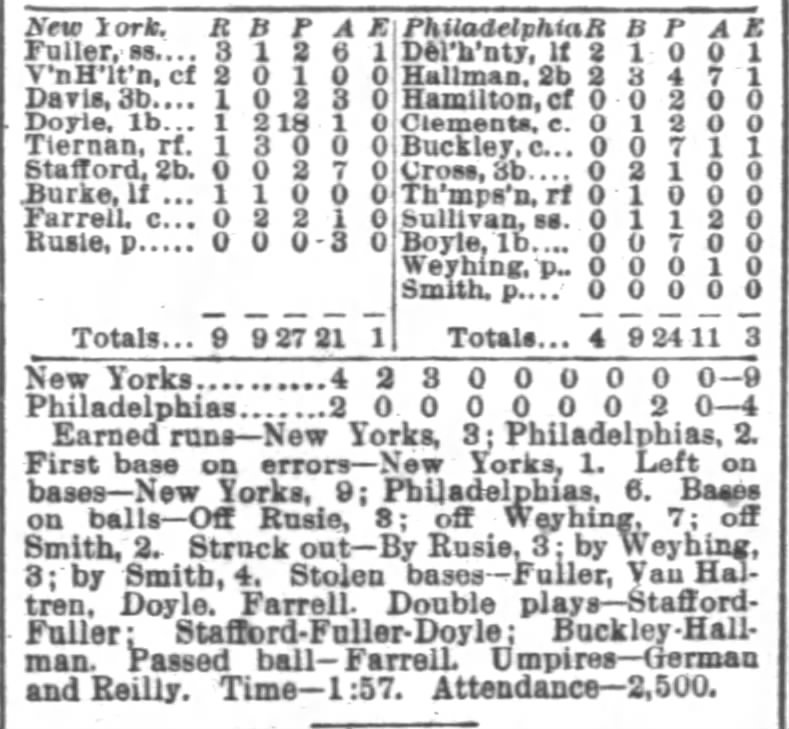
When the New York Giants met the Philadelphia Phillies on May 1, 1895 The New York Evening Sun provided a novel recap—the entire game was presented in verse:


The weather did its level best

To fire with joy the rooter’s breast,

And old Sol sent his brightest rays

To make up for past wet days

He shone with full and festive strength

Upon the Polo Grounds at length.

The balmy breezes of May Time

Resembled some fair eastern clime.

With ground so dry, yet without dust,

What player could but do or bust?

Both teams had somewhat rusty grown

By inactivity o’erthrown.

The Slowtown people were the first

To warm up with a practice burst.

The pitchers limbered up their arms,

And batters tried to work their charms

Upon the curves they volleyed in

By practice with their batting pin.

The twirlers seemed a trifle wild,

But pitcher Weyhing only smiled

And nodded like a coony fox

When told to take the pitcher’s box.

Gus Weyhing started for Philadelphia.

Gus Weyhing started for Philadelphia.

And when the players pranced about

Their frozen legs thawed quickly out.

The Phillies practicing today

Were much like Boston in their play.

The old men on the team were not

In practice quite up to the spot.

All balls that sizzled down their way

They let proceed and did not stay.

Young Turner, who was hurt last week,

Again was forced the bench to seek.

His strength gave way while in left field,

And homeward to the plate he reeled.

His captain gave him some more grace,

And Delehanty took his place.

The Giants showed up very well.

Their work was shop and clear’s the bell.

When time was called this first of May,

Four thousand people saw them play.

No umpire came to judge the game,

It had to go on just the same:

So German had to take the job,

With Reilly for his pal, be gob.

The Game:

First Inning.

Now with a last tug at his hat

Big Delehanty came to bat.

He got first on four bad balls

And down to second safely crawls,

When Hallman hit a daisy one

That Stafford stopped, but on the run.

Hamilton’s small infield fly

Was caught by Staff—Good eye! Good eye!

Clements hit to center field

And Delehanty homeward spieled.

Meanwhile Hallmann took a brace

And stood triumphant on third base.

Cross hit to Fuller, who threw to Staff,

Who dropped it, to the rooters’ wrath.

Hallman scored, and Clements out

By force at third produced a shout.

Then Sullivan to Stafford hit

He threw to Doyle and Sully quit.

Two runs.

Hot buns!

Now Fuller drew four measly shoots

And went to first by easy scoots.

Val Haltren got four balls also

And straightway down to first did go,

Advancing Fuller by this feat

To second where he took a seat.

Davis down to Hallman hit,

And Van was forced because of it.

Doyle knew a trick worth two of that—

His single hit the fence, that’s flat.

Fuller scored and David stirred\His stumps and landed safe on third.

Tiernan’s hit scored Davis too.

Staff went to first on balls, hurroo!

Burke struck thrice at the spinning sphere,

And Burkeville sadly moaned, ‘Oh, dear!’

A pretty single Farrell sent,

And skipping down to first he went.

‘Twas pretty work, and what is more,

Enabled Doyle and Mike to score.

Then Farrell climbed the second stair.

‘Twas no use.  Rusie fanned the air.

Amos Rusie started for New York

Amos Rusie started for New York

Four runs.

Great guns!

Second Inning.

Boyle sent an easy one to Staff,

He didn’t fail to do his half.

But promptly threw him out to Doyle,

Who didn’t let the good thing spoil.

Then Weyhing also fanned the air.

Thus Rusie evened things for fair.

The Delehanty followed suit

And made the third man out to boot.

No run,

Not one.

Here Clements found he was too fat,

And Buckley went behind the bat.

Fuller’s smash in center fails;

Van Haltren gets his base on balls.

In this respect Cap Davis vied.

The bases were all occupied.

Doyle force the Cap at second base,

Where Hallman calmly holds his face,

But in the turmoil that ensued

Short Fuller struck an attitude,

Then down the last course took a skate

And like a rabbit crossed the plate.

Mike singled to the right field loam,

Van Haltren also scampered home.

Then Stafford missed the fatal strike.

At second Hallman caught our Mike.

Score two—

That’s true!

Third Inning.

Then Hallman sent a liner hot,

Which Rusie let go like a shot.

The batter ambled to first base,

And Amos hid his blushing face.

Then Hamilton to Davis hit,

And Hallman took bag 2 on it.

On Buckley’s sacrifice to Doyle,

Hallman went to avis’ soil.

Then Cross lined one to Fuller’s ground,

He neatly grabbed it on the bound

And slung the pellet down to Doyle,

Who gently plucked it from the soil,

Touched first bad with his Trilby boot.

‘My,’ yelled the crowd, but you’re a beaut!’

No score.

For us Burke hit to center field,

A single the resultant yield.

Then all Burkeville with one acclaim

Rose up and cheered their hero’s name.

eddieburke

Eddie Burke–“Then all Burkeville with one acclaim–Rose up and cheered their hero’s name”

Next Farrell, seeing Fuller’s hit,

Got up and duplicated it.

The Burke took second, Eddie third,

When Delehanty sadly erred.

Then Cross, who’s never known to scowl,

Froze tight to Rusie’s little foul,

But Filler once more four balls drew

And quickly down to first base flew.

Four bad ones, too, Van Haltren got,

Which forced Ed Burke home on the spot.

Duke tried to score on Davis’ crack,

But Buckley tapped him on the back.

Doyle smashed a single out to right.

Two runs came in –‘twas out o’ sight!

Cap Davis, graceful as a bird,

Flew round the course and perched on third,

But Tienan hit to Sully’s place

And perished tamely at first base.

Score Three.

That’s we!

Fourth Inning.

Thompson four balls got, and Sully’s bunt

Let him to first—the little runt!

Boyle’s liner went to Stafford’s spot,

Who held it, though he said ‘twas hot,

And laced it onto Fuller’s paws,

Who touched bag 2 midst much applause.

Big Thompson, who should have been there,

Was caught far off his base for fair.

Now Stafford added glory won

By nabbing Weyhing’s hit.  No run.

Now Weyhing thought he had enough,

And Smith tried pitching—that’s the stuff.

When Stafford stepped up to the plate,

The crowd arose and cheered him great,

Whereas poor Staff was struck with awe

And fanned out, much against the law.

Then Hallman gathered in the sphere,

And though the thing was very near

He plugged it down to first with vim.

Burke found the ball ahead of him.

Farrell fanned the ozone thrice

And took a back seat calm and nice.

No score once more.

Fifth Inning.

When Delehanty went to bat,

He didn’t know where he was at.

He sent one down to Davis’ ground,

Who plucked it neatly on the bound

And passed it on to Jack Doyle’s place,

Who took it in with airy grace.

Hallman out, short to first,

And Hamilton was likewise curst.

No score.

Now roar!

Rusie’s out caused quite a howl,

And Buckley gobbled Fuller’s foul.

Hallman fumbled big Van’s hit;

The latter safe on first did sit.

He didn’t tarry but a minute,

But stole bag two—

Gosh, Van was in ir!

But Davis stopped all hope of fun

By going out at first.  No run.

Sixth Inning.

Buckley went out, Davis to Doyle,

Van Haltren kept Cross’ fly off soil.

Davis took Thompson foul on the run,

And the Phillies retired without a run.

Doyle sent one down to second base

And on the bench resumed his place.

Tiernan bunted mid a shout

And beat the ball two feet about.

Hamilton took in Stafford’s fly,

And Burke went out as slick as pie.

No runs.

Good fun.

Seventh Inning.

Sully’s slow bunt along the ground

Ahead of him at first he found.

Boyle died at first in style as slick.

‘Twas Fuller this time who did the trick.

Rusie attended to Smith’s weak hit.

The Quakers were certainly not in it.

No Score.

Hurrah!

Farrell out at Hallman’s door,

And Rusie fanned the air once more.

Fuller got four nasty ones,

Then down to second quickly runs.

Smith struck out lengthy Van,

Who batted like a pygmy man.

No more.

Oh, pshaw!

Eighth Inning.

For Slowtown Delly made a hit,

And Hallman duplicated it.

Fuller muffed the ball in thrown,

And Delehanty ran clear home.

Hallman safe to second crawls,

And Hamilton to first on balls.

Buckley out at first by tag.

And Hamilton off second bag.

Hallman to third on this play

And scored on Cross’ hit—hooray!

Thompson singled to center field,

And Cross to third base quickly spieled.

Sully smashed along the ground.

The ball at first ahead he found.

Score two.

That’s you.

Davis, Hallman to Boyle,

And Hamilton took care of Doyle.

Tiernan first on balls, and Staff

Forced him at second—made him laugh.

No run

By gun!

Ninth Inning.

Fuller caught Boyle’s fly like glue,

And Smith’s strike out made No. 2

Delehanty out at first.

The crowd yelled a triumphant burst.

To sum it up, the game was great.

The rooters left the grounds elate.

Then round the town they took a turn,

For every one had cash to burn.

The Box Score

The Box Score

“Yale’s Crack Baseball Pitcher”

23 May

Herbert Ovid Bowers followed a legend at Yale.

From 1886 through 1890 pitcher Amos Alonzo Stagg had led the Yale baseball team to the championship of the Ivy League (post graduate students didn’t lose eligibility in the 1800s).  He was a highly sought after pitching prospect, but Stagg, a devout Presbyterian, turned down multiple offers to play professionally; in his 1927 biography, “Touchdown!” he said:

“There was a bar in every ball park, and the whole tone of the game was smelly.”

Amos Alonzo Stagg, right, with Yale catcher Jesse Dann

Amos Alonzo Stagg, right, with Yale catcher Jesse Dann

Bowers was born June 2, 1867, in Manchester, Connecticut and entered Yale in 1889 as a sophomore after teaching school for two years in Hartford—he also played for a semi-pro team in Plainville, Massachusetts.

He joined the baseball team in 1890—Stagg’s final season–as an outfielder and pitched on a limited basis during the early part of 1891 when pitcher William Dalzell was tapped as Stagg’s replacement.  The Chicago Tribune said:

“Dalzell promised much, but failed.”

The Pittsburgh Dispatch said Dalzell became ill during the 1891 season and “Bowers was literally forced into the box,” where he “demonstrated that he was the best pitcher in college.”

The New York Herald said:

“Yale would not be a factor in baseball this year, they said.  But when Bowers popped up in the box and began pitching ball (Yale fans) changed their wail to a hurrah…He puts up a great game and is as cool in the box as the famous Stagg himself.”

The 5’ 9” righthander led Yale to a 24-9 season.  The Tribune said:

“Bowers is strategic and cool but not very fast, and weighs but 150 pounds.  He is a good general ball-player, can run bases fast, and has extra good command of the ball.  With twenty-five pounds more weight and the extra strength that goes with it Bowers would be a phenomenal pitcher.  As it is he is a good and valuable one.”

Herbert Ovid Bowers

Herbert Ovid Bowers

On June 13 Bowers and Yale lost 5 to 2 to Princeton at the Manhattan Athletic Club in New York, losing the league championship.

Yale was just 18-16 in 1892.  Bowers took a no-hitter into the ninth inning during a victory over Princeton, but he gave up a walk and a two-out hit, losing the no-hitter and shutout, but winning the game 3 to 1.  Yale met Harvard for a three-game series in June which was to decide the 1892 championship.

Harvard took the first game in Cambridge, Massachusetts on June 23, beating Bowers 5 to 0.  Five days later in New Haven, Connecticut Bowers beat Harvard 4 to 3, setting up a final game to decide the championship.

The Associated Press said:

“The result of to-day’s game leaves the championship undecided.  Yale tried to arrange for a game on neutral grounds July 4, but Harvard refused, and as both colleges have closed, the championship will remain unsettled.  The Yale alumni are celebrating on a grand scale.”

Some members of the press anointed Bowers the next great pitching star.  The New York Herald called him:

“Yale’s crack baseball pitcher, who by many is counted the superior of even the famous Stagg.”

Sam C. Austin, the sporting editor of “The Police Gazette” said Bowers lacked the size to throw hard, but:

“He relies mainly upon his ability to deliver puzzling curves that disconcert the batsman…He has great command over a ball, and can use drops, in and out shoots, and curves that would puzzle a professional to hit.”

The New York Evening World said, “It is said that the New Yorks are after Bowers, the famous Yale pitcher.”

Bowers at Yale

Bowers at Yale

After his  graduation, and despite the accolades, Bowers, who played in a semi-pro league in Vermont after the 1891 and ’92 seasons, chose to enroll in law school at Yale.  He played for the law school team in 1893, and in June pitched the greatest game of his life.  The New York Sun said:

“Pitcher Bowers of the Yale Law School team further added to the excellent record he has made by pitching great ball against the Cuban Giants last Monday at Brattleboro, VT.  He did not allow the colored players a single safe hit, and only twice did they knock the ball outside the diamond.  Both times the balls were flies.  This is the first time that the Cuban Giants have been so retired.  Bowers was obliged to pitch part of the time with a wet ball as it rained during a portion of the game.”

Bowers also had two doubles, scored two runs and drove in two more.  Yale won 4-2–the Cubans scored two runs in the seventh after a walk to Cubans’ second baseman Frank Grant, followed by a three-base error on a throw from Yale’s third baseman on a ground ball hit by Abe Harrison, the Cubans shortstop.  Harrison scored a ground out.

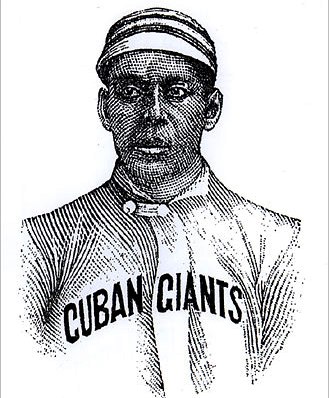
Frank Grant, Cuban Giants

Frank Grant, Cuban Giants


Bowers also pitched, played outfield, and captained the 1893 Yale club that won the eight-team “World’s Fair Intercollegiate Baseball Tournament,” which was organized, in part, by Bowers’ former teammate Stagg the University of Chicago’s football and baseball coach.   Yale was 4-1, including a 9 to 0 victory over Amherst in the championship game.  The Chicago Tribune said:

“After the game the Yale team was called into the grand stand and there presented with the magnificent cup given by the university Club to the winning team.  The presentation was made by Mayor (Carter) Harrison and at the close of his remarks the Yale University yell was given.”

After graduating from law school, Bowers appeared to be following in Stagg’s footsteps again, when he was hired to coach the baseball team at Oberlin College in Ohio.  After victories over the University of Illinois (13 to 1) and Michigan (17 to 3), The Associated Press said:

“Coach Bowers has done wonders for Oberlin’s batting and team work and the boys are making a fine record.”

Despite his success at Oberlin, Bowers did not return the following season, and just short of his 28th birthday signed his first professional contract—his career lasted just two games.

He started two games for the Hartford Bluebirds in the Connecticut State League, losing both and posting a 5.14 ERA; he gave up 32 hits in just 14 innings.  He appeared to have lost the “curves that would puzzle a professional to hit.”

After his release, Bowers was not out of work for long.

In August The Manchester Herald said Bowers “once the crack twirler of the Yale team,” had been appointed judge of the newly formed Manchester Connecticut Town Court.  With that, Bowers went on a different course than Stagg.  He was a judge and politician—he served two terms in the Connecticut General Assembly—until his death in Manchester on November 30, 1927.

“I was Large and McCarthy was Quick Tempered”

16 May

In 1912, Pennsylvania Governor and former major league pitcher John Tener, told William Phelon of The Cincinnati Times-Star about how a minor league team made a payroll during his playing days.

John Tener

John Tener

 “Such a thing as one day’s pay wouldn’t exactly break or worry me, that is wouldn’t worry me know, and it has been some years since I have had occasion to fret about losing one day’s wages.  Yet believe me there was once a time when I was robbed of one day’s salary, and that one day’s salary seemed to John K. Tener, as big as the First National Bank to the average young clerk at the present time.  And—just to show what strange things happen in this world—the man who took away John K. Tener’s poor little one day’s pay was in the after years Justice (William Henry) Moody, of the (United States) supreme court bench—that’s how life really happens in this republic of ours, and, I’m sure, the one day’s pay he saved on me looked as big to him right then as half a million did a few years subsequently.

“It was long, long ago when the world was very young, and I was a pitcher for the Haverhill team (1885) Tommy McCarthy, who afterwards grew so renowned as one of the headiest players of the champion Bostons, was one of the Haverhill outfielders, and Justice Moody was one of the chief officials of the Haverhill club.  The season was drawing to a close, the Haverhill team was losing money, and it seemed doubtful whether the exchequer could be so replenished that everybody would get what was coming to him at the final settlement.

Tommy McCarthy

Tommy McCarthy

“The days ran along and finally but one more day remained.  That night the stockholders of the club held a meeting, inspected the books, and did some great figuring as to ways and means.  Towards 11 o’clock, they found that they would lack only a few dollars of enough to settle up—but where were they going to find those few dollars?  That was the question, and they were debating on passing the hat when a great thought struck Mr. Moody.  ‘Gentlemen,’ he said, ‘I have it!  Upstairs, in the hotel, our two highest salaried players, Tener and McCarthy, are now asleep.  If we could save one day out of their wages we would have just enough to see us through.  Let’s release them and save tomorrow’s salaries.

“The stockholders carried the suggestion by acclamation, and releases were duly carried out.  Then a glance at the clock showed it was 11:30.  In half an hour or more it would be too late—a new day would begin, and we would have to have our full day’s pay.  Mr. Moody was deputed to bring us the news—which was considered a ticklish task, as I was large and McCarthy was quick tempered.  Somewhat bashfully, he came upstairs, woke us up, and gracefully handed us our releases.  Then he fled before Tom and I could get our heads clear and realize the situation.

“And, believe me, in those days I was so short of money that it just about broke my heart to lose that one day’s pay.  But I had to lose it, just the same, and Mr. Moody was the winner.  Did I ever get it back?  Not the money I didn’t—but I have often made Justice Moody buy enough good wine to pay for that several times over.”

Tener served in the United States House of Representatives, was Governor of Pennsylvania and President of the National League, but his short career as a player remained important to him.  A story made the rounds in many newspapers (although at least a decade after he left office) that when signing a bill into law while governor, a legislator said:

“Governor Tener, I think that’s one of the best things you ever did.”

Tener was said to have replied:

“You’ve got it all wrong–I once shut out the Giants.”

On his 81st birthday, July 25, 1944, The Associated Press asked about the “move to get Tener’s name added to the roll of immortals in Baseball’s Hall of Fame.”  Tener, and another former National League President, John Heydler had been an early and ardent supporter of the establishment of the Hall of Fame.

“(Tener) laughs that off.  ‘I don’t belong there.'”


“The result is interesting. Incidentally, also, repulsive.”

14 Apr

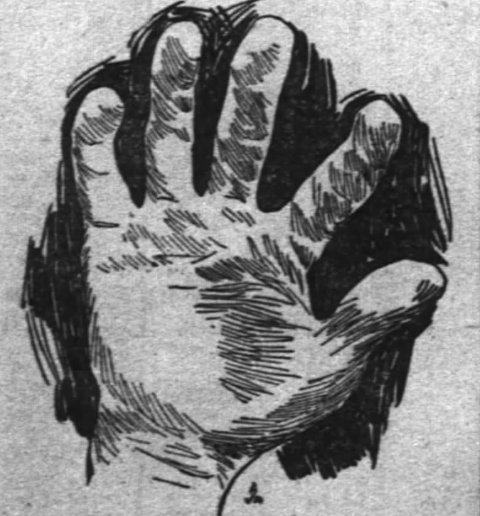
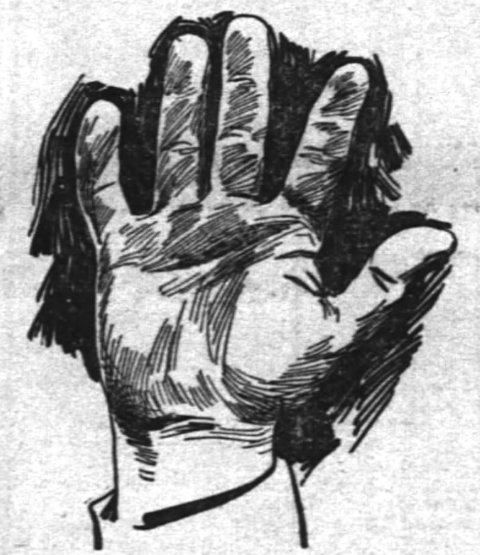
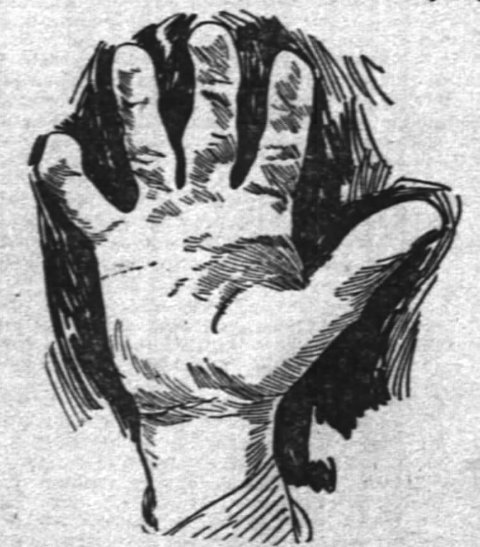
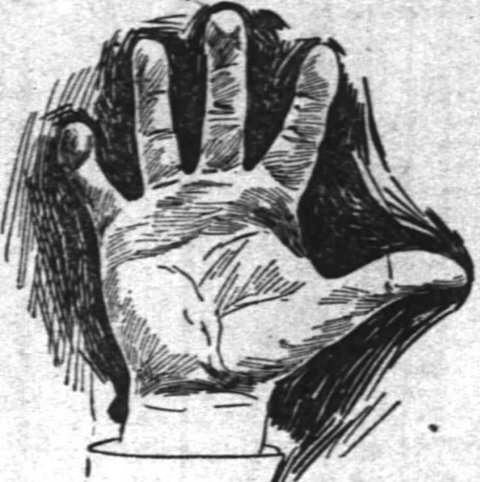
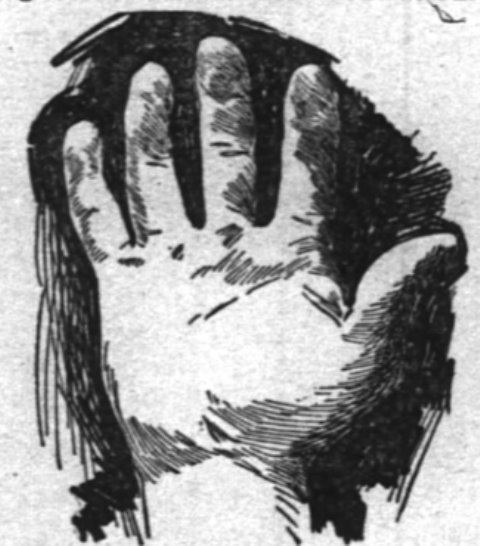
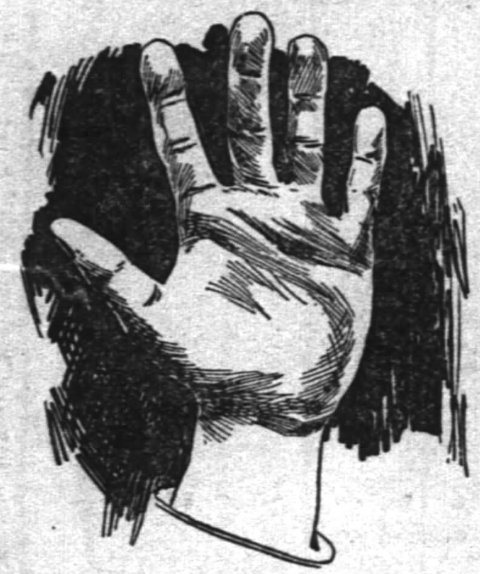
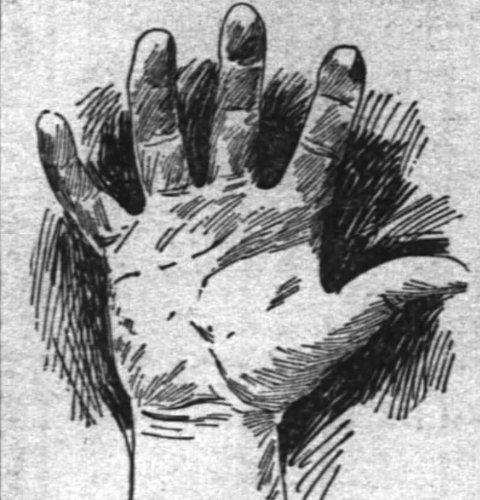
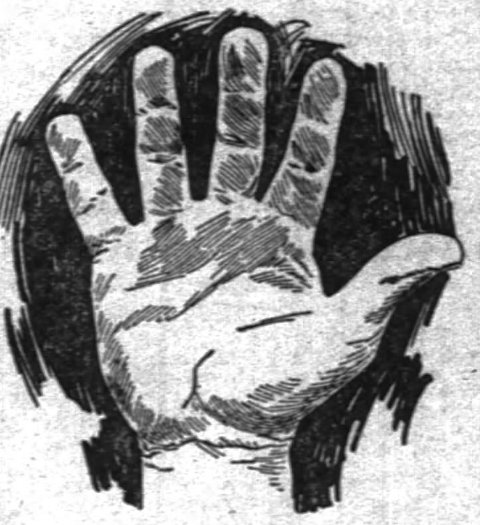
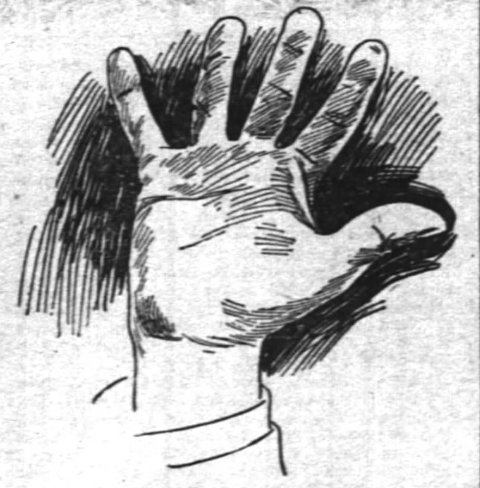
While writing for The New York Herald in 1895 Oliver Perry “OP” Caylor had the hands of several members of the New York Giants photographed.  The Chicago Inter Ocean said, “The result is interesting.  Incidentally, also, repulsive.”

Caylor said:

“It is hard to say who has had the most marvelously disfigured hand among the catchers since the game became professional, but the award lies between the late (Frank) “Silver” Flint and Tony Suck.”

Flint had died three years earlier, and Suck (born Zuck) had died earlier that year.

Of the Giants, Caylor said backup catcher William “Pop” Schriver “takes first prize in a display of distorted joints   His right hand, as it is seen in the photographic view, has lost much of its resemblance to the natural member.”

Schriver

Schriver

Caylor said starting catcher Charles “Duke” Farrell and the team’s other catcher, Parke Wilson, had hands that were in good shape in comparison to Schriver:

“Farrell, for a man who has done so much catching and has faced so many swift and wild pitchers, possesses remarkably well preserved and shapely fingers.”

Farrell

Farrell

Wilson

Wilson

Caylor said third baseman George Davis “has what’s known as a ‘daisy.’ The first joint of the little finger on his right hand is crooked like the elbow of a stove pipe.”  Captain and first baseman Jack Doyle “has several angles and curves on his hands.”

Davis

Davis

Doyle

Doyle

Rightfielder Mike Tiernan ‘has escaped very luckily,” and among pitchers Amos Rusie, William “Dad” Clarke and Jouett Meekin “disfigured fingers are scarce.”

Tiernan

Tiernan

Rusie

Rusie

Clarke

Clarke

Meekin

Meekin

Caylor said:

“Baseball players as a rule, are not proud of their unshapely hands.  Yet a close examination of the hands of the men of New York City under 40 years of age will disclose the fact that more than half of them have one or two ‘baseball joints’ apiece to remind them of the time when a foul tip went wrong or a high fly took a sudden shoot out of its natural course…The non-professional invariably is proud of this reminder of the day or days when he played.

Lost Team Photos–Delhanty’s Last

11 Apr

1903senators

The 1903 Washington Senators.  Photo was taken the day before the Senators 3 to 1 victory in the home opener against the New York Highlanders at National Park.

The Senators–sixth place finishers in 1901 and 1902–were in eighth place by May 8 and never gave up their spot in the American League cellar.  The horrible season was made worse when the club’s best player Ed Delahanty was swept over Niagara Falls and  died on July 2–Delahanty’s death has been chronicled by many excellent sources.

When this photo was taken, Delahanty had been forced to rejoin the Senators after having signed in the off season with the New York Giants–he was badly hurt financially by the peace agreement between the American and National Leagues–Delahanty, who made $4,000 in Washington in 1902 had signed for between $6,000 and $8,000 (contemporaneous sources disagreed on the amount) and a large advance, which he was forced to return.  Despite his financial woes, Delahanty still managed to hit .333 for the last-place team at the time of his death.

The photo above is the last team picture which included the future Hall of Famer:

First row: James “Ducky” Holmes, William “Rabbit” Robinson, Gene DeMontreville, Lew Drill

Second row: William “Boileryard” Clarke, Wyatt “Watty” Lee, Manager Tom Loftus, Bill Coughlin, Joe Martin, Jimmy Ryan

Standing:  Delehanty, Albert “Kip” Selbach, Al Orth, George “Scoops” Carey, Casey Patten, John “Happy” Townsend, Charles Moran

Loftus was let go as manager after the 43-94 season.  The team would not finish better than seventh place in the American League until 1912.

Ed Delahanty

Ed Delahanty