Tag Archives: Pacific Coast League

“Probably the ‘Boniest’ Bonehead Play Ever”

22 Jun

While some of the details changed in subsequent tellings, this story stayed substantially the same from when it was first presented in a column by sports writer William A. in 1913, until the final published version in 1957 in The New Orleans Times-Picayune.  One version called it, “Probably the ‘boniest’ bonehead play ever”

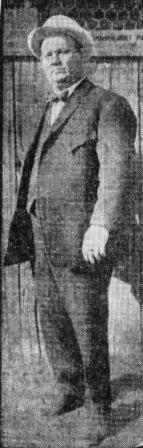
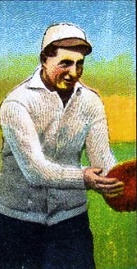
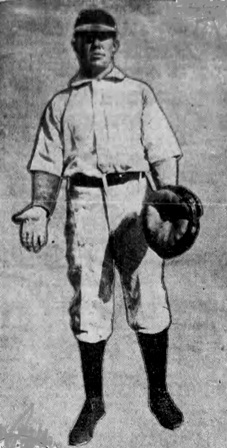
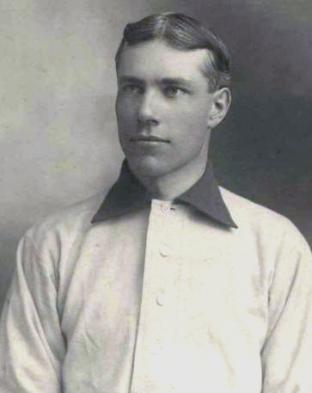
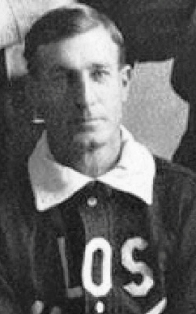
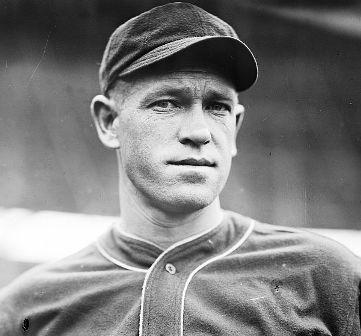
The story was told by and told about lefty Evan “Rube” Evans.  Born on April 28, 1890, in Sebring, Ohio, Evans was a career minor league pitcher who, when the story first appeared, seemed to be headed to the big leagues. 
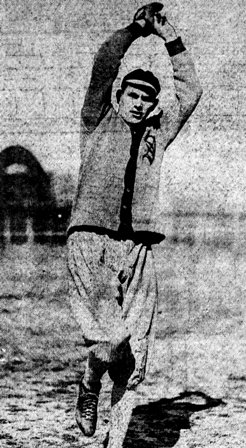
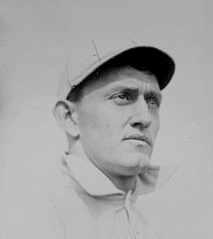
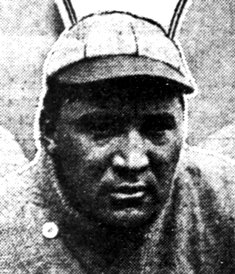
Rube Evans

Rube Evans

The tall–he was reported by various sources as anywhere from 6′ 2″ to 6′ 4″–began his professional career with the Dallas Giants in the Texas League in 1910; he was 15-12 for the pennant winners, but The Dallas Morning News said he didn’t “take baseball seriously” until the following year, when he was 18-16 for the Giants:

“Before that, it seemed, the big, husky flinger looked at playing baseball something in the light of a joke.  Last season, though he came back into the game with a different viewpoint. He seemed to realize that ball playing was a man-sized business.”

After his 1911 performance, Evans’ contract was purchased by the New York Giants, and he joined the team for spring training in Marlin, Texas in 1912.  The Morning News said if he maintained his new found focus “and works as hard as he knows how to work he ought to stick.”

Evans quickly impressed the Giants with a pitch “takes a most freakish break,” according to The Washington Times:

“Rube Evans, the Giants left-handed recruit pitcher from Dallas, surprised bot Manager (John) McGraw and Coach Robby (Wilbert Robinson) by showing them a curve that is entirely new to the big league…The ball is delivered in exactly the same manner as the spitball, but he does not moisten it.”

The paper did not elaborate on how Evans’ “dry spitter” was different from versions reported on during previous seasons–including the one thrown by Christy Mathewson of the Giants–but according to The New York World, “McGraw says he will try and teach it to Rube Marquard.”

Despite his “dry spitter,” Evans failed to make the team and was returned to Dallas where he posted a 22-12 record for the Giants.

In 1913, he joined the New Orleans Pelicans in the Southern Association but appeared to be headed to the Cleveland Naps before he threw a pitch in the regular season for the Pelicans.  In March, Evans shut down the Detroit Tigers 3 to 1 on five hits and followed that up with a four-hitter (and 3 to 1 victory) against the Naps.

The Cleveland Press said, “(Naps Manager Joe) Birmingham plans to cut down his squad considerably.  It is said recruits (Hugh) Peddy, (Pete) Shields and (Ward) McDowell will be left here in trade for one good pitcher, probably Southpaw Rube Evans.”

With Evans apparently on the verge of joining the Naps, the story of his “bonehead” play was told by Phelon, then repeated widely:

“(Evans) has one curious habit—a trait which has aroused much wonder on the part of every manager under whom the southpaw has been toiling.  When given an order by his manager or captain, Mr. Evans always stops, cocks his ears, and demands a repetition of the directions.  Naturally he is first taken for a simp, or bonehead, but when further acquaintance with him shows that he is a gentleman of intelligence and high mentality, the field leaders are muchly puzzled.

“’I always want my orders repeated,’ quoth Mr. Evans, ‘so that I will never again make such an error.”

(The 1913 version of the story, which quotes Evans,  places the incident in McKeesport, Pennsylvania, some later versions say it happened in 1913 with the Pelicans, still others say it was in Portland, Oregon; however, the original publication predates Evans’ time on the West Coast which did not begin until May of 1914).

Evans said he had pitched into the ninth inning when the opposing team put a runner on third with one out, when his manager told him if the other team attempted a squeeze play to “bean him.”  Evans said:

“’I knew no more what a squeeze play was than the man in the moon, but my orders rang in my ears as I started winding up.  Just as a swung up my arm, the fellow on third tore for the plate…I took careful aim at the oncoming runner, and pickled him with a fine shot to the back of the cranium.  Three seconds later the crowd was coming towards me with roars of fury, and I got over the back fence just in time.

“’Well how was I to know that I should have hit the batter and not the runner?  Ever since I have insisted on duplicate orders, so that I would know just what to do.’”

His acquisition by Cleveland never materialized and he had a disappointing 12-15 record in 1913, in a season split between New Orleans and the Birmingham Barons.

It is also in question whether Phelon’s characterization of Evans as a “gentleman of intelligence and high mentality,” was entirely accurate given his inability to stick with clubs who were impressed with physical abilities.  After his second chance to pitch in the majors didn’t materialize, the remainder his of career was marked by long stretches of mediocrity, charges of bad behavior and comparisons to another left-handed “Rube.”

In August of 1913, he was suspended for the remainder of the season by the Birmingham Barons for, according to The Birmingham Post-Herald, “Failure to keep in condition.”  The Sporting Life’s Chandler Richter called him “Erratic,” The Oakland Tribune said he was”Eccentric,” a wire service retelling of the “beanball” story from 1915 said he “earned a nationwide reputation as a ‘squirrel,” another called him “the real eccentric,” when compared to Rube Waddell.
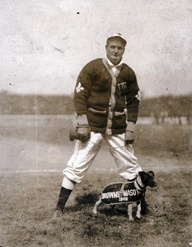
The other left-handed Rube

The other left-handed Rube

His two-year tenure with the Portland Beavers in the Pacific Coast League (PCL) began when he wore out his welcome in New Orleans in May of 1914 and was sold to the Beavers.  It was particularly rocky.  The Spokane Daily Chronicle said Evans and Beavers manager Walter “Judge” McCredie “got along like a pair of strange bulldogs.” He was suspended at least once, again for the euphemistic “failure to be in proper condition,” and gave up a game-winning home run to Jack Ness of the Oakland Oaks when he accidently threw a pitch over the plate while attempting to intentionally walk Ness.  At the close of the 1915 season, Portland let him go for what The Portland Oregonian called “His inability to take care of himself.” Of his 9-22 record the paper said:

“Rube ran into gobs of adversity.”

After leaving Portland, Evans played parts of three seasons for the Salt Lake City Bees in the PCL–in 1917 he was 21-9, but when McCredie was named manager of the Bees in 1918, Evans time with the team was nearly over.  Before the season, The Oregonian said, “Evans did not take kindly to the idea of having to take orders” from his former manager and was threatening to jump the club.  He finally did jump in June after appearing in 14 games and posting a 3-8 record.

Evans went to Portland and finished the 1918 season in the semi-pro Shipyards League, The Oregon Daily Journal said upon his arrival:

“Rube Evans was through at Salt Lake and McCredie was probably saved the trouble of wearying his hand by writing out Rube’s release, when Rube left.”

In 1919, he played for the Rupert franchise in the semi-pro Southern Idaho League; while successful, his reliance on the emery ball for his success didn’t make him friends.  The Twin Falls Times said:

“When Rube Evans lugged the emery ball into the S.I.L. he failed to do anything beneficial to the league.  Rube will win a few more games for the Rupert club, but he has lowered the standard of sport in the league.”

Evans had one more season in professional baseball, posting a 10-7 record with the Regina Senators in the Western Canada League in 1920.  In an August 15 doubleheader against the Edmonton Eskimos Evans was ejected for arguing with the umpire while facing the second batter of the first game; he came back to lead the Senators to 5 to 3 victory in the second game, giving up two runs in 7 2/3 innings, and hitting a three-run home run in the sixth.
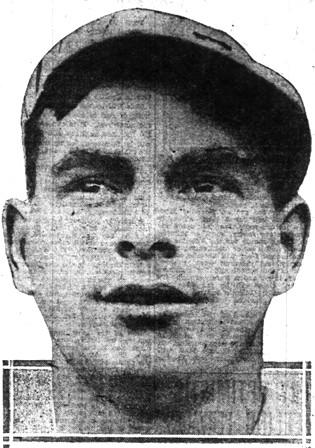
Rube Evans

Rube Evans

After the 1920 season, he returned to Ohio and spent the next decade playing semi-pro baseball there and in Western Pennsylvania.  His last headlines came in 1924 when he pitched six innings for the Sharon (PA) Elks team in an exhibition game against the New York Yankees.  The Elks lost 10-8, Babe Ruth went 2-4 with a double for the Yankees.

Evans’ playing days ended in Akron, Ohio.  He pitched for and managed the Goodyear Tire and Rubber Company team, and stayed on with the company as a rubber worker.  He died on January 30, 1950.

A clue to some of Evans’  erratic behavior is contained in his death certificate.  The pitcher spent the last three and a half years of his life in Ohio’s Cambridge State Hospital; his cause of death was listed as “General Paresis,’ brought on by syphilis.

A shorter version of this post appeared on June 3, 2013
“Their Joy was Unrestricted”

10 Jun

After Charles “Cy” Swain lost his leg in an accident after the 1914 season, he attempted to stay active in baseball by forming a team called the Independents with another former player, Tommy Sheehan.

Cy Swain

Cy Swain

Swain managed the team which was comprised of minor and major leaguers who spent the off-season on the West Coast.

In the early spring of 1916, the team played their most unusual game.  The San Francisco Chronicle described the scene:

“For the first time in the history of the State Prison across the bay in Marin County, the convict baseballers were yesterday permitted to play against an outside team…The attendance? Good!  Something like 2300 men and women prisoners, even including the fellows from solitary confinement, took their seats to watch the game, and their joy was unrestricted.”

Swain’s Independents were playing the Midgets, the baseball team at San Quentin.

The paper said Swain received “an ovation that lasted for five minutes,” and that the prisoners cheered loudly for Ping Bodie, Spider Baum, and Biff Schaller.

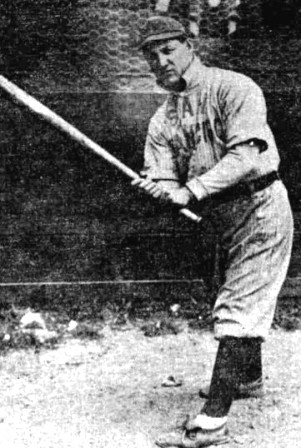
Ping Bodie

Ping Bodie

“They know a good play or a bad one, just as you do from your comfy seat at Recreation Park, and they did their rooting accordingly.”

Because of prison rules, the game recap was slightly different than usual:

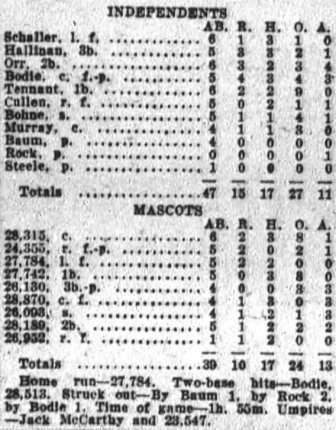
“Names are barred when it comes to San Quentin inmates, but it is worthy of note that No. 27784 came through with a home run, while third sacker 26130 pulled a fielding stunt that would land him with the Coasters if he were a free agent.

“Warden (James A.) Johnson, however, has his players fully signed, and he is protected with a reserve clause that is far more binding than the foundation of organized baseball. “

Jack McCarthy, a former American League and Pacific Coast League umpire, worked the game with “No. 23547,” and “to their credit be it said, the double system worked perfectly.”

The game was a slugfest, won the Independents 15 to 10—Bodie, Schaller and Ed Hallanan had three hits each.

The Box Score

The Box Score

Swain’s independents returned to the prison again the following year, beating the Mascots 9 to 6.  After the success of those games, baseball against outside teams became a regular feature at San Quentin.

Cy Swain

8 Jun

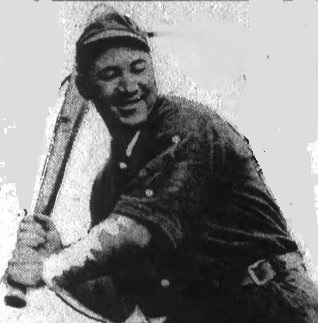
Charles R. “Moose” “Cy” Swain was for a short time, one of the best-known players on the West Coast and his brief time as the West’s home run king is all but forgotten.

Born in Palo Alto, California, Swain made his professional debut with San Jose franchise in the California State League in 1904.  Years later, Mike Steffani, San Jose manager, told The San Jose Evening News that his “discovery” of Swain was an accident.

Steffani was in need of a shortstop, and Swain’s brother Ira, who played at Stanford University,  was recommended to him by pitcher Win Cutter.  Cy, who accompanied his brother to San Jose, played first while Steffani worked out Ira at short.  Steffani said he told Cutter:

“I think young Cy is the best player.  I like the way he handles the ground balls.  He acts like (Charles) Truck Eagan to me.”

Cy Swain was signed.  Ira was sent home.

Charles "Cy" Swain

Charles “Cy” Swain

Swain was called “a hard hitter,” who struck out often.  He also apparently enjoyed a drink.  After hitting a disappointing .239 for the Spokane Indians in The Northwestern League in 1907, Swain was traded to the Butte Miners.

In announcing the news, The Spokane Press said, “Charley isn’t exactly a temperance man.”   The paper said that when the Spokane owner sent him a contract with a temperance clause, Swain wired back, “Send me two of those; I may break one.”

Swain, who also struggled with weight issues, went from Butte to the Tacoma Tigers, then the Vancouver Beavers.

In July of 1910, he was leading the league with a .298 batting average when the Washington Senators offered $1800 for his contract.  The Vancouver Daily World said the offer was turned down.  The club’s owner/manager/shortstop Bob Brown told the paper:

“That pennant looks awfully good to me, and until I have it clinched I intend to hold the team intact.  There have been numerous other clubs after Charlie’s services, but they will all have to wait until the season is over.”

Swain slumped badly the rest of the year and finished with a .250 average (and a league-leading 11 home runs). The Beavers finished second, six and a half games behind the Spokane Indians.

Despite Swain’s sluggish finish and questions about his weight—The Seattle Star said he was “carrying 220 pounds”– Washington purchased his contract at the end of the season.  Just before he reported to the team in Atlanta in February of 1911, The Washington Herald said:

“There is a reason why this man Swain should not be overlooked when the time comes for the final selection of the Nationals.  It was Cliff Blankenship who was sent scouting for Walter Johnson five years ago and who signed him…and Blankenship is sponsor for Swain.”

Cliff Blankenship

Cliff Blankenship

Swain responded to a letter from William Peet, The Herald’s baseball writer, about his weight:

“I note what you say about certain of my friends on the Western papers claiming I have taken on so much weight that I am handicapped thereby.  Just write them a personal letter and bet them all you’ve got that I haven’t taken on more than five pounds since I quit playing last fall…I will join the Washington club in shape and try my best to make good.”

Early reports from Atlanta in the Washington papers, The Post, The Times, and The Herald sounded promising:

“For a big fellow Swain is a wonder when it comes to covering ground in the outfield.”

“Though a six-footer, weighing 200 pounds, he runs like a sprinter.”

“He hits hard…his most distinguishing trait (is) a willingness to work and an inexhaustible fund of good humor.”

Swain was hitting .273 in spring games when he became sick (either a cold or the flu, depending on the source) and did not appear in a game, or practice with the team for a week.

Swain in Atlanta with the Senators

Swain in Atlanta with the Senators

On April 6 The Herald said:

“Swain and Manager Jim (McAleer) had a long talk this morning in the clubhouse and when the Vancouver husky emerged his face was wreathed in smiles.

“’It’s all right, boys,’ he said.  ‘I will probably go back to the Pacific Coast.  Had a nice chat with the boss and told him that if he decided he couldn’t use me to ship me (West) and he promised to do so.”

Swain was returned to Vancouver, where he hit. 309 and helped lead the Beavers to the Northwestern League pennant.  After hitting .286 for the last place Sacramento Sacts in the Pacific Coast league in 1912, Swain was sold to the Victoria Bees in Northwestern League in May of 1913, setting the stage for his record-breaking season.

On August 1, The Oakland Tribune said:

“(Swain) is electrifying the natives in the Northwestern League.  Playing for Victoria, up to last Sunday, Cy had connected with 17 home runs and was hitting .329.”

He hit 17 more by September 18.  Swain’s 34 home runs broke the previous West Coast high—Ping Bodie hit 30 for the San Francisco Seals in 1910 (Art Bues had the previous league record with 27 in 1910)—and his .329 average was a career high.

He benefitted from the small dimensions of the league’s parks; The (Portland) Oregonian said fourteen of his 34 home runs cleared Victoria’s 270 foot center field fence and 11 more came at Seattle where the left and right field fences were just 237 feet from home plate.

After another solid season in the Northwestern League in 1914–.310 with 12 homeruns—Swain was traded to the Minneapolis Millers in the American Association for Fred “Newt” Hunter on November 24.

While most of the newspapers in Northwestern League cities shared the view of The Spokane Chronicle, that “The exchange will effect a promotion for Swain as he will play in a class AA league, which has been his ambition.”  The Seattle Star, however, despite the numbers he put up, raised some doubts about Swain:

“It is not likely that Seattle will be disappointed in the trade…Swain did not deliver last season like the fans had hoped and expected.  He was the joke of the league in the pinches.”

Swain

Swain

Just three days after the trade, Swain was working his off-season job for the Pacific Telephone and Telegraph Company in San Francisco, when he fell from the back of a company truck which ran over his right leg.  On December 4, the leg was amputated.

The San Francisco Chronicle said:

“He was counting on making good with Minneapolis with the view of someday stepping into the big league, the dream of every ballplayer.  What Swain will do now with one limb lost has not been decided, for the unfortunate player is overwhelmed with grief at the sudden termination of his diamond career.”

Benefit games were held in San Francisco and Tacoma, drawing 4000 and 7000 fans; the games raised more than $4000 for Swain.

He used the money to open a cigar store in San Francisco with another former player, Tommy Sheehan.  The two also organized a team, managed by Swain, called the Independents.  The team was comprised of West Coast professionals—including Ping Bodie, Spider Baum, and Biff Schaller–and played during the winter and early spring.  One of their games in the spring of 1916 was the first game ever played by an outside team on the grounds of San Quentin Prison.  Swain’s team won 15 to 10.

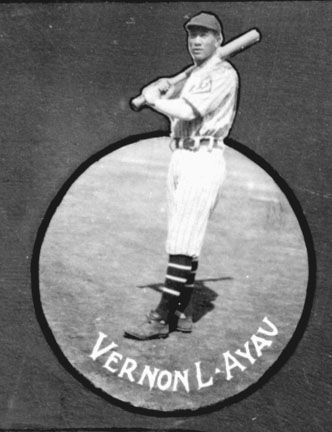
In November of 1916, Swain and Sheehan organized team made up of major leaguers and West Coast players to travel to Hawaii for a series of games.  The team played local and military teams, as well as the All-Chinese team which included Vernon Ayau, the first Chinese player to have appeared in a professional game.

Ayau, played against Swain's team in Hawaii

Ayau, played against Swain’s team in Hawaii

News of the games in Hawaii was sketchy; based on various reports the team played between eight and 12 games on the trip; all sources agree the only game they lost was against a US Army Infantry team.

Swain continued to manage the Independents in 1917 and ’18.  He and Sheehan also sold the cigar store and opened the Maryland Bowling Alleys in Oakland with Cliff Blankenship, the former catcher who recommended Swain to the Washington Senators in 1910.

Early in the fall of 1918, Swain’s brother, Ira, who accompanied to the tryout in San Jose in 1904, contracted the Spanish Flu and died on October 21.  On November 5, The Oakland Tribune said:

“Charlie Swain, one of the most popular ball players in the history of the game in the West, died here last night, a victim of Spanish Influenza.  Two weeks ago today Charlie’s brother Ira fell victim to the malady.”

Swain was 36-years-old.  The Tribune said:

“Good-bye, Charlie, we’re going to miss that happy smile.”

“A Pork Jinx on the Club”

4 Mar

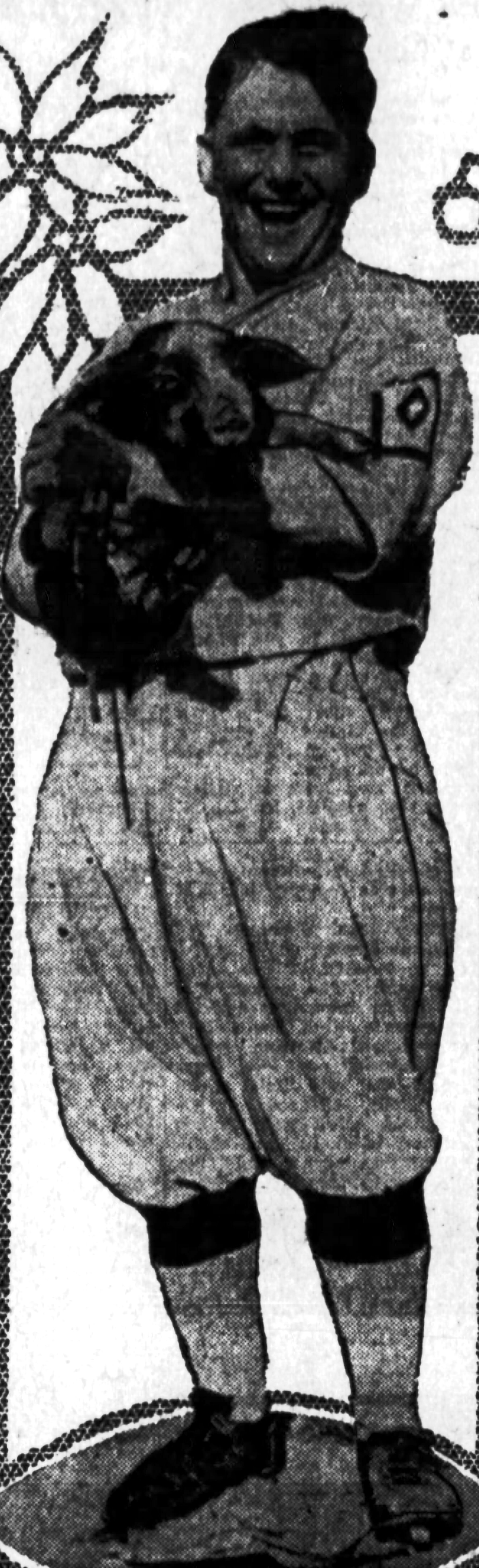
To mark the Oakland Oaks 1916 home opener, J. Cal Ewing, generally known as “The Godfather of the Pacific Coast League” presented Oakland Manager Harold “Rowdy” Elliott with a gift:  The Oakland Tribune said:

“Ewing gave to the Oaks a mascot in the shape of a real ‘rooter,’ a yearling pig, which was kept on the players’ bench throughout the game.”

The Oaks cruised to a 10-2 victory over the Portland Beavers in front 15,000 enthusiastic Oakland fans, and the superstitious among the ball club and their fans attributed the win to “Margaret,” the new mascot.

The Oaks played well in April, and were in first place until the end of the month, but by mid May they were 16-21, fifth place in the six-team league—and it was noticed that no one had seen “Margaret” for some time.

Rowdy Elliott with Margaret

Rowdy Elliott with Margaret

The Tribune was convinced the disappearance of the pig was responsible for the team’s decline:

“Suffering Pigs!  A Pork Jinx on the club!…The wrathful shade of a female porker is responsible for the Oaks’ slump.  Maggie the Pig was compelled to shuffle all her porcine coil to the accompaniment of roast apples and cranberry sauce, which is no nice way to treat an emblem of Good Fortune.”

The paper also noted that the club’s secretary also worked as a cook, and Ewing should have “had sense enough” to take that into account before presenting the team with a pig.

And, the paper composed a poem:

O Maggie, dear, and did ye hear

   The news that’s goin’ round?

The Oaks are losing day by day

   And soon they won’t be found.

They’ve ingestion badly.

   And they’re looking for the hook

They can’t play ball at all, at all

   Since you went to the cook.

It became a bit of a scandal.

The Oaks quickly denied that the pig had been eaten:

“They say the trouble is that they haven’t eaten her pigship.  Margaret was given to the ground keeper to preserve, and that personage refuses to produce the pig.”

Rowdy Elliott was quick to tell The Tribune the reason for the club’s slump had nothing to do with the team mascot.  He said the blame was clearly the result of another team’s mascot:

“Elliott says the Oaks’ slump can be attributed to no less a personage than Erasmus Pinckney Johnson.”

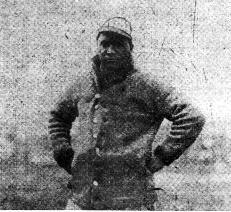
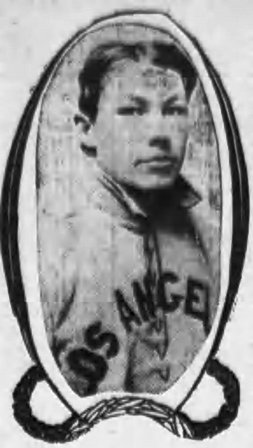
Johnson was the mascot for Frank Chance’s Los Angeles Angels—The Los Angeles Times said the young African American boy had been found, on Chance’s orders, in late April in order to break a week-long losing streak. The Times routinely described “the good luck charm” in the most racist terms.

Part of the “luck” Johnson brought was derived from rubbing the young mascot’s head.  Elliott claimed during the Oaks’ last series in Los Angeles he had rubbed the Johnson’s head “the wrong way.”

“Since that moment Rowdy has had little luck, winning only two games out of the last fourteen played.  Erasmus hasn’t been doing much for the Angles of late, for Chance’s crew has been in a slump, but he has at least succeeded in wrecking the Oakland club.”

Frank Chance

Frank Chance

So desperate were the Oakland fans for answers that The Tribune enlisted two prominent fans, an Alameda County Circuit Court judge and a local doctor to do a “psychological study of the team.”

“Judge Wells…has come to the conclusion that the team has worked itself into a jinx, and needs the aid of the pig mascot they had in the opening game to pull them through.  Dr. Halsey agrees that hits, pitching fielding and psychology and all may have something to do with it, but the real reason, according to the doctor, is that the boys are suffering from a nervous breakdown that followed shortly after seeing such an enormous crowd at the opening game.”

Things quickly got worse for the Oaks. Elliott was suspended for several days for throwing a ball at umpire Jack Doyle, and the team continued to lose in June, and then for the rest of the season.

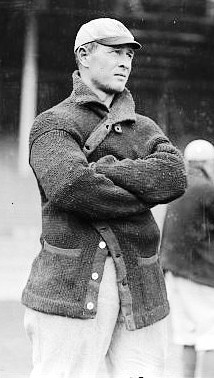
At the end of July Elliott was sold to the Chicago Cubs, George “Del” Howard, who had purchased the club during the season, replaced him as the Oaks’ manager.

Oakland finished 1916 in last place with a 73-136 record.  Chance’s Angels overcame their May slump and easily won the championship with a 119-79 record.

Margaret the pig was never heard from again.

“A Ballplayer can’t chase ‘Chickens’ and Chase Flies”

25 Feb

With money borrowed from his brother Clarence, an oil speculator, Henry “Hen” Berry stepped in to take over ownership of the Los Angeles Angels in 1906.

"Hen" Berry

“Hen” Berry

Berry’s Angels won the Pacific Coast League championship in 1907 and ’08, and that success, along with his own profits in the oil business, made Berry a wealthy man in his own right.

He also managed, during his tenure with the Angels, to sell a player to a big league club for the highest amount ever received by a Coast League Club to that point, when he was paid $5,000 by Charles Comiskey of the Chicago White Sox for 18-year-old Lee “Flame” Delhi in 1911; Delhi appeared in just one game for the Sox the following season and was out of organized ball well before his 25th birthday.

Berry was also the driving force in getting the league to finally adopt a two-umpire system in 1912.

He also had a theory about what the type of lifestyle that best suited his players.  In 1914, he talked about it with a reporter from The Los Angeles Examiner:

“’A ballplayer can’t chase ‘chickens’ and chase flies at the same time with any degree of certainty that he’ll land the flies.’

“That is ‘Hen’ Berry’s way of saying that a player whose head is turned by the hero-worship of the fair patrons on the diamond stands a mighty slim chance at high fielding averages or of shining in the .300 batting class…Wedding bells for all players, he believes, would result in the highest possible efficiency.”

Eighteen of the 21 members of the Angels were married, and it was that way by design:

“’It is his susceptibility to the attentions of pretty hero worshippers that keep many a promising athlete from reaching the high place that otherwise would be his in the world of sport,’ asserts Berry.

“’The ballplayer is perhaps more constantly beset by these fair idolizers than any other professional athlete because women frequent the diamond more generally by far than any other sport.’

“’So we have the very thing which keeps baseball keyed up to concert pitch—the element of personal admiration for the players—becoming the most dangerous possibility in pulling a good man down or keeping him mediocre.’”

"Hen" Berry caricature

“Hen” Berry caricature

While Berry conceded that marriage didn’t guarantee that a player would be “immune from lionizing” by women, it would at least reduce the “social diversions which frazzle a man’s nerves.”

Marriage, said Berry, resulted in “Emotional calm” and provides “stability which goes far towards winning pennants.”

Berry’s theory had not resulted in any recent success; after his two pennants in 1907 and ’08, the Angels had experienced a drought that would continue in 1914 when his predominately married club finished second to the Portland Beavers.

Berry sold the Angels after the 1914 season and moved north, purchasing the San Francisco Seals.

He picked up two more championships with the Seals—it is unclear how many of the players on each pennant-winning club were married– and sold the team to group headed by former Coast League catcher Charlie Graham before the 1918 season.

San Francisco Seals owner Charlie Graham

Charlie Graham

After leaving baseball, Berry managed the family’s oil holdings in California.  On March 13, 1929 the steering broke on Berry’s car as he rounded a curve while driving near his home in Maricopa.  The car plunged 100 feet into a ravine, and the former West Coast baseball magnate was dead at age 59.

A Bobby Eager Story

23 Feb

The 1906 San Francisco earthquake left the city in ruins; it also put the future of the Pacific Coast League (PCL) in serious jeopardy.

Years later PCL veteran Bobby Eager wrote about the league in the aftermath of the quake in The San Jose Evening News:

“Did you ever hear of a bunch of ballplayers owning their club in a league?  I never did, but I came within an ace of being a part owner at one time.”

Bobby Eager

Bobby Eager

Eager, then with the Los Angeles Angels, said the league was “pretty much on the bum,” and while leagues in the East had agreed to help the PCL financially, there was no sense of how the league would operate.

Jim Morley, the owner of a large pool hall in Los Angeles, owned and managed the Angels, but said Eager:

“(H)e got cold feet early.  He practically dismissed the team and said he was through.”

San Francisco Seals owner James Calvin (J. Cal) Ewing, whose deep pockets kept the league afloat, was “furious at Morley, quitting like a hound.”

Local boxing promoter “Uncle” Tom McCarey was asked by Ewing and league president Eugene Bert to take control of the club, but when that failed they reached out to a local businessman.

“They got a fellow by the name of Gil Meade to take over…It was decided to play the San Francisco games at Oakland, and go on with the league and give the fans some ball.  Of course it was an uphill fight all around with no grounds at Frisco.

“Meade shot his $5,000, which was his bankroll, in a couple months and he was done and out.”

At the time, The Los Angeles Examiner said Meade left as a result of the league failing to award him a large block of stock in the team that was promised.

Eager said after Meade departed the team was called together by field manager and Captain Frank “Pop” Dillon:

Frank "Pop" Dillon

Frank “Pop” Dillon

“He first wanted to know how much money we all had and we told him.  Then he laid before us his plans.  He showed us how we could take over the club by putting up three or four hundred dollars apiece.  He said we would not get any salaries that year but the next year he thought the club would pay big.  A few of the players (Eager included) were willing to take a chance but most wanted their salaries.  They were not gamblers.”

Dillon could not convince enough of the Angles and Eager’s dream to own a club died.

“The result was the league dug up (William Henry) “Hen” Berry who was running a little poolroom.  Hen’s brother (Clarence, who made a fortune in the oil and horse businesses) let him have enough to back the club the rest of the season which was about $8,000, but next year we won the pennant and Berry cleaned up big.  I know every stockholder who had a $100 share got a $40 dividend the next year.  If we players had taken the club we would have made just as much and might have started something new in baseball in the way of profit-sharing.”

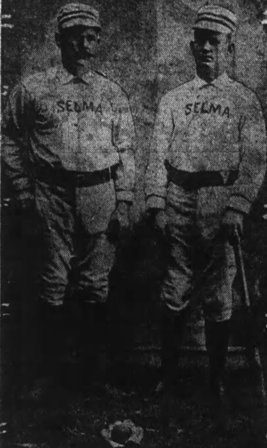
Clarence, left, and William Henry Berry played for the amateur Selma (CA) Tigers in the 1890s

Clarence, left, and William Henry Berry played for the amateur Selma (CA) Tigers in the 1890s

Another “Hen” Berry story on Wednesday.

Life on the Road, 1914

6 Feb

In 1914, before beginning his second season as manager of the San Francisco Seals, George “Del” Howard gave the readers of The San Francisco Call a rare look behind the scenes of a baseball team.

Del Howard

Del Howard

“One of the many difficulties which beset a ballplayer is ‘killing’ time while playing away from home…Del Howard was telling only yesterday how the various members of the Seal squad act while on the road.  All the boys are quartered at the same hotel and they usually pass the time in each other’s company.  Card playing for the most part is the favorite pastime, with theater-going running a close second..  There are a few of the San Francisco players who like to hide behind a book, others frequent billiard parlors for a game with the cue, but the majority sit around a table and do their best to deal out pairs.”

Howard even shared the team’s rules for road trips:

“Don’t stay out later than midnight.

Don’t fail to answer 8 A.M. call.

Don’t fail to be down to breakfast by 8:15.

Don’t run around to dances

Don’t play ‘craps’ at any time.

Don’t go over 25 cent limit at cards.

Don’t drink to excess.

Otherwise the players are free to do as they please.”

He said of his “don’ts”:

“We haven’t many rules but the ones we have must be observed.  We don’t tell a player he mustn’t drink nor smoke but we do take action when the privileges are abused.  A player knows best what is good for him and free rein is given him.  A player is allowed to remain up until midnight, if he is in good company, and he is required to be up at 8 in the morning.   There is nothing to do but it is healthy for him to be out of bed.  We breakfast at 8:15.  Very few players eat any lunch and at 6 we go to dinner.  Then there is a long evening to be faced and t is certainly a problem putting in time.”

Howard then described how some of the Seals’ most popular players were “putting in time:”

Howard Mundorff is the life of the club.  ‘Mundy’ is full of fun and the players gather around him and listen for hours while he tells stories and amuses them.  Howard is also one of the card sharks.

Mundorff

Howard Mundorff

Jimmy Johnston is an enthusiastic pool player and he usually can be found at night trying for the 15-ball in the side pocket.  Pete Standridge is also handy with the cue.

Walter Schmidt is quiet and keeps to himself a deal of the time.  He delights in taking strolls and Walter Cartwright, another quiet chap, occasionally accompanies him.

(Jay) Nig Clarke seems to lose himself on every trip and Manager Howard declares that for the life of him he cannot tell just how Nig passes the time.

(Roy) Corhan plays cards pretty regularly, but he spends a lot of his time writing, for he keeps up a continuous line of communication with his better half, when he is on the road, writing consistently every day.

Roy Corhan

Roy Corhan

Charlie Fanning is a bug with the camera and takes pretty good pictures of all the places of interest.  “Skeeter” also knows when to lay down two pair.

“(Albert “Lefty”) Leifield is a very interesting talker and he was a running-mate with Mundorff in amusing the gang.”

Howard said shortstop Harry McArdle was the “most popular player he ever encountered.  Mac has admirers in every town and was kept pretty busy keeping engagements.”

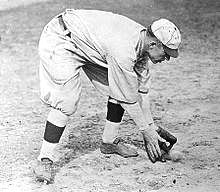
Harry McArdle (sliding)

Harry McArdle (sliding)

As for his time on the road, Howard said, “I walk around and look over things.  I was fortunate in having a well-behaved club last season and did not have any trouble keeping them in line…A busher has the time of his life in a strange town, but a veteran only figures to do something to keep busy.”

After a 104-104 fourth-place finish in 1913, Howard’s Seals—minus Johnston, who drafted by the Chicago Cubs and McArdle, who was traded to the Venice Tigers–behaved themselves well enough to finish third with a 115-96 record in 1914.  The following season he was replaced by Harry Wolverton who led the seals to a 188-89 season, and the Pacific Coast League championship.

“Either they think that Everybody is Gullible, or else they are Weak Mentally themselves”

19 Nov

Until a broken ankle in 1902 slowed him, George Van Haltren was one of baseball’s best leadoff hitters; a .316 hitter with 2544 hits during his 17 seasons.   After a disappointing 1903–.257 in  84 games—his major league career was over, and he went home to the West Coast where he spent six seasons in the Pacific Coast League (PCL).

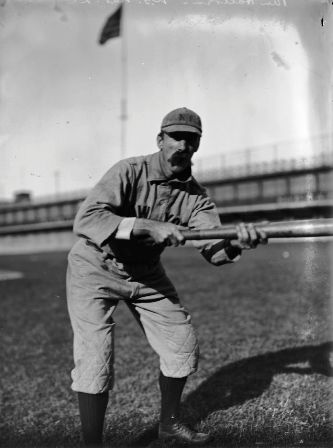
George Van Haltren

George Van Haltren

A member of the Seattle Siwashes during his first year in the PCL, Van Haltren was asked by The Oakland Tribune—the paper called him “an ultra-scientific batsman,” to share his expertise:

“Every ball player occasionally meets other players who call themselves ‘place hitters.’  The assertions of the majority of these players are such that either they think that everybody is gullible, or else they are weak mentally themselves.  They tell you they ‘can put the ball where they please,’ and that ‘it is easy when you know how.’

“Never take any stock in such twaddle.  These place-hitters would be just the men to have around when the ‘fans’ are calling on the home team to ‘hit ‘em where the fielders ain’t!’  But when it comes to delivering the goods, I have noticed, they are generally short.

“As a matter of fact, the batter often tries to hit to a certain field, and sometimes he is successful, but no man can give a guarantee when he goes up that the ball he hits will take any special direction.  If place-hitting could be carried out to the fine point that some players say they have it, they would be able to hit safely every time they came up.

“To the young player I would say: Don’t get in the habit of planting your feet on the ground and not moving them until you have swung at the ball.  Get a stride and advance a little toward the ball as you hit.  Do not step too far and accustom your eyes and hands to the change such a step makes.  Learn to hit squarely every ball that passes over any part of the plate between the knee and shoulder, and devote the most practice to what you are weakest on.

“Learn to think and act quickly and to keep your head at all times.  In a contest do not always do the same thing under the same circumstances.  Give your opponents a surprise whenever you possibly can.”

By the time he arrived on the West Coast, Van Haltren was no longer able to give his opponents “a surprise” as often as he could before the ankle injury; he hit .270 for Seattle in 1904, he played five seasons with the Oakland Oaks, hitting .255 before retiring in 1909.

Van Haltren died in 1945 without ever drawing serious Hall of Fame consideration.  A good argument for his enshrinement can be found here.

“I Never did trust an Umpire no how”

12 Nov

During an eight-year career spent in the California and Pacific Coast Leagues, Robert Joseph “Bobby” Eager was never a star but was very popular with West Coast baseball fans.  Years after he played his final game for the San Jose Prune Pickers in 1909 he began writing occasional columns about the game for The San Jose News.

Bobby Eager

Bobby Eager

Eager backed up starting catcher Henry “Heine” Spies with the Los Angeles Angels:

“(O)ne of the best backstops the Coast has ever had.  Spies was known as the best foul ball chaser that ever put on a glove, barring none.  It seemed as though he really knew just where to go when a batter hit a long foul, he was right on the job.  I have played with him for five years and have never seen him misjudge a fly ball.  It got so that every time a foul ball went up, no matter where it went, the crowd would yell ‘Heine would have got it,’ even though the ball went out of the lot.  Well, to make a long story short, Los Angeles was playing and Heine was catching, Charlie Baum was pitching.  A foul ball went up and Heine chased the ball up against the grandstand and made a most wonderful catch, but it seemed as though the ball must have touched the stand in some way and Umpire (Jack) Huston ruled that it didn’t go.”

Henry "Heine" Spies

Henry “Heine” Spies

Eager said Spies argued Huston’s call, and as a result, the umpire—who had been a teammate of Spies in 1891 with the Sacramento Senators—fined the catcher $5.

“The next day was pay day and when Spies went to get his dough he was 5 short.  He immediately hunted up Huston at Morley’s pool rooms, where most of the ball players hung out (in addition to owning the billiard hall, Jim Morley managed the Los Angeles Angels for four seasons).  He immediately demanded that Huston either give him the $5 back or they go to the mat, which Huston refused to do, of course.  There was trouble, and poor Heine was fined $50 by the president of the league for beating up an umpire.  I never will forget how hard Spies took it to heart.  He and I were going down Market Street, San Francisco, and we were looking in the different windows and we came across a big furniture store with a swell bedroom set for $50.  Heine looked at it for a long time.  I looked up to see the tears rolling down his cheeks, and turning to me he said: ‘See—see, Bobby, there, see what Huston robbed me out of.  I could have had that swell bedroom set if he hadn’t gone and fined me that $5.  I never did trust an umpire no how.  They all seem to be a bunch of burglars.”

In addition to his occasional work for the newspaper, Eager coached several local baseball teams and worked for the Standard Oil company until his death on February 2, 1926.

Prince Hal’s Brush with Death

5 Nov

After nearly a decade as one of the California’s most popular players, Bobby Eager became an occasional columnist for The San Jose News.  Eager provided told stories about some of the biggest stars on the West Coast during the first decade of the 20th Century:

 “How close the greatest first baseman the game has ever produced came to losing his life in the infancy of his career is a story that has never been published though I guess everything else Hal Chase ever said, though or did has found its way into print.”

Eager said it happened in 1904 when he and Chase were teammates with the Los Angeles Angels in the Pacific Coast League.

“We were on our second trip to Seattle.  When the train reached Thrall, which was a water tank line and the last stop in California before we passed into Oregon, Chase and I saw some ripe apples hanging on a tree… Chase went up the tree like a squirrel and I stood on the ground.”

"Prince" Hal Chase

“Prince” Hal Chase

With Chase still in the tree, the train, which Eager re-boarded, prepared to pull out of the station.

“By the time Chase could get back the train got under headway, and the trainman had closed the doors of the Pullman.

“When we discovered the doors were shut we rushed out, and there was poor Hal hanging on the steps and his feet almost dragging in the ties.  He was hanging on for dear life.  First (Norman) Kitty Brashear and I tried to pull him up on the platform but that was impossible.  All the time the train was going faster and faster.  Then I yanked the bell rope but I yanked it so hard that broke and the engineer never got the signal.  In the meantime Tim Flood had rushed ahead to locate the conductor who refused to stop the train until the next station three miles ahead.  We wanted to kill the conductor, but that would have done no good.

“All the time Chase was getting weaker and weaker, but as it was a case of life or death with him he stuck to the train.  It was Brashear who hit on the scheme which saved Chase from having his legs cut off and the game losing its kingpin first sacker.  Brashear got down on the platform, yelled to him to let go when he pushed him with his foot.  Hal said he would do it.  Brashear, who was powerful as a bull, placed his big boot squarely in Chase’s breast and as he yelled ‘let go’ shoved Hal all the way over the embankment and when we saw him roll safely down the embankment we were happy.

“But Hal was not out of his peril.  As he told us afterwards he pulled himself together and hobbled back to Thrall half dead.  This was 3 o’clock in the afternoon.  The next train didn’t come along until 11 at night.  Soon after dark Hal said a flock of coyotes came down from the mountains.  They were hungry and looking for blood.  Hal said he found safety on top of the tank station house.  He said the Coyotes kept him treed until his train pulled in.”

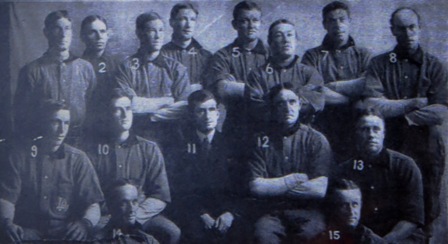
Hal Chase (3), Bobby Eager (6), Tim Flood (12), and Kitty Brashear (13)

Hal Chase (3), Bobby Eager (6), Tim Flood (12), and Kitty Brashear (13)

Despite the injuries, Chase appeared in 190 of the Angels 235 games.  At the close of the 1904 season, he was drafted by the New York Highlanders.