Tag Archives: Portland Beavers

“One of the most Astonishing Pennant Drives in Minor League History.”

16 Oct

After the Pacific Coast League’s (PCL) war-shortened 1918 season, John “Buddy” Ryan joined a team in Seattle’s Puget Sound “Shipyard League,” as a player/manager, but suffered a leg injury in September.

When the PCL reorganized for the 1919 season The (Portland) Oregonian said in an article about the Salt Lake City Bees:

“Buddy Ryan, who hits .300 year after year, is one of the holdouts.  (Manager Eddie) Herr does not know exactly whether Ryan is a holdout or whether he means to retire from baseball, but we who have watched the red-faced (Ryan) year after year know that Buddy wants more coin to cavort in the outer garden, hence the fact that he is secluded at a farm on the outskirts of Denver while the Salt Lake team is doing its best to get into shape.  Ryan has a bum pair of props, but still travels at a pretty fair gait.”

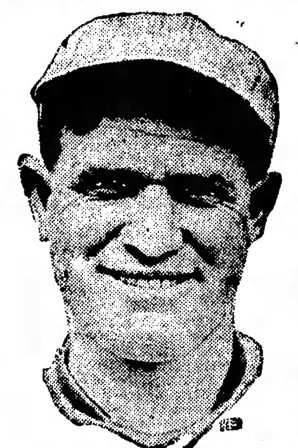
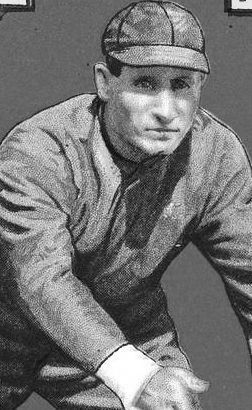
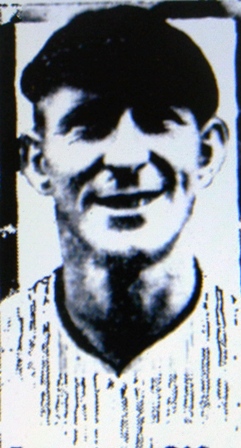
John "Buddy" Ryan

John “Buddy” Ryan

Whether it was about money or his “bum pair of props,” Ryan sat out all of the 1919 season.  In July of 1920 he returned to the PCL, signing with the Sacramento Senators.  The Oregonian said Portland Beavers owner Walter “Judge” McCredie “made strenuous efforts to sign him,” but “(Sacramento manager) Bill Rodgers seems to have pulled off a good stunt in signing the veteran slugger.”

Despite bad legs, the 34-year-old Ryan hit .298 in 105 games for the Senators; he hit .320 and .305 in 1921 and ’22, and retired again after hitting just .256 in 1923.

In September of 1924 Ryan, who operated several gas stations in Sacramento and did some scouting, was the surprise choice to replace Charlie Pick as manager of the last place Senators.  While he remained popular is Portland, The Oregonian was not encouraging about Ryan’s prospects:

“Buddy inherits a hard job.  Sacramento managers last about two years, win, lose or draw.”

Despite the prediction Ryan would remain manager of Sacramento until September of 1932; his best finish was second place in 1928 and he compiled a record of 825-927.

During the 1926 the usually mild-mannered Ryan, who The Berkeley Daily Gazette said typically “never so much as shouted from the sidelines,” was suspended three times for altercations with umpires.

In May The Los Angeles Times said the “rotund and soft-speaking manager” had “cuffed” umpire Augie Moran over “a decision at first base” during a game with the Hollywood Stars.  PCL President Harry Williams suspended Ryan indefinitely; he was reinstated after a week.

In August, after a ten-minute argument with Moran over a call at third base in Oakland, The Associated Press said:

“Moran ordered Ryan from the game, but the Sacramento manager refused to go, so three police men escorted him from the field.”

Williams again announced that he had suspended Ryan indefinitely; that suspension lasted a week also.

Three weeks after Ryan’s return, during a loss to the Los Angeles Angels, The Associated Press said:

“Manager Buddy Ryan of Sacramento took a healthy wallop at umpire (’s chin…With (John) Monroe on second in the first inning, (John) Knight drove a grounder at (Johnny) Mitchell, whose throw to second caught Monroe.  It was a close play, but Van Graflan ruled him out.  Ryan then walked to the field and in the course of an argument flattened Van Graflan with a perfect right to the chin.  He was chased from the field.”

Ryan was again suspended indefinitely, and again returned to the bench after a week.

He never had a similar incident during his nearly 30-years in baseball.

By the time Ryan resigned as Sacramento’s manager in 1932 he had become extremely wealthy, owning a chain of gas stations.  His business interests were cited as the reason for his resignation.
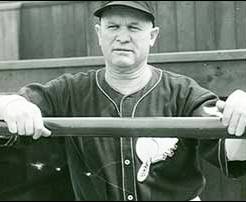
Buddy Ryan

Buddy Ryan

Three years later he managed the Portland Beavers for 52 games (23-29) before stepping down due to “ill health.”

After nearly a decade away from baseball Ryan joined the Oakland Oaks as a scout and coach for new manager Dolph Camilli—Camilli played for Ryan for four seasons in Sacramento and the two remained close.
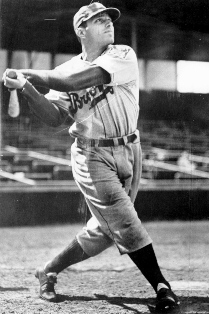
Dolph Camilli

Dolph Camilli

After Camilli left Oakland Ryan became manager of the Wenatchee Chiefs, a Western International League team which had just been acquired as a farm team of Sacramento.  He led the team to a pennant in 1946, but was fired after a 31-59 start the following season.

In 1948 Ryan became a team owner.  Along with a partner he purchased another Western International League franchise; the Spokane Indians.  His first act as owner was to install himself as manager, replacing Ben Geraghty who had just led the team a second place finish, .001 behind the Vancouver Capilanos.

Ryan’s move set the stage for his friend Camilli’s greatest moment as a manager; what The (Spokane) Spokesman-Review called “one of the most astonishing pennant drives in minor league history.”   On August 3 Ryan was hospitalized with pneumonia and Camilli was enlisted to take over the team.  The Indians 59-52, in fourth place, 9 ½ game out of first.

Under Camilli Spokane won 45 of their last 57 games—27 of the last 31—and won the pennant by 2 ½ games.

Camilli turned the team around; he said his friend Ryan had been too soft on the players:

“The first day I walked in there, here they were drinking beer in the clubhouse—I raised holy hell about it—before the game.  I woke ‘em all up.”

Ryan sold his interest in the team after the 1948 season and retired, for the final time, from baseball.

Ryan died in 1956 at age 70—The Oregonian called him “one of the greatest baseball favorites old Vaughn Street (Portland’s ballpark from 1901-1956) ever knew.”
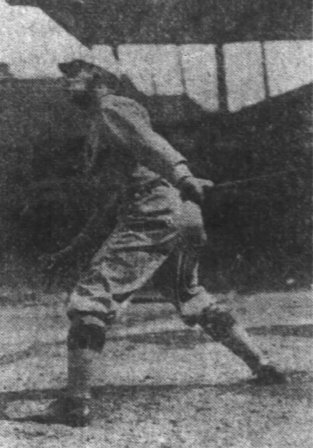
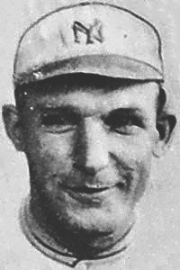
“Johnson can Hit the Ball as far as Anybody”

14 Oct

After Hal Chase replaced George Stallings as manager of the New York Highlanders, Otis “Ote” Johnson was given another opportunity to play for the team.

Highlanders’ second baseman Frank LaPorte and third baseman Jimmy Austin were traded to the St. Louis Browns for third baseman Roy Hartzell.  Chase said he’d move shortstop John Knight to second and playing Johnson at shortstop.

The Sporting Life quoted Chase saying he planned to play Johnson at short “for his batting,” but noted that Johnson “only batted .223 in the fast Eastern League last season.”

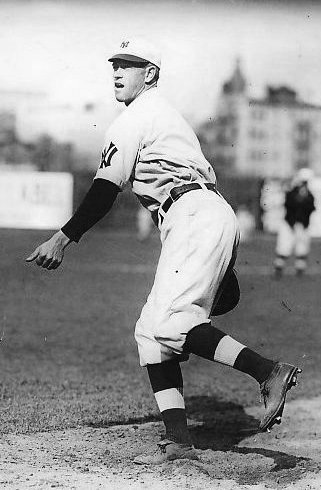
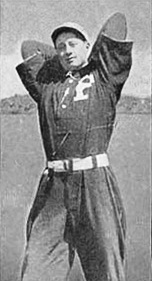
Otis "Ote" Johnson

Otis “Ote” Johnson

New York scout Arthur Irwin agreed with Chase that the team needed Johnson’s bat in the lineup, and told The New York Globe:

“Johnson can hit the ball as far as anybody, and what is more he can hit often.”

The New York Herald said:

“Johnson is a beautiful fielder as well as a good hitter, and it is Chase’s intention to have him take the shortstop job.”

That’s where Johnson was on Opening Day, a 2 to 1 victory over the defending World Champion Philadelphia Athletics; Johnson batted seventh, went 0 for two with a walk and a sacrifice, and scored a run.

After sweeping Philadelphia in three games, New York split a four game series with the Washington Senators.

The Washington Herald said New York’s new shortstop “sure looked good, he fielded his position in fine shape,” and “keeps the infield alive with his funny remarks.”

A month after the season began The Indianapolis News said Johnson was “called home (to Muncie, Indiana) by the serious illness of his mother.”  Three days later the paper said he returned to New York “his mother’s condition having considerably improved.”  Within a week of his return the New York papers reported that Johnson had filed for divorce from his wife.

Less than two weeks later Johnson lost his starting job; Knight moved to short and Earle Gardner played second base.

Ote Johnson

Ote Johnson 1911

The San Francisco Chronicle said of the former Pacific Coast League star:

“Ote Johnson has been benched for his weak hitting.  He put up a star game in the field…but Ote did not respond with the hitting which featured his work when he was with Portland.”

Three days after he was benched Johnson left the team again to finalize his divorce.  After returning Johnson became New York’s primary utility infielder until he fell out of favor with Hal Chase.  The manager had been criticised as the team slumped for, as The Globe said “utterly lacking in the qualities for successful management.”

By August the team was fourteen games out of first place and The Herald said:

“Hal Chase, who has been very lenient with his players, is drawing the string tighter.”

The paper said Johnson “has been suspended without pay for violating the club’s rule of discipline.”  It was never revealed what rule was violated, but Johnson was suspended for about a week.  Johnson also hurt his throwing arm in August, further limiting his playing time.

Many in the New York press questioned Chase’s ability as a manager; Wilton Simpson Farnsworth of The New York Evening Journal was the exception.  Farnsworth said of Chase, when the team was 13 games back in August:

“Hal Chase, the game’s greatest first baseman, has made good as manager of the new York Yankees…Knockers claim that poor management is keeping the Yanks down, but forget it! A bad break in luck plus innumerable injuries is the cause.”

Hal Chase

Hal Chase

Regardless of the reasons, 1910’s second place team was limping to a sixth place finish. Chase resigned as manager in November.  Johnson hit just .234 and committed 31 errors in just 65 games.  He was released to the Rochester Hustlers in the International league in December.

Johnson spent just one season in Rochester; he hit .268 and got married; after the season his contract was sold to the Binghamton Bingoes in the New York State League (NYSL).  Johnson protested the pay cut his Binghamton contract called for, and initially threatened to jump to the PCL, he eventually signed a contract and became popular with fans.  He hit the Bingoes first home run of the 1913 season and was awarded with a free daily shave from a local barber and fan named Billy McCann.

He played most of the next three seasons in the NYSL—with the exception of 45-games with the St. Paul Apostles in the American Association at the beginning of the 1914 season.

After playing for the Elmira Colonels in 1915 Johnson recommended two players to his friend Walter “Judge” McCredie on the Portland Beavers—his teammate, pitcher Frank Caporal, and Syracuse Stars first baseman Owen Quinn—and it appeared the 31-year-old Johnson might be heading back to Portland where he remained very popular.

On November 9 Johnson went hunting with friend in Binghamton.  The (Portland) Oregonian said:

“Ote Johnson, famous ‘Home Run’ Ote of the Portland Pacific Coast team of 1907, 1908 and 1909, is dead…It seems Johnson, in company with a party of friends, went forth in search of game and while chasing a wounded fox stumbled and fell, both barrels of the shotgun he was carrying discharged into his abdomen.

“To the older generation of Portland fans Johnson will be remembered for his prowess in poling out long bingles.  He was one of the longest hitters that ever wore the livery of a Coast League club.  Some are prone to argue that he eclipsed the performances of (Frank) Ping Bodie and Harry Heilman, who are now the long-swat stars of the circuit.  Johnson also had a peculiar throw from third that will be remembered–He had a perfect underhand throw and was a wonder at handling bunts.”

He was buried in Johnson City, New York–his pallbearers included several players: Mike Roach, Charles Hartman, Mike Konnick, and William Fischer,

“The Longest Hit in the World”

10 Oct

Walter “Judge” McCredie, longtime Portland Beavers player, manager and president said the longest home run he ever saw was hit by Otis L. “Ote” Johnson when Johnson played for him:

“The drive of Ote Johnson’s at Los Angeles (in 1909) was the longest clout I have ever witnessed.  Out in center field they had a pavilion 150 feet long.  Hits at Chutes Park in Los Angeles had never come within fifty feet of the pavilion…Johnson put the ball clean over the pavilion and the ball bounced into the bandstand for what I call the longest hit in the world.”

By the time he hit that ball in Portland he had already been called “Home run” Johnson for at least five years, a name earned in the Texas League when he hit 22 home runs in two seasons for the Dallas Giants—he finished third with 12 in 1903 and led the league with 10 in 1904.

Otis "Ote" Johnson

Otis “Ote” Johnson

Johnson was born in Fowler, Indiana in 1882, and grew up in Muncie.  The Dallas Morning News said fellow Indianan Claude Berry recommended Johnson to Dallas.  Primarily a shortstop, Johnson also played first, third and outfield, and appeared in more than 30 games as a pitcher during his professional career.

Johnson was sold to the Little Rock Travelers near the end of the 1904 season; he remained with Little Rock through 1906 but hit just .210 against “A” class Southern Association pitching.  He was sold to the Charleston Sea Gulls in the class “C” South Atlantic League before the 1907 season and hit .263, leading the team in doubles (27), triples (13) and home runs (10).

His performance in Charleston earned him another shot in the Pacific Coast League (PCL) when his contract was sold to Portland.  After a slow start at the tail-end of the 1907 season, Johnson regained his form, hitting .280 with 10 home runs in 1908 and .293 with 13 home runs (including his “longest hit in the world”) in 1909.

McCredie said the day Johnson hit his home run against Los Angeles scouts from the New York Highlanders was in the stands:

“(A)fter the battle they asked me to put a price on Ote.  I did, and a few days later the deal was consummated.”

The price was $4,000.

As Johnson prepared to join the Highlanders and manager George Stallings for spring training in Georgia, the New York press was excited about the team’s new prospect who was spending the winter in Muncie working and playing goalie Muncie’s professional roller polo team.  The New York Globe said:

“There is a ‘terrible Swede’ coming to New York next season.  He is a glass blower and makes from $6 to $7 a day in a factory at Muncie, Ind., and in the summertime he makes his living at swinging a large club and gathering bad and good bounders on the baseball field…The boy we’re harping about is Ote Johnson, who will be a member of the New York Americans. (In the PCL) he is known as ‘Home Run’ Johnson.  They say he has driven many a pitcher to the bench.”

George Stallings

George Stallings

Phil Cooney, a New Yorker, who played with Johnson in Portland, told The Globe:

“They seem to think that this boy Johnson can’t hit a curve ball, but Stallings will find out that he can hit any kind.”

On March 23 Stallings told The New York American that Johnson, who was playing third base and shortstop, “couldn’t hit.” Two days later The American said:

“Ote Johnson this afternoon gave an apt illustration of a home run and for the first time since he reported to Stallings the Portland demon found his batting eye.  But for the most daring burglaries on the part of (William) Birdie Cree, the big third sacker would have hit for 1.000 during the afternoon.  As it was he had a single and a homer in three times at bat.  His single might have been a homer had not (2nd baseman) Earle Gardner sprang into the air and retarded its progress by a blind stab.  But the four-base smash was beyond reach.

“Johnson got to one of (Dick) Carroll’s choicest curves and knocked the ball further than any had ever before traveled in Georgia.  Birdie Cree was playing deep for the big fellow.  The ball went so far that Cree had not gotten to it by the time Johnson crossed the home plate, and he only jogged from second.  The ball rolled to the fence, which is fully 300 yards from the plate.”

As late as April 1 it looked like Johnson might stick with New York.  The Trenton Evening Times said:

“The latest ‘phenom’ to be discovered is Otis Johnson, the New York Americans’ third sacker.  This recruit has been playing sensational games around the last station since he joined the club…Johnson is also quite a slugologist.  In the last few games the youngster has been batting like a Tyrus Cobb.  In a recent game at Athens, Ga., he made four hits in as many times at bat.  Among them was a home run.  Manager Stallings says he thinks Johnson will make a great name for himself this season.”

Despite the build up, and the reports of his prowess at the plate, Johnson did make Stallings’ club.  His contract was sold to the Jersey City Skeeters in the Eastern League.

The (Portland) Oregonian said New York “farmed out” the former Beaver star despite the fact that:

“New York critics credit Ote, nevertheless, with having more promise than some of the players retained by Stallings.”

Johnson hit just .223 with 9 home runs (second in the league) with Jersey City, but would benefit from unrest in the New York clubhouse.  Manager George Stallings accused his star first baseman, Hal Chase, of trying to throw a game in St. Louis (the first of what would become many accusations against Chase). Stallings said he would resign if Chase wasn’t let go; Highlander owner Frank Farrell sided with Chase and forced Stallings out in September; Chase was named manager.

Hal Chase

Hal Chase

After the season ended the New York papers said Johnson would on Chase’s club the following season, either at third base in place of Jimmy Austin (who was rumored to be on the market, and eventually traded to the St. Louis Browns), or to play shortstop in place of John Knight  who would be moved to second base to replace Frank LaPorte (also on the market, and also eventually traded to St. Louis with Austin).

More Otis Johnson on Monday.

“The Disappearing Oakland Infielder”

7 Aug

James Ernest “Jimmy” Frick began his career with the Iola Gasbags in the Missouri Valley League in 1904, hitting .331 in 106 games.  While Frick began the 1905 season with the Oklahoma City Mets in the Western Association, a “C” level league, press reports said he could have played at a higher level and The Sporting Life said St. Louis Cardinals, Hall of Famer pitcher Charles “Kid” Nichols “cannot understand why Jimmy Frick of Oklahoma City persists in hiding out it the bushes when he can make good in fast company.”

Frick was hitting above .300 in July when he was sold to the Seattle Siwashes in the Pacific Coast League; he hit .252 in 18 games until August 18 when The Associated Press said Frick “disappeared mysteriously.”

Four days later The Seattle Star said Frick who “was very popular” with local fans had jumped the Siwashes and rejoined Oklahoma City having been promised “$1000 and a chance to manage the team next year.”

Whether the reported deal was actually promised to Frick is unknown.  While he returned to Oklahoma City he never joined the Mets and finished the season with the Wichita Jobbers.

At the end of the 1905 season multiple teams laid claim to him.  The Associated Press said:

“The case of J. Frick who was claimed by Indianapolis, Wichita, Seattle and Oklahoma City was referred to Secretary (John) Farrell (of the National Association).”

In February of 1906 Frick was awarded to Wichita then immediately traded to the Toronto Maple Leafs in the Eastern League.  He spent the next five and a half years in the Eastern League with Toronto, the Baltimore Orioles and the Newark Indians.

On July 16, 1910, while with Baltimore, Frick was hit in the head with a pitch.  In August The Sporting Life said he had not yet returned to the lineup:

 “(Frick) is in a bad way in this city, as the result of being hit on the head by a pitched ball during the last home series of the Birds. Although the accident happened at least three weeks ago, Frick’s head is still in bad condition, his face is swollen and dizziness seizes him on the slightest provocation. It is doubtful if Frick will play again this season.”

He did return at the tail end of the season, but only appeared in a few games.  In 1911 he was sold to Newark, and after hitting just .200 in 28 games he was sold to the Troy Trojans in the New York State League.

Jimmy Frick

Jimmy Frick

Before the 1912 season, Harry Wolverton, third baseman and manager of the Oakland Oaks in the Pacific Coast League, was named manager of the New York Highlanders in the American League.  Oakland hired Bayard “Bud” Sharpe to manage the team; one of his first moves was to purchase Frick from Troy to fill the void Wolverton left at third.

By March 7 The Associated Press said Sharpe was “somewhat exercised about infielder Frick.”  The new third baseman had arrived in Oakland by train several days earlier, but had not arrived at the Oaks training camp in Livermore, California and had not been heard from him.  Sharpe showed up the following day, but it was reported he had spent several days in an Oakland hospital—it was not reported why he was hospitalized.

Frick began the season as the Oaks starting third baseman, but after hurting his foot in April, August “Gus” Hetling filled in and Frick never returned to the regular lineup.

On September 17, with Oakland in a battle for the pennant with the Vernon Tigers, the team was in Los Angeles when Frick, according to The Associated Press left his room at the Hotel Rosslyn and “dropped from sight.”

The Los Angeles Examiner said the Oakland team and the Los Angeles Police Department had looked for Frick for more than a week and found no sign of the infielder.  The Associated Press said “all of Frick’s haunts have been searched,” and that the disappearance “may hurt Oakland in their fight for the pennant, as he is considered the best utility infielder on the team.”

Herb McFarlin, Secretary of the Oaks, said:

“Frick has always been a steady player, not inclined to drink or run around.  He always has been absolutely dependable.”

On October 4 The Associated Press said “the disappearing Oakland infielder” had been found by his wife:

“He had been ill in a Los Angeles Hospital, assuming an alias so that he would not be bothered.”

As with his spring disappearance there was no mention as to why Frick was in the hospital.

On October 5 he was with the Oaks in Portland for a game with the Beavers, he did not play, but was “out on the coaching line rooting for his team.”

Frick was with the team on October 27 when they took both games of a double-header in Los Angeles; Vernon won both games of a doubleheader from Portland, and Oakland took the pennant with a winning percentage of .591 to Vernon’s .587.

Frick saw little action in the final weeks of the season, his replacement Hetling hit .297 and was awarded a Chalmers Automobile as the league’s most valuable player.

Gus Hetling, Frick's replacement at third

Gus Hetling, Frick’s replacement at third

Frick and his wife went to Portland at the end of the season, and in late November planned to leave for Oklahoma City where they owned a farm.  On November 20 Mrs. Frick went to pick up tickets for the trip, when she returned home, she found Jimmy Frick dead.  He committed suicide by drinking carbolic acid. (Baseball Reference incorrectly lists his date of death as November 18),

The Portland Oregonian said Frick had been “ill and despondent,” and said he was suffering from “brain fever.”  (Brain fever is an antiquated and vague term used for inflammation of the brain).

None of the stories about Frick’s suicide and “brain fever” mentioned the severe injury he had received when he was hit in the head in 1910, so  it’s impossible to determine whether it contributed to the erratic behavior that year, hospital stays, or death of the disappearing Oakland infielder.”

“Branding us as if we were a Band of Convicts”

1 Aug

When the directors of the Pacific Coast League (PCL) met in Los Angeles in January of 1912, The Los Angeles Examiner said the league would be introducing a new innovation:

“President (Allan) Baum said each player will be given a uniform bearing upon the left arm a number he will wear throughout the season.  On all score cards sold at games every man of each team will be named in consecutive order.”

The plan wasn’t immediately embraced.  The Portland Oregonian said several players on the Portland Beavers were against the idea, pitcher Frederick “Spec” Harkness said:

“Of course, I don’t like this branding us as if we were a band of convicts…Hap Hogan (Wallace “Happy Hogan” Bray, manager of the Vernon Tigers) must have been the man who got this freaky legislation past the magnates at Los Angeles for the numbers go nicely with Vernon’s convict suits.”

Frederick "Spec" Harkness

Frederick “Spec” Harkness

The idea was actually the inspiration of Oakland Oaks president Edward Walters.

Major League players and executives also objected to the idea, Tigers president Frank Navin was quoted in The Detroit Times:

“It is a 10-1 bet that the players would rather suffer salary cuts all along the line than be labeled like a bunch of horses.”

Despite early objections, PCL players eventually accepted the inevitable, even Harkness who caused a stir among superstitious teammates when he requested number thirteen.

Roscoe Fawcett, sportswriter of The Portland Oregonian said:

“(Harkness) has put superstition to rout by sending in a request for number 13 under the new Pacific Coast League system of placarding players.”

By March the numbering idea gained some acceptance, and the desire for number 13 had caught on; there was a competition for the number among the Portland Beavers.  The Oregonian said Harkness “now finds his claim disputed by Benny Henderson, Walter Doan and others.”

In the end Harkness (who was born on December 13) received the number.  Given the rampant superstitions of early 20th Century players, most teams simply didn’t issue number 13 to any player.  The only other player in the PCL reported to have worn the number was Oakland pitcher Harry Ables.

Harry Ables

Harry Ables

The PCL’s experiment in uniform numbers was largely unsuccessful.  The Oregonian said the armbands were too small and “cannot be read from 90 feet away.”

By the end of the season, Vernon manager Hogan and Portland manager Walter “Judge” McCredie both of whom enthusiastically supported the numbers, were of the opinion that “the present trial has been a fizzle.”

The biggest criticism of the experiment was the failure of the system to achieve its chief goal, “numbering the men did not help out the sale of scorecards.”

Numbers were eliminated before the 1913 season and the PCL did not use uniform numbers again until the early 1930s.

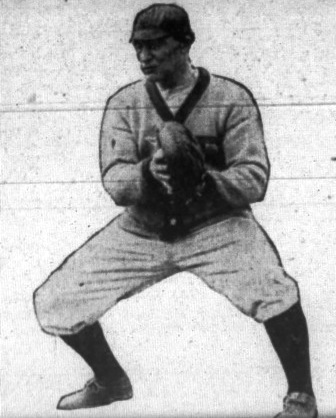
Larry McLean

8 Jan

At 6’ 5” John Bannerman “Larry” McLean is still the tallest catcher to have played in the Major Leagues nearly a century after his final game.  Born in New Brunswick, Canada, McLean’s ability was mostly overshadowed by his frequent off-field troubles during his career.

McLean bounced between the minor leagues, semi-pro teams, and trials with the Boston Americans, Chicago Cubs and Saint Louis Cardinals from 1901-1904.  McLean joined the Portland Beavers in the Pacific Coast League in 1905 and it was here that he developed into a good ballplayer and a first-rate baseball character.

Larry McLean

Larry McLean

McLean hit .285 in 182 games with Portland in 1905, but also started to show signs of the troubles that would plague him for the remainder of his career; Portland added a “temperance clause” to his contract and McLean, who had originally planned on a boxing career, loved to fight.

In 1906, while hitting .355 for Portland, and catching the eye of the Cincinnati Reds who would purchase his contract in August; McLean announced that he was going to become a professional fighter.

The wire report which ran in The Bakersfield Daily Californian said:

“McLean the giant catcher of the Portland team…He is so big that umpires walk out behind the pitcher so they judge balls and strikes…announces that he will fight any man in the world, Big Jeff (Jim Jeffries) not barred.”

The story said McLean was training with Tom Corbett (older brother of “Gentleman Jim” Corbett) and Corbett said he “has a ‘sure ‘nuff’ champion in the big catcher.”

Talk of a ring career temporarily ended when McLean joined the Reds, but McLean’s legend grew.  In November of 1906, he caught a murderer while in a subway station with his wife.  The Boston Post said the suspect:

“Was seen to pull a gun and pump five bullets (into the victim)…Larry started after him and collard him just outside the entrance.  (McLean had the suspect) pinioned so he could not move.  The police soon arrived and took charge of McLean’s prisoner.”

McLean was a huge hit with Havana fans the following winter when the Reds touring Cuba; The Sporting Life said:

“Larry McLean was the favorite and every time he caught a ball the crowd applauded. McLean has been dubbed by the baseball fans ‘Chiquito.’”

McLean and Chicago White Sox pitcher Frank Smith were mentioned at various times as possible opponents for heavyweight champion Jack Johnson; boxing writer Tommy Clark said in 1910 that McLean “Thinks he has a good chance of lowering Johnson’s colors.”

But while McLean was a fan favorite he regularly ran afoul of Cincinnati management and none of the managers he played for was able to keep him out of trouble.

While with the Reds McLean was arrested at least four times–for disorderly conduct, passing a bad check and two assaults.  In one case, at the Savoy Hotel in Cincinnati, McLean knocked a newspaper man from Toledo unconscious after the man “Reproved McLean for using a vile name.”

While serving a suspension for breaking team rules in 1910 McLean Said:

“When I get back to Cincinnati there will be 25,000 fans at the depot waiting to shake hands with me.”

Frank Bancroft, Reds secretary and former manager said in response:

“Twenty-five thousand, why, they’ve not that many barkeepers in Cincinnati”

McLean had worn out his welcome by 1910, but Cincinnati was not able to find any takers for the catcher.  Pittsburgh Pirates owner Barney Dreyfuss said, “I wouldn’t give 30 cents for Larry McLean.”

McLean stayed with the Reds for two more seasons, but when Joe Tinker took over the team one of his first moves was to sell McLean to the Saint Louis Cardinals in January of 1913.  McLean said he had finally learned his lesson and promised to behave with the Cardinals:

“They didn’t want me around because they said I was a bum. Now I’m going to fool Tinker.”

McLean did behave himself in Saint Louis and seemed to appreciate the opportunity he was given by his former Reds teammate, manager Miller Huggins, even earning a “good behavior” incentive in his contract, and was hitting .270 for the Cardinals, but the cash-strapped team went with the younger, cheaper Ivey Wingo behind the plate and traded McLean to the New York Giants for Pitcher Doc Crandall.

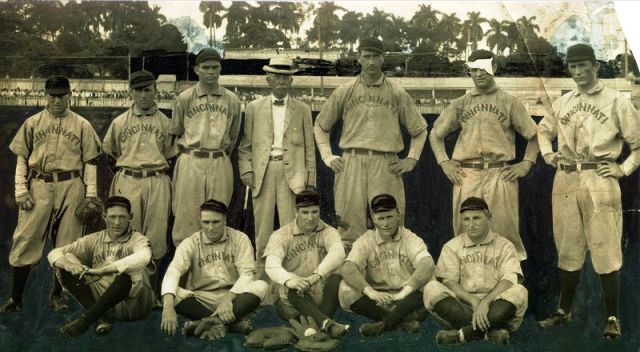
Larry McLean, standing end right, Miller Huggins, standing end left, and Frank Bancroft, standing middle (in suit) on the 1908 Cuban tour.

Larry McLean, standing 5th from left, Miller Huggins, standing end left, and Frank Bancroft, standing middle (in suit) on the 1908 Cuban tour.

The rest of the McLean story tomorrow.

Ty Lober

27 Sep

Elmer “Ty” Lober was a long-time minor league player, manager in the Wisconsin State League, served in the Army in WWI and was a central figure in a scandal that briefly rocked the Pacific Coast League in 1914.

In September of 1914 police in Portland, Oregon announced the arrest of four men, and issued a warrant for a fifth.  The men were charged with “Wholesale traffic in school girls between the age of 14 and 16.”

Two of the men arrested were Portland outfielder Lober and third baseman Bobby Davis.  Also arrested were a local jeweler and an actor named Bert Roach (Roach would go on to appear in more than 300 films).  The warrant was issued for Mission Wolves and former Major League pitcher Frank Arellanes.

Early reports indicated that the players had confessed and that there would be several more arrests.  But the “open and shut case” described by West Coast newspapers seemed to quickly fall apart, and concerns about wide spread human trafficking among Pacific Coast League players quickly faded.

Just three weeks after the arrests the grand jury came back with indictments for only two of those arrested; Davis and Arellanes.  The cases against these two quickly fell apart also and all three players were in uniform at the beginning of 1915, Lober and Davis with Portland and Arellanes with Denver in the Western League.

Lober went on to play with Lincoln in the Western League before entering the service in 1918.  He spent 1920 with an independent team in Zanesville, Ohio and was signed to play with the Milwaukee Brewers in the American Association in 1921.  He finished his career with the Little Rock Travelers of the Southern Association in 1925 (he’s misidentified as “Lobar” on Baseball Reference).

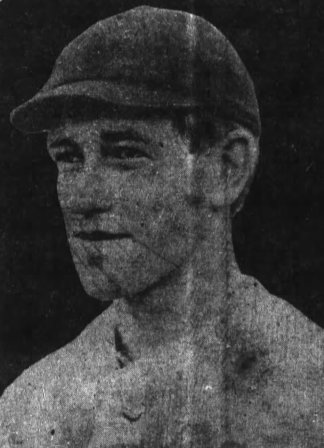
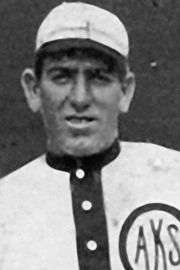
Elmer “Ty” Lober

Lober managed and occasionally played for Two Rivers in the Wisconsin State League into the early 30s

He passed away on November 6, 1946 in Two Rivers.