Tag Archives: San Francisco Seals

“Calvo has been the Victim of a Cruel and Merciless Conspiracy”

4 Jun

When he signed 18-year-old Jacinto “Jack” Calvo Gonzalez, Washington Senators manager/owner Clark Griffith was no stranger to Cuban players, having managed Armando Marsáns and Rafael Almeida with the Cincinnati Reds, but Calvo’s signing was the beginning of Griffith’s 40-plus year commitment to signing players from Cuba.  During his tenure the Senators signed more than half of the 63 Cuban players in the major leagues.

Calvo was “discovered” while playing with Almendares in the Cuban National League, where he hit .342 in 19 games.  He made even more of an impression during a series Almendares played against the New Orleans Pelicans of the Southern Association, Calvo hit .400 and his older brother Tomas hit .385.

???????????????????????????????

He also hit .400 during a six-game series with the Philadelphia Athletics, The Associated Press said he didn’t compile those numbers facing minor league pitchers picked up for the series, but “against (Eddie) Plank, (Jack) Coombs, and (Charles “Chief”) Bender.”

When rumors circulated that Washington might have signed Calvo, Bender said:

“I never saw a faster youngster in my life; he can hit too, and looks for the entire world like a class ball player…If Griffith has signed him he will never regret it, for there is no chance for him to be a failure.”

By December of 1912 Griffith had Calvo under contract.  The Pittsburgh Press said:

“The young Cuban sent a letter to Griff, written in Spanish.  ‘They did not teach Spanish where I went to school,’ said The Old Fox, ‘so I can’t translate the missive.  However, as he signed his contract I guess everything is alright.’”

The Boston Red Sox signed Tomas Calvo later in December.

While Tomas never made it in Boston, Jacinto made his debut with the Senators on May 9; he hit only .242, but everyone noticed his arm.  After a June game with the St. Louis Browns, The Associated Press said:

“The youngster astonished the bugs yesterday with his remarkable throwing arm.  At one time he heaved the ball from the right field fence directly to (Germany) Schaefer’s hands at second.”

On August 13 Calvo was sent to the Atlanta Crackers in the Southern Association and made his first appearance with the team the following day, batting seventh, going 1 for 4.  The Atlanta Constitution said “He’s fast, fields pretty well, throws like a shot and meets the ball squarely.”

Calvo only lasted 10 days in Atlanta.  He was hit on the right arm with a pitch thrown by Charles “Curly” Brown of the Montgomery Rebels.  He was returned to the Senators and did not appear in another game that season.  (Some sources show Calvo with the Long Branch Cubans in the New York New Jersey League—it was most likely his brother Tomas, an infielder, rather than career outfielder Jacinto, who played shortstop for the team in 94 games).

Calvo started the 1914 season with the Los Angeles Angels in the Pacific Coast League.  After only 11 games (he was 4-8 with one double, one triple and a stolen base) he was sent to the Victoria Bees in the Northwestern League.  Later in the season a story came out explaining his abrupt departure from Los Angeles.
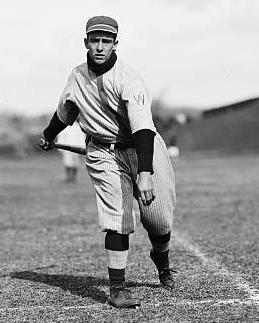
Calvo with the Washington Senators

Calvo with the Washington Senators

The Spokane Spokesman-Review said, “Calvo has been the victim of a cruel and merciless conspiracy,” despite the fact that “in the exhibition games last spring against the White Sox Calvo loomed up head and shoulders above the other Angel gardeners, out hitting them by a wide margin and displaying more speed on the bags than the whole Angel team combined.”

The paper claimed that a female reporter:

“(o)n one of the local papers…dragged out of him the fact that his father was a rich sugar planter in Havana, and that he played baseball for fun and not for money…That was the beginning of the end for little Calvo. “

The story said fans began harassing Calvo, and:

“Instead of coming to his rescue, the players on the Angel team ‘rode’ the boy unmercifully.  It was pathetic to see the friendless little Cuban trying to get into the good graces of his teammates.  One day, in the clubhouse the boy sat down on a bench and cried before them all.  His spirit was broken.”

Calvo hit .289 for Victoria in 1914, and spent the spring of 1915 with the Senators before being release before the beginning of the season.  After his release he played with his brother Tomas for the Long Branch Cubans, by then a member of the Independent Negro League; he also played for Havana in the Cuban-American Negro Clubs Series.

Calvo next played for the Vancouver Beavers in the Northwestern League and the San Francisco Seals in the Pacific Coast League, hitting .329 in 1916, and slipping to .263 in 1917. After the 1917 season, the outfielder returned, unsigned, the contract sent to him by Seals owner Charlie Graham.

Calvo had been very popular in San Francisco during his nearly two seasons with the Seals, but was criticised by fans and local press for his holdout, especially because he was holding out on the even more popular Graham.  The San Francisco Chronicle said:

“He sent his terms, and as they were exactly what he asked for before.  (Charlie) Graham is wondering why the Cuban went to the trouble to wire at all.”  The paper criticised Calvo for “asking for more money than he got last year,” while “better players than he have submitted to a salary slash on account of war conditions.”
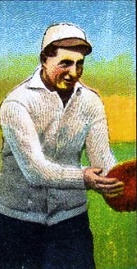
San Francisco Seals owner Charlie Graham

San Francisco Seals owner Charlie Graham

The Chronicle lamented the fact that Seals outfielder Biff Schaller would miss the entire season with an injury, otherwise “Calvo could have stayed in Havana for all that anyone here cares.”

As it turned out, Calvo did stay in Havana.  For all of 1918 and ’19, not returning to the states until 1920.  Tomorrow–Jacinto Calvo’s return.

“Mique” Fisher 2

7 May

On October 12, 1906, with the World Series between the Chicago White Sox and Chicago Cubs deadlocked at two games apiece, August “Garry” Herrmann, President of the National Commission, received a telegram from Fresno, California:

“Fresno will give $25,000 guarantee; guarantee 40,000 fans and sunshine for deciding game of World Series.

–Mike Fisher”

Fisher said the offer to bring the series and Fresno native Frank Chance to town was backed by “the businessmen here.”

It is doubtful Herrmann took the offer seriously, and it’s probably just as doubtful that Fisher took it seriously, but it was picked up by newspapers across the country, and Fisher enjoyed the publicity.

It was a last bit of publicity before his career in organized baseball ended.  Later in the month he was dismissed as manager of the Fresno Raisin Eaters, and the team was dropped from the Pacific Coast League (PCL) the following spring.

Within weeks Fisher had moved on to a new project; he announced that he was in the process of forming a team to travel to Hawaii.  The San Francisco Call said “It will be the first American ball team to make the trip across the Pacific in a little over nineteen years,” since Spalding’s world tour.

In conjunction with Jesse Woods, a Honolulu promoter, Fisher organized a tour of the Hawaiian Islands with a team of PCL stars.

Mike Fisher

Mike Fisher

Upon his return, Fisher got more ink on the West Coast, when he headed to Nevada with Charlie Irwin of the San Francisco Seals; the two met with businessmen in the mining towns of Goldfield and Tonopah to discuss forming a professional league—Fisher told The San Jose Mercury News that he was now “against organized baseball,” and if he got involved in the league “it will be an outlaw organization.”

Fisher chose not to get involved in the new league, but immediately went to work on an even more ambitious tour than the 1907 Honolulu trip.

With the sponsorship of the Reach Sporting Goods Company, Fisher would accompany a group of stars to China, Japan and the Philippines.  Early publicity promised the travelers would include Ty Cobb, Hal Chase, and Frank Chance.

When the ship set sail in November of 1908 those three stars were not on board, but “several hundred fans and friends” were present when the steamer China left the port in San Francisco to see the group off.  The team was substantially the same as the one that toured Hawaii the previous year—an aggregation of PCL stars and a few National and American League players– and consisted of: Jim Delahanty, George Hildebrand, Bill Burns, Pat Flaherty, Jack Bliss, Babe Danzig, Harry McArdle, Nick Williams, Joe Curtis, Heine Heitmuller, Jack Graney and Bill “Brick” Devereaux.

Despite the failure to land Cobb, Chase or Chance for the tour, the West Coast press applauded Fisher for even attempting the trip, The Call said:

“The undertaking which he has fathered and which is so successfully underway at the present time is a big proposition.  With the single exception of the around-the-world trip of the A.G. Spaldings years ago, nothing on as big a scale as this has ever been attempted.  To take a team of American baseball players over a journey that will total 10,000 miles before they return, to play games in China, Japan, Manila and Honolulu is something that two or three years ago would have been laughed at as an impossibility.”

The tour lasted more than three months, with the team barnstorming through Japan, China, the Philippines and Hawaii, playing local and US Service member teams.  Though reports varied, the team played between twenty and thirty games, and lost no more than four.

While they drew large crowds throughout the trip, the newspapers back home reported that the tour was a financial disaster; when the players arrived back in San Francisco on February 15, 1909 aboard the Tenyo Maru, Fisher responded to the reports:

“I hear that it has been said that the trip was a financial frost.  Well, anybody who says that is a liar.  We broke even in Japan and made money in Manila and Honolulu.  I am satisfied with the trip.”

Fisher didn’t mention the financial results in China; likely because that leg of the tour was a disaster financially.  Years later he would tell a story about the team’s experience there, complete with his usual exaggerations:

“In one game we played in Canton we had 150,000 people inside, and as the gatemen had been instructed to accept Chinese money it required the combined efforts of the entire team to tote the money up to the hotel.  A special staff of accountants was busy all night totaling it up and in the morning we discovered we had $46.15.”

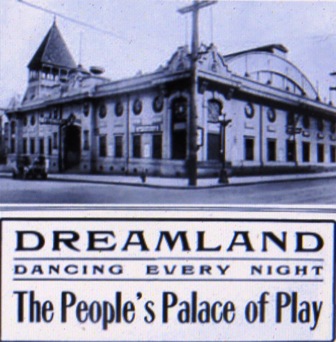
Fisher promised to take a team to Australia the following year.  The trip never took place; instead Fisher purchased a Seattle dance hall called the Dreamland, and quickly became the target of the pious women of the city.  Early in 1910 Fisher was indicted by “The King County grand jury, as a direct result of the activity of the Women’s Clubs,” for violating liquor laws, allowing “unescorted women” into his dance hall, and other assorted charges.  A special prosecutor, Justice William Henry White, one of the most respected jurists in Washington State, was appointed to prosecute Fisher and other club owners targeted by the women.

Ever the promoter, Fisher used the indictment to promote his dance hall and rally public support.  After the indictment was handed down Fisher sponsored a “Sermon in the Dreamland rink.”  According to The Seattle Times, Fisher engaged Reverend Frank Herthum, who “has liberal ideas about amusements.”

Mike Fisher's Dreamland Dancehall, Seattle

Mike Fisher’s Dreamland Dance Hall, Seattle

Herthum preached, and Fisher presented a free vaudeville show.  The paper said Fisher had stirred up a “protest against the effort to close the dance hall without having provided a substitute where clerks, servant girls and employees in the shops may pass an evening to their liking.”  At the same time The Times noted that the prosecutor was becoming impatient with the women who brought the charges because they continually promised to provide evidence that “has not yet come to light.”  The charges were quietly dismissed within weeks.

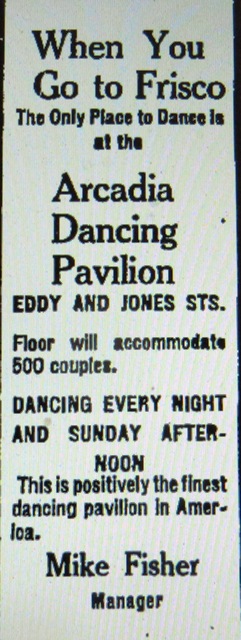
Fisher left Seattle sometime in 1911 and began operating the Arcadia Dance Hall in San Francisco.

Advertisement for Fisher's Arcadia Dancing Pavilion.

Advertisement for Fisher’s Arcadia Dancing Pavilion.

In January of 1917 Fisher made headlines in California when he announced that he was directing an effort to restart the California State League, which had folded after the 1915 season.  He said he would have clubs in Sacramento, Fresno, Stockton and San Jose.  Within two weeks Fisher abandoned the plan.  The San Jose Mercury News was not surprised:

“Mr. Fisher, the wonderful getter of publicity, has his publicity and is through.  Probably he has done wonders for his dance emporium or whatever it is he runs.”

The following year the San Francisco Seals of the Pacific Coast League came on the market; the first name reported as a potential buyer was Mike Fisher.  Fisher again got his headlines, but it was his old friend Charlie Graham who got the team.  Graham, and a group of investors purchased the Seals and the former catcher was installed as manager.

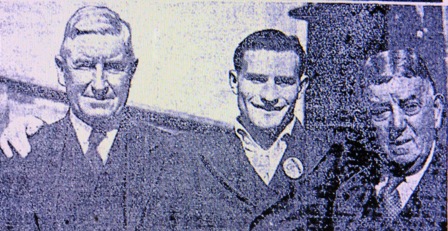
Charlie Graham, left, Mique Fisher, right, with World Middleweight Champion and actor Freddie Steele.

Charlie Graham, left, Mique Fisher, right, with World Middleweight Champion and actor Freddie Steele.

With his friend in charge The Mercury News said Fisher became a fixture “around the San Francisco ballpark ever since Graham bought in on the Seals in 1918,” he would remain a fixture at Recreation Park, and later at Seals Stadium for more than 20 years , and continued to provide copy for West Coast s sports writer

As a result of his friendship with Graham, who recommended he get the honor, 77-year-old Fisher was selected to travel to Cooperstown to represent the PCL at baseball’s centennial celebration in 1939.  The man who so loved seeing his name in the paper  received headlines one more time, when he died in San Francisco on June 6, 1943.

More “Chief” Johnson

30 Aug

Last week I told you about George “Chief” Johnson’s release from the Chicago White Sox in the spring of 1913, allegedly because of his affiliation with the Winnebago (Ho-Chunk) Native-American Tribe.

Cincinnati Reds owner August Garry Herrmann and manager Joe Tinker were apparently more concerned with a good arm than the so-called “Winnebago ban,” and signed Johnson.

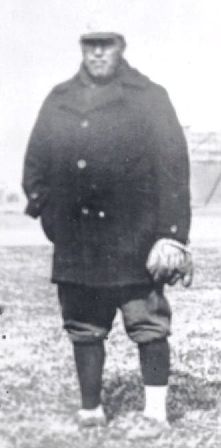
George “Chief” Johnson

Through the first month of the season, Johnson was the only effective Reds pitcher, winning three games (including two shutouts) for a team with a record of 5-16.

The New York Times took notice in an article, the racist tone of which was typical of the era:

“Big Chief Johnson of the Winnebagos [sic] is copper-colored and fat. At bat he displays as much activity as the wooden Redmen who hold forth at the doors of countless cigar stands. But on the mound this latest Indian to edge his way into the select circles of major leaguedom can deal out ciphers with as much success as the more illustrious Johnson of Washington.”

Johnson ended the season 14-16, with a 3.00 ERA for a team that finished 25 games under .500.

In 1914, the Federal League came calling.  Otto Knabe, Manager of the Baltimore Terrapins sent a telegram to Johnson asking for his terms.  According to Knabe, Johnson replied with a telegram sent collect saying “Will sign for $10,000 bonus and reasonable salary.” Knabe telegrammed Johnson collect “Asked for your terms, not Walter Johnson’s”

Otto Knabe

Johnson signed the following month with the Federal League Kansas City Packers for a more modest $3000 advance and $5000 salary; the only problem was that Johnson had already signed a contract with the Reds for 1914.

Johnson’s 1914 season was highlighted by a series of injunctions and court rulings that kept him sidelined for much of the season while organized baseball battled the upstart Federal League.  (The saga of the Federal League has been rehashed in numerous books and blogs, no need to reinvent the wheel here—I recommend this book)

Johnson played for Kansas City in 1914 and 1915 posting records of 9-10 and 17-17.  Throughout his tenure in Kansas City Johnson had numerous run-ins with the law over his drinking and was cited for desertion and non-support of his wife. Additionally, his weight ballooned to well over two hundred pounds.

Johnson’s major league career was over after 1915, but he pitched three more seasons in the Pacific Coast League.  Pitching for the Vernon Tigers near the end of the 1916 season Johnson was so out of shape that it was reported in the Los Angeles Times that the Portland Beavers chased him from a game in the third inning by having several hitters in a row lay down bunts that the overweight pitcher was unable to field.

Johnson reportedly returned in better shape in 1917 and was 25-23 pitching for Vernon and the San Francisco Seals.  Johnson returned  in 1918, posting a 2-6 record, and was joined in San Francisco for a short time by his brother John who appeared in one game for the Seals.

After his release by San Francisco Johnson barnstormed with a variety of teams throughout the Midwest and West and sold “snake-oil” in a traveling tent show.  On June 11, 1922, Johnson was in Des Moines, Iowa with his tent show when he was killed in a dispute over money during either a dice or poker game (news accounts varied).  Johnson’s killer, an African-American gambler named Ed Gillespie, was originally charged with first-degree murder, but the charges were reduced to manslaughter based on eye-witness accounts that claimed Johnson was “drunk and belligerent.”  He was buried at the Winnebago Cemetery in Winnebago, Nebraska.

A postscript.

A few days after Johnson’s death a small item appeared in Iowa newspapers; it was about a druggist in Des Moines who had agreed to put a display in his store window to promote Johnson’s tent show. The story said:

“Anyone anxious to own a nice horned rattlesnake may have one by taking the one left in his show window by the late Mr. Johnson.”