Tag Archives: Washington Senators

“Johnson can Hit the Ball as far as Anybody”

14 Oct

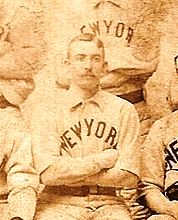
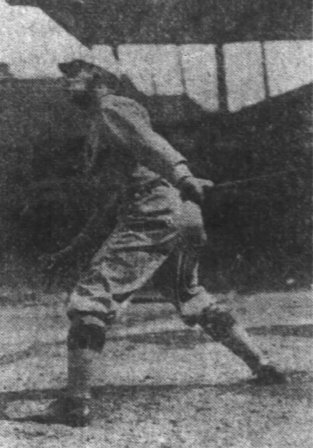
After Hal Chase replaced George Stallings as manager of the New York Highlanders, Otis “Ote” Johnson was given another opportunity to play for the team.

Highlanders’ second baseman Frank LaPorte and third baseman Jimmy Austin were traded to the St. Louis Browns for third baseman Roy Hartzell.  Chase said he’d move shortstop John Knight to second and playing Johnson at shortstop.

The Sporting Life quoted Chase saying he planned to play Johnson at short “for his batting,” but noted that Johnson “only batted .223 in the fast Eastern League last season.”
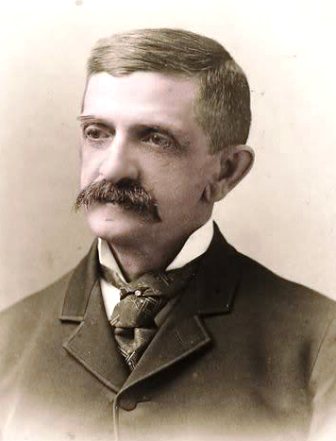
Otis "Ote" Johnson

Otis “Ote” Johnson

New York scout Arthur Irwin agreed with Chase that the team needed Johnson’s bat in the lineup, and told The New York Globe:

“Johnson can hit the ball as far as anybody, and what is more he can hit often.”

The New York Herald said:

“Johnson is a beautiful fielder as well as a good hitter, and it is Chase’s intention to have him take the shortstop job.”

That’s where Johnson was on Opening Day, a 2 to 1 victory over the defending World Champion Philadelphia Athletics; Johnson batted seventh, went 0 for two with a walk and a sacrifice, and scored a run.

After sweeping Philadelphia in three games, New York split a four game series with the Washington Senators.

The Washington Herald said New York’s new shortstop “sure looked good, he fielded his position in fine shape,” and “keeps the infield alive with his funny remarks.”

A month after the season began The Indianapolis News said Johnson was “called home (to Muncie, Indiana) by the serious illness of his mother.”  Three days later the paper said he returned to New York “his mother’s condition having considerably improved.”  Within a week of his return the New York papers reported that Johnson had filed for divorce from his wife.

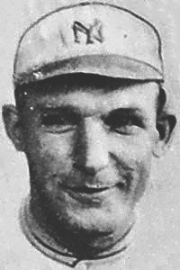
Less than two weeks later Johnson lost his starting job; Knight moved to short and Earle Gardner played second base.
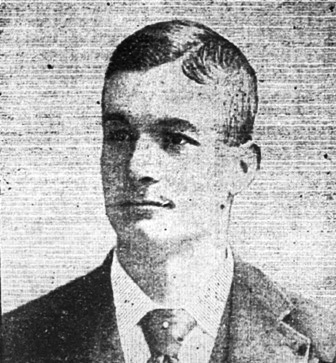
Ote Johnson

Ote Johnson 1911

The San Francisco Chronicle said of the former Pacific Coast League star:

“Ote Johnson has been benched for his weak hitting.  He put up a star game in the field…but Ote did not respond with the hitting which featured his work when he was with Portland.”

Three days after he was benched Johnson left the team again to finalize his divorce.  After returning Johnson became New York’s primary utility infielder until he fell out of favor with Hal Chase.  The manager had been criticised as the team slumped for, as The Globe said “utterly lacking in the qualities for successful management.”

By August the team was fourteen games out of first place and The Herald said:

“Hal Chase, who has been very lenient with his players, is drawing the string tighter.”

The paper said Johnson “has been suspended without pay for violating the club’s rule of discipline.”  It was never revealed what rule was violated, but Johnson was suspended for about a week.  Johnson also hurt his throwing arm in August, further limiting his playing time.

Many in the New York press questioned Chase’s ability as a manager; Wilton Simpson Farnsworth of The New York Evening Journal was the exception.  Farnsworth said of Chase, when the team was 13 games back in August:

“Hal Chase, the game’s greatest first baseman, has made good as manager of the new York Yankees…Knockers claim that poor management is keeping the Yanks down, but forget it! A bad break in luck plus innumerable injuries is the cause.”

Hal Chase
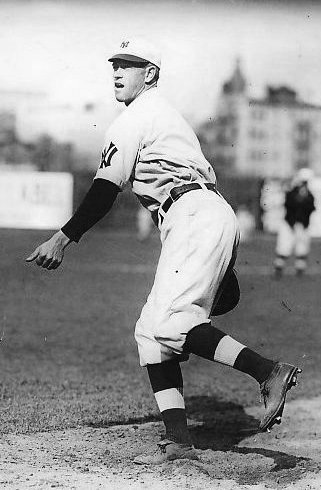
Hal Chase

Regardless of the reasons, 1910’s second place team was limping to a sixth place finish. Chase resigned as manager in November.  Johnson hit just .234 and committed 31 errors in just 65 games.  He was released to the Rochester Hustlers in the International league in December.

Johnson spent just one season in Rochester; he hit .268 and got married; after the season his contract was sold to the Binghamton Bingoes in the New York State League (NYSL).  Johnson protested the pay cut his Binghamton contract called for, and initially threatened to jump to the PCL, he eventually signed a contract and became popular with fans.  He hit the Bingoes first home run of the 1913 season and was awarded with a free daily shave from a local barber and fan named Billy McCann.

He played most of the next three seasons in the NYSL—with the exception of 45-games with the St. Paul Apostles in the American Association at the beginning of the 1914 season.

After playing for the Elmira Colonels in 1915 Johnson recommended two players to his friend Walter “Judge” McCredie on the Portland Beavers—his teammate, pitcher Frank Caporal, and Syracuse Stars first baseman Owen Quinn—and it appeared the 31-year-old Johnson might be heading back to Portland where he remained very popular.

On November 9 Johnson went hunting with friend in Binghamton.  The (Portland) Oregonian said:

“Ote Johnson, famous ‘Home Run’ Ote of the Portland Pacific Coast team of 1907, 1908 and 1909, is dead…It seems Johnson, in company with a party of friends, went forth in search of game and while chasing a wounded fox stumbled and fell, both barrels of the shotgun he was carrying discharged into his abdomen.

“To the older generation of Portland fans Johnson will be remembered for his prowess in poling out long bingles.  He was one of the longest hitters that ever wore the livery of a Coast League club.  Some are prone to argue that he eclipsed the performances of (Frank) Ping Bodie and Harry Heilman, who are now the long-swat stars of the circuit.  Johnson also had a peculiar throw from third that will be remembered–He had a perfect underhand throw and was a wonder at handling bunts.”

He was buried in Johnson City, New York–his pallbearers included several players: Mike Roach, Charles Hartman, Mike Konnick, and William Fischer,
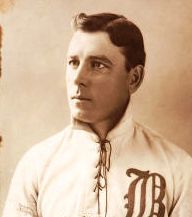
“Fear of the Black List has Stopped Many a Crooked Player from Jumping”

9 Sep

For a brief period in the mid1890s, George Jouett Meekin was considered among the top pitchers in the game; he might never have had the opportunity, but for what The Sporting Life called “The disastrous effects of Chairman Young’s somersault.”

Jouett Meekin

Jouett Meekin

 John Montgomery Ward, Meekin’s manager with the New York Giants, said he was, along with Amos Rusie, Tim Keefe, John Clarkson and Kid Nichols, the “most marvelous pitchers as ever lived.”

Charles “Duke” Farrell, who caught Meekin and Rusie with the Giants, said:

“Sometime, it seemed to me that (Meekin) was actually faster…Rusie’s speed struck the glove with a bruising deadening, heavy shock, and Meekin’s fastest gave a sharp, sudden sting.”

But in 1891 Meekin was a 24-year-old pitcher in his third season with the St. Paul Apostles in the Western Association. The New Albany, Indiana native became a well-known amateur player across the Ohio River in Louisville before signing his first professional contract with the Apostles in 1889.  His sub .500 winning percentage was not enough to keep the American Association’s eighth place Louisville Colonels, from inducing Meekin to jump his contract with St. Paul.

In June Meekin jumped; at the same time third baseman Harry Raymond jumped to Colonels from the Western League’s Lincoln Rustlers.

The National Board of Control, created after the 1890 season as part of the “peace agreement” between the National League and The American Association after the collapse of the Players League, to arbitrate contract disputes, acted quickly.  Board Chairman (and National League President) Nick Young announced that Meekin and Raymond would be “forever ineligible to play with or against a National Agreement club.”  The statement, signed by Young, also said:

“This order or any other that may hereafter be made for the same cause, will never be modified or revoked during the existence of the present board, whose term of office will not expire for five years.”

The move was applauded by the press and no less a figure than “the father of baseball,” Henry Chadwick, who called Raymond and Meekin part of a “venal cabal” of jumping players.

Despite the promise that the order would “never be modified or revoked,” Young did just that.  Within weeks of issuing the order, both players were reinstated.

The backlash was swift.

The Cleveland Plain Dealer called the reversal “nauseating.”  The Cincinnati Times-Star said it was “one of the greatest mistakes ever made.”  The Milwaukee Evening Wisconsin said Young and the board chose to “toss the National Agreement into the fire.”

nickyoungpix

Nick Young

James Edward Sullivan, founder of the Amateur Athletic Union (AAU) said the reinstatement of the “arch-culprits” Meekin and Raymond “was the worst in the history.”  He predicted dire consequences as a result:

“Heretofore the fear of the black list has stopped many a crooked player from jumping or doing dishonest work.  But from now on it will be different.  A precedent has been formed.”

Raymond jumped back to Lincoln, taking Colonels’ pitcher Phillip “Red” Ehret with him to the Rustlers.  Meekin remained with Louisville and moved to the National League with the Colonels the following season.

Meekin had a 10-year big league career as a result of Young’s reversal.

From 1891-93, Meekin was 29-51 with Louisville and the Washington Senators and was traded to the Giants (along with Duke Farrell) before the 1894 season.  He was 33-9, and fellow Indiana native Amos Rusie was 36-13, for the 2nd place Giants.  Meekin had two complete game victories in the Giants four game sweep of the first-place Baltimore Orioles in the Temple Cup series (Rusie won the other two games).

The New York Evening Journal called Meekin “Old Reliable,” and said, “He can push ‘em up to the plate in any old style, and is factor with the stick.”  The pitcher hit .276 with 29 RBI in 183 at bats in 1894 (including hitting 3 triples in a game on July 4) and was a career .243 hitter.

Meekin won 102 more games (including 26, and 20 win seasons in 1896 and ’97), but as O. P. Caylor said in The New York Herald he suffered from “a lack of control.”  Meekin walked 1056 batters and struck out only 901 in more than 2600 innings, he also hit 89 batters; in 1898, he broke Hughie Jennings nose with a pitch.

After posting a 16-18 record for the seventh place Giants in 1898, Meekin, along with Rusie, and second baseman William “Kid” Gleason, were blamed by New York owner Andrew Freeman for the team’s disappointing finish.  Freeman told reporters:

“Meekin, Rusie and Gleason will be either sold or traded.  We do not want them.  I’m going to break up cliques in the team even if I have to get rid of every man.  There must be harmony.  Without it we can’t win games.  We have too many men who are simply playing for their salaries and do not seem to care whether they win or not.”

Rusie had injured his arm late in the season and sat out the next two years.  Meekin and Gleason, despite Freedman’s promise, returned to the Giants for the 1899 season.  The team finished in tenth place, and Meekin struggled with a 5-11 record.

He was sold to the Boston Beaneaters in August for a reported $5000, although it was commonly assumed that the Giants received much less, or simply “loaned” Meekin to Boston for the stretch run; a charge made by Brooklyn Superbas manager Ned Hanlon.  Although Hanlon’s charges have become “fact” in countless books and articles over the years, several newspapers, including The Pittsburgh Press refuted Hanlon’s story:

“All that talk and fuss about Freedman giving Jouett Meekin to Boston in order to help that team win the pennant and thus get even with Brooklyn is nonsense.  The truth of the matter is that Freedman thought Meekin’s days as a pitcher were over, and he offered him to the Pittsburgh club, but President (William) Kerr thought the same way and did not take him.  At the time Boston’s pitching corps was in bad shape and manager (Frank) Selee took a chance on the big fellow.  There was no underhand dealing in the matter at all.”

Meekin was 7-6 with a 2.83 ERA for Boston, but the team finished second to Brooklyn.  He was released by Boston before the 1900 season and pitched just two games with the Pittsburgh Pirates before being released again in July.  He finished the season with the Grand Rapids Furniture Makers in the Western Association and spent 1902 in the Southern Association with the Memphis Egyptians.

Meekin returned home to New Albany, Indiana, where, in 1910, according to The Trenton True American “his earnings from baseball are well invested in real estate.”

Meekin slipped into relative obscurity by the time he died in 1944.

The original picture that appeared with this post–now below–was misidentified as Jouett Meekin in this blog and by The Louisville courier-Journal in 1897.  According to Mark Fimoff co-chair SABR Pictorial History Committee, the picture was actually Lave Cross.  

Lave Cross--picture earlier misidentified as Jouett Meekin.

Lave Cross–picture earlier misidentified as Jouett Meekin.

Things I Learned on the Way to Looking up Other Things #5

8 Aug

Johnny Evers “Ardent Worshipper of Hoodoo Lore”

Edward Lyell Fox was a war correspondent in World War I; after the war he was accused of taking money to write stories favorable to the German government.  Before that he wrote extensively about baseball for several American magazines.

In 1910, writing for “The Columbian Magazine”, Fox interviewed Johnny Evers of the Chicago Cubs about the “almost unbelievable efforts made by ballplayers to offset what they firmly believe to be ‘hoodoos.’”

Evers was one of the most superstitious players in the game, “an ardent worshipper of voodoo lore,” according to Fox, and Evers said the Cubs “are more superstitious than any team in the big leagues,” and that manager Frank Chance “is one of the most ardent respecters of diamond ‘hoodoos.’”

It’s not certain that Evers’ claim that “most players firmly believe in,” the superstitious he listed for Fox, but it’s clear he believed them:

 “If any inning is favorable to a player, he will try to lay his glove down on the same spot where he had placed it the inning before.

“While going to different parks in cars, the sight of a funeral cortege is always regarded as an ill omen.”

Evers also said the sight of a handicapped person was also an “ill omen…unless you toss him a coin.”

On the other hand Evers said a wagon load of empty barrels was a sign of good luck.

Johnny Evers,

Johnny Evers,


“Too much of a Good Thing”

Even in baseball’s infancy that were critics that said the popularity of the game was “too much of a good thing.”

In September of 1865 The Philadelphia Inquirer editorialized:

 “Let us take, for instance, the base ball (sic) pastime, which is now assuming the proportions of a violent and widespread mania.”

The culprit, according to the editorial, was the athletic club teams that were growing in popularity and  no longer “satisfied with a game or two a week.”

 “(S)ome of these associations devote, three, four or five days at a time to their games; that they are not satisfied with playing on their own grounds for their own benefit and amusement, but that they thirst for popular applause, and are rapidly transforming their members into professional athletes…They issue their challenges, and hotly contend for mastery with clubs belonging to other cities.”

 The Inquirer did predict one aspect of baseball’s new popularity:

 “It can be easily seen that this spirit must soon lead on to gambling. So far the only prize of the base ball and cricket matches has been a ball or some implement of the game, but private wagers have undoubtedly been laid upon the playing of certain clubs, and money has changed hands upon results.”

The Enquirer was also concerned that the game defied “common sense” because “during the heats of summer violent bodily exercise should be avoided; but upon this subject common sense and the base ball mania seem to be sadly at variance.”

The editorial concluded that “the young men,” make sure “they do not depreciate themselves to the level of prize fighters or jockeys, who expend their vim on horse races and matches made for money.”

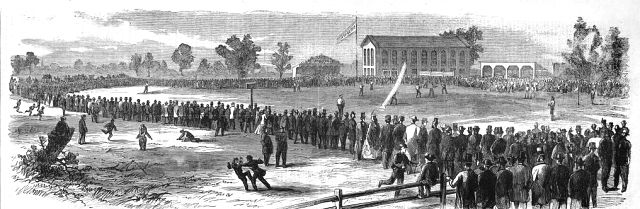
Athletic of Philadelphia versus Atlantic of Brooklyn, in Philadelphia October 30, 1865--"a violent and widespread mania."

Athletic of Philadelphia versus Atlantic of Brooklyn, in Philadelphia October 30, 1865–“a violent and widespread mania.”


Odds, 1896

Early in 1896 The New York Sun reported on “an early development of interest.”  A local bookmaker had issued odds on the 1896 National League race:

“He lays odds of 3 to 1 against Baltimore finishing first; 7 to 2 against Cleveland and Boston;  4 to 1 Philadelphia and New York; 7 to 1 Chicago; 8 to 1 Brooklyn and Pittsburgh; 15 to 1 Cincinnati; 40 to 1 Louisville; 100 to 1 Washington, while (Christian Friedrich “Chris”) von der Ahe’s outfit (St. Louis) is the extreme outsider on the list.  Any lover of the German band can wager any amount and “write his own ticket.”

The final standings:

1. Baltimore Orioles

2. Cleveland Spiders

3. Cincinnati Reds

4. Boston Beaneaters

5. Chicago Colts

6. Pittsburgh Pirates

7. New York Giants

8. Philadelphia Phillies

9. Washington Senators

10. Brooklyn Bridegrooms

11. St. Louis Browns

12.  Louisville Colonels

1896 Orioles, 3 to 1 favorites, won the National League Championship.

1896 Orioles, 3 to 1 favorites, won the National League Championship.

“The Ty Cobb of Trapshooters”

15 Jul

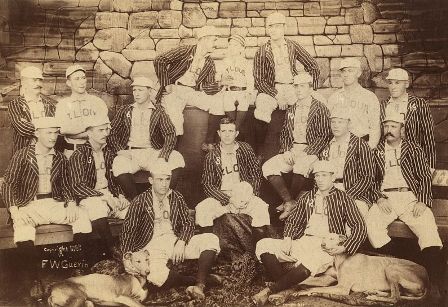
Lester Stanley “Les” German broke into professional baseball with a bang in 1890.  The 21-year-old played for Billy Barnie’s Baltimore Orioles, a team that had dropped out of the American Association and after the 1889 season and joined the Atlantic Association, a minor league.

German was 35-9 in August when the American Association’s Brooklyn Gladiators folded in August, the Orioles returned to the association, and German returned to Earth; posting a 5-11 record for the big league Orioles.

German was a minor league workhorse for the next two and a half seasons.  He was 35-11 for the Eastern Association champion Buffalo Bisons in 1891; he appeared in 77 games and pitched 655 innings for the Oakland Colonels in the California League in 1892, and was 22-11 for the Augusta Electricians in the Southern Association in July of 1893 when his contract was purchased by the New York Giants.

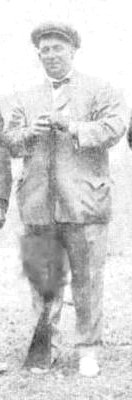
Les German, 1894

Les German, 1894

German would never win in double figures again; In five seasons in the National League he was 29-52, including a 2-20 mark with the 1896 Washington Senators.

It was German’s next career that earned him the most notoriety.  A crack shot, German became one of the most famous trapshooters in the country for the next thirty years.  He won numerous championships and was often featured in Buffalo Bill’s Wild West Show with Annie Oakley.

A National Sports Syndicate article in 1918 said “Lester German is the Ty Cobb of trapshooters.”  The article said that beginning in 1908, when official records were first kept, German had maintained a “remarkable average,” shooting a t a better percentage than any other professional marksman.

Les German, 1918

Les German, 1918

As German’s reputation as a shooter grew, his legacy as a pitcher became inflated.

A mention of his baseball career in a 1916 issue of “The Sportsmen’s Review”, credited German, and his 9-8 record,  with “leading the Giants,” to their 1894 Temple Cup series victory over the Baltimore Orioles, there was no mention of Amos Rusie’s two shutouts .  A 1915 article in The Idaho Statesman inexplicably said German “headed the National League in both pitching and fielding” in 1895—German was 7-11 with a 5.54 ERA and committed 2 errors in 45 chances on the mound; he also made eight errors in 11 games he filled in for the injured George Davis at third base.

German operated a gun shop and continued to organize and participate in shooting tournaments until his death in Maryland in 1934.

“The Sudden Reappearance of ‘Silver’ King”

27 Jun

Oliver Perry “O.P.” Caylor wrote in June of 1896 in The New York Herald:

“One of the baseball surprises of the season is the apparently successful reappearance of ‘Silver’ King upon the National League diamond.  Without any warning the Washington club sent him in against the Pittsburgh team, and he not only won his game, but held the latter down to six hits, Of course all this caused a great deal of gossip wherever baseball is a subject of interest.”

When Charles Frederick “Silver” King (born Koenig), took the mound for the Washington Senators and beat the Pittsburgh Pirates 8 to 1 in the second game of a May 30 doubleheader, it was his first appearance in professional baseball in nearly three years.

King had been one of baseball’s best pitchers of the 1880s, with a 142-70 record from 1887-1890 while playing for Charlie Comiskey, first with the St. Louis Browns in the American Association and then following Comiskey to the  Chicago Pirates in the Players League.

Comiskey (8) and pitcher Silver King (14) with the 1888 St. Louis Browns, King would follow Comiskey to the Chicago Pirates in the Players League in 1890

Comiskey, seated center(8) and Silver King standing second from right (14) with the 1888 St. Louis Browns, King would follow Comiskey to the Chicago Pirates in the Players League in 1890

Caylor said that during Flint’s heyday:

“His most successful delivery was what is known as ‘the cross fire,’ first used effectively, I believe, by (Charles “Old Hoss”) Radbourne and at present the prominent stock in trade of (Wilfred “Kid”) Carsey of the Philadelphias (Phillies).  It consists of standing on the extreme end of the pitcher’s plate, stepping away still farther from the direct line towards the batsman and sending the ball across the home base at an angle, which, although small, is very bothersome to the man with the bat.”

Silver King

Silver King

Caylor said King was “put out of the business” in 1893 when “the pitcher’s box was set back five feet,” (to the current 60’ 6”).  While King’s record slipped during the last two seasons the distance was 55 feet to a combined 36-53 while pitching for the Pirates and New York Giants, he had respectable ERAs of 3.11 and 3.29.  After the rule change King went 8-10 with a 6.08 ERA pitching for the Giants and Comiskey’s Cincinnati Reds in 1893, and then disappeared.

Caylor thought there was “a great deal of significance to King’s return to the diamond,” and predicted a trend:

“It means managers, having exhausted the new crop and finding nothing before them worth a trial, are forced to look behind and try to rekindle some of the half burned out embers. Washington not only took up King, but they gave (Les) German a trial after the New York club let him go.  (Cap) Anson (Chicago Colts) went back to (Fred) Pfeffer after finding (Algernon “Algie”) McBride, (Josh) Reilly and (George) Flynn wanting and was even forced to put himself into his nine to fill out the weak spots.”

Caylor said it was “astonishing  to look over the list of new material which was brought into the National League last spring and notice how small a part of it has been able to keep ‘in the swim.’  Every day one hears that some younger player has been released or that another has been loaned or farmed to a minor league club.”

Caylor’s prediction of success for the “trend,” and the players named was a mixed bag.  Anson, who had never really gone away, hit .331 in 108 games, for the Colts, but Pfeffer hit just .244 in 94 games. German fared the worst, he was 2-20 in 1896 and 3-5 the following season before being released in August.

King managed to post a 16-16 record for the Senators in 1896 and ’97 but never found his early career form.  After the 1897 season, he returned to St. Louis where he died in 1938.

Caylor would become ill the following season, and died in October of 1897.

Satchel Paige Night, 1952

21 Jun

???????????????????????????????

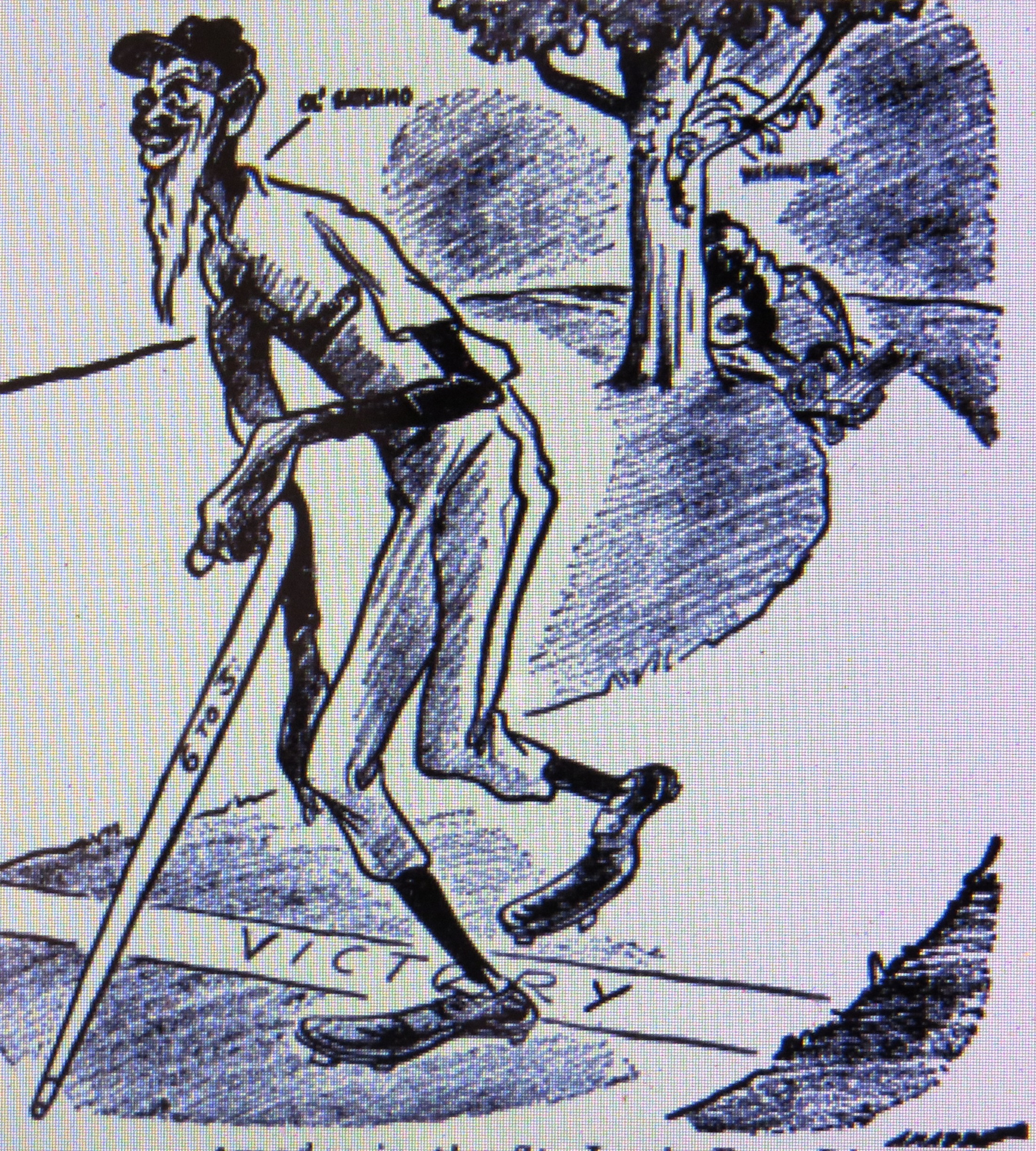
This cartoon of Satchel Paige  appeared in The St. Louis Post-Dispatch on July 29, 1952; drawn by the paper’s cartoonist Amadee Wohlschlaeger, who celebrated his 101st birthday last December.

Paige was primarily used as a reliever in 1952, but made one of his six starts the evening before against the Washington Senators on “Satchel Paige Night” at Sportsman’s Park in St. Louis.  The Associated Press said:

“A bearded player in a wheelchair was introduced as Paige’s first battery mate.”

Owner Bill Veeck gave him a boat called “Ole Satch 1,” a television, and a camera; his teammates presented him with a rod and reel.

Paige pitched 6 2/3 innings and was credited with the win in a 6-3 victory against the Washington Senators.

Later that month Senators manager Bucky Harris said in The Washington Afro-American:

“I swear to God, we would be in first place if we had Satchel Paige.”

???????????????????????????????The Box Score

A Thousand Words—Deacon McGuire’s Left Hand

14 Jun

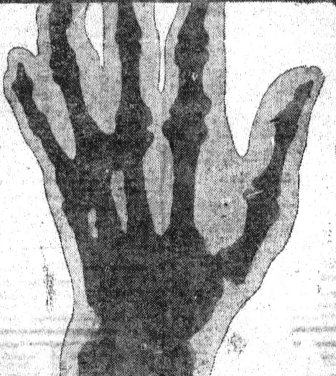
mcguirehand


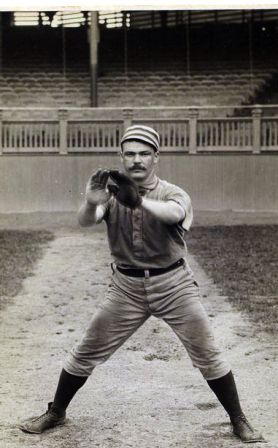
James “Deacon” McGuire caught more than 1600 games in a career that spanned parts of 26 seasons between 1884 and 1912.  He broke every finger on both hands and suffered thirty-six separate injuries to his left hand.  In 1906, his x-ray was acquired by the New York papers after yet another injury.

The New York World said doctors were “amazed to see the knots, like gnarled places on an old oak tree, around the joints, and numerous spots showing old breaks.”

Deacon McGuire

Deacon McGuire

“The Deterioration in the Morale of the Players”

10 Jun

The Chicago Tribune had had enough:

“The deterioration in the morale of the players has been followed by deterioration in that of the spectators.  The latter relish the obscene profanity and the slugging exploits of the hulking brutes of the baseball field.”

The Tribune provided an “account of the more disgraceful of the many rows witnessed by spectators of baseball games,” during the just-ended 1899 season:

“May 2—Row at Pittsburgh—St. Louis game.  (Frank) Bowerman was put out of the game.  (Jack) O’Connor was taken off the field by the police, and the crowd chased umpires (Tom) Burns and (William) Smith.

May 19—Umpire Burns put (Giants’ William “Kid”) Gleason out of the game at St. Louis.  Gleason’s protest was so strong Burns forfeited the game to St. Louis.

June 1—Row on the grounds at Washington.

June 16—After a long wrangle and continued rowing on the field at New York.  Umpire Burns forfeited the game to Brooklyn.

June 16—(Fred) Clarke and (Clarence “Cupid”) Childs fight on the field in Louisville.

June 27—Rowdy action of players caused the crowd at the Pittsburgh game to mob umpire (James “Chippy”) McGarr.

July 18—(Tommy) Corcoran slugged (John) McGraw at Baltimore after being first attacked, and his action started a riot.

July 26—(Emerson “Pink”) Hawley, (Fred) Tenney, and (Hugh) Duffy engaged in a game of fisticuffs at Cincinnati.

Aug 16—(Oliver “Patsy”) Tebeau, McGraw and (George “Candy”) LaChance fought at Baltimore

Aug 18—Riot at Baltimore game started by (Tim) Donahue throwing a handful of dirt at (Steve) Brodie’s face.

Sept 1—Childs and Aleck Smith fight on the field in Louisville.

Sept 7—Riots at St. Louis and Brooklyn.

Sept 15—Clarke taken off Philadelphia grounds by police.

Sept 16—Chicago players jerked (Ed) Swartwood around the diamond because he called the game in the eighth inning on account of darkness.

Oct 9—(George “Win”) Mercer assaulted (Al) Mannassau at Washington.

Oct 14—(Jimmy) Scheckard assaulted umpire (John) Hunt, refused to retire, and Hunt forfeited the game to Brooklyn.”

Cupid Childs, repeat offender

Cupid Childs, repeat offender

Al Mannassau, assaulted by Win Mercer in Washington

Al Mannassau, assaulted by Win Mercer in Washington

In addition to the fans, The Tribune blamed team owners:

 “For the multifarious minor acts of blackguardism and rowdyism of which the hired men of the club owners were guilty there is no room.  It is sufficient to say that they, like the graver offenses mentioned above, did not wound the feelings or jar on the nerves of the proprietors of these baseball roughs.  Those proprietors seem to have come to the conclusion that audiences like these ruffianly interludes.”

Like hundreds of predictions before and thousands more to come over the years, The Tribune saw dire consequences for baseball given the current state of the game:

“There was a time when Chicagoans went to see the games of the Chicago club because they had a feeling of proprietorship in that organization.  That day is over.  Men do not go to see games out of local pride, nor do they go to see fine playing.  They go to listen to the language of the slums and to witness the horseplay and brutalities of the players or performers.  When these have lost their attractions professional baseball will disappear. “

“Calvo May Come Out But No One Cares”

5 Jun

Jacinto Calvo and San Francisco Seals owner Charlie Graham were unable to come to terms on a contract for 1918, and the local press quickly turned on the outfielder.

The San Francisco Chronicle said:

“(Calvo) is a simple-minded Cuban boy…When he is hitting he can go around the bases in nothing flat.  When he has a batting slump, he develops water on the knee and can hardly limp up to the plate.”

He remained in Cuba and served as a police officer in Havana.

It was rumored again in 1919 that Calvo might return to the Seals, but The Chronicle, under the headline “Calvo May Come Out But No One Cares,” made it clear that twelve months had not softened opinions about the holdout outfielder:

“Calvo has written friends that he wants to come back, but if he stays in that dear old Havana until Charlie Graham coaxes him back, he will grow whiskers a foot long.  Graham really tried to get Calvo last year, for he was in a bad way for lack of outfielders, but if there is any coaxing to be done this year, Calvo will do it.”

Calvo

Calvo

Terms were not reached for 1919, and Calvo remained in Havana for another year.

In February of 1920 The Chronicle said Calvo, “Who bobs up every year about this time,” had written Graham saying he wanted to return to the Seals, then in March the paper reported that “The Havana World” said that Calvo “has joined the Franklin, PA independent team together with (Manuel) Cueto.”

Neither report proved true; instead, Calvo was signed by Clark Griffith for a second tour of duty with the Washington Senators.  In 17 games he had only one hit, a triple, in 23 at-bats before being sent to the Little Rock Travelers in the Southern Association in July.

Calvo could not hit American League pitching, but no one questioned his throwing arm; except teammate Stanley “Bucky” Harris.  The future Hall of Famer wrote in 1925, in a series of articles he wrote for The North American Newspaper Alliance, that his doubts about Calvo’s arm almost cost him his career:

“I thought I could hurl a baseball farther than anyone on the club and entered into a contest with Jack Calvo, an outfielder.  The Cuban has a reputation for having a great arm.  I had won a long-distance throwing contest…while with the Buffalo club.  That convinced me I could hold my own.”

Despite being warned against taking on Calvo by teammate Clyde Milan, Harris went ahead with the contest, the two stood in the infield:

“(Calvo) cut loose.  He threw the ball over the right field bleacher wall.  I realized it was a truly wonderful peg.”

Harris said he was concerned about being caught by manager Clark Griffith and rushed his throw:

“My elbow cracked as the ball left my hand.  It sounded to me as if a board had been broken across a fence…The ball dropped yards inside the park.”

Harris said for three weeks he “wondered if I ever would be able to throw a ball again.”  By the time Harris returned to the lineup, Calvo was on his way to Little Rock where he hit .306.

From 1921 through 1926 Calvo spent his summers playing baseball in the states; most notably in Fort Worth, where he helped lead the Texas league Panthers to two Dixie Series victories over the Southern Association champions in 1923 and ’24.  His winters were spent working as a lieutenant in Havana’s Harbor police and playing baseball in the Cuban League.

Calvo’s career ended abruptly in September of 1926.  The San Antonio Light reported that the former Fort Worth outfielder, then with the Memphis Chickasaws in the Southern Association “must forego baseball…and return to his job, his leave of absence was about to expire, and he packed up and beat it for a boat.”

Calvo played briefly in Cuba that winter but never played professionally again.  He was elected to the Cuban Baseball Hall of Fame in 1948 and died in Miami in 1965.

“Calvo has been the Victim of a Cruel and Merciless Conspiracy”

4 Jun

When he signed 18-year-old Jacinto “Jack” Calvo Gonzalez, Washington Senators manager/owner Clark Griffith was no stranger to Cuban players, having managed Armando Marsáns and Rafael Almeida with the Cincinnati Reds, but Calvo’s signing was the beginning of Griffith’s 40-plus year commitment to signing players from Cuba.  During his tenure the Senators signed more than half of the 63 Cuban players in the major leagues.

Calvo was “discovered” while playing with Almendares in the Cuban National League, where he hit .342 in 19 games.  He made even more of an impression during a series Almendares played against the New Orleans Pelicans of the Southern Association, Calvo hit .400 and his older brother Tomas hit .385.

???????????????????????????????

He also hit .400 during a six-game series with the Philadelphia Athletics, The Associated Press said he didn’t compile those numbers facing minor league pitchers picked up for the series, but “against (Eddie) Plank, (Jack) Coombs, and (Charles “Chief”) Bender.”

When rumors circulated that Washington might have signed Calvo, Bender said:

“I never saw a faster youngster in my life; he can hit too, and looks for the entire world like a class ball player…If Griffith has signed him he will never regret it, for there is no chance for him to be a failure.”

By December of 1912 Griffith had Calvo under contract.  The Pittsburgh Press said:

“The young Cuban sent a letter to Griff, written in Spanish.  ‘They did not teach Spanish where I went to school,’ said The Old Fox, ‘so I can’t translate the missive.  However, as he signed his contract I guess everything is alright.’”

The Boston Red Sox signed Tomas Calvo later in December.

While Tomas never made it in Boston, Jacinto made his debut with the Senators on May 9; he hit only .242, but everyone noticed his arm.  After a June game with the St. Louis Browns, The Associated Press said:

“The youngster astonished the bugs yesterday with his remarkable throwing arm.  At one time he heaved the ball from the right field fence directly to (Germany) Schaefer’s hands at second.”

On August 13 Calvo was sent to the Atlanta Crackers in the Southern Association and made his first appearance with the team the following day, batting seventh, going 1 for 4.  The Atlanta Constitution said “He’s fast, fields pretty well, throws like a shot and meets the ball squarely.”

Calvo only lasted 10 days in Atlanta.  He was hit on the right arm with a pitch thrown by Charles “Curly” Brown of the Montgomery Rebels.  He was returned to the Senators and did not appear in another game that season.  (Some sources show Calvo with the Long Branch Cubans in the New York New Jersey League—it was most likely his brother Tomas, an infielder, rather than career outfielder Jacinto, who played shortstop for the team in 94 games).

Calvo started the 1914 season with the Los Angeles Angels in the Pacific Coast League.  After only 11 games (he was 4-8 with one double, one triple and a stolen base) he was sent to the Victoria Bees in the Northwestern League.  Later in the season a story came out explaining his abrupt departure from Los Angeles.

Calvo with the Washington Senators

Calvo with the Washington Senators

The Spokane Spokesman-Review said, “Calvo has been the victim of a cruel and merciless conspiracy,” despite the fact that “in the exhibition games last spring against the White Sox Calvo loomed up head and shoulders above the other Angel gardeners, out hitting them by a wide margin and displaying more speed on the bags than the whole Angel team combined.”

The paper claimed that a female reporter:

“(o)n one of the local papers…dragged out of him the fact that his father was a rich sugar planter in Havana, and that he played baseball for fun and not for money…That was the beginning of the end for little Calvo. “

The story said fans began harassing Calvo, and:

“Instead of coming to his rescue, the players on the Angel team ‘rode’ the boy unmercifully.  It was pathetic to see the friendless little Cuban trying to get into the good graces of his teammates.  One day, in the clubhouse the boy sat down on a bench and cried before them all.  His spirit was broken.”

Calvo hit .289 for Victoria in 1914, and spent the spring of 1915 with the Senators before being release before the beginning of the season.  After his release he played with his brother Tomas for the Long Branch Cubans, by then a member of the Independent Negro League; he also played for Havana in the Cuban-American Negro Clubs Series.

Calvo next played for the Vancouver Beavers in the Northwestern League and the San Francisco Seals in the Pacific Coast League, hitting .329 in 1916, and slipping to .263 in 1917. After the 1917 season, the outfielder returned, unsigned, the contract sent to him by Seals owner Charlie Graham.

Calvo had been very popular in San Francisco during his nearly two seasons with the Seals, but was criticised by fans and local press for his holdout, especially because he was holding out on the even more popular Graham.  The San Francisco Chronicle said:

“He sent his terms, and as they were exactly what he asked for before.  (Charlie) Graham is wondering why the Cuban went to the trouble to wire at all.”  The paper criticised Calvo for “asking for more money than he got last year,” while “better players than he have submitted to a salary slash on account of war conditions.”

San Francisco Seals owner Charlie Graham

San Francisco Seals owner Charlie Graham

The Chronicle lamented the fact that Seals outfielder Biff Schaller would miss the entire season with an injury, otherwise “Calvo could have stayed in Havana for all that anyone here cares.”

As it turned out, Calvo did stay in Havana.  For all of 1918 and ’19, not returning to the states until 1920.  Tomorrow–Jacinto Calvo’s return.