Tag Archives: Western Association

Sammy Strang

5 Nov

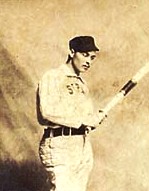
Samuel Strang Nicklin, “The Dixie Thrush,” was one of baseball’s great renaissance men.

Born in Tennessee in 1876, he was the scion of one of Chattanooga’s most prominent families.  His father John Bailey Nicklin served in the Union Army during the Civil War, moved to Chattanooga in 1866, and served as mayor from 1887-1889.
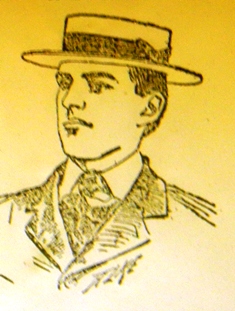
Sammy Strang

Samuel Nicklin spent one year at the University of Tennessee where he starred on the football and baseball teams. He also had two short stints in professional baseball 1893 and 1896, which included 14 games with the Louisville Colonels in the National League when he was 19.  Late in 1896, he enlisted as a private in the Tennessee Volunteers, served in Spanish-American War and rose to the rank of captain.

After leaving the service, Nicklin signed a contract with Cedar Rapids Bunnies in the Western Association and dropped his last name; he was known as Sammy Strang for the rest of his career.

The Milwaukee Journal said of the name change:

“(Strang) came of a rich southern family with deep prejudices against professional ball.”

This “prejudice” likely had nothing to do with it given that in addition to serving as Chattanooga mayor, the elder Nicklin was active in professional baseball, serving as president of the Southern Association in the 1890s.

A career .269 hitter, Strang was best known for being one of baseball’s first regular pinch-hitters while playing for John McGraw’s New York Giants from 1905 until June of 1908.  According to The Associated Press:

“McGraw noted the regularity with which he hit in pinches.  So he called him a ‘pinch hitter’—and the term stuck.”

During the 1909 season, Strang began coaching the baseball team at West Point.  He retired from baseball after playing from 1908-1910 with the Baltimore Orioles in the Eastern League, to study opera.
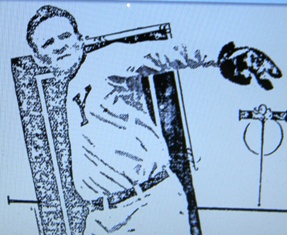
Sammy Strang

During his baseball career, Strang was known for writing songs and singing but decided to seriously pursue a music career in 1910.  He traveled to Paris where he trained under Jean De Reszke, one of the greatest male opera stars of the 1890s.

Upon returning from Paris, he chose not to accept an offer to join an opera company and instead returned to West Point, where he continued as coach until 1917.

Strang returned Tennessee shortly before his father’s death in 1919 to manage and take over ownership of the struggling Chattanooga Lookouts in the Southern League.  While the Lookouts did not win a league championship during Strang’s tenure, he was credited with turning the franchise around and sold the team, for which he paid nothing 1919, for a reported $75,000 in 1927, while retaining ownership of the stadium, Andrews Field.

Unfortunately, Strang’s most ambitious plan–to sign Satchel Paige in 1926–never materialized.

According to Larry Tye’s book “Satchel Paige: The Life and Times of an American Legend,”   Strang failed in an attempt to sign Paige for $500 to pitch a game against the Atlanta Crackers. Paige said of the deal:

“I just had to let him paint me white.”

Samuel Strang Nicklin died in Chattanooga in 1932.
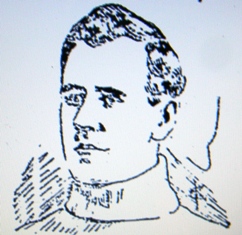
Cooney Snyder

22 Oct

“Cooney” Snyder‘s Major League career lasted only 17 games for the 1898 Louisville Colonels in the National League.

Born in Canada in 1873, Abraham Conrad Snyder was most frequently identified as “Frank” Snyder during his career.

Snyder played in the Western Association in 1884 and he is mentioned frequently in contemporaneous news stories as a member of the 1885 Guelph Maple Leafs in the Canadian League, although no records survive.

Snyder earned his shot in the Major Leagues after hitting .333 for the London Cockneys in the Canadian League and .340 for the Toronto Canucks in the Eastern League in 1897.

The Sporting Life said, “Snyder is credited with an extraordinary throwing arm as well as a strong swing as a batsman,” and attributed his strength to the job he held before playing professional ball:

 “Snyder acquired this strength in a peculiar way.  Before he became proficient in base ball “Cooney” was a keeper in a Canadian insane asylum. His daily task was to wrestle with the patients who showed a desire to buck against the rules of the institution.”

Snyder was Drafted by the Washington Senators, then sold to the Colonels before the 1898 season.  After hitting a disappointing .164, Snyder was released by Louisville and returned to the Canucks, then finished the season with the St. Thomas Saints in the Canadian League.

Snyder finished his career with the Reading Coal Heavers in the Atlantic League in 1899.

“Cooney” Snyder, 1899

After the 1899 season, it was reported by The Reading Eagle that Snyder had accepted a job at a hotel owned by former major leaguer, and Reading resident Larry Ressler.  The article said Snyder was “Considering offers from several Eastern League teams,” but it appears he never played again.

Snyder made the news one more time before eventually returning to Canada and passing away there in 1917; in December of 1899 when The Reading Herald reported on Snyder’s heroic actions during a factory fire at the Nolde and Horst Hosiery Mill:

 “For nearly an hour he stood under a burning building breaking the fifteen-foot fall of many factory girls, who were penned in the blazing structure like rats in a trap. His position was one of the greatest peril, as red hot brick and burning embers were failing all around him.”

The Reading Times said he caught at least six women in this manner.

George Treadway

16 Oct

A small item in the Louisville Courier-Journal near the end of the 1893 season created a major stir.  And while the story was almost immediately shown to be untrue, several books and articles over the years have tried to imply that it’s still an open question.

The story about George Treadway was written by Courier-Journal Baseball Editor Sam McKee who was traveling with the Baltimore Orioles of the National League:

“There can be little doubt that Treadway, Baltimore’s right fielder is a Negro…all the players say he is.”

Treadway attributed the story to a former teammate he refused to name, and told The Baltimore News:

“The story is the result of a piece of spite work on the part of a former member of the Baltimore team, and knowing the man as I do, I am not surprised that such a thing could emanate from him.”

Treadway went on to say that he had information about the player which would “Kill him eternally, as far as the baseball profession is concerned, but I prefer not to act in that underhanded way.”

Treadway said the story about him came out of an incident when he was playing with Denver in the Western Association when an opposing player had directed a racist epitaph at Treadway.

George Treadway

Both The Baltimore Afro-American and baseball columnist O.P. Taylor reported that the story was investigated and was untrue.  At the same time it came to light that Baltimore owner Harry Vonderhorst and manager Ned Hanlon had heard similar rumors and conducted an investigation before signing Treadway, The Sporting Life said:

“Manager Hanlon felt satisfied the report was without truth and Treadway was made a member of the team.”

The story quickly went away, but in recent years has been revived, and mostly in the absence of the facts.  For example:

“. . . the writers . . . compared Joe (Jackson) to Treadway . . . but they did not mention that Treadway had been driven out of baseball by opposing players and fans who bombarded him with taunts and slurs about his alleged or real Negro blood.” – From Say It Ain’t So, Joe!: The True Story of Shoeless Joe Jackson

This reference to Treadway, like most, ignores critical facts.  The taunts and slurs must not have been very effective—Treadway remained in the Major Leagues for two full seasons, and part of a third after the story broke, and he was “driven out of baseball” a full 11 years later at the age of 37.

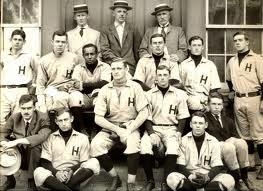
Had there been any evidence that Treadway was African-American his tenure in professional baseball would have been similar in length to that of William Clarence Matthews a decade later.

As the starting shortstop for Harvard University, Matthews faced four years of racial tension and boycotts—when the Crimson faced Georgetown in 1903 Georgetown’s manager,  and the team’s catcher, Samuel H. Apperious (Baseball Reference lists him as “William”) refused to participate in the game.

After graduating Matthews attempted to play professional baseball, signing with the Burlington team in the Vermont-based “outlaw” Northern League.  Upon arriving in Burlington Matthews was faced with another player boycott led by the same Sam Apperious, who was playing for the Montpelier-Barre team in the lead.  While there were rumors that Matthews might play Major League ball it never rose beyond speculation.

Matthews was, in effect,  “driven out of baseball.”

William Clarence Matthews with Harvard Baseball Team

George Treadway was in and out of professional baseball until 1904, but his absences were about the economics of early baseball and not questions about his race: from 1899-1901 Treadway played baseball for various teams in the Chicago area, including the White Rocks in the Chicago City League, while working for the Pullman Palace Car Company.

After leaving Chicago, Treadway played in the Pacific Northwest League and Pacific Coast League.  He stayed on the West Coast and settled in California until his death in 1928.

Matthews became an attorney, was actively involved in politics and served as legal counsel for Black Nationalist leader Marcus Garvey.  He also passed away in 1928.

1893 St. Joseph Saints

19 Sep

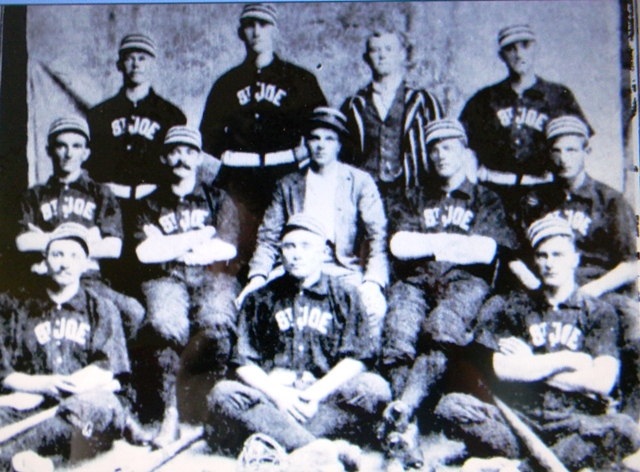
This team is of interest to me mostly because I’ve never seen the photo I’ve posted published anywhere else—it is, I believe, the earliest photo of Hall of Famer Fred Clarke in a baseball uniform.

1893 St. Joseph Saints. Hall of Famer Fred Clarke is in the far right of the middle row.

Saint Joseph was part of the Western Association which disbanded in June of ’93 with the Saints in 2nd place at 11-8.

Clarke had the distinction of having the first two teams he played with be part of leagues which folded —he was with Hastings in the Nebraska State League in 1892.  Clarke ended up with Montgomery in the Southern Association for the remainder of ’93, that league’s season was also cut short because of a Yellow Fever outbreak in New Orleans.

In addition to Clarke, future major leaguers “Ducky” Holmes and Art Twineham were also with St. Joseph in 1893.

The team was owned by a local jeweler named Al Wendover, it was his only foray into professional baseball ownership.

Missing from the photo is pitcher Frank “Bones” Parvin a native Missourian who appeared in six games with the Saints.  Parvin was 6’ 3” and, depending on the news account, weighed between 150 and 180 pounds.  Parvin had an 87-81 record during an eight year minor league career with 13 different teams in the Midwest and South.  His real claim to fame however was that he was a cousin outlaws Frank and Jesse James.

“A Leaden Messenger of Death”

12 Sep

George Kittle played in Texas and Nebraska from 1888-90.  Very little is known about his life before 1888, other than that he was most likely born in Taylorville, Illinois between 1860 and 1862.

Kittle appears in Texas in 1888 as an outfielder and catcher for Dallas in the Texas Southern League and Fort Worth in the Texas League.  In 1889 he pitched for the Austin Senators in the Texas League posting a 25-16 record.  Kittle spent the first half of 1890 pitching for the Waco Babies.  He was 9-8 when, on June 20, he was sold to Omaha in Western Association.

No records exist for Kittle’s time in Omaha and he was not listed on the roster of any team for 1891, but it appears he was playing baseball in or around Waco that season.

On January 19, 1892 Kittle and two friends entered one of Waco’s legal brothels.  Just after arriving one of Kittle’s friends became involved in altercation with another customer.  Hattie Tyree, who operated the brothel, became involved in the dispute and had a physical altercation with Kittle.  She returned to her room and came back with a pistol.  She fired one shot at Kittle, who was immediately taken from the brothel to a nearby hotel and a doctor was called.  Kittle died from the gunshot wound early the following morning.

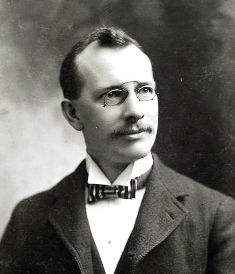
Ren Mulford Jr., the famous baseball writer for the Cincinnati Enquirer and  Sporting Life described the shooting:

“George Kittle, the Texas Leaguer, was sent to his grave by a siren named Hattie Tyree, who fired a leaden messenger of death into him at Waco. That murder was cold blooded.”

Ren Mulford

Tyree’s trial was a sensation in Waco, where she was well known; Kittle was not the first person she had shot in her house (the first had survived).  Despite public outcry and multiple witnesses who testified that Kittle was not the aggressor in the altercation, Tyree was acquitted by a Texas jury in the spring of 1882.

Who is the Real Jack Rowan?

10 Sep

John Albert Rowan was born in New Castle, Pennsylvania in 1886. After compiling an 18-10 record for Leavenworth in the Western Association, the twenty-year-old earned a one-game audition with the 1906 Detroit Tigers. Rowan gave up eleven earned runs on fifteen hits and five walks in a 13-5 loss to the Chicago White Sox. He made it back to the big leagues with Cincinnati in 1908 and pitched parts of 7 seasons in the Major Leagues with the Reds, Phillies, and Cubs.

Rowan was more or less forgotten by July of 1958 when a small Associated Press item announcing his death in his room at a Detroit hotel appeared in newspapers.

Jack Rowan

For the previous 20 years Rowan had spent his summer days at Briggs Stadium, the site of his Tiger debut in 1906 (Bennett Park, the Tigers’ stadium from 1895 to 1911 was on the same site. Replaced by Navin Field in 1912, renamed Briggs after the 1935 expansion). The Tigers were planning on honoring the former pitcher at an upcoming game.

One problem:

The day after the announcement of Rowan’s death a man in Dayton, Ohio told reporters he was the real Jack Rowan.

The Detroit Rowan had his supporters. One of his pallbearers swore he saw him pitch that game for the Tigers, although he remembered it as “1907 or 8.” Bishop John Donovan of the Detroit Catholic Diocese was certain the man whose funeral he presided over was Rowan; the bishop had interceded on the Detroit Rowan’s behalf years earlier to help him get a baseball pension.

Win Clark, secretary-treasurer of the Association of Professional Ball Players of America, was also sure the Detroit Rowan was the real Rowan; after all, they had been sending him pension checks for years.

But many said his stories were inconsistent and that he gave his age at 85 years old, 13 years older than Rowan’s listed age.

The Dayton Rowan insisted he was the real Rowan and had his own supporters. Dayton sports writers were sure the local man was the former pitcher, who had finished his career in Dayton in 1917—but the Dayton Rowan gave his age as 68, four years younger than Rowan should have been.

Neither man had any living family to back up their claim.

Ultimately, the living Rowan, the one in Dayton, prevailed. It was generally determined that he was the former Major League pitcher, the Detroit Rowan deemed an imposter.

The Dayton Rowan showing reporters a photo of the 1910 Cincinnati Reds

The Dayton Rowan died in 1966 and is buried there—interesting given that one of his arguments for his legitimacy after the Detroit Rowan’s death in 1958 was, “If he is the real man why isn’t he being buried in New Castle along with the rest of his family?”