Archive | June, 2013

A Thousand Words—Deacon McGuire’s Left Hand

14 Jun

mcguirehand


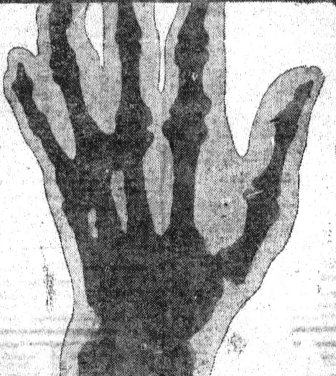
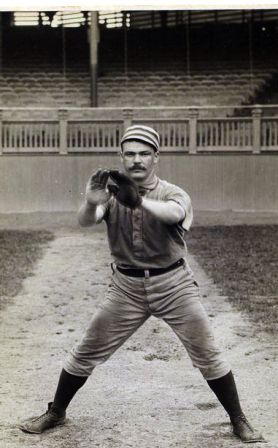
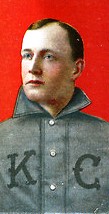
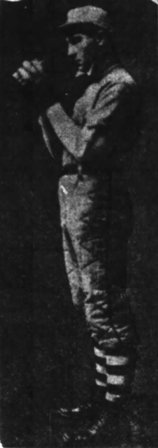
James “Deacon” McGuire caught more than 1600 games in a career that spanned parts of 26 seasons between 1884 and 1912.  He broke every finger on both hands and suffered thirty-six separate injuries to his left hand.  In 1906, his x-ray was acquired by the New York papers after yet another injury.

The New York World said doctors were “amazed to see the knots, like gnarled places on an old oak tree, around the joints, and numerous spots showing old breaks.”

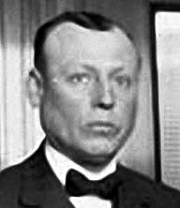
Deacon McGuire

Deacon McGuire

“A Baseball with a Mystery Attached to it”

13 Jun

The Chicago Tribune’s Hugh Fullerton claimed that somewhere at Chicago’s West Side Grounds, home of the Cubs, “if it has not decayed, there is a baseball with a mystery attached to it.”

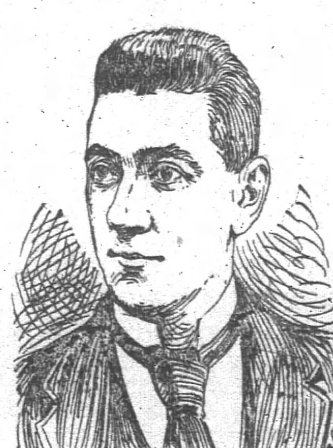
Hugh Fullerton

Hugh Fullerton

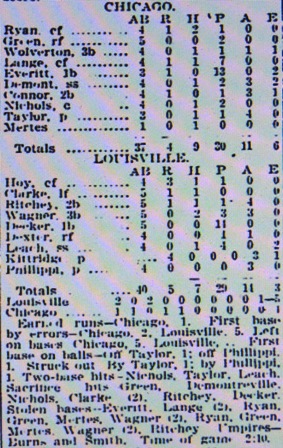
The incident took place on May 11, 1899 “in the middle of a hot game between Louisville (Colonels) and Chicago…this ball disappeared—and as far as anyone knows never yet has been found.”

Fullerton said:

“The score was 4 to 4 in the seventh inning, with Chicago at bat, when Arthur Nichols, the little catcher, came up with one man out. He whanged into the ball and drove it safe to right.  Charlie Dexter threw to second and Nichols slid safe just as the ball arrived.  Tommy Leach was covering second base, and as Nichols slid he lost sight of the ball.  He said it struck his forearm and fell to the ground, and when he started to pick it up it wasn’t there.  He thought it was under Nichols and waited until the runner arose. The ball was not there.

“Nichols waited and held the base, fearing the ball was hidden and he would be tagged out. (Claude) Ritchey and Leach were busy hunting for it.  Everybody joined in.  Still Nichols feared a trick and stuck to the bag.  After five minutes umpire (William) Smith, who was working on the bases, called the Louisville players down, and after accusing them of hiding the ball threw a new one into play.  Chicago kicked and Nichols was ordered to run home.  He ran, but Smith sent him back to second and ordered play begun with a new ball.”

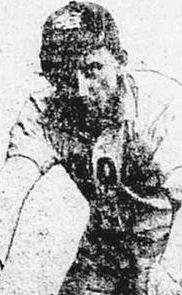
Art Nichols

Art Nichols

Pitcher Jack Taylor singled to right, and Nichols was thrown out at home plate by Dexter.  Louisville went on to win the game 5-4 in ten innings.

Fullerton said:

“Leach, Nichols and Ritchey, the only men near the ball, vowed they never saw it.  What really became of it no one seems to know.”

The Box Score

The Box Score

“All Men were his Friends”

12 Jun

Among the reasons Rube Levy remained one of the most popular figures in West Coast baseball was his refusal to accept offers to play for teams outside of California.  The San Francisco Chronicle said:

“With all his vast experience on the baseball diamond, the young man has never ventured beyond the confines of the state in which he was born…Time and time again Rube has received princely offers from Eastern magnates bidding against each other, but he always declined their advances.  He knew that California needed him, and he said he never would desert the state.  This sacrifice on his part is what has endeared Reuben in the hearts of the populace and why he is always greeted with plaudits.”

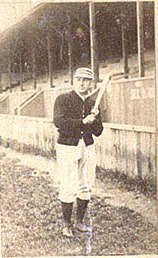
Reuben "Rube" Levy

Reuben “Rube” Levy

Levy disappeared from professional rosters after the 1896 season, but appears to have remained active as a player and umpire in semi-pro baseball in San Francisco.

Levy, along with his brother David who also played professional ball on the West Coast in the 1880s and 90s, also worked for the San Francisco Fire Department.  A  city report from 1898 shows the brothers working out of Engine Company 14 on McAllister Street.  Reuben, badge number 187, was an assistant foreman, David, number 184, a hoseman.

In 1899 he became an umpire in the California League.  Early in the season The Sporting Life said “he is not altogether conversant with the playing rules,” and later said he “is umpiring in style, but is a little off on balls and strikes.”

The following season Levy returned as a player with the San Francisco Brewers in the California League.   On April 2, 1900 The Chronicle, which incorrectly said he had been away from professional ball for seven years, said of the crowd:

“It applauded every move made by Rube Levy, who played out in the western prairie for San Francisco, and made one hit and four putouts and otherwise distinguished himself before rooters who used to yell for him years ago.  Old timers referred to the epoch when Rube used to be the darling of the kindergarten bleachers at the old Haight Street Grounds, when 2000 shrill-voiced youngsters, at 10 cents a voice used to go into ecstasies over Rube.”

The article said of the 37-year-old, “(He) chased flies and caught them as cleverly as though he were Rube’s grandson.”

Levy appeared in 87 games in 1900, hitting .205, and returned to umpiring the following season.

In 1903 he joined the newly formed Pacific Coast League.  It’s more likely he acquired the position because of his brother-in-law, rather than based on his reputation as an umpire.  Levy’s wife was the former Rebecca Fisher, sister of Mike “Mique” Fisher one of the league’s founders and owner/manager of the Sacramento Senators.

"Mique" Fisher, Levy's brother-in-law.

“Mique” Fisher, Levy’s brother-in-law.

The reviews of his work as an umpire never improved, The San Francisco Call said about one game: “He did not give either nine the worst of it, He was just impartially rank.”   The Los Angeles Times was especially critical of his work, calling him “notoriously incompetent.”

He managed to remain on the league umpire staff through the 1904 season.

The Spokane Daily Chronicle summed up his career as an arbiter:

“He was anything but a success as an umpire, but he had the reputation of being one of the few men in the business who refused to get mad.  The players started in time and again to bait him and get him mad, but Rube always preserved his abundant good humor.”

After the 1904 season Levy opened a cigar store on Fillmore Street in San Francisco.  On February 8, 1907 the 42-year-old Levy died after a brief illness, his death was attributed to a brain tumor.

The Sporting Life said of his death:

“(T)here was never a more popular ball player in San Francisco, and of whom it can be truly said that all men were his friends.”

“The Idol of the Haight Street Grounds”

11 Jun

Reuben “Rube” Levy was one of the first Jewish professional players, and one of the biggest stars in the early days of West Coast baseball.

Born in 1862 to Prussian-Polish immigrants, Levy worked as a shoe cutter and began his professional career as a teenager, playing left field for the San Francisco Californias in the New California League in 1881.

A good fielder, but not particularly fast, The San Francisco Morning Call once described him chasing a ball: “Reuben Levy, following the ball as it sped gleefully along, looked like a cow chasing a coyote across a pasture.”

Reuben "Rube" Levy, 1888

Reuben “Rube” Levy, 1888

Levy quickly became a fan favorite.

The Morning Call, and The San Francisco Chronicle called him “the hero of the kindergarten” during the years he played at Haight Street Grounds; the title referred to the section of the grandstand adjacent to left field occupied mostly by young fans.  The Sporting Life said “there never was a more popular player in San Francisco,” and called him “The idol of the Haight Street Grounds.”

Years later, The South of Market Journal recalled that the “kindergarten” fans “applauded the genial Rube for any kind of play.”  The paper said one reason why Levy was the most popular West Coast player with children was because in the days when baseballs were a valuable commodity he would:

“Get hold of a ball that he would bide and save till the game was over, when the kids would swarm down the field and gather around their idol. He would take a ball from his pocket; toss it high in the air with hundreds of healthy youngsters, among them future greats, in a big drive to capture it. Believe us, many a spunky kid emerged from this huddle with something other than a smile, yes, more like a blue forget- me-not under the eye in the struggle for the possession of the prize. Then away Rube, the idol of the Kindergarten would gallop lo the clubhouse joyful in the thought that his juvenile admirers were
made happy for the day.”

In 1890 The Sporting Life said Levy had won a contest for the most popular player in the California League, beating out popular Oakland Colonels infielder, and fellow San Francisco native, Jim McDonald:

 “(A)t the eleventh hour the friends of Rube Levy executed a grand coup by unloading three thousand votes into the ballot box, thereby flooring McDonald and other favorites ‘out of sight.’  Sixth Street and the Kindergarten by a straight stroke had outwitted Mac’s friends and landed their boy first under the wire, and distanced all others. Well, Levy deserves it, as he is a quiet, unobtrusive gentleman and first-class ball player, and Jim would rather have been beaten in the race by his old neighbor than by any other player.”

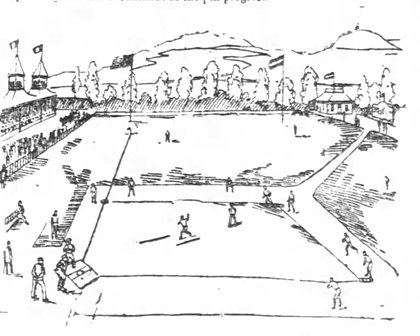
San Francisco's Haight Street Grounds

San Francisco’s Haight Street Grounds

Levy was said to have a good arm, and while with the San Francisco Metropolitans in 1892 manager Henry Harris decided to use the left-hander on the mound in an early season game.  The Chronicle said:

“The Los Angeles (Seraphs) team has a majority of left-handed batters in its make-up, and they generally hit the ball on the seam for bases. Harris is a firm believer in the theory that a southpaw is particularly effective against this class of hitters.”

The experiment failed.  The Chronicle said Levy “with the speed of a (Amos) Rusie, but without control…entered the box against (Bob) Glenalvin‘s men (and) gave them the game in the first few Innings.”

Harris used Levy three more times on the mound, but the results were no better.  He ended up 0-2, giving up 12 hits, three walks and 14 runs (although only 2 earned) in six innings.

Levy pitched at least one more game each during the 1893 and ’94 season.  The Chronicle said of his 1894 effort pitching for the San Francisco Hot Peanuts against the Californias of San Francisco:

“Rube Levy was elected to do the twirling yesterday and in consequence of the arrangement the San Francisco team was defeated.  Throughout the afternoon Reuben’s opponents at the bat straightened out his curves for long-distance jolts, and stole bases on him unawares.  Levy’s work in the box was so ineffective that the crowd was continually provoked to offering him words of cheer and comfort.”

Levy pitched a complete game, losing 18-10, the Californias had 17 hits, stole seven bases, and the Peanuts committed 11 errors behind him.

Levy was generally described as a clutch hitter, but almost no statistics survive.   Baseball Reference lists his 1892 and ‘93 averages at .237 and .283.

Levy, unlike other pioneering Jewish players seems to have been spared  of anti-Semitism and Insensitivity, perhaps owing to San Francisco’s large Jewish population (second only to New York during his career).

While the San Francisco based Breeder and Sportsman referee to his “little Hebraic curve,” in an article about one of his pitching appearances, nothing seems to have risen to the level of what Zeke Ferrias faced when pitching in the Three-I and other Midwest leagues during the first decade of the 20th Century.   It was not unusual for newspapers, like The Dubuque Telegraph-Herald to attribute a victory to Ferrias’  “Jew luck,” and conversely, when he began to fade as a pitcher to mention that “his Jew luck had quit him.”

The first part of Rube Levy’s career came to a close when he retired after the 1896 season; the second part tomorrow.

“The Deterioration in the Morale of the Players”

10 Jun

The Chicago Tribune had had enough:

“The deterioration in the morale of the players has been followed by deterioration in that of the spectators.  The latter relish the obscene profanity and the slugging exploits of the hulking brutes of the baseball field.”

The Tribune provided an “account of the more disgraceful of the many rows witnessed by spectators of baseball games,” during the just-ended 1899 season:

“May 2—Row at Pittsburgh—St. Louis game.  (Frank) Bowerman was put out of the game.  (Jack) O’Connor was taken off the field by the police, and the crowd chased umpires (Tom) Burns and (William) Smith.

May 19—Umpire Burns put (Giants’ William “Kid”) Gleason out of the game at St. Louis.  Gleason’s protest was so strong Burns forfeited the game to St. Louis.

June 1—Row on the grounds at Washington.

June 16—After a long wrangle and continued rowing on the field at New York.  Umpire Burns forfeited the game to Brooklyn.

June 16—(Fred) Clarke and (Clarence “Cupid”) Childs fight on the field in Louisville.

June 27—Rowdy action of players caused the crowd at the Pittsburgh game to mob umpire (James “Chippy”) McGarr.

July 18—(Tommy) Corcoran slugged (John) McGraw at Baltimore after being first attacked, and his action started a riot.

July 26—(Emerson “Pink”) Hawley, (Fred) Tenney, and (Hugh) Duffy engaged in a game of fisticuffs at Cincinnati.

Aug 16—(Oliver “Patsy”) Tebeau, McGraw and (George “Candy”) LaChance fought at Baltimore

Aug 18—Riot at Baltimore game started by (Tim) Donahue throwing a handful of dirt at (Steve) Brodie’s face.

Sept 1—Childs and Aleck Smith fight on the field in Louisville.

Sept 7—Riots at St. Louis and Brooklyn.

Sept 15—Clarke taken off Philadelphia grounds by police.

Sept 16—Chicago players jerked (Ed) Swartwood around the diamond because he called the game in the eighth inning on account of darkness.

Oct 9—(George “Win”) Mercer assaulted (Al) Mannassau at Washington.

Oct 14—(Jimmy) Scheckard assaulted umpire (John) Hunt, refused to retire, and Hunt forfeited the game to Brooklyn.”

Cupid Childs, repeat offender

Cupid Childs, repeat offender

Al Mannassau, assaulted by Win Mercer in Washington

Al Mannassau, assaulted by Win Mercer in Washington

In addition to the fans, The Tribune blamed team owners:

 “For the multifarious minor acts of blackguardism and rowdyism of which the hired men of the club owners were guilty there is no room.  It is sufficient to say that they, like the graver offenses mentioned above, did not wound the feelings or jar on the nerves of the proprietors of these baseball roughs.  Those proprietors seem to have come to the conclusion that audiences like these ruffianly interludes.”

Like hundreds of predictions before and thousands more to come over the years, The Tribune saw dire consequences for baseball given the current state of the game:

“There was a time when Chicagoans went to see the games of the Chicago club because they had a feeling of proprietorship in that organization.  That day is over.  Men do not go to see games out of local pride, nor do they go to see fine playing.  They go to listen to the language of the slums and to witness the horseplay and brutalities of the players or performers.  When these have lost their attractions professional baseball will disappear. “

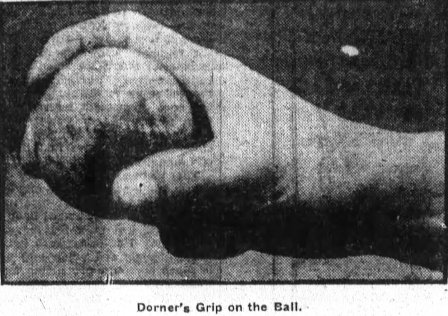
Gus Dorner’s Spitball

7 Jun

dorner1 dorner2

Augustus “Gus” Dorner suddenly became a successful pitcher in 1904.  He had brief trials with Cleveland in the American League in 1902 and ’03, he was 6-6 and control was a problem; on May 23, 1903, walked 11 batters in a game against the Philadelphia Athletics.  He finished the 1903 season with the Columbus Senators in the American Association posting a 7-7 record.

The next two seasons in Columbus Dorner was 18-10, and 29-8.  The Fort Wayne Daily News said:

“The big German attributes his success to condition, control, study of the batsman and mastery of the spitball.”

Dorner said, “I use the spitball a great deal.”  As a result of his new pitch he said:

“(I) have not had the slightest trouble with my arm this year.  I have worked hard to get control and perfect the spit ball.”

The magic was short-lived.  Dorner earned a return to the big leagues in 1906 but was a combined 8-26 with the Cincinnati Reds and Boston Beaneaters.  Overall he was 29-62 in parts of four seasons with Boston.

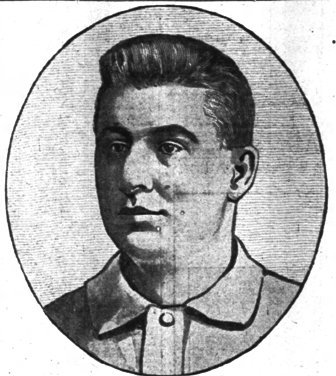
Gus Dorner

Gus Dorner

He didn’t fare much better in the minor leagues, going 25-29 his last three seasons as a professional.  After his release from Boston in May of 1909, he finished the season with the American Association’s Kansas City Blues with a 9-18 record.  The last two years of his career were spent with the Wilkes-Barre Barons in the New York State League and the Harrisburg Senators in the Tri-State League.

Ernest Nichols

6 Jun

Ernest Nichols seemed destined for stardom.  He was the subject of a bidding war before he ever pitched in a professional game.  The San Francisco Chronicle said that his hometown San Francisco Seals wanted to sign him, but had a lot of competition:

Parke Wilson wanted him for the Pacific Coast League in Seattle (the Siwashes), Matt Stanley recommended him to (Dan) Dugdale for the opposition team in Seattle (the Chinooks of the Pacific National League), and Spokane came along with a contract calling for a large figure and took Nichols away from the other bidders.”

Ernest Nichols

Ernest Nichols

The 21-year-old, six-foot, 190 pound right-hander was in high demand after pitching for the amateur Reliance Athletic Club team of Oakland in Northern California’s Mid-Winter League, and an independent team in Vancouver in 1902.  The Chronicle said:

“Speed and control were Nichols’ strong suit, and he had the remarkable record of thirty-five strikeouts in two consecutive games (with Vancouver).”

Upon joining the Spokane Indians Nichols immediately lived up to the hype.  By mid July he had started 24 games, winning 20.  During a one week stretch in June he beat the Tacoma Tigers four times.  The Chronicle said Nichols, who supported his mother and sisters had his salary “raised voluntarily by the Indians.”

On July 20 Nichols and two teammates went swimming at the pool in Natatorium Park, park of the amusement park that also included the Indians’ ballpark.   After swimming, the three began to watch a ballgame between two local teams.  The Spokane Spokesman-Review said:

“(Nichols) complained of cramps.  The three started to walk to catch a car.  When a car arrived he was lifted aboard and speeded to Dr. Kimball’s office.  The doctor saw that he was dead.”

He died of septic endocarditis.  Two days later The Spokesman-Review said:

“The last sad rites were rendered to the remains of pitcher Ernest Nichols yesterday afternoon by his friends and associates who knew him intimately and by a great mass of the public who knew him only through his baseball fame. “

Nichols’ body was returned to San Francisco and plans were quickly made to play a benefit game in his honor in Spokane.  The game between the Indians and the Butte Miners raised $1025.

In October of 1903 The Chronicle said:

“In all the league averages no box man is found with a record approaching that of the late Ernest Nichols, the San Francisco boy who won 20 out of a possible 24 games before death called him.”

“Calvo May Come Out But No One Cares”

5 Jun

Jacinto Calvo and San Francisco Seals owner Charlie Graham were unable to come to terms on a contract for 1918, and the local press quickly turned on the outfielder.

The San Francisco Chronicle said:

“(Calvo) is a simple-minded Cuban boy…When he is hitting he can go around the bases in nothing flat.  When he has a batting slump, he develops water on the knee and can hardly limp up to the plate.”

He remained in Cuba and served as a police officer in Havana.

It was rumored again in 1919 that Calvo might return to the Seals, but The Chronicle, under the headline “Calvo May Come Out But No One Cares,” made it clear that twelve months had not softened opinions about the holdout outfielder:

“Calvo has written friends that he wants to come back, but if he stays in that dear old Havana until Charlie Graham coaxes him back, he will grow whiskers a foot long.  Graham really tried to get Calvo last year, for he was in a bad way for lack of outfielders, but if there is any coaxing to be done this year, Calvo will do it.”

Calvo

Calvo

Terms were not reached for 1919, and Calvo remained in Havana for another year.

In February of 1920 The Chronicle said Calvo, “Who bobs up every year about this time,” had written Graham saying he wanted to return to the Seals, then in March the paper reported that “The Havana World” said that Calvo “has joined the Franklin, PA independent team together with (Manuel) Cueto.”

Neither report proved true; instead, Calvo was signed by Clark Griffith for a second tour of duty with the Washington Senators.  In 17 games he had only one hit, a triple, in 23 at-bats before being sent to the Little Rock Travelers in the Southern Association in July.

Calvo could not hit American League pitching, but no one questioned his throwing arm; except teammate Stanley “Bucky” Harris.  The future Hall of Famer wrote in 1925, in a series of articles he wrote for The North American Newspaper Alliance, that his doubts about Calvo’s arm almost cost him his career:

“I thought I could hurl a baseball farther than anyone on the club and entered into a contest with Jack Calvo, an outfielder.  The Cuban has a reputation for having a great arm.  I had won a long-distance throwing contest…while with the Buffalo club.  That convinced me I could hold my own.”

Despite being warned against taking on Calvo by teammate Clyde Milan, Harris went ahead with the contest, the two stood in the infield:

“(Calvo) cut loose.  He threw the ball over the right field bleacher wall.  I realized it was a truly wonderful peg.”

Harris said he was concerned about being caught by manager Clark Griffith and rushed his throw:

“My elbow cracked as the ball left my hand.  It sounded to me as if a board had been broken across a fence…The ball dropped yards inside the park.”

Harris said for three weeks he “wondered if I ever would be able to throw a ball again.”  By the time Harris returned to the lineup, Calvo was on his way to Little Rock where he hit .306.

From 1921 through 1926 Calvo spent his summers playing baseball in the states; most notably in Fort Worth, where he helped lead the Texas league Panthers to two Dixie Series victories over the Southern Association champions in 1923 and ’24.  His winters were spent working as a lieutenant in Havana’s Harbor police and playing baseball in the Cuban League.

Calvo’s career ended abruptly in September of 1926.  The San Antonio Light reported that the former Fort Worth outfielder, then with the Memphis Chickasaws in the Southern Association “must forego baseball…and return to his job, his leave of absence was about to expire, and he packed up and beat it for a boat.”

Calvo played briefly in Cuba that winter but never played professionally again.  He was elected to the Cuban Baseball Hall of Fame in 1948 and died in Miami in 1965.

“Calvo has been the Victim of a Cruel and Merciless Conspiracy”

4 Jun

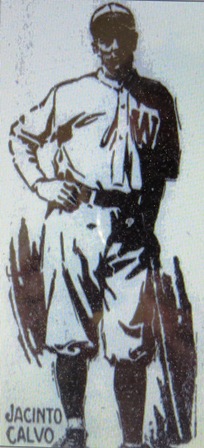
When he signed 18-year-old Jacinto “Jack” Calvo Gonzalez, Washington Senators manager/owner Clark Griffith was no stranger to Cuban players, having managed Armando Marsáns and Rafael Almeida with the Cincinnati Reds, but Calvo’s signing was the beginning of Griffith’s 40-plus year commitment to signing players from Cuba.  During his tenure the Senators signed more than half of the 63 Cuban players in the major leagues.

Calvo was “discovered” while playing with Almendares in the Cuban National League, where he hit .342 in 19 games.  He made even more of an impression during a series Almendares played against the New Orleans Pelicans of the Southern Association, Calvo hit .400 and his older brother Tomas hit .385.
???????????????????????????????

He also hit .400 during a six-game series with the Philadelphia Athletics, The Associated Press said he didn’t compile those numbers facing minor league pitchers picked up for the series, but “against (Eddie) Plank, (Jack) Coombs, and (Charles “Chief”) Bender.”

When rumors circulated that Washington might have signed Calvo, Bender said:

“I never saw a faster youngster in my life; he can hit too, and looks for the entire world like a class ball player…If Griffith has signed him he will never regret it, for there is no chance for him to be a failure.”

By December of 1912 Griffith had Calvo under contract.  The Pittsburgh Press said:

“The young Cuban sent a letter to Griff, written in Spanish.  ‘They did not teach Spanish where I went to school,’ said The Old Fox, ‘so I can’t translate the missive.  However, as he signed his contract I guess everything is alright.’”

The Boston Red Sox signed Tomas Calvo later in December.

While Tomas never made it in Boston, Jacinto made his debut with the Senators on May 9; he hit only .242, but everyone noticed his arm.  After a June game with the St. Louis Browns, The Associated Press said:

“The youngster astonished the bugs yesterday with his remarkable throwing arm.  At one time he heaved the ball from the right field fence directly to (Germany) Schaefer’s hands at second.”

On August 13 Calvo was sent to the Atlanta Crackers in the Southern Association and made his first appearance with the team the following day, batting seventh, going 1 for 4.  The Atlanta Constitution said “He’s fast, fields pretty well, throws like a shot and meets the ball squarely.”

Calvo only lasted 10 days in Atlanta.  He was hit on the right arm with a pitch thrown by Charles “Curly” Brown of the Montgomery Rebels.  He was returned to the Senators and did not appear in another game that season.  (Some sources show Calvo with the Long Branch Cubans in the New York New Jersey League—it was most likely his brother Tomas, an infielder, rather than career outfielder Jacinto, who played shortstop for the team in 94 games).

Calvo started the 1914 season with the Los Angeles Angels in the Pacific Coast League.  After only 11 games (he was 4-8 with one double, one triple and a stolen base) he was sent to the Victoria Bees in the Northwestern League.  Later in the season a story came out explaining his abrupt departure from Los Angeles.
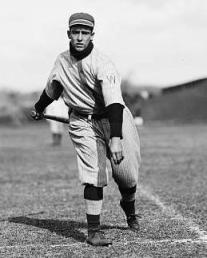
Calvo with the Washington Senators

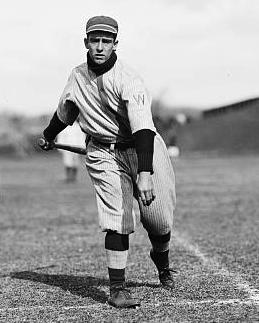
Calvo with the Washington Senators

The Spokane Spokesman-Review said, “Calvo has been the victim of a cruel and merciless conspiracy,” despite the fact that “in the exhibition games last spring against the White Sox Calvo loomed up head and shoulders above the other Angel gardeners, out hitting them by a wide margin and displaying more speed on the bags than the whole Angel team combined.”

The paper claimed that a female reporter:

“(o)n one of the local papers…dragged out of him the fact that his father was a rich sugar planter in Havana, and that he played baseball for fun and not for money…That was the beginning of the end for little Calvo. “

The story said fans began harassing Calvo, and:

“Instead of coming to his rescue, the players on the Angel team ‘rode’ the boy unmercifully.  It was pathetic to see the friendless little Cuban trying to get into the good graces of his teammates.  One day, in the clubhouse the boy sat down on a bench and cried before them all.  His spirit was broken.”

Calvo hit .289 for Victoria in 1914, and spent the spring of 1915 with the Senators before being release before the beginning of the season.  After his release he played with his brother Tomas for the Long Branch Cubans, by then a member of the Independent Negro League; he also played for Havana in the Cuban-American Negro Clubs Series.

Calvo next played for the Vancouver Beavers in the Northwestern League and the San Francisco Seals in the Pacific Coast League, hitting .329 in 1916, and slipping to .263 in 1917. After the 1917 season, the outfielder returned, unsigned, the contract sent to him by Seals owner Charlie Graham.

Calvo had been very popular in San Francisco during his nearly two seasons with the Seals, but was criticised by fans and local press for his holdout, especially because he was holding out on the even more popular Graham.  The San Francisco Chronicle said:

“He sent his terms, and as they were exactly what he asked for before.  (Charlie) Graham is wondering why the Cuban went to the trouble to wire at all.”  The paper criticised Calvo for “asking for more money than he got last year,” while “better players than he have submitted to a salary slash on account of war conditions.”
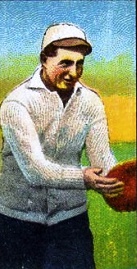
San Francisco Seals owner Charlie Graham

San Francisco Seals owner Charlie Graham

The Chronicle lamented the fact that Seals outfielder Biff Schaller would miss the entire season with an injury, otherwise “Calvo could have stayed in Havana for all that anyone here cares.”

As it turned out, Calvo did stay in Havana.  For all of 1918 and ’19, not returning to the states until 1920.  Tomorrow–Jacinto Calvo’s return.