Archive | April, 2015

Diet Tips from Tim Murnane

6 Apr

Tim Murnane, who began his career as a first baseman for Middletown Mansfields in the National Association in 1872 and later was a member of the Boston Red Stockings in the National League’s inaugural season in 1876, would go on to become one of the most influential baseball writers in the country.
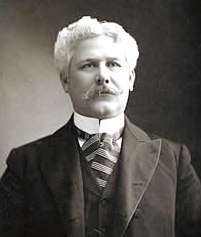
Tim Murnane

Tim Murnane

Writing in The Boston Globe in 1906, he said he had discovered the one thing that caused the greatest harm to a baseball player.

“Over-feeding kills off more ballplayers than accidents or hard work on the ball-field.”

Murnane suggested two solutions.  First, he recommended that, “The Fletcher system should be taken up by the veteran ballplayers without delay.”

The “Fletcher System” or “Fletcherizing” was a then very popular diet technique put forth by a “self-taught nutritionist” named Horace Fletcher.  Fletcher claimed, in several books published during the first decade of the 20th Century that the key to weight loss was to chew food so completely that it was virtually liquefied before swallowing.  Called “The Great Masticator,” Fletcher counted Thomas Edison, Henry James, Franz Kafka, John D. Rockefeller, J.C. Penny—and apparently Tim Murnane—among his adherents.  His theories had fallen out of favor, replaced by diets based on calorie intake, by the time of his death in 1919.
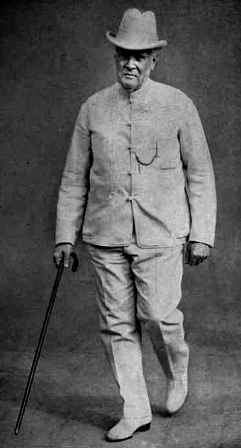
Horace Fletcher "The Great Masticator"

Horace Fletcher, “The Great Masticator.”

Secondly, Murnane said, “(T)he rules of eating should be laid down by the management of every club.”

He said Harry Wright, who had been Murnane’s manager in Boston, “(W)as about the first baseball man to keep a close watch over his players during meal time,” and insisted they eat lightly before games.

“’Just a plate of soup.  That’s plenty,’ would be Mr. Wright’s cry as the players filed into the dining room for lunch.  The greatest athletic performances on the field have been accomplished on practically empty stomachs.”

[…]

“I have known at least half a dozen good ballplayers being passed up in Boston on account of paying no heed to the manager’s advice about overloading their stomachs.  Frank Selee was just as much of a stickler in this line as was Harry Wright, and both were remarkably successful baseball managers.  The manager who does not pay especial attention to this end of the players’ life must lose out, for his team will be unable to keep up a fast clip very long after the boys commence to take on flesh as the result of overfeeding and drinking.”

Murnane had other diet tips for readers:

“A ballplayer cannot drink too much good milk.  The greatest drinker of milk I ever knew was James O’Rourke, and Jim, after thirty-three years on the ball-field, is just as lively a 10-year-old today.  O’Rourke never used tobacco in any form, nor ever indulged in malt liquors, but what a milk drinker he has been all his life and what credit to the national game, from every angle you view the old sport!’

Jim O'Rourke

Jim O’Rourke, “The greatest drinker of milk.’
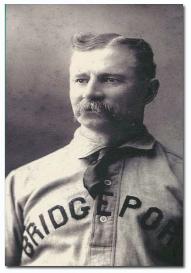
Murnane blamed the disappointing performance of the Boston Americans in 1905 (Fourth place, 78-74, 16 games out of first) on the dietary habits of the team:

“To be honest, I think the Boston Americans last season practically ignored condition from first to last.  I never witnessed on one ball team so many men out of form by being overweight…This club would have won at least one dozen more games had they taken good care of their stomachs, and no one knows this better than Captain (Manager Jimmy) Collins himself, who has said it will be a much different season with the Boston club next season.”

The next season, 1906, was much different, but not in the way Collins had hoped.  The team was 35-79 when Collins was replaced as manager by Charles “Chick” Stahl, and finished in last place with a 49-105 record.

Murnane concluded:

“Baseball was never intended for a fat man’s game, and Captain Anson was the only heavyweight who ever piloted a pennant winner, although my old friend Charley Comiskey was growing a bit stout when his boys carried off the prize five years ago.”
 

Lost Advertisements–The Leland Giants’ New Ballpark

3 Apr

lelands


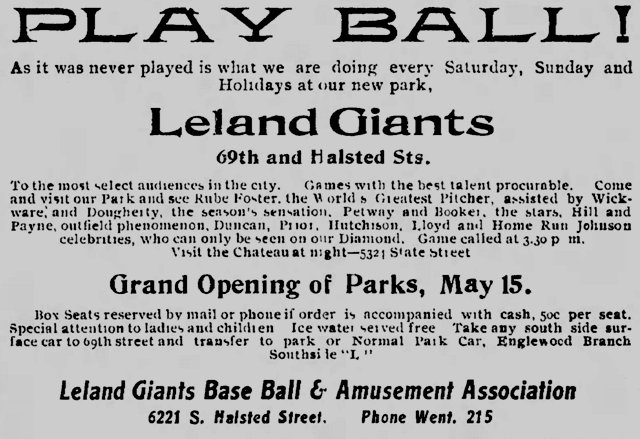
An advertisement for the opening of the Leland Giants’ newly refurbished ballpark, Normal Park, at 69th and Halsted Streets in Chicago, on May 15, 1910.  Just three weeks earlier, Cook County Judge Jesse Baldwin had given the team, managed by Andrew “Rube” Foster, the right to use the name Leland Giants.

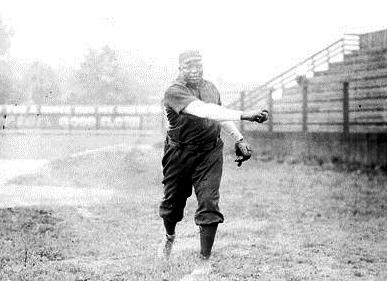
Rube Foster

Rube Foster

May 15 would be the first regular season game for the Leland Giants after the split between Frank Leland and Foster over finances, which resulted in the formation of two separate teams–Leland’s team would be called the Chicago Giants.

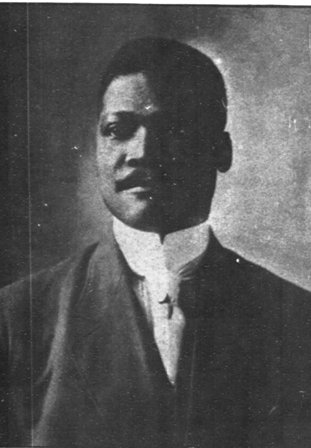
Beauregard Fitzhugh Moseley, who had been one of Leland’s primary financial backers but sided with Foster in the split, became the business manager of the new club and represented the team in court.  Under Moseley and Foster’s leadership, the club retained many of the club’s stars and added John Henry Lloyd and Grant “Home Run” Johnson to the roster:

“To the most select audiences in the city.  Games with the best talent procurable.  Come and visit our park and see Rube Foster, the World’s Greatest Pitcher, assisted by (Frank) Wickware and (Charles) Dougherty, the season’s sensation, (Bruce) Petway and (Pete) Booker, the stars (Pete) Hill and (Andrew) Payne, outfield phenomenon, (Frank) Duncan, (Wesley) Pryor, (Fred) Hutchinson, Lloyd and Home Run Johnson, celebrities, who can only be seen on our diamond.”

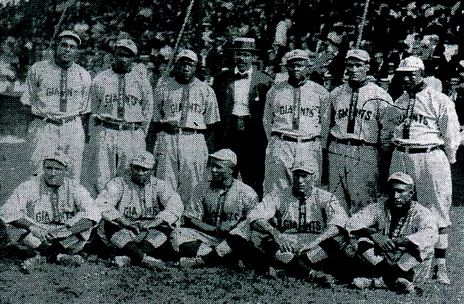
1910 Leland Giants--Seated, left to right, Johnson, Booker, Payne, Strouthers, Duncan, Pryor; standing, left to right, Petway, Lloyd, Hill, Dougherty, Bill Lindsay, Wickware, and Foster.

1910 Leland Giants–Seated, left to right, Johnson, Booker, Payne, Strouthers, Duncan, Pryor; standing, left to right, Petway, Lloyd, Hill, Dougherty, Bill Lindsay, Wickware, and Foster.

While Foster and Moseley’s club consisted of several of the core players from the 1909 Leland Giants, who had won the championship of Chicago’s City League, the league’s members rejected their request for league membership in 1910;  Frank Leland’s Chicago Giants were accepted into the league and The Chicago Tribune said it would be the Chicago Giants who would “hoist the pennant” signifying the 1909 championship at their ballpark, Auburn Park, at 79th and Wentworth,  on May 15.

When the Chicago Giants played their first City League game on May 1, the Leland Giants were on what The Chicago Inter Ocean called “Moseley’s 9,000-mile trip;” a spring training tour that covered 9,073 miles and included games in 10 states.

While they were not members of the City League, the Leland Giants played games against league teams throughout the season; including the May 15 opener.

The Chicago Defender said:

“Those in doubt about the popularity and ability of the 1910 line-up of the Leland Giants, had that doubt dispelled last Sunday if they were at the giants’ new park…B.F. Moseley presented the entire line-up, together with Manager (William C. “Billy”) Niesen‘s team, the Gunthers (a member of the City League) to 4,000 enthusiastic fans, comprising some of the best citizens of Chicago.”

The Defender described Normal Park as “one of the swellest and best-equipped ballparks in the city…it is clean and accessible to the (street) car lines and a credit to the race.”

As part of the festivities, at Normal Park–and at roughly the same time Frank Leland was about to”hoist the pennant” at Auburn Park, Niesen, on behalf of the City League gave the Leland Giants their own championship banner:

“(Niesen) presented the pennant to Rube Foster, as the champions of the city, a march was then formed, headed by the First Regiment K of P (Knights of Pythius) Band to the rear of the grounds, where the pennant, a beautiful flag in maroon, properly lettered ‘Leland Giants, City Champions’ was hoisted and unfurled to the breeze amidst great applause and music.”

The Lelands beat the Gunthers 5 to 1 behind the pitching of Frank Wickware.

Frank Leland’s Chicago Giants, lacked some of the star power of 1909 and  finished in second place in the City League.

Foster and Moseley’s Leland Giants fared better.  The “best talent procurable” won 35 straight games until June 11; The Chicago Tribune said, “Lelands Defeated at Last–Gunthers break winning streak of colored players,” when, with Foster on the mound, they lost 3 to 1 to Niesen’s Gunthers.  It was a rare loss, the Leland giants won 106 games in 1910, with just seven losses.

Beauregard Fitzhugh Moseley

Beauregard Fitzhugh Moseley

The next season, with an infusion of cash from a new business partner, a white Chicago tavern owner, John Schorling–another former partner of Frank Leland, who was sometimes identified as Charles Comiskey‘s son-in-law–the Leland Giants became the Chicago American Giants and moved from Normal Park to “Schorling’s Park” at 39th and Wentworth, the former home of the Chicago White Sox.


“Silly Assertions by a Brace of Newspaper Nincompoops”

1 Apr

Adrian Constantine “Cap” Anson’s Chicago White Stockings cruised to the National League championship in 1880. The team was never out of first place and won the pennant by 15 games over the Providence Grays.

The 1880 National League Champions

The 1880 National League Champions

Two influential newspapers, The Cincinnati Enquirer and The Washington Capital spent the offseason downplaying the White Stockings’ victory and questioning the team’s integrity.

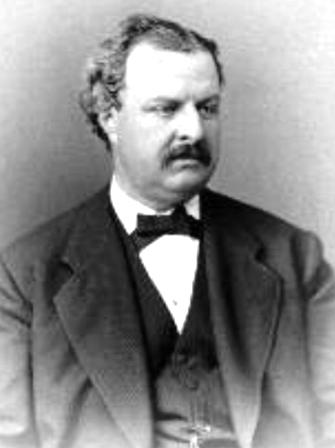
The Enquirer’s OP Caylor had a long-time feud with White Stockings—and National League President William Hulbert–which heated up further at the close of the 1880 season when the Cincinnati Reds were banished from the National League. Cincinnati management routinely leased the team’s Bank Street Grounds out for Sunday games—games where beer was sold as well. Hulbert pushed through a ban on both practices for the 1881 season, then, as was his original intent, forced the Reds out of the league.

William Hulbert

William Hulbert

Caylor attributed the White Stockings’ success to favorable schedules approved by Hulbert’s “well-trained minions,” and he declared:

“The League, as owned and operated by Hulbert, is rotten and corrupt.”

The Capital, an independent, crusading weekly, took it further. Not content to limit the accusations to off-field corruption, the paper claimed it was common knowledge Chicago had thrown games late in the season.

Over their last fourteen games, the White Stockings were 9-4 with a tie. The Capital said:

“Everybody knows that when the Chicagos had the championship well in hand last season they gave games away to attract gate money…(Hulbert) does not seem to know that the public knows that every time his league goes into secret session it is to concoct some means of swindling the public or the players, or both.”

The Chicago Tribune would not let the insults stand. Their defense was no surprise, in 1875 the paper’s baseball writer, Lewis Meacham had been Hulbert’s conduit for selling the public on the formation of the National League as a successor to the National Association–a league free of drunkenness, gambling and corruption. While Meacham had died in 1878, the paper remained Hulbert’s staunch ally. The Tribune said:

Silly Assertions by a Brace of Newspaper Nincompoops

“Everybody knows that this assertion is a silly falsehood, without a shadow of basis in fact or reasonable probability. So far from losing games to attract gate-money, the Chicago club finds that nothing pays so well as to win all games and lose none. If such a thing were not possible, the club that should go through the greater part of a season without once suffering defeat would attract more patronage and make money than any club ever organized.

“Reason and fairness are, however, wasted upon two such hopeless imbeciles as the fellows who butcher base-ball in the columns of The Washington Capital and The Cincinnati Enquirer.”

The Tribune said jealousy over the lack of a National League club in each city was the only explanation:

The Capital man has been standing on his head ever since the League was impelled by geographical reason to refuse the Washington club’s application for admission; and The Enquirer man has been similarly inverted both as to body and brain ever since the Cincinnati Club was kicked out of the League on account of its refusal to abolish Sunday games and beer jerking on the club grounds in Cincinnati.”

like most 19th-Century allegations of malfeasance on and off the field, the allegations were quickly forgotten.

The White Stockings cruised to another championship in 1881 with a 56-28 record, finishing nine games ahead of second place Providence. It was Hulbert’s final season. He died three weeks before opening day in 1882.

The Tribune, Hulbert’s greatest ally to the end, said upon his death:

“His great force of character, strong will, marked executive ability, unerring judgment of men and measures, and strict integrity and fairness were of incalculable value to the league, and he was rightly considered to be the brains and backbone of that organization. In him, the game of base-ball had the most useful friend and protector it has ever had; and in his death the popular pastime suffers a loss the importance of which cannot easily be exaggerated.”