During his scouting trip to the West Coast looking for talent for the Boston Braves, Johnny Evers talked to Brian Bell, the Associated Press Bureau Chief in San Francisco:
“(He) has been sitting up late looking at games in the Pacific Coast League. The once great second baseman frankly is puzzled.
“Night baseball has turned the game topsy-turvy. A scout dislikes to recommend the purchase of an infielder or pitcher because with the lights the players have to adjust themselves to various conditions.
“’Recently, I looked at a promising shortstop.’ said Evers. ‘He was playing almost in left field. The next time I saw him in another park he was almost in back of the pitcher. When I spoke to him about it, he said that each park in the league has its dark spots and he has to play accordingly.’”
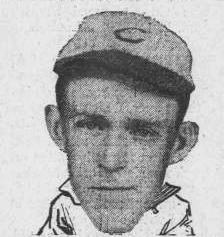
Johnny Evers
The shortstop Evers was scouting, according to The Los Angeles Express was Carl Dittmar. The club was said to be looking for a replacement for 39-year-old Rabbit Maranville, in order to move the veteran to 2nd base; the Braves instead purchased Billy Urbanski from the Montreal Royals.
Pitchers told Evers they would have to throw low pitches at the parks with lights mounted on top of the grandstand and high pitches at the parks with lower mounted lights:
“How can a scout tell whether these pitchers that are so good at night can pitch in the majors in the daytime?”
As for baseball as a whole?
“Evers calls the present ‘the cream puff era’ in baseball. ‘There’s no more fight in the game.”
He complained that one West Coast manager told him a player we wanted to scout had ‘a bad cold’ and would not be in the lineup:
“I cannot understand players staying out of a ball game because of a cold.”
There were at least two players of “the cream puff era” that Evers approved of:
“Babe Ruth and Lefty O’Doul are the greatest hitters today. They realized that conditions are changing in baseball. Ruth’s mighty swings eliminated the bunt and put the homerun at a premium some years ago. With the slowing up of the baseball, Ruth is accepting the changed conditions.
“The big fellow of the Yankees now just meets the ball most of the time. Because of his strength, the ball leaves the bat like a shot and is past the infielders before they are able to take a full step.
“O’Doul is meeting the ball in a sweeping motion, which results in many base hits. He started the season in a terrible slump, but he was smart enough to discover the trouble.”
O’Doul
The scout, and co-author with Hugh Fullerton of “Touching Second: The Science of Baseball” remained a fan of the dead ball:
“Evers thinks the slower the ball the better the players and the game. Brainy players and plays have been sacrificed by the lively ball for fellows who can do nothing but ‘cut and slash.’”
Many different versions of how and when Johnny Evers and Joe Tinker finally reconciled—and when—after years of mutual animus have been told over the years. Evers told the story himself—and talked more about both Tinker and Frank Chance—while he was scouting for the Boston Braves in Georgia, in a 1931 interview with Ralph McGill of The Atlanta Constitution.
McGill, incidentally, was an outspoken anti-segregationist who rose from assistant sports editor to managing editor and publisher at The Constitution and won the 1958 Pulitzer Prize for his editorials on the civil rights movement.
“(W)hen Johnny Evers sat in a room at the Atlanta Athletic Club until a late hour Saturday morning and recalled the old days he held a dozen men on his words: Tinker to Evers to Chance.”
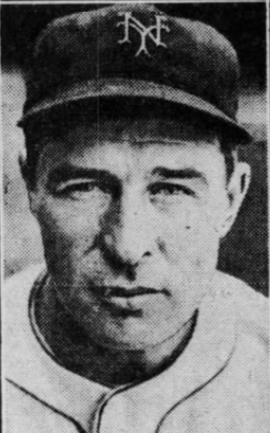
Johnny Evers,
McGill said Evers, “told the story of how the trio played for 12 years and were then parted for 11 to meet for the first time two days before Jack Dempsey went into the ring against Luis Firpo (1923)”
With “something glistening in his eyes,” Evers told the story to McGill and the others:
“Joe Tinker and I never got along well. We were both high strung. If a man bumped me at second, Joe was over there to help me. But when it came to just us—well, we often raced off the field into the clubhouse and went to it with fists. If I made a good play, he told me. If I made a poor one, he told me. And I him. As I said, we didn’t get along.”
Then, he said, “came the breakup…And not for 11 years did I see either of them or them one another.”
Days before the Dempsey/Firpo fight Evers received a telegram from Chance who was in New York:
“Come on down. Joe is here.”
Evers said:
“I got on the train and went. I got the number of the room from the clerk. And I went up and knocked.
“’Come in,’ yelled Frank Chance.
“’I knocked again.
“’Come in,’ he yelled louder than ever.
“I knocked once more.
“’All right, you so and so, stay out,’ yelled Chance.
“I turned the knob of the door slowly and then swung it open.
“Tinker and Chance were sitting there at a table, staring at me and I at them across a span of 11 years. We stared there motionless and wordless for five minutes.
“And then I took a step forward and we were all together with our arms about each other’s shoulders and we were all crying as if our hearts would break.”
Tinker to Evers to Chance
Evers turned his attention to Chance, who had died seven years earlier. McGill said:
‘”The Peerless Leader’ they called him. And he must have been. Johnny Evers thought so. He didn’t say, but as he talked of Chance there was something in his voice, something he felt in the old days when they were helping to make the Cubs famous.”
Evers said of his former manager:
“Chance had more courage than any man I ever saw. He was a born fighter.”
Evers cited Chance’s sparring with Joe Choynski, a heavyweight contender who finished with a 59-17-6 record, with 39 KOs; Jim Corbett said no opponent ever hit him harder:
“Chance stayed four rounds when he was a student in California with Joe Choyniski [sic], one of the greatest of the heavyweights. (He) was touring then and offering $100 to any man who would stay four rounds. Chance was the college champion, and he went in there and stayed four rounds. He was cut to pieces and knocked down innumerable times. But he stayed four rounds.”
Evers either embellished the story in places or heard an embellished version to begin with.
Chance took part in a three-round exhibition with Choynski on May 18, 1896. The fight was not part of some challenge offered by Choynski, but rather a benefit for one of the instructors at the Fresno Athletic Club. Chance’s bout was part of what was advertised in The Fresno Bee as a night of “vaudeville and novelty.”
The bout with Chance was the first of two sparring matches for Choynski that evening—the other was with the honoree E.V. Bradstreet—and The Bee makes no mention of any knockdowns or the savage beating Evers implies:
“Chance is Fresno’s best boxer and did nobly, but Choynski taught him several things…Chance did comparatively well.”
Evers also suggested that the “fight” with Choynski did permanent damage to his former manager:
“It left him with an impediment in his speech from which he never recovered.”
Finally, he suggests the embellishments were Chance’s and not his:
“’Johnny,’ he used to say to me. ’that was hardest $100 I ever earned.’ What a fighter he was.”
More insights from Evers from his 1931 scouting trip for the Braves, Wednesday.
“The old-timers. They were better hitters! No question about it.”
Said Ed Barrow after he became president of the New York Yankees in 1939 and Jimmy Powers of The New York Daily News had the 71-year-old pick his all-time team.
Barrow
Powers said of Barrow:
“The beetle-browed executive, one of the few remaining links between the gas-lit, coach-and-four, Wee Willie Keeler era and the moderns, boomed at us across his wide, flat-topped desk in the offices of the New York baseball club.”
Barrow was “a great believer in ‘natural born’ stars,’ telling Powers, “A fellow has it—or he hasn’t it.”
He explained his theory:
“Once in a while a manager will make a few minor corrections in stance, or change something here and there, but if player hasn’t the natural coordination, the God-given physique, the reflexes for rhythm and timing, he’ll never get ‘em. Sometimes one man will get more mileage out of his talents than another because he will work harder. That’s why the old-timers were better hitters. They looked at better pitching, and they practiced and practiced and practiced.”
Barrow said there was one reason in particular for why old-timers were better hitters:
“The tipoff is in the strikeout column. The moderns strikeout oftener—and there’s your answer. The present-day hitter is so homerun crazy that half the time he closes his eyes and swings; four bases or nothing! Usually, it’s nothing.”
Barrow’s told Powers:
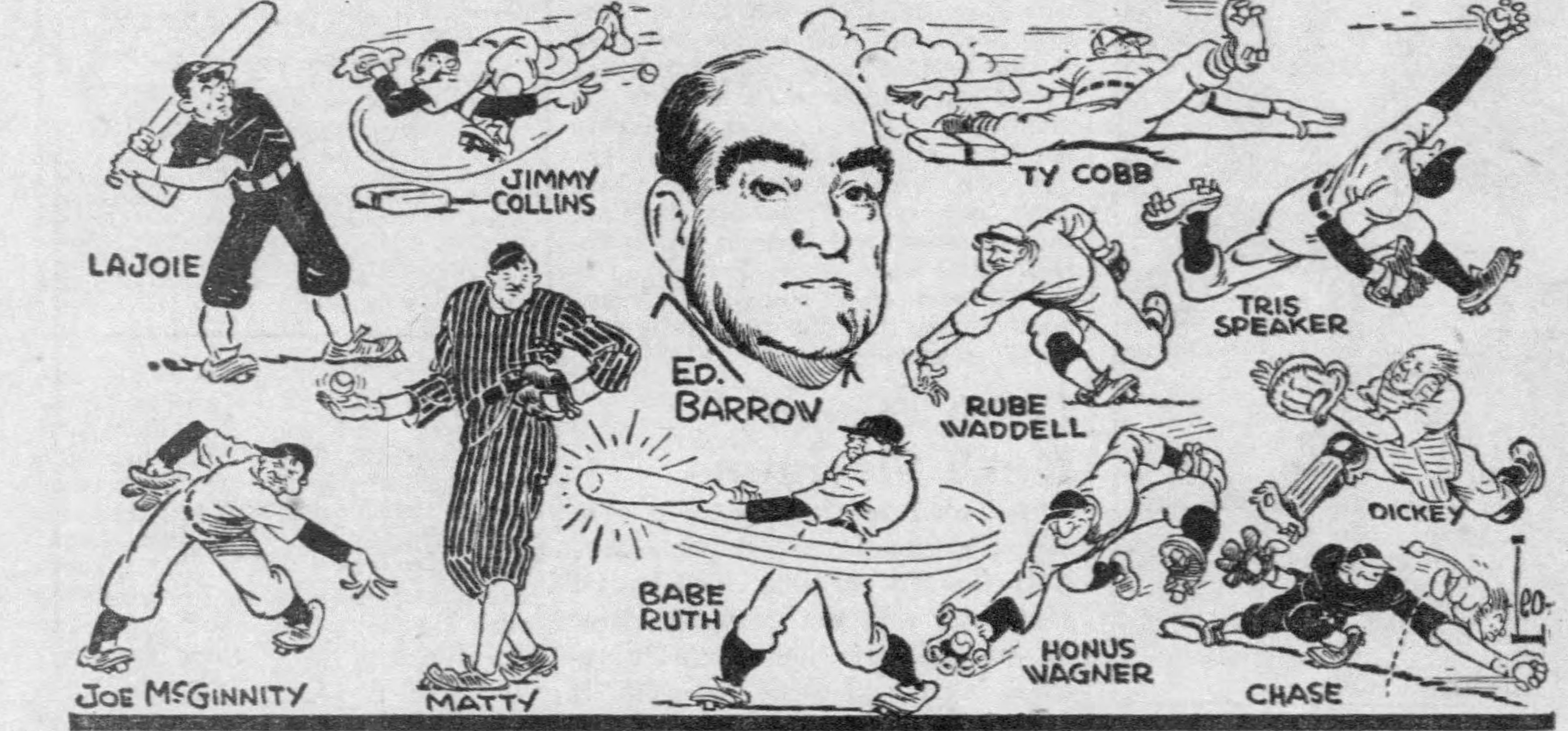
“Now, on my All-Star, All-Time team I’d put Cobb, Speaker and Ruth in the outfield. Chase, Lajoie, Wagner, and Jimmy Collins in the infield. Matty, Johnson, Waddell, and McGinnity, pitchers. And Bill Dickey, catcher…I’d put Joe DiMaggio on that team as utility outfielder. I’d put Lou Gehrig as substitute first baseman and pinch hitter. Bill Bradley, Eddie Collins, Swede Risberg, and Buck Weaver would also get contracts on this ‘Dream Team.’ Keeler would be another utility outfielder and Bresnahan would be my second catcher. Ruffing and Gomez would fill out my pitching staff!”
Barrow’s All-Stars
Barrow said he could offer “a million reasons’ for the rationale for each selected player.
“(R)ecords can be misleading…I won’t quote you records of my All-Timers…A man must be in the dugout or in the stands to weigh the merits of a player and not be influenced by a record book.”
He said in choosing his team, he held “no grudges,” which is why he selected Risberg and Weaver, “Black Sox scandal or not.”
He said he would add Joe Jackson to the team, “if I thought he was smart enough. But Jackson, strange to say, was the only dumb one on that whole team. Up until 1938s Yankees—those Black Sox were the best team in baseball!”
As for some of his picks:
“Chase on first base! Nobody near him. He could throw a ball through a knothole, covered the whole infield like a cat, and remember he used a glove that just covered his fingers and seldom had a palm. The ‘peach baskets’ first basemen use today would have been barred years back, Chase could hit behind the runner, bunt, steal, fake a bunt at third and then bunt over the third baseman’s head. He could do all the tricks.”
Chase
He called Napoleon Lajoie “the most graceful second baseman I have ever seen. He had a rifle arm and was as slick as a panther,” and gave him the edge “by a slight margin” over Eddie Collins.
Honus Wagner, who Barrow signed for the Patterson Silk Weavers in 1896, “is my nomination as the greatest individual ballplayer of all time.”
Of his first impression of Wagner, he said:
“He was pretty terrible when I first ran across him, looked awkward as all get-out. But suddenly he would come through with a perfectly dazzling play that had everybody on our bench swallowing his tobacco cud in astonishment.”
Like Lajoie, Barrow said Jimmy Collins just edged out the second choice—Bill Bradley—because:
“Collins could make perfect throws to first from any position. When an infielder makes an off-balance throw today the crowd gives him a big hand. The old timers did it every play because the old ball was slow dribbling out there. Today the lively ball comes out fast in one or two hops, and this gives the third baseman a chance to make his throw from a ‘straightened up’ stance.…Remember, in the old days the ball was dark, wet with slippery elm juice; often it was smudged with grass stains, hard to follow.”
In the outfield, Barrow said, “I don’t think anyone will give you an argument on Cobb-Speaker-Ruth.”
He called Ty Cobb “the greatest hitter of all time,” with “a lightning-quick brain and plenty of gut.”
Babe Ruth, he said was, in addition to the being the “great slugger of all-time,” changed the game because of “His salary, his magnetic personality, and his publicity.”
Tris Speaker “was superb. A good hitter, a great fielder, a brainy man. He was so confident of his ability ‘to go back’ he practically camped on second base.”
Of the pitching staff, he said Christy Mathewson “could do almost everything with a baseball—practically make it talk.”
Of Walter Johnson he said:
“He had awe-inspiring speed. You’d stand up there watching and suddenly—pfffft—pfffft—pfffft. Three phantom bullets whizzed past. Too fast for your eyes to focus ‘em.”
Rube Waddell was “the best lefthander” he had seen.
Joe McGinnity appeared to be a sentimental choice:
“(He) was a work horse, a competent soul who loved the game so much I believe he’d work for nothing.”
Bill Dickey, he said was not “given the credit” he deserved:
“He’s a hitter. A workmanlike receiver. Handles pitchers marvelously. Has a good arm. Is fast. Is always one jump ahead of the opposition. Dickey does everything well.”
In July of 1944, Jim McCulley of The New York Daily News sat with two men watching a game:
“’The greatest ball players I ever saw?’ Said the fellow on my left. ‘That’s easy.’
“’Pitchers? Well, there was Christy Mathewson, old Pete Alexander, Walter Johnson and Three-Fingered Brown. There was Ty Cobb, a fat guy named Ruth and Joe Jackson in the outfield. Catchers? Let’s see now; there was Roger Bresnahan and I guess I have to put Ray Schalk in there along with Roger; There was (Pie) Traynor at third and the old Dutchman at short, of course, but do I have to tell you his name, Hans Wagner? Rogers Hornsby at second and Georg Sisler at first. They were the greatest I ever played against or saw, anyway, and I don’t think they can come much better.
“’Speaker? He was great all right, but naw, not in their class.”
McCulley’s other companion responded that Hal Chase belonged in place of Sisler.
“The fellow on the left smiled and said: ‘Leave me out of it.”
Hal Chase, 61 years old and in failing health, was on the East Coast “on a little vacation” attending games and attempting to rehabilitate his reputation. Although he shaved three years off his age and told McCulley his birthday was in a “couple of days, July 21st to be exact;” Chase’s birthday was February 13.
Chase
McCulley said the former first baseman, despite his many illnesses and injuries, “still has that athletic figure and moves around quickly and with the same grace which made him so outstanding on the ball field.”
Chase said he watched a dozen games on his trip East:
“Even went out to see Josh Gibson play the other day. There’s a hitter. One of the greatest of all time. He hit two home runs and they were belts. Say, if he played in the Polo Grounds 75 games a year, he’d hit 75 home runs.”
Chase even told an apocryphal story about the Negro League star:
“’You know how Gibson happened to start playing pro ball?’ asked Chase. ‘Well, one day the old Pittsburgh Crawfords were moving out of Pittsburgh in a bus. They happened to stop along side of a sandlot diamond on account of a traffic tie up. So they all took a look out the windows to watch the in progress. There was a mighty loud crack and a couple of seconds later a ball bounced off the top of the bus, which was parked about 400 feet from the home plate. Oscar Charleston, who managed the Crawfords at the time, got right out of the bus and hot-footed after the kid who had socked the ball.”
It is not clear whether the story was invented by Chase or a story he had picked up, but it ignores that Gibson began his professional career with the Homestead Grays and was well-known as a semi-pro player before his first professional game.
Chase said Gibson was the second-best player he’d ever seen:
“That fat guy was the greatest, of course. Nobody can come close to Ruth. He was the greatest that ever lived, better than Cobb or anybody else. If Ruth ever shortened up on the bat, he’d have hit over .400 every year. But Gibson comes as close to Ruth as you’ll ever get.”
Gibson
As for his own legacy:
“Chase still gets emotionally upset when the talk gets around to his final days as a player. It’s a well-known fact that he didn’t leave the game of his own accord, but we won’t go into that here.”
McCulley said the “name of Chase belongs alongside those of other all-time greats of the diamond,” and:
“The fact that his name isn’t listed in the Cooperstown museum cuts deeper and deeper into Hal as time goes on. It’s the one regret and the one dark thought in an otherwise brilliant baseball saga.”
Chase was dead less than three years later with thesame regret and dark thought unresolved.
His first major league manager, Clark Griffith told Shirley Povich of The Washington Post:
“You wouldn’t believe a man could do all the things on a ball field Chase could do. There wasn’t a modern first baseman who can come close to him. There wasn’t ever any ‘second Hal Chase.’ He was in a class by himself.”
Myron Townsend, the sports editor of The Cincinnati Commercial Tribune said:
“More bunk is written about baseball than any professional sport.
“In dwelling on the details of ‘Inside’ ball the scribes allow their imaginations to run away with them.”
In 1910, after the publication of Johnny Evers’ and Hugh Fullerton’s book, “Touching Second; The Science of Baseball,” talk of “inside baseball” was all the rage: or “a favorite subject of the space killers,” as Townsend put it:
“Many fans believe that baseball players are mental gymnasts. They swallow whole all they read about the ‘science’ of the game.
“Touching Second,” Evers’ and Fullerton’s collaboration on “Inside Baseball.”
“For this reason, the speculative typewriter tickler never grows weary of pounding out epistles about the marvelous mental attainments of professional players.”
Townsend ridiculed the idea that, “According to the critics baseball is very complex. The moves and counter moves are fairly bewildering. A great chess master is a child when compared to a baseball manager.”
He said the baseball writer of the rival Cincinnati Times-Star had it right:
“No writer perforates the ‘signal’ theory more neatly or thoroughly than “Billy Phelon.”
Phelon had written on the subject:
“A kick of the coacher’s right foot means one movement for the batsman and baserunner; a kick of the left foot means another; pulling grass with the right hand means to do this and jerking it violently with the left hand means to do the other thing. If the manager on the bench shades his eyes with his palm it means a steal, if he hits the water barrel viciously with his left foot it means to sacrifice.
“In short—according to the magazine writers and the brilliant critics of the day—baseball is controlled, all the way through the stages of the active play, by these intricate, complex, recurring, and crisscrossing signs and codes.
“All of which would be extremely instructive were it not for the fact that it isn’t so; and that, in all these stories, the writers either built upon their imagination; or—more likely—were ‘stung’ and ‘joshed’ by the ballplayers to whom they went for information”
Phelon said it was “a plain, hard fact, no ball team ever played the game under a long and complex code of signals.” He called it “an utter impossibility and mental absurdity.”
Instead, Phelon said:
“The generalship of the ballfield is an ever-shifting series of quickly devised schemes, not a fifth part of them figured out or practices before each individual game begins. The signal code of the ball field is limited to eight or ten simple tricks and must ever be so for the reason that the brain of the ballplayer is not that of Euclid, Plato or Archimedes.”
Townsend said, “Mr. Phelon is right,” and told Cincinnati fans to “disabuse their minds of all such rot.”
Reds Manager Clark Griffith, said Townsend:
“Does not have to tell (Bob) Bescher when to steal bases. Instinct tells the speed boy what to do when he reaches first. A certain amount of teamwork between batter and baserunner may be necessary, but as a third party a manager is a ‘butter in.’”
Bescher
The Commercial Tribune Editor accused Evers of attempting to “bunk the fans about the elaborate set of signs and counter signs the Cubs use.”
Townsend said the “brainy second baseman” said he and Cubs shortstop Joe Tinker “never made a move” with signaling one another. He contrasted that with the second baseman and shortstop of the 1904 New York Giants, Billy Gilbert and Bill Dahlen, who:
“(N)ever used a signal of any kind. The duties of their positions were second nature to them.”
Contrary to the trend, It was a game of spontaneity, not science:
“No one should underestimate ‘generalship’ and strategy as a component part of the game, but the decisive plays come up on the spur of the moment. They cannot be rehearsed in the clubhouse…’Inside ball’ will always be a favorite theme, but the speed boys and hard hitters, aided and abetted by a start staff of pitchers and a master workman behind the bat, will continue to win games, knowing nothing about the ‘signs and signals’ which ignorant fans imagine they are wise to.”
The Chicago Daily News said this was “the sort of chatter” heard from women in the grandstand in the past, but, in 1909, those days were gone:
“Well-known women, those whose names you see in the society column regularly, fans—or perhaps fannettes are better—who cheer the Cubs and White Sox on to victory. And they know the game.”
One such “fannette” was “Mrs. Hobart Chatfield-Taylor;” the former Rose Farwell, daughter of one-time US Senator from Illinois Charles B. Farwell:
“Once at the field she sees nothing, hears nothing, but the game. She is oblivious to her surroundings and applauds clever plays enthusiastically.”
The Daily News said that Taylor, “Unlike many fair enthusiasts…indulges in the slang’ of baseball. She said:
“It’s distinctive slang and to me explanatory of the game. ‘Tinker died stealing’ is far more expressive than ‘Mr. Gibson, the Pittsburgh catcher, noticed Mr. Joseph Tinker, the Chicago shortstop, in the act of purloining second base, and therefore threw to the gentleman playing second base, who tagged Mr. Tinker with the ball in ample time to put him out.”
Tinker
Taylor said, “I love baseball…Of course to fully appreciate the sport one must thoroughly understand it, but when you master the plays and comprehend its technicalities it becomes the greatest of outdoor sports.”
One of the other “well known” Chicago fans was “Mrs. W.J. Chalmers,” whose husband had turned the company started by his father—Fraser & Chalmers—into one of the world’s largest manufacturers of mining equipment. She was the former Joan Pinkerton—daughter of detective Allan Pinkerton. She said:
“There is a strange fascination about a ball game that endears it to me, although I can’t say just what it is.”
“Miss Phoebe Eckles,” the daughter of a Chicago bank president, said:
“Often, I try to analyze one of the great crowds, drawn to a game by the same unknown quality that impels a moth to flutter to a flame. The tragedy and comedy, the kaleidoscopic possibilities of the game, have endeared it to me.”
“Mrs. Potter Palmer II,” the daughter of Chicago newspaper publisher Herman Kohlsaat, said she did “not thoroughly understand the game,” but is “learning rapidly,” and the paper promised she would be “as ardent a fan” as the others soon.
Chicago’s Society Women attend a game
“Mrs. Orville E. Babcock,” was the wife of a Chicago financier; his father was a civil war general and served—controversially and amid scandal—as President Ulysses S. Grant’s secretary. She said:
“I use the slang because I believe in ‘When in Rome etc…,’ Some of the reporters stretch the English language almost to the breaking point, when writing base ball stories, but many of the expressions they coin are amusing and cute.”
The Daily News said “One might go through Chicago’s” social register and “name hundreds” of society women who were baseball fans:
“It merely shows the advance of the national game, which a few years ago was conducted in a manner that effectively barred women and kept thousands of men away, that city a city’s most exclusive set is proud to admit a fondness for the sport.”
By 1911, Jack Chesbro had been two seasons removed from professional baseball. Lou Guernsey of The Los Angeles Times said:
“Only a year or two ago Jack Chesbro’s praises were sung throughout the length and breadth of the land. Everyone knew who Jack Chesbro was. Everyone from the slant-jawed-son-of-the-slums to the Boss Barber knew that Jack originated the spitball and was the great big calcimine applier in the American League…his appearance at the bat or on the field was the signal for a great outburst of cheers. He was idolized.”
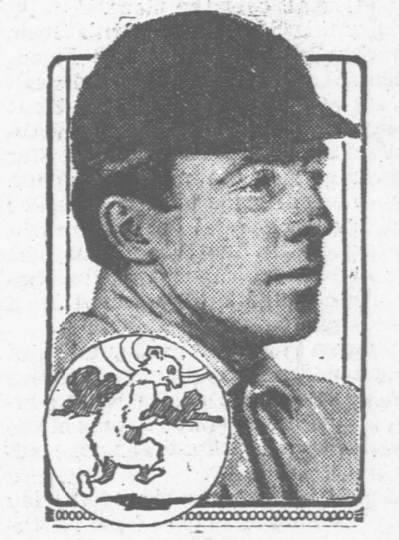
Jack Chesbro
But, said Guernsey, “the inevitable” followed:
“He started to slip. He lost control, couldn’t get his spitter working right and he was banged all over the lot by opposing swatsmen. He looked around one day after he had twirled a losing game and found his friends had gone and that tremendous thing we call fame struggling around somewhere in the vortex of oblivion…Chesbro went, or rather was sent away.”
Guernsey said he had recently visited Massachusetts:
“I stopped at a little town called Whitinsville. It was necessary for me to pass several hours in the little puritanical hamlet in order to catch my train on another road.” I followed a thin line of people out to a typical country baseball field in the afternoon to see Whitinsville hook up with a team from a nearby town.”
Sitting on the bleachers, he said re related:
“Is Chesbro going to pitch today?’ I heard one bewhiskered individual ask of a Whitinsville fan sitting next to him.
“’I guess they’re goin’ to put the big dub in today,’ replied the fan rather hopelessly.”’
And there on the bench sat:
“Happy Jack Chesbro of international fame once upon a time sitting with his fellow players. He was chewing a wad on Navy plug and fingering his glove.”
Chesbro took the field to, “Not a handclap or cheer,” while Guernsey recalled just three years earlier in New York hearing “25,000 frenzied fans shout the name of Chesbro until the very grandstand trembled.”
According to Guernsey:
“The game commenced. The nearby villagers fell against Jack’s curves and shoots for a total of seventeen hits totaling thirty-one bases. Whitinsville couldn’t do anything with the lanky twirler for the opposing team and they lost the game 11 to 3. Chesbro outpitched by a nineteen-year-old country yap.
“After the game the manager of the Whitinsville team paid Chesbro his $10 for pitching the game and informed him that services would no longer be needed. He went, or rather was sent away.”
Chesbro’s fate had become part of a cycle:
“The fickle crowd throws itself at the feet of the hero for the moment only to rise soon to cast itself before another idol and forget the one upon whom it showered praises at first.”
Chesbro made one last attempt to return to pro ball in 1912, failing to get signed after tryouts with Pittsburgh and Brooklyn in Hot Springs, Arkansas. He returned to Massachusetts and continued pitching in semi-pro leagues well into his 50s.
Perry Werden had a reputation as an umpire baiter during his more than 20 years a professional player
His penchant for hurling obscenities at umpires was so well know that in 1895 The St. Paul Globe, in noting that the Minneapolis Millers had issued free season tickets for all the town’s clergy members said:
“Perry Werden will give them food enough for sermons to last the rest of the summer.”
In 1899, he was thrown out of a game before it began because, The Globe said, “Perry threw the ball at (Jack) Sheridan, swiftly.” That was the culmination of a several-year struggle with Sheridan, who tossed him out of many Western League games. In 1895 The Milwaukee Journal said that during one game in which Sheridan ejected him:
“(T)he actions of Werden and others were so objectionable that 200 spectators left the grounds in a body and stated they would never patronize another game as long as base ball was so conducted in their city.”
On that occasion Werden was fined $50 and escorted from the grounds by two Milwaukee police officers.
While playing for the Memphis Egyptians in 1903, Werden and teammate Al Miller were fined $25 in a Birmingham police court for assaulting an umpire; he was escorted from the field by police on at least two other occasions that season.
Jack Brennan—born Gottlieb Doering—and Werden were teammates as rookies with the St. Louis Maroons in the Union Association in 1884 and remained friends. When Werden played for the Minneapolis Millers in the Western League and Brennan umpired in the circuit, The Globe said:
“They are great friends, but Brennan puts Perry out of the game whenever he gets a chance. When Perry hurt his knee…the umpire sent the following telegram of condolence to the big first baseman: ‘I hope that you will have to saw your leg off,” To this Werden replied” ‘I sincerely hope a foul takes your head off.”’
By 1906, well past his prime at 44, Werden joined the Vicksburg Hill Billies in the Cotton States League. He had played in the same league the previous season with the Hattiesburg Tar Heels and coached the Mississippi College baseball team in the spring.
He signed with Vicksburg–who were off to a 2-14 start under manager Billy Earle–along with Jeff Clarke, who had been the ace of his Mississippi College pitching staff as soon as the season ended on May 10.
Werden was immediately popular, as he had been in every city he played.
The Jackson Daily News said he, “has made many friends,” and was rumored to be in line to replace Earle and manager.
The Vicksburg Herald said:
“The old man has a good supply of ginger left and held down the initial sack in fine form. His coaching was calculated to put life into the youngsters, and he showed as much enthusiasm as a boy. There is no doubt that his presence on the team will add materially to its strength.”
The Vicksburg American reported that Werden and teammate Tom Toner “now have a bachelor’s quarters at the ballpark.” The two lived in a tent, where “Perry is cook and woodchopper and Tommie does other chores. Both are well pleased with the outing.”
And it took only four games for Werden to be “put out of the game and fined $5 for something said to the umpire.” He was tossed from at least two more games in next six weeks.
But, after hitting .328 in the same league the previous season, Werden, who injured a leg in June, hit just .141 in 49 games for Vicksburg.
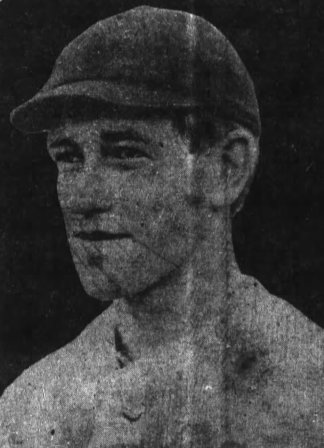
Werden
On July 8, with the team 23-43, Earle resigned as manager and Werden was released. The American said:
“Perry today stands as one of the grand old ruins of what was once a gilt-edged celebrity, and with due respect to his age and feelings he certainly may be relegated to that realm called ‘has been.’”
The Vicksburg Evening Post was less kind, claiming Earle’s resignation was because “internal dissentions caused principally by Werden made it impossible for him to get good work out of his men.”
The Herald remained in Werden’s corner, saying the club’s directors:
“(F)or some occult reason, regarded him as a disturber. Just how these gentlemen arrived at that conclusion is a mystery. If the matter were left to the patrons of the game—the persons who make baseball a possibility—Werden would have been retained.”
For his part, The Herald said Werden was “grieved because the report circulated that his is a disorganizer…he says he has played ball for twenty-three years and the charge was never made before.”
Less than a week after his release, Joe O’Brien, president of the American Association asked him to become what he hated most: an umpire.
Werden accepted, but never said a good word about his new career despite immediately receiving positive reviews:
The Columbus (OH) Dispatch said after his first game there:
“Perry Werden is a good umpire. That’s the verdict that must be rendered on his first appearance at Neil Park. He permits no idle coaching and has good judgment on balls and strikes. Pitchers get the corner of the plate when they put them there. Fans liked his work.”
The Indianapolis Sun recounted some highlights from “genial jolly Perry’s” first weeks on the job:
“Werden’s tongue bids fair to be as cutting as that of the Hibernian Tim Hurst. He has umpired but a few games, but he has already won a reputation for being a wit and a master of repartee.”
Werden was quick to return questioned call with insults—during one game in Toledo, Fred Odwell, just sent to the Toledo Mud Hens from the Cincinnati Reds suggested Werden “open his eyes,” after a call, the umpire responded:
“What are you trying to do? Kick yourself back into the big league?”
He ordered Toledo’s Otto Knabe back to his position during an argument before Toledo manager Ed Grillo, “gets next to what a four-flusher you are.”
When Mud Hens third baseman Otto Krueger objected to a call, Werden chastised him for an earlier misplay:
“No, you are a nice bone head. Anybody that don’t know how many men are out and stands like a dummy with the ball at third base while a man runs down to first, has got no business to talk to me. Skidoo.”
When Indianapolis Indians catcher Ducky Holmes questioned a call, Werden responded:
“Little boy, every ball I call you say is a strike, and every strike you say is a ball. Shut up or I’ll have an amateur catching in your place.”
Dick Padden, whose major league career had ended the previous season, and was player-manager of the St. Paul Saints had his value to his club dismissed by Werden during an argument:
“Padden, you can kick all you want to. You dead ones don’t count. When I chase a man, I’ll put out someone who can weaken the team. Stick in Dick. I know you’re tired, but I am not going to put you out.”
Having served well for a few weeks, Werden parodied his well-known umpire hatred when he told The Sun:
“There ain’t any good umpires. There never was an umpire in the history of baseball that knew anything about the rules…there never was an umpire that could tell whether a curve broke over the plate or not…All that an umpire is out there for is to make a bluff at giving the decisions.”
After his many years as a player, Werden said he was “taking the rest cure,” as an umpire:
“The rottener you are the better you get by.”
And he endeared himself to every fan who swore they could see a play better than the umpire on the field:
“I’ve often wondered how the loud-faced fellow, in the stands, at 100 yards off from the play, can see exactly what comes off, But it’s so; he can. He never makes a mistake. I’ll admit sometimes it’s pretty hard for the umpire to see when he’s right on the spot. Where the runner and the ball and the baseman are. That’s the difference between the umpire and the fan. The umpire is always rotten and a dud, while the fan is always wise, just, and correct.”
At the close of his first half season, The Minneapolis Journal said of the new umpire:
“Perry as an umpire is getting away with it in great shape. He is a popular idol around the circuit and gets along well with the players.”
The reluctant umpire was hired back for the 1907 season.
Werden, top left, with the 1907 Western League umpire staff. Standing front l to, r. S.J. Kane and Gerald Hayes tope row, Werden, W.J. Sullivan, Jack Kerwin, and John Egan.
Early in in 1907 season, The Indianapolis News, likened Werden to a mythical wise king, and asked “the Nestor of the umpires,” about his newly chosen career: among the questions and answers:
“What is the future of umpiring? Was asked.
“A fool or a martyr is born every minute.”
“Can you recommend it to the American youth?
“Has he not a friend?”
“Would you advise umpiring as a profession?
“It is more exciting that the South American revolutions and the climate is better.”
“How did you come to be an umpire?”
“I was sent up for life, but the governor changed the sentence.”
Werden’s transformation from umpire attacker to umpire came full circle during a June 11, 1907 game in Louisville, after what The Courier-Journal called a “raw mistake” by the umpire calling a runner safe at second–a call Colonels pitcher Jim “Bull” Durham objected to. The Times said:
“Werden was forced to stand abusive language and as a climax Durham struck Werden with his glove.”
Durham was suspended for a week for the attack.
Late in his second season, Werden told The Minneapolis Journal he couldn’t “get used to umpiring,” Hugh Edmund (Hek) Keough responded in The Chicago Tribune:
“Possibly it is because umpiring can’t get used to him.”
The Minneapolis Star Tribune summed up Werden’s tenure:
“The big fellow makes his mistakes, but he is honest and fair, and this is all the fans want.”
William Henry Watkins, owner of the Indianapolis Indians, rescued Werden from umpiring after it was reported that he had already signed to move from the American Association to the Western League.
The Minneapolis Journal said:
“Werden will go to Indianapolis to act as assistant manager, coach, and advisor general of the Indianapolis baseball club.”
The Indianapolis News called him “The official coacher and trainer” of the club.
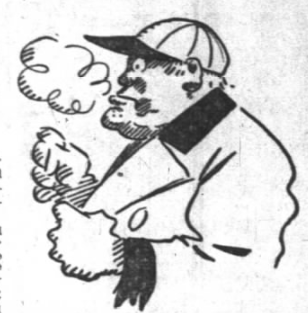
Caricature of Werden as Indianapolis “Coach”
Werden was ejected for the first time as Indians’ “coacher,” during the season’s eighth game by Stephen Kane—his frequent umpiring partner the previous season.
The Indians won their first pennant since 1902 and the coach received much of the credit in the Indianapolis press and was brought back for a second season.
Werden didn’t return in 1910, though he was apparently asked back. He went home to Minneapolis to organized a semi-pro team; Werden’s All-Stars that played for several seasons in Minneapolis’ City League..
He returned to umpiring in the Northern League in 1913—he was the league’s chief umpire– and the Dakota League in 1920 and 21.
Werden was also responsible for one rule change as an umpire. The Toledo Blade told the story:
“One day last summer a couple of fans shied some cushions at the venerable pate of Perry Werden. Perry immediately hied himself to the office of President Joe (O’Brien) and reported that he had been hanged, strangled, and flayed by the Milwaukee bugs.
“O’Brien was required to obey the rule and a $100 penalty was plastered on to Harry Clark, the supposition being that Clark was field captain of the Brewers. Clark denied that he was the leader of the team, and as he produced an affidavit swearing to his statement, O’Brien was powerless to collect the fine. He allowed the matter to drop but was thoughtful enough to bring it up at the annual meeting. Under the new rule the club and not the captain will be liable.”
The New York Telegram eulogized in 1906, and pronounced him:
“The greatest ball player of them all, when all that makes a great ball player is taken into consideration.
“There was nothing that Buck Ewing could do on a ballfield without doing it well. Before he became a catcher, he was a fine infielder. After he was a catcher, he was a fine outfielder. When he was a catcher, he was a good pitcher, and there was no time in his life that he was not one of the most intelligent, if not the most intelligent right-hand batters in the history of the game.”
Ewing
It was acknowledged that “There were others who were greater sluggers,” and players with higher averages, “but there was only one Ewing, whom every pitcher feared when there were men on base.”
In addition, The Telegram said, “No ball player lived who knew more about the inside of baseball,’ and when he threw a ball it was as if:
“He simply handed it to the baseman, with a snap which many a catcher had tried and none has equalled.”
Tom Loftus told the paper when he was managing, he was asked “why his players did not try to steal” against Ewing:
“Steal bases, what’s the use? If you give them two rods handicap for a start the second baseman would be waiting for them before they within twenty feet of the base.
“You could rob a bank easier than you can steal on this man Ewing.”
The eulogy also said, “as a matter of baseball history,” Ewing “probably made” the longest hit on record, in an 1889 game with the Cleveland Spiders.
“Cleveland’s left field fence was so far away from home plate that no one had ever batted the ball over it, and no one expected that a hit would go over it. ‘Darby’ O’Brien, long since dead, was pitching for Cleveland. He tried to fool Ewing with a low curve on the outside corner of the platter.”
The pitcher was not Darby O’Brien, but John “Cinders” O’Brien:
“Buck swung with all his weight on the ball, and when it cleared the top board of that far away left field fence by so many feet that there was enough daylight to have prolonged the afternoon for another hour or so. The crowd in spite of its partisanship stood up and roared.
“The ball was found in the garden of a Cleveland millionaire hundreds of feet from the fence…The measures are in existence to this day, but there is little doubt that it wa the longest hit ever made in the history of professional baseball. Also, New York won because of the hit.”
In addition to identifying the wrong “O’Brien” as pitcher, The Telegram erred in the outcome of the game. Cleveland beat New York eight to six.
The game was June 22, 1889. The New York World described the moment; the Giants loaded the bases in the third inning:
“Then Buck Ewing, captain of the champions of all creation, came to bat and made the longest hit ever made on these grounds.”
The Cleveland Press said:
“(Ewing) drove it high over the left field fence, which is 478 feet from the home plate.”
The Telegram insisted in 1906 that Ewing’s homerun was “the longest hit ever made in the history of professional baseball.”
The 1922 “Spalding Guide” said of Ewing’s home run:
“(W)here the ball went after that (clearing the fence, 478 feet from home plate) never was ascertained, although it was a standing joke in Cleveland that it turned up in the repletion room of a Euclid Avenue mansion, which would not have been wholly impossible if it rolled to the corner of what was once Case Avenue.”
The 1906 eulogy concluded:
“(A) gamer man with a more magnetic personality never played professional baseball. There are thousands to whom Buck Ewing’s death will bring a feeling of sorrow that a personal friend has been taken away.”
Edgar Forrest Wolfe—who wrote and drew cartoons under the pen name Jim Nasium for The Philadelphia Inquirer and The Sporting News, among others—said in 1931:
“I knew Rube Waddell before he ever broke into the big leagues.”
Rube
Wolfe recalled a game Waddell pitched in “an open field” in Butler County, Pennsylvania:
“A friend of his drove into the field in a buggy. This fellow drove up along the third base line and yelled to Rube, who was in the box pitching at the time.
“’Hey, Rube!’ he called, ‘come on and take a buggy ride!’
“Rube immediately dropped the ball and walked over and climbed into the rig and taking the lines from his friend’s hands he drove out of the baseball field and left the ballgame flat. All the entreaties of the other players couldn’t get him out of that buggy.”
On another occasion, Wolfe said Waddell was hired to pitch for the Homestead Athletic Club in a series versus their rival the Duquesne Country and Athletic Club:
“Each of those organizations supported strong semi-pro baseball teams that would be the equal of the average minor league clubs of today.”
Waddell was expected ‘to pitch one and possibly two of the games,” in the four-game series and was not scheduled to pitch in the opener:
“But when the regular star pitcher of the Homestead team walked out into the middle of the diamond to pitch that opening game, the Rube walked out and took the ball away from him. He had been hired to come down there and pitch and he was going to pitch. And what’s more he did pitch—and how? He shut out (Duquesne) with two hits, fanning 16 of them.
“When they got ready to start the game the next day, there was Rube marching out to the pitcher’s box again. They couldn’t get him out of it.”
Wolfe said Waddell won again, but Duquesne scored one run, “which so riled Rube that he went out and shut them out,” in the third game.
Later, Wolfe said while Waddell was pitching for the Athletics:
“Rube had just pitched the first game of a double header on a torrid July afternoon with the thermometer around 100 in the shade–and no shade. He had pitched such air-tight ball in this game, shutting out his opponents and striking out most of them, that Connie Mack thought he would kid him a little as he walked into the bench after retiring the last man.
“’Do you think you could pitch the second game Ed?’ Connie asked him.
“’I don’t know Connie, till I get warmed up,’ replied Rube.”









 Baseball History Daily