Archive | March, 2021

“Funny Thing, this Spring Training Business”

8 Mar

In 1912, Joe Tinker traveled the West performing a “baseball monologue” on vaudeville stages. On January 8, he appeared, with a juggler as his opening act, at the Empress Theater in Los Angeles.

Ad for Tiner at the Empress

The Los Angeles Examiner published part of his monologue:

“Funny thing, this spring training business is anyway. It’s uncertain any way you look at it, but, of course, all of us have to go through it.”

He said players all had, “slightly different ideas about how to get in condition,” and said he trained off season and reported each spring in shape.

Pitchers needed to be “the strongest men” and required the most work, but:

“I do not believe in any long runs for any ballplayer, for he does not have that kind of stuff in a game. What a ballplayer needs, as a fighter does, is to strengthen his legs.”

He thought distance running negatively impacted speed for position players.
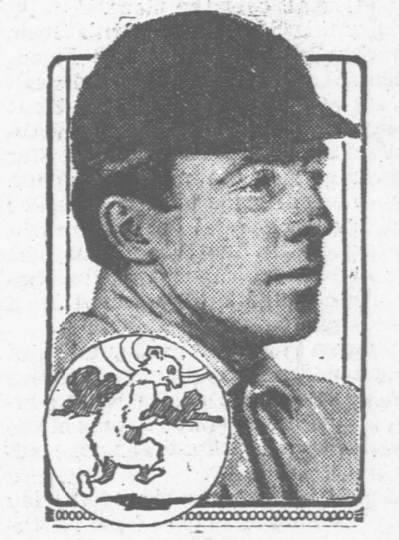
Tinker

Tinker said pitchers should simply get used to running the bases regularly:

“This is necessary, so that when they get on bases in a game they would not be worn out if they should run around and score a run.

“You take a pitcher that is all tired out by making a run, for instance, and he is in no shape to pitch the next inning. He is almost sure to lose his control and that is what a heaver needs in a game more than anything else. This weakness of many young pitchers is often due to being winded after running the bases.”

Tinker said the best pitchers—Christy Mathewson, Ed Walsh, and Mordecai Brown—and others were successful because “they are strong. Their legs are good and they can go through a hard game without becoming weak.”

He said “ a month of training is long enough” for each club:

“Sometimes teams train too long. At that, it is often hard to get teams into the strid euntil three weeks after the season begins, for no player takes the same interest in a practice game as he does in the real thing.

“Speaking of my own club, the Cubs, (Frank) Chance has always given the men a lot of leeway. Many of us have always been in pretty fair shape when we started.”

Tinker’s final advice:

“Ballplayers should be very careful of their stomachs, as should all athletes. They should not overeat. An overloaded stomach makes you loggy, heavy, and dull-witted, and ballplayers, you know, must have their wits with them. You cannot go to sleep in the big leagues.”

The Tabasco Kid and “Blind Toms”

4 Mar

Kid Elberfeld, “The Tabasco Kid,” while managing the Springfield Midgets in the Western Association in 1930 “wrote” a series of articles for The Springfield Leader:

“A young chap was in the house one day reading some of the many clippings and letters that were sent to me by fans, and even reporters who had a dislike for me”

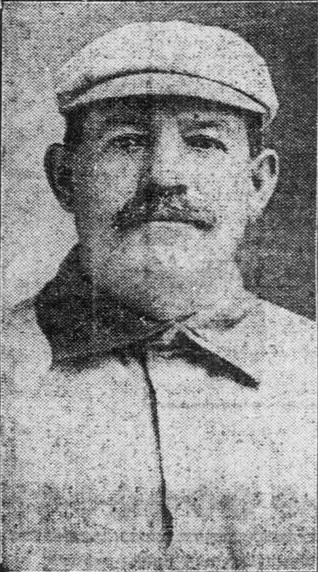
Elberfeld

Elberfeld said, “it seemed reporters couldn’t roast me enough,” so many fans wrote as well to “bless me down the line.”

His visitor observed: “They did everything to you on a ball field but pull a gun on you.”

Elberfeld’s Response:

“Sonny, that, too happened to me twice in my life. The only reason they didn’t publish it is that it would be a knock to the police of the town to pull a gun on a poor little boy like me.”

He said the first incident took place in Atlanta while he was managing the Little Rock Travelers. 

“Both clubs were up in the race fighting for every point. Sam Mayer the Atlanta captain, and I were at home plate arguing over a decision with the umpire. Sam said something to me I didn’t approve of and I grabbed his shirt.

“Police as a rule were always johnny-on-the-spot when our team was on the field in that town, immediately I felt something stuck in my side. I looked down and saw a nice, bright and shining pistol poked in my ribs. I said, ‘Say, look here’—I put my hand on the gun and pushed it away— ‘that damned thing, might go off.’ I don’t know why, but the policeman stuck it in his pocket.’

“not a word was mentioned in the paper about the policeman pulling the gun on me.”

He said he manager of the Travelers during the second incident as well—this one took place in Memphis. Elberfeld was having a “tough time with the ‘Blind Toms,’ his term for umpires:

“Boys used to say it was the hometown of the league president and the umpires wanted to show him they could run Kid and his players. If the umpires realized what a bad effect this had on my team, they would have been a little more lenient with the players and me.”

Elberfeld had a contentious relationship with Southern Association President John D. Martin–a Memphis attorney—Martin became league president in 1919 and suspended Elberfeld twice in the first month of the season—The Kid threatened to The Memphis News Scimitar after the second suspension that he would “manage my club from the grandstand hereafter,” to avoid additional fines and suspensions.

 Already believing the league’s umpires were particularly hard on him in Memphis, Elberfeld “was putting up a verbal battle,” with the umpire, who ejected him:

“I refused to heed his request and he immediately called out a police squad.

“Here they came. I was standing at home plate. First one pushed me, then another. I finally began pushing a little myself, but they grabbed me quick. I thought they put me in a vice and pulled me along. I was about to break away and run, when a big policeman stuck a gun in my back and said, ‘walk along.’ I did, never hesitating to the street, when they turned me loose.”

Elberfeld never stopped yelling at umpires, even at the point of a gun; and he said he never listened to anyone in the stands:

“Don’t listen to the fans, for everybody who comes to a ballgame gets crazy just as soon as they enter the park, and they are not responsible for what they say or do. Even the owners, secretary, umpires, and manager are irresponsible under the stress of the game, and the newspaper men are worse.”

Elberfeld did not appear to have any brushes with police on the field in 1930, although he was regularly combative and never let up on the “Blind Toms,” his Springfield Midgets finished 64-73, fifth place in the six-team Western Association. Elberfeld was let go after the season.

“Harsh Language has Done More to Ruin Prospective Players”

3 Mar

In 1898, Buck Ewing, in his first season as a full-time manager told The San Antonio Light his philosophy for preparing players while his Reds trained in the Texas city:

“The regime that the Cincinnati players go through is not half as severe as the training of the pugilist. I make it a rule not to work out my men over three hours a day when we are training. With a pugilist it is the aim of his trainer to get him at his best for a certain day. To have him on edge, so as to be at his very best just as he enters the ring, the pugilist has to prepare for the event…In training a ball team you must bear in mind that there is a long siege of playing ahead of them. It won’t do to bring them to their very best to get them ‘on edge.’

“On the contrary, you must aim to have them robust and fast, and down to weight without getting them so fine that a continuous siege of playing may cause them to fall off weak.”

Buck Ewing

Ewing said he “trained hard every season since I have been in the business,” and because of that his players “do not feel that they are imposed upon.”

He said of his team:

“We have been very fortunate in having a collection of sensible, honest players. I have not found any bad feelings at any time. I have made it a practice to make every player feel that he is just as much a factor in the Cincinnatis as the oldest man.”

He said he didn’t just prepare his players physically:

“The baseball world must know that it is pretty hard for players even with years of experience to withstand the influence of the taunts of the crowd. It is one of the first lessons, I believe should be taught players, to turn a deaf ear to shouts of the attendance. Our players are especially strong in this point, although occasionally rooters do get them unbalanced.”

The Reds manager said, “No captain or manager, be him ever so great, can make a team win ball when there is lack of harmony.”

“If there are two or three men who are not speaking to each other, and who are continually talking about shirks and grumbling and muttering, it is impossible for them to play good ball. They may capture a game now and then, but for steady, reliable work they cannot be depended upon. Every man in the team should stand ready at any moment to do his best to make his nine win.”

And what was the biggest danger for the harmony of a team?

“Harsh language has done more to ruin prospective players than any other cause.”

Ewing said his club “kept uppermost in their mind,” that “there should be but one head and that he should do the ordering and they the obeying.”

That “idea” he said, portended good things for Cincinnati’s prospects in 1898:

“I have never been in a team where the players carried out this idea and were as harmonious in their work as the present one.”

The 1898 season was Ewing’s most successful as a manager—his Reds won 92 games –but finished third in the National League.

“They Make just as many Fumbles as we did”

1 Mar

The summer before his death in 1932, 73-year-old Dan Brouthers, “Sat in the shade under the Yankee Stadium bleachers where Babe Ruth hits all those home runs.”

Brouthers spoke to Harold Burr of The Brooklyn Eagle:

“(He) admits that baseball has changed quite a bit…’But it hasn’t changed either,’ the old fellow, a giant of a man in shirt sleeves and straw hat contradicted himself. ‘I notice when the boys go out on the field nowadays, they make just as many fumbles as we did, pull just as many bones.”

Dan Brouthers

Brouthers said he didn’t believe players of his generation would have “ever made an error if,” they played on the current fields.

“’Do you know I never saw a groundskeeper until I played in Brooklyn in ’82? He was a curiosity. I used to take a rake myself and clean up around first base just before the game started. Then I’d pass it along to the second baseman, the third baseman.’

“’What about the shortstop?’

“’Oh, you mean Pop Smith?’ questioned Brouthers, the old eyes that were keen enough once upon a time in the past for their owner to lead the big-league batters for five seasons, lit up in admiration: ‘Pop didn’t need any rake.’”   

Brouthers told Burr he could not recall how many homeruns he hit but “remembers ever detail” of the 1887 World Series with the St. Louis Browns:

“Charlie Comiskey was on first base for them. Detroit slugged them to death, winning eight of the first 11 games. But the contract called for 15 games and we played it out. (Beginning with game 4) we went to Pittsburgh for a game—Brooklyn –New York—two games in Philadelphia—one in Washington—Baltimore—Boston—back to Brooklyn –Detroit—Chicago—and wound up in St. Louis. We traveled in a special train and were 28 days on the road.

“The crowds were good through all the barnstorming and the traveling World Series played to 15,000 and 20,000 people a day. Regular season prices prevailed—75 cents—in grandstand and 50 and 25 cents in the bleachers.”

Brouthers didn’t mention that he was injured and had just three at bats during the series, won by Detroit 10 games to five.

“No,” said Brouthers in the end, ‘the game hasn’t changed. But I guess there are more good hitters around.”

He said:

“’I see a lot of the Babe’s homers up there,’ pointing through the skeleton scaffolding of the bleachers looming above him. ‘I like to watch (Chuck) Klein and (Lou) Gehrig ride ‘em. Gehrig is strong as a bear. And Babe Herman. The kids are the same too wanting you to sign their books and baseballs. Only it was cigarette pictures we had to autograph.”

Brouthers then asked, “‘When will this story be in the paper, mister?’” Burr said Sunday:

“’I’ll bring you up some copies of it.’

“’Bring me one,’ said the quaint Dan Brouthers, ‘I’ll read it first and let you know if I want anymore.’”