The San Francisco Examiner described it as a, “Remarkable series of Accidents in a Memorial Day Baseball game.”
The 1899 Decoration Day game between the Bakersfield and Merced in the semi-pro San Joaquin Valley League was said to be:
“The banner record for baseball accidents…No less than six Bakersfield athletes were rendered hors du baseball, and one Merced player was carried off the field of carnage in a litter. Two pitchers were disabled by getting hit on the salary arm, and the third hero who took the slab for Bakersfield threw his shoulder out of gear trying to locate the plate.”
The Fresno Morning Republican said of what had been a highly anticipated game in the newly formed league:
“Never in the history of baseball in the valley has such interest been shown in the game…Nearly 500 people had gathered to witness the sport long before ethe time announced for the game to commence.”
The Bakersfield, Californian said the crowd was enthusiastic, but the contest did not live up to expectations.
“Not that it was a good game of ball from a professional standpoint, as it was full of errors from start to finish and many a rank play was responsible for unearned runs.”
And there were more injuries. The Examiner said:
“While the Red Cross corps wrestled with the dislocated shoulder an outfielder who came into pitch split the hand of the catcher. He went to the hospital and then the shortstop got hysterical or something and broke his ankle. Next a Bakersfield man collided with a Merced man. They both stove in their figureheads and air compartments, and the ambulance was called again.
The Californian concluded:
“(N)ot withstanding the crippled condition of the (Bakersfield) team, the boys managed to keep in the lead.”
Bakersfield won 15 to 14 in a game that included 30 hits, 15 errors, eight passed balls, and six hit batsmen.
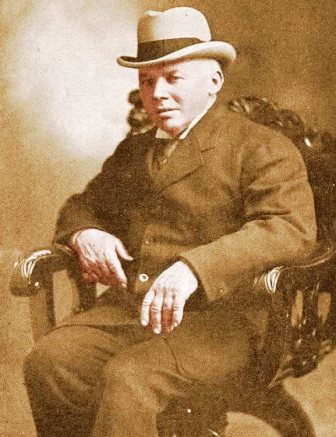
In August of 1904, Ted Sullivan came through the Midwest on his way to the West Coast on a scouting trip for the Cincinnati Reds He stopped long enough in Decatur, Illinois to talk baseball with the town’s daily papers, The Herald and The Review:
“He belonged on the diamond in the days of Anson. When it came time for him to quit he did not retire, rather he took up other lines of the game.”
Ted Sullivan
Sullivan had traveled the world, become “something of a philosopher, and “seems proudest of the fact that the National League selected him as its agent to see minor league players in action and report on the promising ones.”
Sullivan said the assignment was, “proof of the confidence the best of them of today place in my judgment.”
It was, he said, “not safe to take a man from the minor leagues on the showing of the score cards,” which were “often doctored.”
Sullivan had been visiting towns around the Three-I League, and was in Decatur to watch catcher Ed Krebs and shortstop Louie Gruebner, who, The Herald said:
“Fields fine and bats like an old lady.”
Krebs took 1905 off, in part, he told The Review, because baseball cut into his fishing time.
Sullivan was among the games pioneers who thought the days of the best players were in the past.
“No, the great ball players are not to be had now, they are all dead. Ball playing is not all in the arms and legs, most of it is in the head. It is in that head quality that the men of today are lacking. Who is there to take the place of Mike Kelly of old? Why that man showed them every trick they know today, they don’t do anything worth counting that Kelly did not show them.”
Sullivan scoffed at “talk about the Pittsburgh team…being a match for Anson’s team when it was at its best and had Kelly; why, Pittsburgh is not in the same class.”
He said, “everything else in the world today is showing better brain than it ever did before,” except, of course, baseball.
“I was at Harvard watching a ball game and I sat next to the president of that university. I mentioned to him that we needed brains in the game today and he told me he thought the college men could furnish that. I told him know that we could not get that from the colleges.”
Sullivan said the best brains for baseball came out of the “vacant lot leagues,” and mentioned, “one ball player who had to make a cross as his signature, but he was getting $4,000 a year…because he had it in his head to play the game.”
There were “a better class of men” playing currently, but:
“It is a mistaken idea to think that the college athlete by breaking into the game has elevated it.”
The Review said Sullivan was, “also faithful to the ‘Old Sod,’ and maintained that the Irish made the best baseball players:
“Not one that comes from Ireland, but one whose veins are filled with the blood of the Celt.”
But while baseball would never be the same as it was during his prime, Sullivan said the game still, “shows what a great we have,” as there were players who could earn “twice the sum,” of members of the US Senate.
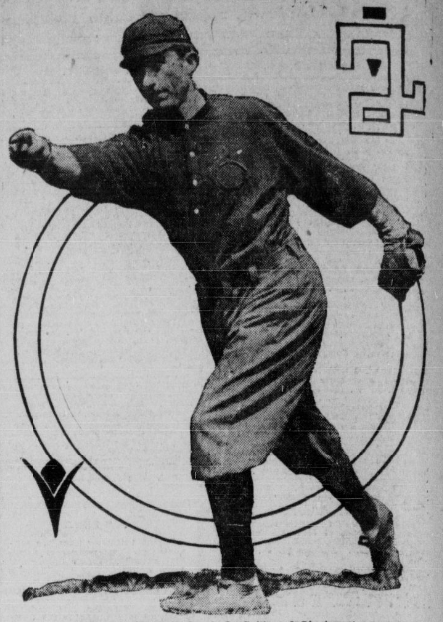
Sullivan’s most significant “discovery” of the 1904 trip was Orval Overall; the 23-year-old “college man was amid a 32-25 season with a 2.78 ERA for the Tacoma Tigers in the Pacific Coast League. He was the only player Sullivan scouted out West “who will be drafted.” He told The San Francisco Chronicle:
Orville Overall
“I do not consider that Overall is the best pitcher in the league by any means…but Overall has it in him to make a great pitcher and with the coaching and development he will get in big league company it will be brought out.”
Mike Mitchell spent eight seasons in the major leagues with four different clubs; he hit .278 and one of the game’s best outfield arms. He also differed from most of his contemporaries who were interviewed by syndicated writer Joseph B. Bowles in 1910 for a series of articles where the game’s best players and managers explained, “How I Win.”
Mitchell’s explanation:
“Luck I think is the biggest element in winning baseball games, and in the success of any individual player. I have known many good ballplayers who were sent back to the minor leagues and have never arisen again because luck broke against them during their early careers, and they were never lucky enough to get another chance.”
Mitchell
He reasoned:
“Scoring runs wins, hitting scores runs and luck is the best part of hitting…There are mysteries in batting that even the batters do not understand…Often a man hit hard and steadily without getting safe hits for weeks and then suddenly the luck will turn and everything he hits will go safe.”
Michell hit .222 in his second season after a .292 rookie year, and rebounded in 1909 with what would be a career best .310:
“(In 1909) I stood up and hit that ball as hard as ever I did in my life and hit it steadily yet had hard work to get above .200 and the next season hits rolled out of the bats. I could not trace it to any fault of my own, for the swings and stride seemed the same.”
He also believed that, “There is no way for a man to learn to bat,” with one exception:
“I think left-handed batters who are extremely fast actually can be taught to bat whether they are natural hitters or not. They can learn to poke and push the ball and chop at it, mixing it up with their swings and by practice become pretty good hitters whether they were at the start or not.”
Despite it being luck, Mitchell offered some advice to hitters:
“Try to keep a steady footing, both feet on the ground but with the body balanced on the balls of the feet. Never hit flatfooted.”
He also preached contact over power:
“Notice the best major league batters. They may take two hard swings at the ball, then see them shorten up their grips on the bat and make sure of hitting the ball to save a strikeout.”
His advice to young players:
“Keep cool, watch closely and study all the time and you may hit—if you are lucky.”
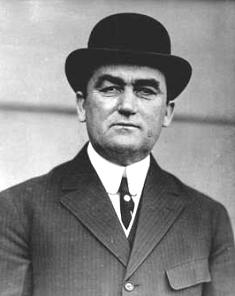
Damon Runyon took credit for tagging John McGraw’s favorite scout, Dick Kinsella with the nickname “Sinister Dick.” Runyon said in his column for the Hearst Newspapers in 1930 that the sobriquet might not make sense any longer:
“The nickname is perhaps misleading. You look for a dour fellow of wicked aspect—a piratical-appearing bloke with perhaps a cutlass between his teeth. Instead, you see a well-dressed, quiet man, deep in his fifties, with kind eyes wrinkled by smiles…Well, twenty years back the man from Springfield (IL) was indeed a sinister looking chappy. He had beetling black brows, and a fierce black mouser, or mustachio, which gave him a positively violent appearance.”
“Sinister Dick” Kinsella
McGraw told Runyon:
“It isn’t the fellows he sends to me that makes him great. It’s the ones he keeps me from buying. He saves my ballclub a lot of money every year by keeping me off the dead ones.”
Kinsella had spent more than 20 years scouting for McGraw, though Runyon said:
“(H)e used to retire at frequent intervals. So often, in fact, that you never could tell when he was officially a scout or just a businessman.”
Damon Runyon
In addition to providing his nickname, Runyon was also responsible for a story about how Kinsella supposedly missed signing Edd Roush for the Giants in 1912, when Roush was playing in the Kitty League. The earliest version of the story appeared in Runyon’s column in The New York American in 1913, with a more complete version appearing in 1916:
“One broiling hot summer day a couple of years ago a sinister looking man arrived in the town of Evansville, Indiana. This sinister looking man was of somber aspect. His hair was a sinister black. His sinister eyebrows hung heavy above a glowering, sinister glare. He wore sinister city clothes, and there was a sinister bulge to his coat just above the right hip.
“With sinister deportment, he accosted a citizen of the town of Evansville and made inquiry of him with sinister significance in his voice.
“’Where’s the ball orchard?’ demanded Sinister Dick Kinsella for it was none other than the sinister scout of the New York Giants, as you doubtless have already divined from the sinister import of this narrative.”
According to Runyon, Kinsella went for a haircut after watching that day’s game and said to the barber:
“That’s a right likely looking outfielder that fellow Roush,’ suggested Sinister Dick. ‘Hits good, and can go fetch ‘em, but don’t throw much, hey? Bad arm hey?’
“’Well, I’ll tell you about that stranger,’ said the barber, pausing in his operations and assuming the attitude of a man about to impart grave news. ‘He used to have as good a throwin’ arm as anybody you ever see, but he hurt that arm and he’s been learnin’ hisself to throw with the other arm.”
With that, said Runyon, “a sinister train bore Sinister Dick on his sinister way” out of town, while a scout for the White Sox, Ted Sullivan, “Purchased Roush for $4000 [sic, $3,000]”
Kinsella left the Giants after the 1930 season, John B. Foster of The New York Sun suggested that an instance of the scout not saving money for McGraw’s ballclub might have led to his departure. In 1927 Kinsella had signed pitcher Bill Walker for $25,000. After Walker finished 1930, 17-15 with a 3.93 ERA and Kinsella had departed, Foster wrote:
“The failure of Walker to succeed may be one of the reasons why Dick Kinsella failed to remain with the New York club as a scout, because a large outlay was made for Walker.”
Grantland Rice of The New York Herald interviewed Ty Cobb on a fairly regular basis when the retired star was living on the West Coast.
In 1940, after the two met in San Francisco, he said, “Cobb was the bluebird harbinger of spring,” and recalled when, in 1904, “Cobb kept writing me letters, signing Smith, Jones, Brown, and Robinson—all telling me what a great player young Tyrus Raymond Cobb was.”
Rice
Rice said he “fell for the gag,” and thanked Cobb for making him, “quite a prophet” for writing about him based on the letters.
Rice asked Cobb about his famous batting grip:
“It shows what habit will do in sports. I began playing baseball with much older and bigger kids.” I couldn’t grip the big bats that they had near the handle. I had to spread my hands to poke at the ball.
“I couldn’t swing the big bats any other way. After that I couldn’t change. But I was probably better off as a place hitter than I might have been as a slugger. I never believed in slugging anyway.
“I believe in getting on—and then getting around. Today they only believe in hitting a fast ball out of the park.”
Cobb said he was “still for speed and science,” over power:
“Base stealing today is a lost art. It seems to be gone forever. Did you know that several high-class ballplayers last season failed to steal a base? I remember one year I had 96 steals. That’s almost the same as 96 extra base hits, for those steals put me in a position to score.”
Rice asked the 56-year-old Cobb what the biggest difference between the “present crop” and the players of his era was:
“Stamina, I mean legs and arms. I’ve lived on my legs most of my life. As you may remember in 24 big league years, I never spared my legs. I’ve played many a game with almost no skin on either thigh.
“I believed then and I believe know in toughening up your system—not sparing it. Between seasons I hunted all winter, eight or ten hours a day. That’s what Bill Dickey has done—and you know where Bill Dickey stands in baseball.”
Cobb
Cobb had little use for current pitchers either:
“The modern crop has weak arms. Look at Cy Young, winning 512 ball games. Show me a pitcher today who can even pitch 400 games. Remember Ed Walsh? One year Ed won 40 games and saved 12 others [sic, 6]. He worked in 66 games that year, around 1908. And then pitched through a city series, working in almost every game.
“Most of these kids today can’t take it. They have come up the easy way. They have to be pampered. A lot of them need a nurse. We had to come up the hard way. What a difference that makes—in any game.”
Cobb lamented that any current pitcher “is almost a hero” for winning 20 games:
“Can you imagine Cy Young, who averaged over 20 games for wee over 20 years, out there today.
“The kids today rarely use their legs. They ride in place of walking. I always had to walk. Maybe five miles—maybe 20 miles. The old-time pitchers had to work in 50 or 60 games. Maybe more. I’ve seen them come out long before the ball game was scheduled to start in order to get the kinks out of their tired arms, working out slowly for over 30 minutes. But not today.”
Cobb said he believed Dizzy Dean would be “a throwback” until he hurt his arm:
“He always wanted to pitch. To be in there. But there are not many left like that. They’d rather be resting up.
“In my opinion, a real pitcher should be good for at least 45 ball games—maybe 50 if he is really needed. I mean men like Walsh, Cy Young, Alexander, Matty, Chesbro, Joe Wood—the top guys. They could take it—and they loved it. Not this modern crowd. At least most of them. They haven’t the stamina needed to go on when there is no one to take their place.”
Cobb had good things to say of two other modern stars:
“I’ll say this for Babe Ruth. He could always take it—and like it. So could Lou Gehrig. You never had to pamper Ruth or Gehrig. They were ballplayers of the old school. So was Matty. So was Alexander, drunk or sober. What a pitcher.”
Cobb said what mattered in all things was stamina, fortitude, brains and speed:
“They still count. When they don’t then you haven’t either a game or civilization. You haven’t anything worthwhile.”
Note: As indicated below, Cobb conflated Walsh’s 1908 regular season performance and his 1912 post-season work in Chicago’s City Series. I failed to include that note and this link in the original post: https://baseballhistorydaily.com/tag/chicago-city-series/
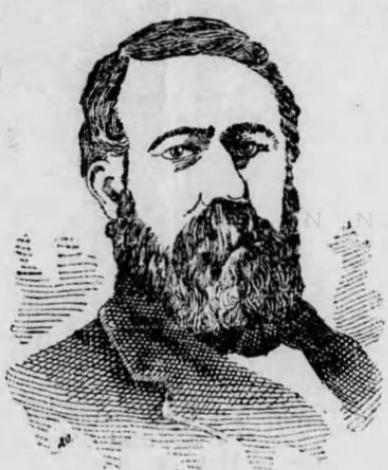
Before the 1895 season, Henry Chadwick proposed “eight changes” to baseball in The New York Clipper:
“First: The doing away with ‘hoodlumism,’ as shown in the form of dirty ball playing and blackguard bickering.
“Second: Abolishing the bullying coaching business.
“Third: Prohibiting the wearing of the large mittens by any player on the field except the catcher.
“Fourth: A rewording of the balk rule so as to prohibit the feint to throw to the bases. At present the rule, in this respect is a dead letter.”
His frustration with balks not being called, was a regular subject for Chadwick That same season, he wrote in a different column:
“It will be seen, too, that, whenever the pitcher ‘feigns’ to throw the ball to first base he must do it while standing with ‘both feet on the ground.’ If he raises one foot in making the feint he commits a balk. Has anyone seen a balk called by any umpire when the pitcher has openly violated the rule by raising his foot and taking a sidestep to throw to a base?…The balk rule is more plainly written that many other rules in the game, and yet umpires make it a dead-letter law.”
Chadwick
Chadwick continued
“Fifth: The overrunning of all the bases, as recommended by George Wright at the convention of 1869.”
The “Spalding Guide,” edited by Chadwick, said that Wright had only proposed the rule that was adopted—overrunning first base–but that, “When the amendment was presented at the convention of 1869, (another) delegate wanted the rule applied to all bases, but the majority preferred to test the experiment as proposed at first base.”
The Guide did, however, during Chadwick’s tenure as editor, advocate for the overrunning of all bases:
“The most irritating disputes caused by questions involved in sliding to bases and in running up against base players are also due to the same cause. Why not put a stop to these injuries and these disputes by giving the base runner the same privileges in overrunning second (and) third…that he now has in overrunning first base? In every way will the adoption of the rule suggested be an improvement, and not the least of its advantages will be its gain to base running, which is, next to fielding, the most attractive feature of our game.”
His final three:
“Sixth: I would neither increase nor decrease the distance between the pitcher’s box and the home plate.
“Seventh: In regard to the ‘trap ball’ rule, I would make it applicable in every case wherein a batting base runner reaches first base unless by a clean base hit; but even then, only when the ‘force’ hit ball touches the hand of an infielder, not an outfielder. I think if a runner reaches first base by a clean base hit, it is not just that he shall be punished by an out incurred through the weak hitting of his successor at the bat, as he is under the rule of purposely dropping an infield fly ball.”
“Eighth: I think these catches on flytip balls sharp off the bat and fouled to the catcher and caught on the fly should be outs. Every such ball is generally over the plate and within due range.”
The “father of Baseball” had at least one supporter for his plan for “flytip balls,” to be outs regardless of the number of strikes on the batter. O.P. Caylor said in The New York Herald:
“Henry Chadwick thinks—and there is nothing wonderful about that, for he thinks correctly—that foil tips caught by the catcher right off the bat should be out.”
In April of 1896, Oliver Perry “OP” Caylor of The New York Herald said of Amos Rusie, who was weeks into what would be a season-long holdout and legal battle:
“Rusie is just now a bigger man than old Harrison in Indianapolis.”
Amos Rusie
Benjamin Harrison, the former president, was rumored to be seeking the Republican nomination later that year, and Caylor said even if he became a candidate again, it would not elevate him to “that prominence in the public mind which the recalcitrant pitcher attained in his ‘hold off.’”
As for the current resident of the White House:
“Recently I had the pleasure of meeting the president of the United States at his desk in Washington. Probably to avoid the undesirable topic of politics, Mr. Cleveland brought up the subject of baseball.”
President Grover Cleveland told him:
“I was very fond of the game when I lived in Buffalo and had time to see it played. We had a good team up there then. There were (Pud) Galvin, who rated well as a pitcher, and (Jack) Rowe, and that big man who played first base—what was his name?’
“I said it was (Dan) Brouthers, and that he is still playing.”
The president was curious about finances:
“’These ball players get pretty good salaries, do they not?’ Inquired the president.
“When I told him that some received $3000 for six months’ service and yet were not satisfied, that catching smile, which is so infectious, lighted up his face as he aptly replied.
“’Well, Washington is pretty full of people who are glad to get employment at $1200 a year.”
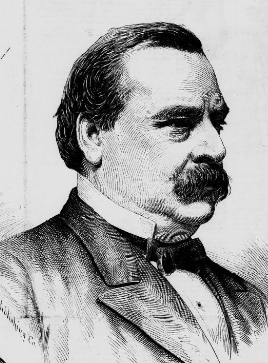
President Grover Cleveland
Caylor, always an ally of ownership, concluded:
“And yet Amos Rusie refuses $400 a month on a technicality. No wonder baseball players as a class have the reputation of being the most unreasonable people on earth.”
Caylor, in another column, blamed the whole situation on former Giants outfielder Eddie Burke who he claimed, “was responsible for Amos Rusie’s running astray and amuck on the primrose path.”
The Indianapolis Journal told the story of what led to the dispute:
“It started, to recount it briefly, in Jacksonville last year when the Giants were training there. Rusie drank too much. He never denied it. They said that he got drunk and insulted the mayor of the town. That was very naughty. In Baltimore again he and Eddie Burke…got ‘loaded,’ and were fined $100 each.”
Burke’s fine was rescinded, the paper said, and Rusie’s was—for a time:
“The last game of the season was with Baltimore, and Freedman sent down word by manager Harvey Watkins if Rusie didn’t win that game he would fine him another $100. It was talked about and got to Rusie, and the game was lost.”
Rusie was pounded for eight runs and walked seven in an 8 to 3 loss to the Orioles.
“Two hundred was held out of his pay and he went back to Indianapolis at the seasons close.”
While the pitcher sat at home in Indiana, Caylor said, “The national character of baseball was aptly illustrated,” at the 1896 season opener between the Rusie-less Giants and the Senators in Washington.
Three members of President Cleveland’s cabinet were in attendance, “and a reporter counted 40 members of the two houses of Congress among the rooters.”
Caylor chided Rusie for the holdout throughout the season; In October he wrote:
“He has been been met more than half way by President Freedman, and I am glad to announce that the Big Boy will be with us in 1896. If Amos is a friend to himself he will begin right now and turn up in the spring fully fortified to carry out his promise.”
A full year later, in April of 1897, Rusie signed again with the Giants for $3000 (the league reported the salary as $2400) and settled his legal claims for $5000. The Journal said:
“(T)he big fellow gets every cent he started out for, as well as all his attorneys’ fees. It is really not a compromise, but a capitulation on the part of Freedman, insisted upon by the league, and a tacit admission by that organization that the reserve rule, while all powerful in baseball and quite necessary to the life of the game, is not fitted to stand the strain of a court trial.”
Rusie left Indiana to join the team on April 20, two days before their season opener. The Indianapolis News said the “Hoosier Thunderbolt,” was:
“In better shape than he has been in years.”
Rusie was 28-10 with a 2.54 ERA for the third place Giants.
“Bailey’s Monthly Magazine of Sport’s and Pastimes” was published in London. In 1893, cricketer turned writer Frederick Gale told of his ‘Two Days’ Sport at Chicago,’ during the summer of 1893.
Gale
He had spent most of his time in Chicago at the World’s Columbia Exposition, except for one day at the American Derby at Washington Park—the 1893 American Derby’s $50,000 purse is said by several sources to be the second highest of any 19th Century race.
And on another day he attended a baseball game:
“The admission was half a dollar, which included a seat in the stand—and the stands were pretty full. For fear any readers do not understand baseball, I will describe it in the fewest words. If the reader does not understand rounders, he had better put this magazine down and go smoke a cigar.”
He compared the equipment:
“The only difference between baseball and rounders is that the bat is much heavier and stronger. The ball is much heavier than a rounder ball, though lighter than a cricket ball.”
And the “features” of the game:
“The ‘pitcher’(the ‘feeder’ as we called him in rounders) throws the ball as hard as he possibly can, and the man whom we called ‘behind’ at the rounders puts on a mask and wears a padded jerkin, as if he were made up for ‘Falstaff.” The bases are, I believe thirty yards apart, and four in number, and each base is guarded by a fieldsman, to whom the outfielders throw the ball. The fieldsmen do not throw at the batsmen, as we did at rounders, but are practically run out in various ways. I only tell you the principles of the game, without the details.”
Gale had attended a game in England during Spalding’s world tour four years earlier and said, “We admired the wonderful throwing and catching of the baseballers, which were excellent.” But the admiration was where, “we left baseball, and there it is likely to remain.”
Watching a game in Chicago was more interesting:
“The excitement is tremendous. The betting, mostly in small sums, not exceeding dollars and half-dollars in friendly contests, such as I saw, is constant. I hear of large bets in very big matches, but I know nothing of my own knowledge.”
The second West Side Grounds which opened less than two months before Gale’s visit to Chicago
Gale described the most exciting moment of the game:
“The enthusiasm is catching. I shouted myself hoarse at a magnificent ‘double event.’ It occurred thusly: A fieldsman, very deep out, caught a tremendous ‘skier,’ turned round, and saw a man leave his base; threw, from what seemed to me an impossible distance, right into a fieldsman’s hands, at one of the bases; the fieldsman caught it and ran the man out.
“I daresay I have called things by wrong names; but I don’t care if I have made the game intelligible to cricketers who admire fielding.”
Gale concluded baseball suited the country:
“I think the Americans are quite right to enjoy and encourage baseball. It requires much pluck and skill. They say ’We are a busy people and cannot stand three-day cricket matches as you do in England. We want about three hours of sport and excitement and get them.’ I say, ‘Long live baseball in America!’”
After the 1908 World Series, Cubs second baseman Johnny Evers wrote an article that appeared in The Chicago Evening Post. Evers took exception to people who thought he had an easy job:
“When you hear a person give voice to the expression, ‘Ball-players have an easy time of it,’ you are doubtless inclined to side in with him an agree that we get our money without an awful lot of trouble. But permit me to say, you are far from the truth in your belief.”
Evers countered:
“(I)t’s safe to declare that of all the occupations entailing a remuneration of say $3000 per annum, that of the diamond artist is fraught with the most hard work and trouble.”
Johnny Evers
Evers allowed that baseball was “a good healthy game,” and brought “much enjoyment,” but:
“(W)hen you have to get out, day in and day out, for six or seven months, and play, think you not it is likely to grow rather monotonous and wearisome? No matter whether you feel lively or listless, so long as you can stand up, you have to keep at it and turn out mighty perfect work, or you’ll find yourself looking for new occupation. It’s no joke when you’re feeling in the dumps to trot out on the field, with the sun beating down on you, and the temperature at ninety or thereabouts and jump around and act as though the greatest pleasure in the world for you consisted of running your legs off, and getting in front of balls that are coming your way at the rate of a mile a minute.”
Evers said that “in most cases” a “brain worker…takes himself off to the country” to get away from his job, while the ballplayer, “has to stick right to his job, no matter how worked out he feels.”
He said success in baseball was dependent on “grey matter” not strength:
“It’s a case of think, think, all the time, and the fellow who trusts to luck and does not see to it that that he has his brains under full steam every minute will not last long.”
And thinking wasn’t limited to the field:
“You have to study both from personal observation and from books and newspapers, the peculiarities of every man who plays on any of the teams in the league with. You have to know just where this player is likely to hit an inshoot, and where he is likely to send a straight ball or an outshoot.
“You have to know how much a lead a certain player can be given off a base before you can catch him napping. You have to discover what player is likely to lay down a bunt, and what one will always hit it out. Then you will have to make a long exhaustive study of the pitchers, so that you will be able, once in a while, to out-guess them.”
And while some doubted the complexity of the Cubs’ signs; Evers said:
“(Y)ou have to get in your head a long and complicated series of signals, which cover almost every imaginable twist and turn of a baseball game. You have to have a pretty good set of brains to get a whole lot of signs down to such perfection that you can recognize them and act immediately, though you may almost be crazy with excitement, and have a mad mod of twenty or thirty thousand people shrieking at you.”
Then there was the pressure:
“The great uncertainty of baseball makes every player have the feeling that to him alone is likely to come the chance to make or mar the work of the entire season. A little error at a crucial moment, and everything will be lost.”
There was no greater strain than knowing, “upon you alone depends the winning of a game which may perhaps mean the capturing of the pennant and the addition of thousands of dollars to your employers’ profits, and the salaries of your fellow players and yourself.”
Evers said, “the great strain that the engineer on a fast train works under,” was no greater than that of a ballplayer:
“The engineer knows that if everything holds together, as he is almost practically certain it will, he is running no very great risk. The ball player on the other hand knows that there is no telling what is about to occur. For the engineer there are but two courses of thought, one—if nothing breaks, all is well; the other—if anything happens, jump.”
Evers said the ballplayer’s money “was well earned,” and:
“I might have touched on the fact that the ball player is the source of enormous profits to the one who employ him, and consequently should get his fitting share of the profits, but I do not wish to be put down as a knocker, because in reality, I’m an optimist.”
Malachi Kittridge was nearly a decade removed from major league baseball in 1915 but had plenty of opinions about how easy current players had it. He told The Cleveland News:
“The big league ballplayer has the easiest job there is. He does not even have to pack his uniform. That is done for him in the clubhouse. His hand baggage is taken to the train for him. He rides in a lower berth. Arriving at another town, he is met by a taxicab while his baggage is taken to the hotel in a wagon. He does not even have to write his name on the hotel register. He finds his room and a good one with a bath reserved for him.”
And once in town, it was even easier:
“He has nothing to do except to report at the grounds at 2 pm, practice and then take part in the game. His evenings are his own as are his mornings, except at home, when some clubs have practice sessions. He has more idle time upon his hands than any man engaged in any other profession, yet he fails to take advantage of it by fitting himself for some other profession or business to take up when his baseball days are over.”
Kittridge
Kittridge said players idled away their time on the road taking walks and playing cards in the morning, or at a theater or pool hall in the evening, rather than devoting “some of his time to study” of a future career. But, he warned, “he cannot study too much and run the risk of injuring his eyes.”
The News said Kittridge also resented, “the oft printed story that the old-time baseball player was rough neck,” compared to the modern, “college-bred” players:
“I guess they forgot about the famous old Chicago White Sox. Of that team, John K. Tener became governor of Pennsylvania and president of the National League; (Cap) Anson was county clerk of Cook County, which means Chicago; Mark Baldwin is a famous surgeon in Pittsburgh; Ad Gumbert was Sheriff of Pittsburgh [sic, Allegheny County]; (Bill) Hutchinson, the great pitcher, is a railroad official out West; Walter Wilmot is a banker in Minneapolis, and Clark Griffith is pretty well up in the baseball game.”
Kittridge challenged the reporter to “investigate,” and said, “you would find that the majority of the old-timers have done well since quitting the game, indicating that they were not the rowdies later day writers would have the public believe.”
Kittridge himself was a fairly successful minor league manager, but his one stint running a major league club was a disaster. Kittridge’s 1904 Washington Senators were 1-16 when the player-manager was replaced by Patsy Donovan. The Boston Globe provided an example of how he counseled pitchers to face the league’s leading hitter, Napoleon Lajoie:
“Place the ball at a medium rate of speed over the middle of the rubber, or cut the plate with a slow, arched curve whenever Lajoie is facing you. The big Frenchman will write an obituary in the shape of a double, triple, or homer on any ball that has steam behind it and veers over the outside or inside corners. I have seen him soak a high one in the inside on a level with his Adam’s apple, and the next one he plucked off his socks knee high and on the inside.”







 Baseball History Daily