Archive | June, 2021

The 1925 Homestead Grays

18 Jun

Twenty-five games into the 1925 season, the independent Homestead Grays had won 23 games, lost one and tied one according to The Pittsburgh Courier.

Bill Nunn of The Courier called the club, “Pittsburgh’s one winning ballclub,” and regionally the “greatest drawing card in baseball.”

He estimated that more than 70,000 fans, “male and female, white and black” had attended Grays games to that point of the season.

Nunn provided rare sketches of the players “From the plate to the fence.”

Of the team’s three catchers he said:

Bill Pierce was, “colorful and forceful, with a mighty arm and powerful bat. William “Pep” Young, he said was, “A veteran with a wise head, and an almost uncanny ability to detect the opposing batter’s weakness.” Harry “Rags” Roberts was, “The Nick Altrock of the Grays,” and the converted outfielder was, “a wonderful utility man.”

The pitchers:

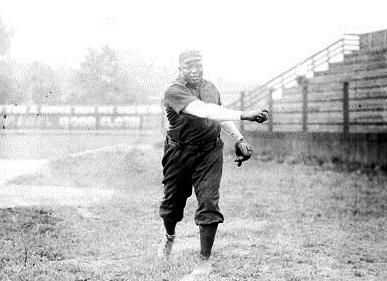
Oscar Owens was, “a speedball artist. The strength of his arm and the power of his bat had made him a popular idol.” Smokey Joe Williams was, “showing the way to all others …his fastball, which travels a bit faster than Oscar’s, is sending him to the top with leaps and bounds.”
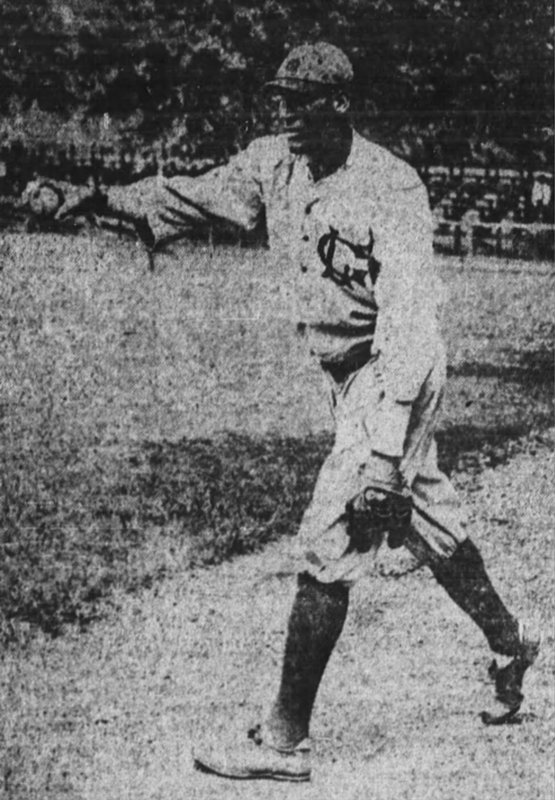
Smokey Joe Williams

Charles “Lefty” Williams, “The Grays little southpaw” had been with the club since 1921 and, “His work has done much to place the Grays in the enviable position they hold today.” Laudie “Pete” Walker was, “A protégé of ‘Dizzy’ Dismukes, and the latest addition to the staff,” had, “a world of speed and a puzzling curve ball.”

First baseman Willie “Dolly” Gray had, “the flashiness of a (Charlie) Grimm and the speed of a reindeer (he) is hitting like a demon.”

Second baseman Raymond “Mo” Harris was, “Reliable, cool under fire and a dangerous man at the bat by reason of the fact that he seldom goes after bad ones, and makes a pitcher lay it ‘in the groove.’ Mo fits in nicely.”

Shortstop Gerard Williams, “Captain of the club…first appeared in Pittsburgh playing with Dismukes’ Keystones…Williams is one of the greatest shortstops of modern days.”

Third baseman Jasper “Jap” Washington had, “a pair of the biggest hands in baseball, a powerful arm, and a mighty bat. Jap’s colorful work, his fighting heart and withal, his good nature, has endeared him here.”

Right fielder Dennis “Peaches” Graham was, “The Grays most consistent hitter…a former schoolteacher and a college graduate is quiet and unassuming, but when a drive goes into right, or a hit is needed to score a run, Graham is sure to produce.” Nunn said Graham had hit safely in all 25 games and was, “the fastest man on the Grays team going down to first base and is hailed by opposing teams everywhere as the greatest all-around ball player, white or black, they have ever seen.”

Center Fielder Willis Moody, “a product of the West Virginia hills…is said by old fans to be as good a fly chaser as Oscar Charleston in his palmiest days.”

Left Fielder Vic Harris completed “the greatest outfield combination the grays have ever known, and one of the greatest in the country. Harris was, “a sure fielder and his bat peals a merry tune.”
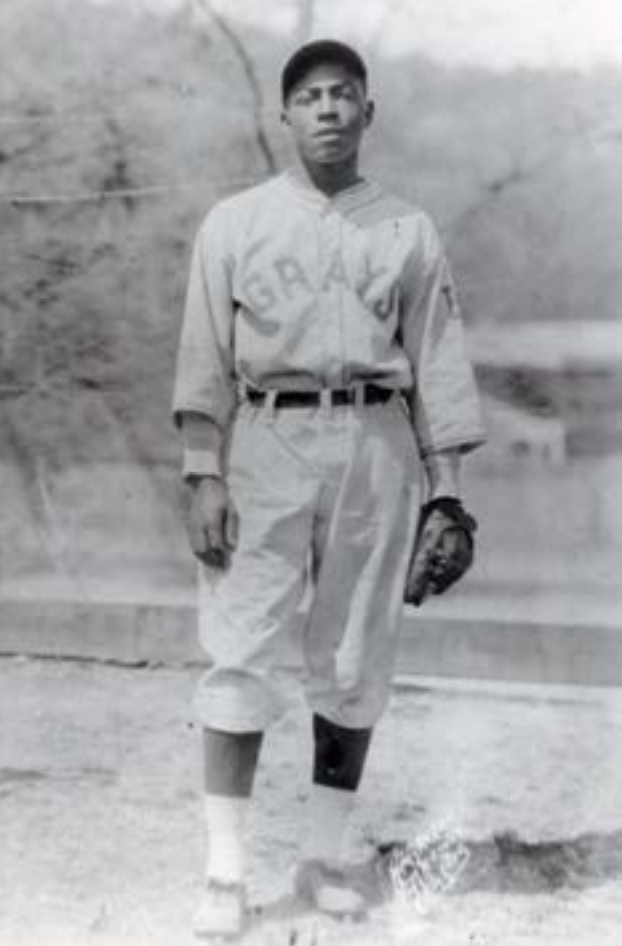
Vic Harris

Sam “Lefty” Streeter, who Nunn identified as “Joe,” had yet to pitch for the Grays but had arrived in Pittsburgh that week after having started the season with the Birmingham Black Barons in the Negro National League. His acquisition provided the Grays with “a pitching staff equal to any in Negro baseball.” The Alabama native was, “said to be one of the greatest pitchers ever developed in the south.”

By August, The Courier reported the Grays had played 100 games, with a record of 84-14-2
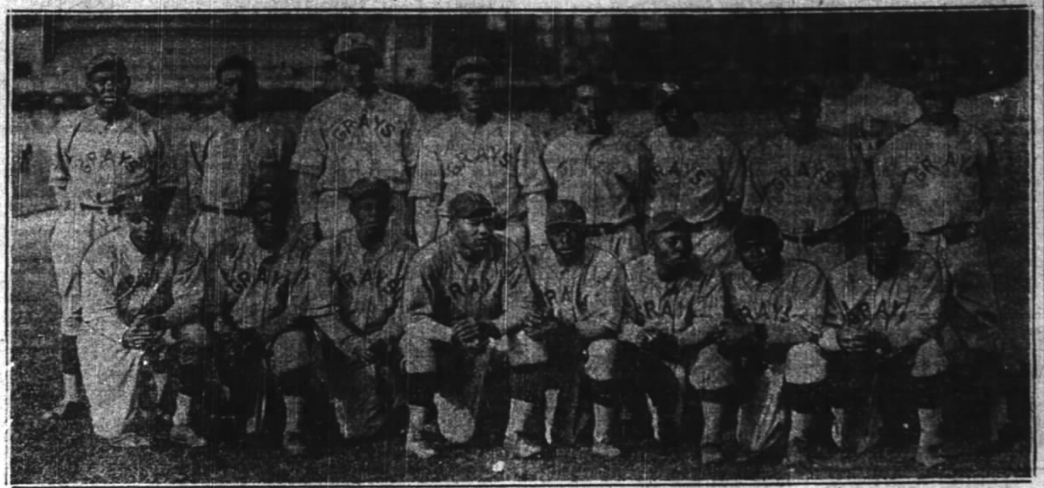
1925 Grays Back Row, left to right: Washington, Walker, J. Williams, Pierce, Charlie Craig, Young, Owens R. Harris Front row left to right: Moddy, J. Williams, G. Williams, Graham, V. Harris, Roberts, Streeter, Gray. Scales is not pictured.

Nunn’s opinion of the club did not wane. In September he called manager Cum Posey a, “shrewd diplomat of human merchandise,” who had “built up a team of stars which includes on his roster some of the greatest baseball players of modern times.”

Nunn claimed that Owens threw “four no-hit games” that season, and in In another column in July, he described the Grays hurler:

“One of the most picturesque figures in independent baseball…The muscular Adonis has won 19 games, lost two, and twirled in one tie engagement…Owens is one of the miracles of modern baseball, hereabouts. When asked as to how he kept in such remarkable physical trim, Oscar replied: ‘My wife, regular hours, and abstinence from strength destroying habits, have kept me in the shape I am.”

Nunn said Owens’ wife served as the pitcher’s personal trainer, “using a special preparation on (his arm) after each game.”

Mid-season, George Scales had joined the Grays, moving Washington to first and moved Dolly Gray to the outfield where he supplanted Moddy.

 Of the new infield combination, he said: “Speed and intelligence together with a punch at the bat are rolled up” in the four.

The club won the Tri-State (Pennsylvania-Ohio-West Virginia) Independent League. The Courier simply said the team had “played over 150 games this season and won more than 125.”
“Pop Lloyd was the Paragon of Deportment”

16 Jun

Randy Dixon was a World War II correspondent for The Pittsburgh Courier, reporting on the Tuskegee Airman among the many stories that carried his byline. Before leaving for Europe, he had sometimes written about baseball for The Courier.

In a 1940 column, he said he participated in a “fanning bee in which were engaged a blend of old timers and an opposite cast of comparative youngsters,” to select the greatest Negro League player of all-time and the best player(s) in other categories.

After “a maze of testimony, pro and con,” the group decided:

“Pop Lloyd was the paragon of deportment.”

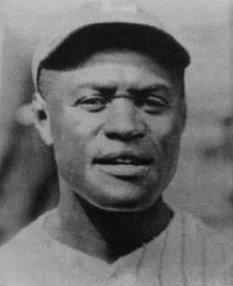
John Henry “Pop” Lloyd

Buck Leonard was, “the least colorful,” player while Luis Santop was “the biggest box-office attraction.”

Dick Redding, Satchel Paige, Stuart “Slim” Jones, and “Smokey” Joe Williams were “the speed kings among pitchers,” Paige was also said to be the “goofiest” player.

”Martin Dihigo was the most versatile and possessed the best throwing arm, but was also the most mechanical.”

The best baserunners were Oscar Charleston, Cool Papa Bell, Pop Lloyd Dick Lundy and Rap Dixon, Bell was the fastest runner, he described the long-forgotten Alfredo Barro, referred to as only “Cuban Baro” as “a close runner up.”

Oscar Charleston

The pugnacious George “Chippy” Britt—who Dixon referred to as “Oscar”—was one of “baseball’s Joe Louises.” Jud Wilson was the other. Wilson also “zoomed the ball hardest off his bat.”

Frank Warfield was the most graceful player, while “Jake Stevens [sic, Stephens] was the trickiest.”. Toussaint Allen, “had no peer” playing first base. Josh Gibson was “the longest hitter.”

Willie Foster had the best pickoff move. Biz Mackey possessed “that uncanny sixth sense that anticipated proper spots for pitchouts and for inside manipulations.”

”Willie “Devil” Wells lived up to his nickname among Dixon’s panel, he was “the toughest for fellow club members to get along with.”

Rube Foster was the best manager. The Hilldale Club was said to be “the best paying proposition in Negro Baseball.”

The Harrisburg Giants, when managed by Charleston and with a roster that included Rap Dixon, Fats Jenkins, and John Beckwith, was “the gas house crew of all time.”

Wendell Smith, Dixon’s colleague at The Courier, just three years into a writing career that would earn him a spot in the Hall of Fame did not make the list of the all-time best black best baseball writers. The group chose Romeo Dougherty of The New York Amsterdam News, Frank (Fay) Young of The Chicago Defender, W. Rollo Wilson and Bill Nunn of The Courier, and John Howe, the editor of The Philadelphia Tribune; Howe had died 12 years earlier.

And finally, the consensus of the group for “greatest player, all things considered,” was Oscar Charleston.

“A Blatantly-Cruel Job”

14 Jun

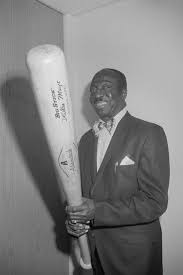
After James “Cool Papa” Bell was elected to the Hall of Fame in 1974, “an old-time Negro League baseball star—one of the all-time greats for certain,” had a few thoughts on Negro Leaguers and the Hall of Fame.

The former player, who, “is not the beneficiary of big-time publicity,” talked to Andrew Spurgeon “Doc” Young of The Chicago Defender.

Bell

Young said:

“The old-timer knows he was better than many of the Negro League players who are being touted for that ‘special niche’ reserved in the Hall of Fame for unfortunate blacks—those superior blacks who were barred out of organized baseball by racial bigots.”

The “old-timer,” according to Young said the committee instituted by Commissioner Bowie Kuhn in 1971 and chaired by Monte Irvin, “has done a terribly bad job…a ridiculous job, a blatantly-cruel job.”

His chief complaint:

“Andrew, ‘Rube’ Foster should have been the first man from Negro League ball admitted to the Hall of Fame. He did more for Negro League baseball than anyone else. He was outstanding on four levels: Player, manager, team operator, and league czar.”

Young recalled that Joe Green, who played with and against Foster during his nearly two decades with several Chicago clubs, told him:

“Joe Greene [sic] knew Rube Foster well and he told me: ‘When Rube Foster died, the league died with him.”

Foster

The “old-timer” said:

“I know something about Rube Foster first-hand. He was a great man…One reason why Rube hasn’t been honored is that the committee is dominated by Easterners, Foster’s greatest triumphs were achieved in the Midwest. It’s a damn shame, really.”

 Then, he called out the most recent honoree:

“It’s got to be a damn shame when players who were twice as good as Cool Papa Bell can’t make it. I played against Cool Papa Bell, and I know he wasn’t an all-around star. He could run fast but he couldn’t throw and couldn’t hit with power. I think Satch (Paige) helped to promote him into the Hall of Fame.”

Young would not share his opinion of Bell but said the “old-timer” was “essentially right” about the failings of the committee.

“’Sure, I’m right,’ the old-timer said. ‘Jelly Gardner was a better player than Cool Papa Bell. Martin Dihigo was one of the greatest players who ever lived. Oscar Charleston, Bullet Joe Rogan, Bingo DeMoss—all three of them were better than Cool Papa Bell.’

“’You should know,’ the writer said. ‘You played against them all.’

“’Absolutely,’ the old-timer said. ‘And he didn’t crack a smile.”

Young never revealed who the “old-timer” was.

Foster was finally inducted in 1981, after Charleston (1976) and Dihigo (1977). Rogan would not be honored until 1998. Gardner and DeMoss have remained overlooked for induction.

“I Know I Made a Bum Play”

4 Jun

Harry George “H.G.” Salsinger spent nearly 50 years as sports editor of The Detroit News and was posthumously honored with the J. G. Spink Award in 1968.

In a 1924 article he said:

“Baseball historians, setting down how a pennant was won, often point to one series that was the break in a season’s race. One can point to a certain game as the deciding one of that particular series and that game probably had one play that was the break of the game and that one play came on a certain pitched ball.”

Salsinger said in the Tigers 1907 pennant winning season:

“All who studied the matter were agreed that one series decided the pennant, a series between Detroit and Connie Mack’s crack Philadelphia machine, played late in the season (September 27 and 30). And one game decided that series, a 17-inning tie that broke the Athletics.”

The pennant, he said, was won because “that game was snatched from Philadelphia” when Ty Cobb hit the game-tying home run off Rube Waddell in the ninth.

“The most important hit of the season of 1907,” was “because Cobb outguessed” Waddell.

The story of how the pitcher was “outguessed” was told to him by Waddell himself:

“Up comes this Cobb, and I feeds him a fast one on the inside where he wasn’t supposed to particularly like to see ‘em pitched. I always figured that if this fellow had any weakness is was on a ball pitched close in. The way he stood at bat made him shift too quick to get a good hold of the ball.

“Well, I shoved the first one in over the inside corner of the plate an’ he never looks at it. The umpire calls it a strike, but he pays no attention to it. I immediately figures this bird is looking for a certain ball, thinking I’d give him just what he wanted on the next one or the one after that. He figures I’m going to be working him. So, I see my chance to cross him up. I says to myself, ‘I’ll feed this cuckoo on in the same spot an’ get him in a hole then guess what’s coming.’”

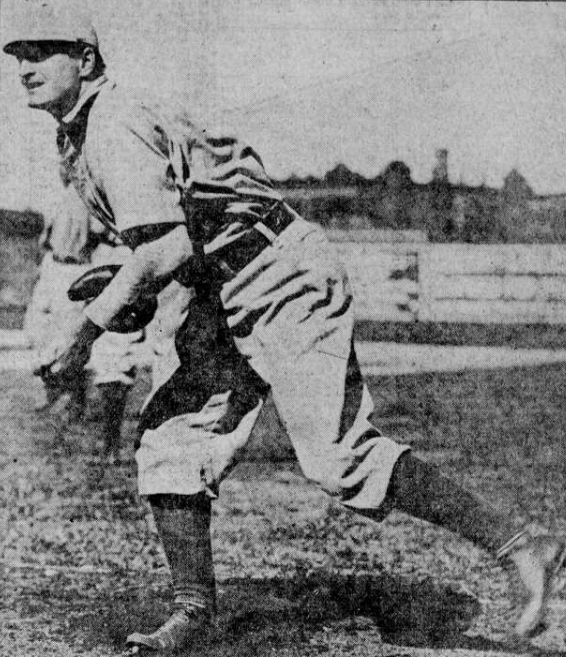
Rube

Waddell threw the next pitch:

“Once more I shoots a fast one for the inside corner an’ the second the ball leaves my hand I know a made a bum play. This Cobb, who didn’t seem to have noticed the first one, steps backlike he had the catcher’s sign, takes a toe hold and swings on her. I guess that ball is going yet.”

Waddell told Salsinger he talked to Cobb about the pitch:

“Later on, I meets this Cobb on the street, and I says to him, “Listen here Cobb, it’s all over an; everything, an’ there ain’t no hard feelin’ or nothin’, so tell me, why don’t you swing at that first one, the fast one I sends over. You don’t give it a look an’ you’re all set for the same thing when I repeats. Did you have the catcher’s signal or something.”

“An’ this Cobb says to me: ‘Why I figures if I lets the first one pass and makes out I don’t notice it and is lookin’ for somethin’ else, you’ll try to cross me up and shoot the next one over the same spot, feeling sure you double crosses me. I feel so sure that so soon as the ball leaves your hand I jumpback, take a toe hold an’ swing. Sure enough I was right. You hand me the same thing back.’

“An’ I says to this Cobb, ‘Kid you had me doped 100 percent right, an sure enough the lucky stiff did.”

Cobb

Cobb, Salsinger said, “made this observation,” to the reporter, about outguessing pitchers:

“Most pitchers follow a set system of pitching to you. You can get them once or twice. If they throw you a fast ball, slow ball, curve, fast one, in that order the first time at bat it is almost certain that they will throw you the same thing in the same order the next time you come up. Few pitchers vary from the system, and the few that do are the leading pitchers.

“Knowing what is coming is one thing but hitting the ball is another. You often know just where the ball will be pitched, but often it carries so much stuff that you cannot get the proper hold on the ball and you fail to hit safely even when you have the advantage of knowing what it is.”

Willie Keeler: “How I Win”

2 Jun

As part of a syndicated syndicated series of articles asking star players and managers to explain, “How I Win,” writer Joseph B. Bowles spoke to the “brainiest outfielder in the business,” Wee Willie Keeler, then in his final season in the major leagues:

“The study of batting and of batters has done more for me in winning games and helping the team win than anything else.”

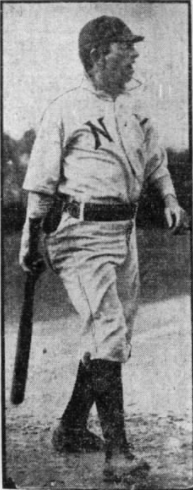
Keeler

Keeler said, “through long experience,” he knew where batters would hit “any kind of pitched ball,” but:

“(T)he modern game changes so rapidly a fielder has to keep studying all the time to keep up with it. The batters change their styles sometimes in a few days, and I have seen many games lost by fielders misplaying a batter who has changed his direction of hitting.”

He said he spent every morning reading and studying to see, “how each man is hitting and the general direction of his hits,” and who was pitching.

“At the end of the week I get all the scores in some sporting paper and take each man separately and go through all the games to study his batting. In that way I generally know just what each batter is likely to do, and I play for him accordingly.”

Keeler said in Brooklyn one season, after being out of the lineup for several days with an injury and not “studying box scores during the layoff, “It was surprising to see how many of them I misplayed when I got back into the game.”

The man nicknamed “Hit ‘em where they ain’t,” said, “The study of fielders by hitters is almost as important,” particularly for fast runners.

“Indeed, I think this is one of the most neglected points in baseball. No man can hit a ball to any point he wants to, but many can accomplish the feat a fair percentage of times.”

Keeler said throughout the game:

“I study the positions taken by the opposing players and very frequently it is possible to catch a player out of position or pull him out of position and hit into his territory.”

One of the “most effective forms of place hitting,” was drawing corner infielders in by feigning a bunt, “then poking the ball over his head or hitting it fast past him.”

Many players, rather than considering where they were being played, “see only the pitcher, and slam away at the ball without any idea of where it is going.”

He called himself an advocate for “hitting the ball squarely rather than hitting it hard,” and:

“If anyone will study how many hits are made after two strikes and the batter ‘chokes up’ his bat and hits squarely without swinging hard at the ball he will be convinced that style of batting is best.”