Archive | August, 2021

“O’Connor Called me a big Fat-Head”

30 Aug

Jake Stenzel’s nine-year big-league career came to an end at age 32 in July of 1899. The Cincinnati Post said the abrupt end was the result of, “suffering from a lame throwing ‘wing’ all season.”

Stenzel had joined his hometown club, the Cincinnati Reds, after being released a month earlier by the St. Louis Perfectos.

Stenzel drew his release after an altercation with teammate Jack O’Connor during a June 18 game with Washington. He came to the plate in the fifth inning with the bases loaded and no outs. Stenzel attempted to bunt and pooped up to first baseman Pete Cassidy who doubled Emmet Heidrick off first.
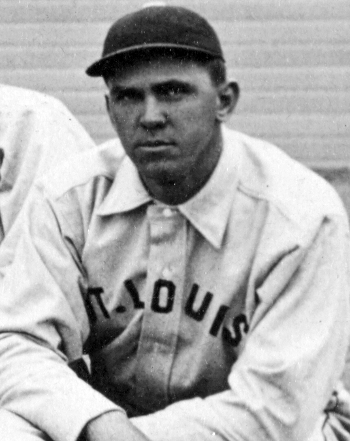
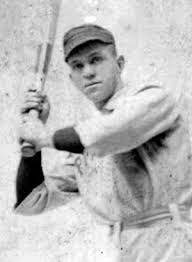
Stenzel

The St. Louis Globe-Democrat said:

“O’Connor, who was coaching, addressed some remarks to Stenzel, and by the looks on the faces of both men they could not have been good natured ones. Stenzel made a rush at O’Connor, and they came to a clinch.”

Stenzel was “very bitter” at O’Connor and manager Patsy Tebeau over the release which was made official several days later

“When I made that bunt that resulted in a double play O’Connor called me a big fat-head and used all kinds of profanity. When I walked to the bench Tebeau told me I was released. A few minutes later when, when someone in the stand asked Tebeau why he released me he, Pat said because I was a thick-headed Dutchman.”

O’Connor denied having a role in Stenzel’s release, telling The Globe-Democrat he was, “in no position” to have influenced Tebeau—despite being the club’s captain—and claimed after the altercation the two shook hands in the clubhouse.

Stenzel signed with the Reds weeks later and hit .310 in nine games before being released again for his lame arm.

Stenzel bought a bar on Western Avenue, across the street from the three ballparks the Reds called home until 1970 and was frequently sought out by reporters for his opinions on the game until his death in 1919.

In 1915, he told The Pittsburgh Chronicle-Telegraph:

“Delicate and dainty, indeed, are the athletes of today.”

Current players, he said:

“(H)op out of the game on the least pretext; their managers and club owners uphold them in retiring from the fray as soon as they suffer the slightest damage, and a cut finger is amply sufficient to secure a week’s vacation on full pay.”

Earlier that summer, Reds pitcher Rube Benton was on the mound two days after having a finger broken by a line drive during a game with the Cubs. He was, said Stenzel:

“(A)bout the gamest fellow I’ve heard of recently. Most of them would have laid off two weeks and then told the manager that the hand was still tender.

“Back 30 years ago things were very different. Players prided themselves on their nerve and often had to be actually forced out of the game before they’d stop. Best evidence of the difference between then and now; in the old days a player couldn’t leave the game unless disabled, and the clubs carried only twelve or thirteen men. If a pitcher or a catcher broke his finger it meant that he would have to play right field awhile…Show the manager a broken finger ad it meant an assignment to right field for the next afternoon instead of a vacation. The player expected it too, and would have felt insulted if he had been told to take a layoff instead of getting into action.”
“Rube Prides Himself on his Strength”

27 Aug

After a six to three Reds victory over Chicago on August 7, 1901, The Cincinnati Commercial Tribune told the story of why Chicago’s Rube Waddell and several fans came late to the game.

Jake Stenzel, a Cincinnati native, had returned home after his nine-year major league career came to an end and opened a bar across the street from League Park:

Stenzel

“During yesterday’s game there was a counter attraction in Jake Stenzel’s saloon, where Rube Waddell was exhibiting feats of strength. Fifty or more people who came out in that neighborhood for the purpose of seeing the game found Rube’s exhibition entertaining enough, and, consequently, did not hand their coin into the little window of the ball ark entrance.”

Stenzel and another man had lured Waddell into the bar by telling him fishing stories:

“Stenzel said he caught a bass weighing fourteen pounds, and Rube immediately went him four pounds better, and added that he caught the fish with his fingers.”

Stenzel then told Waddell that he caught his fish on property he owned in Indiana and was considering purchasing additional acres.

“’Well, if there’s fishing down there, Jake, it’s cheap, and you better buy it right away,’ advised Rube. ‘I am thinking of buying a place like that myself. When I do, I’ll stock with bass and give up baseball.”’

Rube

The paper said Stenzel’s friend told Waddell:

“’I don’t think you’re strong enough for a fisherman,’ and then the fun began, for Rube prides himself on his strength.”

Waddell responded”

“’Ain’t strong enough, eh? Well. Wait till I show you.’ And Rube rushed over to the end of the counter and raised it off the floor. Then he took a full keg of beer and lifted it over his head, and he wound up his exhibition by picking Jake Stenzel up bodily and throwing him to the pavement.”

With that:

“The crowd cheered, and Rube ran across the street to see the rest of the game.”

“He Would Deliberately Pitch Himself into a Hole”

25 Aug

Connie Mack never tired of talking about Rube Waddell and in 1925 told Frank Menke of King Features that the southpaw, “had an arm which was the remarkable of any pitcher who ever walked onto a diamond.”

Rube’s, “speed was blinding, his curves bewildering, and his control superlative.”

At his best—those six years in Philadelphia when he was 131-86, while going 62-61 in parts of seven seasons with other clubs—Mack said Rube could, “place a ball in exactly the spot where he willed to place it.”

Waddell, whose limited attention span caused him to chase fire trucks and dogs, would get bored on the mound, Mack said:

“I saw Rube go into games, again and again, have the opposition team at his mercy for four or five innings—and then deliberately let down for a while. He would deliberately pitch himself into a hole so that he might have the fun of pulling himself out of it. Oftentimes he purposely put over three bad ones on a batter so that he could put the next three in a groove and fan that man. He purposely put men on bases so that he could spice up the combat and have more fun retiring the side.”

Always broke and always on the make for money, Waddell engaged in elaborate schemes to make a buck. Mack told a story about Rube having run out of money while at a St. Louis amusement park:

“He spent some time in serous financial deliberation—and then embarked on the scenic railway.

“Near the end of the ride, when the train had slowed down considerably, Rube, who had been in the front seat, turned around, and in so doing, extended his left arm. The arm collided with one of the posts that railed in the tracks, whereupon the Rube let out a wild shriek.”

The owner of the park was summoned and realizing who the “injured” party was, assigned an employee to pay Rube up to $100 to avoid “unwanted publicity” for the park.

“The ‘fixer’ went into the office where Waddell had been taken (and) immediately upon his entry, Waddell began yelling in tones even louder than before. ‘Just calm yourself, Rube,’ said the ‘fixer,’ ‘I am going to call a doctor and have him fix you up.’

“’No, no,’ exclaimed the pitcher. ‘I’ll have my own doctor. I’m ruined—ruined for life. Let me out of here—I want a lawyer—I want a lawyer.’”

Waddell was offered $20, asked to sign a paper releasing the park from responsibility, and told if he didn’t, the police would be called for him having crated a disturbance.

Waddell responded, “you’re trimming me,” and said:

“Twenty dollars isn’t enough for a broken arm. Given me $50 and I’ll sign the paper.”

The man stood firm and Waddell accepted the $20; Mack noted that he signed the paper “using the hand of the ‘broken’ arm.”

Later, Mack said, as the employee told the park owner that Waddell accepted only $20, “and he trimmed me at that,” telling the owner to look over at the park’s bandstand:

“The owner looked—and there was Waddell in the bandstand, leading the orchestra and waving a cane in place of a baton—waving it vigorously and enthusiastically with the same arm that had been ‘broken’ a half hour before.”

One more Rube story Friday

“Wrecked the Morale of my Clubs”

23 Aug

In 1925, Frank Menke said in his King Features syndicated column:

“Rube Waddell sleeps his last long sleep, but the memory of him shall last through all the baseball years.”

Menke said Waddell was, “possessed of the mightiest arm the game has ever known,” but was, “handicapped by a brain eccentric to an extreme.”

Rube

Borrowing a phrase from Billy Murphy, the sports editor of The St. Louis Star, Menke called Waddell, “The Peter Pan of the National Game.”

Fred Clarke, Waddell’s first major league manager, told Menke his version of the story of the pitcher’s arrival in Washington D.C. to join the Louisville Colonels in August of 1897:

“’I climbed into bed about midnight, all in,’ related Clarke, ‘I was awakened out of sleep by a heavy pounding on my door. Striking a match, I looked at my watch and found it was 3:30 a.m.’

“’Who is it?’ I growled.’

“’Open up, it’s a friend,’ said a voice outside.

“’I opened the door—and a big, lanky fellow rushed at me, hand extended, and with a wide grin on his face.

‘’Hello, Freddie; hello, Freddie,’ he chuckled, ‘How are you old boy, how are you? Let me have $2 will you?

“’Doesn’t seem as if we’ve ever met before, ‘I said. ‘Would you mind telling me who you are.’”

“’Why, I’m your new pitcher—Rube Waddell; I’m surprised you don’t know me. Just got in town and I need $2.’

Clarke said he told Waddell he didn’t have the money, but “it is customary in the big leagues for a new player to visit all the older players on the team as soon as he arrives,” and sent Waddell to bother his new teammates.

Clarke said he “ducked my players” the next morning at breakfast because:

“(E)veryone had been visited by the Rube during the night and those fellows were intent upon murdering the man who had sicced the Rube onto them.”

Waddell appeared in just two games for Louisville in 1897 but returned to Clarke and the club in 1899 and then spent 1900 and part of the 1901 season playing for Clarke in Pittsburgh. Clarke told Menke that no player had ever caused him, “one tenth the trouble” that Waddell had:

“But some way, somehow, no matter what he did, it wasn’t possible to be mad at him for long.”

Clarke said Waddell, “wrecked the morale of my clubs to such an extent that I finally decided to get rid of him.”

The Pirates sold the pitcher’s contract to Chicago in May of 191, but Clarke said the Orphans were not the first club with which they had a deal for the sale:

“I sold him to Boston. The Boston club asked me to sign up Rube for them. The lefthander had been getting $1200 from us, Boston was willing to pay him more.”

Clarke said he presented Waddell with a $1500 contract:

“’No, I won’t do that,’ said Rube, ‘I’d rather play for you for $1200. I don’t want to go to Boston.”

Clarke said the offer was increased three times, to $1800, $2100, and finally $2400 but Waddell said:

“No, Freddie, I’d rather play for you for $1200.”

Clarke said:

“He flatly refused to go there, so the Boston deal was cancelled and a short time later we shipped Rube along to Chicago, which was a town he liked.”

Waddell was sent to Chicago in the midst of a eight game back to back home and road series between the two clubs—Waddell lost the first game of the game of the series pitching for Chicago and lost the fifth as a member of the Pirates.

Clarke said during that series Chicago manager Tom Loftus threatened Rube with a $25 if he ever fraternized with members of the opposing club on the field, and then told a story—the facts of which don’t square with any game played between the two clubs that season, but fits the pattern of the classic Rube Waddell story:

“When we made our next trip to Chicago we were fighting for a position near the top and every game counted. Chicago sent Rube in against us and he was pitching air-tight baseball. All during the game we tried in one way of another to talk to him, but Rube, remembering about the possible $25 fine, wouldn’t even look at us in a friendly way.

“Coming in from the field after the eighth, with the score 5 to 1 against us, I passed alongside Rube and said in a stage whisper:

“’Say, Honus Wagner, Sam Leever, and myself are going hunting for quail near your old town of Butler in the fall and when we do, we’ll let you know Rube, because we want you to come along with.’

 The distraction worked. Clarke said:

“It is a matter of history we made six runs off Rube in that inning and won the game.”

In fact, Waddell lost three time to the Pirates in 1901—the 4 to 2 loss the day after Chicago acquired him, 6 to 1 on June 2 (Leever got the win), and 5 to 1 on August 11, but none of games match Clarke’s “matter of history.”

Incidentally, Waddell almost didn’t appear in the August 11 game. He was scheduled to pitch the day before—the game was rained out—but right before it was, The Chicago Tribune said he was detained by the police for some old debts incurred in Pittsburgh:

“After dodging constables for three days to avoid service, Manager Loftus was glad when two of the minions corralled Rube.”

Waddell told his manager he could “settle with them for $21.” Loftus paid the debt, and he was able to take the mound the following day.

More Rube Wednesday

“I’ve Seen him Throw a Ball out of the Park in a Spell of Anger”

20 Aug

Walter Johnson rated Rube Waddell the greatest pitcher he saw in a 1925 syndicated article. He listed Grover Cleveland Alexander, Christy Mathewson, and Ed Walsh as his next three.

Cy Young came next.

Johnson acknowledged he had not seen Young at his best, “His greatest three years were back in 1891 to 1893…Yet 15 years later I worked many games with the grand old veteran when he was still effective against the best batters in the American League.”

Johnson said like Young, he, “had to use more curves,” later in his career, and:

“His work was always smooth and pleasure to watch. He seldom did the sensational thing on the diamond. But one thing he did that will always live—he won 508 [sic, 511] victories.”

Cy Young

Next was Eddie Plank who Johnson said had “The best cross-fire I ever saw,” and “He was simply a wonder on doping out the other club.”

Johnson said during the 1924 World Series, “(Plank) told me some things about (Frank) Frisch and (Ross) Youngs that helped a lot.”

Johnson said Bender was “always deliberate when pithing, “wasted few balls,” and threw “an inside ball,” that “The leading batters in the league couldn’t solve.”

Chief Bender had, “a good curve and wonderful fastball. Added to these qualities he was smart as a whip.”

Chief Bender

Johnson said his temper was as much as a detriment as his intelligence was a benefit though:

“I’ve seen him throw a ball out of the park in a spell of anger.”

Johnson said umpire Tommy Connolly told a friend Bender was capable of throwing as hard as Johnson, “but he would only let himself out once or twice during a game. Usually in a tight place with men on bases and two strikes on the batter.”

Johnson’s final three were Mordecai Brown, Jack Chesbro, and Bill Donovan.

Brown, owing to the injury that cost him parts of two fingers and earned him his nickname, made it, “possible for him to get a peculiar hold on the ball that produced a deceiving curve.”

Mordecai Brown

He also rated Brown and Bender the two best fielding pitchers.

Chesbro, who served as a coach early in the season for Johnson’s World Series Champion Senators in 1924.

Johnson said of  Chesbro, “I don’t believe he has ever outlived the sting of disappointment,” over missing out on a championship in 1904—Chesbro took the loss in two of the three straight games the Highlanders dropped to the Americans on October 8 and 10, giving Boston the pennant.

Johnson said he admired Wild Bill Donovan’s side arm fast ball but admired more the fact that he wore an “eternal smile.”

“He was peeved and Hughey Jennings, then Detroit’s manager, was walking by and tried to get him sore with a bit of joshing.

‘Hell, (Donovan) ain’t got nothing on the ball.’

“’No,’ was Hughey’s reply, ‘but he’s got a smile on his face.”’


Johnson said that smile, “made the batter feel there wasn’t any use trying.”

Just misses from Johnson’s ten were Smoky Joe Wood, Rube Marquard, Addie Joss, Urban Shocker, Babe Ruth, and Stan Coveleski.

“He had Everything the Ideal Pitcher Requires”

19 Aug

Walter Johnson “wrote” a series of syndicated columns during the off season between the 1924 and ’25 seasons.

In one he said he received, “About a hundred letters,” asking him to name the greatest pitcher of all time.

Johnson acknowledged:

“I risk endless criticism.

“But my reply is—Rube Waddell.”

Rube

Johnson defended his pick:

“After making all allowance for his wild habits, if I were a manager and had my choice, the late Rube Waddell would be my first choice of all the pitchers I have ever seen work. And that, of Course, includes the best in both major leagues during the past twenty-five years.”

Johnson called Waddell, “the pitcher’s pitcher.”

He said he left off A. G. Spalding, Amos Rusie, John Clarkson, “and other famous pitchers before my time,” but said that should not diminish the pick of Waddell:

“(C)ertainly the general run of pitchers in any generation would be about the same, and on that basis, it would take a strong argument to make me believe there was ever a man capable of being as near to the perfect pitcher as the famous George ‘Rube’ Waddell. He had everything the ideal pitcher requires except, of course, his one great failing—discipline.”

Johnson said he wouldn’t burden readers with a recitation of “all the scrapes and eccentric stunts,” of Waddell’s career because they were well known, “so I will confine these comments to his record as a pitcher.”

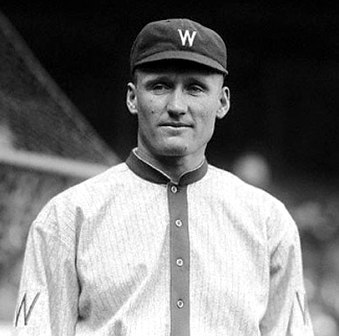
Walter Johnson

Johnson based his opinions, he said, less on “the way of averages,” and more on “personal experience or observations.”

Rube, he said, “had the two chief requirements,” for a great pitcher:

“(A) real curve ball and a real fast ball. And speed—no man ever lived with greater speed! If that big lefthander had possessed a little common sense, no pitcher in history could have compared with him.”

Johnson’s next three were Grover Cleveland Alexander, Christy Mathewson, and Ed Walsh.

“Alexander is one of the smartest f all pitchers. He has a lot of good stuff…Some experts have called Alexander the best of all curve ball pitchers. Wonderful control has always been his chief asset…Alex’s slow ball is a dandy, and his disposition—so necessary to a winning pitcher—is ideal.”

Johnson called Mathewson, “An eight-letter word ending in ‘Y’ meaning to break a batter’s back.” He attributed his success to the Fadeaway:

“Whenever that word is mentioned by the fans or players, it suggests the name of Matty before any other figure in baseball. Of course, he has a good fastball, but he always held that more in reserve. Matty’s control was the best in either big league, and his knowledge of rival batters was greater perhaps than any pitcher of his day. But it was the ‘fadeaway’ that made him famous.”

Walsh was an “iron man,” said Johnson:

“The spit-ball and overwork, almost to the point of slavery, cut short his wonderful career. Walsh ought to be in there yet. He was a powerfully built fellow and one of those pitchers who needs hard work, and lots of it. But he worked too hard and too often.”

Ed Walsh

Johnson called it a “calamity” that Walsh, with “such an arm and such a disposition” had his career shortened by overwork.

More of Johnson’s top picks tomorrow.