Archive | Uncategorized RSS feed for this section

Bugs Versus Rube

9 Jun

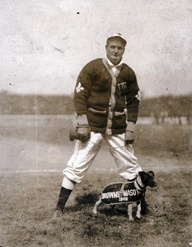
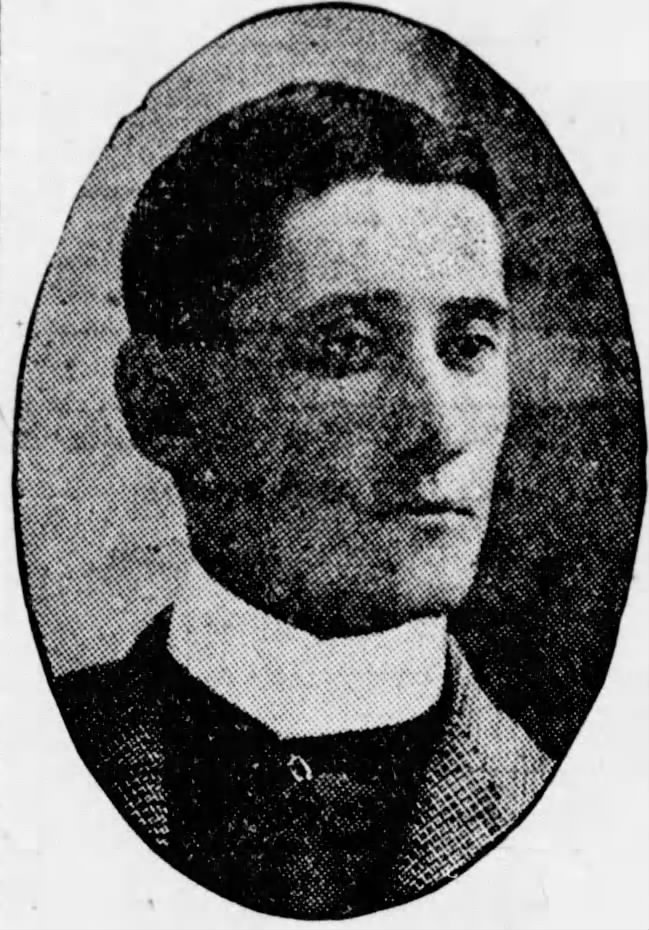
Charles Emmett Van Loan is largely forgotten today, but from 1904 until his death in 1919 at age 42, he was considered one of the best, and most prolific, baseball writers in the country.

Grantland Rice said:

“Van Loan was not only a great story-teller.  He was the first writer of his time to see the romance and the glamour of the game, mingled with its amazing fund of humor.”

In addition to his newspaper work, which included stints in New York, Los Angeles, San Francisco and Denver, Van Loan wrote some of the most popular fictional baseball stories of his era—he published four collections of baseball stories, as well as anthologies of  boxing, horse racing and golf stories.

Hugh Fullerton said of his death:

“Van is dead and sports in America have lost their greatest interpreter, and fighters, ball players and athletes of all grades have lost their best friend.”

Charles Emmett Van Loan
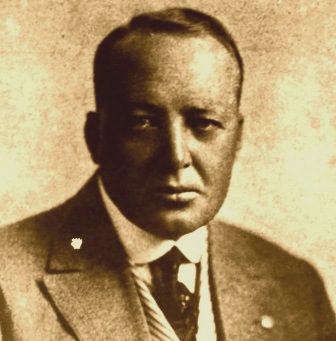
Charles Emmett Van Loan

As sports editor for The New York American in 1910 Van Loan weighed in on the two most interesting pitchers of the day:

“In the race for distinction as the most erratic, eccentric and daffy pitcher of the big leagues “Bugs” Raymond is leading by an elbow over our old friend, G. Edward Waddell, known to fame and a portion of Missouri as the ‘Rube.’

“The battle between G. Edward and the ‘Bug’ has been a close one.  For many moons Waddell held the belt for eccentricity.  If he had not been a wonderful baseball player, he would have been chucked to the minors years ago, but pitchers like Waddell are so rare that they must be preserved to the game.

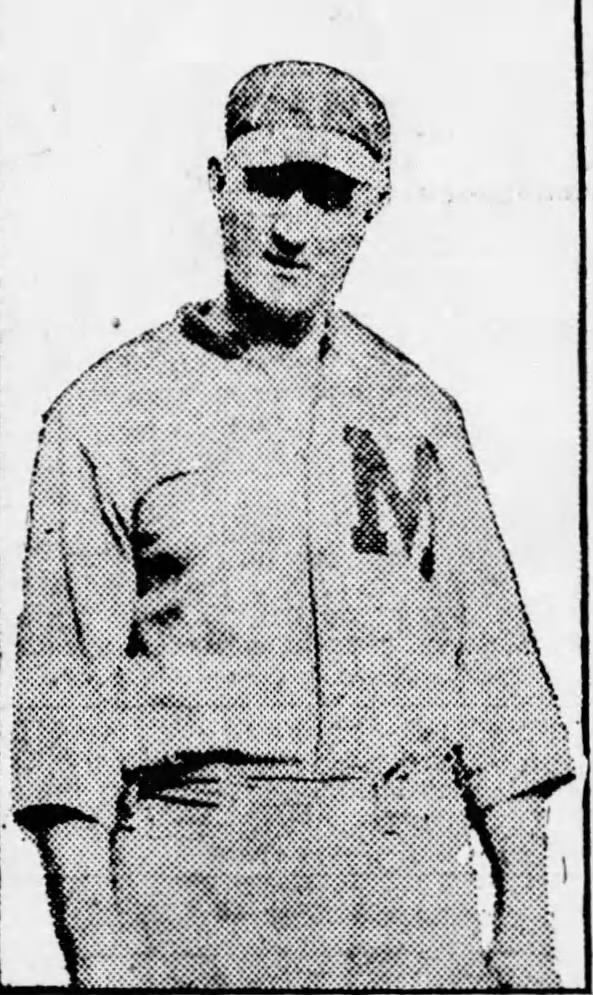
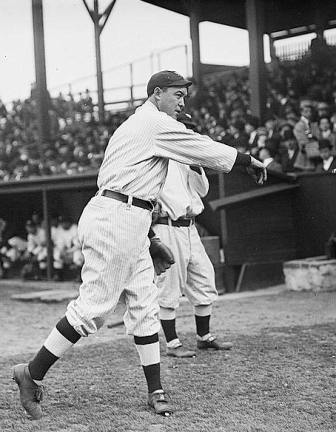
Bugs Raymond

Bugs

“We all remember the sorrows of Oscar Hammerstein and the many tribulations forced upon him by his singers, particularly the women.  A woman with a wonderful voice can get away with anything short of murder in the first degree by blaming it upon her artistic temperament—which is an ornamental means for plain unadorned meanness, selfishness or petty spite.  If a soprano got jealous of another woman and tore up her contract, refused to sing her roles and played smash generally, she could blame it upon her artistic temperament, and all was forgiven.  What a shame the ‘Rube’ never heard about that artistic temperament thing!  It would have been such a handy alibi for him.

“Waddell stuck in the limelight by virtue of his ability to throw a ball like a streak of lightning and throw it twice or three times in the same place…In between his marvelous performances the ‘rube’ established himself as a bartender, a side-show barker, an actor, a sidewalk comedian, a rough and tumble battler and a very competent vessel for mixed liquors.  He enjoyed the proud eminence of supreme bug of the major leagues and everything was lovely until ‘Bugs’ Raymond happened along.  ‘Bugs’ went the ‘Rube’ one better.  Waddell in his balmiest days never had a special keeper engaged, by the management to take him gently but firmly by the elbow and steer him away from temptation.

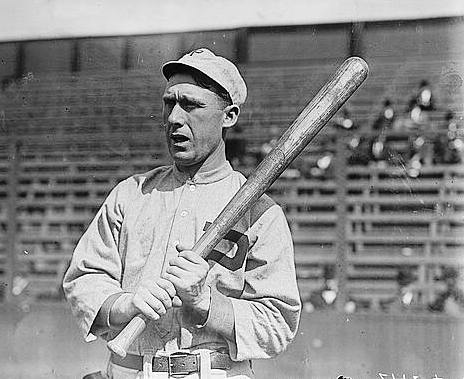
Rube

Rube

“You never heard of a chorus girl with an overdose of the artistic temperament.  A chorus girl who develops tantrums is fired immediately.  You never heard of an eccentric ballplayer who was not a good one, a bad player would be sent  back to herd the cows and coax the potatoes out of the ground with a hoe.

“’Rube’ and ‘Bugs’ are good players.  Raymond almost drove (John) McGraw to despair last season, for the chubby manager realized what an excellent pitcher ‘Bugs’ really was and tried to save him for the hard finish of the season.  McGraw even went so far as to try physical persuasion upon his big, but erratic southpaw, upon the ground that a swift wallop on the nose is sometimes better than a ream of argument.

“McGraw tried to keep money out of Raymond’s hands, figuring that if he never had a cent he would be forced to keep his nose dry.  No use.  ‘Bugs’ had too many friends.  His admirers were always ready to purchase even if ‘Bugs’ had to look up in the air when it came his turn to deliver orders to the gent in the apron.

“’Turn him loose on a desert isle’ said one of the players, referring to Raymond, ‘and inside of an hour he will turn up with a flask on his hip.  How he does that I don’t know.  I guess he just charms that liquor.

“Unfortunately George Edward must retire from the competition.  Boston is his hoodoo town,  By reason of matrimonial troubles ‘Rube’ was forced to cut Boston off the pitching list, and just as the clouds cleared away, bing! On the elbow with a red hot liner, and out goes the ‘Rube’ with a broken bone.

“At the end of last season nobody believed that McGraw would make another effort to reform the thirsty Raymond.  It was thought that in spite of the fact that ‘Bugs’ won 600 percent of his games, he would get the gate, but McGraw decided to try it again on the ground that a pitcher of Raymond’s class is worth saving at any cost.  McGraw is willing to gamble.  Should he fail to straighten out the big spitballist everybody will say:  ‘I told you there wasn’t any use.’  On the other hand, should the private keeper keep ‘Bugs’ away from the disturbance water and his pitching be up to his usual standard, everyone will say that McGraw showed excellent judgment in hanging on to his souse paw through thick and thin.

“An erratic pitcher is a hard strain on a team.  The men behind him never know when he is going to blow up and they are kept on a strain whenever the eccentric one works.

“When ‘Bugs’ goes into the box in good condition, his head clear and his muscles hardened by work, he pitches good enough baseball for any man’s club.  His keeper has been steering him away from the gin mills for some time—touch wood everybody—and at last accounts McGraw was hopeful that the problem had been solved.

“They say the ever loving ‘Rube’ is consumed with jealousy because ‘Bugs’ has a keeper.  A man with a broken wing doesn’t really need a keeper.”
McGraw was unable “to straighten out the big spitballist,” Raymond’s big league career was over by June of 1911, and he was dead just more than a year after that.  Waddell’s major league days were over within weeks of Van Loan’s observations, and he was dead less than four years later.
“The Contest is going to be the Hottest in the History of Baseball”

6 Jun

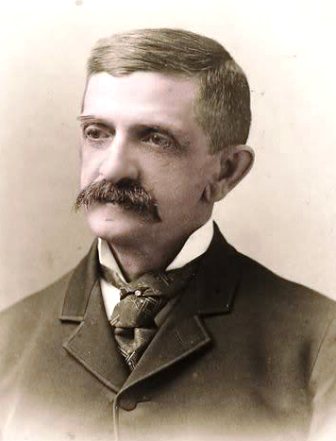
Just weeks into the 1892 season, National League president Nick Young declared the newly expanded league, which absorbed four franchises from the defunct American Association and included the only scheduled split-season in major league history, an unqualified success.

Nick Young

Nick Young

The schedule, which called for the first half to end on July 15, and the second in later October, necessitated starting league play two weeks earlier than 1891 resulting in a large number of early season games being played in inclement weather.

Young spoke to a reporter named Max Ihmsen, who usually covered politics for The Pittsburgh Dispatch, about the state of game

“(T)here is no doubt of the overwhelming success of the new deal.  Considering the wretched weather that prevailed everywhere during April the showing, both financially and as to skill displayed, has been remarkable.  Everyone is making money, and I look for the most successful season ever known in the history of the game.  The reconciliation of the clashing interests, a reconciliation effected during the past winter, has been the salvation of the sport…This year there is every prospect of each club quitting a big winner.  Never before have such games, as are now being put up, been seen.”

Young said an April 19 doubleheader in Chicago, which brought in $4,000 accounted for the league’s highest single-day gate receipts of the season so far.

As for the pennant race Young said:

“The contest is going to be the hottest in the history of baseball.  Everybody is ‘out for blood,’ and at the close of the season I anticipate seeing a tie for every place up to fourth or fifth.  A difference of 10 or 15 games between the highest and lowest clubs will reflect no discredit on the lowest club…All the clubs are in good shape and I expect quite a number of absolutely errorless games will be recorded before the season closes.”

Young got nearly everything wrong.

At the close of the season, Ernest J. “Ernie” Lanigan said in The Philadelphia Record that only two teams (Cleveland and Pittsburgh) operated in the black.  He said their profits were less than $20,000 combined while “ten clubs have lost in the neighborhood of $150,000.”

O.P. Caylor said in The New York Herald the league’s financial state was a “disaster more astonishing than any which have preceded it and knocks the hot air out of President Nick Young’s prosperity balloon, which went sailing up so grandly.”

At a June meeting in New York team owners agreed to cut rosters from 15 to 13, and the salaries for the remaining thirteen players were cut (as much as 40 percent).  At the same time, they increased to 12 ½ percent the 10 percent of gate receipts each club was assessed to pay off the debt incurred to buy out the American association franchises that were not absorbed into the league.

Caylor said salaries would continue to fall and “This is the year when the owners of huge blocks of baseball stock are not classed with the Vanderbilts, Goulds, Astors, and Rockefellers.  Every one of the holders has been ‘touched’ heavily, more or less, by the financial disappointments of the year.”

The Baltimore Sun put it more succinctly:

“The season has been a failure financially.”

The Boston Beaneaters won the first half (52-22) over the Brooklyn Grooms (51-26), after the June roster and salary reductions, the Cleveland Spiders (fifth place with a 40-33 record in the first half) won the second half (53-23) over the Beaneaters (50-26).

Initially, Boston owner Arthur Soden said his team would not meet Cleveland in a post-season series as a result of charges in Boston that his team tanked the second half.  He told Caylor:

“You cannot make a large number of our patrons believe that the Boston club has not purposely lost the last championship for the sake of making money out of a series of finals.  That belief has hurt us to the extent of thousands of dollars during the last half of the season, and unless it be removed will hurt us equally as much next season.  The only way we can remove the wrong impression is by refusing to play.”

Caylor said at the October owners meeting “the rest of the league took up the case and literally forced the Boston club to play…Boston’s refusal to play would do more harm to the interests of the League at large than the Bostons could possibly suffer by the playing of the games.”

The nine-game championship series began with an 11-inning pitching duel between Boston’s Jack Stivetts and Cleveland’s Cy Young that ended in a 0-0 tie.  Boston swept the next five games.

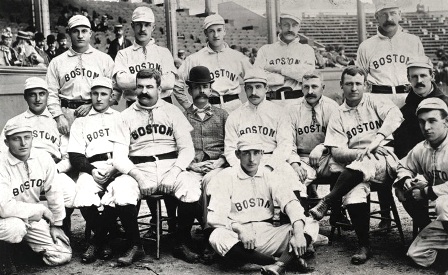
The Boston Beaneaters

The Boston Beaneaters

The split schedule and the resulting longer season were dropped for 1893.

Max Ihmsen, the reporter Nick Young spoke with, became city editor of The New York Journal, a William Randolph Hearst paper, in 1895.  Ihmsen went on to manage Hearst’s unsuccessful campaigns for mayor of New York City and governor of New York; he was also the Hearst-backed candidate for Sheriff  of New York County in 1907, a race he lost to the Tammany Hall-backed candidate.

Ihmsen later became the managing editor of another Hearst paper, The Los Angeles Examiner.  He died in 1921.

Things I Learned on the Way to Looking up other Things #8

4 Jun

Remember the Maine

Several sources say Harry Stees, who played for the 1897 Shamokin Coal Heavers in the Central Pennsylvania League died in the explosion of the USS Maine in Havana Harbor on February 15, 1898—it would make him the first professional player killed in action.

The Sporting Life also reported that he had died aboard the ship.

A small item in his hometown newspaper contradicts that story.

Nearly a month after the sinking of the Maine, The Harrisburg Telegraph ran the following Headlines:

“A Fool Joke”

Harry Stees was Never on the ‘Maine’ at Havana or Elsewhere

The paper said a letter had been published in The Daily, the newspaper in the nearby town of Sudbury, Pennsylvania signed by “Mrs. Harry Stees.”  The letter asked for the paper if they could locate Robert Durnbaugh, a teammate of Stees with the Coal Heavers, and have Durnbaugh contact her.

In the Letter Stees is referred to as Theo.  Contemporary references in the Telegraph and census records refer to Stees as T. Harry Stees. The paper said:

“A ‘Telegraph’ reporter located Mr Harry Stees without difficulty at the Peipher Line warehouse, on Walnut Street, this morning, and showed him the clipping.  He stated that he was undoubtedly the individual referred to in the letter, but was positive that neither his wife nor mother had written such a communication to The Daily.  ‘It’s some fool joke, put up on me by someone in town,’ he said.  ‘I have been away from Harrisburg since last September when I returned with Durnbaugh from Shamokin, where we had been playing ball, and I never set foot on the Maine.’  Mr. Stees proposes to investigate the origin of the communication.”

There was no follow up on the story, but T. Harry Stees was a prominent figure in amateur and semi-pro baseball in Harrisburg into the 1930s.

T. Harry Stees, circa 1915

T. Harry Stees, circa 1915

It appears he was not the first professional player killed in action.

Stees, 1919

Stees, 1919

Anson’s Old Bat

Despite a broken ankle received while sliding on May 23 sidelined “Silent” John Titus for much of the season, the Philadelphia Phillies’ outfielder had his highest single-season home run total–eight in just 236 at bats, his previous high was four in 504 at bats in 1904.

John Titus

John Titus

The Philadelphia Record claimed it was due to a bat he had acquired that season:

“Cap Anson’s old base ball bat is helping the Phillies in their flight toward the National League pennant.  This relic of early baseball is now owned by John Titus.

“When everything broke badly for Anson and he lost his fortune…that bat had to be auctioned off.  Pat Moran, then a member of the Cubs, but now (Phillies Manager Charles “Red”) Dooin’s first lieutenant, was the purchaser of the club.  He bid against several members of the cubs team.

“Moran had the bat shortened as soon as it was his, so that today it doesn’t look much like the clubs that Anson used, but Moran says that ‘the wood is there.’

“Titus was looking over Moran’s club one afternoon toward the close of (the 1910) season and asked to be allowed to hit  a ball to the outfield with it…’Silent John’ used the bat just once and after that nothing but the possession of it would satisfy him.

“Immediately Titus began to negotiate with Moran for the bat…Finally Moran yielded, knowing that the bat would do Titus more good than it would do him.”

The Record described the bat:

“(D)irty and black from tobacco juice and frequent oiling, but the wood is in perfect shape.  Probably no bat in baseball is as thick as this one.  From the pitcher’s box it is said it reminds one more of a cricket bat in width.”

Titus told the paper:

“Anyone can hit with that bat of Anson’s.  When a fellow is hitting, he feels that there is something to life, after all.  What pleases a fellow more than to see a ball dropping over a fence?  Another one I guess.  Every player likes to hit home runs.  It gives a player lots of ginger and confidence when he is hitting them on the nose.”

Several newspapers picked up versions of the story throughout the season, but there was no later mention of the bat, or its eventual fate, in the Philadelphia press.

Jack Grim

2 Jun

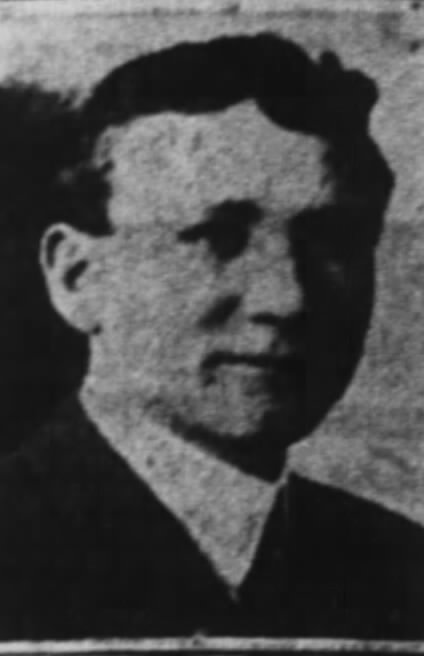
John J. “Jack” Grim never amounted to much as a player.  Statistics are nearly nonexistent for his playing career, and those that do survive are unimpressive; primarily a catcher, he played for all, or parts of nine seasons from 1894 until 1902.  The Cincinnati native made his mark, now all but forgotten, as a manager and executive.

John J. "Jack" Grim

John J. “Jack” Grim

Often confused with former major league catcher John Helm “Jack” Grim—for example, most sources list John H. Grim as the manager of the 1904 Columbia Skyscrapers in the South Atlantic League, it was John J. Grim who managed that team, and during that season might have made his greatest contribution to the game.

Grim’s first managerial appointment was with the Anaconda Serpents in the Montana State League in 1900.  He guided the team to a second-place finish in the first half, and the club was in first place in the second half race on August 11, when Grim abruptly resigned.  The Anaconda Standard said Grim sent a letter to the team directors in which he charged “there is a feeling in certain quarters, against me.” He said:

“I cannot do myself justice while laboring under these conditions.”

Arthur “Dad” Clarkson, brother of Hall of Famer John Clarkson, replaced Grim; the team finished the second half of the season in second place under Clarkson.  Grim became an umpire in the league for the remainder of the season.

In 1901 Grim went to the West Coast with William H. Lucas, a former minor league pitcher who had been president of the Montana State League, to join Dan Dugdale to reestablish  the Pacific Northwest League; Lucas served as league president and Grim managed the Portland Webfoots to the championship, winning the pennant by 16 games.

The league expanded from four to six teams for 1902, and Grim was hired to manage the Spokane franchise, which had finished in last place (41-67) under three different managers in 1901.  The Sporting News said:

“(Spokane’s) stockholders have given (Grim) full power to act in signing players.”

The Sporting Life said Spokane fans were “feeling confident that (Grim) will this year sustain his reputation for always piloting winners.”  Despite the free reign, and high hopes, Spokane struggled, finishing in last place with a 46-75 record.

The following season, as a result of the West Coast baseball war—the California League expanded to the Pacific Northwest, becoming the Pacific Coast League—the Pacific Northwest League expanded into California and became the Pacific National League.  Grim managed the Portland Green Gages.

On July 1 the Portland franchised was, according to, The Oregon Journal “transferred bag and baggage to Salt Lake City.” In Salt Lake City Grim quickly wore out his welcome.

After it was reported in late July that Grim might be let go, six players, including the team’s star shortstop Charles “She” Donahue, went on strike.  They missed two games, but returned after the team’s president said: “he has no intention of letting Grim out.”  The harmony didn’t last and just weeks later Grim was released and fined $100 for what The Salt Lake Herald called “starting a mutiny within the ranks of the club.”

The trouble in Salt Lake wasn’t over.  Near the end of the season, Donahue’s contract was sold to the St. Louis Cardinals.  The sale was reportedly engineered by Grim after he was let go as manager.

The Herald said:

“What kind of a con game is Jack Grim trying to work on the Salt Lake ball club?  What right had Jack Grim, who was fired…got to sell Donahue to the St. Louis club?  How many more of the Salt Lake’s players is Grim trying to dispose of in the same way?  What did Grim do with the money he received from (Cardinals President Benjamin) Muckenfuss of the St. Louis team?”

Grim told The Cincinnati Enquirer he entered into negotiations with the Cardinals over Donahue on September 14. But The Herald noted:

“At that time Grim’s sole business in Salt Lake was to hang around with the ballplayers and try his best to create discord among them.  He had been fired long before.”

The National Commission ruled the sale/signing legal.  Garry Herrmann, chairman of the commission, said that in the contract he signed with Portland for 1903 “Donahue had a specified agreement that he was not (placed on the reserve list)” despite the fact that the Salt Lake team claimed he had already signed a contract for the following season.  As a result, there was nothing stopping Grim from delivering Donahue to the Cardinals, and the money he received—the amount was never reported—was his.

Grim was again involved in a new league in 1904, when he and fellow Cincinnati native Ed Ashenbach, helped form the first incarnation of the South Atlantic League—Grim managed the Columbia Sky Scrapers and Ashenbach managed the Charleston Sea Gulls in the six-team circuit.  Grim only lasted until mid-July as manager and finished the year as an umpire in the league.

It was that season that that he claimed he made his great contribution to the game.  According to Grim, he was the first person to alert the Detroit Tigers about a 17-year-old outfielder for the Augusta Tourists named Tyrus Raymond Cobb.

While Cobb was not sold to the Tigers until August of 1905, some credence for the claim was provided by Cobb himself in 1910, when an article appearing under his name—likely ghostwritten by Roger Tidden of The New York World—said Grim had tried to purchase his contract when he was struggling at Augusta, shortly after “I left home to show up the league.”

In 1905 Grim was one of the principal organizers of the Virginia-North Carolina League and managed the Greensboro Farmers—Grim lasted less than half a season and by August The Sporting Life said he was scouting for the Cincinnati Reds.

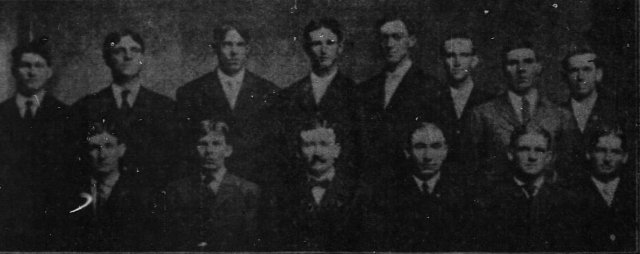
Grim finally found some stability in 1906.  He again helped found a league and owned and managed a club.  Grim’s Lynchburg Shoemakers won the Virginia League pennant in 1906—the team was led by pitcher Walter Moser (24-8), who would make the jump from the C-league Shoemakers to the Philadelphia Phillies in August.   But after a fifth-place finish and 1907, and a slow start the next season, Grim sold the team in July of 1908.

1906 Lynchburg Shoemakers, Virginia League champions. Grim is third from left on the bottom row.

1906 Lynchburg Shoemakers, Virginia League champions. Grim is third from left on the bottom row.

Just after selling the team, Grim’s wife reported him missing.  She told police in Louisville, Kentucky that she hadn’t heard from him for three weeks and thought he might be in Louisville after visiting family in Cincinnati.  Al Orth, the New York Highlanders pitcher, said he saw Grim in New York and told The Associated Press “He did not look like a man who was missing from anywhere.”

Al Orth

Al Orth


Grim eventually returned to Virginia and his disappearance was never explained.  Orth, who was from Lynchburg, returned there later that summer purchased an interest in the team and managed the club until early 1909 when he returned to the Highlanders.

For the next four years Grim bounced back and forth from team ownership (he managed, and owned part of two more Virginia League franchises (Portsmouth in 1910 and Newport News in 1912) and real estate speculating on the West Coast and in Virginia.

At the beginning of the 1912 season a small item in The Richmond Times-Dispatch hinted that there was trouble ahead:

“Jack Grim has a combination of troubles.  One is of the financial variety—well the other is nobody’s business.”

The financial troubles came to a head in August.  The Times-Dispatch said:

 “Because Manager J.J. Grim would not pay their salaries, all of the players of the Newport News baseball club except (Frank) ‘Deacon’ Morrissey, struck just before the scheduled double header between Newport News and Petersburg.”

After the game was awarded to Petersburg by forfeit, Grim’s co-owners removed him—outfielder William “Buck” Hooker was named manager for the remainder of the season.

At the end of the 1912 season, Grim found himself in an odd predicament.  The Cincinnati Enquirer said:

“Though minus a franchise, Jack Grim, formerly of Cincinnati, has a ball team under reservation, for he owns title to the players of the Newport News club…It develops that in the adjustment of the club’s affairs in August, Grim who was manager and part owner, got out without losing title to the players, though he lost the franchise.”

As a result, when the Cleveland Naps drafted third baseman Ray Bates from Newport News after the 1912 season, the draft price went to Grim.

It was the last good thing to happen to him; from there, Grim’s life spun out of control.

In October, he attended the World Series in New York (his wife later said he attempted to kill her during that trip).

In November of 1912 the Virginia League turned down his attempt to secure a franchise for 1913; next his effort to start a new league with teams in Virginia and the Carolinas fell through.

In addition to being unable to secure a franchise and running out of money—an effort to secure the New York-New Jersey League franchise in Kingston, New York also fell through–Grim’s wife had him arrested  during the first week of March 1913, and told a Lynchburg judge he had repeatedly “threatened Mrs. Grim with bodily harm.”  Grim was held in jail, but according to The Times-Dispatch “is doing everything possible to effect a reconciliation with his wife.”

Grim was released on bond after a week, but quickly rearrested, and by March 23 The Times Dispatch said:

“That a commission of lunacy will be summoned early this week to investigate the Sanity of john J. Grim, the well-known minor league baseball magnate , seems now to be a foregone conclusion…Since his incarceration Grim’s condition has grown so bad that there is no doubt in the minds of the jail attaches that he is insane…Grim has not had his clothes off in a week, and he spends his time in his cell singing, shouting, talking and pacing up and down, begging to be liberated.”

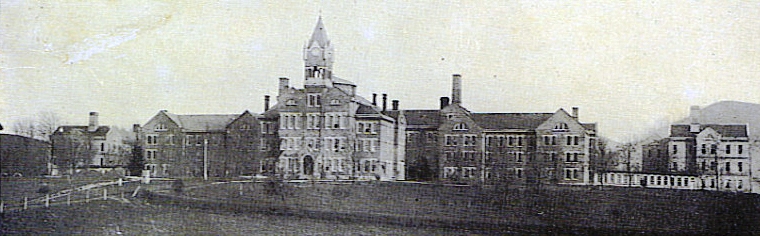
The “commission of lunacy” found Grim insane based on the testimony of Grim’s wife and a doctor named Albert Priddy, and ordered him sent to Virginia’s Southwestern State Hospital in Marion.  It was in front of the commission that Mrs. Grim related the story of the “attempt to murder her with a razor in New York City.”

Southwest State Hospital, Marion, Virginia

Southwest State Hospital, Marion, Virginia

Contradictory reports about Grim’s condition came out during the next year.  The Associated Press said in August Grim was “A raving maniac…not far from death.”  A December story in The Cincinnati Enquirer said “he is improving rapidly and probably will be discharged at an early date…Grim expects to return to Cincinnati.”

Almost a year later, he was still in the hospital, and The Enquirer reported that “Grim is improving in health and expects to visit his Cincinnati friends soon.”

That item was the last newspaper reference to Grim; he was never released and died in the state hospital.

The doctor who testified that Grim was insane, Albert Sidney Priddy, was superintendent of the Virginia State Colony for Epileptics and Feebleminded in Madison Heights, Virginia.  The doctor, and that institution became infamous in the case of Buck v. Bell (the case was Buck v. Priddy until Priddy’s death in 1925; Bell was his successor at the State Colony).  The Supreme Court’s decision in the case–upholding the Virginia’s compulsory sterilization law– resulted in the forced sterilization of more than United States citizens in Virginia and states that enacted similar laws.

Giants Versus Phillies in Verse

30 May

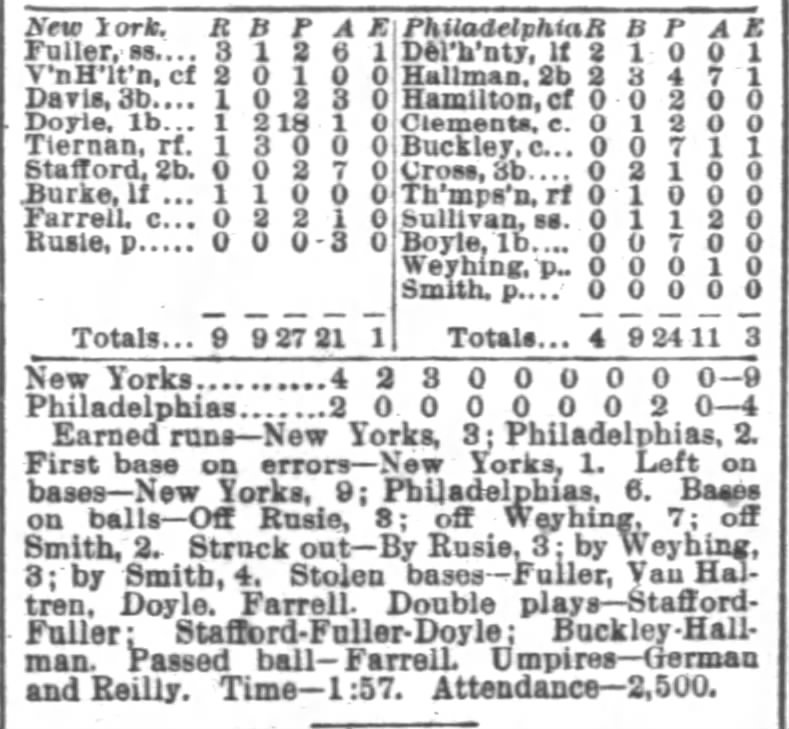
When the New York Giants met the Philadelphia Phillies on May 1, 1895 The New York Evening Sun provided a novel recap—the entire game was presented in verse:


The weather did its level best

To fire with joy the rooter’s breast,

And old Sol sent his brightest rays

To make up for past wet days

He shone with full and festive strength

Upon the Polo Grounds at length.

The balmy breezes of May Time

Resembled some fair eastern clime.

With ground so dry, yet without dust,

What player could but do or bust?

Both teams had somewhat rusty grown

By inactivity o’erthrown.

The Slowtown people were the first

To warm up with a practice burst.

The pitchers limbered up their arms,

And batters tried to work their charms

Upon the curves they volleyed in

By practice with their batting pin.

The twirlers seemed a trifle wild,

But pitcher Weyhing only smiled

And nodded like a coony fox

When told to take the pitcher’s box.

Gus Weyhing started for Philadelphia.

Gus Weyhing started for Philadelphia.

And when the players pranced about

Their frozen legs thawed quickly out.

The Phillies practicing today

Were much like Boston in their play.

The old men on the team were not

In practice quite up to the spot.

All balls that sizzled down their way

They let proceed and did not stay.

Young Turner, who was hurt last week,

Again was forced the bench to seek.

His strength gave way while in left field,

And homeward to the plate he reeled.

His captain gave him some more grace,

And Delehanty took his place.

The Giants showed up very well.

Their work was shop and clear’s the bell.

When time was called this first of May,

Four thousand people saw them play.

No umpire came to judge the game,

It had to go on just the same:

So German had to take the job,

With Reilly for his pal, be gob.

The Game:

First Inning.

Now with a last tug at his hat

Big Delehanty came to bat.

He got first on four bad balls

And down to second safely crawls,

When Hallman hit a daisy one

That Stafford stopped, but on the run.

Hamilton’s small infield fly

Was caught by Staff—Good eye! Good eye!

Clements hit to center field

And Delehanty homeward spieled.

Meanwhile Hallmann took a brace

And stood triumphant on third base.

Cross hit to Fuller, who threw to Staff,

Who dropped it, to the rooters’ wrath.

Hallman scored, and Clements out

By force at third produced a shout.

Then Sullivan to Stafford hit

He threw to Doyle and Sully quit.

Two runs.

Hot buns!

Now Fuller drew four measly shoots

And went to first by easy scoots.

Val Haltren got four balls also

And straightway down to first did go,

Advancing Fuller by this feat

To second where he took a seat.

Davis down to Hallman hit,

And Van was forced because of it.

Doyle knew a trick worth two of that—

His single hit the fence, that’s flat.

Fuller scored and David stirred\His stumps and landed safe on third.

Tiernan’s hit scored Davis too.

Staff went to first on balls, hurroo!

Burke struck thrice at the spinning sphere,

And Burkeville sadly moaned, ‘Oh, dear!’

A pretty single Farrell sent,

And skipping down to first he went.

‘Twas pretty work, and what is more,

Enabled Doyle and Mike to score.

Then Farrell climbed the second stair.

‘Twas no use.  Rusie fanned the air.

Amos Rusie started for New York

Amos Rusie started for New York

Four runs.

Great guns!

Second Inning.

Boyle sent an easy one to Staff,

He didn’t fail to do his half.

But promptly threw him out to Doyle,

Who didn’t let the good thing spoil.

Then Weyhing also fanned the air.

Thus Rusie evened things for fair.

The Delehanty followed suit

And made the third man out to boot.

No run,

Not one.

Here Clements found he was too fat,

And Buckley went behind the bat.

Fuller’s smash in center fails;

Van Haltren gets his base on balls.

In this respect Cap Davis vied.

The bases were all occupied.

Doyle force the Cap at second base,

Where Hallman calmly holds his face,

But in the turmoil that ensued

Short Fuller struck an attitude,

Then down the last course took a skate

And like a rabbit crossed the plate.

Mike singled to the right field loam,

Van Haltren also scampered home.

Then Stafford missed the fatal strike.

At second Hallman caught our Mike.

Score two—

That’s true!

Third Inning.

Then Hallman sent a liner hot,

Which Rusie let go like a shot.

The batter ambled to first base,

And Amos hid his blushing face.

Then Hamilton to Davis hit,

And Hallman took bag 2 on it.

On Buckley’s sacrifice to Doyle,

Hallman went to avis’ soil.

Then Cross lined one to Fuller’s ground,

He neatly grabbed it on the bound

And slung the pellet down to Doyle,

Who gently plucked it from the soil,

Touched first bad with his Trilby boot.

‘My,’ yelled the crowd, but you’re a beaut!’

No score.

For us Burke hit to center field,

A single the resultant yield.

Then all Burkeville with one acclaim

Rose up and cheered their hero’s name.

eddieburke

Eddie Burke–“Then all Burkeville with one acclaim–Rose up and cheered their hero’s name”

Next Farrell, seeing Fuller’s hit,

Got up and duplicated it.

The Burke took second, Eddie third,

When Delehanty sadly erred.

Then Cross, who’s never known to scowl,

Froze tight to Rusie’s little foul,

But Filler once more four balls drew

And quickly down to first base flew.

Four bad ones, too, Van Haltren got,

Which forced Ed Burke home on the spot.

Duke tried to score on Davis’ crack,

But Buckley tapped him on the back.

Doyle smashed a single out to right.

Two runs came in –‘twas out o’ sight!

Cap Davis, graceful as a bird,

Flew round the course and perched on third,

But Tienan hit to Sully’s place

And perished tamely at first base.

Score Three.

That’s we!

Fourth Inning.

Thompson four balls got, and Sully’s bunt

Let him to first—the little runt!

Boyle’s liner went to Stafford’s spot,

Who held it, though he said ‘twas hot,

And laced it onto Fuller’s paws,

Who touched bag 2 midst much applause.

Big Thompson, who should have been there,

Was caught far off his base for fair.

Now Stafford added glory won

By nabbing Weyhing’s hit.  No run.

Now Weyhing thought he had enough,

And Smith tried pitching—that’s the stuff.

When Stafford stepped up to the plate,

The crowd arose and cheered him great,

Whereas poor Staff was struck with awe

And fanned out, much against the law.

Then Hallman gathered in the sphere,

And though the thing was very near

He plugged it down to first with vim.

Burke found the ball ahead of him.

Farrell fanned the ozone thrice

And took a back seat calm and nice.

No score once more.

Fifth Inning.

When Delehanty went to bat,

He didn’t know where he was at.

He sent one down to Davis’ ground,

Who plucked it neatly on the bound

And passed it on to Jack Doyle’s place,

Who took it in with airy grace.

Hallman out, short to first,

And Hamilton was likewise curst.

No score.

Now roar!

Rusie’s out caused quite a howl,

And Buckley gobbled Fuller’s foul.

Hallman fumbled big Van’s hit;

The latter safe on first did sit.

He didn’t tarry but a minute,

But stole bag two—

Gosh, Van was in ir!

But Davis stopped all hope of fun

By going out at first.  No run.

Sixth Inning.

Buckley went out, Davis to Doyle,

Van Haltren kept Cross’ fly off soil.

Davis took Thompson foul on the run,

And the Phillies retired without a run.

Doyle sent one down to second base

And on the bench resumed his place.

Tiernan bunted mid a shout

And beat the ball two feet about.

Hamilton took in Stafford’s fly,

And Burke went out as slick as pie.

No runs.

Good fun.

Seventh Inning.

Sully’s slow bunt along the ground

Ahead of him at first he found.

Boyle died at first in style as slick.

‘Twas Fuller this time who did the trick.

Rusie attended to Smith’s weak hit.

The Quakers were certainly not in it.

No Score.

Hurrah!

Farrell out at Hallman’s door,

And Rusie fanned the air once more.

Fuller got four nasty ones,

Then down to second quickly runs.

Smith struck out lengthy Van,

Who batted like a pygmy man.

No more.

Oh, pshaw!

Eighth Inning.

For Slowtown Delly made a hit,

And Hallman duplicated it.

Fuller muffed the ball in thrown,

And Delehanty ran clear home.

Hallman safe to second crawls,

And Hamilton to first on balls.

Buckley out at first by tag.

And Hamilton off second bag.

Hallman to third on this play

And scored on Cross’ hit—hooray!

Thompson singled to center field,

And Cross to third base quickly spieled.

Sully smashed along the ground.

The ball at first ahead he found.

Score two.

That’s you.

Davis, Hallman to Boyle,

And Hamilton took care of Doyle.

Tiernan first on balls, and Staff

Forced him at second—made him laugh.

No run

By gun!

Ninth Inning.

Fuller caught Boyle’s fly like glue,

And Smith’s strike out made No. 2

Delehanty out at first.

The crowd yelled a triumphant burst.

To sum it up, the game was great.

The rooters left the grounds elate.

Then round the town they took a turn,

For every one had cash to burn.

The Box Score

The Box Score

“My Forte is Base-Ball, and not Speaking”

28 May

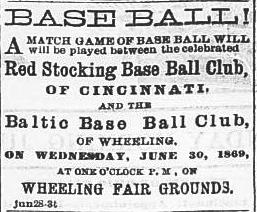
The Red Stockings arrived in Wheeling, West Virginia on June 29, 1869; the final stop on their 21-game tour, which began in Mansfield, Ohio on June 1.  They had won the previous 20 games on the trip and The Cincinnati Enquirer said:

“The only real sensation which our city has enjoyed of late has been that created by our victorious Red Stockings on their Eastern tour.”

The Wheeling Intelligencer said of their arrival:

“These celebrated base ballists reached our city last evening, over the Baltimore and Ohio Railroad.  They were met at Benwood by a committee of reception, on behalf of the Baltics…Quite a crowd gathered at the depot to greet them, and when the train reached here (Wheeling) they entered a special omnibus and were driven at once to the McClure House.  After brushing off the dust of travel and refreshing the inner man, they were taken in charge by the committee and spent the remainder of the evening in sightseeing.  They are courteous in their manners and jubilant at the prospect that the arduous labors of the month’s campaign are so nearly ended.  A more splendid tour has never been made by any club.  They (will) return to the Queen City with a record of unexampled brilliancy.”

The paper said admission to the game at the Wheeling Fair Grounds was 25 cents for adults and fifteen cents for children, and told their readers:

“We would advise all who wish to witness the finest playing ever seen in this region, to be present.”

Advertisement for the Wheeling game.

Advertisement for the Wheeling game.

The game was played the following day (some sources incorrectly list the date of the game as July 1).  The Intelligencer said:

 “At one o’clock yesterday afternoon, the long anticipated game of baseball between the Red Stockings, of Cincinnati, and the Baltics, of our city, was opened.

“The Red Stockings were first at the bat and succeeded in making almost a score of runs (the Red Stockings scored 11).  The Baltics came to the bat and were whitewashed.  The same ill luck happened them during the three innings played (4 ½ innings were played).  At four o’clock the game closed—the Red Stockings being compelled to leave at that hour so as to make an evening train to Cincinnati…They went off in the best possible spirits—feeling conscious that they were the champion base ballists in the country.  In their recent tour they did not sustain a single defeat. “The game yesterday was witnessed by about fifteen hundred persons , among them a large number of ladies, and although the Red Stockings almost annihilated one of our home clubs, the fine playing of the strangers elicited the heartiest and warmest applause.  As the play progressed the excitement amounted almost to enthusiasm.  Good order was preserved throughout the game. “We neglected to mention in the proper place that the score stood at the close: Red Stockings, 52; Baltics, 0. Time occupied, three hours.”

While the Wheeling paper didn’t mention rain, The Cincinnati Enquirer said rain caused the early ending:

“The Cincinnatis went to bat for the fifth inning and scored eight runs, making the total score of fifty-two.  It now commenced to rain and game was called, the Baltics not being given the opportunity to be white-washed gain.”

The official score was 44-0, and the Red Stockings had completed a 21-0 month-long road trip on their way to a perfect 65-0 record. The Enquirer said of their return:

“Our victorious Red Stockings, the first nine of which met and conquered all the first-class base-ball clubs of the country, after a tour of one month, arrived at home at ten o’clock yesterday morning via the Little Miami Railroad.  The day when our boys should arrive home, has during the past week been eagerly looked for, and arrangements to give them a hearty welcome were completed.”

Four thousand people turned for the return:

“The train arrived at the depot promptly on time, when the boys, amid the enthusiastic cheers of the spectators, were escorted to carriages provided for the occasion and taken over the line of march prescribed to the Gibson House.  At the head of the procession was the Zouave band in an open transfer wagon, gaily decorated with flags and banners.”

After the team arrived at the Gibson House, they appeared on a hotel balcony:

“Loud calls were made for Mr. (Aaron Burt) Champion, President of the club, (Harry) Wright, (Charlie) Gould and (Doug) Allison, and, in fact, every member of the nine.”

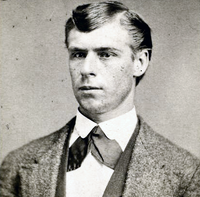
Doug Allison

Doug Allison

After the team members were “shown to private apartments where they had an opportunity of resting.”  Later, they appeared again:

“(T)he nine dressed in their neat white uniforms, with the well-known red stockings, were seated in carriages and driven to the Union Grounds where fully 3,000 people persons has assembled to again welcome them and witness the game with a picked nine.”

Before the game the team was presented with a 27 ½ foot long ash baseball bat “lettered with the names of the First Nine and the two substitutes.” The Red Stockings beat the local picked nine 53-11. A banquet was held in the team’s honor that evening.  The Cincinnati Commercial said it was a “glorious reception…An extra pig was killed in honor of the ‘boys.’”  The Enquirer said the crowd called on the Harry Wright to make a speech:

“Loud calls were made for Harry Wright, Captain on the Nine.  He arose and rather bashfully asked to be excused from making a speech; it was something that he was not in the habit of doing, but he would do all in his power to aid in keeping the reputation of the nine.”

One-by-one each player on the team refused to give a speech for the crowd.  Wright’s brother George said “Gentlemen, you must excuse me, as nobody else is making speeches.  My forte is base-ball, and not speaking, therefore I’ll stop short.”

George Wright

George Wright

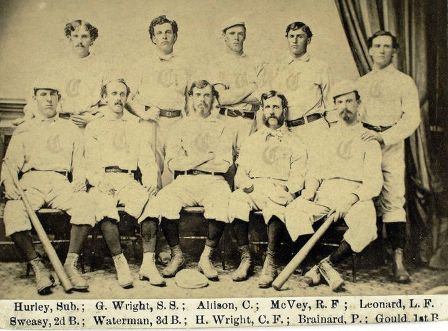
The closest thing to a speech came from one of the team’s two reserves, James Fowler.  Fowler rarely played, and appeared in only one game during the tour—Allison was hit over the left eye by a foul ball during the June 24 game with the Maryland Club of Baltimore, George Wright moved behind the plate and Fowler played the final three innings at short.  Fowler, primarily acted as the team’s scorekeeper, does not appear in the team photo and is usually not listed on the team roster. Fowler told the crowd:

“Mr. Champion says that I slept through all these matches; if I didn’t play I talked, and helped in that way.  I am happy to be a member of the Cincinnati Nine—or rather Eleven.”

The Red Stockings "Eleven" minus James Fowler

The Red Stockings “Eleven” minus James Fowler

While none of the players were willing to give a speech, the crowd, and local dignitaries, made a series of toasts to the team.  The Enquirer said:

“At a late hour our reporter left the scene of conviviality, at which time the company were enjoying themselves in the happiest manner, and doing all in their power to manifest their appreciation of the victorious ‘Red Stockings.’  So ended the grand ovation—the most complete, in every respect, ever extended to any similar organization in the country.”

Despite the late night and “conviviality,” the Red Stockings beat the Olympics of Washington twice that week, 25 to 14 and 32 to ten.

Dispatch from the Front—March 1918

26 May

“Supply exhausted of first base mitts, masks, catchers’ mitts, protectors, fielders’ gloves and rules supply low.  Spring supplies should be rushed as rapidly as possible on different ships.  Increase of athletic goods essential.  Unexpected needs in front require a large increase.”

The New York Sun said the above cablegram was sent from France to the Y.M.C.A. in New York.

“It calls attention to what our men overseas regard as one great deficiency in the equipment of the United States troops.  Baseball is still our national game, even over there in Flanders, and the basemen object to taking hard throws from across the diamond with their bare hands.”

Baseball game with members of the Twenty-eighth Division, Three Hundred and Second U.S. supply train in France

US troops play baseball in France, 1918

The Sun said the Y.M.C.A. had already provided to “the men of the expeditionary forces in France:  79,680 baseballs and 19,000 bats, 8,000 fielders’ gloves, 2,000 catchers’ mitts,” and more was on the way.

“When the umpire calls ‘play ball!’ American soldiers forget all about the grim business of war.  A baseball game…for the time being is the principal object in life.  The game must be played with all the national enthusiasm.  It must be played right.  That’s why they want more rule books.  The few that went over have been thumbed so much that the replenishing supply is made part of a cable message at so much a word.”

“Play makes the boys who are fighting for democracy forget that they are fighters and recall that they are democratic.  Old-fashioned army officers who were bitterly opposed to the introduction of such fol de rol into the training of the greatest army the United States ever has been called to raise have retracted their strictures against the innovation. “These men know how to play now; at least 70 per cent of them had no idea of where to begin  when they were sent to training camps.  So war has done what the most prominent advocates of physical training and scientific play have failed to do.  It has made the young men of America nearly 100 percent interested in athletics as active participants.”

Dr. George J. Fisher of the Y.M.C.A. said:

“’These boys who are sending for mitts and gloves aren’t going to give up playing ball when they come home and the victory has been won.  They are coming home to make America what many of us have been trying to make her—a play nation.”

“Yale’s Crack Baseball Pitcher”

23 May

Herbert Ovid Bowers followed a legend at Yale.

From 1886 through 1890 pitcher Amos Alonzo Stagg had led the Yale baseball team to the championship of the Ivy League (post graduate students didn’t lose eligibility in the 1800s).  He was a highly sought after pitching prospect, but Stagg, a devout Presbyterian, turned down multiple offers to play professionally; in his 1927 biography, “Touchdown!” he said:

“There was a bar in every ball park, and the whole tone of the game was smelly.”

Amos Alonzo Stagg, right, with Yale catcher Jesse Dann

Amos Alonzo Stagg, right, with Yale catcher Jesse Dann

Bowers was born June 2, 1867, in Manchester, Connecticut and entered Yale in 1889 as a sophomore after teaching school for two years in Hartford—he also played for a semi-pro team in Plainville, Massachusetts.

He joined the baseball team in 1890—Stagg’s final season–as an outfielder and pitched on a limited basis during the early part of 1891 when pitcher William Dalzell was tapped as Stagg’s replacement.  The Chicago Tribune said:

“Dalzell promised much, but failed.”

The Pittsburgh Dispatch said Dalzell became ill during the 1891 season and “Bowers was literally forced into the box,” where he “demonstrated that he was the best pitcher in college.”

The New York Herald said:

“Yale would not be a factor in baseball this year, they said.  But when Bowers popped up in the box and began pitching ball (Yale fans) changed their wail to a hurrah…He puts up a great game and is as cool in the box as the famous Stagg himself.”

The 5’ 9” righthander led Yale to a 24-9 season.  The Tribune said:

“Bowers is strategic and cool but not very fast, and weighs but 150 pounds.  He is a good general ball-player, can run bases fast, and has extra good command of the ball.  With twenty-five pounds more weight and the extra strength that goes with it Bowers would be a phenomenal pitcher.  As it is he is a good and valuable one.”

Herbert Ovid Bowers

Herbert Ovid Bowers

On June 13 Bowers and Yale lost 5 to 2 to Princeton at the Manhattan Athletic Club in New York, losing the league championship.

Yale was just 18-16 in 1892.  Bowers took a no-hitter into the ninth inning during a victory over Princeton, but he gave up a walk and a two-out hit, losing the no-hitter and shutout, but winning the game 3 to 1.  Yale met Harvard for a three-game series in June which was to decide the 1892 championship.

Harvard took the first game in Cambridge, Massachusetts on June 23, beating Bowers 5 to 0.  Five days later in New Haven, Connecticut Bowers beat Harvard 4 to 3, setting up a final game to decide the championship.

The Associated Press said:

“The result of to-day’s game leaves the championship undecided.  Yale tried to arrange for a game on neutral grounds July 4, but Harvard refused, and as both colleges have closed, the championship will remain unsettled.  The Yale alumni are celebrating on a grand scale.”

Some members of the press anointed Bowers the next great pitching star.  The New York Herald called him:

“Yale’s crack baseball pitcher, who by many is counted the superior of even the famous Stagg.”

Sam C. Austin, the sporting editor of “The Police Gazette” said Bowers lacked the size to throw hard, but:

“He relies mainly upon his ability to deliver puzzling curves that disconcert the batsman…He has great command over a ball, and can use drops, in and out shoots, and curves that would puzzle a professional to hit.”

The New York Evening World said, “It is said that the New Yorks are after Bowers, the famous Yale pitcher.”

Bowers at Yale

Bowers at Yale

After his  graduation, and despite the accolades, Bowers, who played in a semi-pro league in Vermont after the 1891 and ’92 seasons, chose to enroll in law school at Yale.  He played for the law school team in 1893, and in June pitched the greatest game of his life.  The New York Sun said:

“Pitcher Bowers of the Yale Law School team further added to the excellent record he has made by pitching great ball against the Cuban Giants last Monday at Brattleboro, VT.  He did not allow the colored players a single safe hit, and only twice did they knock the ball outside the diamond.  Both times the balls were flies.  This is the first time that the Cuban Giants have been so retired.  Bowers was obliged to pitch part of the time with a wet ball as it rained during a portion of the game.”

Bowers also had two doubles, scored two runs and drove in two more.  Yale won 4-2–the Cubans scored two runs in the seventh after a walk to Cubans’ second baseman Frank Grant, followed by a three-base error on a throw from Yale’s third baseman on a ground ball hit by Abe Harrison, the Cubans shortstop.  Harrison scored a ground out.

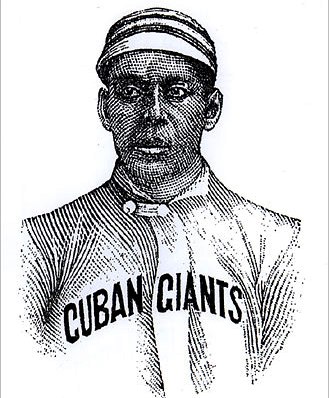
Frank Grant, Cuban Giants

Frank Grant, Cuban Giants


Bowers also pitched, played outfield, and captained the 1893 Yale club that won the eight-team “World’s Fair Intercollegiate Baseball Tournament,” which was organized, in part, by Bowers’ former teammate Stagg the University of Chicago’s football and baseball coach.   Yale was 4-1, including a 9 to 0 victory over Amherst in the championship game.  The Chicago Tribune said:

“After the game the Yale team was called into the grand stand and there presented with the magnificent cup given by the university Club to the winning team.  The presentation was made by Mayor (Carter) Harrison and at the close of his remarks the Yale University yell was given.”

After graduating from law school, Bowers appeared to be following in Stagg’s footsteps again, when he was hired to coach the baseball team at Oberlin College in Ohio.  After victories over the University of Illinois (13 to 1) and Michigan (17 to 3), The Associated Press said:

“Coach Bowers has done wonders for Oberlin’s batting and team work and the boys are making a fine record.”

Despite his success at Oberlin, Bowers did not return the following season, and just short of his 28th birthday signed his first professional contract—his career lasted just two games.

He started two games for the Hartford Bluebirds in the Connecticut State League, losing both and posting a 5.14 ERA; he gave up 32 hits in just 14 innings.  He appeared to have lost the “curves that would puzzle a professional to hit.”

After his release, Bowers was not out of work for long.

In August The Manchester Herald said Bowers “once the crack twirler of the Yale team,” had been appointed judge of the newly formed Manchester Connecticut Town Court.  With that, Bowers went on a different course than Stagg.  He was a judge and politician—he served two terms in the Connecticut General Assembly—until his death in Manchester on November 30, 1927.

“I Believe that a Pitcher of a Slow Ball could make Monkeys out of Opposing Batsmen”

21 May

After the success of William Arthur “Candy” Cummings’ decades-long campaign to be recognized as the inventor of the curveball—his claim was supported by influential voices like A.G. Spalding, Cap Anson,  and Tim Murnane—culminated with his 1908 “Baseball Magazine” article “How I Pitched the First Curve,” Cummings was often sought out by the press for his opinions on pitching.

Candy Cummings

Candy Cummings

In 1910, an article “By Arthur Cummings, Discoverer of the Curve,” appeared in several newspapers, including The Boston Post.  Cummings took current pitchers to task for throwing too hard:

“Speed, speed, speed seems to be the cry of the pitcher today.  The more steam a fellow has, the more valuable he appears in the eyes of the managers.  It’s only once or twice in a game that a twirler will let loose his slow ball, and then he doesn’t put a whole lot of faith in it.  Of course there are some exceptions, like Mathewson, but I am talking about the general run.  To my mind, the speed craze is an obsession and many a pitcher would meet with greater success if he’d only revert to the old style of pitching and try slow ones oftener.  Players and managers of today think that the only way to win a ballgame is to have a pitcher who can throw a ball with such force that it will go through a six-inch plank, and if the fellow hasn’t got that amount of speed he is no good.

“If some managers would go back to the old-time style of pitching and send men in the box who would serve up slow balls there wouldn’t be as much base running as there is now, but the ball would be batted more and there would be better exhibitions of fielding.  Players of today can’t hit a slow ball with any degree of safety, they having become used to the swift article.  That’s why I believe that a pitcher of a slow ball could make monkeys out of opposing batsmen.

“Of course, there is a difference in the national sport, as now exemplified, when you compare it with the game when I was in it some thirty years ago.  The pitcher’s box now is further away from the home plate than it was when I used to pitch.  At that time it was forty-five feet from the home plate; now it is more than sixty, and it takes some speed to get over the plate.  I don’t know as I could go in a pitcher’s box, such as it is used today, and get a ball over the home plate, but if they moved it up to forty-five feet I could get my slow overshoots over the pan and I’ll bet a cigar the batsman wouldn’t hit it; he’d hit at it, though, and swing for all he’s worth.

“But even though the plate is further back, the pitchers have the curve worked down to such a science that they can make their ‘floaters’ break more sharply than we old timers could, and consequently they would much more easily fool the hitters.  Once in a while a genuine slow ball pitcher pops up and gets along but little confidence is placed in him; his victories are attributed to luck, and he is not used very regularly.

“Fans laugh these days when a pitcher takes it into his head to serve up a slow ball, which scorers call a change of pace, and see a heavy hitter almost break his back trying to kill the ball.  When he misses, it pleases the bugs immensely, but let me tell you, that the slower a ball is the harder it is for the batsman to connect with.  The hitting column wouldn’t have as big averages as it does now, and a man who could bat for .300 would be a wonder indeed, if slow balls were used by pitchers.

“But it seems as if the day of the slow ball has gone by.  A scout will not sign a pitcher unless he has got something good in the way of speed or a peculiarly curving swift ball, like Harry Howell’s or Eddie Cicotte’s knuckle ball.  It seems as if when we old timers dropped out of the game and the present generations took it up where we left off, they thought they would introduce new features to the game, and selected speed as the proper thing.  Of course, the invention of the mask, protector and heavy mitts had something to do with slow pitching passing out of existence, but it was the ideas of the young pitchers more than anything else that developed the desire of captains and managers for pitchers with great speed.

Ed Cicotte's knuckleball grip

Eddie  Cicotte’s knuckleball grip

“Perhaps you notice that these pitchers of today who have such great speed and assortment of curves do not work very regularly.  Well, when I played ball I was in the box one day and in the field the next and in that way I kept my arm in good shape and my batting eye keen, just because I was at the game all the time.  I never used much speed; therefore my arm was in condition to work.  Perhaps some manager will come along yet and decide that there was better pitching in the old days and give a slabbist with a slow curve ball a chance to work in the box.

“When that day arrives the fans will see some fun, for the long-distance hitters will find it hard to connect with the ball very often.”

In 1921 Cummings, then 72-years-old was sitting in the press box of Ebbetts Field, a guest of The Brooklyn Eagle, for a game between the Dodgers and Philadelphia Phillies.  Cummings told The Eagle’s Sports Editor Abe Yager:

“I think I could out-guess   Babe Ruth if I were pitching right now.  I had to pitch against Dan Brouthers, Cap Anson and other sluggers of bygone fame and believe me it was some feat to fool them.  We did it often, but of course, they hit ‘em out just as often.  Ruth can be fooled by an outcurve, a high one in close or a drop the same as the sluggers of old, but of course, he will connect once in every three times by the law of averages.”

Franz Hosp

19 May

Franz Philip Hosp Jr. was born in Cincinnati in 1884 (some records, including cemetery documents and his grave say 1883).  His father was a well-known landscape architect and horticulturist who moved the family to Riverside, California in 1888.

The elder Hosp was responsible for many projects in the Southwest and Southern California; he is probably most famous for his landscaping of Victoria Avenue in Riverside, which remains a tourist attraction and is listed on the National Register of Historic Places, and for planting the gardens at the El Tovar Hotel in Grand Canyon National Park.

The family also ran a successful nursery in Oceanside, California  and Hosp worked with his father while playing baseball in the San Diego area.

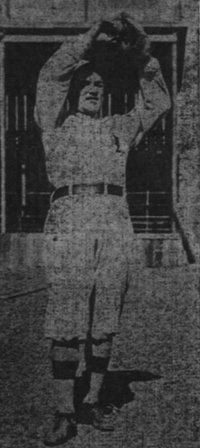
Franz Hosp

Franz Hosp, 1909

In December 1906 he pitched for the San Diego Pickwicks (sponsored by San Diego’s Pickwick Theater) of the California Winter League.  Hosp quickly caught the eye of West Coast professional teams; according to The Los Angeles Times he had a streak of thirty-one scoreless innings that winter and “fanned as many as eighteen men in a single game.”

The Los Angeles Herald said two teams, The Butte Miners and the Seattle Siwashes of the Northwestern League, had already “tried hard to secure his services,” when he pitched against the Los Angeles Angels of the Pacific Coast League (PCL) in a February exhibition game in San Diego.

The Associated Press said the game

 “(W)as the first time in which he allowed as many as seven hits, and after doing, he took a brace and fanned out an equal number of Los Angeles’ best artists, with the result being that the Angels’ manager (Henry ”Hen”  Berry) lost no time in annexing Hosp to his own aggregation.”

Hosp said he chose to play with Los Angeles so he could continue working at the family business in Oceanside.

The pitcher was a popular member of the Angels.  The Los Angeles Herald said:

“Pitcher Franz Hosp is not only one of the best twirlers in the coast league, but he is also one of the most genial boys who ever donned a baseball uniform.  Hosp has forgotten more baseball, young as he is, than many of the swell headed players who roar at decisions have ever learned.”

The Times said of Hosp, who also played second base and shortstop:

“His work in the field and at the bat is equal to his performance in the box making him one of the best all-around men in the business.”

Hosp was 12-7 with a 2.73 ERA for the PCL champion Angels in 1907; he also played 13 games in the infield, hitting just .105.

franzhosppix

Franz Hosp

The following season Hosp (22-14 2.02), William “Dolly” Gray (26-11, 2.12), and Walter “Judge” Nagle (24-10, 1.94) led the Angels to another league championship.  On July 26 he had the most embarrassing moment of his career during a game with the San Francisco Seals.  The San Francisco Chronicle said:

“Hosp of the Angels established a unique and startling record yesterday afternoon, one that bids to stand a long time in baseball circles.  Not only did he literally pitch the game away, but in one inning—the fourth—he walked six men and hit two more, forcing in five runs across the plate without a hit by the Seals.  Not a ball was hit out of the diamond.”

(Just more than a year later, August 28, 1909, Hosp’s former teammate Dolly Gray, now a 30-year-old rookie with the Washington Senators, set the major league record by walking eight Chicago White Sox batters in one inning).

Hosp was 16-14 in August of 1909 when he was signed by the Cincinnati Reds for 1910.  Within a week he hurt his arm and did not pitch again for the remainder of the season.

By the spring of 1910 there were conflicting reports about the condition of Hosp’s arm.

The Times reported that according to Angels pitcher Andy Briswalter:

“Franz Hosp, whose clever pitching resulted in his purchase by the Cincinnati Reds, may never play ball again.”

The Herald said Hosp:

“(D)enied with considerable indignation the story purporting to be an interview with Andy Briswalter.  According to this story, Hosp’s arm was said to be in such condition that he might never play ball again.  While Hosp was overworked last season, when his sensational work with the Seraphs resulted in his being purchased by the Cincinnati Reds, he stated that he never felt better and that the rest of the past winter overcame any inconvenience or ill effects.  Hosp says he hasn’t seen Briswalter in six months.”

Hosp joined the Reds in Hot Springs, Arkansas, and was first tried in the outfield.  The Cincinnati Enquirer said after his debut:

(Ward) Miller and (George “Dode”) Paskert will have a dangerous rival for the right field job in the person of Franz Hosp, the recruit from the coast, who was signed as a pitcher but will try out as a fielder…He is a right-hand hitter, a good-sized, well-built fellow, and meets the ball square on the nose.  He came to bat five times; made a double and two clean singles…He showed a lot of speed on the bases and appears to be a kid who will bear watching.”

When finally given a chance to pitch, against the Boston Red Sox on March 25, after two scoreless innings, he gave up four singles and doubles to Harry Lord and Tris Speaker, in the third, resulting in three runs and was lifted for a pinch hitter the following inning.

Hosp was also tried in the infield where he “has made a fine impression.”  But it wasn’t enough to stick with the Reds.

The Herald reported in early May:

“Franz Hosp, one of the best pitchers who ever worked in the Coast League and who was released to Los Angeles by Cincinnati almost ten days ago because his pitching arm is kafluey for a time is warming up with the Angels every day and Hen Berry thinks he will get back into pitching form again soon.  He is a crack infielder too, and a heavy sticker, so it is dollars to cents that he will not be idle long.”

Hosp made his mound debut for the Angels on May 20; he pitched a complete game, losing 5 to 3.  The Herald said:

“Hosp showed excellent form for a pitcher who has been out of the game as long as he, and with a weak and sore arm, and he should be able get back to his best form with a little patience and careful slab work until his arm is ripe again.”

The paper was wrong, the extent of Hosp’s activity as a pitcher after that game was four innings in three games over the next year and a half.

Hosp was released by the Angels on June 15, along with Briswalter, who The Times claimed four months earlier had said  Hosp’s arm was shot; Briswalter had not recovered from a hip injury sustained during the 1909 season, he developed Tuberculosis of the injured bone and died in 1912.

Andy Briswalter

Andy Briswalter


Hosp continued to play for a decade.

Within weeks he was signed to play shortstop for the Vernon Tigers.   He hit just .240 for the Tigers, but The (Portland) Oregonian called him “a nifty fielder.”

Hosp became the team’s regular shortstop, through their move to Venice, California.  He hit .261 in 1911, and 1912, .255 in 1913, and then slipped to .208 in 1914.  He was released before the 1915 season and played for the Wichita Witches in the Western League.  He returned briefly to the PCL at the end of 1915, but was released by the Oakland Oaks prior to the 1916 season.  He returned to the PCL in 1918, playing for four teams over the next three seasons, ending his career after 56 games with the Salt Lake City Gulls in 1920.

Hosp returned to Southern California where he played and managed for semi-pro and industrial league teams and lived in Los Angeles.

On June 30, 1928 he was killed in a car accident on Coast Highway (US 101) 16 miles north of Oceanside.