Escorted to the Canadian Border

31 Jul

John Morris “Moose” Baxter made it into six games for the 1907 St. Louis Cardinals hitting .190.  Baxter was born in Chippewa Falls, WI and played throughout the Midwest and Western US before his April ’07 cup of coffee with the Cardinals; he seems to have spent parts of each season between 1903 and 1906 playing independent ball in Canada—he appears on the rosters of independent teams in Calgary, Wetaskiwin and Banff during that period.

Many ballplayers of his era lived on the edges of the law, but Moose had the distinction of being escorted to the border of Canada and asked not to return.  Moose’s troubles began in 1908 while playing Montgomery in the Southern Association.  Baxter was unexpectedly released in June and Montgomery manager Jimmy Ryan said the move was “(F)or the good of the team.”  Within weeks, the newspapers in Southern Association cities reported that Moose was released for betting against his team.  He finished the season in New Orleans.
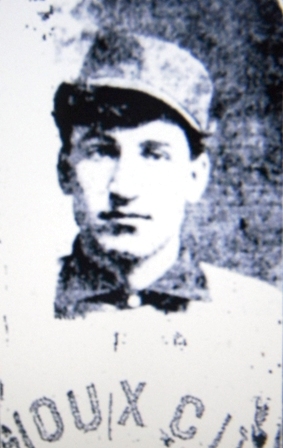
Moose Baxter Sioux City 1902

Moose played parts of two more seasons in the New York State and Western Canada Leagues but spent most of those two seasons playing independent ball in the Northwest United States and Canada.

Sometime in 1910 Moose ended up in Calgary, Alberta, Canada where he quickly made a name for himself and was described by the local papers as “The boss of the Tenderloin District.”  Moose ran Turkish baths and sold liquor in several establishments without bothering to get a license.  His brother Henry, who pitched for Edmonton in 1911 and also played independent ball in the Northwest, was his partner in the business.  After several run- ins with the law both brothers were arrested late in 1911, Moose was sentenced to six months in prison at Lethbridge, Alberta.

According to newspapers in Canada and Washington, upon his release Moose Baxter was given a week to sell off his considerable property in Calgary; and “Immediately placed in charge of Immigration Agent A.E. Humphries to be taken to the boundary line and given his freedom.”

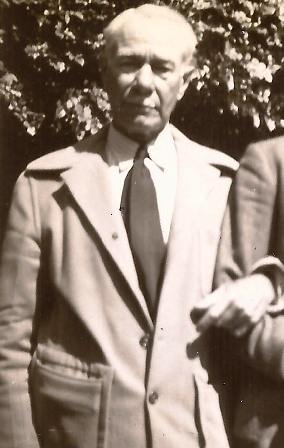
After returning to the Northwest in 1912, Baxter split his time between Spokane, Washington and Portland, Oregon, appearing in city directories for both towns.  He died August 7, 1926, in Portland and was buried at Greenwood Memorial Terrace in Spokane.
Baseball’s First Chinese Player

30 Jul

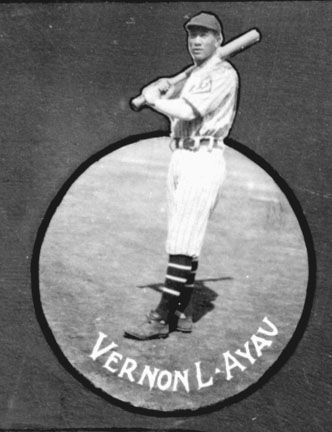
Vernon L. Ayau’s professional career lasted less than half of one season, but in the process, he became the first Chinese player in professional baseball and his signing nearly broke up a league.

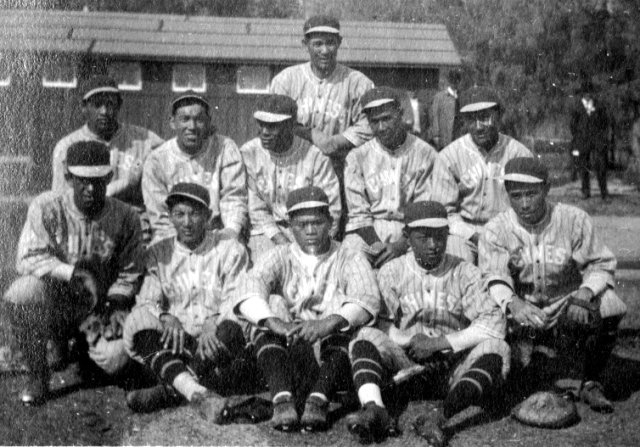
Ayau, born January 31, 1894, in Maui, Hawaii, played on the Chinese University of Hawaii team that toured the US in 1913, 14 and 15.  He was said to have caught the eye many in professional baseball including New York Giants manager John McGraw.

Chinese University Team

Ayau was described as a slick fielding shortstop with an excellent arm, but a weak hitter.  In December of 1916, he was offered a contract by Bill Leard, manager of the Seattle Giants in the Northwestern League.  Leard played against Ayau when he went to Hawaii after the 1916 season with an all-star team put together by former Northwestern and Pacific Coast League player Charles “Cy” Swain.

Within weeks, Northwest League players passed a petition expressing their displeasure with the signing, and newspapers in league cities came out strongly against Ayau.

Anti-Chinese sentiment was especially strong in areas where Chinese workers were being hired as miners, and mining unions in Butte and Great Falls (two league cities) threatened to “take action to have (Ayau) removed from the league.”  Shortly before the signing, a Chinese mine worker had been dropped from a bridge into the Missouri River by members of the miners union.

Leard received death threats but along with Seattle’s ownership held his ground and Ayau was on Seattle’s opening day roster.

His time with Seattle only lasted until May 20 when Leard announced his release.  Despite the early threats of boycotts and other action, he was actually signed and released by Tacoma and later Vancouver in the Northwest League over the next six weeks.

By July 1917, Ayau’s career in professional baseball was over.  He hit only .203 in 133 at bats with the three teams.  Contemporary news reports noted his weak hitting but universally praised his glove and arm.  That month he joined a semi-pro team in Wildwood, NJ that also included his former Chinese University teammate Lee Tin.

After serving in the US Army as a member of the infantry in France, Ayau returned to New Jersey where he continued to play semi-pro ball for several years.

He died in Penns Grove, New Jersey on March 28, 1976.

Filling in the Blanks–Felts

27 Jul

A semi-regular feature providing more biographical information for a player who lacks a complete profile on Baseball Reference.

For the 1927 Hattiesburg and Meridian Mississippi teams in the Cotton States League, Baseball Reference lists a player simply as “Felts” as playing for both teams.

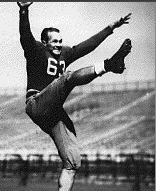
Every college football fan in America in 1931 knew that the Felts who played in the Cotton States League was All-American Tulane Fullback Nollie C. “Papa” Felts.  That time in the Cotton States ended his collegiate career.

Felts was in the midst of his 2nd career in college football in 1931.  Born February 7, 1905, he had captained the Southern Mississippi football team in 1923, also lettering in baseball and basketball.  Felts left Southern Mississippi to become a teacher and raise a family, and took time out in the summer of 1927 to play 20 games in the Cotton States League.

Nollie Felts

In 1930 Tulane offered Felts a scholarship to play football and attend medical school.  Felts became captain and earned All-American honors in 1931 leading Tulane to an 11-0 record in the regular season and losing 21-12 to National Champions USC in the Rose Bowl.

 Felts’ football career ended the next season.  He was forced to miss the Green Wave’s first game of 1932 with Texas A&M when the Southern Conference ruled him ineligible because of his 20 game career in professional baseball.  Felts claimed he had not been paid by either Hattiesburg or Meridian, an assertion that was confirmed by team and Cotton States League officials, and appealed the decision. The Southern Conference executive committee unanimously rejected Felts’ appeal and he was declared permanently ineligible.

Without Felts Tulane finished the 1932 season 6-2-1, including their first loss since 1926 to in state rival LSU.

Felts turned down several offers to play professional football, opting to finish medical school. He practiced medicine in Hattiesburg, Mississippi until death on November 1, 1974.

Abe Lincoln and Baseball

26 Jul

As detractors denounced baseball in the 19th century for drunkenness, gambling, and bad behavior, there were numerous attempts to link the game to Abraham Lincoln. The many stories linking the martyred President to baseball helped contribute to its acceptance and popularity.

The connections were more invention than fact.  There is no supporting evidence for A.G. Spalding’s story in his 1911 book “America’s National Game that Lincoln was informed of his nomination in 1860 while playing baseball in Springfield, Illinois.  Stories that Lincoln mentioned baseball on his death bed; as well as the 1914 claim by Rachel Billington, an alleged former neighbor of Lincoln that he played baseball regularly and “Could hit the ball every time it was pitched to him” have been thoroughly discredited.

It was a scandal involving a minor league player that became Lincoln’s closest link to the national pastime.

By all accounts Warren Wallace Beckwith led an interesting life.  Born in Mount Pleasant, Iowa in 1874, his father was a wealthy railroad executive and Beckwith was said to have inherited a fortune upon his father’s death in 1905..  He played college football at Iowa Wesleyan and played baseball and football professionally, and served in the Spanish-American War and World War I.

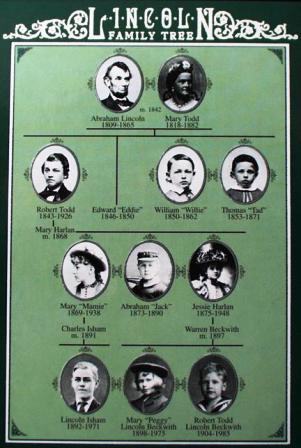
His life got more interesting in 1897 when he became front page news in every paper in the country.  Beckwith had eloped with Jesse Lincoln, granddaughter of the late President.  Her father Robert Todd Lincoln, former Secretary of War, was quoted calling Beckwith a “Baseball Buffoon.”

The Beckwith-Lincoln marriage played out like a soap opera in the newspapers for the next decade.

Beckwith spent most of 1897 playing in the Texas League with Dallas, Paris and Denison/Sherman/Waco teams.  The New York Times reported that Beckwith’s nicknames in Texas were “The Dude” and “Lady Killer,” and that “He would never go into a game to pitch without first combing or brushing his hair faultlessly.”

Warren Wallace Beckwith

Beckwith made headlines again when he entered the service as war was declared with Spain. When he returned from Cuba and after the birth of the couple’s first child, a daughter, he joined Sacramento in the California League, which resulted in another round of stories about Robert Todd Lincoln’s disapproval of his son-in-law’s profession.

According to contemporary news reports neither Robert Todd Lincoln nor his wife, Mary Eunice Harlan Lincoln, daughter of former Iowa Senator James Harlan, ever accepted the marriage.

Lincoln Family Tree

News stories announcing the couple’s divorce in 1900 turned out to be incorrect and they had a second child, Robert Todd Lincoln Beckwith, who upon his death in 1985 was the final direct descendent of President Lincoln.  Beckwith and Lincoln did divorce in 1907.

Beckwith never played professionally after 1899, but played extensively on semi-professional teams in Illinois and Iowa.  Beckwith’s final appearance in organized ball was as the manager of Oshkosh in the Wisconsin State League for part of the 1905 season.

After serving in France in World War I Beckwith settled in La Jolla, California.  He died in La Jolla in 1955 and is buried at the Forest Home Cemetery in Mount Pleasant.

Heroes, Villains, Oddities and Minutia—Forgotten Baseball

26 Jul

In the days before electronic media the players who toiled in hundreds of small and medium sized towns across North America were heroes, idols and sometimes villains; and they were household names.  While organizations like SABR have provided reams of research on professional baseball, so many of those household names, and the teams and the leagues in which they played, have been lost in the mist of time.

This Blog will attempt to fill in some of those gaps; to relate their stories, resurrect their names and return them to their place in the rich history of America’s game.