Wagner’s Glove

30 Apr

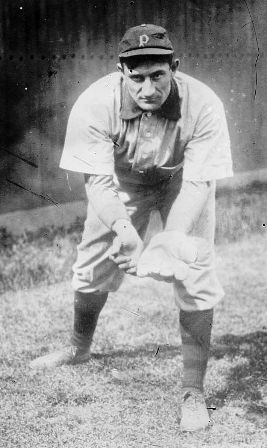
A Newspaper Enterprise Association syndicated article in 1920 told the story of the glove Honus Wagner refused to replace:

“Many another would be ashamed of it, but not the only Honus Wagner. Wagner would not part with it for love or money. There is a history to the glove.”

wagnerpix

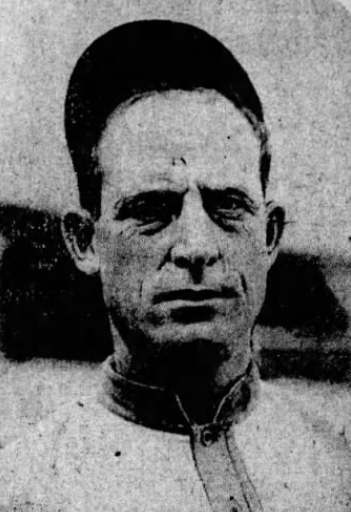
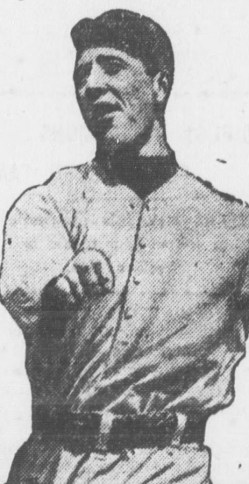
Honus Wagner

Wagner could not recall exactly when he received the glove, but guessed it was 1902:

“Honus knows that Herman Long, once the greatest of all shortstops, then playing with the Boston team, gave him the glove. It is a fact that Long always used a glove with a big hole in the center of it. He would buy a new glove and at once cut it to pieces, leaving an open spot in the center about twice the size of a baseball.”

Eight years later:

“The glove is now a worn-out relic, but Hans hangs onto it like grim death. He figures it would be the worst luck in the world for him to lose it.

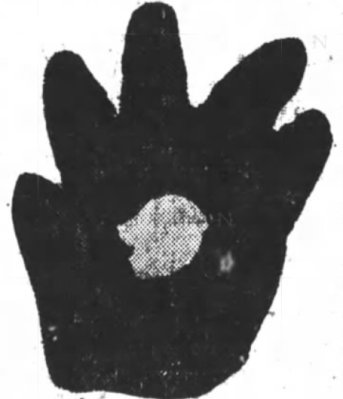
“Fans have time and again watched Wagner take that glove off his big left hand and throw it down towards third base. And they can always see the hole in it, for it is too big not to be noticed.”

wagnergllove

Wagner’s glove

Wagner was often asked about replacing the glove:

“(H)e will only say that he has no money to pay for one. But back of that there is the one fact that remains always prominent—Wagner is just as superstitious or sentimental as any other ballplayer, and he has always felt that the Herman Long glove has brought him luck. That’s why he hangs on to it, It is worn to a frazzle. There is nothing to it but the bare edges. The center is all worn away, and Wagner grabs those hard line drives really with the bare hand.”

“It was for Blood and not for Averages”

29 Apr

Pongo Joe Cantillon said in 1914:

“Let any baseball man of the country of the present day type pick out a ball club from players who have come up in the last fifteen years and I will pick one from the old school and presume that they play under present day rules. Then we can leave it to the judgement of the people who have watched baseball for the past twenty-five years and I believe the players of today will find that they are not in a class with the old school performers.”

pongo

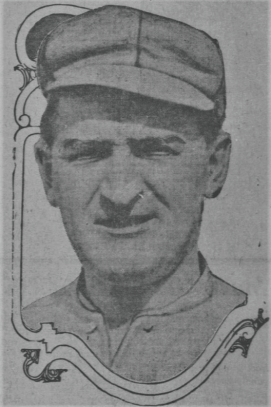
Joe Cantillon

Cantillon, manager and part owner of the Minneapolis Millers of the American Association was speaking to Billy Murphy the sports editor of The St. Louis Star:

“There are a great many arguments over old and new baseball between the players of today and the few of us that are left from the old school. As a member of both classes, I make the assertion, flatly, that baseball has not advanced in recent years from the brainy or playing standpoint.

“I have been in a baseball uniform every playing day since 1881, and during that time have seen many stars come and go. Some came with brilliant radiance and dies away as quickly as they came. Others came slowly but developed into some of the greatest stars the game has ever known.”

Cantillon said the players of the previous century were better in every aspect:

“The players of twenty-five years ago were just as nervy, just as fast, and just as brainy as they are today. They were better fighters and had far more interest in their play than the athletes of today. Formerly one never saw the members of the teams that were to play a series standing around together chattering and laughing and visiting before the game started. Every player in those days hated every man on the club to be played that day, and when the two captains came together to consult with the umpire it was like two bull terriers turned loose from the benches, and once the game started it was for blood and not for averages.”

pongo

Pongo Joe

Pongo Joe compared the behavior of the behavior of contemporary players to the over-solicitousness displayed by two characters in the then popular comic strip:

“There was little consolation in those days for the player that had four hits if the club lost. There was not so much of the Gaston and Alphonse stuff in the olden times. There wasn’t so much of this ‘excuse me, dear fellow’ business. The old school of infielders made the base runners turn each base at a disadvantage by standing on the inside corners of the bags, and there no apology if by ‘accident’ they got in a fellow player’s way.”

There was, he said, “not one trick” in the current game that “was not pulled off” in the previous century, and the exception Cantillon would concede, he did not approve of:

“I will admit that the new school has brought the squeeze play into the game. I will also admit that it is the rottenest play in baseball when it fails.Furthermore, it is an admission from the player who makes it on his own accord that he cannot hit and when the manager asks for it he shows that he has lost confidence in the hitting of the player asked to squeeze.”

In fact, he concluded, current players offered little:

“I cannot recall a single player who in the last ten years has introduced anything new in the line of playing or has offered any new suggestion that would really improve the game from a playing or a rule making standpoint.”

Ticket Scalping Tricks, 1897

28 Apr

The Beaneaters were just a half game ahead of the Orioles when they began a three game series in Baltimore on September 24 1897; Boston took two out three games and left town up a game and a half with just three to play, and held on to win the pennant.

Boston won the first and third games by scores of 6 to 4 and 19 to 10; the Orioles won the second game 6 to 3; The Baltimore Sun said:

“It has been a fair and square fight, and they have lost to the Bostons, not through luck, but because they have been outplayed. If Captain (Hugh) Duffy’s men win the pennant they will have won it fairly, squarely, and deservedly, and Baltimore will congratulate them on their great achievement in beating her own great Orioles.”

Hughie Jennings told The Baltimore American:

hughiejennings

Hughie Jennings

“A few more games like those with Boston in the last series at Baltimore would drive me to an asylum.”

The Sun said there was so much interest in the series that:

“Never perhaps in the history of baseball was there such a vast amount of telegraphic matter sent out from Union Park (during the first game of the series) Fifteen skilled operators were required to send off the great mass of written matter.”

Both The American and The Sun estimated that nearly 65,000 fans attended the series, which made it a boon to the local ticket scalpers, who had to think creatively

The Chicago Inter Ocean said:

“The Baltimore ticket scalpers played a very neat trick at the downtown headquarters, where tickets were on sale during the closing series between the Bostons and Orioles. While a long line of purchasers were in line at the counter, half a dozen fashionably dressed ladies came in and the crowd courteously gave way to them. It was later learned that the women were in the employ of speculators.”

Things I Learned on the way to Looking up Other Things: Ed Delahanty

27 Apr

Post Death Sighting

When Ed Delahanty died, Like Elvis and other icons, there were of course those who claimed to see him alive. The most publicized example involved a sighting at an establishment owned by two other players. The Associated Press reported:

“A traveling man named O’Brien, who is well acquainted with Edward Delehanty [sic], the famous Washington fielder whose body was said to be taken from the river at Buffalo, claims to have seen Delehanty about George (Nig) Cuppy and Lou Creiger’s [sic, Criger] cigar store at Elkhart, Indiana yesterday. O’Brien approached the man he is positive was Delehanty, but the latter conducted himself as if he did not want to be known. O’Brien heard of Delehanty’s reported suicide, and for that reason paid particular attention to the individual.”

delahanty

Delahanty

Delahanty’s “Mascot”

After Delahanty’s death, The New York Herald said Delahanty had a “mascot” who helped him make money at the racetrack:

“Felix Carr, the old-time negro jockey and trainer for (prominent thoroughbred breeder and owner) Barney Schreiber, was responsible for Delahanty’s success on the racetrack and during the winters of 1900 and 1901 the great batsman made as high as $10,000 a season playing the horses at the winter meetings. Felix Carr supplied him with all the stable information at his command and it was on Schreiber’s two-year-olds that Delahanty made his biggest killings.”

Carr was “in Delahanty’s company at the Commercial Hotel,” (now the Hotel Monteleone) in New Orleans “the night before he was killed.”

The paper said Carr, with $2500 in his pocket, left the hotel, disappeared and was later found “in the Bayou St. John, a stream that passes very close to the Fair Grounds racetrack at the Crescent City.” The Herald called it “a strange coincidence” that Carr and Delahanty met “death in the water.”

Delahanty was said to be “continually worrying” that his friend’s assailants were not captured and that “With Carr’s demise” so went Delahanty’s success betting on horses.

The story was correct that Delahanty’s “mascot” disappeared with $2500, but wrong that his body was found.

Carr went missing in March of 1902, but just three months after Delahanty’s death, the former jockey was located in Havana; the $2500 he disappeared with had belonged to his boss.

The Chicago Daily News said Schreiber was so happy to have found out that Carr was still alive, “he will not prosecute him, but will, on the contrary, give him a life position,” to continue training horses at Schreiber’s Missouri farm.

Delahanty’s signing

Two weeks after Delahanty’s body was discovered, The Louisville Courier Journal told the story of how he signed his first major league contract in 1888:

del

Delahanty

“(Charlie) Bastian, who was one of the best fielders in the business, was a weak batsman, and it was decided to secure a good sticker for second base.”

The club sent a James H. Randall to Wheeling, West Virginia to secure Delahanty’s release.

Randall was once described by The Philadelphia Inquirer as:

“Detective James H. Randall…known as an expert in base ball cases and has heretofore been in the employ of the League. He signed (Kid) Gleason, (Pop) Schriver, (Jack) Clements, and (Joe) Mulvey for the Philadelphia club.”

Randall was also said by The Inquirer to have been employed by the Players League in 1890 to help induce talent to jump to the Brotherhood, He also managed some Pennsylvania based minor league clubs in the early 1890s.

“When Randall arrived in Wheeling, he found William McGonigle [sic, McGunnigle], manager of the Brooklyn club and Billy Barnie of the Baltimore club, both of whom were there for the purchase of players, and Delehanty [sic] in particular.”

Randall was able to outmaneuver the competition and “purchased Delahanty’s release,” for $1800.

“He had been told not to pay over $1000 but was so impressed with what he learned about the player that when the other people bid, he raised the amount.”

The Wheeling club was playing a series in Kalamazoo, Michigan, and Randall headed there to sign Delahanty. When he arrived, Al Buckenberger, the Wheeling manager:

“(H)ad not been consulted about the sale and was very indignant when he was informed that Delehanty had been sold. He was also very anxious to beat Kalamazoo in the series, so Randall allowed Delehanty to play two games at Kalamazoo before he signed him.”

Randall said at the close of the series he met with Delahanty at the team’s hotel in Kalamazoo:

“I asked him how he’d like to play in the big league. He said: ‘All right, but I can’t get away.’ When asked how much he salary he would want in case he could get away, he replied that he ought to have about $225 per month to start with.”

Randall said he signed Delahanty for $250 a month and the two left for Chicago where Delahanty made his major league debut on May 22.

“If the Other Fellow got cut you were Glad”

24 Apr

The Detroit News recorded an off season “fanning bee” between Browns manager Jimmy McAleer and Tigers manager Hughie Jennings in 1907:

“’Those were the days when we really hated each other, said Jimmy. ‘Weren’t they Hughie? There was no sitting on the home bench when you went into a town, and there was no handshaking. If the other fellow got cut you were glad, and if you got cut you vowed vengeance. They kind of thought more about winning and less about pay then, didn’t they? Seems that way anyway.’”

mcaleer

Jimmy McAleer

McAleer then moved on to Jennings’ days with the Baltimore Orioles in the 1890s:

“I can remember you fellows to this day coming into the park. And what the crowd used to call you, Chesty? Why, there never lived a crowd more swelled on themselves; you and (John) McGraw and (Willie) Keeler and that bunch. We would give our eye teeth to give you a beating and take the enthusiasm out of you.”

Back to how the game had changed, McAleer talked about Jesse Burkett’s reaction when he joined the Browns after 12 seasons in the National League:

“He sat on the bench beside me. Suddenly he began growling and kicking the dirt.

‘”What in the thunder’s the matter with you?’ I asked

“’Look at ‘um, look at ‘um, he kept saying, ‘handshaking league. Handshaking, look at ‘um.

“He was wild with rage because some of the boys were shaking hands with the visitors.”

Jennings never said a word.

“Did you Ever Hear of a Captain Fining a Manager?”

23 Apr

In 1896, “Scrappy” Bill Joyce, the captain of the Washington Senators, asked a reporter for The Pittsburgh Press:

“Did you ever hear of a captain fining a manager? That’s what I did.”

scrappy

Scrappy Bill Joyce

Joyce said he did this in 1889 when he was the captain of the Houston Mud Cats in the Texas League:

“(W)e went to Galveston to play an important series of games that was to decide which team would head the race for the championship. As the Houstons and Galvestons were hot rivals, these games were important. Johnnie McCloskey, who afterward managed the Louisville team, was my manager. Johnnie was mashed on his ability as a fielder, though no one else was enamored of his fielding, and an X-ray wouldn’t discover any medals on him as a ballplayer, yet he was a good manager.”

Joyce said McCloskey wanted “to show his friends in Galveston what he could do” and insisted on being in the lineup.

mccloskey

John McCloskey

“I tickled his pride by placing my regular right fielder on the bench and putting McCloskey in his place. The umpire announced before the game that Mr. McCloskey, the genial and brilliant manager of the Houston team, in deference to the wishes of his legion of friends in Galveston would play right field on this particular occasion. Johnnie acknowledged receipt of the friendship and esteem of his Galveston admirers by dropping two flies in the first inning that let in four runs.”

Joyce said, “he ordered him out of the game,” but McCloskey refused:

“But what I said went, and I not only removed him, but fined him $20 for insulting me, his captain. As manager of the team, he fined me $50 for disobeying his orders. I raised his fine to $100, and he pushed mine up to $200.

“We won the game, and the owners of the club decided to remit both fines. I have never discovered to this day who was the authority in a case like this, but it strikes me that a manager who thinks he can play ball and can’t, ought to be fined.”

Houston won the league championship

“He was Neither Lucky, Dumb, nor Awkward”

22 Apr

On the occasion of the sale of the land which once stood “the old major league ball grounds at Broadway and Twenty-Eight Street,” in Louisville, James Jerpe of The Pittsburgh Gazette-Times reminisced and Fred Clarke bringing “the foundation of those habitual tail-enders to Pittsburgh.”

Jerpe said:

“Louisville is proud of Fred Clarke-maybe prouder than Pittsburgh or Winfield, Kansas, or Madison County, Iowa, where he was born. It was in Louisville that he won his spurs as a player and showed the qualifications that made him a great leader.”

He said future Louisville residents of the homes built on the ballpark site, “may point with pride to the fact that on their home sites great men like Clarke and Honus Wagner reached their prime.”

clarke

Clarke

Twenty-one-year-old Clarke joined Louisville in June of 1894:

“They called him the freshest busher of the period. He had cost Barney Dreyfuss the munificent sum of $100. With him the little recruit brought a little red bat that was the butt of derisive jokes from veteran players.”

Jerpe said Clarke’s “little red bat” caught the attention of the opponents when he made his debut in a game with Philadelphia:

“’Why, kid, these pitchers will knock that toothpick out of your hands,’ exclaimed Billy Hamilton.”

Years later, Jerpe said Hamilton told Clarke:

“Do you remember how you got four hits in that game and then topped it off with a home run that made me run like mad to the clubhouse?”

Clarke—still so unfamiliar that The Louisville Courier Journal left the “e” off his last name—had five hits in his debut, but did not hit a home run as Hamilton recalled; he had four singles and a triple off Gus Weyhing, but the Colonels lost 13 to 6.

Three years later, Clarke, just 24, became manager of the Colonels; he told Jerpe about the wire he received from club president Harry Pulliam in June of 1897 informing him of the move:

“I didn’t know what to make of that telegram. I thought some of the other players had faked up a message to kid me. You know they always roasted me about being fresh and I thought that they wanted to get my goat. But I talked with several of them and found out that the message was on the level. A fellow named Rodgers [sic, Jim Rogers] had been acting in the capacity of manager. He advised me to accept the job. I was younger than any of the men playing regularly on the Pittsburgh club today, and I couldn’t hardly realize that Pulliam had picked me for a boss job.”

Jerpe said the Colonels under Clarke were “a rough and ready crowd,” and Clarke himself was “a tough nut.”

Clarke told him in 1912:

“You know they had the outfielders pegged as bad men, reckless base runners, vicious spikers and so on. But we were not as bad as they tried to paint us. Managers had a fashion of expecting the outfielders to run bases that way and to intimidate the infielders for the opposition. If one of their men spiked or bumped into one of our men the order always went out to get back at them. Of course, an outfielder was picked to bump the offending player on the other team because the outfielder covered no bases and therefore there would be no chance for them to come back at us again. If the third baseman on the opposing team blocked or bumped our shortstop the manager very promptly tipped his outfielders to get back at the third baseman.”

In 1912, Clarke also told Jerpe about the first time Honus Wagner worked out with his team; less than a month after Clarke became manager in 1897:

wagner1897

Wagner 1897

“We called him the luckiest, dumbest, and most awkward Dutchman we ever saw, but we later learned how badly mistaken we were. He was neither lucky, dumb, nor awkward.

“He played in most every position during his first few days at practice. I was one of the loudest shouters about his blind luck and awkwardness. The way he broke down his hits, fielded anything hit above him or around him and the way he handled himself in general had us all guessing. He stood awkwardly at the bat but hit like a fiend. He ran bases, it seemed, very awkwardly, but he got there. After watching him about two weeks I turned toward a fellow named O’Brien and said, ‘That Dutchman isn’t lucky. He is a wonder. He knows what he is doing, and he can do it better than any of us. I want to take it all back.’”

Wagner, Clarke said, fifteen years after his debut:

“(H)as never changed. He is playing ball the same way he played it during his first week with Louisville. He didn’t seem any more awkward then than he does now. So you fellows might take from this that it is not always the best policy to figure that your first impression of a young ball player is correct. It takes a couple weeks sometimes to see a real good man and often it takes much longer.”

Things I Learned on the way to Looking up Other Things #41

21 Apr

King Kelly, ‘Conceited Ass,’ 1891

When King Kelly Jumped from the Boston Reds to the Boston Beaneaters in 1891, The Baltimore World was not pleased:

kelly

King Kelly

“Kelly, in his jump from the Association to the League, has but proven conclusively that he is just as contemptible as the people had about decided him to be. He may be a great ballplayer, but his record this season doesn’t show it. He is a loud-mouthed, conceited ass. That’s about the build of Kelly, and the Association will not die over the loss of him.”

Annoying Vendors, 1891

After spending five seasons in the major leagues from 1881 to 1885, Dasher Troy was a fixture at the Polo Grounds—he had a liquor concession on and off from 1891 through 1900. During his first season at the ballpark, The New York Sun did not approve:

dashertroypix

Dasher Troy

“The refreshment privilege at the Polo Grounds is held by John Troy, an ex-ballplayer. He maintains a bar under the grandstand and also one in the rear of the men’s stand. The only part of the grounds in which waiters are permitted to peddle beer is on the bleachers. Some weeks ago one of the directors of the club compelled Troy to close the bar in the men’s stand and cease peddling beer in the bleachers.

“By some means he managed to resume and is now working in full blast. In the covered stands, a score of sandwich, peanut, and soft drink men are constantly at work, and annoying spectators by their continuous bawling. It is strongly asserted that the management can not afford to maintain these nuisances to the annoyance of its patrons.”

Clarkson’s Scouting Report, 1887

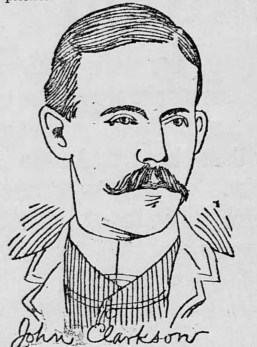
A reporter for The Detroit Free Press briefly eavesdropped on John Clarkson providing fellow pitcher Mark Baldwin with a scouting report on the Wolverines while the White Stockings were in Detroit for three game series in July of 1887:

clarkson

“Clarkson was overheard giving Baldwin some private lessons: ‘Now,’ said Clarkson, ‘there’s Hardy Richardson. Just send ‘em shoulder high at the outside corner of the plate, or a little beyond, and he’ll go after ‘em every time.’ Baldwin made a careful note of this. ‘Then there’s Dan Brouthers,’ continued the craft instructor: ‘Never give him a low ball.’ ‘Will he hit a low one?’ inquired Baldwin. ‘Will he hit it?’ said Clarkson: he’ll kill it.’

“This way of foreshadowing the fate of a regulation league ball unwisely delivered to the bat seemed to impress Baldwin powerfully, and he then and there resolved never to give big Dan any low ones. At this point the teacher and his pupil carried on the lesson in softer tomes, and the remainder of the interesting kindergarten session was lost to the world.”

Borrowed Uniforms

20 Apr

Ernest Lanigan, writing in The Cleveland Leader in 1918 said:

“One way a team could be assured a victory in every stop on a trip, would be to lose its uniforms.”

Lanigan said it happened twice in the last four seasons:

“Last season, on their way East, the Saint Louis Cardinals lost their baggage and had to meet the Superbas in clothing for which Charles Hercules Ebbets had paid. The result was a 9 to 2 victory for Jack (manager Jack) Hendrick’s team.”

The Brooklyn Citizen described the June 1, 1918 game:

“The schedule called for a game between the Saint Louis Cardinals and the Robins. But if the fans were just going by the uniforms the players wore, then it was a combat between the HOME and the TRAVELING uniforms of the Brooklyn Baseball Club, for the Cardinals were arrayed in the traveling unies of the Robins.”

Fourteen trunks belonging to the Cardinals failed to make it from Pittsburgh with the team.  The paper said the Cardinals did have to purchase shoes for the team from a local store:

“(Hendricks) had to order 15 pairs of new ones, which will set the club back $210.”

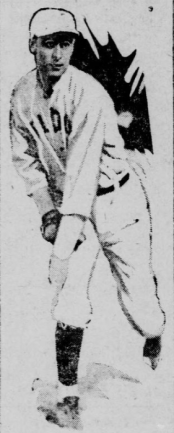
In a borrowed uniform and in new shoes, Red Ames allowed 10 hits, but just two runs, and the Cardinals chased Rube Marquard in the fifth inning—scoring six runs off the Brooklyn starter.

redames

Red Ames

Lanigan said the previous time a team played in their opponents’ uniforms was 1915:

“The Saint Louis Browns reached Detroit minus uniforms and attired in Tiger togs they defeated the Junglemen, 1 to 0.”

Edward A. Batchelor of The Detroit Free Press said of the June 20th game:

“You see it was this way. The St. Louis club’s baggage went astray somewhere between Boston and Detroit and when the Browns arrived, they possessed nothing in the way of baseball equipment except the usual number of arms and legs. Some of them had heads, though this is not considered a requisite in big league ball anymore. They didn’t even have a manager, as Branch Rickey refused to come along. He won’t even look at Sunday ball.

“With true hospitality the Tigers took pity on the forlorn crew and outfitted them completely in the Detroit Road uniforms. They also loaned them gloves and shoes and otherwise contributed to their comfort and convenience.”

Dressed in Detroit uniforms, Batchelor said the Browns “forgot they are tail-enders and imagined they were really the Jungaleers.”

Carl Weilman pitched a four-hit shutout for the seventh place Browns.

weilman

Carl Weilman

Lanigan said one had to go back to 1912 to find a team losing in borrowed uniforms:

“A game which a visiting team did not win when it was compelled to play in the home club’s regalia because of the non-arrival of its baggage took place at the hilltop, in New York on August 12 [sic, August 13]. The Tigers and their baggage parted company in Syracuse and Jennings’ men played in the Yanks’ road uniforms, being beaten 3 to 2.”

Batchelor said in The Free Press:

“A most peculiar combination of circumstances thwarted the well laid plans of Hughie Jennings and kept the fiery siren dumb on the bench in civilian clothes. Detroit’s baggage was misplaced somewhere in Syracuse where an exhibition game was played yesterday. Only the artful hospitality of manager (Harry) Wolverton saved the Jungaleers from forfeit. Wolverton lent the visitors his road uniforms. But had no shoes of guaranteed fit.

“Consequently, the entire invading squad had to go out and purchase new kicks. Winning ballgames in unbroken brogans is no nice business.”

wolverton

Harry Wolverton

Batchelor said the bats loaned to the Tigers were “so full of holes that Jennings’ heavy artillery were able to collect a measly bundle of three hits”

The Tigers scored two runs in the first inning of New York starter Ray Fisher, who was ejected along with Wolverton for arguing a call at first base.  Jack Warhop pitched 8 ½ innings in relief, giving up just two hits in the 3 to 2 victory.

“The Future Emperor, Napoleon Lajoie”

17 Apr

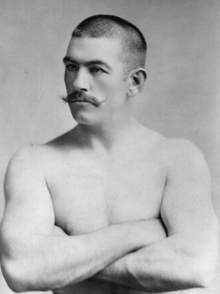
John L. Sullivan “wrote” his life story for The Boston American in 1905.  The former heavyweight champion had always been a baseball fan, played some semi-pro ball, and was once arrested for participating in a Sunday game.

johnlsullivan

John L. Sullivan

In the 1905 article, he talked about the evolution of personal responsibility of the ballplayer:

“What with firing away his money and having fun with (Cap) Anson, King Kelly had a merry life, but a short one. He was a king among ballplayers and a prince among spendthrifts. Once he lectured me on the wisdom of getting the savings bank habit.

‘”You’ll need it someday, John L.’ he said.

“’How about yourself going broke, Mike,’ I asked.

‘Not me. When I need money, I can take my turnout and go selling milk,’ he replied.

“The turnout he referred to was the horse and buggy given to him before a ballgame on the National League grounds in Boston. The rig was a present to the king by his subjects in my town.

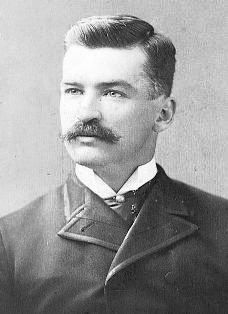
kingkelly

Mike “King” Kelly

“When King Kelly passed out, the future emperor, Napoleon Lajoie was driving an ice cart in Woonsocket. Prosperity almost carried the Frenchman off his feet, but the lesson of Mike Kelly and some more of us foolish ones was drilled into him. He cut out the red-eye and got a bank book, and today he is the king of them all and getting rich. He doesn’t intend to get off the water wagon and go back to the ice cart. The difference between King Kelly and Emperor Lajoie is the difference between the old style and the new in all kinds of sport, and the stayer is the man behind the pledge.

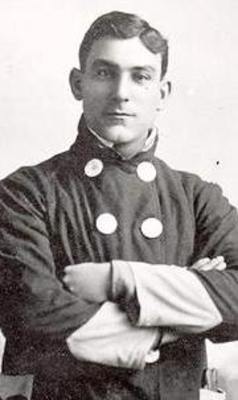
lajoie

Napoleon Lajoie

“Kelly died early. Lajoie grows better every year, and if he were to take up boxing, he could sprint faster than (Jim) Corbett, punch as hard as myself, get away as quick as Fitz (Bob Fitzsimmons), and handle his fists like Tommy Ryan. Moreover, his hat fits. I call the attention of all the temperance lecturers to Larry Lajoie as one of the best examples they can use in their business.”