“Say, Rube, he ain’t Quite Dead yet”

16 Apr

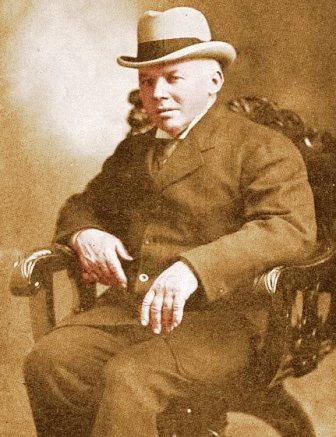
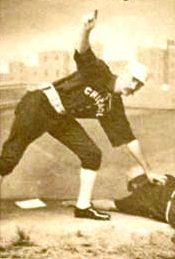
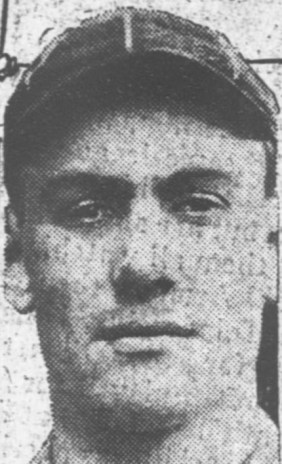
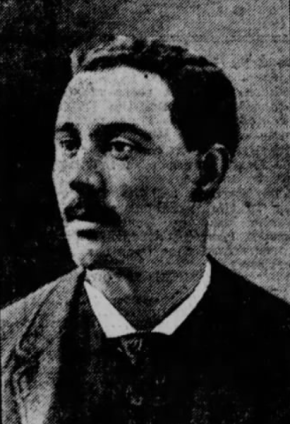
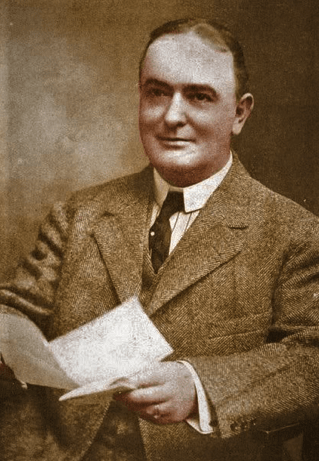
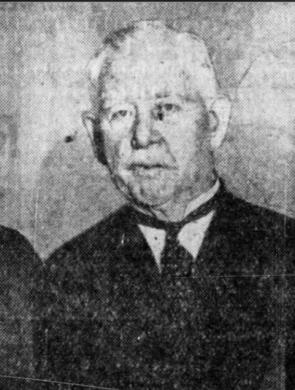
In 1912, Arthur Irwin told William A. Phelon of The Cincinnati Times-Star:
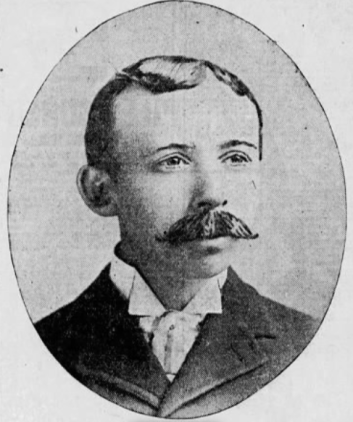
irwin

Irwin

“Rube Waddell was even a richer card than was usually supposed and nobody unless he were to put it all down in a large, thick book will ever have an actual summary of the things G. Edward said and did during his long career in the fast company.”

Irwin said Waddell, despite his reputation for erratic behavior “had a kindly heart, always open to the cries of the unhappy, and especially gentle towards the ladies.”
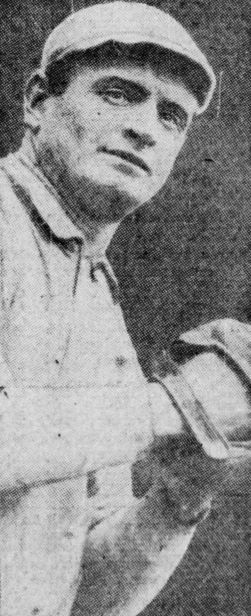
rube

Rube

He told Phelon a story about  a dance they both attended in Philadelphia:

“Mr. Waddell arrived early and was quieted by being presented with a gorgeous badge denoting him as floor marshal. Armed with this, Mr. Waddell was as nice and polite as Lord Chesterfield himself and gave no trouble. The managers soon ceased to worry about Rube—and were given other things to trouble them.

“About midnight a prizefighter named Seiger of some repute as a rough, hardy slugger, came into the hall and at once started making war medicine.”

According to newspaper accounts, there were at least four fighters named Seiger or Sieger who had bouts in Philadelphia during the first decade of the 20th Century—the most prominent were both lightweights: Joe Seiger and Charley Sieger

Irwin picks up the story:

“Inside of ten minutes I had to go in and help the floor committee drag him off some inoffensive fellow who hadn’t kowtowed to his sovereignty. About 10 minutes later we had to sally in again and rescue some well-dressed gentleman from Seiger’s clutches. ‘Better cut it out,’ said I ‘you are looking for a trimming and you will get it, sure’

‘”Ain’t nobody on this floor goin’ to hand it to me,’ jeered Seiger, and back he went, shouldering through the throng.”
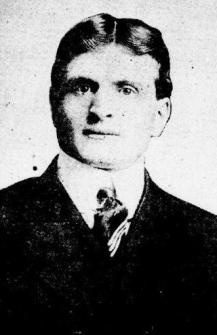
rubesuit

Rube

A minute later, Irwin said:

“I heard loud noises and then the thud of fast falling blows. In I rushed and beheld Mr. Seiger going rapidly round the floor under the mighty fists of Rube Waddell. Before the Rube’s gigantic strength and pile driving blows the prizefighter was helpless. Seiger was receiving a frightful beating, but he had it coming to him and no one interfered. Finally, Seiger fell against the wall, and the Rube, his eyes blazing with murderous delight, simply hailed blows upon the dazed and bleeding pugilist. Just as he was drawing back his great fists for another wallop, there was a shrill shriek and a woman fainted.”

Waddell turned away from the boxer, and:

“(R)an to the spot where the girl had fallen and picked her up. He bore her to an anteroom, poured ice water on her forehead and cared for her like a trained nurse till she revived.”

Someone told Waddell, as he administered to the woman:

‘”Say, Rube, he ain’t quite dead yet.’

“Rube shook his head, ‘Chivalry,’ said Waddell, ‘comes before pleasure. I ain’t going to move from here till this lady gets her things back. Soon as she’s all OK I’ll go finish him but I won’t stir a step till then.”
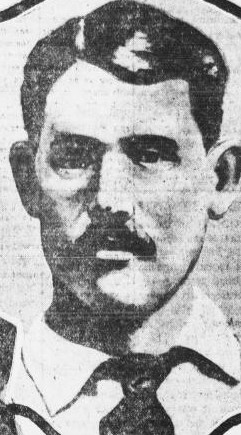
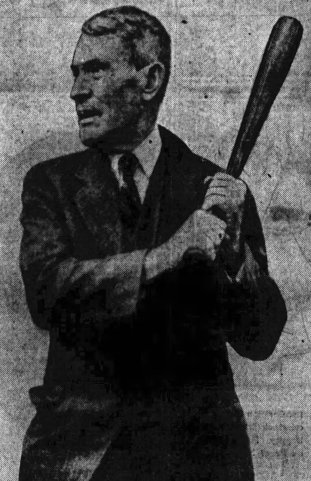
“That’s the way Baseball Goes”

15 Apr

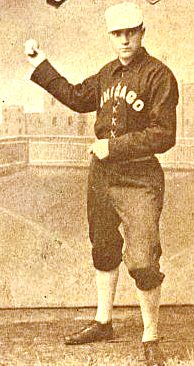
In May of 1933, George Gore, who spent 14 years in the major leagues from 1879 to 1892 was interviewed by one of his Nutley, New Jersey neighbors—a man named J. Warren McEligot–for The Philadelphia Public Ledger:

“It was late in the summer of 1878. New Bedford was playing Providence in the old New England League [sic, International Association]”

gore

Gore

McEligot told the story of Gore being “the first holdout” in baseball; the 24-year-old met White Stockings owner A.G. Spalding at the local railroad depot:

“’How much do you want?’ Mr. Spalding asked compendiously.

“’Twenty-five hundred dollars.’ Replied Gore, just as briefly.

“’You’re crazy,’ and Mr. Spalding chuckled.

“’I mean it,’ stated Gore, and the expression on his face conveyed to Mr. Spalding the information that Gore wasn’t fooling. So, Mr. Spalding forgot his chuckle.

“Mr. Spalding widely became diplomatic. ‘We intend to give you $1500. But I might advance the figure to $1750.’

“’Nothing doing,’ was the independent Mr. Gore’s retort.

“’Will $1800 do?’ Mr. Spalding asked.

“’No,’ and it was an emphatic ‘no.’

“Mr. Spalding became impatient. He had only a few minutes to spare and then he had to entrain for Boston. He stormed and fretted and told the young culprit that his figures were outrageous. But young George was adamant. He wouldn’t yield—not then, anyway. So, Mr. Spalding went away without affixing Mr. Gore’s signature to a Chicago contract.”

Several days later, McEligot said Gore met with Spalding in Boston:

“’I’ll not take a cent less than $2200,’ stated Gore.

“’Nineteen hundred dollars is my last offer,’ Spalding said impatiently. ‘I’m leaving for Chicago tonight. Take it or leave it.’”

Gore accepted and “in doing so the first holdout in organized baseball came to terms,” McEligot said.

“’All right,’ surrendered Gore. I’ll sign for $1900, but remember, I’ll be getting my $2500 a year someday. Mark my words.’

“Gore’s boast proved a truthful one. Later in his career he received that salary with the New York Giants (in 1887).”

McEligot asked the seventy-nine-year-old Gore (incorrectly said to be 81 in the article) about his batting title in his second season, 1880:

“’I was lucky enough to lead the league in batting. I guess Pop (Anson) had an off year. That’s why I won it,’ confessed the modest Mr. Gore.”

Gore told the story of being approached by Anson near the end of the 1886 season:

“’Gore, I’m considering selling you to the New York team, they are willing to pay a handsome price for you.’

‘”But, Pop, you wouldn’t let me go now. I’ve grown to like Chicago and I couldn’t bear leaving the team and the city. It’s my home, you know.’

“’But Pop must have made up his mind on a previous occasion, for he said: ‘I know but that’s the way baseball goes and probably will go after you’re through and I’m through. Yes, you’ll be with New York next year.’

Gore said he told Anson:

“’It’s OK with me then. But listen, if you trade me to New York, Chicago, under your regime, will never win another pennant.’”

McEligot said:

“Gore didn’t say this in boastful tones but with calmness and assurance. And his prediction did hold water. Chicago under Anson never experienced the thrill of another league championship.”

gore

Gore 1933

Gore, he said “appears to be no more than 60,” despite his age:

“That’s because I always took the best care of myself. I haven’t seen a sick day in seventy-five years, and I feel as good today as I did thirty years ago. I can’t get around like I used to, but still am able to walk three or four miles daily. That keeps me in good shape. I eat three hearty meals a day and my favorite diversion now is playing pinochle.”

Within four months, Gore died.

“If I was to Catch Again I’d Laugh at Shin Guards”

14 Apr

Harry Salsinger was the sports editor at The Detroit News from 1907 until his death in 1958. During spring training in 1928 he wrote:

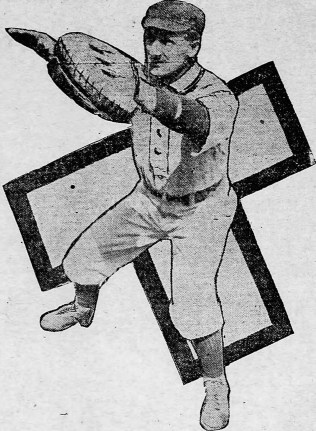
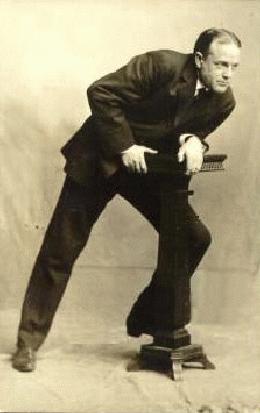
“E.A. Krebs is deeply interested in the pictures of catchers that are sent from the southern training camps. He would like to know why the modern catcher is fitted out like one of the armored knights of King James’ court. His interest is legitimate. Mr. Krebs used to be a catcher himself.”

Edward Adam Krebs caught for teams in the Central Association, Iowa League of Professional Baseball Clubs, Three-I, and Cotton States Leagues from 1902 through 1909.

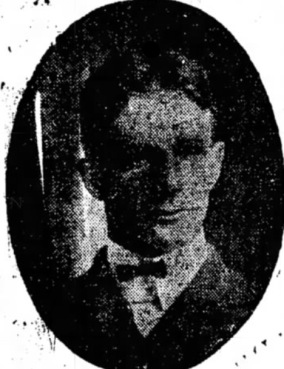
krebs05

Ed Krebs

Salsinger said Krebs:

“(B)elonged to what is now known as a the ‘old school’ and the men of his school have a habit of snickering at modern baseball. When their evidence is given full consideration there seems sound reason for their snickering.”

Krebs, in a letter to Salsinger, said:

“The only protection we had was the mask, and air-filled chest protector and a catcher’s mitt. But the air-filled chest protector was a real joke after the first month of the season. It wouldn’t hold air any longer, but we buckled it on just the same, for appearance sake, I guess. We might just as well had a piece of Brussels carpet hanging on us.”

He was also annoyed by the use of shin guards:

“We didn’t use them in those days. They weren’t used before my day, and they weren’t used long after my day.”

He said he had the scars to show for it:

krebs7

Krebs 1906

“No runner in my days could touch home plate unless he cut me up, for I had home plate completely blocked. I had both feet right on the line, between the runner and the plate. I have been cut from knee to toe many times.

“I have caught some of the fiercest outlaw pitchers the game has known. They were so wild that they could never reach the big leagues. Once in awhile I got a rap on the skin with a wild pitch, but not often, and a kid full of knots doesn’t mind a rap on the shin once in a while.”

Krebs said current pitchers threw no harder than when he played, nor was the ball “any harder,” so, “If I was to catch again (I am 48) I’d laugh at shin guards.”

A Wisconsin native, Krebs said he caught Addie Joss at Sacred Heart College in 1888, although he said he was primarily a shortstop, and the regular catcher was Red Kleinow, who played eight seasons in the major leagues between 1904 and 1911.

krebs9

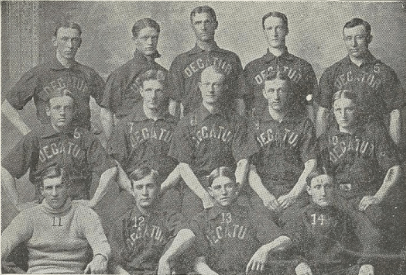
Krebs, 2nd from right, center row, with Decatur, 1903.

During his first season in professional baseball, Krebs played for Fred Pfeffer during the former Chicago White Stockings’ only year as a minor league manager—with the Decatur Commodores in the three-I League in 1902:

“(Pfeffer) was the best second baseman who ever played around or anywhere the bag. I have seen Fred, while he was with us at Decatur and when he was 51 years old [sic 42], go high in the air, pull down a line drive and whip the ball to first for a double play. His throw was half done before he got back to the ground. Many times, I have seen him go deep, scoop up a grounder and slap the ball backhanded to the first baseman.”

Of Pfeffer on the base paths he said:

“I have seen Fred score from third when the catcher stood at the plate waiting for him, the ball in his hand. His body would be pointed straight at the grandstand and his toe would be touching home plate. He would be laying flat on the ground. When the catcher made a stab for Fred, he just wasn’t near the spot where the catcher thought he was.”

Krebs worked as a plumber and died in Burlington, Iowa in 1937.

“Fencing Conversationally with Luke Easter”

13 Apr

Robert C. “Rube” Samuelson was called “Mr. Rose Bowl;” he covered the game for 34 straight years as sports editor of The Pasadena Star-News.

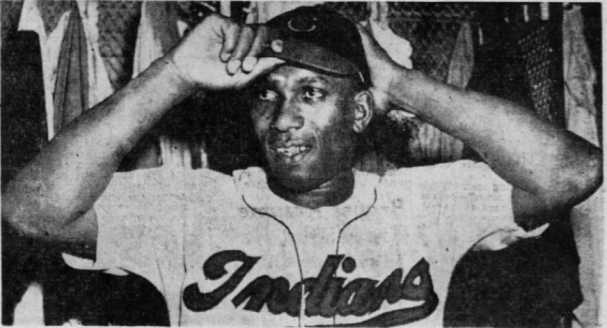
In 1949, he interviewed Luke Easter, two months before Easter made his major league debut.

Samuelson said:

“Fencing conversationally with Luke Easter the San Diego Padres fancy-dan first sacker, takes more than a bit of parrying. To come up with something worthwhile one has to dig in and keep after the big fellow.”

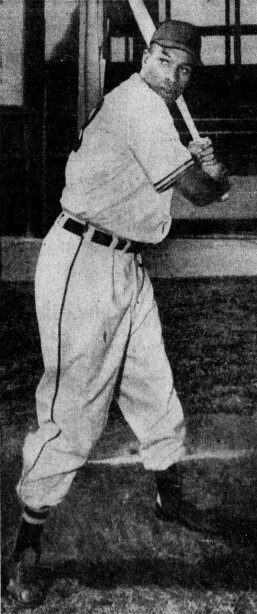
eastersd

Easter

Samuelson asked Easter—who hit .363 with 25 home runs and 92 RBI in 80 games with the Padres–which Pacific Coast League (PCL) pitcher was the toughest to hit. Easter said 42-year-old Tommy Bridges, in his third season with the Portland Beavers after 16 seasons with the Detroit Tigers.

“He’s about the best I ever faced.”

Easter was asked if he thought he’d be able to hit Hollywood Stars’ Willie Ramsdell’s knuckle ball later that week:

“Why not? I’ve hit knucklers before.”

Samuelson then asked about his badly injured knee:

“I don’t know how long it will hold up. I may have to have it operated on before the season ends.”

Easter said his knee hurt, “All the time. Even when I step on the brakes of my car. Even when I go upstairs. It keeps me from going to the right and I can’t pull the ball as well as I otherwise could.”

Easter said the knee was injured when he collided with Larry Doby during spring training, he was later hit in the same knee with a pitch and had “a chipped bone” in the kneecap.

Easter lied when Samuelson asked the next question:

“’How old are you, Luke?’

“’Twenty-seven.’”

Easter would turn 34 on August 4—a week before his big-league debut.

When asked if he was ready to be called up to the Indians, he said:

“Sure. Anytime. But it’s best that I spend one year out here. You can always use experience. Mr. (Bucky) Harris and Mr. (Jimmy) Reese always talk to me and help me. That makes you feel good.”

Asked if he idolized our followed any players, he said:

“Phil Cavarretta of the Cubs. He may not be the best first baseman in baseball, but I like the way he plays.”

He also said Josh Gibson was the best Negro League player he ever saw and that “Doby” was his current “favorite Negro player.”

Easter said the quality of players was better in the PCL than he had faced when he played for the Homestead Grays in 1947 and 1948:

“It’s very good every day in the Coast League. The pitchers especially. You get the same class of pitching about every third or fourth day in the Negro circuits.”

easter49

Easter

On July 2, Easter had knee surgery at the Cleveland Clinic; he made his major league debut with the Indians 40 days later.

Lost Advertisements: Negro Delta Baseball School

10 Apr

negrodeltabbschool

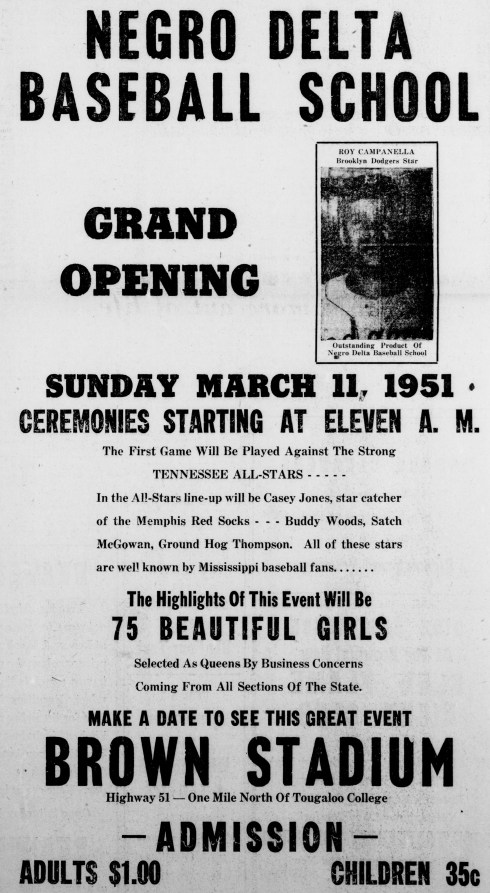
A 1951 ad for the second year of the Negro Delta Baseball School at Brown Stadium, home of the Negro Southern League Jackson Cubs.

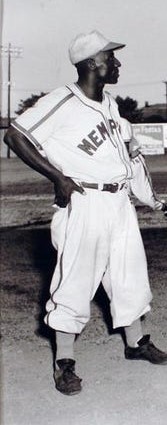
The school was started by long-time Negro League player and manager Homer “Goose” Curry. Curry managed 18-year-old Roy Campanella with the Baltimore Elite Giants in 1940–hence Campanella was advertised as an “outstanding product” of the school.

The Jackson Clarion-Ledger said the six-week school had attracted 86 players from across the country.

The first two years, the school operated at Brown Stadium, but moved the following year to the heart of the Delta in Greenville, Mississippi.

currymemphis

Goose Curry

In 1955, a United Press reporter asked Curry, who had just become manager of The Memphis Red Sox, about the impact of integration on Negro League baseball:

“Now the big league teams can offer the young Negro players a bonus and a shot at the majors. All we can offer is a job…We take what the majors leave, keep them a couple of years and if they develop into pretty good players, we can sell them to the majors.”

Curry, who was still operating the school at that point, although it seems to have been dissolved sometime in the mid 1950s, was asked who was the best player he ever saw:

“That title goes to the late Josh Gibson, fabulous home run hitter of the 30s.

“‘He’s have hit 100 home runs in the majors,’ Curry said.”


“I have had Enough of the Faithful Isle”

9 Apr

In January of 1899, Ted Sullivan was on a mission.  The man most famous for being the “discoverer” of Charlie Comiskey, was in New Orleans making plans.  The Times-Picayune said Sullivan and “some visiting baseball men” were meeting at the Grunewald Hotel (now the Roosevelt):

“America’s great national game, baseball, will be firmly planted in Cuba by the opening of the current baseball season…Ted Sullivan, the well-known baseball magnate, the man who has perhaps managed more teams than any other individual in the south, and who managed the Dallas, Texas team in 1895, has been in the city several days working up this Cuban proposition. He says one of the quickest ways to Americanize Cuba is to establish our national sports there, the first of which will naturally be baseball.”

tedsullivan

Ted Sullivan

The paper quoted one of the backers of the plan:

“Sullivan is the proper man to manage this Cuban scheme because he has had more experience than most any other man you could find. He knows Cuba, and he knows what they think of baseball down there. Twelve years ago, he took two teams to the island and introduced the great game down there.”

The backers predicted “Sullivan’s scheme will be a first-rate success.”

Three weeks later, Sullivan returned to New Orleans. The Times-Picayune said:

“Honorable Ted Sullivan, the baseball magnate…who was at the Grunewald a short time since on his way to Havana, has been heard from…Honorable Ted has returned, but he has returned with some very different views.”

No longer did Sullivan think Cubans would be “brought in nearer accord” with “Americans across the Florida straits,” within months:

“’I have had enough of the ‘Faithful Isle,’ declared this baseball champion after two weeks in Havana seeing what could be done. ‘No more of it for me. Between the pompous air of the non-speaking English people and the arrogance of our own Americans who have a little gold braid on their shoulders, you can, perhaps, you can imagine what a comfortable time down there visitors are having.”

Among Sullivan’s complaints:

“In darkest Africa you can find more English-speaking people than you can find in Havana today.”

The interpreters, he said, were of poor quality and “bleed you on prices,” he called them “social highwaymen.”

Sullivan also complained about the food:

“The menu would disgust a Mississippi River roustabout. The butter is so strong that it would have proven quite a valuable ally to the Spanish army, had the idea occurred to them. It could resist an attack of the Rough Riders and defy the projectiles from (Admiral William T.) Sampson’s guns.”

Sullivan presented a bit more of an optimistic outlook for baseball in Cuba to other newspapers—telling The Washington Times that he would be bringing a Cuban team to the states and that he watched a Cuban team beat a team comprised of American soldiers in two games.

But to those in New Orleans, where the plan for Sullivan’s Cuba mission was hatched, he was clear:

“In the opinion of Ted Sullivan, baseball in Cuba must wait awhile—it’s too early for the Americanizing of the Spanish city in that way.”

“Quit Chasing Baseball Flies to Chase the Devil”

8 Apr

Rodney C. Wells was the editor of The Marshalltown (IA) Times-Republican; in 1909 he interviewed the world-famous evangelist, and second-best player to have gotten his start in Marshalltown; Billy Sunday.

billysunday

Billy Sunday

The article appeared in “The Literary Magazine,” a Chicago-based syndicated newspaper insert that appeared primarily * in newspapers in smaller (20,000 to 40,000 population) markets.

Wells said:

“Although since Billy Sunday quit chasing baseball flies to chase the devil he has been tremendously busy preaching the gospel and saving the souls of tens of thousands of men and women, the is still a thoroughbred ‘fan,’ and there isn’t a devotee of the great national game anywhere who keeps in closer touch with it than he.”

Sunday was asked the perfunctory question about the quality of the modern game versus the 19th Century:

“The individual ballplayer of today is no better than he was twenty or twenty-five years ago. In fact, I believe that taking everything into consideration, the fellows of a quarter of a century ago excelled in some ways. To be true what a man does nowadays counts for more in a game, for now they have teamwork down to perfection. In the old days we hardly knew what ‘teamwork,’ as the word applies today, was. We knew nothing about a hit and run game or the double steal—that was all unknown dope to us. Consequently, playing more as individuals, more rested on us as individuals. Hence my reason for saying that, perhaps in some ways, the boys of the old days excelled the stars of today.”

Wells told the story of Sunday coming to Marshalltown after being recruited from his home in Nevada, Iowa—where he was known as a fastest runner in town–to come to Cap Anson’s hometown to participate on the hose team of the local fire department in the state tournament.  Sunday was required to live in town for a month in order to compete with the local fire department.

“Incidentally, Sunday liked to play ball, and he was out in the pasture for practice regularly. He began to command attention in this line, not so much for his proficiency in the game, as his fleetness of foot and his great base running.”

He was recommended to Anson who “looked Sunday up and down and made him a proposition,” to join the White Stockings.  Sunday said upon his arrival:

“The first thing they ran me up against in Chicago was Fred Pfeffer, the crack second baseman of the then celebrated White Stockings. Pfeffer was the fastest man on the bases in Chicago and one of the fastest in the league. Anson had told some of the boys about my running, and they were inclined to doubt the old man’s word. It didn’t take long to settle matters, however, and the first thing I knew I was matched with Pfeffer in a foot race. It is needless to for me to go into details, but I made Pfeffer look like and ice wagon.”

pfeffer

Fred Pfeffer

Sunday acknowledged he “won a place” with Chicago “even though I wasn’t much of a batter,” because of his speed.

“Then, we hardly ever had a sub, and it was seldom that a fellow was not in his position. We played season after season with eleven or twelve men, while now it is not uncommon to see as high as thirty men in the big-league teams. Why, they carry nearly as many pitchers alone in these modern days as we did in our entire team then.”

Sunday asked:

“Where do you find a ballplayer today who was Cap Anson’s equal at all-around ball when Anson was at his best? And where can you find a catcher who would beat old Mike Kelly?

“While I consider Johnny Kling perhaps the best catcher in professional baseball today, I do not believe he was a better catcher than Mike Kelly. And Kelly wasn’t only a great catcher, but he could play anywhere. If needed he could go on any base and be perfectly at home, or he could make good in the outfield. And he was a cracking good base runner, too, even though he was heavy.

“Then there was our other catcher, Frank Flint. I shall never forget him. Grit? One never saw his equal. We didn’t wear the big mitts in those days, and a catcher behind the bat, although he was getting just as swift balls as the catchers of today, had much less protection on his hands. I saw Flint get a hard one on his left hand, that split the poor fellow’s fingers down a clean inch. Quick as a flash he reached for his shirt pocket, grabbed a rubber band, snapped it around his bleeding fingers, and gave a signal for another ball. Every finger on both of poor old Flint’s hands had been broken at some time or another, and there was never a man who played baseball who had as many marks to show for the game.”

Sunday said he regretted that “the bunting game” was not “down to the science that it is now there were a few of us who could have made good.”

He said when he played in Philadelphia he and Billy Hamilton could “do 100 yards in 10 seconds” and batting first and second in the order and would have benefited from more bunting.

Sunday told Wells he had no regrets about retiring when he was 27 years old to begin evangelizing:

“Of course, Billy Sunday is glad he left baseball, for he felt his duty in life lay elsewhere. While the evangelist has a large income from his preaching, and much larger than he would ever have had in baseball, it was not so when he voluntarily gave up baseball for his religious work.”

billysunday

Sunday

Sunday was paid $83 a month when he first began working at Chicago’s YMCA.

“This was true self-sacrifice on Sunday’s part, for he knew not what the future held in store for him.”

“The Hook Slide is the Hardest for the man Handling Throws to Gauge”

7 Apr

When Johnny Evers was acquired by the Braves in 1914, Melville E. Webb Jr., writing in The Boston Globe shared a “never published” interview with the second baseman, in order to give readers “a better idea of the little fellow.”

evers2

Johnny Evers

“In all my years of ball playing, the man I have found it hardest to touch with the ball as he came down to second base from first is Bill Dahlen…(he) always came straight down the baseline, directly at the base, but in the last ten feet there was no telling what he would do.

“He had a great way of anticipating where the throw from the catcher was coming, and he played his slide to a nicety. Coming straight along, he suddenly would fall down on his hips, to one side or the other, spread his legs ad then use the greatest cleverness in pulling out of reach and twisting himself to hook the base with either foot.”

billdahlen

Bill Dahlen

Evers said Dahlen was not the only man who used a hook slide, but did it better than others:

“He never was a particular dangerous man to try to block but blocking him off never seemed to do much good. He was almost sure to get better of the close plays around second base, and nothing was sure to go right, even when throws apparently were on the mark.”

Others Evers found difficult to tag out at second:

“Hans Lobert, Charley Herzog, (Vin) Campbell, (Bob) Bescher, (Bobby) Byrne, (Sherry) Magee, Miller Huggins and (Honus) Wagner. Wagner was a big mark to try to tag, but often when it came to putting the ball on him he was not there.”

bescher2

Bescher

In general, he concluded “I think the hook slide is the hardest for the man handling throws to gauge.”

Evers said while he “never had any experience playing defensively” against Frank Chance:

“(He) was one of the greatest base runners who ever played, and this because he so very often did the unexpected and used his head as well as his excellent speed. Infielders have told me that Chase was the hardest man they found to tag.”


“They say I ran wild”

6 Apr

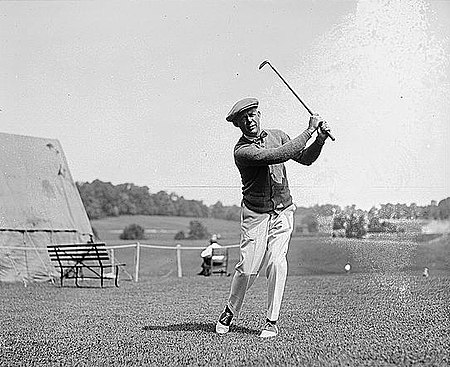
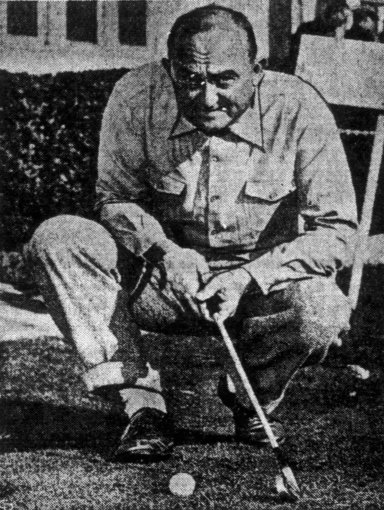
In 1937, Grantland Rice of The New York Herald Tribune met Ty Cobb for a round of golf at Pebble Beach:

ricegolfing

Grantland Rice

“His hair was a trifle thinner and he had put on a few pounds in weight since the big years of his career. But he still looked fit—life had given him a better break than any other retired major league star in history…The legs that carried him at a headlong pace around the bases for 24 years still had enough left to take home through the wilds of Montana, Oregon or Wyoming after quail, deer, or mountain lions—day after day on extended hikes.”

cobbgolf

Cobb

Rice asked Cobb what he thought about the current state of baseball:

“I haven’t seen much baseball or followed it closely, for two reasons. One is that 24 years of hard competition in more than 3000 ballgames burns away most of the lure. The other is that the introduction of the rabbit ball took away most of the science from the game I knew and loved so well. It has been a different game.

“In those years we had to battle for a run. I used to lay plans days or weeks ahead to use against some club to get that run. They say I ran wild. I did it with a purpose—but only when we had a good lead and I could afford to waste a play. I wanted them to think I was a crazy runner—in order to hurry the play of either infield or outfield—to upset what you might call their mental balance. Today, in the main, they wait around for someone to hit a home run. A single run rarely means anything.”

Cobb said he understood he had a reputation “as a rough rider around the bases,” but:

“I recall only three men I spiked in 24 years. I don’t believe the total would be over six or seven”

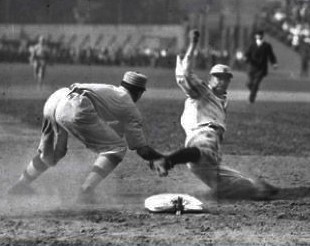
He told Rice the famous 1909 spiking of Frank “Hone Run” Baker:

“I barely scratched his arm…The Baker incident gave me a reputation I never deserved.”

cobbbaker

Cobb slides into Baker, 1909

Later, Rice asked Cobb about the best pitchers he faced:

 “My number one pitcher would be Cy Young. Cy won more than 500 ballgames in two big leagues. He was still a fine pitcher after more than 20 years…Ate the age of 65, in the veterans’ game, old Cy pitched three run less innings. He had a world of stuff—he had a game heart and he had control.

“Next to Cy, I’d name (Walter) Johnson who led them all in shutouts and strikeouts. That’s the main answer”

Cobb called Big Ed Walsh:

 “The most valuable five-year pitcher I ever saw. In one season (1908)  he worked 66 games, won 40 and saved 12 others [sic, 6]. Right after this he stepped in and pitched almost every game in the Chicago City series. Big Ed was the star workhorse of them all for about five years before the arm gave out.

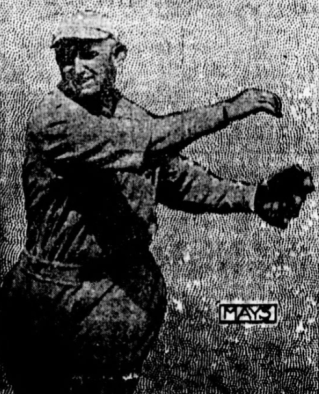
Cobb told Rice his “Biggest day, I suppose was that afternoon against the Yankees just after a ball pitched by Carl Mays killed Ray Chapman.”

The New York Tribune said the fans were “in an uproar” over comments Cobb had allegedly made to Associated Press (AP) reporters. On the day of Chapman’s death, The AP reported:

“Ty Cobb, the Detroit star asserted that summary measures should be taken against Mays immediately.”

mays

Mays

The AP also said in a separate article:

“After the funeral of Roy Chapman has been held, Ty Cobb will have a few things to say regarding Carl Mays…’I am too upset over the death of Chapman to say anything now,’ he said. Cobb, however, added

That he had his own experiences with Mays’ bean-ball and that he would be willing to give some of his opinions about the Yankees submarine pitcher when he does talk.”

chapman

Chapman

It was also reported that Cobb was among a group of players who would refuse to play against Mays.

Describing the scene at the Polo Grounds nearly 17 years late, Cobb told Rice:

“I had been misquoted and when I came into the park there was the loudest chorus of boos and hisses, I ever heard.

“Naturally I felt bitter about this. It isn’t a pleasant feeling to be booed and hissed by 35,000 of your fellow citizens, I went out to show them up I happened to have one of my best days.”

Cobb’s “Biggest game” was actually the second game of the series. During the first game of the series on August 21, The Tribune said:

“(T)he booing and hissing were violent every time Cobb came to bat. This roused Cobb’s belligerency and he exchanged some sharp repartee with the crowd by the Detroit dugout. He was surrounded by a growling mob as he left the field, but Cobb, who rather enjoys being a storm center, walked off the field slowly and deliberately”

Cobb, who went 1 for 4 with a stolen base, told reporters after Detroit’s 10 to 3 win:

“Some Boston people who have a grudge against Carl Mays used me as a smoke screen. I did not say a word against Mays, and I attended no meeting to boycott him.”

The following day, August 22, with 37,000 fans in the Polo Grounds was the “Biggest day,” Cobb was 5 for 6 with a double and three stolen bases and scored two runs in an 11 to 9 victory.

Back to the game at Pebble Beach, Rice said of Cobb:

 “Golf is one game that has left him baffled. Once in awhile he breaks 80, but his average score is around 82 or 83. He hits a long ball and he is a first-class putter but is still erratic on the in between shots. Always full of tension…If he could relax more, there would soon be a great improvement in his game. But the mental habit of a lifetime isn’t so easily overcome. The more delicate shots give Ty his greatest trouble. This is where tension nearly always takes its toll. The mental factors that make a great ballplayer or football player may be ruinous for golf.”

“He has Always Been a Lazy, Unmanageable Fellow”

3 Apr

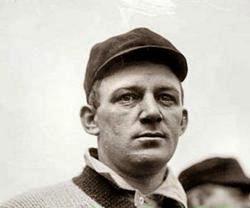
Mert Hackett—contemporary newspapers generally referred to him as Myrtie–caught 241 games over five National League seasons from 1883 to 1887.  In 1902, he was asked by The Boston Post to assess the modern game:

“People who never used to miss a game do not go at all now. At the time when the Brotherhood League was formed 12 years ago and during the troubles that followed, many people lost all sympathy for those who are now in National ownership. As a member of the Cambridge police force, I meet many old friends who used to be regular attendants at the games but who never go now. They have lost their interest and are disgusted with the questionable tactics in vogue now among players and managers.”

hackett

Hackett

The Post claimed that Hackett’s career came to an end in 1887, when he was “Practically blacklisted” by Indianapolis Hoosiers manager Horace Fogel:

“Hackett received a letter from his sister in Boston stating that her three children were sick and requesting him to come at once. The old catcher left immediately and arrived only to be present at the death of two of the children.”

The paper claimed, “For some reason” Fogel later said Hackett did not have permission to leave the team and “wrote a letter to the other clubs” saying Hackett had been fined and suspended.

Contemporaneous accounts in The Indianapolis News and The Indianapolis Journal tell a different story.

In July of 1887, The News said that Fogel, having just taken over as manager, had granted Hackett leave (to “visit his friends”) before discovering that the team’s other catchers Tug Arundel and George Myers were injured.

“(Fogel) told him that, by reason of the crippled condition of the nine, he would have to catch the game with the Cuban Giants in Trenton. Hackett was greatly enraged, and with the threat he would be ‘—— if he played against n——.’ He left the club and for this reason he was suspended.”

Horace_fogel

Sporting Life said Hackett was, “Playing off all season,” and “he has always been a lazy, unmanageable fellow, and the players all claim that he is the only troublesome, disorganizing man in the team.”

In whatever case, he never played in the major leagues again after the close of the 1887 season.  When he was released by the Hoosiers before the 1888 season, The Journal said:

“Strange that a player of his ability could not be sold for a small sum at least.”

He managed and played for the Troy Trojans in the International Association—his brother Walter was the team’s shortstop–briefly in 1888.

hackett2

Hackett, 1935

Hackett’s career in law enforcement lasted much longer, he was with the Cambridge police force for 42 years, retiring in 1935 at age 75. He died in 1938