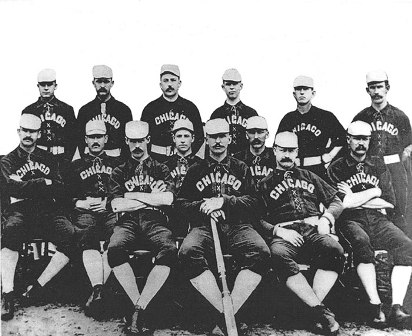
“You got away with Something that time, Buck”

2 Mar

It will be reviewable by instant replay this season, but in 1914 the “Neighborhood Play” had no name, and its use by one American Leaguer was a big story.

The Chicago Daily News said:

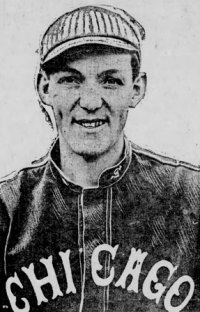
“There is a story going around the circuit which undertakes to show how Buck Weaver, the White Sox shortstop, fooled all the umpires…Buck’s long suit was acting as pivot on a double play, taking the ball from the second baseman.”

buckweaver

Buck Weaver

The paper said when Weaver joined the Sox in 1912, he “noticed that he was often failing,” to turn double plays.

“He lay awaken nights figuring how he could increase his speed in pulling off (double plays), and finally decided that if he could not get the batter no one could, as he was the owner of as strong a whip as any shortstop in the land.

“The solution of the puzzle came to him by accident.  In dashing to second to take a throw from (Morrie) Rath he overstepped the bag and was a stride closer to first than usual when he got the ball.  Instead of stepping back and touching the sack, he made the throw to first base and, much to his surprise, the umpire called both men out.”

When Weaver returned to the dugout, Manager Jimmy “Nixey” Callahan said:

“’You got away with something that time, Buck.’”

Weaver told his manager:

“’I was a whole stride over second when I got the ball.  But say, I could away with it by accident, what’s the matter with trying to pull it off right along when the man at bat is fast and likely to beat me out if I wait for the throw? I can save a quarter of a second or so by going over the bag.’”

The paper said Callahan encouraged him to try it.

“And Buck did.  He worked the trick successfully against the Naps six or seven times, twice in one game with (George) Hildebrand umpiring the bases.

“’He worked it on us several times,’ said Jim McAleer, formerly of the Red Sox, while Clark Griffith admits that Washington suffered the same fate.

“Even Connie Mack was forced to murmur, and when Connie Mack kicks, something must be wrong, and possibly as a result of the protest of the manager of the world’s champions, the umpires will watch Mr. Weaver more carefully this year when he is acting as pivot man in the double play.”

After 1913, when he participated in a career-high 73 double plays, Weaver never played as many games at shortstop, so it’s unknown whether umpires, in fact, watched him “more carefully” when  he attempted the Neighborhood play.

“Cobb is Essentially an Individual Player”

29 Feb

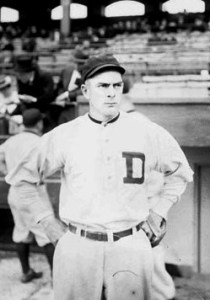
In February of 1913, The Associated Press (AP) reported that Detroit Tigers second baseman Oscar “Ossie” Vitt had requested a raise from owner Frank Navin.  The AP said:

“Navin wrote Vitt that he was more than satisfied with his work last year, and would be ordinarily glad to increase his salary, but owing to the necessity of meeting the demands of (Ty) Cobb for $15,000.”

Ossie Vitt

Vitt

The Detroit Free Press disputed The AP’s, and Vitt’s account:

“Mr. Vitt did receive a letter from Mr. Navin, and this letter did pointedly refuse to add anything to the Vitt emoluments for 1913.  So far the story from the golden West is true.  But the reasons given  Oscar for not granting him an increase had nothing whatever to do with Mr. Cobb, nor was the star athlete’s name even mentioned.  Vitt was informed that he is mighty lucky to receive a contract for 1913 with as much money mentioned as the document recently sent him calls for.”

Whether Vitt believed Cobb was responsible for his lack of a raise is unknown, but he did take the opportunity 10 months later to take a swipe at Cobb in the pages of his hometown paper, The San Francisco Call.  Vitt wrote an article for the paper about the best player he had seen:

“I am picking the man who does most to win games for the club he represents.  That man is unquestionably Eddie Collins…Here is one player who is willing to sacrifice all personal gain to help his club.  When he is on the field it is the Athletics he is trying to help, and not Eddie Collins.”


Collins

Collins

Vitt said:

“Collins is great whether he is playing the defensive or offensive.

“In few departments of the game is he excelled.  He is a brilliant fielder, who thinks quickly, and he makes but few mistakes.  At the bat he has few superiors.  He has a wonderful eye, and when he hits the ball he meets it fairly, usually sending it away from the plate on a line for a clean drive.  He can lay down a bunt with equal skill, and it is hard to figure him when he faces a pitcher.

“The point that I admire in Collins is the fact that he never plays to the grandstand.  He adopts the play that will help his club and not the one that will win him applause from the spectators… I don’t think there is another player in the game today who wins as many games for his club than this fellow Collins.”

After lavishing praise on Philadelphia’s Collins, Vitt said of his teammate:

“Cobb is a remarkable ballplayer. I have been with him for two seasons, and while I consider him greater than Collins in many respects, I do not think he is as valuable to a club as Collin… His spectacular style of play is popular with the fans, and while the Tigers were rather lowly in the pennant race, they were good drawing cards, because the crowds would go out to see Cobb bat and steal bases.

Cobb

Cobb

“If Cobb would play the game like Collins I think he would be the greatest of them all, but he does not.  Cobb is essentially an individual player.  He is unlike Collins in this respect.  However, the fans like to see Cobb, and they must be pleased.”

While Vitt equivocated, calling his teammate an “individual player,” while at the same time putting, at least, some of the blame for it on the fans who “must be pleased,” he took his biggest swipe at his teammate in another passage without ever naming him:

“You take a great player like Collins, who is so sincere in his work, and he naturally becomes a prime favorite with the other members of the club, because of his efforts to help them.  He gets them all in that stride, and I attribute (Connie) Mack’s success to that reason.”

Cobb’s only public reply came weeks later in The Detroit News:

“I think Vitt might help the team if he would accumulate a little better individual average and not attack his fellow players.”

Vitt hit .243 over seven seasons in Detroit.  He and Cobb remained teammates through the 1918 season.

Los Advertisements–Hans Wagner, Lewis 66

26 Feb

wagner66

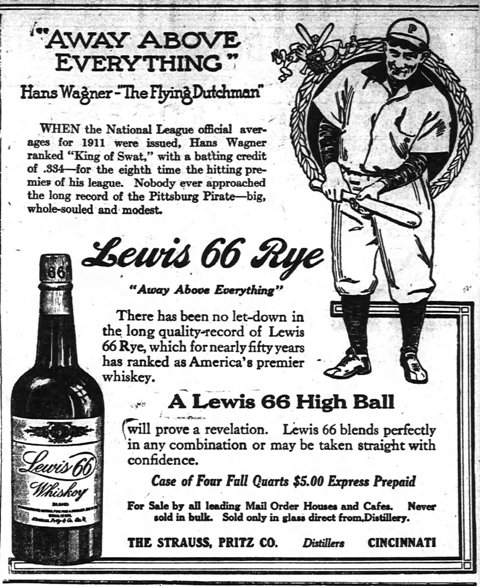
A 1912 advertisement for Lewis 66 Rye, featuring Honus Wagner:

“Hans Wagner–‘The Flying Dutchman’

“When the National League official averages for 1911 were issues, Hans Wagner ranked ‘King of Swat,’ with a batting credit of .334–for the eighth time the hitting premier of his league.  Nobody ever approached the long record of the Pittsburgh Pirate–big, whole-souled and modest.”

Five years later, as Wagner’s career was drawing to a close, Grantland Rice of The New York Tribune said:

Grantland Rice

Grantland Rice

“Wagner stands to date, for team worth, as the most valuable ball player that ever lived.

“A great infielder is of more value than a great outfielder, so in this respect Wagner has even ranged beyond Ty Cobb.

“Hughey Jennings was a star–a great hitter, a brilliant infielder and a brainy workman.

“But even Hughey has to make way before Wagner a man who for twenty years could average .340 [sic 21 years, .328] at bat and cover all the ground in sight between third base and the right field bleachers.

“Wagner is the game’s main marvel…He was as marvelous in the field as at the bat.  Floundering, awkward looking, bow-legged, with his vast hands dangling at his side, no one would ever have taken him for any action snapshot of grace.

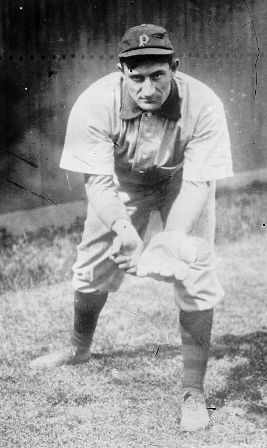
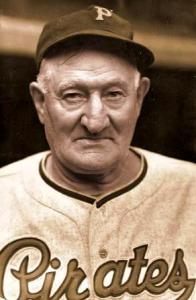
Honus Wagner

Honus Wagner

“But when it came to killing base hits back of third and back of second, mopping up his side of the field with a deadly certainty, he had no equal.

“If Wagner had been a .240 hitter he would have been one of the most valuable man of all time through his great defensive value alone.”

“Pulling a Lave Cross,” Eddie Collins on the Life of a Ballplayer

24 Feb

In 1914, Eddie Collins contributed an article about the life of a major leaguer in The National Sunday Magazine, a syndicated insert that appeared in several papers across the country.
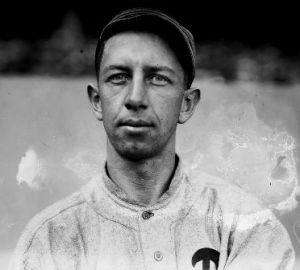
Eddie Collins

Eddie Collins

He described the beginning of his first road trip in the big leagues:

“It happened two days after I had joined the Philadelphia Athletics.  As ‘Mr. Sullivan,’ (Collins initially played under the name Edward T. Sullivan), still being an undergraduate at Columbia, I had watched two games from the grandstand at Shibe Park.

“The series over, Manager (Connie) Mack told me to report at the railroad station in time to catch a train that was leaving at six o’clock.  The Athletics were to make a quick September (1906) swing around the circuit.”

Collins said he was “about the first one at the depot,” and “eager as a boy” to begin his big league career.

Once on the train, he described the reaction of the players the first time the porter announced that dinner would be served:

“What transpired, immediately, might have led one to believe that the porter had insulted nearly everyone in the car.  There was a stampede.  Every one of the Athletics was up and rushing down the aisle, throwing aside magazines and newspapers, tumbling and pitching toward the door. The porter was knocked over and it is no exaggeration to state that one of our players—a very fleshy outfielder with elephantine tread (Topsy Hartsel)—walked over him in his haste.

“’What’s the matter with those fellows?’ I asked a veteran who had not joined the stampede.

“In justice to him, be it explained that he had a sprained ankle and couldn’t run.

“’They’re pulling a Lave Cross,’ he threw over his shoulder, as he hobbled after the others as fast as his lame ankle would permit.

“I came to know what ‘Pulling a Lave Cross’ meant.”
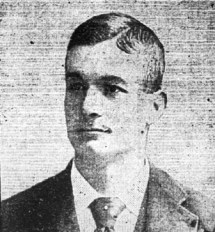
Lave Cross

Lave Cross

Collins explained the term, which referenced the former Athletics player:

“He was in the big leagues for years and during that period, he was never beaten into a dining car or eating room of any sort.  He always caught the first cab out of the station; he always was the first to plunge into the sleeper and select the best berth.  He never ran second where personal comforts or tastes were at stake.  During all his years, and the competition is keen, he was supreme.”

Collins said while Cross’ behavior might have been extreme, “haste” was “a habit inbred in all successful” ballplayers:

“I have noticed that after the game we all dress like firemen getting three alarms, race back the hotel, race into the dining room, race through our meal.  Then we saunter out into the lobby and kill two or three hours trying to see which foot we can stand on longer.  At first I marveled at this, then I found myself racing along with the rest of them.”

Calling himself, and his colleagues “rather peculiar individual(s)” Collins said of ballplayers:

“On the field, all his energies and thoughts are concentrated on one idea—the winning of the game.  His day’s work done, however, he throws that all off.  His first desire is to avoid the crowds and excitement.  Then he persistently refuses to talk baseball.  If you want to make yourself unpopular with big league ballplayers, drop into their hotel some night and try to talk baseball to them. “

Collins next provided readers with “some idea of ballplayers out of spangles,” to bring them into “closer touch.”

Honus Wagner, he said, was not a fan of fans:

“Down in Carnegie (PA) there are about twenty unfortunates…who are taken care of solely through Wagner’s generosity.  He has a heart as big as his clumsy looking body, but he hates the baseball ‘bug.’  Frequently wealthy fans have called at Wagner’s hotel on the road and tried to engage him in conversation.  Generally he will excuse himself and going over to the elevator boy will sit and chat with him for an hour at a time.  Wagner’s worst enemy will not tell you he is conceited, but he hates the fans prying into his affairs.”
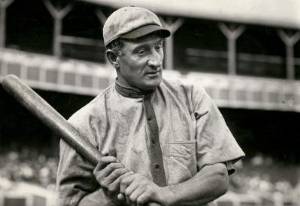
Honus Wagner

Honus Wagner

Connie Mack, he said, “is the same kind of man” as Wagner:

“Connie is forever handing out touches to old time players.  He is always thinking of anybody connected with baseball from the bat boys up. I know he insisted out little hunchback mascot (Louis Van Zelst) getting a share of the World Series’ money—not that any players objected—but it was Connie’s thought first.

“’Little Van comes in on this,’ he said.”
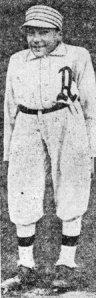
Louis Van Zelst

Louis Van Zelst


Collins also talked about how his teammates occupied themselves on the road:

“You will never find Chief Bender, our Indian pitcher, hanging around the hotel.  Too many original fans are apt to salute him with a war-whoop.  Besides, he is golf mad and when not on the diamond, he is to be found on the links… (Carroll “Boardwalk”) Brown, the young pitcher who did so well for us last year, is a billiard expert… (Stuffy) McInnis and (Eddie) Murphy are the ‘movie fiends’ of our club and are the only ones (Collins said many players were scared to go to the movies because they thought it would damage their eyes).  They can call the name of every star as soon as they see the face on the screen. Jack Barry, our shortstop, is inordinately fond of Hebrew literature and Biblical history.  This, although he, as well as his name, is Irish.”

Collins also shared his manager’s rules for the Athletics when the team was traveling:

 “It is one of Mack’s rules that we are only allowed to play cards on the trains…Connie is against card playing, which only leads to-night after night sessions, ill feelings and finally, disruption. I could tell you of at least one American League team that was broken by card games…Everybody has to be in bed by half past eleven and report in Mack’s room at half past ten in the morning.  For an hour Mack talks baseball, planning our campaign for the day.”

After Mack’s meeting, it was time to eat, and Collins shared his insights on ballplayers and food:

He said a “young pitcher on our club” should be a star, but “he has a weakness for roast beef,” and “persists in stuffing himself at noon time.”  He didn’t name the pitcher.

 “Walter Johnson, the greatest pitcher in baseball, also has a noonday weakness.  It is ice cream, but he seems to thrive on it.  Jack Barry feels off-color if he does not get his slice of pie…On the day he is going to pitch, Eddie Plank, our veteran left-hander, always eats tomato soup.  He thinks he would lose if he did not observe this ritual.”

Collins concluded:

“There is great temptation for the young minor league player, being put up at first class hotels…to eat his head off.  I honestly believe that more good youngsters have been ruined for big league work simply from overeating than any other extraneous cause.”

Other than their general disdain for ‘bugs,’ Collins said, in the end, players of the current era were unrecognizable from their counterparts of a generation earlier:

“Ballplayers today are scrupulously careful never to offend anyone in any way.  Especially do they take pride in being Chesterfields when women are around.”

“Excited and Nervous Players are Easy to Beat”

22 Feb

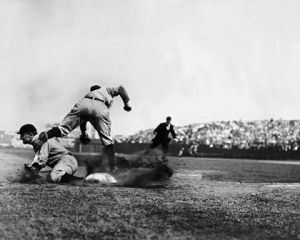
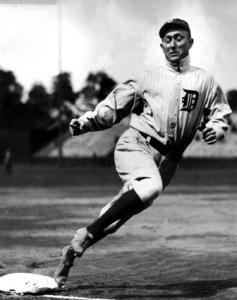
Ty Cobb shared his base running philosophy with writer Frank Menke in 1921, as part of a series of “As told to” articles for the King Features Syndicate.  Menke said of Cobb’s revelations:

Frank Menke

Frank Menke

“While it is of the most vital interest to youngsters, it also furnishes splendid reading for the adult fan, for it details the methods which Cobb used to reach baseball greatness”

Cobb’s view of base running seems appropriate for his personality:

“Keep in mind that when you are on bases you are fighting practically alone against nine men.  Every player on the other team is there for the purpose of killing you off before you can advance further.  You are faced by desperate odds, and the only chance you have for success is increasing watchfulness and alertness in taking advantage of every advancement chance that comes to you”

He was also clear about who owned the base paths:

“The baselines belong to the runner.  The baseman has no right to block your way.  According to the rules, you are justified in sliding into any baseman who tried to bar you progress illegitimately.  But don’t play dirty baseball.  Never run into a baseman unless it’s absolutely necessary.”

cobbconlon

Cobb stressed the importance of knowing four things every time he reached base: whether the catcher had a strong arm, the pitcher’s ability to hold a runner, the “trickiness” of the first baseman and how good each infielder was at taking throws and tagging base runners:

“You learn those things by observation.  Utilize every minute on the bench in studying the other players.  Learn what they can do—and what they can’t do—by watching them.  Then, when your time comes to run the bases, you’ll be ‘smarted’ up.”

[…]

“Upon arriving at first, it is usually a splendid thing to bluff a steal immediately.  That will enable you to learn whether the shortstop or the second baseman will cover the bag.  You can use that knowledge to your advantage when you are sliding into the bag… While on the bases, always keep yourself facing the man with the ball.  Maintain a position so that when the ball goes into play, you can advance to the next bag, or dart back to your own, as may be necessary, without an iota of lost motion.

“Worry the opposing infield—and especially the pitcher.  Keep racing back and forth.  Get a tantalizing distance off your bag but never too far so that you can’t get back in safely. Bluff steals. That helps to rattle the pitcher—and that’s what one of your chief aims should be.  Get the other fellows excited, and as nervous as possible.  Remember that excited and nervous players are easy to beat.”

[…]

“Hesitation in base running is fatal.  Once you make up your mind to steal and the signal has been passed to your mates, don’t hesitate.  If you hesitate, all is lost.  For hesitation loses you a second or so and the difference between a putout and a successful steal usually in less than a second of time.”

He also provided sliding tips:

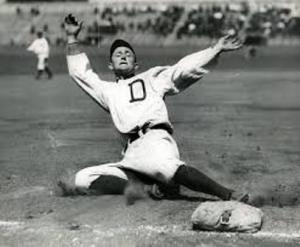
“Practice feet-first sliding…You’ll need to slide practically every time you attempt to steal.  Try short slides first, while running only at a moderate speed.  Then try longer ones.  As you acquire the knack of successful long slides from slow runs, increase your running speed.  As you increase your speed, go back first of all to the short slide and gradually work up to the long slide from a full-speed run.

“When hitting the dirt, aim to land on the side of your leg, with most of the weight and impact upon the fleshiest part of the upper hip.  Keep your legs rigid. Otherwise, they may double over and break.

cobb3


“Protect your arm when sliding.  Keep it clear of the underside of your body.  Otherwise, they may double up under the body and be broken or seriously injured…Never try to slide between a baseman’s legs unless it is absolutely necessary.  He spreads his legs for the main purpose of trapping you as you come in.  Try to hit the bag on one or the other side of him.

“Having reached your base in safety, get up quickly.  Don’t loiter.  Be ready to shoot for the next base.  How do you know—unless you are on your feet and watching—that the baseman hasn’t muffed the ball or that the catcher hasn’t thrown wildly to the outfield?”

In the end, Cobb was making the case for his style of play at the dawn of baseball’s new age:

“Keep your brain at work…Take chances but not foolhardy ones…Keep your eyes open—be alert—always.  Never fail to take advantage of the other fellow’s misplay…They win ballgames.  A run made on an error isn’t as spectacular as a home run.  But it counts as much in the total.”

Lost Advertisements–Grover Cleveland Alexander, Sweet Caporal

19 Feb

alexandercaporal

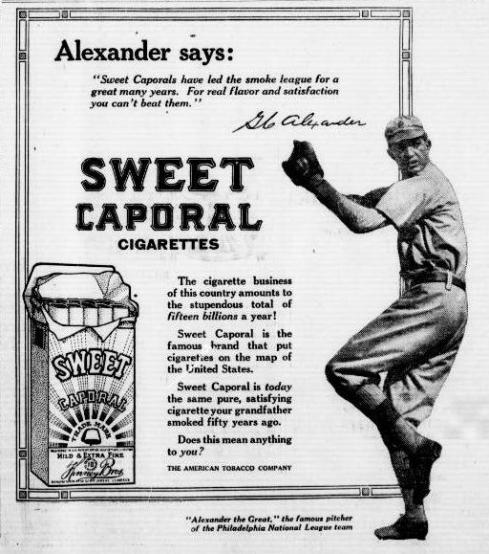
A Sweet Caporal advertisement featuring Grover Cleveland Alexander:

  “Sweet Caporals have led the smoke league for a great many years.  For real flavor and satisfaction you can’t beat them.”

Shortly before the 1915 season, Damon Runyon, writing in The New York American compared Alexander and Walter Johnson:

Damon Runyon

Damon Runyon

“Whenever we see Grover Cleveland Alexander pitching at top form, we conclude that he is the greatest right-handed pitcher in the land, and we cling to that conclusion until Walter Perry Johnson comes along with a line of his best pelting.  Then we decide that Walter is the greatest, and we hold that decision to the day that ‘Alex’ reappears.

“In short, our mind–probably none to stable at best–does a heap of vacillating between these Western wonders, and we are certain of only just one thing with respect to their ability–which is that it’s either Grover or Walter who is the greatest righthander…You may think that (Christy) Mathewson, or (Dick) Rudolph, or Bill James or Willie (Bill) Doak is greatest, and we have no doubt that you can produce just as many arguments in support of your belief…but it is our opinion that Johnson and Alexander today stand head and shoulders above all the rest.”

Runyon said that neither, however, were better than Mathewson when Matty was at his best:

“They are both great pitchers, but there have probably been many just as great–and there has been only one Mathewson.”

Runyon also claimed that players who faced both Alexander and Johnson agreed that one was the better pitcher:

“Ball players who have hit against both men–or rather who haven’t hit against them, for there is never much hitting against Walter or Grover–say that the Nebraskan is the better of the two.  They say he has as much ‘stuff’and knows how to use it better than Johnson.”

Morris' ride, Walter Johnson
Walter Johnson
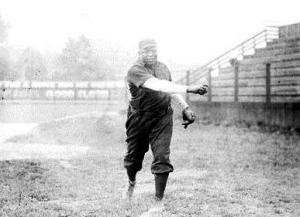
Most important to Runyon, he said, was that he preferred watching Alexander pitch:

“As a matter of personal choice, however, we would rather watch Alexander work than Johnson:  To us, it seems that he has more natural grace in the box…than the big Washington propeller.  There are mighty few pitchers who come under the head of things of beauty when they are working, but ‘Alex’ is one of them.”

As for a forecast for the coming season, Runyon said:

“Some fans are dreaming this year of seeing Alexander and Johnson as opponents in the first game of the 1915 world’s series, but they are mostly Philadelphia and Washington fans who are having those dreams, and we doubt if the dreams will come true.”

Both pitchers were dominant that season.

Johnson was 27-13 with a 1.55 ERA for a team, true to Runyon’s prediction, could only dream of a pennant–finishing fourth.

Alexander, however, was 31-10 with 1.22 ERA and did pitch the first game of the World Series for the pennant-winning Philadelphia Phillies–he won the opener 3 to 1, beating Ernie Shore and the  Red Sox, but Boston came back and won four straight, including Dutch Leonard‘s 2 to 1 victory over Alexander in Game 3.

Hal Chase, 1912

17 Feb

Hal Chase resigned as manager of the New York Highlanders after the 1911 season but remained with the club.  Before the 1912 season, he was the subject of the profile written by Homer Croy for the International Press Bureau.  Croy would later become a well-known novelist and screenwriter, best known for writing “They had to See Paris,” Will Rogers’ first sound film.

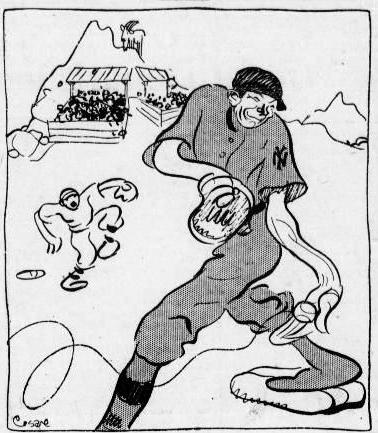
The feature also included a sketch of Chase by Oscar Cesare of The New York Evening Post.

chaseoscarcesare

Croy wrote:

“Hal Chase, the great billiard player, is also captain of the Yankees.  He would rather play billiards, after being out on a month’s camping trip with nothing to stay the inner man except canned calf’s tongue, pemmican and an uninterrupted view of the landscape, than have a plush-button, golden-backed chair in the dining room of the Waldorf with three waiters and a water boy to heed his beck.

“A three-cushion carom is as easy for him as a pick-up…He has such good shoulders and leaps so gracefully that he has to have a penknife operated by foot power to open his mashing notes.”

Of Chase’s brief stay at Santa Clara College, Croy said:

“He went one year to college, making a major of second base, a minor of handball and a bluff at calculus.  The faculty couldn’t see him with a microscope and full lights on, sighing with relief when he climbed in the chair car homeward bound.”

Croy said besides billiards, hunting and horseback riding were Chase’s favorite activities, “When he gets out of his baseball togs his favorite outdoor diversion is keeping his heels in, his elbows stiff and his thumbs pointing up.  He can give a riding master the lag.”

By the end of the decade, Chase’s name would be synonymous with gambling and game-fixing, but in the spring of 1912, to Croy, he was:

“The greatest first baseman between the Canadian Pacific and the Gulf Stream.”

“A Good Ballplayer must be Temperamental”

15 Feb


Idah McGlone Gibson was the most famous female journalist of the early 20th Century; in addition to publishing several books, she wrote for the syndicated Newspaper Enterprise Association, The Chicago Tribune, The Los Angeles Evening Herald, and The Toledo Blade.

idahmgibson

Idah McGlone Gibson

She also interviewed New York Giants Manager John McGraw twice, five years apart.

Their first meeting took place in New York shortly before the end of the Giants’ pennant-winning 1912 season.  McGlone told her readers:

“McGraw is surrounded by more ‘buffers’ to keep the public from him that Maude Adams (a notoriously press-shy actress), who is never interviewed, and that’s going some.

mcgrawgibson

Gibson and McGraw in 1912

“Neither his telephone number nor his home address is obtainable unless you reach one of his close friends, and at the Polo Grounds. he is never on view until you have passed all the police force and plain-clothes men.”

McGlone said former Giant turned New York attorney, John Montgomery Ward provided her with an introduction to McGraw.

“It was after the game that I saw the Giants’ manager, well-groomed, well-dressed, well-mannered. McGraw was evidently at peace with himself and the world…He is the most serious ballplayer I ever talked to.  He seldom smiles, and told me that he put one on to order when he had his picture taken with me.”

Gibson asked how McGraw thought the Giants would fare in the World Series against the Boston Red Sox:

“Of course, we are going into the game to win, not because of any glory attached to it, but because it is our business.  However, I feel that I shall be able to live through the winter if we lose the world’s championship.  I am not able to get up that high-water mark enthusiasm which exhilarates the fans to whom the game is a pleasure and not a business.”

She also asked McGraw about the biggest source of gossip surrounding his ballclub; the relationship between Rube Marquard, his 26-game winning pitcher and vaudeville star Shirley Kellogg—during August and September several newspapers published erroneous reports from Marquard’s mother that the couple had married:

“’Indeed, I don’t know whether he is married or not,’ he answered suavely, but his brown eyes narrowed and his lips came together firmly.  ‘You know I have nothing to do with the private lives of my men.’

“Marquard’s name and love affairs, however, did not bring a rosy glow to the manager’s face, and I imagine McGraw has helped make the course of true love run a little crooked, as ‘the Rube’ has lost the jump to his fast ball since his reported marriage.”

Rube Marquard

Rube Marquard


McGraw touted his other pitchers, telling Gibson that the greatest pitching performance “he had ever seen was in training camp last spring” when Jeff Tesreau and Al Demaree faced each other for 12 scoreless innings in an intersquad game in Texas.

Despite her fondness for McGraw, Gibson told her readers they “may trust a women’s intuition” and correctly predicted the Red Sox would win the World Series.

Gibson met McGraw five years later during a September series in Cincinnati, with the Giants on their way to another National League pennant. She said:

“I hope I have changed as little as he has in that time.

“His hair, the Irish hair that turns white early, has grown just a bit more optimistic—that is all.

“’Twenty-nine years is a long time to be in the game,’ he said as his eyes wandered over the field—‘longer than most of those boys can count their entire lives.’”

Gibson asked about temperamental players:

“In my nearly three decades of baseball I have learned one thing thoroughly—a good ballplayer must be temperamental, just as an artist, a musician, or a writer must have temperament.”

Gibson asked how he makes “a man’s temperament,” benefit the team:

“’By ignoring it,’ he answered.  ‘I must make every man think he has no temperament, even while making him use that most desirable quality in a ballplayer to its fullest capacity.’”

McGraw refused to say which player on the team was the most temperamental, but offered to tell who was the least.  Gibson said:

“’(Christy) Mathewson, I interrupted.’

“’Yes, Mathewson is always to be depended upon.  When he knows a thing is to be done he just does it.  Some men play best when a team is winning and some play best when spurred by defeat.  A baseball manager must not only be a good picker, but he must study each man individually and handle all differently.’

“’At the end of a season with a winning team you have to be more than ever on your guard.  Every man is a bundle of nerves, drawn taut.  At this time every little prejudice, every little idiosyncrasy, every little vein of superstition is laid bare and raw.  You get to know your men better then than at any other time during the season.’”

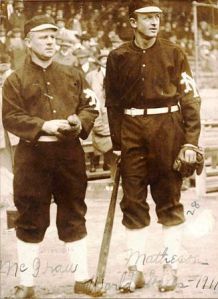
Christy Mathewson with John McGraw

McGraw and Mathewson

Gibson asked if the best ballplayers came from a particular nationality.  McGraw said:

“’I cannot answer that.  I think perhaps the Irish are the quickest thinkers and the readiest to take a fighting chance, but I would not like a team made up entirely of Irish.  You must have temperaments like the German to ballast the Irish.  Truly I think a winning ball team must be a melting pot of all nationalities.  This year there are more Germans among the Giants than any other nationality and they are just as temperamental as any other but they don’t show it in just the same way.’”

Gibson did not make a prediction about the World Series as she had done five years before; McGraw’s temperamental Giants were beaten four games to two by the Chicago White Sox.

Lost Advertisements–Frank Frisch, “Dr. Eliot’s Five-Foot Shelf”

12 Feb


frischad

In 1923, P.F. Collier & Son Co. used New York Giants second baseman Frank Frisch in advertisements for the 51-volumes of great world literature, now known as The Harvard Classics, then called “Dr. Eliot’s Five Foot Shelf.”

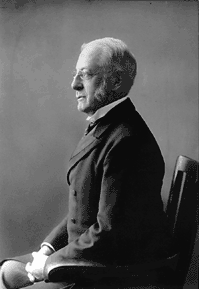
The collection first appeared in 1909.  Harvard University President Charles William Eliot claimed that anyone could receive a liberal education by spending 15 minutes a day reading from a collection of books that could fit on a five-foot shelf.

Charles William Eliot

Charles William Eliot

The anthology was borne out of that claim:

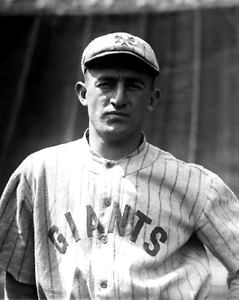
“When Frank Frisch first appeared at the Polo Grounds in 1920, he was hailed as the smartest young college player who ever broke into baseball.  He is still smart and still studying.  This column tells how.”


Brain’s are Frank Frisch’s main asset as a Champion ball-player

“When John J. McGraw started in 1920 to rebuild the Giants he looked about for young, smart, teachable players.

“From Fordham College, he took young Frank Frisch–and Frisch made good in the first game he played and is still making good.  His main asset is his brain; he thinks faster and further ahead than do most other players.

“But ballgames are short and so is a professional player’s active career.  What does Frisch do in the rest of his time? You will find him, not scattering his time and thought, but curled up somewhere with a good book in his hand.

“In his private library, for instance, is Dr. Eliot’s Five Foot Shelf of Books. He bought it with his earnings as a ballplayer, and now studies it to make his mind still faster and so to increase his earnings–both on the diamond and in later life.”

Frisch

Frisch

The use of a professional athlete, even one with a college education like Frisch, would likely have not pleased Eliot, who had a general contempt for sports.  He attempted, unsuccessfully, to abolish football at Harvard in 1905, and is often quoted having said about baseball:

  “Well, this year I’m told the team did well because one pitcher had a fine curve ball. I understand that a curve ball is thrown with a deliberate attempt to deceive. Surely this is not an ability we should want to foster at Harvard.”

Things I Learned on the Way to Looking Up Other Things #17

10 Feb

Honus Wagner on Integration, 1939

As part of a series of articles on the long overdue need to integrate major league baseball, Wendell Smith of The Pittsburgh Courier interviewed many of baseball’s biggest names.  One of the most vocal proponents was Honus Wagner.

Wagner

Wagner

The then 65-year-old Pittsburgh Pirates coach told Smith:

“Most of the great Negro players I played against have passed on, but I remember many of them well.

Rube Foster was one of the greatest pitchers of all time.  He was the smartest pitcher I have ever seen in all my years of baseball.

“Another great player was John Henry Lloyd.  They called him ‘The Black Wagner’ and I was always anxious to see him play.

“Well, one day I had an opportunity to go see him play.  After I saw him I felt honored that they should name such a great ballplayer after me, honored.”

Rube Foster

Rube Foster

Wagner said the “Homestead Grays had some of the best ballplayers I have ever seen.”

John Henry lloyd

John Henry lloyd

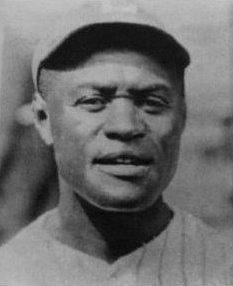
Although he misidentified one of them as “lefty,” Wagner also said of William Oscar Owens, a pitcher and outfielder for the Grays and several other clubs:

“He was a great pitcher and one of the best hitters I have ever seen.”

More recently, Wagner said Oscar CharlestonJasper “Jap” Washington, Satchel Paige and Josh Gibson “could have made the grade easily had they been accepted.”

Wagner concluded:

“Yes, down through the years, I have seen any number of Negro players who should have been in big league baseball.”


Uniform Criticism, 1923

The Decatur (IL) Herald found the state of baseball uniforms worthy of an editorial in March of 1923:

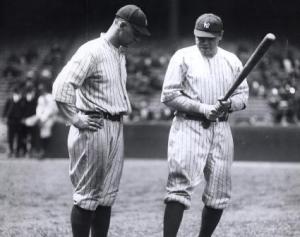
“Pictures of baseball players in training reveal that the season of 1923 has brought no marked change in the style of uniform.  It is quite as baggy and unbecoming as ever.

“Baseball players refer to their costumes as ‘monkey suits,’ a term that is supposed to establish some sort of connection with the cut of the affairs worn by the little animals that pick up the organ grinder’s pennies.  However, that may be, no sensible man imagines that his uniform accentuates his good looks.  It is purely a utility costume and smartness has no place in it.”

ruthandgehrig

Lou Gehrig and Babe Ruth in their “baggy and unbecoming” 1923 uniforms


The paper was most concerned about the uniform’s tendency to make players look foolish and appear to be out of shape:

“A collarless blouse with an awkward length sleeve bags at the belt in a way to emphasize abdominal prominence instead of athletic trimness about the loins.  Loose knickerbockers gathered at the knee resemble the khaki uniforms of the Spanish-American War period in their voluminousness and wrinkles…A cap fitting close about the head and bringing ears into striking relief is the climatic feature of this make-up.

“Underneath this covering of dirty gray or brown there are doubtless lithe limbs and well developed muscles, but the spectator doesn’t see them.  The baseball costume doubtless serves its purpose, it fails lamentably to make the wearer look like an athlete.”

No Women Allowed, 1912

Coming out of the 1912 winter meetings in Chicago, The New York Globe said:

“Nothing doing for suffragettes in the American League!  Not even if they march to the meeting.  They may be making great progress in their cause, but there will not be any Mrs. Brittons in the Ban Johnson organization.”

“Mrs. Britton” was Helene Hathaway Britton, who became owner of the St. Louis Cardinals after the death of her uncle Stanley Robison.

Helene Hathaway Britton with children Marie and Frank

Helene Hathaway Britton with children Marie and Frank

 “A decision was reached that no woman can own a club or even attend an American League meeting.  According to the owners it was a good decision, as they did not want to get into the same mess of trouble which the National League has encountered since one of its clubs fell into the hands of a woman.  Which shows the American League is constantly being benefitted by the experience of the National.”

The “trouble” referred to tension between Britton and Manager Roger Bresnahan, who she had given a five-year contract before the 1912 season.  The two feuded after the team struggled and Britton rejected numerous overtures from Bresnahan to buy the team.  She eventually fired the manager and a very public battle ensued.  Sinister “Dick” Kinsella, who along with Bill Armour comprised the Cardinals’ scouting staff, resigned claiming Bresnahan was “Not treated right.” Armour remained with the club and a settlement was finally reached when Bresnahan was named manager of the Chicago Cubs.

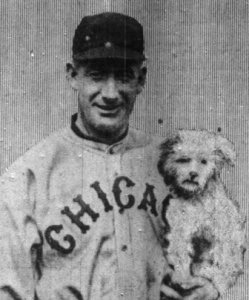
bresnahanandtoy

Bresnahan moved on to the Cubs

One American League owner told The Globe:

“I think it will benefit our league to keep the women out of baseball.  It is almost impossible to do so, but we must keep them out of baseball.  A woman owning a ballclub is about the limit, and the American League made a great move when they decided to bar female magnates.  Votes for the women may be alright, and we do not blame them for battling for them, but it would be a terrible thing to have them in baseball as owners.  It would mean the ruining of the game.”

Grace Comiskey, who became owner of the Chicago White Sox after the death of her husband John Louis Comiskey in 1939–she was forced to go to court to get control of the club from The First National Bank of Chicago; as trustees of the estate, the bank wanted to sell the team because there was no specific instruction in the will that his widow should take control.

She became the American League’s first woman owner.

The game appears not to have been “ruined” during her tenure.