Tag Archives: American League

“Victim of Hoodoo”

4 Feb

In a game filled with stories of superstition, jinxes, “hoodoo,” and general irrationality, the Detroit Tigers seem to be the subject of an out-sized number of such stories during major league baseball’s first four decades.

Tigers’ pitcher George Mullin, whose story I told in October, was one of the most superstitious players in the history of the game, and he was not alone in Detroit.

This story begins in 1904, but took off in 1911, first in the Detroit newspapers and then across the country.  The Headline in The Duluth News-Times said:

“Moriarity (sic) is Victim of Hoodoo that follows Detroit Captains.”

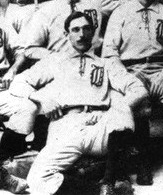
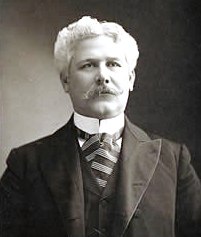
“Moriarity” was George Moriarty, who had been named captain of the Tigers for 1911.  The story said Moriarty was the victim of a “Jinx” that dated back to 1904 when Bobby “Link” Lowe was acquired by the Tigers and named captain:

“His sterling playing qualities and the friendship that all the players had for him, together with his knowledge of baseball brought him the appointment of captain.  Bob got into a slump and Bob did not get out of it.”

Bobby "Link" Lowe

Bobby “Link” Lowe

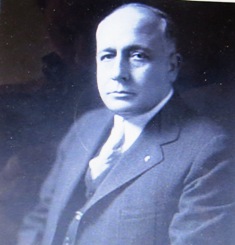
In 1905, the Tigers named Bill Coughlin captain, the story continued:

“Coughlin, whom everybody liked and who could play ball as well as the majority of them and think faster than most of them… (His) playing started down grade.  Bill bit his fingernails tore out his black wavy hair in bunches, lost sleep and worried several pounds off…Bill never got back to form.”

Bill Coughlin
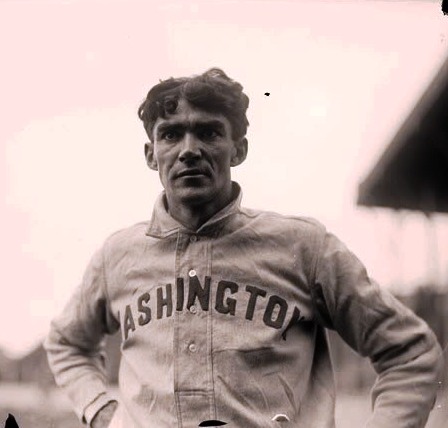
Bill Coughlin

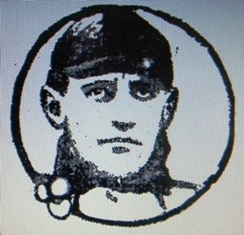
After Coughlin was replaced at third base by Moriarty in 1909, Detroit manager Hughie Jennings named William Herman “Germany” Schaefer captain for the 1909 season.  The story said of him:

“Herman with his ever penetrating optimism, humor and baseball wisdom …appeared to be the right man in the right place as captain…but Herman’s playing ability decreased to such an extent that Detroit gladly grasped at the chance to trade Schaefer.”

Germany Schaefer

Germany Schaefer

Hughie Jennings was enough of a believer in the jinx, even before it became grist for the newspapers, that after trading Schaefer in August of 1909, he chose not to name a captain for the remainder of the season, or for 1910.  Jennings decided to again name a captain in 1911:

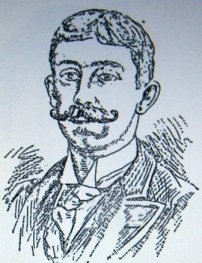
“On the Southern training trip Jennings came to realize the necessity of a field leader… (Moriarty) was cool-headed and had the qualities of a leader…the choice seemed like a good one…But soon after the opening of the season it became apparent that Moriarty caught the hoodoo…The duties of the position have weighted in Moriarty until his playing ability has fallen away below par.”

After the 1911 season, Jennings took the situation seriously enough to again consider eliminating the position of captain.  The Detroit Free Press said, “In all probability the Tigers will have to struggle along without a captain next season,” citing Moriarty’s “Frightfully bad year,” after being named captain.
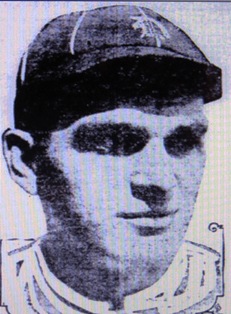
George Moriarty

George Moriarty

In the end, Moriarty was again captain of the Tigers in 1912 and served in that capacity through 1915.

Like most “jinxes,” there really was no jinx, none of the players performed significantly worse than their career averages except for Lowe—but he was 38-years-old when he was acquired by Detroit in 1904 and had missed most of 1903 with a badly injured knee.

Coughlin had shown great promise with the Washington Senators, hitting .275 and .301 in 1901 and 1902, but by the time he was named Tiger captain in 1905 he had back-to-back seasons of .245 and .255, right around his career .252 average.

Schaefer was a .257 career hitter, and his numbers during his half-season as captain were similar to his career numbers.

Moriarty hit .243 during his season with the captain “hoodoo;” his career average was .251, and most of his 1911 numbers were similar to his performance throughout his career.

More on Moriarty tomorrow.
The Man who Dried up Memphis

4 Jan

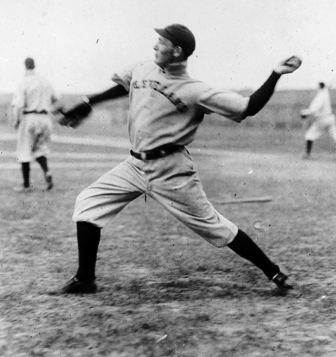
Finis Albert “Fin” Wilson had a brief, unsuccessful Major League career.  After four minor league seasons—two with the Knoxville Reds in the Appalachian League and two with the New Orleans Pelicans in the Southern Association—and a brief spring trial with the Cleveland Indians, Wilson signed a contract to play with the Brooklyn Tip-Tops in the Federal League in September of 1914.

Appearing in two games that September, Wilson went 0-1 with a 7.71 ERA.  Despite a respectable 3.78 ERA in 1915, Wilson‘s Major League career was over after a 1-8 season for the Tip-Tops.

Wilson signed with the Atlanta Crackers in the Southern Association in 1916, but became sick in April and missed most of the first half of the season.  He returned to the team in July and ended the season with a 4-6 record.

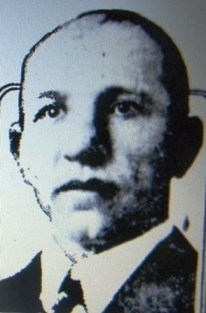
Finis Wilson 1914

Finis Wilson 1914

He returned home to Greensburg. Kentucky and served two terms in the Kentucky General Assembly.  In 1928 he was appointed as a federal prohibition administrator in Memphis, Tennessee, primarily responsible for stopping the transportation of illegal liquor on the Mississippi River.

Wilson was very popular in Atlanta because while pitching for New Orleans in 1913 he beat the Mobile Sea Gulls on the last day of the 1913 season securing the championship for the Crackers and shortly after his appointment he was the subject of a glowing profile in The Atlanta Constitution:

“In an office at the custom-house here in old Shelby County with the Mississippi meandering by just outside the window I found the man who won the 1913 pennant for the Atlanta Crackers. Finis E. Wilson, who left a bank presidency in Kentucky to battle Shelby county bootleggers, does not look like the young left-handed pitcher who gave the greatest exhibition of courage the Southern Association ever saw. His hair is gray now and he looks positively genial.”

He was on the front line of the government’s battle with moonshiners.  In one raid Wilson, according to The Associated Press he:

 “Dried Memphis up… (Wilson) directed the greatest cleanup Memphis ever experienced…more than 150 persons were arrested and confiscated 1,500 gallons of whiskey, 800 gallons of wine and 20,000 quarts of home-brew.

In another raid two of Wilson’s boats were bombed as agents destroyed 1300 gallons of liquor and arrested six men.  Wilson told The Associated Press:

“If it’s war the moonshiners want it’s war they’ll get.”

And it was a war; 16 agents were killed and 183 were injured in 1928 and ’29 alone; and while corruption among agents was widespread, it appears that no agents under Wilson were charged with any wrongdoing.

Wilson left government service sometime after the repeal of the Volstead Act in 1933, and died in Coral Gables, Florida in 1959.

Finis Wilson circa 1930

Finis Wilson circa 1930

Anger Management

27 Dec

Thomas Timothy “Tim” Flood just couldn’t control himself.

Flood was a solid infielder and somewhat erratic hitter.  As a 17-year-old he hit .364 with the New Orleans Pelicans in the Southern Association in 1894 but hit .266 in his minor league career and .233 as a Major Leaguer.

He had a late season 10-game trial with his hometown St. Louis Perfectos in the National League in 1899.  He was given his next shot in the National league in 1902 when he was signed by Ned Hanlon’s Brooklyn Superbas to fill the void left at second when veteran Tom Daly jumped his contract to join the Chicago White Sox.

Flood was an upgrade in the field, and while a weaker hitter than Daly, he quickly became a favorite of Hanlon who named him Brooklyn’s captain for the 1903 season.

Tim Flood

Tim Flood

1903 was not a good season for the new captain; he continued to struggle at the plate and dealt with a knee injury that limited him to 84 games.  He was also suspended for two games in July for a physical altercation in Cincinnati with umpire James “Bug” Holiday.  Holiday, a former Major Leaguer had a stormy half season as a National league umpire and resigned several days after tangling with Flood.

Flood was released by Brooklyn in March of 1904 and joined the Los Angeles Angels in the Pacific Coast League.

He was a very popular player in Los Angeles and captained the Angeles in 1904 and part of 1905 until he assaulted Ira “Slats” Davis, another former Major Leaguer turned umpire during a game in June of 1905. Eugene Bart, president of the league suspended flood indefinitely.

Newspapers reported that Flood said he would “never fight another arbitrator whether he is in the right or wrong.”

In 1906, he signed with the Altoona Mountaineers in the “outlaw” Tri-State League, where he appears to have kept his pledge and had an incident-free season.

In 1907, he joined  the Toronto Maple Leafs in the Eastern League and managed to play 29 games before he was in trouble again.  Flood assaulted an umpire named John Conway during a game in Toronto; the attack included a kick to the umpire’s chest.

Flood was arrested.

He was charged with assault and ordered to appear in front of a magistrate. Friends told Flood the hearing would be a formality and that he should plead guilty and receive a small fine.

No one told Magistrate George Taylor Denison who said, “This sort of thing must be discouraged,” and sentenced Flood to “Fifteen days in jail with hard labor.” At the same time Patrick Powers, president of the Eastern League, banished Flood from the league.

Toronto fans were outraged and immediately began circulating petitions which “included the names of several clergymen” and were presented by team officials to Minister of Justice Allen Bristol Aylesworth in hopes of getting Flood pardoned.

Opinions of the punishment varied.  Several newspapers carried the following poem which lamented Flood’s fate for “Sassing” an umpire:

“’Holy Moses!’  In Toronto

There is news to make you pale

Sass the umpire if you want to—

That is, want to go to jail!

There is woe among the batters,

As around the field they scud;

And their pride is torn to tatters

By the fate of poor Tim Flood

Fifteen days in jail for Timmy

Soon the parks will close so tight

That you couldn’t with a jimmy

Let in one small streak of light.”

Others, including two former players, said Flood got what he deserved and implied that his behavior was not limited to the three well-publicized incidents.

Charles “Count” Campau, a former Major Leaguer and umpire, who had been a teammate of Flood’s in New Orleans said:

“I am sorry to see anyone go to jail, but, for the good of baseball. I am glad to see Tim Flood out of it for good. Rowdies of the Flood type are a disgrace to any sport or business, and especially baseball. He was always mixed up in just this way and was chased out of California, where b« was playing, for the same kind of tricks. Umpire baiting was always his long suit, and, from what I can understand, his attack on Umpire Owens [sic] was a most cowardly one: Flood is a good ballplayer, but his hasty temper, his meanness has put him out of the game forever, and incidentally Into Jail.”

Charles "Count" Campau

Charles “Count” Campau

Tim Murnane, Major Leaguer turned baseball writer said:

“Tim Flood has a new record, and will now be in a position to go back to his trade and give up the game he was unfitted for.  The courts all over the country should follow the example of the Canadian judge, who sent a ballplayer to lock-up for assaulting an umpire.  It wouldn’t take many decisions of this kind to drive the bad men out of the sport.  Imagine a player taking a running jump at a man and hitting him in the breast with his spiked shoes!”

Tim Murnane

Tim Murnane

After serving 10 days, Minister of Justice Aylesworth ordered Flood released.  The player, in various reports, claimed he lost between 10 and 16 pounds during his incarceration, citing the poor quality of the food.

President Powers rejected pleas from the Toronto management to reinstate Flood and permanently banned him from the Eastern League; however, contrary to Campau’s and Murnane’s wishes, Flood was out of baseball for less than a month.

Flood was signed before the end of July by the Saint Paul Saints in the American Association and vowed, as he had before, that he was a changed man.

It appears 10 days in jail might have made a difference.  Flood was named manager of the Saints in 1908 and continued to play and manage in the minor leagues for five more seasons, apparently without incident.

In 1914, The Sporting Life reported, with no irony, that Flood was hired as an umpire in the Northern League.

Flood died in St’ Louis in 1929.

A Thousand Words–Harpo Marx

24 Dec

harpo

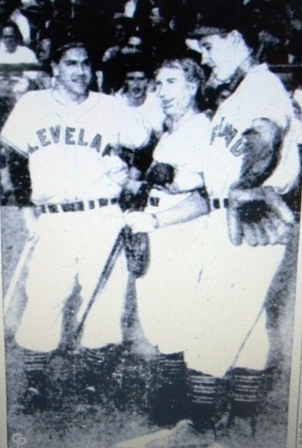
Harpo Marx with manager Lou Boudreau and pitcher Bob Feller at the Cleveland Indians’ training camp at Randolph Park (now Hi Corbett Field) in Tuscon, Arizona, March 1947.

Zimmer and The Players Protective Association

21 Dec

Charles “Chief” Zimmer made one more important contribution to the game as founding member and first president of the Baseball Players Protective Association.

When the organization was formed in June of 1900 Zimmer said:

“The players realize that the sport needs a stirring up, and will cooperate with the club owners in the good work.”

In retrospect it was an admirable, but naive statement.

Nearly 100 players attended the first meeting and elected Zimmer.  Hughie Jennings was elected secretary and William Clarke treasurer.  The attorney for the Association was former Major Leaguer Harry TaylorClark Griffith was later name vice president.

In December the association presented their five point plan to the owners:

  1. “Club owners (would) mot have the right to ‘reserve’ players at a salary less than that provided for the ensuing year, nor for more than three years.”

  2. “Not to buy, sell, assign, trade lend, accept, select or claim service of any player for any period in any way without his written consent.”

  3. “Club owners to pay physicians’ fees for injuries received in actual play.”

  4. “No player to be suspended without pay more than three times a season or two weeks at a time.”

  5. “The appointment of a committee of arbitration, one member to be chosen by the owners, one by the players, and a third (agreed upon to mediate disputes)”

The demands were met with silence.  The Baltimore Morning Herald said:

“Club owners will hardy accede to the requests—no communication yet established with the new organization.”

Part of the reason the association was largely unsuccessful was because early on it was made known they would do nothing to leverage their demands.  Harry Taylor told The New York Times:

“Well, this is a conservative organization.  There is nothing revolutionary about it, and we don’t propose to keep men from playing ball.”

While some short-term gains were made as a result of the creation of the American League as a Major League in 1901, allowing players to jump contracts for terms from AL clubs, the association was all but broken after the American and National League’s made peace in 1903.

Charles "Chief" Zimmer

Charles “Chief” Zimmer

It would be more than 50 years before players again seriously considered taking collective action, but Zimmer’s organization provided one of the early, small steps to challenging the reserve clause.