Tag Archives: Atlanta Crackers

“Apperious is a high-toned Man”

8 Jan

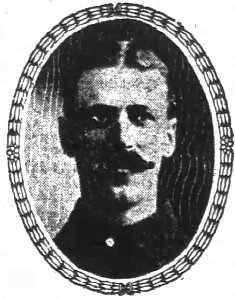
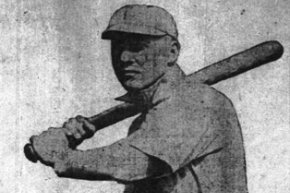
After igniting a controversy in Vermont’s Northern League in 1905 when he refused (as he had in college in 1903) to appear on the field with William Clarence Matthews, Sam Apperious returned to Alabama in 1906.

He played centerfield for the Montgomery Senators in the Southern Association.  The Washington Post said in March “it is said that Connie Mack has arranged to try him out with the Athletics next fall.”

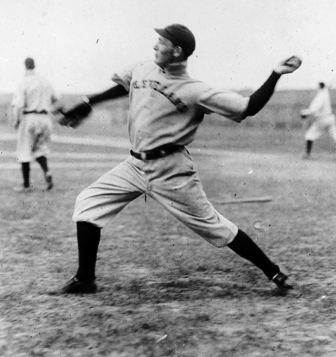
Sam Apperious

Sam Apperious

The Atlanta Journal said he was in Alabama, and not the big leagues, by choice:

“Apperious is a high-toned man, a graduate of Georgetown, and plays ball for his home town because he likes the game.  He is not in the strict sense a professional, for he declines to go the big league, where he could easily get a much larger salary.”

In Montgomery Apperious became part of the biggest controversy of the Southern Association’s 1906 season—the league had no shortage of controversies each season.

It started with a fly ball to Apperious in an otherwise uneventful 9-0, June 10 victory over Charlie Frank’s Pelicans in New Orleans.  The Journal said:

“It sailed so high in the air that Apperious, who caught it, concealed under his shirt and gave it Manager (Dominic) Mullaney.  When cut open (the following day in the presence of Shreveport Pirates Manager Bob Gilks) it was found to be wrapped in rubber.”

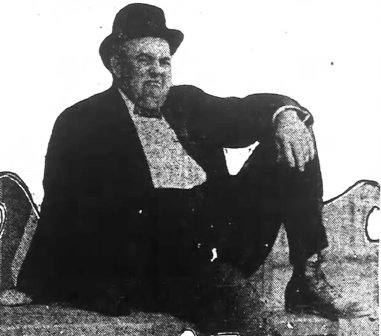
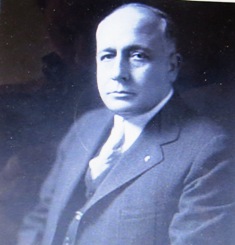
Charlie Frank
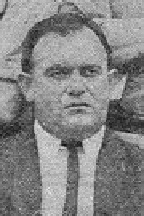
Charlie Frank

Five days later the Atlanta Crackers were in New Orleans when, in the eighth inning after home runs by Pelicans’ William O’Brien and Mark “Moxey” Manuel,  Atlanta second baseman and captain, Adolph Otto “Dutch” Jordan suspected something was wrong with the balls.  The Atlanta Constitution said:

“(After Manuel’s home run) The ball was lost and new one was thrown out by the umpire, but before (Joe) Rickert, the next batter could go to the plate, Jordan picked up the ball and said he would not play, that the balls had rubber in them and that his men were being robbed…Jordan tried to purloin one of the balls, and only gave it up after he had been arrested by a half dozen policemen.”

Jordan was charged with petit larceny and released on $100 bond.  The ball taken from him was reported to be in the possession of the New Orleans Police.  Days later the Montgomery team gave the ball Apperious had kept to Southern Association President,  William Kavanaugh.  A full investigation was promised.

The Journal called for immediate action:

“Kavanaugh may be making investigations quietly and he may intend to act later, but what seems most in order just now is the suspension of the man who is said to be responsible for all the trouble in the Crescent City.  The actions of Charlie Frank in causing the arrest of Otto Jordan and his being taken in a patrol wagon through the streets of the city in a uniform of Atlanta, is a disgrace and the mere thought given it the more repugnant it becomes to all decent people.

“It was a disgusting and uncalled for act and was done to cover up the outrageous contact of the man who put the rubber balls into the game.”

By the end of the week, Apperious denied that the ball opened in Shreveport was the ball he caught in New Orleans while Mullaney and the Montgomery club dropped their request for an investigation of Charlie Frank and the rubber balls.

On June 23 the Crackers mascot, a four-year-old goat named Yaarab (shared with the Atlanta fire department) died suddenly.  A tongue-in-cheek article in The Constitution said: “when the news was flashed over the wires that Mullaney was another of Frank’s right-hand men, the goat betook himself to a bed of straw and curled up and bid his firemen friends a last farewell.”

Yaarab in happier times

Yaarab in happier times

Once Apperious and Mullaney withdrew their allegations, the scandal went the way of most of the annual scandals in the league; in early August The Sporting Life said President Kavanaugh declared the charges “entirely unfounded.”

Apperious appeared in 137 games for Montgomery in 1906 and hit .251.  The Constitution called him “The fastest outfielder in the South.”  The Montgomery Advertiser said he was “one of the best all-around ballplayers in the South.”

He only appeared in 24 more games.  Early in the 1907 season, The Advertiser said he was “suffering with water on the knee.”  Unable to recover from the injury, Apperious was released by Montgomery in June.

Apperious would never play again; he married and moved to Louisville, Kentucky.

The man who refused to take the field with William Clarence Matthews and the Cuban X Giants lived to see baseball integrated.  He died in 1962.  There is no record of him ever speaking to a reporter about his actions in Washington and Vermont.

A final note: The Washington Herald reported before the 1908 college baseball season that for the first time since 1904 Harvard would be playing Georgetown:

“When Sam Apperious was captain of the varsity nine Harvard insisted on playing a negro against the Blue and Gray, and Apperious viewed the game from the bench.  This brought about a severance of athletic relations, but the old wounds have healed and the Crimson will play at Georgetown field on April 25.”

The game ended in a 2-2 tie after 10 innings.
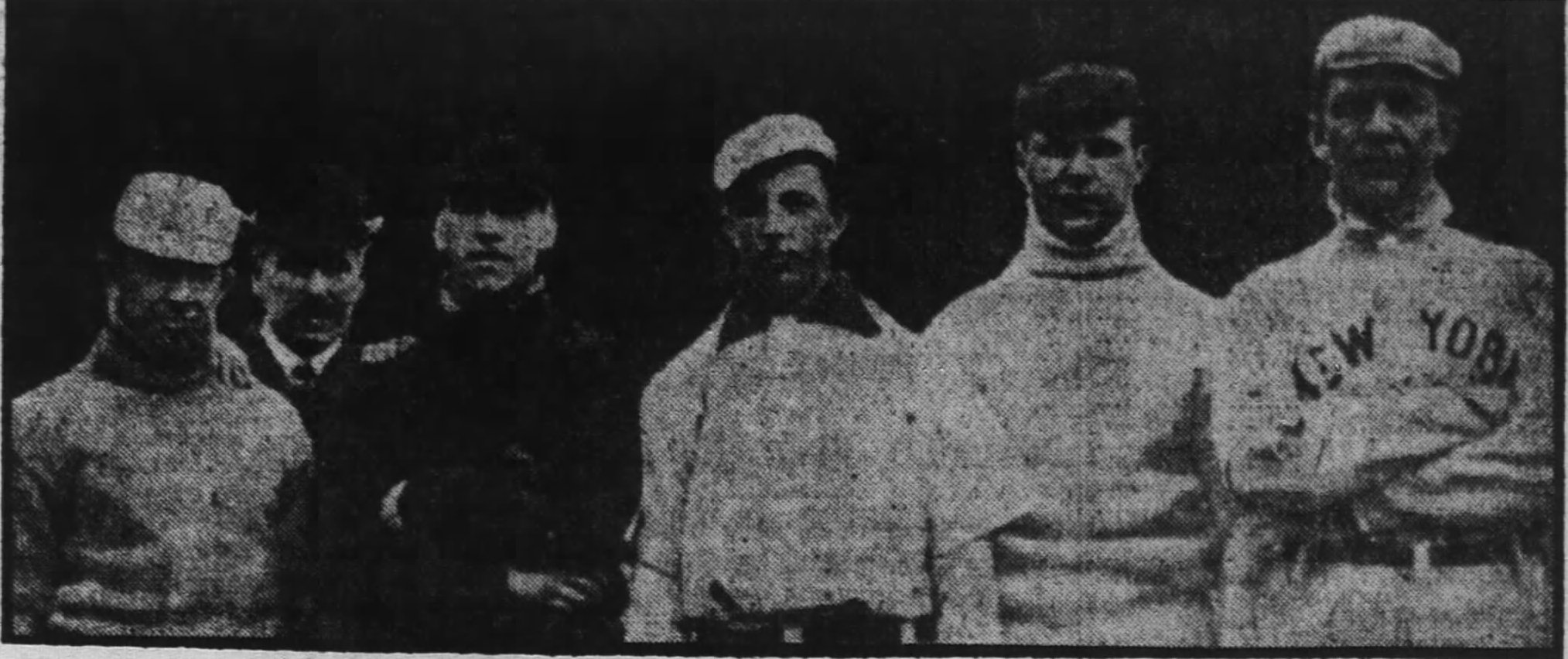
Lost Team Photos–1903 New York Highlanders

3 Jan

1903NY

Five members of the first New York Highlanders team and a New York sportswriter photographed at Atlanta’s Piedmont Park in March of 1903. The financially failing Baltimore Orioles franchise was transferred to New York for the 1903 season.

From left: William “Wee Willie” Keeler (RF), James “Gym” Bagley of The New York Evening Mail, Harry Howell (P), William “Wid” Conroy (3B), Monte Beville (C), and John Ganzel (1B).

Atlanta Was thrilled to host the team.  The Atlanta Constitution said on the morning the team was due to arrive:

“The hearts of the local fans will be made glad today by the arrival of the New York American baseball team, for this afternoon on there will be something doing at the park.

“Manager Clark Griffith will have charge of the team, and will bring them in with him this afternoon on the Southern’s No. 27 from Washington, which is due in the city at 3:55 o’clock.

“The aggregation is nothing less than a bunch of stars.”

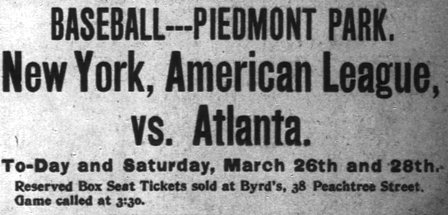
Large crowds came out to Piedmont Park for the team’s morning and afternoon practices and for the Highlanders first spring game on March 26 against the Atlanta Crackers.

advertisement for the 1903 New York Highlanders spring games with the Atlanta Crackers

Advertisement for the 1903 New York Highlanders spring games with the Atlanta Crackers


Griffith’s team finished fourth in the American League with a record of 72-62.

“The Montgomery Team Threw to us Three Games by Arrangement”

12 Nov

The Southern Association kicked off their 1903 season assuming things couldn’t help but go better than the previous year.  The actions of Memphis Egyptians owner/manager Charlie Frank—who continued to put players in the Memphis line up who had been blacklisted by the league—had thrown the season into chaos.  The situation became so contentious that the headline in The Atlanta Constitution said after the final day of the season:

  To The Relief of All the Season is Now Over

A post season agreement restored the league—and made Frank even a greater power in the league.

As part of the settlement Frank received an estimated $5000 which he immediately put towards building a contender for 1903.

Frank built a good team and continued to improve it; as the team battled for the pennant in the final month the roster included veterans Perry Werden, Joe Delehanty, and Charles “Dusty” Miller.

In July he paid a reported $2500 to the Milwaukee Brewers in the American Association for outfielder Sam Dungan, pitcher Ray “Dad” Hale and third baseman Bill Phyle; Frank named Phyle team captain.

Bill Phyle

Bill Phyle

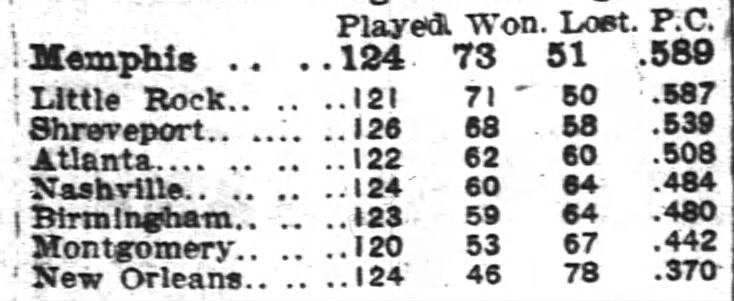
Frank’s team finished strong and edged out the second place Little Rock Travelers on the final day of the season; Memphis beat the Atlanta Crackers 9 to 5 in front of 7500 fans—the then largest ever crowd at Atlanta’s Red Elm Park.

The final standings

The final standings

The following week Little Rock defeated Memphis 3 games to 2 in a best of five series; the Southern Association season appeared to have come to peaceful close on September 28, 1903.

That changed two days later.

Newspapers across the South reported on serious charges that were being made in Memphis.  The Associated Press said:

“According to statements made by William Phyle, former National League player and this year a captain of the pennant-winning Memphis team…the Memphis club won first honors by inducing players on the opposing team to ‘throw’ the final (series).”

Phyle told reporters the scheme began earlier in September:

“The Montgomery team (Black Sox) threw to us three games by arrangement, but Little Rock kept on winning and kept it close on out heals.  I knew that Birmingham (Barons) threw to Little Rock too.  Then the deciding and final game of the season between Memphis and Atlanta arrived, and we had to win the last two games to keep the lead.  Two of the Atlanta pitchers were given $25 each to allow Memphis to win…and another player was also bought.  We won one game by (George) Winters misjudging a fly that allowed (Ted) Breitenstein a three-bagger and the deciding run.”

Winters error came in the second to last game; he was absent from the final game of the season.

Phyle later told an Atlanta reporter that the pitchers who were paid off were Frank “Zeke” Wilson and John Ely.  Charlie Frank, who had just announced he was leaving Memphis to take control of the New Orleans Pelicans, denied the charges and claimed Phyle was simply angry over a “dispute involving money.”

Zeke Wilson

Zeke Wilson

Phyle also said the five-game post season series was “prearranged, so that the deciding game was played in Memphis before a Sunday crowd.”

League President William Kavanaugh scheduled a meeting in Memphis for October 17 to investigate the charges, and Phyle went to West Baden, Indiana.

Phyle demanded travel expenses to return to Memphis for the meeting, he initially claimed that the money the league wired came too late. Then Kavanaugh ordered him, by telegram, to “catch the first train for Memphis,” Phyle refused, now claiming he was ill.

The meeting was held without Phyle.  Zeke Wilson testified that he had received $50 from Charlie Frank, but that it was given to him after the season in order to secure his release from Atlanta.  He said he intended to sign with Frank in New Orleans (he ended up signing with Montgomery in 1905, but joined Frank in New Orleans in 1905).

As for Winters, who made the error that allowed Memphis to win the second to last game and was absent for the final game, The Sporting Life said that charge was “very easily explained.” It was claimed he failed to appear in the final game because of a dispute with Atlanta management over transportation money.

Managers Lew Whistler of Montgomery and Michael “Duke” Finn of Little Rock denied that either club was involved in “anything crooked.”  John Ely did not appear but sent a letter denying all charges.

Without Phyle in attendance to provide his evidence the league “exonerated all clubs and players mentioned in his charges,” and suspended Phyle indefinitely.

Next Phyle was ordered to St. Louis to defend his charges before the National Association of Professional Baseball Leagues.  He again failed to appear.

On October 25 Bill Phyle was expelled indefinitely from professional baseball.

The following week he appealed the decision; claiming his illness was the only reason he failed to appear and that if allowed “he will appear and substantiate the charges which he has made.”

He was never given another opportunity to present his case.  His appeal was denied in December.

Tomorrow: More on Bill Phyle.

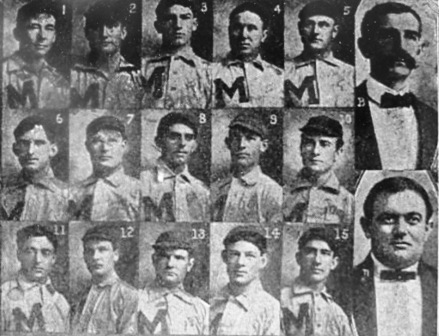
The 1903 Memphis Egyptians--

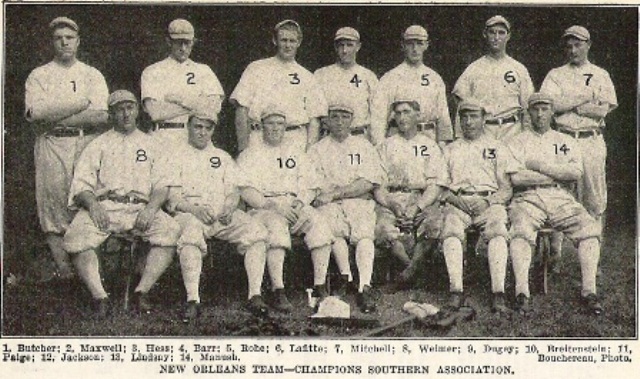
The 1903 Memphis Egyptians–Bill Phyle is number 11, Joe Delehanty 2, Perry Werden 4, “Dusty” Miller 12, Ted Breitenstein 13, Charlie Frank, bottom left with bow tie

“Krug Seemingly Lost his Head”

25 Sep

The 1902 Southern Association season was so contentious that a headline in The Atlanta Constitution said the day after it ended:

To the Relief of All the Season is Now Over

In addition to the months-long battle between Charlie Frank and the league, there was an on-field incident that The Columbus (GA) Daily Enquirer called “an exhibition as was never before seen on an Atlanta Diamond.”  Henry “Heine” Krug was at the center of it.

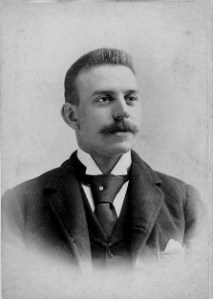
Henry Krug

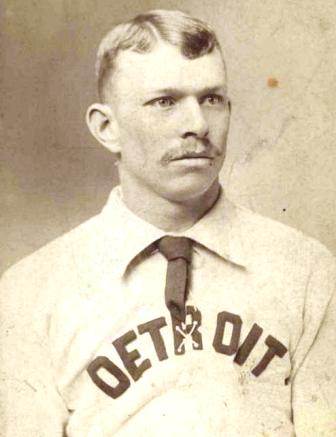
Henry Krug, 1902

In February of 1902, Ed Peters, new owner and president of the Atlanta Firemen signed Ed Pabst to manage the team.  Pabst had played the previous season with the San Francisco Wasps in the California League and brought with him to Atlanta his friend Krug, a 25-year-old shortstop who had been playing for West Coast professional teams since he was 17.

When Krug was signed The Constitution said he was “beyond doubt the star of the Pacific Coast,”

The Sporting Life said Krug had already signed a contract with the Philadelphia Phillies, but jumped the Phillies to join Atlanta.

Krug’s average never dipped below .300, and was very popular with fans and the press.  The Constitution called him “The best all-around professional of the Southern Association” in June.

On July 15 the paper noted his “dashing, errorless work that has been classed as phenomenal.”

Two days later the tone changed dramatically.

The fourth place Firemen were playing Charlie Frank’s Memphis Egyptians and Krug was having a rough day.  Early in the game a throw from first baseman George Winters hit Krug “and gave him a severe blow in the mouth.”  Krug had walked off the field, intending to leave the game, but came back.  He probably shouldn’t have.

Krug went on to make three errors, two of which The Constitution said “in the opinion of the crowd might have been avoided.”

The crowd began to taunt Krug and “Instead of taking the roast the bleachers proceeded to give him as any sensible player would take it, Krug seemingly lost his head and with all the vicious intent imaginable, he secured the ball and threw it with all his strength into the bleachers.”

The Constitution said Krug, “phenomenal” just two days earlier, now said the shortstop’s “conduct on former occasions has been offensive to the patrons of the game.”  Although Krug was ejected from a game earlier in the week, there didn’t appear from newspaper reports to be any pattern of “offensive conduct.”

Atlanta bleacher fans “dodged the sphere” and no one was hurt.  Team president Peters immediately approached Ed Pabst and “instructed him to order Krug out of the game.”  Pabst refused:

“He did not like what he considered an infringement on his prerogative, and at once tendered his resignation as manager of the Atlanta team.  President Peters was just as ready to accept as Manager Pabst was to tender, and within the space of a few seconds the ball player who has been managing the Atlanta team since the playing season of 1902 opened found himself deposed.”

Ed Pabst

Ed Pabst

Peters took over as manager and remained in the position for the rest of the season.  His first act as manager was to remove Krug from the game and suspend him.  The Constitution said:

“Krug’s baby act was witnessed by Sergeant Martin and policemen Norman and Hollingsworth.  They placed him under arrest.”

Some reports said a bottle and rock were thrown at Krug, but the player said he didn’t see that and was reacting only to the verbal taunts.  He appeared in court the following day and was fined $10.75; The Daily Chronicle said, “Krug appeared very penitent.”

Peters sold Krug’s contact to the New Orleans Pelicans the following day, but Krug refused to report sending a wire to Peters and Pelicans owner Abner Powell saying “that if he could not play in Atlanta he would not play,” in the league.

Despite the incident, there was no shortage of interest in Krug’s services.  In addition to New Orleans, the Phillies, who he jumped to join Atlanta and the San Francisco franchise in the California League offered him contracts.

Krug signed with Philadelphia and made his debut with the Phillies on July 26; the day after Atlanta management petitioned the National Association of Baseball Leagues (NAPBL) to blacklist Krug.

No action was taken and Krug played out the season in Philadelphia, hitting .227 in 53 games.  He spent 1903 with the San Francisco Seals in the Pacific Coast League (PCL).  Peters sold his interest in Atlanta in 1903.

Before the 1904 season, the PCL and the NAPBL reached an agreement that made the league part of the National Association and no more an “outlaw league.”  As part of the deal, PCL players who were under contract with other teams were returned.  As a result, Krug returned to Atlanta.

The Constitution assured their readers:

“He has promised to be good and to do his best to help the team win.  It is the belief of many fans in this city that he wishes to redeem the past.”

Krug played two incident-free, if unspectacular seasons in Atlanta, then played in the New York State League with the Scranton Miners and the American Association with the Indianapolis Indians.

krug1

Henry Krug,1907

The 31-year-old returned to San Francisco, where he was “negotiating for a place with the California State League,” and had accepted a position coaching the baseball team at Cogswell College.  Krug underwent surgery for “an abscess upon his throat” on January 12, 1908, and died from complications from the operation two days later.

Two months after his death all had been forgiven in Atlanta.  The Constitution named him to the paper’s “All-Atlanta Ball Team,” the best professional players to have played in the city.  Krug “was a power with the stick.  No better man ever played on the Atlanta team when it came to breaking up a game.”

“An Almost Complete Surrender”

23 Sep

At the close of the Southern Association’s tumultuous 1902 season league president William Kavanaugh, and the majority of the team owners, led by the New Orleans Pelicans’ Abner Powell, set out to oust Charlie Frank of the Memphis Egyptians.

Charlie Frank

Charlie Frank

After a decade as a player, including two seasons with the St. Louis Browns in the National League, Frank was one of the founding members of the new Southern Association in 1901 and became the president and manager of the Memphis Egyptians.

The Atlanta Constitution said that right from the beginning Frank became “the storm center for southern baseball politics… (He) was constantly engaged in some sort of furious baseball litigation.”

After signing three players–Jim St. Vrain, Charlie Babb,  and Bill Evans—who were under contract with other teams during the 1902 season, Frank became embroiled in a months-long legal battle with the league and the National Association of Professional Baseball Leagues (NAPBL).

In October of 1902, Frank lost his legal battle, and it was thought that the time was right to force him out.  The New Orleans Times-Picayune said Powell and Kavanaugh were “confident that a new party” would take over the Memphis franchise and “do much better than the old.”

Powell, Kavanaugh, and the other league owners overestimated their influence in Southern baseball and underestimated Frank’s.

While Powell and company were trying to find a replacement for Frank, he was creating a new league.  The Constitution said:

“(Frank) determined to organize an outlaw league, got financial backing in Memphis and actually formed a circuit.”

The problem for the Powell group was that Frank’s proposed league, and its investors, were more financially sound than the existing league.  Charlie Frank challenged the Southern Association again, and again the Southern Association blinked.

Rather than losing the league, the other team owners accepted every one of Frank’s demands and welcomed him back.

The Associated Press called it “an almost complete surrender,” by the Powell-Kavanaugh contingent:

“Charles Frank retains the Memphis franchise; Memphis club and Frank restored to good standing; Memphis will be paid for all losses sustained during last season, on account of unplayed games, legal costs, etc…”

Additionally, Frank saw to it that every investor in his “new league” was reimbursed for their costs; the Association covered “all obligations made by the promoters,” including honoring the contracts of all players who had been signed, most of whom were absorbed into Southern Association teams.  Additionally, Chattanooga, Tennessee was dropped from the league and a franchise in Montgomery, Alabama was “awarded to the promoters” of Frank’s “new league.”

It was estimated that Frank received $5,000 in the settlement.  He put some of that money towards building a solid team for 1903, winning his first pennant.  Memphis won again in 1904; early in the season, Frank handed over the managerial reins to Lew Whistler.

Lew Whistler

Lew Whistler

In 1905, Frank became president, principal owner, and manager of the New Orleans Pelicans, and promptly led them to a pennant— in spite of a Yellow Fever epidemic in New Orleans which required the team to relocate to Atlanta for part of the season.  Frank’s Pelicans also won pennants in 1910 and ’11.  He sold his interest in the team after the 1911 season but remained manager for two more years.

Charlie Frank's 1910 New Orleans Pelicans

Charlie Frank’s 1910 New Orleans Pelicans

In 1916 Frank returned to the Southern association again, organizing a stock company to purchase the Atlanta Crackers.  He managed Atlanta to a fifth place finish in 1916, and then won pennants in 1917 and ’19.

Frank sold his majority interest in the Crackers in May of 1921 but continued to manage the team.  In May of 1922, he resigned citing poor health—he died in Memphis three weeks later.

Defending their own Honor

12 Aug

In 1909 the Atlanta Crackers won their second Southern Association championships in three seasons.  Big things were expected for 1910; the team’s two 20-game-winning pitchers Tom Fisher and Harold Johns were returning.

The team the Southern press called “the hitless wonders,” which hit .222 while winning the championship added two new bats, outfielder Arista DeHaven, .336 with the Terre Haute Hottentots in the Central League and Charlie Seitz, .326 with the Norfolk Tars in the Virginia League.

But it took very little for near panic to take hold in Atlanta.

Only eight games into the season the Crackers were 3-5, tied for sixth place.  The Birmingham Age-Herald was ready to pronounce the defending champions finished, and said “there was dissention and dissatisfaction in the ranks.”   The article said that manager Adolph Otto “Dutch” Jordan had already lost control of his team.

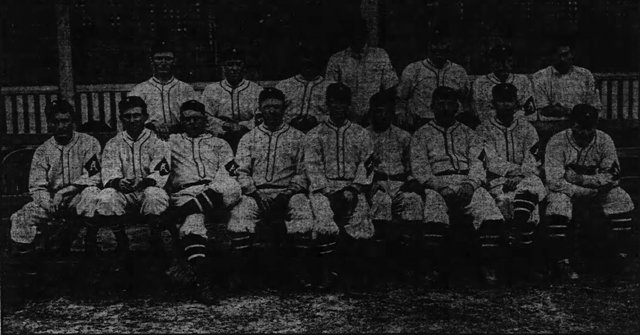
The 1910 Atlanta Crackers:  Standing, from Left to right: Arista DeHaven, Charlie Seitz, Paul Sentell, Brown Rogers, Hyder Barr, Roy Moran, and Ed Hohnhorst,  Seated from left: Scott Walker, Hank Griffin, Syd Smith, Otto Jordan, Bick Bayless, Erskine Mayer, Harry Matthews, Harold Johns and Tom Fisher.

The 1910 Atlanta Crackers: Standing, from Left to right: Arista DeHaven, Charlie Seitz, Paul Sentell, Brown Rogers, Hyder Barr, Roy Moran, and Ed Hohnhorst, Seated from left: Scott Walker, Hank Griffin, Syd Smith, Dutch Jordan, Dick Bayless, Erskine Mayer, Harry Matthews, Harold Johns and Tom Fisher.

It wasn’t enough for the team to simply deny the charges; in an unprecedented move they went right to the fans to assure them they were trying to win and happy to be members of the Crackers.

On May 1, The Atlanta Constitution ran a letter “gotten up without solicitation by the boys and the autographs of each and every man is attached hereto:”

A Card to the Faithful Fans of Atlanta:

We the undersigned players of the 1910 ballclub, appreciating to the full the kind of loyal support always accorded us by the good citizens of Atlanta, desire hereby to register an emphatic protest against a statement recently made in a Birmingham paper to the effect that there was dissention among us, and that this dissention, so it was alleged, was the cause of our defeats on the last road trip.

Without stopping to discuss the real reasons which gave us more defeats than victories, we wish to state that it gives us much satisfaction to put our friends on notice that there is not one word of truth in this malicious slander, and further, that we know of no reason why there should be any dissention in our club…It should be further interesting to state, as we do, that the very best of feeling prevails among us all, and there is not one of us who is not doing his very utmost to land another pennant for Atlanta.  We simply ask our friends to continue to put their faith in us, and in return, we desire to give them the assurance that, whether we win another pennant, or not, we are firmly determined to play the best and sincerest ball of our careers—at least so far as honest and persevering effort can aid in bringing about so happy a result.  We confidently hope to amply show both friend and foe, long before the summer of 1910 has passed into baseball history, just how basely we have been misrepresented by this idle and empty charge.

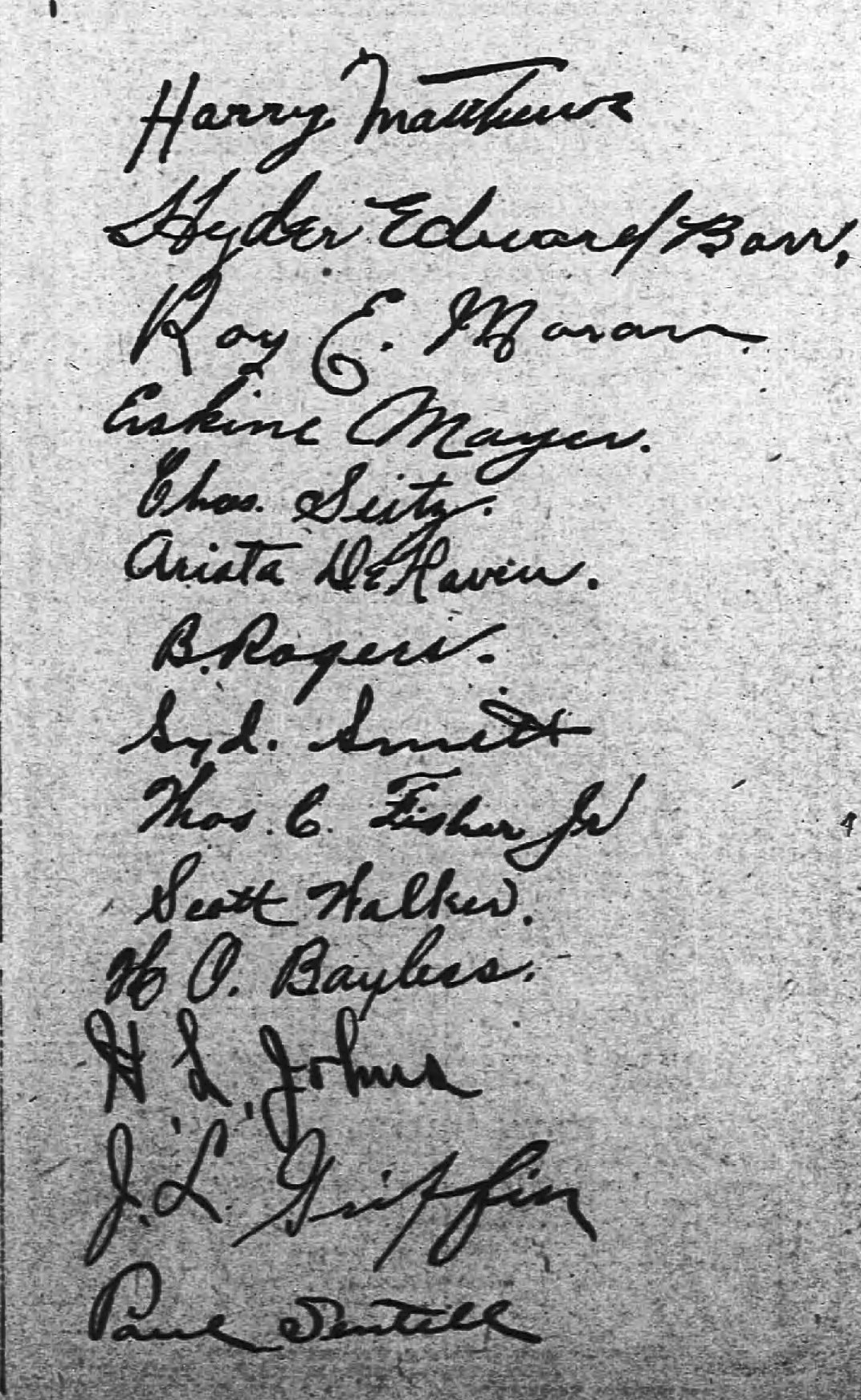
The signatures of the 1910 atlanta Crackers that appeared with their open letter to the fans.

The signatures of the 1910 Atlanta Crackers that appeared with their open letter to the fans.

After the slow start, and their pledge to “play the best and sincerest ball” of their careers,  Atlanta played well the remainder of the season, finishing with a 75-63 record, but the New Orleans Pelicans, behind “Shoeless Joe’ Jackson’s league leading .354 average, and the pitching of 41-year-old Ted Breitenstein (19-9, 1.53 ERA), and 31-year-old Otto Hess (25-9), went wire-to-wire, winning the pennant with a record of 87-53.

Atlanta would not win another pennant until 1913.

“Calvo has been the Victim of a Cruel and Merciless Conspiracy”

4 Jun

When he signed 18-year-old Jacinto “Jack” Calvo Gonzalez, Washington Senators manager/owner Clark Griffith was no stranger to Cuban players, having managed Armando Marsáns and Rafael Almeida with the Cincinnati Reds, but Calvo’s signing was the beginning of Griffith’s 40-plus year commitment to signing players from Cuba.  During his tenure the Senators signed more than half of the 63 Cuban players in the major leagues.

Calvo was “discovered” while playing with Almendares in the Cuban National League, where he hit .342 in 19 games.  He made even more of an impression during a series Almendares played against the New Orleans Pelicans of the Southern Association, Calvo hit .400 and his older brother Tomas hit .385.

???????????????????????????????

He also hit .400 during a six-game series with the Philadelphia Athletics, The Associated Press said he didn’t compile those numbers facing minor league pitchers picked up for the series, but “against (Eddie) Plank, (Jack) Coombs, and (Charles “Chief”) Bender.”

When rumors circulated that Washington might have signed Calvo, Bender said:

“I never saw a faster youngster in my life; he can hit too, and looks for the entire world like a class ball player…If Griffith has signed him he will never regret it, for there is no chance for him to be a failure.”

By December of 1912 Griffith had Calvo under contract.  The Pittsburgh Press said:

“The young Cuban sent a letter to Griff, written in Spanish.  ‘They did not teach Spanish where I went to school,’ said The Old Fox, ‘so I can’t translate the missive.  However, as he signed his contract I guess everything is alright.’”

The Boston Red Sox signed Tomas Calvo later in December.

While Tomas never made it in Boston, Jacinto made his debut with the Senators on May 9; he hit only .242, but everyone noticed his arm.  After a June game with the St. Louis Browns, The Associated Press said:

“The youngster astonished the bugs yesterday with his remarkable throwing arm.  At one time he heaved the ball from the right field fence directly to (Germany) Schaefer’s hands at second.”

On August 13 Calvo was sent to the Atlanta Crackers in the Southern Association and made his first appearance with the team the following day, batting seventh, going 1 for 4.  The Atlanta Constitution said “He’s fast, fields pretty well, throws like a shot and meets the ball squarely.”

Calvo only lasted 10 days in Atlanta.  He was hit on the right arm with a pitch thrown by Charles “Curly” Brown of the Montgomery Rebels.  He was returned to the Senators and did not appear in another game that season.  (Some sources show Calvo with the Long Branch Cubans in the New York New Jersey League—it was most likely his brother Tomas, an infielder, rather than career outfielder Jacinto, who played shortstop for the team in 94 games).

Calvo started the 1914 season with the Los Angeles Angels in the Pacific Coast League.  After only 11 games (he was 4-8 with one double, one triple and a stolen base) he was sent to the Victoria Bees in the Northwestern League.  Later in the season a story came out explaining his abrupt departure from Los Angeles.

Calvo with the Washington Senators

Calvo with the Washington Senators

The Spokane Spokesman-Review said, “Calvo has been the victim of a cruel and merciless conspiracy,” despite the fact that “in the exhibition games last spring against the White Sox Calvo loomed up head and shoulders above the other Angel gardeners, out hitting them by a wide margin and displaying more speed on the bags than the whole Angel team combined.”

The paper claimed that a female reporter:

“(o)n one of the local papers…dragged out of him the fact that his father was a rich sugar planter in Havana, and that he played baseball for fun and not for money…That was the beginning of the end for little Calvo. “

The story said fans began harassing Calvo, and:

“Instead of coming to his rescue, the players on the Angel team ‘rode’ the boy unmercifully.  It was pathetic to see the friendless little Cuban trying to get into the good graces of his teammates.  One day, in the clubhouse the boy sat down on a bench and cried before them all.  His spirit was broken.”

Calvo hit .289 for Victoria in 1914, and spent the spring of 1915 with the Senators before being release before the beginning of the season.  After his release he played with his brother Tomas for the Long Branch Cubans, by then a member of the Independent Negro League; he also played for Havana in the Cuban-American Negro Clubs Series.

Calvo next played for the Vancouver Beavers in the Northwestern League and the San Francisco Seals in the Pacific Coast League, hitting .329 in 1916, and slipping to .263 in 1917. After the 1917 season, the outfielder returned, unsigned, the contract sent to him by Seals owner Charlie Graham.

Calvo had been very popular in San Francisco during his nearly two seasons with the Seals, but was criticised by fans and local press for his holdout, especially because he was holding out on the even more popular Graham.  The San Francisco Chronicle said:

“He sent his terms, and as they were exactly what he asked for before.  (Charlie) Graham is wondering why the Cuban went to the trouble to wire at all.”  The paper criticised Calvo for “asking for more money than he got last year,” while “better players than he have submitted to a salary slash on account of war conditions.”

San Francisco Seals owner Charlie Graham

San Francisco Seals owner Charlie Graham

The Chronicle lamented the fact that Seals outfielder Biff Schaller would miss the entire season with an injury, otherwise “Calvo could have stayed in Havana for all that anyone here cares.”

As it turned out, Calvo did stay in Havana.  For all of 1918 and ’19, not returning to the states until 1920.  Tomorrow–Jacinto Calvo’s return.

“An Umpire Nearly Lynched”

11 Mar

The above headline appeared on an Associated Press story in August of 1890.  Former Major Leaguer Jimmy Manning, then managing the Kansas City Blues in the Western Association had interceded to quell a riot at the end of a game with the Denver Grizzlies in Kansas City:

“Two questionable decisions by umpire Jovin (Sic) in the ninth inning, when Kansas City was about to tie the score, angered the crowd to such an extent that they swarmed into field, hooting and jeering the umpire.  Two young boys got hold of a rope, and in fun proposed to lynch him.  This added to the excitement, and it looked for a time as if the umpire would be mobbed.  Jimmy Manning climbed up to the top of the fence and addressed the mob.  He said the umpire had decided rightly and advised that no violence be attempted.  This quieted the mob to a degree.  In the meantime the players of both clubs formed a hollow square around the umpire and conducted him to the clubhouse.”

Jimmy Manning

Jimmy Manning

“Jovin” was actually Fred Jevne, a 26-year-old minor league veteran who had become an umpire just a month earlier.  After joining the Spokane franchise in the Pacific Northwest League in April, Jevne was suspended in May for punching an umpire.

In July The Spokane Falls Daily Chronicle said Jevne and teammate Tom Turner “quit the nine because they were excessively fined and ill-treated.”  According to the paper the two players showed up at the July, 1 game “in an intoxicated condition and acted like ruffians in the grand stand.” Turner was eventually reinstated and finished the season in Spokane, Jevne did not.

Since 1885 Jevne had played for a variety of teams in several leagues, including the Southern, International, and California.  When he was signed by Spokane to play center field and serve as captain, The Daily Chronicle said:

“Jevne is rather short.  He is a good batsman and a good player generally.  The San Francisco papers, when he played there, alternately praised him and berated him, but all agree that he was a good player.”

Jevne made one more attempt at playing, joining the Evansville Hoosiers in the Northwestern League in 1891.  He then returned to the Western Association as an umpire.

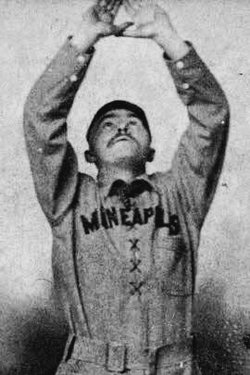
Fred Jevne

Fred Jevne with the Minneapolis Millers, 1889

In December of 1894 Jevne was named to the National League umpiring staff, where his work received mixed reviews.  In June The Baltimore Sun called him “As good an umpire as there is in the business.” In August, after a he worked a game between the Boston Beaneaters and Chicago Colts, The Boston Globe said “Umpire Jevne did poor work, both sides suffering from his yellow decisions.”  The Pittsburgh Press called Jevne’s performance in a September game between the Pittsburgh Pirates and Philadelphia Athletics “By far the worst exhibition of umpiring given this season.”

Jevne was not offered a position in the National League for 1896, and went to work in the Southern Association, where he seems to have a continued his fighting ways.  In July, The Birmingham Age-Herald said Jevne had missed the previous day’s game between the Montgomery Senators and Columbus River Snipes:

“Jevne, the regular umpire, arrived in town last night, but this morning loaded himself up with the spirit of hilarity, got into a fight with a citizen and when the hour for playing arrived was in the hands of the police, and failing to make bond was unavoidably absent from the field.”

Despite his troubles, or because of them, Jevne was asked to join the Interstate League at the end of the 1896 season because, according to The Sporting Life, umpires were losing control of games:

 “(Interstate League President Charles) Powers to-night wired for Fred Jevne the ex-National League umpire, who is so handy with his fists, to report for duty.”

Jevne was not popular with players or the press down south, and said his time in the Southern Association was difficult:

“It was no snap umpiring down South.  Fines didn’t go—were never paid—and so I used to remove men from the game.  Sometimes I would have to take out about half of a team before they would behave, and then the papers would roast me good and plenty the next morning…I had a scrap with a player named (Al) Gifford (Atlanta Crackers shortstop), and punched him in a car going from the grounds.  The local paper came out the next morning and urged the chartering of a special car for the umpire. So that he could be alone in his dignity, and another paragraph hinted that a cigar sign or dummy could be put in the special car for the umpire to punch”

Jevne appears to have returned to the Southern Association for parts of the 1897 and ’98 seasons.  He spent at least part of 1899 and 1900 in his hometown, Chicago, where he worked as an umpire in some college games.  In 1901 Jevne became a Western League umpire and that year met with a violent and mysterious end.

Initial newspaper reports said Jevne had fallen from a third story window in Denver’s Hotel Victor on August 2; he lingered for two days before dying. His body was returned to Chicago and he was buried at Graceland Cemetery.

However, several months after his death, Jevne’s brother Lloyd, a well-known three cushion billiard champion, told The Associated Press he was certain he had been murdered, and that before dying Jevne had said he was pushed:

“I saw Fred’s body after it was shipped back to Chicago, where the burial took place, and the most prominent feature of his injuries was the bruise on his nose.  Doctors I saw believe that he was struck across the face with some blunt object… When he was about to die it is not probable he would have told a falsehood.  He would not have said at that time that he had been pushed out the window.”

Lloyd Jevne

Lloyd Jevne

Whether Fred Jevne fell or was pushed from that hotel window has never been positively determined.

The Man who Dried up Memphis

4 Jan

Finis Albert “Fin” Wilson had a brief, unsuccessful Major League career.  After four minor league seasons—two with the Knoxville Reds in the Appalachian League and two with the New Orleans Pelicans in the Southern Association—and a brief spring trial with the Cleveland Indians, Wilson signed a contract to play with the Brooklyn Tip-Tops in the Federal League in September of 1914.

Appearing in two games that September, Wilson went 0-1 with a 7.71 ERA.  Despite a respectable 3.78 ERA in 1915, Wilson‘s Major League career was over after a 1-8 season for the Tip-Tops.

Wilson signed with the Atlanta Crackers in the Southern Association in 1916, but became sick in April and missed most of the first half of the season.  He returned to the team in July and ended the season with a 4-6 record.

Finis Wilson 1914

Finis Wilson 1914

He returned home to Greensburg. Kentucky and served two terms in the Kentucky General Assembly.  In 1928 he was appointed as a federal prohibition administrator in Memphis, Tennessee, primarily responsible for stopping the transportation of illegal liquor on the Mississippi River.

Wilson was very popular in Atlanta because while pitching for New Orleans in 1913 he beat the Mobile Sea Gulls on the last day of the 1913 season securing the championship for the Crackers and shortly after his appointment he was the subject of a glowing profile in The Atlanta Constitution:

“In an office at the custom-house here in old Shelby County with the Mississippi meandering by just outside the window I found the man who won the 1913 pennant for the Atlanta Crackers. Finis E. Wilson, who left a bank presidency in Kentucky to battle Shelby county bootleggers, does not look like the young left-handed pitcher who gave the greatest exhibition of courage the Southern Association ever saw. His hair is gray now and he looks positively genial.”

He was on the front line of the government’s battle with moonshiners.  In one raid Wilson, according to The Associated Press he:

 “Dried Memphis up… (Wilson) directed the greatest cleanup Memphis ever experienced…more than 150 persons were arrested and confiscated 1,500 gallons of whiskey, 800 gallons of wine and 20,000 quarts of home-brew.

In another raid two of Wilson’s boats were bombed as agents destroyed 1300 gallons of liquor and arrested six men.  Wilson told The Associated Press:

“If it’s war the moonshiners want it’s war they’ll get.”

And it was a war; 16 agents were killed and 183 were injured in 1928 and ’29 alone; and while corruption among agents was widespread, it appears that no agents under Wilson were charged with any wrongdoing.

Wilson left government service sometime after the repeal of the Volstead Act in 1933, and died in Coral Gables, Florida in 1959.

Finis Wilson circa 1930

Finis Wilson circa 1930

Sammy Strang

5 Nov

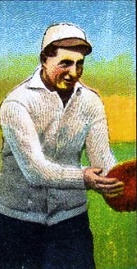
Samuel Strang Nicklin, “The Dixie Thrush,” was one of baseball’s great renaissance men.

Born in Tennessee in 1876, he was the scion of one of Chattanooga’s most prominent families.  His father John Bailey Nicklin served in the Union Army during the Civil War, moved to Chattanooga in 1866, and served as mayor from 1887-1889.

Sammy Strang

Samuel Nicklin spent one year at the University of Tennessee where he starred on the football and baseball teams. He also had two short stints in professional baseball 1893 and 1896, which included 14 games with the Louisville Colonels in the National League when he was 19.  Late in 1896, he enlisted as a private in the Tennessee Volunteers, served in Spanish-American War and rose to the rank of captain.

After leaving the service, Nicklin signed a contract with Cedar Rapids Bunnies in the Western Association and dropped his last name; he was known as Sammy Strang for the rest of his career.

The Milwaukee Journal said of the name change:

“(Strang) came of a rich southern family with deep prejudices against professional ball.”

This “prejudice” likely had nothing to do with it given that in addition to serving as Chattanooga mayor, the elder Nicklin was active in professional baseball, serving as president of the Southern Association in the 1890s.

A career .269 hitter, Strang was best known for being one of baseball’s first regular pinch-hitters while playing for John McGraw’s New York Giants from 1905 until June of 1908.  According to The Associated Press:

“McGraw noted the regularity with which he hit in pinches.  So he called him a ‘pinch hitter’—and the term stuck.”

During the 1909 season, Strang began coaching the baseball team at West Point.  He retired from baseball after playing from 1908-1910 with the Baltimore Orioles in the Eastern League, to study opera.

Sammy Strang

During his baseball career, Strang was known for writing songs and singing but decided to seriously pursue a music career in 1910.  He traveled to Paris where he trained under Jean De Reszke, one of the greatest male opera stars of the 1890s.

Upon returning from Paris, he chose not to accept an offer to join an opera company and instead returned to West Point, where he continued as coach until 1917.

Strang returned Tennessee shortly before his father’s death in 1919 to manage and take over ownership of the struggling Chattanooga Lookouts in the Southern League.  While the Lookouts did not win a league championship during Strang’s tenure, he was credited with turning the franchise around and sold the team, for which he paid nothing 1919, for a reported $75,000 in 1927, while retaining ownership of the stadium, Andrews Field.

Unfortunately, Strang’s most ambitious plan–to sign Satchel Paige in 1926–never materialized.

According to Larry Tye’s book “Satchel Paige: The Life and Times of an American Legend,”   Strang failed in an attempt to sign Paige for $500 to pitch a game against the Atlanta Crackers. Paige said of the deal:

“I just had to let him paint me white.”

Samuel Strang Nicklin died in Chattanooga in 1932.