Tag Archives: Baltimore Orioles

“To be Hissed and Hooted at in the East is too much”

20 Jun

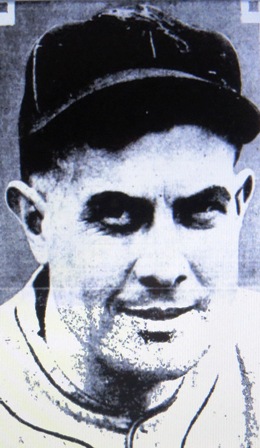
In 1886  Thomas Jefferson “Tom” York retired after a fifteen-year career.   As a 20-year-old he joined the Troy Haymakers in the National Association in 1871, he was with the Hartford Dark Blues for the National League’s inaugural season in 1876, and finished with the Baltimore Orioles in the American Association; he also served two brief stints as a player/manager with the Providence Grays.

York, who suffered from rheumatism, had considered retiring before the 1894 season after the Cleveland Blues sold him to the Orioles, but The Baltimore American said he was induced to continue playing with a $5000 salary and “the scorecard and cushion (concession)” at Oriole Park.  After hitting just .233 in 1884, he was only able to play in 22 games the following season before calling it quits.
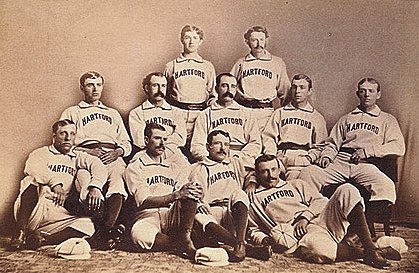
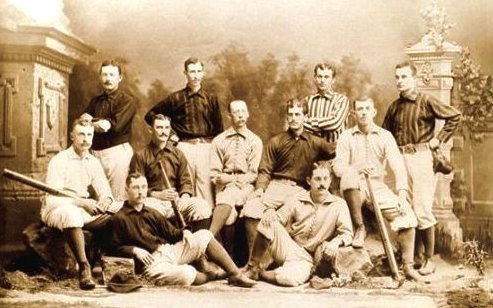
Tom York, middle row, far right, with the 1876 Hartford Dark Blues

Tom York, middle row, far right, with the 1876 Hartford Dark Blues

Just before the beginning of the 1886 season York was hired as an American Association umpire.  After the May 22 game in Baltimore which the Orioles lost 2-1 to the Louisville Colonels, The Baltimore Sun said:

“(York) received a dispatch yesterday ordering him to Brooklyn.  Instead of going he telegraphed his resignation.  His reason for doing so was the abuse he received from some of the spectators of Saturday’s game.  In fact, he was nearly equal to that of John Kelly, ‘the king of umpires.’  He declared (Pete) Browning’s hit near the foul line a fair hit.  He was in the best position to know, but, as it was made at a critical point, some of the audience objected, and York came in for pretty severe abuse.”

The paper said York also made a “questionable decision,” when he “evidently forgot that it was not necessary to touch a runner in a force,” and incorrectly called a runner safe at second:

“York became discouraged and the Association lost a good umpire.”

Within weeks York became a National League umpire; that didn’t last long either.

On June 30, the Kansas City Cowboys lost at home to the New York Giants 11-5, The Chicago Inter Ocean said York “was escorted from the grounds by the police on account of disapproval manifested over his umpiring.”

Less than a month later, after York was “roundly hissed” at the Polo Grounds after making “some very close decisions against the New Yorks,” in a July 22 game against the Philadelphia Quakers, he sent a telegram to National League President Nicholas Young resigning his position.  York told The New York Times:

“I have been badly treated in the West, but to be hissed and hooted at in the East is too much.  I have often heard that an umpire’s position was a thankless one, but I have never realized it before.  It’s bad enough to be hissed and called a thief, but in the West when the local club loses an umpire in fortunate if he escapes with his life.  Of all the cities in the league Kansas City is the worst.”

York said there was another incident Kansas City the day before he was escorted from the field by police:

“On June 29 when the New York men beat the Cowboys 3 to 2 (William “Mox”) McQuery hit a ball over the fence, but it was foul by 25 feet, and I declared it so.  After the game Vice President (Americus) McKim, of the Kansas City club wanted to know how much money I would get from the New Yorks fir That decision.  I remarked that I received my salary from the league and did not take a penny from the New Yorks or any other none.  Then he grew furious, and said he would end my days.  This in conjunction with other things incidental to the life of an umpire has made me tired of the business, and I intend to make room for some other victim.”

Despite quitting both leagues within two months, The Baltimore American said the American Association sent York a telegram in two months later “asking him if he wanted an appointment as umpire.”  The paper said “York replied no, emphatically, as his past experience was sufficient to justify his remaining at home.”

York remained at home for the rest of the season and the next, but while he never worked as an umpire again he returned to baseball in 1888 as manager of the Albany Governors in the International Association.  Over the next decade he was connected with several East Coast minor leagues, including the Connecticut State League, the New York State League and the Eastern Association, as a manager and executive.

York retired to New York where he became one of the many former players employed at the Polo Grounds at the behest of manager John McGraw.  In 1922 The New York Telegraph described his position:

“York has the pleasant post of trying to keep the actors, tonsorial artists and plumbers out of the press stand.  It is old tom who examines your pink paste board and decides whether you are eligible for a seat in the press cage.”

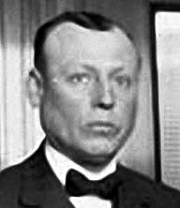
Tom York, 1922
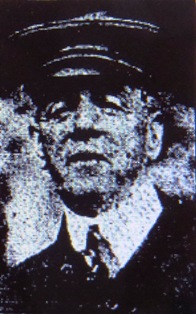
Tom York, 1922

In February of 1936, as preparations were being made for York, along with James “Deacon” White, George Wright, Tommy Bond,  to be honored that summer at the  All-Star Game  as the last four surviving players from the National League’s first season, the former player, manager, executive and umpire died in New York.
“The Deterioration in the Morale of the Players”

10 Jun

The Chicago Tribune had had enough:

“The deterioration in the morale of the players has been followed by deterioration in that of the spectators.  The latter relish the obscene profanity and the slugging exploits of the hulking brutes of the baseball field.”

The Tribune provided an “account of the more disgraceful of the many rows witnessed by spectators of baseball games,” during the just-ended 1899 season:

“May 2—Row at Pittsburgh—St. Louis game.  (Frank) Bowerman was put out of the game.  (Jack) O’Connor was taken off the field by the police, and the crowd chased umpires (Tom) Burns and (William) Smith.

May 19—Umpire Burns put (Giants’ William “Kid”) Gleason out of the game at St. Louis.  Gleason’s protest was so strong Burns forfeited the game to St. Louis.

June 1—Row on the grounds at Washington.

June 16—After a long wrangle and continued rowing on the field at New York.  Umpire Burns forfeited the game to Brooklyn.

June 16—(Fred) Clarke and (Clarence “Cupid”) Childs fight on the field in Louisville.

June 27—Rowdy action of players caused the crowd at the Pittsburgh game to mob umpire (James “Chippy”) McGarr.

July 18—(Tommy) Corcoran slugged (John) McGraw at Baltimore after being first attacked, and his action started a riot.

July 26—(Emerson “Pink”) Hawley, (Fred) Tenney, and (Hugh) Duffy engaged in a game of fisticuffs at Cincinnati.

Aug 16—(Oliver “Patsy”) Tebeau, McGraw and (George “Candy”) LaChance fought at Baltimore

Aug 18—Riot at Baltimore game started by (Tim) Donahue throwing a handful of dirt at (Steve) Brodie’s face.

Sept 1—Childs and Aleck Smith fight on the field in Louisville.

Sept 7—Riots at St. Louis and Brooklyn.

Sept 15—Clarke taken off Philadelphia grounds by police.

Sept 16—Chicago players jerked (Ed) Swartwood around the diamond because he called the game in the eighth inning on account of darkness.

Oct 9—(George “Win”) Mercer assaulted (Al) Mannassau at Washington.

Oct 14—(Jimmy) Scheckard assaulted umpire (John) Hunt, refused to retire, and Hunt forfeited the game to Brooklyn.”

Cupid Childs, repeat offender

Cupid Childs, repeat offender

Al Mannassau, assaulted by Win Mercer in Washington

Al Mannassau, assaulted by Win Mercer in Washington

In addition to the fans, The Tribune blamed team owners:

 “For the multifarious minor acts of blackguardism and rowdyism of which the hired men of the club owners were guilty there is no room.  It is sufficient to say that they, like the graver offenses mentioned above, did not wound the feelings or jar on the nerves of the proprietors of these baseball roughs.  Those proprietors seem to have come to the conclusion that audiences like these ruffianly interludes.”

Like hundreds of predictions before and thousands more to come over the years, The Tribune saw dire consequences for baseball given the current state of the game:

“There was a time when Chicagoans went to see the games of the Chicago club because they had a feeling of proprietorship in that organization.  That day is over.  Men do not go to see games out of local pride, nor do they go to see fine playing.  They go to listen to the language of the slums and to witness the horseplay and brutalities of the players or performers.  When these have lost their attractions professional baseball will disappear. “

Crazy Schmit Stories

13 May

Fred “Crazy” Schmit was widely considered to be the first pitcher to keep a “book” on hitters, it was mostly attributed to his poor memory, and the pitcher kept an actual book in his pocket listing the weakness of each hitter.  The earliest reference to Schmit’s book was in The Sporting Life in 1894, but the story was repeated in newspapers for the next thirty years, usually as a story told by John McGraw or Hughie Jennings.

The article said Schmit kept:

“(A)n account of the weakness at bat of his opponents, setting them down in a small book, which he always carried with him on the diamond…One day when he had the Chicagos as opponents (it was the season that Captain Anson led the League in batting), Anson came to the bat. “Crazy” Schmit looked at the big first baseman, then went down into his pocket, and, taking out his book, read “Anson, base on balls.”

Over the years the story changed—the batter was sometimes Elmer Flick, Nap Lajoie, Ty Cobb, Honus Wagner, Tris Speaker, and as Jennings said in 1926, “Every good hitter since Anson’s day, but Anson is the player whose weakness was reported to be a base on balls.”

"Cap" Anson

“Cap” Anson

Jennings also claimed that during the 1890s as part of a prank by teammates aboard a ferry, Schmit’s suitcase, with his book inside, fell overboard, and said:

“Schmit was a losing pitcher from that time on.  He won a few games but lost a great many more…The bottom of Hudson River held his ‘pitching arm.’”

Pitcher turned sports cartoonist Al Demaree said Schmit “used to warm up with an old water-soaked ball that weighed several pounds—at a distance of 75 feet, and not the regulation 60 feet from his catcher.”

Al Demaree's Schmit cartoon--as with most references to the pitcher, his name is spelled incorrectly

Al Demaree’s Schmit cartoon–as with most references to the pitcher, his name is spelled incorrectly

After his final game with the Baltimore Orioles in 1901, Schmit continued to play with semi-professional and quasi-professional teams for more than a decade.  His antics continued to make the papers.

In 1906 Schmit joined Jim “Nixey” Callahan’s Logan Squares in the Chicago City League.  The Sporting News’ Revere Rodgers told a story (complete with Schmit speaking in a comic German accent) about the team going to Joliet, Illinois for a game:

“(The Logan Squares) knew the umpire was a ‘homer’—a man who couldn’t see a close decision without giving his team the best of it.  He stopped before the grandstand, hat in hand, and announced (the batteries)…’Crazy’ Schmit was right behind him and when (the umpire) finished Schmit took off his cap and making a sweeping bow said: ‘Laties and schentlmen, der umpire for der game today vill be Mister Miller of Joliet and he vill as usual slightly favor der home glub mit his decision.”

According to The Chicago Tribune’s Hugh Fullerton Schmit was deeply disappointed at the end of the 1906 season when Callahan did not allow him to pitch in the Logan Squares victories against the World Champion White Sox, and National League Champion Cubs.

Schmit continued to play in the Midwest and also did some scouting for John McGraw’s New York Giants.  A story that appeared in The Duluth News-Tribune said Schmit pitched a few games for the Fond du Lac in the Wisconsin-Illinois League (Schmit’s name does not appear on any Fond du Lac roster in either of the two years the other player mentioned in the story was with the team (1909, 1911)so the story may be apocryphal):

“Along about the seventh inning, with Rockford leading by 6 to 4 the first man up got on.  Schmit pitched out three times in an attempt to get the runner going down to second base, but the runner made no attempt to purloin the sack.  With the count three and nothing on the batter he grooved the next one, only to have the batter lean on it and drive it over the left field fence for a homerun.

“After the runners had circled the bases the umpire threw up another ball.  Schmit took it, shook his head and walked over to Bobby Lynch, who was playing third base…and said to him ‘Say, Bobby, no wonder I can’t beat these fellows.  I won’t pitch against them any longer.  I quit right now.  They don’t know how to play baseball and yet they are leading in this league.  The runner that was on first base just let me waste three balls and yet he does not attempt to steal; then when I put one over for the batter who has three balls and no strikes, he hits it.  Tell me, how can a man of my intelligence and baseball knowledge pitch a game of baseball against such boneheads and unscientific playing of the game?”

“Crazy” Smith died in Chicago in 1940.

Crazy Schmit in Cleveland

10 May

Crazy Schmit pitched for the Cleveland Spiders in 1899; compiling a 2-17 with a 5.86 ERA for the 20-134 last place team (in Schmit’s defense the 1899 Spiders were one of the worst teams in history, losing 24 straight at one point, and Schmit’s ERA was a half of a run better than the team ERA).

The pitcher had grown tired of his nickname “Crazy,” and of references to his behavior as “tacky.”  After being called both by The Cincinnati Enquirer in August, he responded:

“I have stood this sort of thing just about long enough.  I am neither tacky nor crazy, and without wanting to throw any flowers at myself, I will make the statement that there is not another left-handed pitcher in the business who used as good judgment when pitching as I do.

“Furthermore, I am the only left-hander in the business who has an effective slow ball.  Some of these ten-thousand-dollar beauties and phenoms look like thirty cents to me.  I can also swell up and say that I threw the Phillies down this year.  I beat that hard-hitting gang by a score of 6 to 2.”

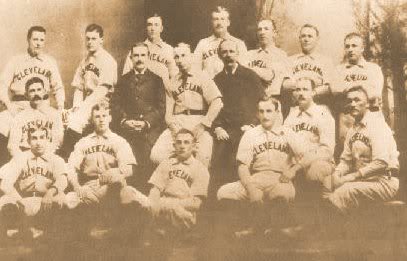
1899 Cleveland Spiders--finished 20-134

1899 Cleveland Spiders–finished 20-134

Within weeks Schmit was let go by Cleveland;  The Baltimore American reported on the release of the former and future Oriole:

“Pitcher Schmit, that queer and original baseball character, was yesterday given his ten days’ notice of release by the Cleveland club management and afterward notified that he had been fined for insubordination.”

The American quoted Schmit:

“I was released I suppose because it had been reported that I was not doing my best to win and because the owners were displeased with me for several accidents that happened to me.  I missed the train in Chicago, and while I was riding into Cincinnati from one of the suburbs with a young lady who may one day be Mrs. Schmit, lightning struck the trolley wire and I missed the train again.  I guess that is why I was fined.  They wished to make an example of me.  I do not mind the release, as I can easily get another and better position, but I hate that $50 fine, because my salary is not quite as high as that of some bank presidents.”

Despite his release and his record, Schmit still considered himself a great pitcher, blamed his career statistics on the teams he played with, and the more he spoke the more valuable he became as a player:

“I have in my career pitched for fourteen tail-end clubs and I am done with them.  Unless I can pitch for some club that can win a game occasionally I will stop pitching ball.  The longer I pitch the more stuck I am on myself as a pitcher.  I have pitched good ball for Cleveland, but who could win with six and eight errors behind him, and misplays that are far worse than errors and that go as hit.

“I am the most popular player on the circuit and the only man who knows how to coach as a science.  If some of these managers knew something of the theatrical business they would wire on and advertise I am to pitch a certain game.  When it is known I am to pitch I have often brought enough into the box office in a single game to pay my whole salary for the season several times over.  We played before 14,000 people in Chicago and of that number fully 5,000 came to see me.”

Schmitt did not “easily get another or better position” in 1899 or 1900—he sat out the remainder of 1899 and spent 1900 in the Interstate and New York State Leagues.  Schmit opened the season at 2-3 in five games with the Columbus Senators before being released; there are no surviving records for his New York State League games with the team that split the season between Elmira and Oswego.  The next season John McGraw would give him a chance to pitch in the American League.

More Crazy Schmit next week.

Crazy Schmit

9 May

In 1913, Giants manager John McGraw, wrote an article that ran in newspapers across the country, in which he made the case that baseball had “practically eliminated the ‘bad actor,’” citing the World Series and the development of the game as a business as the primary factors.

McGraw said many of the players of his day “had paths worn from the ballpark to some favorite saloon and back to the grounds.”  McGraw singled out one player in particular to make his point.

Frederick “Crazy” Schmit pitched for parts of five seasons for five different American and National League teams from 1890-1901, posting a career record of 7-36.  (Schmit’s name was almost universally misspelled by contemporary newspapers–the misspellings have been corrected in quotes that reference him).

Crazy Schmit

Crazy Schmit

McGraw wrote (and likely embellished) about Schmit, who was his teammate in 1892 and ’93 and who he managed in 1901 with the Baltimore Orioles:

  “(W)e had a pitcher named Schmit generally and aptly called ‘Crazy’ Schmit.  His habits were nothing for a temperance society lecturer to dwell upon as an example…I called (Schmit) into a corner the day before the first game (of a series with the Cleveland Blues) and told him that I wanted him to pitch the next afternoon and asked him to get into good shape.  He said he would be out there with everything on the ball.  That was one thing about him—he never knocked his own ability.

“But Schmit’s notion of preparations did not coincide with mine.  I learned afterwards that he went directly from my lecture to his favorite loafing place and remained there telling his friends what he would do to Cleveland the next day.”

McGraw claimed that Schmit fell down on the mound (there’s no contemporary report o confirm it) and:

“Those were the days of quick action, so I rushed into the box from third base where I was playing, sore enough to do anything.

‘Get out of here.’  I yelled at him ‘You are released.’

“He laboriously regained his feet, and with ludicrous dignity walked out of the pitcher’s box and toward the exit of the park.  As he left he whirled on me and exclaimed dramatically: ‘I go to tell the world that the great Schmit has been released.”

McGraw said the pitcher only made it as far as the same tavern he had been at the day before, “and we had to send his clothes to him.”

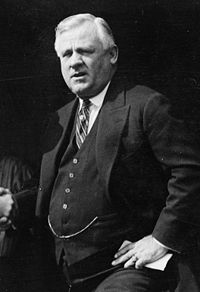
John McGraw

John McGraw

McGraw wrote that before he released Schmit he used a tactic he later tried with “Bugs” Raymond; withholding money from the pitcher to keep him from spending it on liquor:

“After a time I began to miss baseballs in great numbers from the clubhouse and my suspicions were aroused, so I followed Schmit when he left the grounds one night…Schmit proceeded to a corner and mounted a soapbox which he produced from the bushes nearby, and then he pulled five or six league balls, partly used, out of his pocket and began to auction them off as ‘genueen leeg balls.’  For some of them he got as high as $5 apiece.  Or rather, he received $5 for the first one, and then I interrupted him and took the rest away.”

Schmit was released by the Orioles on June 10, 1901; he continued to pitch in semi-pro and outlaw leagues for more than a decade and worked as a scout–for the New York Giants, managed by John McGraw.

Another “Crazy” Schmit story tomorrow.

“Leather-Fisted Phil”

12 Apr

“Leather –Fisted Phil” is what Phillip J. Powers was called in his 1914 Associated Press obituary which said:

“(Powers) was famous for his ability to stop the swiftest throws of the league’s star pitchers.”

He most likely earned the nickname in 1877 when, like many other catchers of the era, he began using a small, leather pad on his hand while with the London Tecumsehs of the International Association.

After the London team disbanded in August of 1878 Powers joined the Chicago White Stockings.  According to The Chicago Inter Ocean:

“He is a tall young fellow…He is described as a good catcher, but liable to get hurt, fair at the bat, and a genial man on the grounds.”

Powers would spend parts of seven seasons and 155 games in the National League and American Association with the Boston Red Stockings, Cleveland Blues, Cincinnati Red Stockings and Baltimore Orioles, hitting .180.  In between his engagements as a player Powers was an umpire.

It was as an umpire that he made a name for himself, but it probably wasn’t what he had in mind.  Few umpires, even in an era when members of the “profession” were poorly trained and underpaid, were the target of as much criticism as Powers.

In 1881 he began the season as a National League umpire.  By July he had become a target in several cities,

The Detroit News said:

“Phil Powers has acquired reputation enough in the last two weeks to last him a lifetime.  The erroneous umpiring he did here, people were inclined to regard as errors of judgment, but to say the least his ‘mistakes’ have become so numerous that his utter unfitness for the position he holds is unquestioned.”

The Cleveland Plain Dealer took the criticism even further:

“Powers is said to have been offered $150 to play ball (for the Detroit Wolverines) for one month, but refused it.  As an umpire he cannot, if square, earn more than $15 or $20 a week and expenses; and must take the chance at that of being chosen an umpire.  He preferred to be an umpire.  Several of his decisions on Saturday were grossly unfair, and, what is worse, they bore heavily on Cleveland.  They were so one-sided that many of the spectators believed he deliberately purposed to give the game to Troy.”

Despite the ill feelings in Cleveland, Powers joined the Blues in August and caught five games for the team after Michael “Doc” Kennedy was injured and John Clapp was “called away by an illness in his family.”   He finished the season with the New York Metropolitans in the Eastern Championship Association.

Powers again became a full-time player from 1882-1885, and was part of the Red Stockings American Association championship team in 1882.  He was released by Cincinnati in July of 1885, signed with the Baltimore Orioles and was again released the following month.

1882reds

1882 Cincinnati Red Stockings, Phil Powers standing 2nd from left

Powers was signed by the St. Louis Browns in the spring of 1886, but released before the beginning of the season, and was added to the National League umpiring staff in August.  He again worked as an umpire through the 1887 season, left to return to London, Ontario to manage the Tecumsehs in the International Association, but again returned to the National League as an umpire in August of 1888.   He came back just in time to find himself in the middle of a controversy involving two Hall of Famers.

New York Giants catcher/captain William “Buck” Ewing was hit on the wrist by a ball during a game with the White Stockings in Chicago.  In 1888 the opposing team’s captain had to agree that an injury was serious to necessitate a substitution; Chicago’s “Cap” Anson said he did not agree to a substitution when backup catcher “Big Bill” Brown entered the game in the 6th inning.  Anson appealed to the umpire, and according to The Chicago Inter Ocean, “(Powers) said that Captain Ewing was not so badly hurt that he could not play.”

After a heated argument, during which The Inter Ocean said Ewing acted “in a childish and fatuous manner,” Powers declared the game “forfeited to Chicago by a score of 9 to 0.”

Buck Ewing acted “in a childish and fatuous manner”

Buck Ewing acted “in a childish and fatuous manner”

Powers had been involved in a similar situation in 1886, refusing to allow Philadelphia Quakers catcher “Deacon” McGuire to leave a game after an injury.  The Chicago Tribune said Quakers captain Arthur Irwin “told McGuire to catch ‘away back’ (from the plate).” The Tribune said Irwin’s actions created a “scene” and “pandemonium reigned,” until Anson agreed to allow Philadelphia to replace McGuire.  White Stockings President A.G. Spalding “preferred charges against umpire Powers” for losing control of the game.

The substitution rule was changed in 1891, putting an end to controversies regarding the replacement of injured players.

But controversies involving Powers continued.  More on Monday.

“Barnie’s Phenom”

10 Apr

The Baltimore Orioles needed pitching in 1889; Billy Barnie’s team had finished in 5th place in the American Association with a 57-80 record, and a 5.69 team ERA.

The Baltimore papers thought he had found a solution in April of 1889, The Sun said:

“Yesterday a big six-footer strolled up to the ball grounds while the Baltimore boys were at play.  He put on a suit and went in to pitch.  The ball-players laughed at first, but soon found that they could not hit the stranger.  He placed the ball in every conceivable position, and his curves and in-and-out shoots were remarkable.  When he picked up the bat he made the ball and the centre-field fence come together.  Mr. J.M. Ritter, a traveling salesman, had seen the young pitcher at play in Virginia and brought him to Baltimore.”

The Baltimore American was also enthusiastic:

“Great things are expected of Goetz, the Greencastle giant.”

His full name was George Burt Goetz, a 24-year-old house painter from Greencastle, Pennsylvania, who had played semi-pro ball in Virginia and Pennsylvania.

His first outing was against Pennsylvania University at Oriole Park; The Sun said Goetz “delighted 1,000 persons yesterday afternoon by his work in the box.” He pitched five shutout innings, giving up just two hits in a 20-1 victory; he also hit four singles, The Sun raved “He gives promise of becoming a great pitcher, batter and runner.”

The Sun said Goetz’ arrival was almost biblical:

“(He) has apparently created almost as much of a sensation among the local ball enthusiasts as David did when he strolled in among the embattled hosts of the Hebrews and offered to take the Philistine champion down a peg or two. ..Let us hope for the honor of the Baltimore Club that Mr. Goetz will prove a Baltimore David, and that the big champions of opposing teams may fall before his lightning delivery and Heaven-inspired curves.”

Within a week Goetz had been brought back to earth when he was pounded in an exhibition game against the National League’s Boston Beaneaters in Baltimore, he gave up 15 hits, 12 runs (6 earned), and committed three errors in a 12-5 loss.

The Sun conceded that “David met Goliath and came out second best this time,” but remained hopeful:

“(T)here’s life in him yet, which the season may develop into full growth.”

As quickly as he had arrived, it was reported that Goetz had returned to Pennsylvania to recover from an unknown illness; The Sporting Life simply said “Barnie’s Phenom Goetz is sick and recuperating in Greencastle.”

Oriole Manager Billy Barnie

Orioles Manager Billy Barnie

Goetz made it back to Baltimore and pitched in a June 6 game “Between two nines composed of Baltimore club players…for the benefit of the Johnstown (flood) sufferers.”  The Sun said “Goetz was too much for them,” allowing only four hits.

That outing appears to have earned him a shot for his professional debut; eleven days later Goetz started the first game of a double-header against the last place Louisville Colonels.  The Sun said:

“With a hard, steady work and a display of intelligence he may become a success.  At times he would fire the ball over the plate with a speed like a rifle shot, but when men were on bases he was nervous.  He was twelve times safely with a total of seventeen bases.”

Goetz gave up six runs (four earned); Baltimore tied the game with a three-run ninth inning, and won it with four in the tenth, earning Goetz the victory, Bert Cunningham pitched the tenth inning for the Orioles.

It would be his only appearance.

On July 4 the Orioles released Goetz. With little fanfare or explanation Barnie’s phenom was through.

Goetz signed with the York franchise in the Middle States League later in 1889.

He dropped out of sight until 1892 when The Sun reported that Goetz was “the sensation of the Wisconsin-Minnesota League,” pitching for Hayward, Wisconsin, and had recently struck out 19 in a game with the West Superior team.  The paper facetiously noted “It was reported Goetz had drowned in the Johnstown flood, but seems to have turned up again.”

Goetz’ catcher in Wisconsin was a Baltimore native named Milton K. Osborn; the two would play again the following season with a team in Little Falls, Minnesota and both joined the Lynchburg Hill Climbers of the Virginia League in 1894.  No statistics survive for any of Goetz’ post-Baltimore stops.

His trail goes cold after 1894.  There are many listings in city directories for George B. Goetz’ throughout the country for the next several decades, and there are reports that he was in California as late as 1912—but nothing else is known about “Barnie’s phenom”

“Not Quite Such an Idiot”

5 Apr

The 1889 American Association season began and ended as a two-team race between the Brooklyn Bridegrooms and St. Louis Browns, who had won four straight championships—the third place Philadelphia Athletics finished 16 games back.  The battle between Brooklyn and St. Louis was bitter and culminated in September with a charge of umpire bribery.

St. Louis owner Chris von der Ahe made a charge of attempted bribery of an umpire.  He said Brooklyn Captain William “Darby” O’Brien had attempted to bribe umpire John Kerins “$100 and the chance for him to umpire in the World’s Series if Brooklyn got there.” (Some accounts claim the amount was $1000, but the overwhelming number of contemporaneous stories put the figure at $100).

Chris von der Ahe

Chris von der Ahe

The Browns owner claimed “I can prove,” the charges and said “Kerins himself told the story in my presence.  Captain (and manager Charles) Comiskey and another party were in the carriage at the time.”

The other “party” never materialized, and Comiskey, no stranger to dubious charges, never fully backed his boss with a statement confirming the accusation.

Kerins, who since 1884 had bounced back and forth between playing in the American Association with the Indianapolis Hoosiers, Louisville Colonels and Baltimore Orioles, and working as a minor league and Association umpire, called the claim “Simply absurd.”

John Kerins

John Kerins


He said he never spoke to von der Ahe, and “I never told Comiskey that any attempt had been made to bribe me,” and that all the charges came from a misinterpreted conversation he had with Comiskey.

Kerins said he simply mentioned to the Browns manager that O’Brien had made “A casual remark,” that “I would give $100 out of my own pocket if Brooklyn could win the championship.”

Kerins said he told O’Brien he’d like to serve as an umpire in the World Series (against eventual National League champions the New York Giants), but it appears Kerins, like every other Association umpire, told many people he’d like to earn the additional money paid to post-season umpires.

Kerins told The Baltimore American that he was:

“Not quite such an idiot as to sell (myself) for the paltry sum of $100.”

O’Brien issued an indignant statement about the charges that appeared in The Chicago Times and other newspapers:

“I was completely nonplussed when I read that story, and, as it was the first intimation I had had of it, you can well imagine my surprise.  To think that that story should reach the eyes of my folks in Peoria and that they might believe me capable of stooping to a dishonest act is what galls me.”

Darby O'Brien

Darby O’Brien

Brooklyn went on to beat the Browns by two games for the American Association Pennant and lost the World Series to the Giants six games to three.

Nothing came of the charges, and it seems doubtful von der Ahe and Comiskey actually believed they were true.

A postscript:  After Comiskey jumped the Browns the following season to join the Chicago Pirates in Players League, von der Ahe signed Kerins (who had all but called him a liar six months earlier), and named him manager in May (one of five Browns managers that season) for 17 games; under Kerins the browns were 9-8.  In June Kerins, hitting .127, was replaced as manager and released by the Browns.

Another “Rube”

4 Mar

Hall of Famer “Lefty” Grove and Jack Ogden were the best known pitchers of the great Baltimore Orioles teams that won seven straight International League Pennants from 1919-1925, but in 1923 both were out-pitched by James Arthur “Rube” Parnham.

Parnham began his professional career in 1914 with the Huntington Blue Sox in the Ohio State League.  In 1915 he joined the Raleigh Capitals in the North Carolina State League, managed by Connie Mack’s son Earle.  The 21-year-old was an unspectacular 9-15 for Raleigh, but caught the eye of the elder Mack and spent the spring of 1916 with Jacksonville with the Philadelphia Athletics.

Rube Parnham, 1917

Rube Parnham, 1917

Parnham returned to the North Carolina State League for the 1916 season, splitting time between Raleigh and the Durham Bulls, posting a 17-19; his contract was purchased by the Athletics in late August.  Nearly a month later Parnham made his Major League debut; he appeared in four games for Mack’s last place (36-117) ballclub, he was 2-1 with a 4.01 ERA.

Parnham was with the Athletics in Jacksonville again in 1917, but was sent to Baltimore before the beginning of the season.  He won 16 games for the Orioles and earned one more shot with Mack in Philadelphia; Parnham was 0-1 with a 4.09 ERA in two September appearances.

As Parnham started winning games for Baltimore he developed a reputation as a work horse; in 1917 he won both ends of a double-header against the Rochester Hustlers, pitching a total of 24 innings in two 3-2 victories; in 1919 he won both games of a twin bill twice.   At the same time he began to earn a reputation as “eccentric’ and “erratic,” the inevitable comparisons to Rube Waddell and his small time roots earned Parnham the nickname “Rube,” he was also known as “Uncle.”

Baltimore sold Parnham to the Louisville Colonels in the American Association in March of 1918, but within two months was sold back to Baltimore, where he rejoined manager Jack Dunn, with who he had, and would continue to have, a contentious relationship.  He won 22 games in 1918 and followed with 28 in 1919, leading the Orioles to their first championship since 1908.

As the Orioles jumped out to a quick lead in 1920 (Parnham was 5-0, and was joined on the pitching staff by Ogden and Grove) the erratic Rube Parnham surfaced again. He was prone to disappearing for days at a time and also appears to have been hurt.  By mid-season he was gone.

More recent accounts have said Parnham jumped the Orioles to play semi-pro ball in Pennsylvania; just as likely, Parnham, who was suspended in June by Dunn for being out of shape, and who was clearly overshadowed by Grove (12-2) and Ogden (27-9); as well as Jack Bentley (16-3) and Harry Frank (25-12), was let go.

Lending credence to Parnham not having jumped is a January 1922 Associated Press item that said the pitcher “whose arm went on him” would rejoin “the Baltimores for the 1922 season.  Parnham wrote Dunn that he believed he could come back next season and pitch successfully.”  He won 16 games for the Orioles in 1922.

The following season would be Parnham’s best; the 29-year-old pitcher led the Orioles with a 33-7 record, Grove was 27-10, Ogden 17-12.   In addition to out-pitching his two teammates, Parnham set an international League record by winning 20 consecutive games.

Parnham’s old ways returned before the 1924 season when he failed to report to Florida for spring training.  The Associated Press said:

“Rube never reported at the Oriole training camp in the south and never even deigned to notify Jack Dunn whether he was going to play ball this year.”

Parnham eventually reported, but had another stormy, abbreviated season.  With a 6-5 record and a 4.84 ERA, Dunn suspended the pitcher in June, and he appears to have not pitched for the Orioles again that season.

The only reference to Parnham in 1925 was a May game he pitched for a semi-pro team in Duquesne, Pennsylvania and was beaten 8-0 by the Homestead Grays.

His career appeared to be over, but Dunn, it seems was willing to give his pitcher one more chance.

The Baltimore Sun said shortly before the 1926 season:

“Uncle Rube Parnham, the most colorful figure in the International League, will be back on the mound for the Orioles next season.”

Parnham was 13-9 with a 5.05 ERA, and spent the entire season feuding with Dunn; It was the end of the Orioles dynasty, the Toronto Maple Leafs won the championship in 1926 and Baltimore would not finish first again until 1944.

The Orioles were finally through with Parnham, The Baltimore Sun said:

“There was so much trouble between Parnham and Dunn last year that it was apparent Rube had spent his last season with the Orioles.” “

The 32-year-old was still considered valuable enough that the Milwaukee Brewers in the American Association purchased the pitcher from Baltimore.

The Brewers expected big things from their new pitcher, The Milwaukee Journal said:

“At times his playfulness leads him away from the straight and narrow, and he nearly drove Jack Dunn nutty last season…But Parnham is a great pitcher, despite his eccentricities, and if (Brewers owner) Otto Borchert can hire a good keeper for him is certain to be a winner with the Brewers.”

By March Parnham had worn out his welcome with another manager when he didn’t bother to report to Hot Springs, Arkansas for spring training.  The Journal said:

“Disgusted with the dilatory tactics of Rube Parnham, Jack Lelivelt, boss of the Brewers, hinted Saturday night that unless the eccentric righthander reports at once that he would probably be turned back to Baltimore.  Former International Leaguers …have told the Milwaukee leader about some of Reuben’s idiosyncrasies  and Lelivelt is beginning to feel that he will become a stepsister to Kid trouble if he had the former Oriole on his club.”

Parnham never played for the Brewers, and was returned to Baltimore, but Dunn was finished with him as well and he was shipped off to the Reading Keystones.  After a 2-8 season split between Reading and the Newark Bears, Parnham’s career was over.

rube

Rube Parnham, 1923

Parnham retired to McKeesport, Pennsylvania, where the troubles that followed him throughout his career seem to have continued.  James Bready, an editor for The Baltimore Sun went to Pennsylvania to interview the former Oriole hero in 1961:

“The story was that he had gone downhill. Falling asleep in the snow, recently, he had lost several toes. On the phone, the director of a home for indigents said he would notify Parnham of the interview project. He gave me the street address — and a caution: ‘Try to get here before noon.’

“Paper, pen — I knocked and Rube beckoned me inside what today would be called a shelter. He was wearing an overcoat (I understand that better, now) and had not shaved recently. We sat down, facing, on two of half a dozen cot beds.  I tried a question. ”Gbbmhdahlr,” he replied. I stared at him; slowly, the meaning penetrated. I reached in my pocket and handed him a dollar.”

Parnham died two years later in McKeesport.

“King of the Natural Hitters”

25 Jan

Percival Wheritt “Perry” “Moose” Werden began his baseball career as a pitcher for the semi-professional team of his employer; the Ira Perry Pie Company in Saint Louis.  He was discovered by the St. Louis Browns who offered him a contract but ultimately signed with the Saint Louis Maroons in the Union Association.

(An oft-repeated story that Werden’s discovery involved him leaving a pie wagon unattended to join a game, resulting in the wagon being destroyed is almost certainly apocryphal, although it has been repeated as fact with little or no support by several writers)

In 1884 the 22-year-old was 12-1 with a 1.97 for the Maroons who at 94-19 won the Union Association pennant by 21 games; despite the strong start, Werden would never pitch in the Major Leagues again.

The Maroons joined the National League the following season and Werden ended up with the Memphis Reds in the Southern League.  He was primarily a catcher a first baseman, and his career as a pitcher pretty much ended; he appeared on the mound in only three games that season and had only 14 more minor league appearances over the next 10 years because of arm trouble.

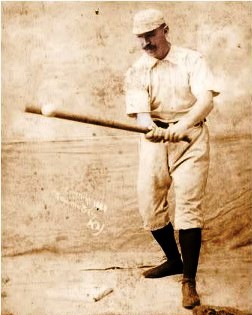
Perry Werden, 1908

Perry Werden, 1908

From 1886-88, Werden played with five minor league teams and played three games in the National League with Washington in 1888.  In 1889, Werden joined the Toledo Black Pirates in the International League, where he became a great hitter.

Werden hit .394 for Toledo; in 424 at-bats, he had 167 hits, which was the hit record for the franchise for nearly 100 years, finally broken by Greg “Boomer” Wells in 1982 (Wells had 182 hits in 541 at-bats).

Toledo became a Major League franchise the following season, joining the American Association as the Maumees, Werden was the their starting first baseman, hit .295 and led the team in hits, runs, triples, and RBIs.  The Maumees finished 68-64 in their only season.

Werden was sold by Toledo to the Baltimore Orioles in 1891 and had another solid season, leading the team in hits, triples and RBI’s.  The following season he was signed by the Saint Louis Browns to replace Charles Comiskey at first base; Comiskey had jumped the Browns to join the Cincinnati Reds.

Werden hit .256 and .290 in two seasons with the Browns.  In 1894, he returned to the minor leagues with the Minneapolis Minnies in the Western League.  That’s where he became a legend.

In 1894, Werden exploded.  He hit .417 with 43 home runs.  In 1895, he improved to .428 with 45 home runs.

The Western League was no doubt a hitter’s league; eight players with at least 100 at-bats hit .400 or better in 1894 and 11 did so in 1895.  And the Minnies home field, Athletic Park, where Werden hit most of his home runs, was by all estimates a hitter’s paradise with a short (some sources say 250 feet) fence.

Regardless, 45 home runs would remain a professional baseball record until 1920. The Duluth News-Tribune said several years later that Werden hit seven home runs in a double-header in 1895; under the headline “Perry Werden was King of the Natural Hitters:”

“It was one of the greatest batting feats ever seen on a baseball lot anywhere.”

Werden had one last season in the Major Leagues.  At 35-years-old in 1897, he hit .301 for the Louisville Colonels, then returned to the minor leagues where he continued to hit well; .330 for his minor league career.

Werden became an umpire in the American Association in 1907, and became a baseball pioneer in 1908 when he joined the Indianapolis Indians in the same league; he was one of the first full-time coaches in professional baseball.  The Associated Press said:

“Perry Werden will go to Indianapolis to act as assistant manager, coach and advisor in general of the Indianapolis baseball club this year.”

In October The Indianapolis News declared Werden a success in the new role:

“Werden was one of the biggest factors in bringing Indianapolis her first pennant since 1902.  Without his services it’s highly probable the flag would have flown elsewhere”

The Indianapolis Star predicted that Werden’s “novel position,” would become the norm with the Indians, and throughout baseball.

Werden eventually returned to umpiring, working in the western, Dakota, South Dakota and Northern leagues.

His 43 home run season became news again in 1920 as Babe Ruth was closing in on Werden’s professional record.  Werden said there was one player in his era who was Ruth’s equal as a hitter.  Who was it?

Read about it on Monday.