Tag Archives: Boston Beaneaters

“An Umpire Nearly Lynched”

11 Mar

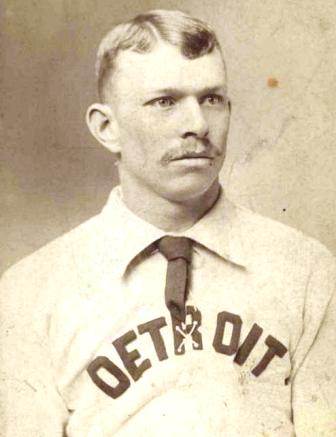
The above headline appeared on an Associated Press story in August of 1890.  Former Major Leaguer Jimmy Manning, then managing the Kansas City Blues in the Western Association had interceded to quell a riot at the end of a game with the Denver Grizzlies in Kansas City:

“Two questionable decisions by umpire Jovin (Sic) in the ninth inning, when Kansas City was about to tie the score, angered the crowd to such an extent that they swarmed into field, hooting and jeering the umpire.  Two young boys got hold of a rope, and in fun proposed to lynch him.  This added to the excitement, and it looked for a time as if the umpire would be mobbed.  Jimmy Manning climbed up to the top of the fence and addressed the mob.  He said the umpire had decided rightly and advised that no violence be attempted.  This quieted the mob to a degree.  In the meantime the players of both clubs formed a hollow square around the umpire and conducted him to the clubhouse.”

Jimmy Manning
Jimmy Manning

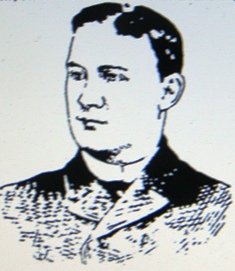
“Jovin” was actually Fred Jevne, a 26-year-old minor league veteran who had become an umpire just a month earlier.  After joining the Spokane franchise in the Pacific Northwest League in April, Jevne was suspended in May for punching an umpire.

In July The Spokane Falls Daily Chronicle said Jevne and teammate Tom Turner “quit the nine because they were excessively fined and ill-treated.”  According to the paper the two players showed up at the July, 1 game “in an intoxicated condition and acted like ruffians in the grand stand.” Turner was eventually reinstated and finished the season in Spokane, Jevne did not.

Since 1885 Jevne had played for a variety of teams in several leagues, including the Southern, International, and California.  When he was signed by Spokane to play center field and serve as captain, The Daily Chronicle said:

“Jevne is rather short.  He is a good batsman and a good player generally.  The San Francisco papers, when he played there, alternately praised him and berated him, but all agree that he was a good player.”

Jevne made one more attempt at playing, joining the Evansville Hoosiers in the Northwestern League in 1891.  He then returned to the Western Association as an umpire.
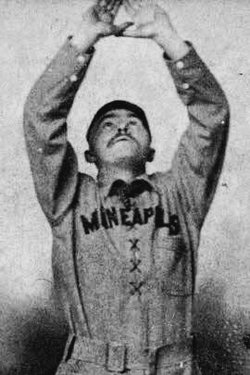
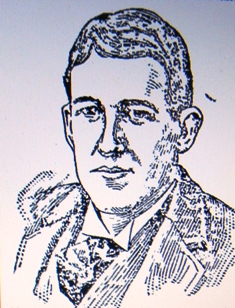
Fred Jevne

Fred Jevne with the Minneapolis Millers, 1889

In December of 1894 Jevne was named to the National League umpiring staff, where his work received mixed reviews.  In June The Baltimore Sun called him “As good an umpire as there is in the business.” In August, after a he worked a game between the Boston Beaneaters and Chicago Colts, The Boston Globe said “Umpire Jevne did poor work, both sides suffering from his yellow decisions.”  The Pittsburgh Press called Jevne’s performance in a September game between the Pittsburgh Pirates and Philadelphia Athletics “By far the worst exhibition of umpiring given this season.”

Jevne was not offered a position in the National League for 1896, and went to work in the Southern Association, where he seems to have a continued his fighting ways.  In July, The Birmingham Age-Herald said Jevne had missed the previous day’s game between the Montgomery Senators and Columbus River Snipes:

“Jevne, the regular umpire, arrived in town last night, but this morning loaded himself up with the spirit of hilarity, got into a fight with a citizen and when the hour for playing arrived was in the hands of the police, and failing to make bond was unavoidably absent from the field.”

Despite his troubles, or because of them, Jevne was asked to join the Interstate League at the end of the 1896 season because, according to The Sporting Life, umpires were losing control of games:

 “(Interstate League President Charles) Powers to-night wired for Fred Jevne the ex-National League umpire, who is so handy with his fists, to report for duty.”

Jevne was not popular with players or the press down south, and said his time in the Southern Association was difficult:

“It was no snap umpiring down South.  Fines didn’t go—were never paid—and so I used to remove men from the game.  Sometimes I would have to take out about half of a team before they would behave, and then the papers would roast me good and plenty the next morning…I had a scrap with a player named (Al) Gifford (Atlanta Crackers shortstop), and punched him in a car going from the grounds.  The local paper came out the next morning and urged the chartering of a special car for the umpire. So that he could be alone in his dignity, and another paragraph hinted that a cigar sign or dummy could be put in the special car for the umpire to punch”

Jevne appears to have returned to the Southern Association for parts of the 1897 and ’98 seasons.  He spent at least part of 1899 and 1900 in his hometown, Chicago, where he worked as an umpire in some college games.  In 1901 Jevne became a Western League umpire and that year met with a violent and mysterious end.

Initial newspaper reports said Jevne had fallen from a third story window in Denver’s Hotel Victor on August 2; he lingered for two days before dying. His body was returned to Chicago and he was buried at Graceland Cemetery.

However, several months after his death, Jevne’s brother Lloyd, a well-known three cushion billiard champion, told The Associated Press he was certain he had been murdered, and that before dying Jevne had said he was pushed:

“I saw Fred’s body after it was shipped back to Chicago, where the burial took place, and the most prominent feature of his injuries was the bruise on his nose.  Doctors I saw believe that he was struck across the face with some blunt object… When he was about to die it is not probable he would have told a falsehood.  He would not have said at that time that he had been pushed out the window.”

Lloyd Jevne
Lloyd Jevne

Whether Fred Jevne fell or was pushed from that hotel window has never been positively determined.
“A Vain and Foolish Kick”

23 Nov

The Brooklyn Bridegrooms won the 1890 National League Championship by 6 ½ games over the Chicago Colts behind pitcher Tom Lovett who posted a 30-11 record.

Just three years earlier there was speculation that Lovett’s career might be over due to overwork.

Tom Lovett, 1890

Born in Providence, Rhode Island in 1863, Lovett began his professional career with Waterbury in the Connecticut State League in 1884.  He appeared in 16 games for Philadelphia Athletics in the American Association in 1885 and was in the New England League with the Lynn/Newburyport Clamdiggers.

In 1887 he signed with the Bridgeport Giants in the Eastern League and dominated the league in May and early June.  Despite getting off to a fast start (the team was 20-5 in May), Bridgeport was suffering a decline in attendance and the franchise was in trouble.

At the same time community leaders in Oshkosh, Wisconsin were determined to win the Northwest League championship, and they put enough money together to offer to purchase Lovett who was 21-3, as well as Tug Wilson, Bridgeport’s catcher and leading hitter, and shortstop Dan Shannon, the Eastern League’s leading base stealer.

Lovett was 20-2 for Oshkosh (40-7 for the season) and they easily won the championship, but he did not pitch during the season’s closing days; The Sporting Life reported that “Lovett is said to be lame in the arm.”

Despite speculation well into the next spring that his arm was permanently “lamed,” Lovett recovered and posted a 30-14 season in 1888 with Omaha in the Western Association.   In the fall of 1888 he was purchased by Brooklyn, then in the American Association.

Lovett was 17-10 in his first season with Brooklyn, and followed that with his pennant-winning performance in 1890.  He then dropped to 23-19 in 1891 as the team fell to 6th place; Lovett threw a 4-0 no-hitter in June against the New York Giants.

After the 1891 season Brooklyn attempted to cut his salary to $2800 (various sources say he either earned $3000 or $3500 in 1891).  Lovett demanded $3500 and turned down a compromise offer of $3200.

He said he could earn more money operating his tavern in Providence and chose to sit out the 1892 season.

The Sporting Life called it, “A vain and foolish kick against salary reduction.”

In this case the critics might have been correct.  The Lovett-less Grooms improved from 61-76 in 1891 to 95-59 in 1892.

Hat in hand, he returned to Brooklyn for the 1893 season signing for $2400.

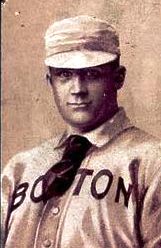
Lovett pitched in only 14 games and had a 3-5 record before hurting his arm again.  The following season he pitched for the Boston Beaneaters until he was released in July.  His Major League career over, Lovett finished 1894 in the Eastern League with the Providence Clamdiggers and spent 1895 with the renamed Providence Grays in the same league.

Lovett, with Boston 1894

Lovett, most likely baseball’s first true hold out, spent the rest of his life in Providence and died in 1928.

A Thousand Words–New Orleans Pelicans

13 Nov

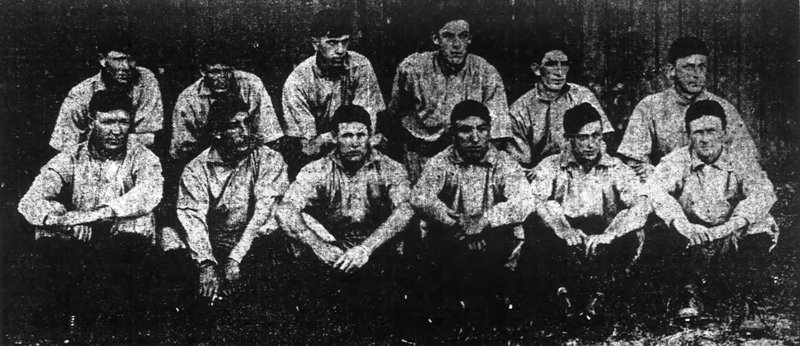
Another picture I’ve never seen published before—the 1906 New Orleans Pelicans of the Southern Association.

Top, Left to right.

Bill Phillipshe spent seven seasons in the Major Leagues with a 70-76 record; and won 256 games in a minor league career that began in 1890 and ended in 1909.

Mark “Moxie” Manuelwas said to have appeared as a both a left and right-handed pitcher for New Orleans in 1906 and 07, Manuel was a combined 37-26, earning him a second trip to the Major Leagues in 1908, where he posted a 3-4 record in 18 appearances for the Chicago White Sox.

Milo Stratton—a weak hitting (career .185) catcher who played in the minor leagues from 1903-1914.

William O’Brien—a .215 hitting first baseman in 1905 with the Toronto Maple  Leafs in the Eastern League and with the Pelicans in 1906.

Jake Atz—played for the Washington Senators in 1903 and the Chicago White Sox 1907-1909, a minor league manager for 21 seasons he won more than 1900 games.

Art Brouthers—a third baseman who played in 37 games for the 1906 Philadelphia Athletics, Brouthers managed the 1913 Paducah Indians to the Kitty League championship.  After his baseball career he was a hotel detective in Charleston, South Carolina.

Front, left to right

Whitey GueseGuese had several strong seasons in the minors, but in his lone Major League season with the Cincinnati Reds in 1901 he was 1-4.  The Youngstown Vindicator said, “He is a twirler who belongs to the disappointing species known as ‘morning glories.” And, “Seemingly has a heart like a canary.”

Joe Rickert—“Diamond Joe” Rickert stole 77 bases for the Pelicans in 1904; he played 15 games in the Major Leagues with the Pittsburgh Pirates and Boston Beaneaters.

William Blake—an outfielder with 13 different minor league teams from 1902 to 1910 and native of Louisville, Kentucky, little else is known.

Punch Knoll—another long-time minor league manager.  Knoll appeared in 79 games for the 1905 Washington Senators, he appeared in 3 games as a pinch hitter, collecting one hit, at 48-years-old while managing the Fort Wayne Chiefs in the Central League

Chick Cargo—brother of Major Leaguer Bobby Cargo, Charles “Chick” Cargo was a shortstop and 3rd baseman who played 19 seasons of minor league ball.

George Watt—Watt had three good seasons for the Little Rock Travelers, with a 53-34 record from 1902-1904.  He slipped to 20-37 in 1905-06 with Little Rock and New Orleans.  By 1907 he had dropped from “A” ball to “D” ball with the Zanesville franchise in the Pennsylvania-Ohio-Maryland League.  In 1908 he pitched for the Zanesville Infants in the Central League, was release in August after posting a 6-15 record and disappeared.

“A Star of the First Magnitude”

8 Nov

Huyler Westervelt was going to be the next big thing.

By January of 1894 the New York Giants had been trying to sign the 24-year-old Westervelt for more than two years.   Considered the best amateur pitcher on the East Coast, he pitched for a number of top teams including the Englewood Field Club, New Jersey Athletic Club, and Orange Athletic Club. Westervelt came from a prominent family in Tenafly, New Jersey and said repeatedly that he’d never play professionally.

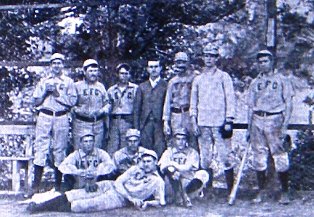
Huyler Westervelt, standing second from right, with the Englewood Field Club team circa 1893

When Giants owner E.B. Talcott finally convinced Westervelt to play professionally he simply signed a piece of paper which said:

“I hereby agree to play with the New York Base Ball Club for the season of 1894 at a salary of $1800.”

Westervelt made his debut for the Giants on April 21, losing 4-3 to the Baltimore Orioles; but beat the Boston Beaneaters 5-2 on May 5, holding the defending champions to three hits and earning the fawning praise of New York Sporting Times columnist O.P. Caylor who said Westervelt was:

 “(A) newly discovered jewel who has flashed out in the baseball firmament as a star of the first magnitude.

“(On May 5) young Westervelt became famous, and his name flashed over thousands of miles of wires that night, while next day the whole country was reading about his triumph.”

Westervelt struggled for the remainder of the season; prone to wildness he finished with a 7-10 record and 5.04 ERA, but still figured into the Giants future plans.  He refused to sign a contract for 1895 which reduced his salary to $1500—Westervelt was added to Giants’ reserve list, where he would remain for several years.

Westervelt continued playing for amateur teams in New York and New Jersey, while working for the Overman Bicycle Company, and attempted to get the Giants to trade or release him.  He filed an appeal contending that he never signed a National League contract, only the piece of paper he signed with Talcott, and therefore the Giants had no right to put him on the reserve list.  He lost the appeal.

Huyler Westervelt

There were reports in early 1896 that Baltimore Orioles manager Ned Hanlon was trying to acquire the pitcher, they never panned out.  In April The Sporting Life said Westervelt was done with professional baseball, but later in the year he joined the Derby-Shelton Angels in the Naugatuck Valley League; no statistics survive other than a brief mention of a seemingly less than successful August game against the Torrington Tornadoes, “(Westervelt) received the warm reception of 16 hits.”

Westervelt returned to the amateur leagues, playing well into the first decade of the 20th Century, and went to work as a broker on Wall Street.  He remained on the reserve list of the New York Giants through the 1901 season, prompting The Sporting Life to say:

 “By the way, did you notice that New York still reserves Huyler Westervelt?  That is one of the standing jokes of each season.”

Westervelt made one more appearance in professional baseball; according to Baseball Reference he played 17 games for the Bradford Drillers in the Interstate League in 1905; while he is not listed on the roster of the Utica Pent-Ups in the New York-Penn League in 1905, he appeared in at least one game for that team, losing a 5-4 decision to the Troy Trojans on June 23.

While Westervelt never achieved the stardom Caylor predicted for him, he remained an important figure in amateur baseball circles until his death in 1949 at the age of 80.

A Really Bad Idea

19 Oct

James Aristotle Hart (his middle name is incorrectly listed as Abner on Baseball Reference) was an influential figure in shaping baseball’s rules.

Hart managed the Louisville Colonels in 1885 and ’86.  He then purchased the Milwaukee franchise in the Western League, and helped A.G. Spalding organize the first baseball teams to go on world tours.  He returned to the National League to manage the Boston Beaneaters in 1889.

James Hart, 1886

In 1890 he went to England and Scotland to help launch a professional baseball league, and upon his return he became secretary of the Chicago Colts and served as an intermediary in the 1890 fight between the National League the nascent Players League.  He became president of the Chicago club the following year, succeeding Spalding, and served in that capacity until 1905.

The New York Times said:

“Many rules now deemed indispensable were championed by Hart.  The foul strike rule, one of the most important, was his final effort in the rule making.  He was largely responsible for…defining the coachers’ box, changing the pitchers’ box and substituting the slab, altering the shape of the home plate, requiring the catcher to play close up to the plate all the time, abolishing the foul tip and covering the players’ bench.”

One rule that Hart considered seriously enough to release to the press “with earnest request for publication and comment,” would have completely changed the game as we know it.

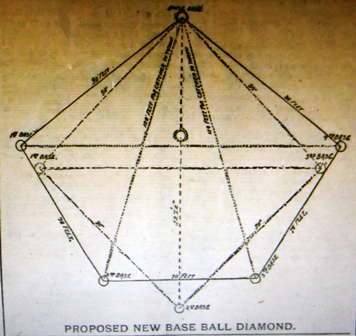
The idea, proposed by a man from Rollo, Missouri named Cliff Spencer and submitted to Hart, called for a redesign of the baseball diamond.

The Sporting Life said of the design:

“The proposed new diamond is a startling innovation, but the more it is studied the more favorably it impresses.”

The new diamond would increase the number of bases from three to four and while the distance between the bases would remain 90 feet:

“(T)he new base lines would throw first and fourth bases about ten feet further out than the present base lines. Thus making a very much larger area for fair balls.”

After several more paragraphs espousing the virtues of the new design, The Sporting Life concluded:

“No decided disadvantages are apparent in this proposed new diamond except that it may operate to the extreme in batting, base running and run-scoring.  (The) objection, could however be easily overcome by deadening the ball somewhat more should the batting become too heavy.”

The article concluded:

“The proposed new diamond, if adopted, would be a radical innovation.  But it maybe that a radical remedy is requisite to restore the base ball patient to entire health and vigor. It is generally conceded that some changes in the game are urgently needed in order to make it more attractive, to lift it out of the rut of pitcher-domination.”

Diagram of the proposed new diamond laid over traditional diamond–home plate is at the top.

Even the glowing review of the proposed plan in The Sporting Life stopped short of absolutely endorsing the idea:  “It is not intended here to advocate, either reservedly or unreservedly, the adoption of this radical innovation,” because it was conceded that there were much less radical measures that could be adopted to increase run production.

Within a week The Sporting Life, and every other newspaper who had published a story about the new diamond concept, had concluded that the idea would never be adopted.

Hart, a long time advocate of increasing run production, was not known to have ever again commented on the new diamond.