Tag Archives: Boston Red Sox

Ty Cobb, Joe Jackson, Harry Hooper and Quackery

15 Feb

Baseball history is full of stories of products that have been routinely used in the belief they give players an edge.  Some, like steroids and amphetamines have obvious benefits; others like Power Balance bracelets provide none.

In 1916 advertisements began to appear in newspapers and magazines across the country for a new miracle drug from DAE Health Laboratories in Detroit: Nuxated Iron.

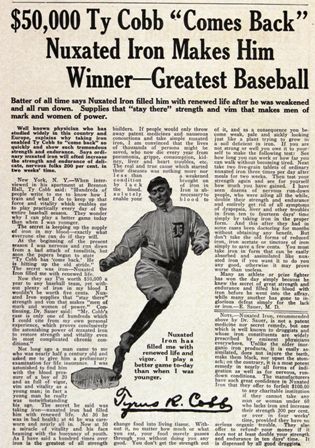
An ad featuring Ty Cobb said “Greatest Baseball Batter of all time says Nuxated Iron filled him with renewed life after he was weakened and all run down.”

Cobb said in the advertisement:

“At the beginning of the present season I was nervous and run down from a bad attack of tonsillitis, but soon the papers began to state ‘Ty Cobb has come back, he is hitting up the old stride.’ The secret was iron—Nuxated Iron filled me with renewed life.

“Now they say I’m worth $50,000 a year to any baseball team.”
cobbnux

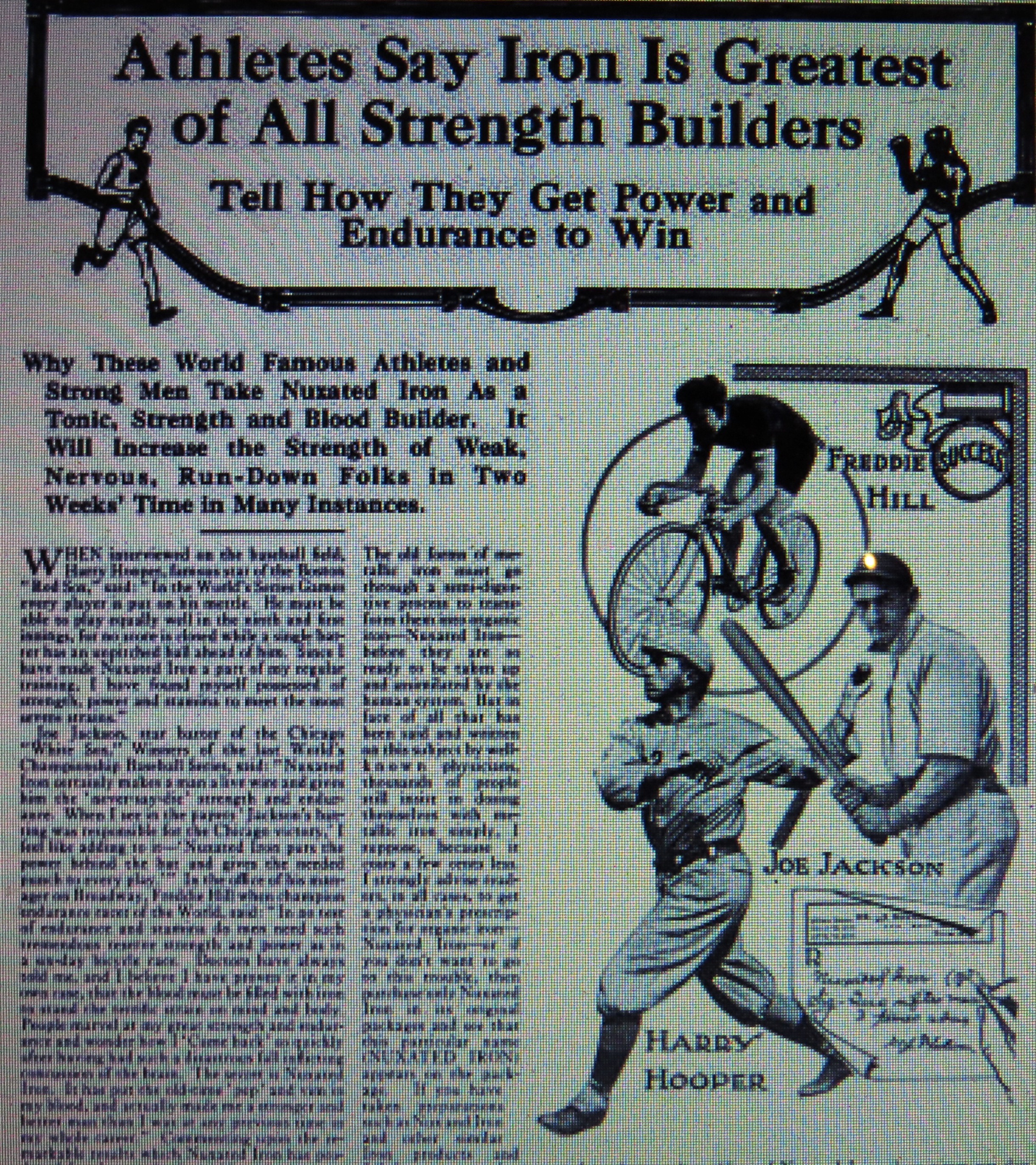
Other ads for Nuxated Iron began to appear, featuring boxer Jess Willard, cyclist Freddie Hill and baseball stars Harry Hooper and Joe Jackson.  Hooper said:

“Since I have made Nuxated Iron a part of my regular training, I have found myself possessed of strength, power and stamina to meet the most severe strains.”

Jackson said:

Nuxated Iron certainly makes a man a live wire and gives him the ‘never-say-die strength and endurance.”

The illiterate Jackson added: “When I see in the papers ‘Jackson’s batting was responsible for the Chicago victory,” I feel like adding to it—‘Nuxated Iron puts the power behind the bat and gives the needed punch to every play.’”
???????????????????????????????

The Journal of the American Medical Association took notice of the Nuxated Iron ad campaign and in October of 1916 had this to say about the “miracle drug:”

“Newspapers whose advertising ethics are still in the formative stage have, for some months past, been singing—at so much a song—the praised of “Nuxated Iron.”  The public has been that this nostrum is what makes Ty Cobb, “the greatest baseball batter of all time,” a “winner” and is what helped Jess Willard “to whip Frank Moran” besides being the “untold secret” of Willard’s “great triumph over jack Johnson.”

All that DAE would say about the ingredients were:

“Formula—The valuable blood, nerve force and tissue building properties of this preparation are due to organic iron in the form of ferrum peptonate in combination with nux vomica (strychnine) phosphoglycerate and other valuable ingredients.

But alas, The AMA Journal was not impressed with the claims made by Nuxated Iron’s endorsements:

“The Journal felt that it owed it to the public to find out just how much iron and nux vomica there were in ‘Nuxated Iron.’  Packages of the nostrum…were subjected to analysis.”

What the analysis found was that the formula that made Ty Cobb a “winner,” offered no health benefits:

“There is only one-twenty-fifth of a grain of iron in each ‘Nuxated Iron’ tablet, while the amount of nux vomica…is practically negligible…In a dollar bottle of ‘Nuxated Iron’ the purchaser gets, according to our analysis, less than 2 ½ grams of iron; in 100 Blaud’s Pills, which can be purchased at any drug store for from 50 to 75 cents, there are 48 grains of iron.”

To sum up their analysis The Journal called the claims made by Nuxated Iron “the sheerest advertising buncombe.”

Contemporary sources said Cobb earned as much as $1000 for his endorsement of Nuxated Iron; there is no record of what Hooper or Jackson were paid, but all three disappeared as paid spokesmen for the product by early 1917.

Nuxated Iron stayed on the market, and stayed in the crosshairs of the AMA until at least 1921.  But by then, the company no longer used baseball players to sing their players.

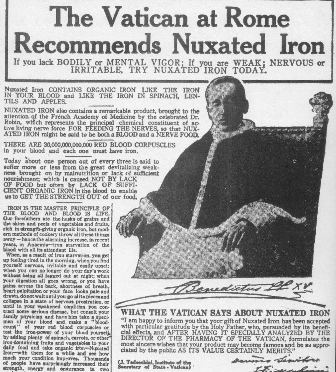
The 1921 ad campaign for Nuxated Iron sought a higher authority to promote the product’s benefits, and featured a picture of Pope Benedict XV under the headline:

“The Vatican at Rome Recommends Nuxated Iron.”
pope

“One of the Two Greatest Sluggers”

28 Jan

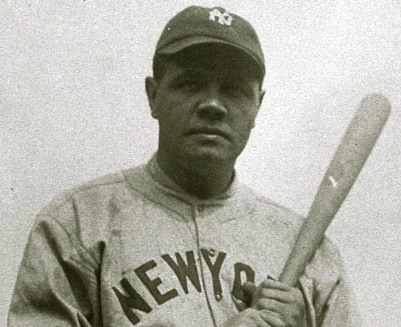
On July 19, 1920, Babe Ruth hit his 30th home run of the season off Dickie Kerr of the Chicago White Sox, breaking the Major League record he had set the previous season.  Perry Werden, working as an umpire in the South Dakota League was largely forgotten.

Babe Ruth

Babe Ruth

The Minneapolis Tribune, as a point of local pride, reminded readers that Ruth had not eclipsed the record set in their town:

“Beyond all doubt the mark made yesterday is a major league record of all time but the Babe has yet to equal the mark of 45 made by Perry Werden of the Minneapolis Western League club in 1895.”

Some reporters, like Al Spink of The Sporting News, dismissed Werden because “the park at Minneapolis, which was an unusually small inclosure (sic), with the right and left field fences close in.”  Regardless, Werden was back in the public eye; his forgotten record was revived as fans followed Ruth’s record season.  The Associated Press said:

“(Werden) admits that Babe Ruth has a harder swing than he had when he made his mark. ‘There is no doubt that Babe has it on all of them—modern and ancient’ says Werden”

When Ruth hit numbers 45 and 46, one in each game of a double-header at Fenway Park, The Associated Press said:

“(Ruth) broke all known world’s records for circuit drives in a single season.”

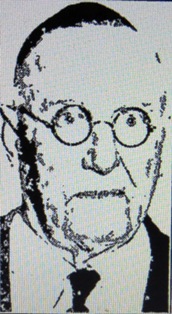
Werden, in his role as “the former holder of the home run record for organized baseball” was often asked about Ruth over the next decade.  Werden called Ruth “One of the two greatest sluggers that I have seen in fifty years.”

Perry Werden, 1930

Perry Werden, 1930

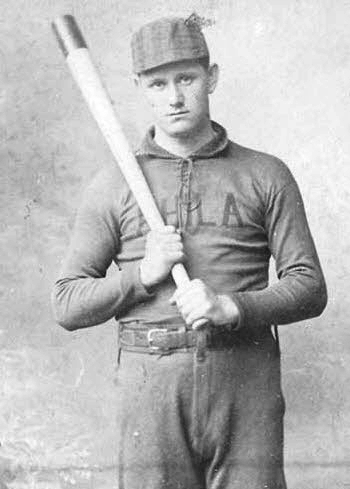
The only player Werden considered Ruth’s equal?   Ed Delahanty.

Werden told The North American Newspaper Alliance, in a nationally syndicated story:

“Ed Delahanty would have equaled or bettered the home run record of Babe Ruth if the lively ball had been in use…If Delahanty had any weakness no pitcher ever found out what it was.  He hit left-handers as easy and effectively as he did right-handers, and it made no difference to him where they threw the ball—high, low, inside, outside, curve fast ball or slow ball—they all looked alike to Big Ed.”

Werden said while playing first base for the Saint Louis Browns he saw just how hard Delahanty could hit:

“The Phillies had a runner on first base, and when Delahanty came up to bat we played in close for him, thinking he would bunt.  That was a mistake we never made again when Delahanty batted.  Instead of bunting he hit a ground ball so hard that it tore a shoe off George Pinkney, our third baseman, in addition to fracturing his right ankle.”

As further proof Werden said “Even with the lively ball…it was thirty-six years before Delahanty’s record of hitting four home runs in a single game was equaled by Lou Gehrig.”  Werden didn’t mention that Bobby Lowe had accomplished the same feat two years before Delahanty.

Ed Delahanty

Ed Delahanty

While Werden will never join Delahanty and Ruth in the Hall of Fame, he is remembered as one of the greatest minor league players of the 19th Century.  He died in Minneapolis in 1934.

Demon Rum–or Demon Rum as an Excuse to Replace a Popular Manager

8 Oct

The 2011 Boston Red Sox were only the latest in a long history of alcohol taking the blame for a team’s poor performance.

As the Chicago Cubs faded into third place during the waning days of the 1912 season, team president Charles Murphy issued an order for “total abstinence” and all players would have a temperance calls in future contracts.

The move was not unprecedented—since 1909 Barney Dreyfus of the Pittsburgh Pirates had required his players to sign a temperance pledge.  What made Murphy’s order so newsworthy was that over the course of several days he issued numerous, often contradictory, “clarifications” and because it quickly became apparent the move was a intended to wrest control of his ballclub from Manager Frank Chance.

Murphy’s original statement said that “loose living and training methods” led to the team’s poor finish. At the same time he provided cover for popular Cub outfielder Frank Schulte who had been suspended by Chance in September his nighttime activities during a crucial August road trip in Cincinnati.  The Cubs lost three of four games to the Reds and fell out of contention.    Murphy’s statement presented Schulte as a man incapable of any personal responsibility:

“I desire to say that in my judgment Schulte has been more sinned against than sinner…from what I could gather he was a victim of too many so-called friends…if we had a rule similar to that in vogue in Pittsburgh this player could not have been led into temptation.”

Chicago Cubs President Charles Murphy

The implication being that Chance had perhaps overreacted by suspending “the more sinned against” Schulte.  This statement was further complicated by Murphy’s several “clarifications,” some of which seemed to support Chance’s decision while some did not.

Chance quickly defended his players and his reaction to Murphy revealed just how bad the relationship was between the team president and his manager:

“Murphy only thinks of the team when it’s winning…his statement reflects upon me personally, and I have been in the business too long to allow Murphy or anyone else to insult me.”

Making matters worse, and calling Murphy’s motives into question was that Chance issued his response from a hospital bed in New York.  As a result of being hit in the head by numerous pitches throughout his career, Chance had developed a blood clot near his brain and had undergone surgery just a few days earlier.

Murphy didn’t hesitate to use Chance’s health issues against him.

A month earlier, plagued by doubts about his condition and suffering from severe headaches, Chance had suggested to Murphy that he might not be able to manage the Cubs in 1913.  At the time Murphy told his manager to wait until after the surgery to make a decision about his future.  Now he was using that conversation to assert that Chance had issued his resignation.

Once Murphy began claiming Chance had, in effect, quit in August the Chicago media which had almost universally supported the “abstinence pledge” called foul.  The Chicago Tribune and Chicago Examiner both said Murphy was using the conversation and the pledge as cover to run the legendary Chance—who led the Cubs to four pennants and two World Championships—out of town.

Chance went.  But he didn’t go quietly.

The manager had acquired 10 percent of the Cubs, shares Murphy had been trying to purchase for more than a year.  Chance sold the shares to Harry Ackerland a Pittsburgh investor who President Murphy did want owning part of his team.  Despite Murphy’s efforts to block the sale, it went through.

Chance was claimed on waivers by Cincinnati, but after the Reds acquired Joe Tinker from the Cubs and named him manager, Chance was waived to New York, where he became manager of the Yankees.

Chance led the Yankees for two losing seasons, managed the Los Angeles Angels in the Pacific Coast League in 1916 and ’17, and closed out his career with one dismal season in Boston; the Red Sox finished 61-91 under Chance.

Frank Chance

Johnny Evers was named Cubs manager for the 1913 season—the Cubs again finished third.

From the day Murphy issued his initial statement until Chance died in 1924, “The Peerless Leader” never missed an opportunity to take a shot at Murphy.

When the Cubs were sold to Cincinnati publishing magnate Charles Phelps Taft (President William Howard Taft’s half-brother) before the 1914 season Murphy claimed that he had made more than a half million dollars on the deal.  Chance and former Cubs pitcher Mordecai Brown (who had his own feud who Murphy who released him after the 1912 season, allegedly without giving Brown money he was owed for playing in that year’s “City Series” with the Chicago White Sox) quickly responded.  Both players confirmed what had long been rumored—that Murphy had been bankrolled by Taft who retained a majority of the shares.   Murphy, said Chance, “Never owned more than fifteen or twenty percent of the club stock.”

Both players also charged that Murphy’s treatment of his players was a primary reason for the formation of the upstart Federal League—at best an oversimplification of the conditions which led to Major League Baseball’s last “third league.”

Another Charles Murphy feud later this week.

.

What Happened to Trammell Scott?

2 Oct

Trammell Scott (Incorrectly listed as Trammel in multiple sources) was born in 1886 to a prominent Dalton, Georgia family.  After playing baseball at the University of Georgia, Scott played minor league ball in the south.  He spent time in the Georgia State League, South Atlantic League, and the Carolina Association—he was said to have also played with Houston in the Texas League but no statistics survive.

After his brief playing career Scott was the victim of a near fatal shooting in 1916.  The Atlanta Constitution covered the story closely and reported that Scott, while “In a dying condition,” told his mother “I told you they would get me.”  Trammell recovered, but never identified his assailant and no motive or suspects were ever identified–just 10 days after the shooting Atlanta Chief of Detectives Newport Langford said they were closing their investigation. and according to the Constitution “Leaving the mystery unsolved.”

Scott joined the army in World War I, was decorated for bravery in action and promoted to the rank of Major.

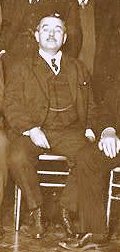
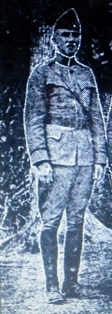
Trammell Scott 1919

Upon returning to Georgia Scott became a well known sportsman.  He was boxing referee and later served on the state boxing commission, owned a sporting goods store, was actively involved in local semi-pro baseball and basketball, and was prominent hunter and breeder of champion bird dogs.

In January of 1938 Scott was named interim President of the Southern Association in a contentious split vote.  At the end of the year he was named President.

In December of 1942 Scott boarded a train in Atlanta to attend the baseball winter meetings in Chicago.  Due to arrive for the league meeting at 4 pm, Scott’s train was delayed.

When the meeting convened without Scott, the owners who opposed his original appointment seized the opportunity.  Thomas Watkins from Memphis, Larry Gilbert of New Orleans, Roy Thompson of Little Rock and Bob Allen of Knoxville led a revolt which was soon joined by Paul Florence of Birmingham.

Within an hour Scott had been voted out and replaced by Billy Evans, a former American League umpire and one time general manager of the Cleveland Indians and Boston Red Sox.  Evans was at the meeting in hopes of landing a different position, but the Southern Association bosses settled on him as the new compromise candidate to run the league.

There was a problem.  No one attempted to reach Scott to inform him of the decision.

That evening, having finally arrived in Chicago, Scott hurried to the National Association dinner meeting of all the league presidents.  Taking his seat, the Associated Press noted “It was a tense moment as (National Association) President William G. Bramham informed Scott the Southern had named a new president.”

Scott said he never saw his dismissal coming and said league owners threw him “A low curve,” by replacing him in the manner they did.

Less than three weeks after his dismissal Scott was turkey hunting on friend’s farm near Newton, Georgia.  After returning for the day, Scott told his friends he was returning to the fields in search of a turkey he had wounded earlier in the day.  The following day Scott was found with a gunshot wound to the chest.

The medical examiner ruled that the wound was self-inflicted but the official ruling said it was “Undetermined whether the shooting was accidental or pre-meditated.”

Many of Scott’s friends said that in spite of being embarrassed by his dismissal he was far from distraught and noted that while being an experienced hunter, Scott was not always careful, “On occasion he was known to have leaned a loaded shotgun against his middle while lighting a cigaret (sic).” This, they speculated, could have caused the type of injury that killed Scott.

Scott was interred at Westview Cemetery in Atlanta—the whole story about two shootings 25 years apart, buried with him.