Tag Archives: California League

Things I Learned on the Way to Looking Up Other Things #2

8 Apr

A few items from 1888 to 1890:

Largest bat 

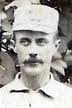
Jonah William “Quiet Joe” Knight appeared in the National League as a pitcher for six games with the Philadelphia Quakers in 1884, posting a 2-4 record, and returned in 1890 as a left fielder with the Cincinnati Reds, hitting .312 in 127 games.  He also spent 16 seasons in the minor leagues and was one of the premier hitters in the Eastern League.

When Knight joined the Reds in 1890 The Cincinnati Post said he “uses a larger bat than any other professional.”  Reds shortstop Ollie Beard said:

“I can hardly swing the bat Knight uses let alone hit a ball with it.”

It was said Knight had his bats made to order in his home town St. Catherine’s Ontario, Canada.

joeknight

“Quiet Joe” Knight

Baseball in German

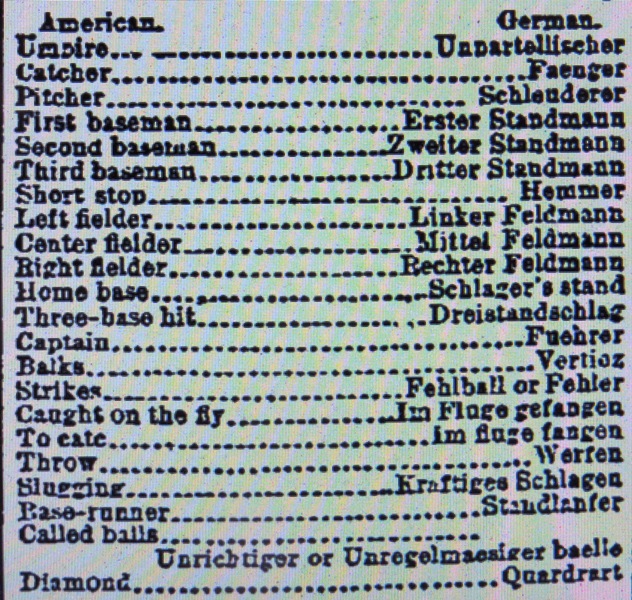
The Boston Herald reported in 1890 that New York’s German language paper Staats-Zeitung hired a baseball editor and would be recapping National League and American Association games:

“Naturally he has been obliged to invent words to describe the technical plays and points and how well he’s succeeded  will be seen from the following:”

???????????????????????????????

Harry Wright’s Team Unimpressive

After the 1887 season Hall of Famer and baseball pioneer Harry Wright took his Philadelphia Quakers on a tour of West Coast along with the Chicago White Stockings, New York Giants and St. Louis Browns; playing exhibition games against each other and with California League teams.

After seeing Philadelphia play The San Francisco Call was unimpressed with the National League’s second place team:

“The ‘Phillies’ will have to improve wonderfully to make their games at all interesting.  They may plead excuses, but they cannot disguise the fact that they played rank ball, and very rank at that.  Their initial effort stamps them as about fourth class, and it will require a brilliant rally to convince people in this section that they are ball-players.  There is not a team in the California League that will not give them a hard game and perchance defeat them.”

Unfortunately there is no record of  how Philadelphia fared on the rest of the tour.

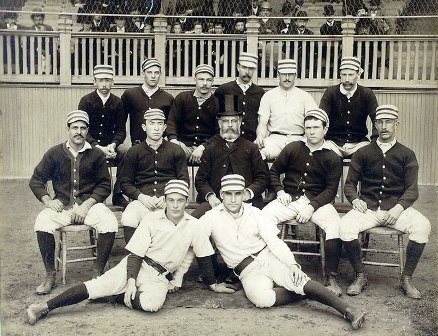
Harry Wright, center, with his 1887 Philadelphia Quakers

Harry Wright, center, with his 1887 Philadelphia Quakers

Charlie Hoover–Infinite Baseball Card Set

21 Mar

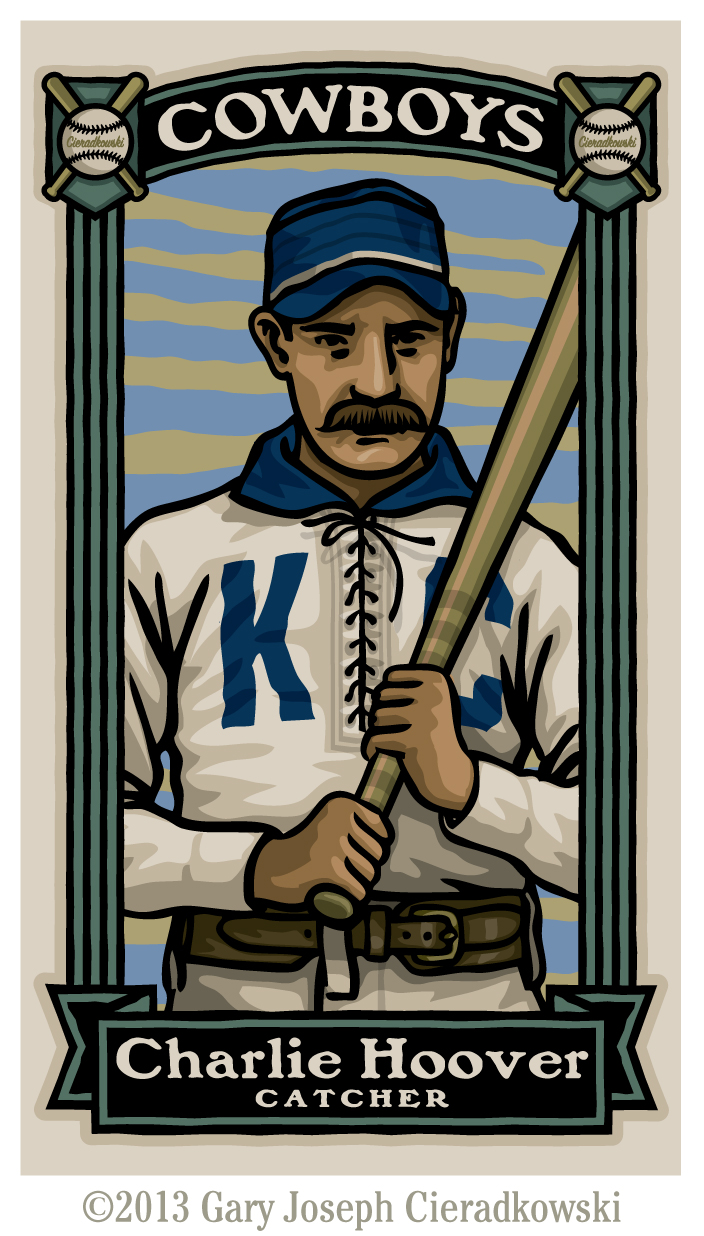
Gary Cieradkowski is an exceptionally talented artist from Covington, Kentucky.  Since 2010 he has produced the great Infinite Baseball Card Set Blog–with excellent stories and his incredible art work.  Gary contacted me recently about collaborating on a piece.  I chose Charlie Hoover.  Hoover was a talented, troubled 19th Century catcher who faded into obscurity and remains one of a handful of Major League players for which there is no information on the place or date of his death.  Read the piece here on Gary’s blog.

This is the card Gary created:

HOOVER_LG

“An Umpire Nearly Lynched”

11 Mar

The above headline appeared on an Associated Press story in August of 1890.  Former Major Leaguer Jimmy Manning, then managing the Kansas City Blues in the Western Association had interceded to quell a riot at the end of a game with the Denver Grizzlies in Kansas City:

“Two questionable decisions by umpire Jovin (Sic) in the ninth inning, when Kansas City was about to tie the score, angered the crowd to such an extent that they swarmed into field, hooting and jeering the umpire.  Two young boys got hold of a rope, and in fun proposed to lynch him.  This added to the excitement, and it looked for a time as if the umpire would be mobbed.  Jimmy Manning climbed up to the top of the fence and addressed the mob.  He said the umpire had decided rightly and advised that no violence be attempted.  This quieted the mob to a degree.  In the meantime the players of both clubs formed a hollow square around the umpire and conducted him to the clubhouse.”
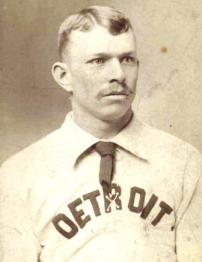
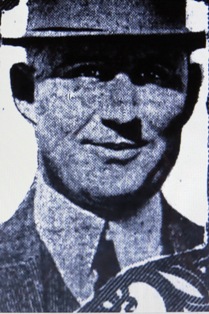
Jimmy Manning

Jimmy Manning

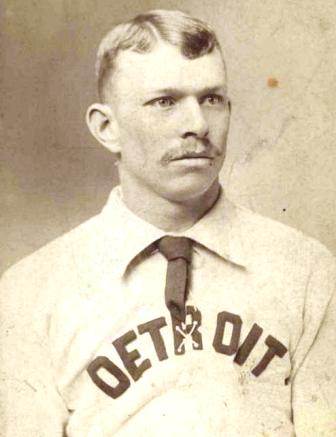
“Jovin” was actually Fred Jevne, a 26-year-old minor league veteran who had become an umpire just a month earlier.  After joining the Spokane franchise in the Pacific Northwest League in April, Jevne was suspended in May for punching an umpire.

In July The Spokane Falls Daily Chronicle said Jevne and teammate Tom Turner “quit the nine because they were excessively fined and ill-treated.”  According to the paper the two players showed up at the July, 1 game “in an intoxicated condition and acted like ruffians in the grand stand.” Turner was eventually reinstated and finished the season in Spokane, Jevne did not.

Since 1885 Jevne had played for a variety of teams in several leagues, including the Southern, International, and California.  When he was signed by Spokane to play center field and serve as captain, The Daily Chronicle said:

“Jevne is rather short.  He is a good batsman and a good player generally.  The San Francisco papers, when he played there, alternately praised him and berated him, but all agree that he was a good player.”

Jevne made one more attempt at playing, joining the Evansville Hoosiers in the Northwestern League in 1891.  He then returned to the Western Association as an umpire.
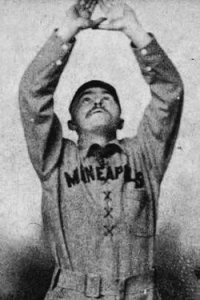
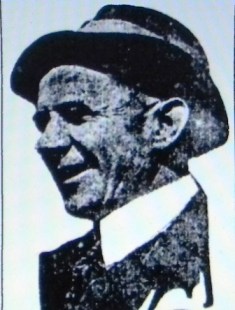
Fred Jevne

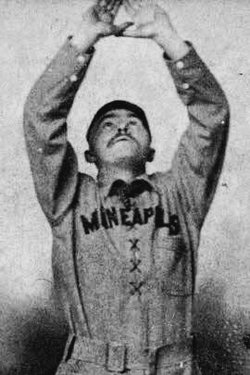
Fred Jevne with the Minneapolis Millers, 1889

In December of 1894 Jevne was named to the National League umpiring staff, where his work received mixed reviews.  In June The Baltimore Sun called him “As good an umpire as there is in the business.” In August, after a he worked a game between the Boston Beaneaters and Chicago Colts, The Boston Globe said “Umpire Jevne did poor work, both sides suffering from his yellow decisions.”  The Pittsburgh Press called Jevne’s performance in a September game between the Pittsburgh Pirates and Philadelphia Athletics “By far the worst exhibition of umpiring given this season.”

Jevne was not offered a position in the National League for 1896, and went to work in the Southern Association, where he seems to have a continued his fighting ways.  In July, The Birmingham Age-Herald said Jevne had missed the previous day’s game between the Montgomery Senators and Columbus River Snipes:

“Jevne, the regular umpire, arrived in town last night, but this morning loaded himself up with the spirit of hilarity, got into a fight with a citizen and when the hour for playing arrived was in the hands of the police, and failing to make bond was unavoidably absent from the field.”

Despite his troubles, or because of them, Jevne was asked to join the Interstate League at the end of the 1896 season because, according to The Sporting Life, umpires were losing control of games:

 “(Interstate League President Charles) Powers to-night wired for Fred Jevne the ex-National League umpire, who is so handy with his fists, to report for duty.”

Jevne was not popular with players or the press down south, and said his time in the Southern Association was difficult:

“It was no snap umpiring down South.  Fines didn’t go—were never paid—and so I used to remove men from the game.  Sometimes I would have to take out about half of a team before they would behave, and then the papers would roast me good and plenty the next morning…I had a scrap with a player named (Al) Gifford (Atlanta Crackers shortstop), and punched him in a car going from the grounds.  The local paper came out the next morning and urged the chartering of a special car for the umpire. So that he could be alone in his dignity, and another paragraph hinted that a cigar sign or dummy could be put in the special car for the umpire to punch”

Jevne appears to have returned to the Southern Association for parts of the 1897 and ’98 seasons.  He spent at least part of 1899 and 1900 in his hometown, Chicago, where he worked as an umpire in some college games.  In 1901 Jevne became a Western League umpire and that year met with a violent and mysterious end.

Initial newspaper reports said Jevne had fallen from a third story window in Denver’s Hotel Victor on August 2; he lingered for two days before dying. His body was returned to Chicago and he was buried at Graceland Cemetery.

However, several months after his death, Jevne’s brother Lloyd, a well-known three cushion billiard champion, told The Associated Press he was certain he had been murdered, and that before dying Jevne had said he was pushed:

“I saw Fred’s body after it was shipped back to Chicago, where the burial took place, and the most prominent feature of his injuries was the bruise on his nose.  Doctors I saw believe that he was struck across the face with some blunt object… When he was about to die it is not probable he would have told a falsehood.  He would not have said at that time that he had been pushed out the window.”
Lloyd Jevne

Lloyd Jevne

Whether Fred Jevne fell or was pushed from that hotel window has never been positively determined.

Assumed Names–Happy Hogan

11 Jan
Wallace Bray 1890s

Wallace Bray 1890s

Some players became so closely associated with the name they adopted that their real name takes a century to catch up.  Wallace Louis Bray came from a prominent family in Santa Clara, California, and like many players at the turn of the 20th Century chose to play under an assumed name to spare the family the shame of having produced a professional ballplayer.  Baseball Reference and other sources still list him by his assumed name.

Bray went by the name Wallace Bray while playing baseball at Santa Clara University (other contemporary sources said he also attended the University of the Pacific)—one of his coaches was Major League pitcher Joe Corbett.  (There is some confusion because there is another player with the surname Hogan, Major Leaguer Willie Hogan attended Santa Clara seven years after Bray and also played in the Pacific Coast League at the same time and he was also sometimes called “Happy,” but Hogan was his given name).

Bray became Wallace Hogan when he signed his first professional contract with the Sacramento Senators in the California League in 1900, and picked up the nickname “Happy.”.

The Berkeley Daily Gazette said:

“He was dubbed “Happy” by the writers because of his sunny disposition.”

He become an extremely popular West Coast baseball figure and in 1903 he was still with Sacramento when they joined the Pacific Coast League, the league in which he played and managed for the next 12 seasons

While never a great player, he was considered a good catcher and infielder but he was a career .186 hitter; The San Francisco Chronicle called him “The most popular figure,” in the Pacific Coast League.

After playing for the Tacoma Tigers, Fresno Raisin Eaters and Los Angeles Angels, Bray was named manager of the new PCL franchise, the Vernon Tigers in 1909; Vernon finished last, but Hogan’s team, which moved to nearby Venice, improved each of the next 5 years and finished in 2nd place twice.

The Chronicle said:

“Taking a new club in a league of the highest minor classification…is quite a job.  Hogan made good with a bang, or his club has always been in the running and in addition it has always been a big attraction.”

The Associated Press said:

“(Hogan) is a human dynamo when on the baseball field.  The present position of the Vernon club in the pennant race is due mainly to his dynamic personality…Baseball players say Hap is the fairest manager in the league and that he treats his men better than any other coast league impresario.”

The Tigers got off to a great start in 1915 and were in first place on May 9, an off day, when Bray went swimming at Venice beach and “He contracted a severe cold and pneumonia set in.”  He missed several games, but “While it was reported several times that Hogan was in serious condition, it was confidently expected that he would pull through it all right.”

He did not pull through and died on May 17 at 37-years-old.

The Associated Press said of his funeral:

Roy Hitt, Doc White, Walter Carlisle, Dick Bayless, Frank Decanniere and Johnny Kane are the players who acted as pallbearers.  The other members of the club and prominent men in baseball acted as honorary pallbearers.  While the throng at the funeral viewed for the last time the face from which even death could not efface the famous smile, every baseball game played in the Coast League halted for five minutes, the stars of the diamond in many cities on the Coast stood with bared heads in silent prayer for the dead star. In accordance with Hogan’s wishes, the body was cremated.”

Wallace Louis "Happy Hogan" Bray 1912

Wallace Louis “Happy Hogan” Bray 1912

The Tigers went into a tailspin under new manager Dick Bayless, while they recovered in the second half the team finished 4th.

A benefit game was played to raise money for Bray’s widow on June 25 at Washington Park in Los Angeles.  The Sporting Life said:

“In the most remarkable tribute ever paid to the memory of any man in Los Angeles, 10,000 persons choked the stands.”

Brother Joe Goes Home

3 Dec

After the Saint Louis Cardinals released Joe Corbett in August of 1904, he returned to San Francisco and signed with the Seals of the Pacific Coast League.

There would be one more skirmish between Hanlon and Corbett.

Hanlon filed a grievance with the National Commission claiming that Corbett’s release did not make him a free agent, but instead released his rights back to Brooklyn.  Hanlon seemed to have a solid case.  Ed Grillo, former and future sports writer and then President of the American Association said:

“(Brooklyn) has a prima facie title to Corbett…The National League acquired complete control of Corbett’s services when he signed a St. Louis contract for 1904, and his release to Brooklyn is in conformity with the national agreement.  The law of the game is clearly with the Brooklyn club.”

San Francisco, with the support of the entire Pacific Coast League, ignored the complaint and put Corbett in the Seals’ lineup.  Hanlon ultimately backed down and Corbett was released to San Francisco.

Corbett appeared in 33 games for the Seals in 1904 and 05, posting a 17-13 record.  In September of 1905 he threatened to bring law suits against Hanlon, The Brooklyn club, and the National Commission:

“(O)n the ground that he has suffered in reputation by combined actions of baseball magnates (and) has been deprived from earning thousands of dollars, rightfully his, because of his pitching ability; and that he has been humiliated and disgraced in many ways.”

The threatened legal action made headlines, but doesn’t appear to have gone further.

Corbett also retired, again, that September.  Reporters, skeptical about this retirement (and given brother Jim’s multiple “retirements” from the ring) pressed Joe on the issue.  In reply he “Promised faithfully to never reappear.”

He kept his promise.  For a few months.

In 1906 he played for the Stockton Millers and San Jose Prune Pickers in the California League, and appeared in two games in the outfield for the Seals.

Corbett came back and retired twice more.  In 1909 he pitched 12 games for the Seals.  In 1916 he tried again; the Seals released him in May after four games.

Joe Corbett, 1916

Corbett and his wife had seven children, and when he wasn’t pitching he amassed quite a resume.  In addition to the various family businesses and newspaper work mentioned, Corbett worked at various times as baseball coach at Santa Clara College (1898-99, 1902-03), in the San Francisco Assessor’s office, clerk’s office, for an oil company, and the San Francisco branch of the Bank of Italy.

A few years before his death in 1945, Corbett was asked by The Associated Press if he had any advice for players who were considering defying the reserve clause and holding out. Joe said:

“If you think you’re right, stick to it.  But don’t forget, it’s pretty hard to beat those hours.”

And finally…Corbett was said to have worshiped “Gentleman Jim,” but was also known to sometimes tire of hearing what a great fighter his brother was.  Over time he developed a standard reply:

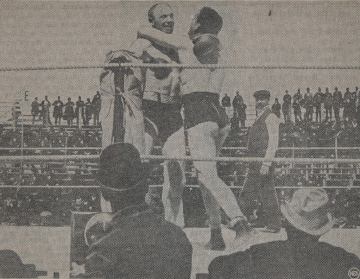
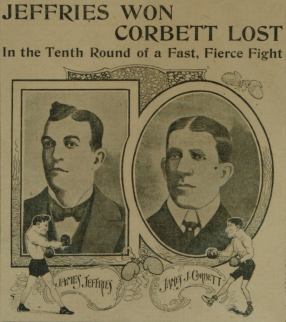
“I only saw him in the ring twice… (Bob) Fitzsimmons won the first time and Jeff (Jim Jeffries) knocked him out the second time.  But they tell me he was some fighter.”

Corbett/Fitzsimmons

Corbett/Jeffries

Filling in the Blanks—All-Time Great Name Edition

3 Oct

Baseball Reference lists H.A. Magendie as a member of the San Francisco Athletics and San Francisco Californias of the Pacific League in 1878 and the San Francisco Eagles of the Pacific League and San Francisco Californias of the California League in 1879.

Hippolyte Aloise (some public records have his middle name a Aloysius) Magendie was born in Stockton, California in 1856 and graduated from St. Mary’s College of California in 1875.

No records exist for the teams Magendie plated for, but a box score from the San Francisco Chronicle from August of 1878 lists him as a second baseman, and the accompanying article provides a nice example of 19th century baseball writing:

“Magendie hit the leather sphere to between first and second base which was handsomely caught by Daniels with his left hand.”

After his brief baseball career Magendie became a journalist and playwright.  His only surviving work I was able to find is a play entitled “Parents by Proxy, A Comedy-Drama in Four Acts,” a copy of which is in the Library of Congress.

Magendie died in San Francisco on August 8, 1907.