Tag Archives: Central League

Filling in the Blanks—Eastman, Huntington 1913

18 Feb

Baseball Reference lists “Eastman” as a player with the 1913 Huntington Blue Sox in the Ohio State League— he quickly became one of the biggest baseball stories in the spring of 1913, and just as quickly disappeared from the game.

George A. Eastman was born in South Dakota.  In 1862 his grandfather was one of the 284 Santee Sioux warriors who participated in the  Dakota War and  had their death sentences commuted by Abraham Lincoln—38 others were hanged in Mankato, Minnesota.

His father John Eastman was a farmer and Presbyterian minister in Flandreau, South Dakota and his uncle, Dr. Charles Alexander Eastman was a prominent writer, nationally known lecturer and activist.

Exactly when Eastman began playing baseball is unclear, but in 1912 he played on a semi-pro team in Sisseton, South Dakota with former Pittsburgh Pirate pitcher Homer Hillebrand.  According to The Pittsburgh Gazette-Times Hillebrand “Considered him very promising material,” and recommended Eastman to Pirate manager Fred Clarke, the paper said “Clarke says Indian players are the style, and the Pittsburgh club will be in style.”
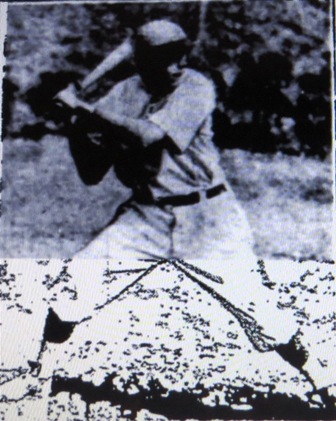
George Eastman in Hot Springs, 1913

George Eastman in Hot Springs, 1913

When Eastman joined the Pirates in Hot Springs, Arkansas, The Gazette-Times, who of course dubbed him “Chief,” said:

“Eastman is a well built fellow, from the baseball standpoint.  He is 5 feet 10 ½ inches tall, weighs 150 pounds and is very fast.”

The paper said Eastman’s preacher father “does not know much about baseball, and does not think very well of it as a profession.”

A shortstop, Eastman quickly became the source of great interest in Hot Springs.  The Associated Press said even the Pirates best player took notice:

“Honus Wagner has taken more than a passing interest in the Indian Chief Eastman.  (Wagner) isn’t given to indulging in extravagant statements and when he says a recruit is a ‘mighty good ballplayer’ it means something…and he added that “chief throws like Mickey Doolan (Doolin) and fields just like Jack Miller.”

Honus Wagner
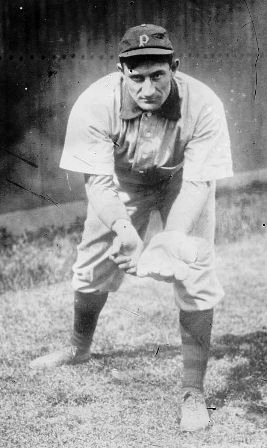
Honus Wagner

The Associated Press said:

“(A) Sioux Indian is burning up things around short field at Hot Springs with the Pittsburgh Pirates and Fred Clarke probably will retain him as an understudy to Hans Wagner.”

The Sporting Life thought he was bound for stardom:

“The Pittsburgh players are very enthusiastic over George Eastman, the Sioux Indian player, now being tried out at short. They say that he is a wonderful natural ball player, including hitting ability. They say he is sure of a place on the team, as he can play most any position and can ‘outhit Larry Lajoie.’

Despite the fanfare, Eastman did not make the team and was released to the Steubenville Stubs of the Interstate League.  It’s unclear whether Eastman ever appeared in a game with Steubenville, and was returned to the Pirates in early May; he was then sent to Huntington for the remainder of the 1913 season.

Eastman hit .210 in 57 games for Huntington.  There is an Eastman who appeared in 18 games in the Central League in 1914, but there’s no evidence that it’s George Eastman, who is never mentioned in connection with professional baseball again.

In fact, the trail for Eastman goes cold from the end of the 1913 until 1937 when he became the first tribal president of the Flandreau Santee Sioux Tribe.  He served seven terms as tribal president before his death in 1954.
George Eastman, circa 1937
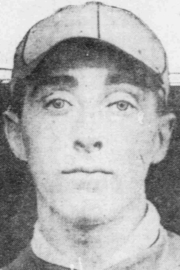
George Eastman, circa 1937

The Two Cent Release

23 Jan

A small item in The Sporting Life in June of 1906 said John “Jock” Somerlott had been released by Jack Hardy, manager of the Fort Wayne franchise in the Interstate Association.

Four years later, when Somerlott was purchased by the Washington Senators the The Associated Press told the story of his release:

“Salary day at Fort Wayne was an event.  It rolled around regularly, but there was seldom money enough in the treasury to pay the players… (Hardy) didn’t like Somerlott, and Somerlott didn’t just exactly hanker after his manager, and the friction grew as money became scarce.”

Jock Somerlott

Jock Somerlott

Jack Hardy

Jack Hardy

Somerlott said he was tired of not getting paid and playing in front of sparse crowds so he approached Hardy one morning in June with an offer:

“Tell you what I’ll do Jack, I’ll give you every cent I’ve got for my release.”

After Hardy accepted the offer:

“(Somerlott) searched his clothing and allowed the manager to do the same, and the total output was two pennies.  He handed the cash to Hardy and got his release.”

Somerlott signed with the Winnipeg Maroons in the Northern-Copper Country League for the remainder of 1906.  After two years in the Southern Michigan League, he went to the Terre Haute Hottentots in the Central League.  After hitting .282 and .292 in 1909 and 1910, the Washington Senators purchased his contract in August.

Somerlott’s Major League career was brief; he appeared in 29 games for the Senators in 1910 and 1911 hitting .204. He returned to the minor leagues for five seasons after his release from Washington, finishing his career with the Pittsfield Electrics in the Eastern Association in 1914.

Somerlott returned home to Indiana and for many years managed the Angola team in the semi-pro Indiana-Ohio League; among his players was Hall of Famer Charlie Gehringer.

Somerlott is a member of the Fort Wayne Baseball and the Northeast Indiana Baseball Association Halls of Fame.  He died in Butler, Indiana in 1965.

Joe Jerger

26 Nov

Through a pronunciation fluke and poor subsequent research, Joseph J. Jerger remains the least known player to have been involved in a fatal beaning in a professional game.

Jerger was born in Germany, February 14, 1877, and began playing professionally with the Fall River Indians in the New England League in 1902.  With the exception of two short stints in the Eastern and Central Leagues, he remained with Fall River through 1907.

On August 9, 1906, with Thomas F. Burke, left fielder for the Lynn Shoemakers at the plate Jerger threw a pitch that broke inside and struck Burke in the temple.  Burke was immediately knocked unconscious, he was caught by the umpire as he fell.

According to newspaper reports Burke was  “a former player for Boston University and a law student in the off season,” this could be true, or Burke might have been confused with Boston athlete and Olympian Thomas E. Burke, who was attending law school during this period.

The real confusion was with Jerger.

Every contemporary newspaper account of the event, using the name as it was pronounced rather than as spelled, called Jerger “Joe Yeager.”   It was probably also due to Joseph Francis “Little Joe” Yeager, who had been a pitcher and in 1906 was playing infield for the New York Highlanders.

The Sporting Life had only added to the confusion in July of 1906 when they said:

“The name of the Fall River pitcher is Jegger not Yeager.”

Early reports were optimistic, The Boston Globe said “Doctors have hope,” for Burke’s recovery. Burke underwent surgery, but never regained consciousness and died on August 11.

Jerger was arrested and charged with manslaughter on August 18.  Contrary to some accounts, like in the otherwise excellent, “Death At The Ballpark: A Comprehensive Study of Game-Related Fatalities of Players, Other Personnel and Spectators in Amateur and Professional Baseball, 1862-2007,” Jerger was never in danger of being convicted–the local authorities had determined that the best way to “place (Jerger) in good standing,” was to make his exoneration official.  (Incidentally, the book also incorrectly identifies Jerger as “Yeager”).

At the time of his “arrest,” the Lynn Chief of Police (named Burke), called the manslaughter charge “a mere formality,” and said it was only to “have a complete record of Burke’s death.”

Judge Berry of the Lynn Police Court, who had been in attendance at the game, presided over the brief hearing on August 20.  Six witnesses testified on Jerger’s behalf and according to The Boston Evening Transcript, Berry ruled that “(Jerger) was in no way to blame for the death of Burke,” and:

“Judge Berry told Yeager (sic) that he was a good pitcher and it gave him pleasure to exonerate him.”

Unlike other pitchers who were involved with hit by pitch deaths, the name confusion meant that the incident did not seem to follow Jerger.  I cannot find a reference to Jerger in any newspaper article after 1906 that mentions Burke’s death.

After being released by Fall River at the close of 1907, Jerger joined the Wheeling Stogies in the Central League.  In 1909 he had his best season, posting a 20-12 record for the East Liverpool Potters in the Ohio-Pennsylvania League.  Jerger finished his career in 1910 with the Quincy Vets in the Central Association.

Jerger died in Martin’s Ferry, Ohio, February 6, 1961.

A Thousand Words–New Orleans Pelicans

13 Nov

Another picture I’ve never seen published before—the 1906 New Orleans Pelicans of the Southern Association.

Top, Left to right.

Bill Phillipshe spent seven seasons in the Major Leagues with a 70-76 record; and won 256 games in a minor league career that began in 1890 and ended in 1909.

Mark “Moxie” Manuelwas said to have appeared as a both a left and right-handed pitcher for New Orleans in 1906 and 07, Manuel was a combined 37-26, earning him a second trip to the Major Leagues in 1908, where he posted a 3-4 record in 18 appearances for the Chicago White Sox.

Milo Stratton—a weak hitting (career .185) catcher who played in the minor leagues from 1903-1914.

William O’Brien—a .215 hitting first baseman in 1905 with the Toronto Maple  Leafs in the Eastern League and with the Pelicans in 1906.

Jake Atz—played for the Washington Senators in 1903 and the Chicago White Sox 1907-1909, a minor league manager for 21 seasons he won more than 1900 games.

Art Brouthers—a third baseman who played in 37 games for the 1906 Philadelphia Athletics, Brouthers managed the 1913 Paducah Indians to the Kitty League championship.  After his baseball career he was a hotel detective in Charleston, South Carolina.

Front, left to right

Whitey GueseGuese had several strong seasons in the minors, but in his lone Major League season with the Cincinnati Reds in 1901 he was 1-4.  The Youngstown Vindicator said, “He is a twirler who belongs to the disappointing species known as ‘morning glories.” And, “Seemingly has a heart like a canary.”

Joe Rickert—“Diamond Joe” Rickert stole 77 bases for the Pelicans in 1904; he played 15 games in the Major Leagues with the Pittsburgh Pirates and Boston Beaneaters.

William Blake—an outfielder with 13 different minor league teams from 1902 to 1910 and native of Louisville, Kentucky, little else is known.

Punch Knoll—another long-time minor league manager.  Knoll appeared in 79 games for the 1905 Washington Senators, he appeared in 3 games as a pinch hitter, collecting one hit, at 48-years-old while managing the Fort Wayne Chiefs in the Central League

Chick Cargo—brother of Major Leaguer Bobby Cargo, Charles “Chick” Cargo was a shortstop and 3rd baseman who played 19 seasons of minor league ball.

George Watt—Watt had three good seasons for the Little Rock Travelers, with a 53-34 record from 1902-1904.  He slipped to 20-37 in 1905-06 with Little Rock and New Orleans.  By 1907 he had dropped from “A” ball to “D” ball with the Zanesville franchise in the Pennsylvania-Ohio-Maryland League.  In 1908 he pitched for the Zanesville Infants in the Central League, was release in August after posting a 6-15 record and disappeared.

“The Rube Waddell of the Central League”

11 Oct

Edward S. Van Anda was the most talented pitcher in the Central League from 1904 to 1908; he was also the most erratic personality in the league–and was often compared to baseball’s most eccentric pitching legend “Rube” Waddell.

Van Anda was born June 6, 1881 in Wapakoneta, Ohio. He pitched for independent teams in Ohio from 1900-1903, getting as much attention for his enormous ego and behavior as he did for his pitching.

Nicknamed “Lord Chesterfield,” or simply “Chesty,” Van Anda would disappear for long stretches and his shameless self promotion made him unpopular with teammates He was signed by the Fort Wayne Railroaders in the Central League in 1904. His statistics for that season are lost, but according to The Youngstown Vindicator: “(H)e won every game he pitched except one toward the close of the season.”

In 1905 Van Anda again pitched for Fort Wayne (the team relocated to Canton, Ohio during the season) and posted a record of 20-14. The Fort Wayne News described Van Anda’s abilities as a ballplayer:

“There is only one thing Van Anda can do and that is pitch. He cannot hit a balloon and he runs bases like an ice wagon.”

The Fort Wayne Gazette said:

“He is rather erratic but has great pitching caliber in him.”

Every article about Van Anda described him as “eccentric,” or as the Toledo Bee put it:

“That Freak Van Anda.”

And the Bluffton (IN) Chronicle said:

“Van Anda is the name of the latest freak to break into baseball.”

A story about his self promotion that made the rounds in newspapers in 1905 was retold several years later in column by former major league pitcher Al Demaree:

“I used to know a fellow named Van Anda…he’d go out into the bleachers, and if the pitcher in the box began to falter, he’d yell “Put in Van Anda he’s the best pitcher on the club. Then he’d move over back of third and start up the same cheer in the crowd.”

The 1905 version of the story included his fellow pitchers, angry at Van Anda’s antics, setting him up

But he could pitch, and appeared destined for the Major Leagues. The Youngstown Vindicator said at the close of the 1905 season:

“Van Anda, known on account of his eccentricities as “the Rube Waddell of the Central League,” has been drafted by the Cincinnati Reds.”

At the close of the 1905 season Van Anda pitched for the local Wapakoneta team in an exhibition against the Reds, the Major Leaguers got 14 hits and beat Van Anda 12-0, it was the last time he faced a Major League team.

After a strong 1906 season with the Grand Rapids Wolverines (23-13), Van Anda was acquired by the Trenton Tigers in the Tri-State League. His time there was short; during a spring training game Van Anda walked off the mound and led the field in the middle of a game, which led to his immediate release.

According to The Fort Wayne News Van Anda “Known all over the Central as an eccentric …was given a bus ticket and returned to Fort Wayne.”

Edward Van Anda

Van Anda pitched for neither Trenton nor Fort Wayne during the 1907 regular season, but signed with the Central League South Bend Greens in June. He only appeared in one game, losing 7-1 to the Wheeling Stogies. He was released a few days later, not resurfacing until the following season.

In 1908 he went 15-11 for Fort Wayne and was purchased by the Montgomery Senators of the Southern Association and posted a 6-5 record. Early in the 1909 season Van Anda was suspended indefinitely by Fort Wayne for “insubordination.” The Fort Wayne News reported that Van Anda signed with the Galveston Sand Crabs of the Texas League, but there is no record he ever played for that team.

Van Anda became a traveling salesman in 1910. He remained in Fort Wayne until his death on October 17, 1965.