Tag Archives: Chicago American Giants

“Fans Inclined to be Fair find it Difficult to side with Wickware”

7 Oct

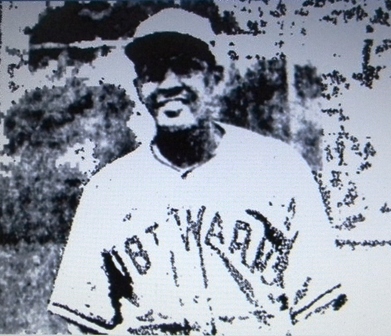
Frank Wickware is best remembered for defeating Walter Johnson and a team of minor league players 1 to 1 in Schenectady, New York in October of 1913.  He was pitching for the Mohawk Giants, and the game was very nearly cancelled after the pitcher and his teammates initially refused to take the field, claiming they were owed six weeks of back pay.
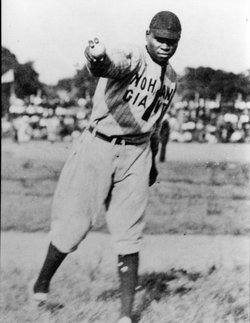
Frank Wickware

Frank Wickware

The New York Times said the crowd of 6,000 nearly rioted, the police were called to control the crowd and more than an hour after the game was scheduled to begin “the financial difficulty was settled and the game started.”

As a result of the “strike,” and the late start, the game was called after only five innings.

The incident in Schenectady wasn’t the first time in 1913 that Wickware took center stage in a controversy over money—the first time it contributed to the cutting short a much anticipated series of games.

On July 17 the Rube Foster’s Chicago American Giants were to begin a five-game series with the Lincoln Giants in New York.
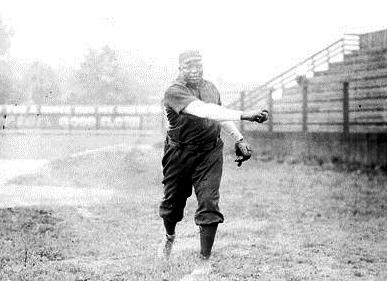
Rube Foster

Rube Foster

Roderick “Jess” McMahon, the owner of the Lincoln Giants, went to Schenectady before the series and signed Wickware, who he intended to start in the first game.

The New York Age said:

“Thursday afternoon before the game…McMahon spied Wickware all togged up in and American Giant suit.  He inquired of the pitcher why he was not in a Lincoln Giant uniform.  Wickware promptly told him that he was going to pitch for the American Giants.

“McMahon protested to Rube Foster against Wickware playing on the American Giants in view of the fact that he had given him money (allegedly $100), but the manager of the American Giants insisted that Wickware do the pitching for his team.  The two managers argued for over an hour, when the game was called off.”

The series was resumed the following day without Wickware.  The Lincoln Giants were ahead in the series 2 games to 1 before the game scheduled for July 22.  McMahon recruited Charles Earle of the Brooklyn Royal Giants to play left field in place Robert “Judy” Gans who was ill.  Foster objected to the substitution and refused to play the game despite there being “A large crowd.”

The Age said Wickware and both teams were doing damage to the future of black baseball:

“Fans inclined to be fair find it difficult to side with Wickware or regard him as a hero.  To accept money from one manager and then want to play for another is a piece of reasoning which does not favorably impress those who believe that one should keep his word at all times.  Just such conduct of Wickware’s will do much to injure the progress of baseball among colored clubs.”

“The sooner the managers of the colored teams get together and agree upon a working basis for their mutual protection the better.  Manager McMahon seems to have developed a habit of borrowing players from other clubs which should not be permitted. “

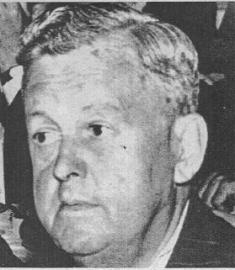
Roderick ":Jess" McMahon

Roderick “:Jess” McMahon

Wickware would remain one of the dominant pitchers in black baseball into the 1920s.  He continued to jump when teams when a better offer came—he played for four clubs in 1914, jumping a contract each time.  In 1925 Wickware was in a bar on 135th Street in New York with Lincoln Giants teammates Oliver Marcelle and Dave Brown.  After an altercation in the bar, a man named Benjamin Adair was shot and killed in front of the bar.

One report in The Freeman said witnesses claimed Adair was with the three players when a fifth man ran from building “shouted ‘I got you,’ and fired point-blank at Adair,” The New York Amsterdam News said “four men were quarreling on the sidewalk, when one drew an automatic.”

In either case, Brown disappeared and was assumed to me the shooter.  Wickware and Marcelle were never charged; there has been much mythology about Brown and speculation about the date and place of his death, but no definitive evidence has been presented.

McMahon and his brother Ed sold their controlling interest in the Lincoln Giants in 1914 and owned the Lincoln Stars from 1914-1917.  The McMahon’s were also boxing and wrestling promoters—which continues to be the family business.
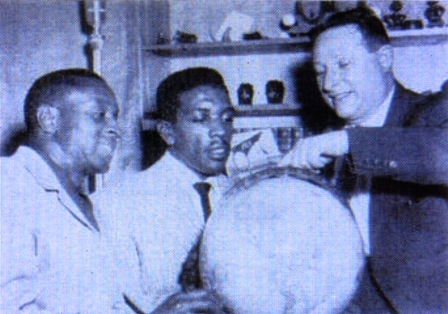
Gaines and Raines

12 Feb

???????????????????????????????

Two of the early foreign players—or gaijin—and the third and fourth African-Americans to sign to play baseball in Japan pose with the man who negotiated their contracts in 1953: Jonas Gaines, left and Larry Raines with Abe Saperstein of Harlem Globetrotters fame.

gaines

Jonas Gaines

Gaines, born in either 1914 or ’15 depending on the source, was nearing the end of a long career; a graduate of Southern University, he played semi-pro ball in North Dakota then began his professional career with the Newark Eagles in 1937, went to the Baltimore  Elite giants in 1938 and appeared in five East-West All-Star games.  Gaines served in the US Army in WWII and  finished his Negro League career with the Philadelphia Stars in 1950.  He spent 1951 and ’52 with the Minot Mallards in the Manitoba-Dakota (Man-Dak) League.

He spent one season in Japan with the Hankyu Braves in the Pacific League, where he was teammates with Raines.  The Braves third gaijin was another former Negro League player, John Britton.  Britton and Jimmy Newberry were the first two African-American players in Japan, having signed together in 1952.  Newberry, like Gaines, left after one season.

Gaines returned to the states in 1954 and led the Pampa Oilers, champions of the West Texas-New Mexico League, with 18 wins.  He finished his career with the Carlsbad Potashes in the Southwestern League in 1957. He died in his native Louisiana in 1998.

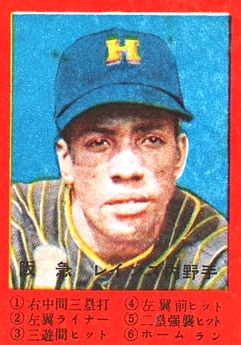
Larry Raines, Japanese baseball card

Larry Raines, Japanese baseball card

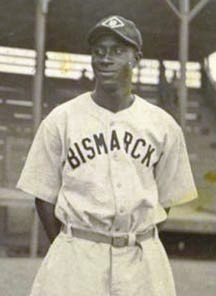
Raines was a twenty-two-year-old infielder for the Chicago American Giants and hit .298 in 1952.  Saperstein, who helped engineer the deal that brought Britton and Newberry to Japan, negotiated the contracts for Gaines and Raines, who according to Jet Magazine were paid $1000 a month by the Braves.

Raines quickly became a star in Japan, leading the Pacific League with 61 stolen bases in 1953; he led the league with a .337 batting average, 96 runs and 184 hits, he also finished second in RBI’s in 1954.

Raines returned to the states and signed with the Cleveland Indians in 1955.  After two seasons in the minor leagues, he played in 96 games for the Indians in 1957.  He appeared in nine games with Cleveland in 1958 and played in the minor leagues until 1961.  Raines returned to Japan in 1962, playing one more season with the Braves.  He died in Michigan in 1978.

“King of the Sandlots”

13 Aug

Not every baseball legend had a long professional career.

“King of the Sandlots” and “Pittsburgh’s Satchel Paige” is what they called Ralph “Felix” Mellix when the former Negro League and barnstorming pitcher announced his retirement from the Semi-pro 18th Ward Team in Pittsburgh’s South Hills League.  Mellix retired every year for a decade only to return again the next season until he was 60.

Ralph “Felix” Mellix

 Almost all of the statistics compiled by Mellix are lost to history, “officially” Mellix appeared in two professional games in his late 30s, one for the Newark Dodgers in 1934 and another the following season for the Homestead Grays, posting an undistinguished ERA of 12.54. Mellix was said to have spent short stints with the Chicago American Giants in 1915 and the Pittsburgh Crawfords in the early 30s, where he was said to be Paige’s roommate, but no records exist of his time with either team.  He pitched for the Crawfords a few times in the 40s in exhibition games, including one against the Chicago Brown Bombers in Milwaukee in 1944.

Like many African American players who began their careers during the first two decades of the twentieth century, Mellix barnstormed and played semi-pro ball for most of his career.  Mellix toured with Jesse Owens when the Olympic Heroes’ was barnstorming with his Toledo Crawfords in 1939.

Born in Atlantic City, New Jersey in 1896, Mellix began playing for his father’s Mellix A.C. Stars semi-pro team at 12 years old.  Mellix began his career as a pitcher in 1915 and spent the next 40 years pitching in an estimated 1500 games, winning more than 600 according to James A. Riley in his book The Biographical Encyclopedia of the Negro League Baseball Leagues.

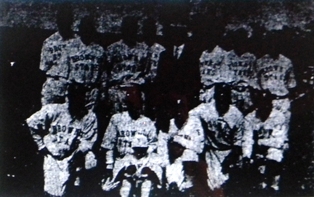
Mellix starred for the powerful Brown’s Colored Stars team in Youngstown Ohio during the mid-20s, sharing mound duties with George Brannigan and Admiral Walker, who also had short professional careers in Negro League baseball.

Brown’s Colored Stars 1924

At the close of his semi-pro career in Pittsburgh, Mellix continued to barnstorm, billing himself as “Baseball’s Oldest Pitcher,” including an appearance with Paige at Forbes Field in 1965 when Paige was traveling with the New York Stars.

Mellix will never haves a bust in Cooperstown, but the Hall of Fame does include his papers and mementos, including a 1946 contract offer from the Brooklyn Brown Dodgers, Joe Hall’s Hillsdale Club transplanted to Brooklyn at the behest of Branch Rickey.  Mellix, employed by the city of Pittsburgh, said he didn’t want to jeopardize his pension to play pro ball at 49 years of age.

Mellix remained a legend in Pittsburgh until his death on March 23, 1985.