Tag Archives: Detroit Tigers

“Dunnie’s” Narrow Escape

28 Jul

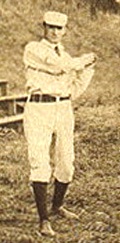
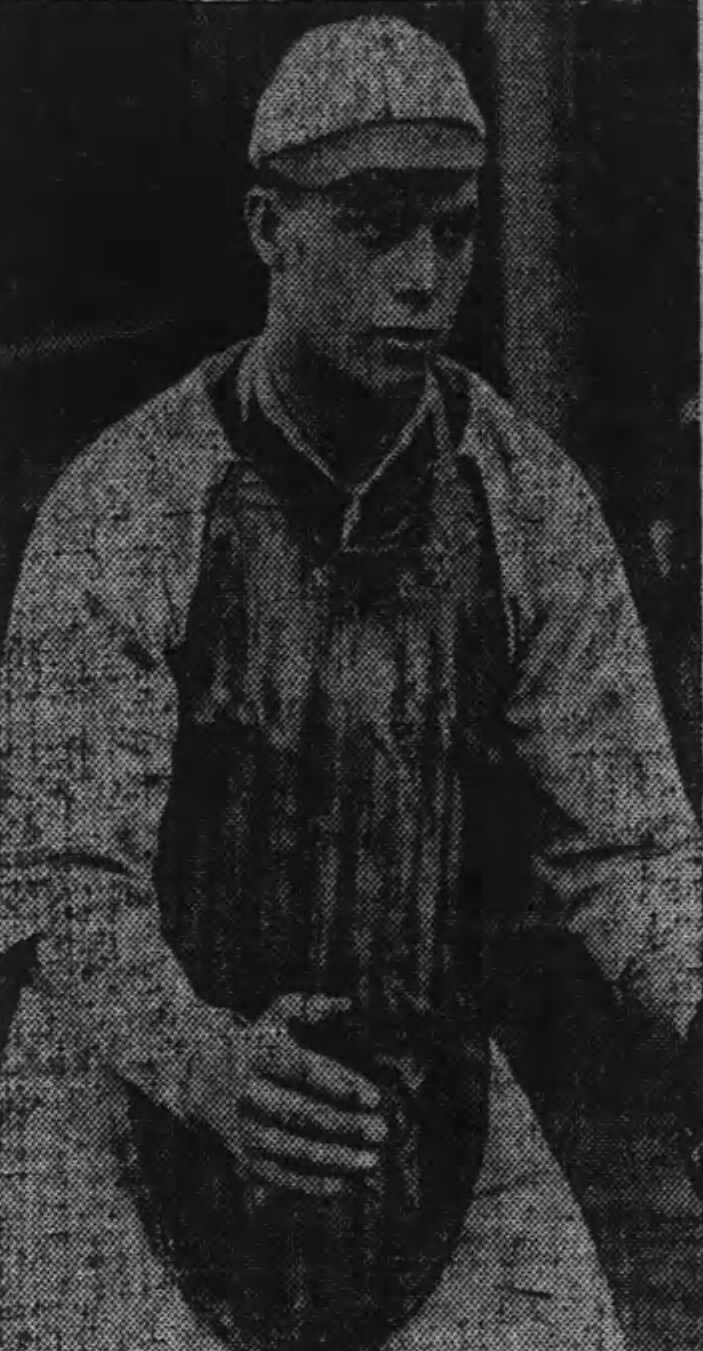
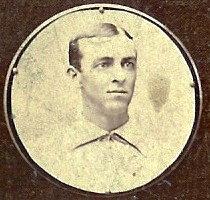
Samuel Morrison “Dunnie” Dungan returned home to Southern California in 1889 after graduating from Eastern Michigan University– the Michigan State Normal School– and joined the F.N. Hamilton’s a powerful San Diego-based semi-pro team that included 39-year-old Cal McVey, a member of Harry Wright’s Cincinnati and Boston Red Stockings teams from  1869 through 1875 (with a detour to Baltimore in 1873).

In the spring of 1890 the Oakland Colonels, champions of the California League in 1889 recruited Dungan to catch for them during a series of exhibition games in Los Angeles.  The Oakland squad did not impress Southern California critics.  The San Diego Union said:

“It is drawing it mild to say that it was the rottenest game that been played on the ground.  If it was not a fake, than the Oaklands cannot play ball.  Do they suppose up about San Francisco and Oakland that they can bring down to Southern California a lot of boys and show the Southerners how to play ball?”

Samuel Dungan
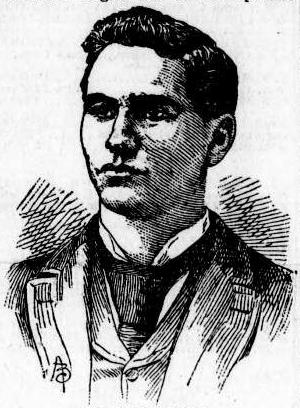
Samuel Dungan

The Union said the Hamiltons, as well as two other San Diego teams, the Schiller & Murthas and the Llewellyns “can beat the Oakland team out of sight.”

The paper said only one player stood out:

“Dungan, the San Diego catcher, who caught for the Oaklands both days, was about the only redeeming feature of that club…And he does not pretend to be a professional.”

As a result of his play during the exhibitions, Dungan was signed by the Colonels;  he still caught occasionally but was now primarily an outfielder.  Team owner Colonel Thomas P. Robinson was unable to restrain his enthusiasm when Dungan was signed, telling The Oakland Tribune:

“I believe Dungan is the greatest batter we’ve ever had here—better than (Lou) Hardie or (Vince) Dailey, the latter of whom I rank as the best of the old men.”

Fred Carroll, a California native who played with the Pittsburgh Burghers in the Players League in 1890, called Dungan “the only scientific batter on this coast.”

Statistics are incomplete for the 1890 California League season, but both The Tribune and The San Francisco Chronicle reported that Dungan was the league’s batting champion.  The Los Angeles Herald said he hit .332.  The Colonels finished third in the four-team league.  The Tribune said it was “probable that Dungan will go East.”

He was first rumored to be heading to be heading to the Washington Statesmen in the American Association but ended up signing with the Western Association’s Milwaukee Brewers.

It was Dungan’s departure from the West Coast in the spring of 1891 that led to the biggest headlines of his career.

The San Francisco Chronicle told the story:

“Sam Dungan, the ballplayer who was with Oakland last season and who led the California League in batting, is being pursued by an irate wife who says she will follow him to the end of the earth if necessary to again clasp him in her arms.  It seems that last year among the many conquests Dungan made in Oakland was Miss Mamie Bodgard.  She became wild over him, and at last was introduced to him.  After the season Dungan came south to his home in Santa Ana, but communication between himself and Miss Bodgard kept up.  She sent him many dainty perfumed notes.  Finally the marriage of the couple was announced and it created no great surprise.

“Now comes the thrilling part of this story.  Two hours after the marriage had taken place (in Los Angeles) Dungan left his bride and journeyed to Santa Ana, where he had an interview with his parents, who are well and favorably known and rank among the leading families.  Sam is a college graduate and was the idol of his parents.  Mrs. Dungan also journeyed to Santa Ana.  She did not go to the home of the Dungan’s, but went to the Richelieu Hotel.  She is a most pronounced brunette, rather petite, and is reported to have a temper.  The couple had parted, and the news of the separation soon became noised around.  Mrs. Dungan consulted a lawyer to have her ‘hubby’ restrained from leaving Santa Ana, but the heavy hitter eluded his young wife and started for Milwaukee, giving his bride the slip at Orange, she being on the same train with him that far.”

The jilted bride told a reporter for The Los Angeles Herald that she was “a grass widow,” but vowed to pursue Dungan to Milwaukee.  Mrs. Dungan’s trip to Milwaukee was unsuccessful.

A year later The Herald reported that a court in Santa Ana had awarded Mrs. Dungan $25 a month  “and she is very elated in consequence.”  She was said to have gone to Milwaukee twice the previous year and had taken to reading “Sammy’s love letters on the street corners,” of Santa Ana:

“Mrs. Dungan is an excellent dresser and is an exceptionally handsome woman.  She doubtless could be induced to kiss and make up, but the parents of her husband stand in the way of a reconciliation.  The Dungan’s are anxious to have Sam get a divorce, but he  can’t very well, and Mrs. Dungan says: ‘Never in a thousand years.'”

A divorce was finally granted in 1893.  Sam Dungan remarried in 1900.

Dungan went on to play parts of five seasons in the major leagues, mostly with the Chicago Colts and had a .301 career batting average.  He was an excellent minor league hitter, putting up several excellent seasons—including averages of .447, .424 and .372 in 1894, ’95, ’97 with the Detroit Creams and Detroit Tigers in the Western League. He also hit a league-leading .337 in 1900 for the Kansas City Blues in the inaugural season of the American League.

Dungan returned home to Santa Ana after retiring at the close of the 1905 season and participated in many old-timers games in Southern California.  The Santa Ana Register reported on his heroics during a 1924 fundraising game for former player Ed Householder who was dying of stomach cancer—Dungan joined Sam Crawford, Gavvy Cravath, Fred Snodgrass and other West Coast baseball legends for the game in Los Angeles:

“Yesterday, Dungan, now a prosperous Santa Ana resident and rancher, proved that years have not dimmed the remarkable eye nor time deprived the power from his arms and shoulders that enabled him, year after year, to outhit the other big league players of his day.

“Dungan rapped out a two-bagger with two men on the cushions in the tenth inning.  This blow broke up the game.  Previously Dungan had smashed out three other bingles.  Thus, Dungan of Santa Ana, the oldest man on the field in point of years, was the heaviest hitter just as he used to be years ago.”

Dungan died in Santa Ana in 1939.
Things I Learned on the Way to Looking up other Things #10

21 Jul

Trash Talk, 1886

The Philadelphia Times reported in July of 1886 about a feud between two American Association pitchers; Brooklyn Grays rookie Steve Toole and St. Louis Browns star Dave Foutz:

“Steve Toole says Foutz is the ugliest player in the Association.  Foutz returns the compliment by saying that Toole is no pitcher, but his face paralyzes the batsmen.”

Dave Foutz

Dave Foutz

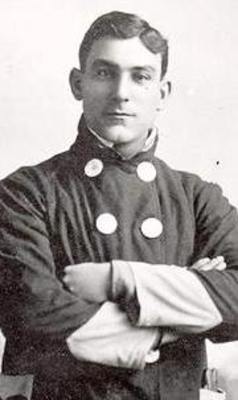
Steve Toole

Steve Toole

The National Convention—1867

The Nashville Union and Dispatch’s take on a decision which would reverberate for the next 80 years:

“Still Against The Negro—The National Convention of base-ball players in session at Philadelphia last week resolved that no club composed of persons of color, or having in its membership persons of color, should be admitted into the National Association.

“To show the significance of this action we may state that there were four hundred and eighty-one clubs represented in this convention including clubs from the following states:  Massachusetts, Connecticut, New York, New Jersey, Pennsylvania, Delaware, Maryland, District of Columbia, Ohio, Indiana, Illinois, Wisconsin, Minnesota, Missouri, Oregon and Nebraska.  From which it is evident that the Northern base-ballists are opposed to Negro equality.”

Boss Schmidt—Throwing and Fighting

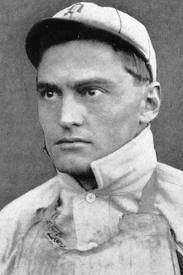
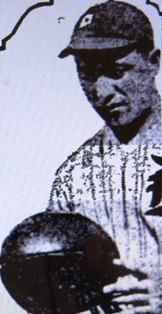
Charles “Boss” Schmidt is best known for leaving Ty Cobb with two black eyes and a broken nose in 1907 after Cobb slapped a black groundskeeper and choked the man’s wife when she attempted to intervene;  he also was a member of three pennant-winning Detroit Tigers teams (1907-1909).

Charles "Boss" Schmidt

Charles “Boss” Schmidt

During the era when several players received tremendous publicity for catching balls dropped from great heights. Schmidt received only minimal attention for an impressive throwing feat in 1909.

The Tigers were staying at Washington’s Arlington Hotel during an August series with the Washington Senators when Schmidt, according to The Associated Press:

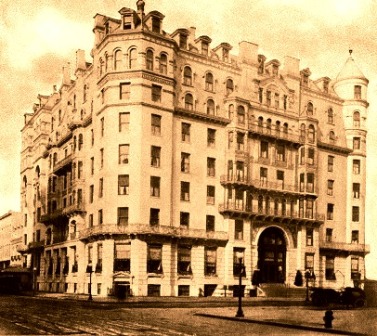
“Charles Schmidt of the Detroit baseball team threw a 10-cent baseball from Vermont Avenue in front of the Arlington over the eight-story Shoreham Hotel (the one torn down in 1929, not the Omni Shoreham which was built in 1930 and is still standing), which faces on fifteenth Street.  He took a run, and the ball went up until it disappeared over the roof line of the hotel.  It was later found in Fifteenth Street.  Whether it cleared the building entirely or bounced from the roof is not known, but it was a splendid throw, for the distance from where Schmidt stood to Fifteenth Street is nearly 400 feet.”

shoreham

The Shoreham Hotel, Washington D.C., the eight story hotel Schmidt cleared with “a 10-cent baseball.”

Schmidt participated in two professional bouts in Fort Smith, Arkansas after the 1911 season—he won a six-round decision and participated in one four-round no decision.  While some thought Schmidt could potentially fight champion Jack Johnson (who some sources say he spared against during this period), it’s clear Schmidt never took seriously the idea of fighting Johnson.

In a letter later printed in The Detroit Times Schmidt told a friend:

“This white man’s hope bunk is the biggest joke ever put over on the public.  I admit I like the boxing game, but I have never even considered gathering a living from the roped arena.  I like to do just four things.  Play ball, fight, hunt and eat.  Boxing is all right for a little amusement when it’s too cold to play ball…As for this dope on my being the white man’s hope, somebody is loon, it sounds like a squirrel talking to a nut.

“I have joined the Tigers again, and mean to show by my playing that I am with the team heart and soul.  Whatever my personal opinions have been, whatever my playing is, whatever critics have said about me, no one can say that I have not given the Detroit team the best I have…I don’t know who this guy is who has been sending fight dope from Fort Smith about my challenging Jack Johnson, but whoever he is, he ought to get a job in New York.  He could sell J. Pierpont Morgan a nicely enameled brick without difficulty.

“Yours is peace, prosperity and pennants, Charlie.”

Despite being released by the Tigers before the beginning of the 1912 season, Schmidt remained true to his word that baseball, not boxing, was his sport of choice.  His big league was over, but he continued as a player and manager in the minor leagues until 1927.  He never fought again.

Lost Pictures–Walter Johnson Steamrolls the American League

20 Jun

walterjohnsonsteam

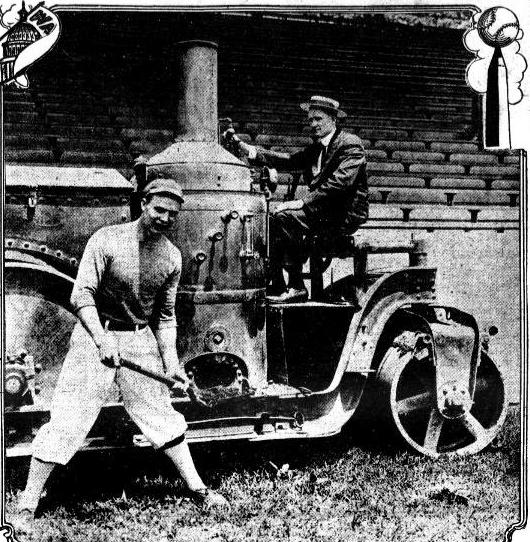
A 1912 publicity photo featuring Walter Johnson at the wheel of a steamroller, and Senators catcher Eddie Ainsmith with the shovel at Griffith Stadium in Washington.  The photo was taken on June 17; the Senators had just returned from Cleveland having won 16 straight games–all on the road.  During the streak, the Senators had gone from 17-21 in sixth place, to 33-21, just one and a half games behind the Boston Red Sox.

The Washington Times said “It was considered an omen of continued triumph” that the steamroller was “found on the grounds.”

The Senators won the following day and continued playing well the rest of the way, finishing 91-61, their first winning season in the team’s 12-year history.  But, it was not good enough to catch the Red Sox who finished 14 games in front.

Johnson had his first of two 30-win seasons, finishing 33-12 with a league-leading 1.39 ERA.

Ainsworth played in the major leagues for 15 years, the first nine with the Senators.  The Washington Post said before the season opener in 1915:

“For the seventh consecutive year Walter Johnson will work in the opening clash for the home folks, and in nearly as many seasons will Eddie Ainsworth be his battery mate.  This pair always work together and no pitcher and catcher in either league are better acquainted when it comes to baseball.”

Eddie Ainsmith

Eddie Ainsmith

Several weeks after Ainsmith was traded to Boston (then to Detroit on the same day) in January of 1919, Louis Dougher a writer for The Washington Times said:

“When Eddie Ainsmith was traded to Detroit via Boston, Clark Griffith shattered on of the crack batteries…it was Johnson and (Charles “Gabby”) Street.  Then when Gabby slowed up and gave way to a successor, it rapidly became Johnson and Ainsmith.”

Age, more than the departure of Ainsmith slowed Johnson down, but he still won 140 games and posted three 20-win seasons after his personal catcher was traded.

“Somebody has got to Write a real Baseball History”

18 Apr

Detroit Tigers Manager Hughie Jennings had an idea to improve American education.  He told The Detroit Times in 1911:

“I think it pretty near time that our advanced public school educators began to think of teaching baseball history in their schools.  Seriously I do.

“Baseball is America’s chief recreation, and has been for two generations.  Indications are that it will live many generations more.  The stars of the game are important personages to the boys and the men of today as are the big men in affairs of state and business.  The boy is constantly clamoring for news of his baseball heroes, and because we have decided baseball is a clean, good sport, we encourage his interest.

“It is only lately that I have been interested in the history of the game, although it has been my means of support for years.  I don’t know what it was that impelled me last winter to go digging into newspaper files for data on the antecedents of the game, but I do know this:  I’m mighty sorry I didn’t get the idea before.  For nothing was more interesting.”

Tiger Manager Hughie Jennings

Tiger Manager Hughie Jennings

Jennings’ conclusions would likely have disappointed Albert Spalding and the members of the Mills Commission, which advanced the Doubleday myth:

“Of course I had always known in a superficial way something about the origin of baseball and about the men who figured prominently in it during its infancy; and the men who have brought it up to the standards of today are men of my day and age, but I had never before made a consistent effort  to learn just what was what in baseball history.  I was pained and surprised , when I started at it, to find that there does not exist a history of the game which is so thoroughly prepared that it might be put into schools as a text book.  Before this idea of mine can be put into effect, somebody has got to write a real baseball history.

“In my research last winter, for instance, I I confirmed my old understanding that baseball as we know it today is sort of a sublimated ‘one-old-cat’ or ‘rounders’ as they used to call it.  The first game of baseball, with nine men on a side, was played in Hoboken, NJ in 1845.”

Jennings quoted Alexander Cartwright’s 1845 rules and made no mention of Cooperstown or a Civil War general, putting squarely in the camp of “The Father of Baseball” on the game’s origins.

The Tigers’ manager also said, according to his research “The first ball was made from sections of an old arctic shoe wound with woolen string and covered with coarse cowhide.”

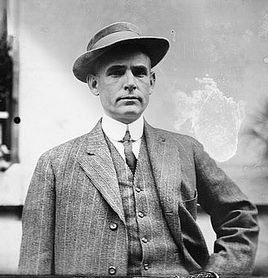
“This whole Trouble, Disgraceful to be sure, may be Blamed directly on Jack Sheridan”

14 Mar

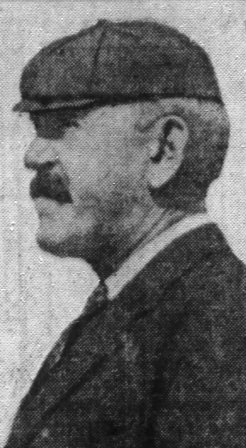
On April 7, 1901, The San Francisco Call reported that John F. “Jack” Sheridan had accepted an offer from President Ban Johnson to continue working as an umpire in the American League—which operated as a minor league the previous season.  The paper said “The National League also made a bid for his services.  He will receive $400 a month and expenses.”  It was said to be “the largest salary ever paid to an umpire.”

Sheridan was a former player, a second baseman and outfielder, who played for several San Francisco teams in the California League, including stints with the Haverlys from 1883-85.  He went East in 1885 and appeared in six games for the Chattanooga Lookouts in the Southern league, and that same season began working as an umpire.

sheridanpix

Jack Sheridan

Years later, Mique Fisher, long-time California and Pacific Coast League manager and executive told The (Spokane) Spokesman-Review that Sheridan was signed by the Lookouts after he “sold himself to Chattanooga through a glowing personal description of his own ability,” but Fisher said:

 “Sheridan couldn’t field a ball with a fish net or hit one with a tennis racket.  When the Chattanooga manager saw Sheridan in action, he swore out a warrant charging him with obtaining money fraudulently.  Sheridan had to work out the expense advance in a cigarette factory.”

He worked as an umpire in the Southern League (1885, ‘93), the California League (1886-89, ’91), the Players League (1890), the National League (1892, ’96-97), and the Western/American League (1894-95, 1898-1900).

The best-paid umpire in the game, who was also a San Jose undertaker during the off-season, traveled from his California home to Chicago in early April of 1901, but a detour in Missouri nearly cost him his job.

The Chicago Tribune said Sheridan left the train “and was taken into custody on account of his strange actions.”  The Fort Wayne Sentinel said among the “strange actions” Sheridan “donned his uniform and started to umpire an imaginary game in the middle of the street.”

Johnson sent fellow American League Umpire “Pongo” Joe Cantillon to Missouri to get Sheridan released and accompany him to Chicago.  Sheridan was admitted to St. Elizabeth Hospital.  The Tribune said he was suffering from “nervous prostration,’ while The Cincinnati Enquirer said the league president said Sheridan was “on a protracted drunk.”

The day after he was admitted to the hospital two friends were given permission to take Sheridan out for a walk, The Chicago Inter Ocean said:

“As they reached Milwaukee Avenue and Division Street, a (street) car whirled by, and Sheridan swung himself on the rear coach.  His friends yelled in vain to the conductor to stop the train, and lost sight of Sheridan.

“They at once notified the police department to look out for Sheridan…Detective Fitzgerald found Sheridan wandering aimlessly on Jackson Boulevard near Wabash…Sheridan did not know where he was, nor could he tell where he had been since escaping from his friends.”

As Sheridan waited to appear in court to determine whether he was insane, newspapers speculated that Johnson would replace the umpire with either former player Warren “Hick” Carpenter or former Western and National League umpire Al Manassau—Manassau was appointed to the American League staff two days before the season began.

Before he could be adjudicated insane Sheridan made a miraculous recovery just one week into the season.  The San Jose Evening News said:

“Mrs. Sheridan, the mother of Jack Sheridan, the noted baseball umpire, has received a telegram from her son, who is in Chicago, stating that he has fully recovered from his derangement and that he could now continue with his contract.”

Sheridan was back on the field before the month of April of over.  He was competent, served as the American League umpires “chief of staff,”  and umpired in four World Series (1905, 07, 08 and 10); he was also selected, along with National League umpire Bill Klem, to join the Chicago White Sox and New York Giants on their world tour after the 1913 season.

But he also demonstrated erratic behavior for the rest of his career.

Just a month after returning to the field The Sporting Life said “Sheridan became frantic and ran up and down the field like a crazy man,” after a disputed call at home plate in the bottom of the ninth of a May 31 game in Detroit between the Tigers and Baltimore Orioles, which led to Sheridan awarding the game to the Tigers by forfeit.

The Sporting Life’s Baltimore correspondent said Sheridan was “held by President Johnson as a competent man,” despite his “habits.”

He resigned on at least three occasions.  After the 1905 and 07 seasons he said he was retiring to return to San Jose and become a full-time undertaker, only to return the following spring and in June of 1910, he abruptly quit minutes before a game in Washington, but returned within several weeks.

When Sheridan again took the field The Washington Post said he would “establish a precedent, as he will be the only major league umpire wearing glasses.”

Sheridan was also arrested in October of 1907 after a barroom brawl that began over a dispute over $120.  The Associated Press said when police searched Sheridan he was carrying $2700.  He was released from jail the following day after being fined $10.

On July 30, 1914, Sheridan called Ray Morgan of the Washington Senators out on a close play at first base in Detroit.  The Washington Post said Morgan, who had slid, “came up with a handful of dirt and threw it on the ground at Sheridan’s feet…Sheridan evidently thought that Morgan intended to hit him, and did not even give the National’s second sacker time to put up his guard, but whaled away at his smaller opponent.”

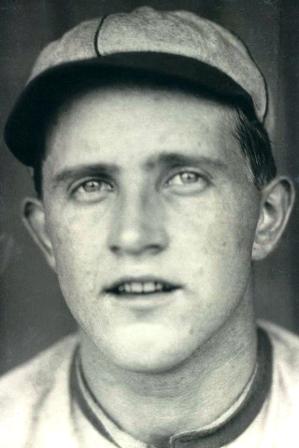
Ray Morgan

Ray Morgan

Morgan punched Sheridan, and after both dugouts emptied, Sheridan was also punched by Washington’s Eddie Ainsmith.  The disturbance spilled over to the stands with a few Washington players, including Morgan and Ainsmith, taking on Detroit fans before police restored order.

The Post said:

“This whole trouble, disgraceful to be sure, may be blamed directly on Jack Sheridan, the umpire, who has been at fault so many times this year.  In the first place Sheridan has threatened to beat up several of the Washington players.  Sheridan told (David “Mutt”) Williams and (Joe) Engel that he would punch them in the nose, the same as he had Morgan, if they did not do as he told them.”

Ban Johnson never took action against Sheridan for the incident in Detroit, but Morgan and Ainsmith drew suspensions from the league.

On August 1, 1914, The Associated Press reported that “The baseball players fraternity intends to take steps to have Umpire Jack Sheridan retired from service on grounds of incompetence.”

The incident, and dust up on August 12 with Jack Fournier of the White Sox inspired a poem from The Chicago Tribune’s Ring Lardner:

Making Night Hideous

Oft in the stilly night,

Ere slumber’s chain has bound me

Fond memory brings the sight

Of athletes crowding round me;

The scowls, the sneers

Of Jack Fourniers

And Morgans strike my vision;

I hear the barks

And rude remarks

That greet each close decision.

Thus in the stilly night,

Ere slumber’s chain has bound me,

I sometimes get tight up and fight

The chairs and tables round me.

At the end of the 1914 season, Sheridan returned to California.  On October 31 The Associated Press reported that Sheridan would not be returning as an umpire:

“Sheridan will probably be retained as a sort of supervisor of umpires, spending his time roaming around the circuit.”

Just three days later Sheridan died of heart failure in San Jose at age 62—he was said to have suffered sunstroke during an August game and never fully recovered.  Ban Johnson supported him to the end; just weeks before the umpire died the American League president told a reporter:

“I sincerely doubt if the baseball game will ever know another Jack Sheridan.  He had all of the virtues of other arbiters, and none of their mistakes.”

The Tribune’s First All-Star Team

21 Feb

In 1933 The Chicago Tribune underwrote the first All-Star game, created by Arch Ward, the  paper’s sports editor,  to coincide with the Century of Progress World’s Fair—more than 30 years earlier The Tribune published one of the earliest  sportswriter selected “all-star teams.”

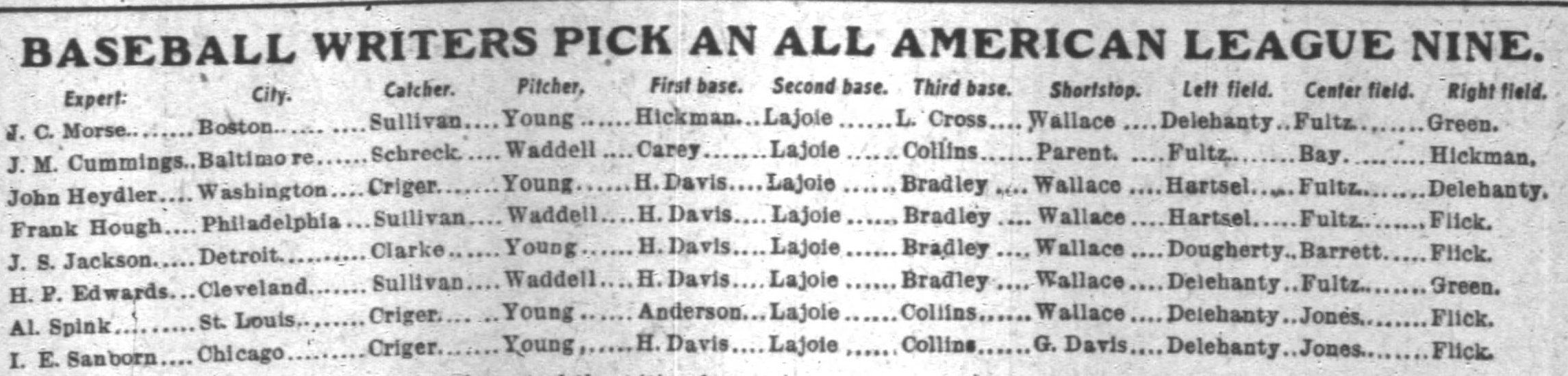
Near the end of the 1902 season, The Tribune polled sportswriters from American League cities to pick “An all American League Nine.” (No similar poll was done for the National League)

The writers polled:

Jacob Charles Morse—The Boston Herald

Joseph M. Cummings—The Baltimore News

John Arnold HeydlerThe Washington Post

Frank Leonardo HoughThe Philadelphia Inquirer

Joseph Samuel Jackson—The Detroit Free Press

Henry P. Edwards—The Cleveland Plain Dealer

Alfred Henry SpinkThe St. Louis World

Irving E. (Sy) Sanborn—The Chicago Tribune

The only unanimous choice was Cleveland Bronchos second baseman Napoleon Lajoie—Lajoie appeared in just 86 games, but hit .379.

Napoleon Lajoie --the only unanimous choice

Napoleon Lajoie –the only unanimous choice

The most disagreement was behind the plate; four different catchers received votes:  Billy Sullivan of the Chicago White Sox and Lou Criger of the Boston Americans received three votes each;  Freeman Ossee Schrecongost who played 18 games with Cleveland and 79 with the Philadelphia Athletics, and William “Boileryard” Clarke of the Washington Senators each received one vote.

Cy Young of Boston led pitchers with five votes, with Philadelphia’s Rube Waddell being the choice of the other three.

Four first basemen were also chosen, but Harry Davis of the Philadelphia Athletics was the consensus choice with five votes.  Cleveland’s Charlie “Piano Legs” Hickman, Washington’s George “Scoops” Carey, and “Honest John” Anderson of the St. Louis Browns all received one vote.

Cleveland’s Bill Bradley edged Boston’s Jimmy Collins four to three, with Philadelphia’s Lafayette “Lave” Cross getting the remaining vote.

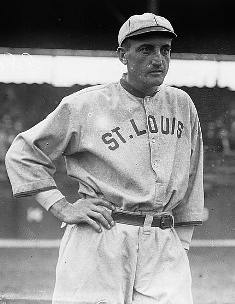
Bobby Wallace of St. Louis was the shortstop consensus with six votes, Boston’s Freddy Parent and Chicago’s George Davis received one vote each.

Booby Wallace, the choice at shortstop

Bobby Wallace, the choice at shortstop

Washington’s Ed Delehanty got four votes in left field, Philadelphia’s Tully “Topsy” Hartsell two; one vote each went to Boston rookie Patsy Dougherty and Philadelphia’s Dave Fultz (who played center field)

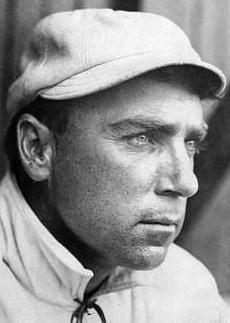
With or without his vote as a left fielder, Fultz was the consensus in center field.  He received four votes at that position; Chicago’s Fielder Jones got two votes, Jimmy Barrett, the only Detroit Tiger to make the list received a single vote (from Joseph Samuel Jackson of Detroit) and Harry “Deerfoot” Bay of Cleveland received one vote.

Jimmy Barrett, the only Tiger

Jimmy Barrett, the only Tiger

Right field included a couple more out of position players, Charlie Hickman picked up one vote despite being primarily a first baseman and playing just 27 games in the outfield in 1902.  Delehanty, almost exclusively a left fielder in 1902, received one vote in right.  Elmer Flick of Cleveland was the consensus with four votes.  Danny Green of Chicago received two votes.

The Results

The Results

The 1902 effort was not repeated by the paper.

“Evans, who, at the Least, is Incompetent”

2 Dec

William George “Billy” Evans was nicknamed “The Boy Umpire” when he was hired by the American League at the age of 22.  After 21 seasons  he became a front office executive, working for the Cleveland Indians, Boston Red Sox and Detroit Tigers; he was also president of the Southern Association, authored two baseball books and in 1973, 17 years after his death, was elected to the Baseball Hall of Fame.

Billy Evans

Billy Evans

But during his first season as an umpire, 1906, he was not held in high esteem in Chicago.

On September 10 the White Sox were in second place, a game behind the New York Highlanders.  The Sox trailed the Tigers 2 to 1 in the 9th inning.  Chicago shortstop George Davis laid down a bunt and was called out at first by Evans.  Every Chicago paper said Evans beat the throw by “at least a step.”

The call precipitated a near riot.  The Chicago Tribune said:

“Instantly a shower of bottles from the first base bleachers drove the umpire, coacher, and players away from the vicinity of the base.”

After the next two batters were retired:

“Evans walked off the field amid another volley of bottle from the third base stand.”

The Tribune and The Chicago Inter Ocean said Evans and fellow umpire Tommy Connolly were mobbed by fans as they attempted to leave the ballpark with a police escort.  Both papers said “one or two blows” from fans connected with the umpire during his retreat.

The Inter Ocean said, “Evans has been the most heartily reviled arbiter that ever worked in any league.”

The Tribune said two weeks earlier Evans cost the Sox a game in Philadelphia.  After Chicago scored two runs in the top of the sixth inning to take a 5 to 4 lead, Evans “let the Athletics take advantage of his inexperience,” and stopped the game on account of rain with two men out in the bottom of the inning.  The Inter Ocean said, “(Sox Manager Fielder) Jones and (second baseman Frank) Isbell nearly came to blows with the umpire and members of the Athletic team.”

After a half hour, the game was called and the score reverted back to the end of the 5th inning, giving Philadelphia a 4 to 3 victory.

The next day, September 11, the Sox played the St. Louis Browns at South Side Park.  Evans worked the game along with Jack Sheridan.  The newspapers said Sox owner Charles Comiskey had discontinued the sale of “bottled goods” at the park that day.

The Browns won 7 to 3, and the Chicago press put much of the blame for the loss on the rookie umpire.

The Tribune said:

President (Ban) Johnson’s persistence in sending Evans, who, at the least, is incompetent, is giving baseball a black eye in Chicago.  Half the crowd believes the charges that Evans is working under instructions from Johnson to beat Chicago.  These charges undoubtedly are founded on mere prejudice, yet, had Evans been under instructions and trying to beat Chicago, he could not have done better than he did yesterday.”

The Inter Ocean said the Browns “were aided and abetted by Umpire Evans, the boy wonder…Why Ban Johnson insists upon sending the joke to officiate at important games is more than any sane man can see.”

But the Evans’ most ardent critic was William A. Phelon, sports editor of The Chicago Journal:

“Umpire Evans is the worst that ever yet came down this or any other pike in the history of the modern universe…And Ban says he is the best in the game.  We are not selfish and we are willing to let some other city endure him.  We can get over the shock of his removal.  If he doesn’t move he may have a statue down on the lake front, a statue 200 feet high made of bottles.  Give us liberty, give us death, give us any old thing, but, by the snakes of old Ireland, give us an umpire!”

Phelon also said Evans “seems to be a gentlemanly individual, whose place in life is evidently a long ways from the profession of umpiring.”

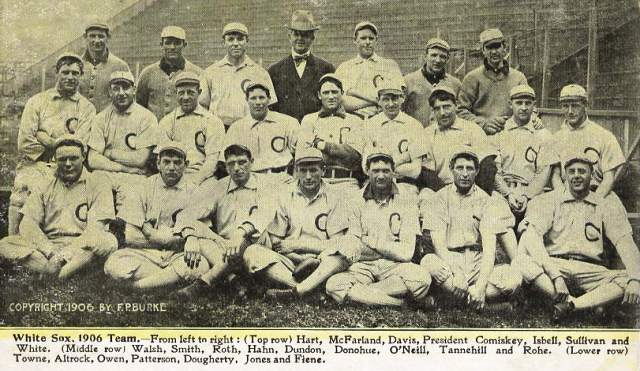
1906 White Sox

Despite the blame heaped on the young umpire in the press, the White Sox went 17-7 the rest of the season and won the pennant by three games.  They went on to beat the Chicago Cubs 4 games to 2 in the World Series.

Things got better for Evans as well.  He worked his first World Series in 1909—the youngest umpire to do so– and participated in five more from 1912 to 1923.  He was the third umpire to be elected to the Hall of Fame; Connolly and Bill Klem were the first two.

Clark Griffith “Convinced me of the Knuckle Ball’s Effectiveness”

7 Nov

As with most 19th Century players, Bill Lange had had several criticisms of players who came later, particularly the “batsmen of the present time,” when he spoke to a reporter from The Chicago Inter Ocean in 1909;  but unlike many of his contemporaries he thought some aspects of the game were better.  He said players were better behaved and were in better condition; he also believed pitching had improved:

“We old timers were a long time in believing there was anything in the so-called spit ball.  But results have forced us to admit its existence and its power to deceive.  Now they are talking about the knuckle or finger nail ball.  For a long time I supposed that was a joke.  But just this morning I had a letter from Clark Griffith, telling about a discussion he had with (Cap) Anson during the schedule meeting at Chicago over the knuckle ball.  Griff ought to know what he is talking about, and he convinced me of the knuckle ball’s effectiveness but his argument with Anse must have been funny.

“You know Anse has to be shown on every proposition.  Griffith told him that (Ed) Summers of the Detroit team had the best command of the knuckle ball and that it came up to the plate in such a peculiar manner that it fooled not only the batsmen, but the catchers too.

“’That’s all rot,’ Anson said to Griffith, but Griff came back with the willingness to bet Anson $100 that Anse couldn’t catch three out of five knuckle balls as thrown by Summers.  Anson jumped at the chance and took the wager, and it will be decided sometime this year, if Summers, Anson and Griffith happen to be in the same city at the same time.

“I guess Griff will win the money, for he told me in his letter that he couldn’t catch half the balls Summers had thrown to him in practice.  I can hardly believe any pitcher has such a funny delivery as that.  Of course, if the knuckle ball worked all the time, there wouldn’t be any hitting at all.”

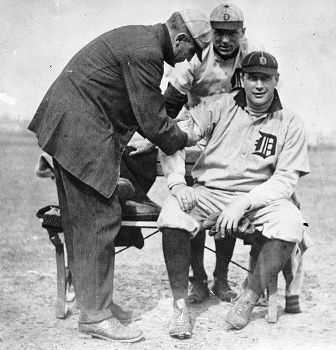
Al Summers has his arm worked on by Tiger trainer Harry Tuthill, first baseman Del Gainer looks on.

Al Summers has his arm worked on by Tiger trainer Harry Tuthill, first baseman Del Gainer looks on.

There’s no record that the wager was ever decided.

Clark Griffith

Clark Griffith

“In Baseball there is no such Advantage”

8 Oct

John Henry Mohardt was, with George Gipp, a member of the backfield on Knute Rockne‘s undefeated 1920 Notre Dame football team, and would go on to play for the Chicago Cardinals, Racine Legion and Chicago Bears in the NFL.

He also played baseball in at Notre Dame and was a highly sought after prospect.  Contemporary reports said he received offers from the Pittsburgh Pirates, Cleveland Indiana, Cincinnati Reds, Chicago Cubs, St. Louis Cardinals and Detroit Tigers.  He signed with the Tigers and manager Ty Cobb.

When it was announced that he would open the season as a member of the Tigers Mohardt was asked by reporters which sport was more difficult:

“Baseball, of course.  Football is team play, baseball largely individual effort.

“In football there is time enough to get set after each signal.  The calling of the signal tells you just what you are expected to do to put over the play.  Every player has a chance to firmly concentrate on his task.

“In baseball there is no such advantage.  There is never an opportunity to get set.

“In baseball the great weight is on the individual.  When I go to bat I am up there along.  I cannot depend on anybody but myself for help. “

Johnny Mohardt

Johnny Mohardt

Mohardt had never played football before entering Notre Dame and “Inside a week he was a first-string player,” as a result he said:

“It is easy to make football players, but from what I know of baseball it is necessary to have natural ability and also be able to think quickly.  Developing football players is easy.  If a fellow is physically fit the coach will do the rest.

“I have seen Coach Rockne make stars almost overnight at Notre Dame.  Every season brings forth scores of new stars in the football world.  In baseball I understand a new star a year is the exception.”

Mohardt was not the exception; he was 1 for 1 with a walk and 2 runs scored for the Tigers in five games in April, and after he was released hit .185 in 21 games for the Syracuse Stars in the International League—then returned to football.

Mohardt became a physician, served in the military in World War II and died in 1961.

An excellent biography of Mohardt written by Dan Cichalski appears on Gary Joseph Cieradkowski’s Infinite Baseball Card Set blog.

“Pitchers Should be Taught how to Sleep”

24 Sep

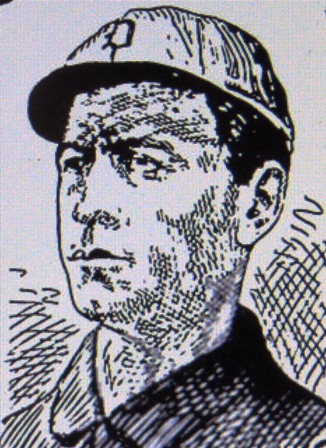
Edward Tilden Siever had a theory about one of the greatest dangers facing pitchers:  how they sleep.

Edward Siever

Edward Siever

The Kansas native did not begin playing professionally until he was 24-years-old in 1899, and was 18-14 as a rookie with the Detroit Tigers two years later.  He injured his arm that season, had a sub .500 record the next three seasons with the Tigers and St. Louis Browns, and went to the American Association with the Minneapolis Millers in 1905. 

Siever’s arm recovered sufficiently to post a 23-11 record with the Millers and was purchased by the Tigers the following spring; he was 14-11 in 1906.

He was having the best season of his career in 1907; finishing with an 18-11 record and a 2.16 ERA for the American League Champion Tigers.  It was during that season that he told The Detroit Times about his theory:

“Pitchers should be taught how to sleep.  Don’t laugh, I mean that More than one good pitcher has lost his arm because he did not know how to sleep correctly.”

Siever claimed that fellow Kansan, St. Louis Cardinal pitcher Charlie “Dusty” Rhodes, missed much of 1906 with a bad arm brought on by the manner in which he slept:

“(Rhodes) used to rest his head on it when he was sleeping.  It deadened the muscles…No ballplayer should ever rest his head on his arms when he is sleeping.  It’s more dangerous than the average young man imagines.  Many a ball player loses his whip and doesn’t know how to account for it.  I’ll bet that’s the real reason in many a case.”

Charlie "Dusty" Rhodes

Charlie “Dusty” Rhodes

The Chicago Cubs defeated Siever in his only World Series appearance in 1907, and after a 2-6 start in 1908 he was sold to the Indianapolis Indians in the American Association; he pitched three more seasons in the minor leagues. 

He remained a popular figure in Detroit and worked for the city’s public works department until he died of a heart attack in 1920.