Tag Archives: Detroit Tigers

“He was Not Crazy as Reported”

18 Jul

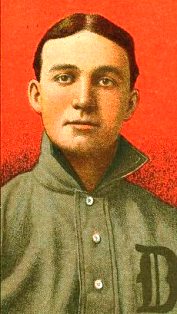
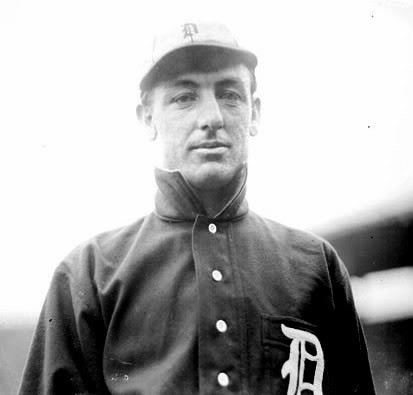
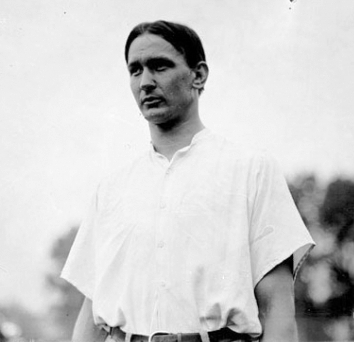
Ervin Thomas “Erve” “Dutch” Beck hit the first home run in the American League; on April 25, 1901, the second day of the season, as a member of the Cleveland Blues; Beck homered off White Sox pitcher John Skopec at Chicago’s South Side Park.

It was a highlight in a short, promising career, like many at the turn of the 20th Century, destroyed by alcoholism.

Beck was considered the best young player in Toledo, Ohio when he joined the Adrian Reformers in the Michigan State League as a 16-year-old in 1895, then for the next five seasons, he was the star of his hometown Toledo Mud Hens in the Interstate League.  For the two seasons in Toledo for which complete records survive, Beck hit .298 in 1898 with 11 home runs and, a league-leading .360 with 15 home runs in 1900.
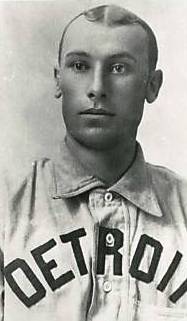
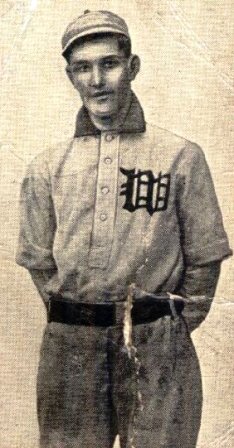
Erve Beck

Erve Beck

Earning the Nickname “Home run Dutch” in the Toledo papers, Beck was credited with 67  during his five seasons with the Mud Hens;  he would remain the team’s all-time career home run leader until 2007 when Mike Hessman (currently with the Louisville Bats in the International League) hit his 68th as a Mud Hen.

Beck also had a brief trial with the Brooklyn Superbas in the National League in 1899, hitting .167 in eight September games.

It’s unclear exactly when Beck’s problems with alcohol began, but according to fellow Ohioan Ed Ashenbach (alternately spelled Ashenback by several contemporary sources), a minor league contemporary who wrote a book in 1911 called “Humor among the Minors”,  it was well-known during Beck’s career that he was “addicted to strong drink,” and as a result suffered from “hallucinations.”
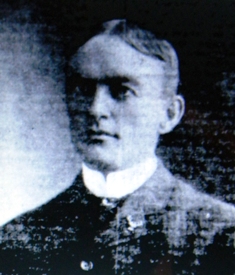
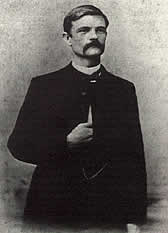
Ed Ashenbach

Ed Ashenbach (Ashenback)

Before the 1901 season, Beck, whose rights were held by the Cincinnati Reds, jumped to the Cleveland Blues in the newly formed American League; the twenty-two-year-old hit .289 and accounted for six of Cleveland’s twelve home runs.

Beck jumped back to the Reds before the 1902 season and received rave reviews early in the season.  The Cincinnati Tribune seemed to like him more at second base than veteran Heine Peitz:

“Erve Beck looks more like a second baseman than anyone who has filled the position since (Bid) McPhee went into retirement (in 1899).  He covers the ground, seems to know where to play and is capable of swinging the bat with some effect.”

His teammate, pitcher Frank “Noodles” Hahn claimed Beck hit the ball “harder than (Napoleon) Lajoie.”

Beck hit better than .300 playing second base in May but went to the bench when Peitz, who was filling in behind the plate for an injured Bill Bergen returned to second.

In June first baseman Jake Beckley missed a week with an injury and Beck filled in there; The Cincinnati Enquirer’s Ren Mulford said:

“(Beck) played the bag in splendid style…In handling ground balls Beck is as good as Beckley, and he is a better thrower… Beck gave another display of his versatility by plugging up a hole in right field.  He made one catch that was a lollapalooza…Most players would have lost heart when benched as Beck was, but he remained as chipper as a skunk during his term of inactivity, and gladly accepted the opportunity to get back into the swim. Beck is a phlegmatic soul, who takes life, as he finds it without a growl.”

In spite of a .305 batting average in 48 games and the great press he received, Beck was released by the Reds in July.  Whether the release was simply because he was the odd man out with Peitz, Beckley and right fielder Sam Crawford healthy or as a result of drinking is unknown.

Beck was signed almost immediately by the Detroit Tigers where he took over at first base after Frank “Pop” Dillon was sent to the Baltimore Orioles.  He hit .296 in 41 games but was again released at the end of the season.

Beck would never return to the big leagues.

In 1903 he .331 for the Shreveport Giants in the Southern Association, he jumped Shreveport the following season and played for the Portland Browns in the Pacific Coast League.   He returned to the Southern Association with the New Orleans Pelicans in 1905.  After starting the 1906 season in New Orleans, he was released in July and signed by the Nashville Volunteers; his combined average with both Southern Association teams was .211.

Beck’s drinking was, according to Ashenback and contemporary newspaper accounts, common knowledge by the time he wore out his welcome in Nashville in August and was sold to the Augusta Tourists in the South Atlantic League.

That stop would last for only one game.

The 27-year-old, four years removed from the American League, played first base for the Tourists on August 6.  Augusta second baseman Ed McKernan said, “It was evident when he reported there was something amiss with him,” and claimed Beck chased “an imaginary flock of geese away from first base” during the game.

The following day, according to The Augusta Chronicle, Beck “created a sensation in the clubhouse…causing all but two of the players to leave the house.”  As a result, Augusta released him.

The following day The Chronicle said:

“(Beck) ran amuck this morning and created great excitement on the street.

“While in a room on the third floor of the Chelsea hotel the big infielder suddenly began to see things and sprang from the third story window to the ground below.  Only two intervening telephone wires and a rose bush saved his life.

“He then darted down an alley and hid himself in a store.  He was finally captured and came quietly back to his room with a policeman and (Tourists outfielder Frank) Norcum.”

The Sporting Life assured their readers that Beck “was not crazy, as reported, but only suffering from the effects of a (drunken) spree.”

McKernan said “During his convalescence…Beck would smilingly avow his determination to abstain from strong drink.”

There were varying reports regarding the extent of his injuries, and it’s unknown whether he was physically able to play after the fall, but Beck would never play professionally again.

He returned to Toledo where he operated a tavern and appears to have been unable “to abstain from strong drink;” he died in 1916 of Articular Rheumatism complicated by Hepatic Cirrhosis.
“I Object to Being Made a Freak.”

17 Jul

In 1913 American League President Ban Johnson set out to put an end to the practice the Baseball Writers Association called “A growing Evil,” ghost-written articles appearing under the by-lines of famous ballplayers.

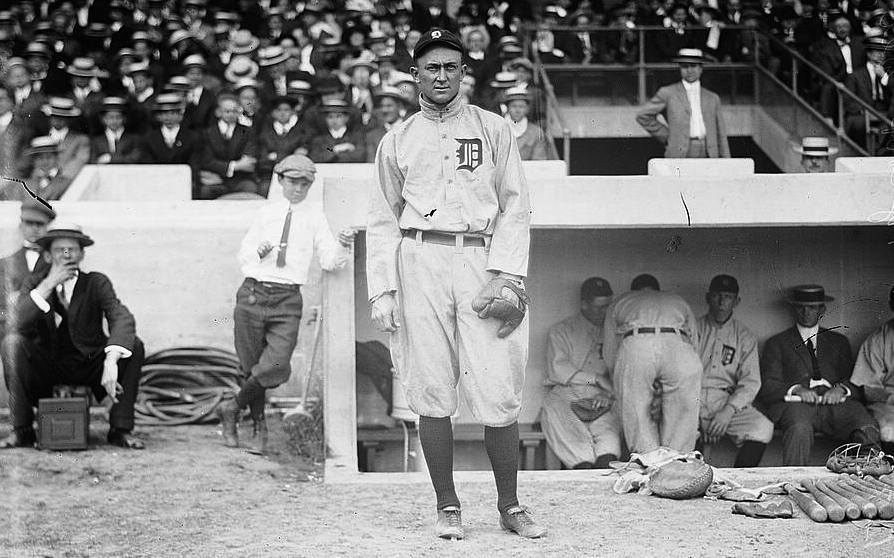
William Peet of The Washington Herald revealed the identities of the ghost writers in March of 1913; Gerhard “Roger” Tidden of The New York World had been the man responsible for articles bearing the name of Ty Cobb, but Tidden died just three months after the revelation.   While the practice waned after 1913, Cobb remained defiant, and continued “authoring” a syndicated column for the next several years.

Ty Cobb

Ty Cobb

Cobb’s articles, for the most part, steered clear of trouble with the league president, but the assertions he made about the Chicago White Sox and manager Clarence “Pants” Rowland in June of 1915 caused a major stir.

Cobb said:

“Battery signal stealing, which has been the cause of several scandals in big league baseball threatens to make more trouble this season if anyone is able to prove what is generally suspected about one of the American League clubs.

“I will not mention the name of the organization which has been accused by the opposing players…because I couldn’t present any proof.”

Cobb then went on for seven paragraphs trying to present proof, and provided enough hints to make it clear he was talking about the White Sox.

Cobb’s said

 “The team I have in mind has won almost all its home games…It looks mighty funny, though, the way this club could hit at home and the feeble manner in which it has been swatting on the road and almost all of the Tigers will take an oath that something out-of-the-way is coming off.”

Chicago, through 49 games, was in first place; 22-8 at home and 9-10 on the road.  Detroit was in second place a game back.  If he left any doubt Cobb said later in the column when discussing the American League pennant race in general:

“The White Sox, who burned up things at home, have not been doing so well on the road.”

Everyone, including American League President Ban Johnson, assumed Cobb was talking about the Sox.  Johnson said:

 “(Cobb) must prove the charges, or I will keep him from playing baseball.  If any man in the American League makes a charge of dishonesty and refuses to back up his charge with the absolute evidence, that man will have to get out of the game.”

The White Sox were less concerned; The Chicago Tribune said the charges made Sox players “grin,” and Rowland told reporters:

“I suppose we had out tipping instruments planted in the Polo Grounds when we made nineteen hits in New York the other day.”

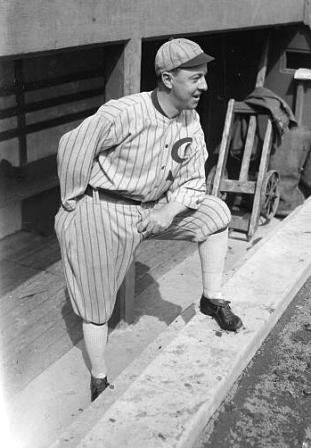
Clarence "Pants" Rowland

Clarence “Pants” Rowland

In his next column Cobb issued a non-denial denial and at the same time openly, and loudly, defied Johnson:

“I made no specific charge against the White Sox…What I did say was that a strong rumor of sharp practice was abroad, and I reiterate that statement right here.”

___

“Mr. Johnson even went to the extreme of saying that he would drive me out of baseball.  He hasn’t done this yet and I expect to stay around for a few more days.  If the league president is willing to pay the salary that my three-year contract calls for, I will be perfectly willing to take a vacation at that, for I have long wanted to do a number of things that baseball interferes with.”

Cobb reiterated the charges and offered no evidence, but said he was justified in making the claims because his manager might have believed them:

“(Tigers) Manager (Hughie) Jennings thought the report sufficiently serious to detail one of our players for plain clothes duty in the bleachers, and he also wrote Manager (Bill) Donovan of New York, telling him of a warning we had received and cautioning him to be on the lookout.  So you see the signal tipping report was not a creature of my own imagination, but a matter of sufficient seriousness to warrant an investigation by our manager in his official capacity.”

Cobb’s only bit of backtracking was to say that if “it should be proved the White Sox tried signal stealing it would be without the knowledge of Mr. (Charles) Comiskey.”  Cobb said Comiskey “wouldn’t countenance anything of this sort for a moment.”

Cobb took one last swing at Ban Johnson, charging the league president with giving “sensational interviews” about him to get “the people excited artificially. If this is Mr. Johnson’s idea, I wish he would abandon it.  I object to being made a freak.”

If there was any doubt whether the American League’s star player or the league president wielded more power, it became obvious within a week.

Johnson, who The Associated Press said “long has been opposed to players permitting their name to be used over baseball stories,” decided not only had Cobb not written the columns, but claimed “a Detroit newspaperman” made up the allegations “out of whole cloth,” and incredibly said that Cobb had “no knowledge,” of the columns despite Cobb being quoted by numerous sources discussing the charges.

Ban Johnson

Ban Johnson

Hugh Fullerton of The Chicago Examiner summed it up best:

“We are rather surprised each morning upon picking up our newspaper to discover that Ty Cobb is still making two-base hits, two steals and catching a few flies instead of being driven out of baseball by (Ban) Johnson.  By the way how did Johnson get into baseball?”

As quickly as Johnson backed down, the charges went away.  Despite the strong start the White Sox faded, and continued to fade even after the acquisition of “Shoeless Joe” Jackson on August 21, finishing third, nine and a half games behind the pennant-winning Boston Red Sox and seven games behind the Tigers.

Cobb led the league for the ninth straight season, hitting .369.

The one legacy from the brief 1915 controversy seems to be Cobb’s dislike of Rowland, who later became a scout for the Tigers.  In his 1984 book “Ty Cobb,” Charles C. Alexander said Cobb only agreed to manage the Tigers before the 1921 season because he was told:

 “Pants Rowland, whom Cobb considered an incompetent fraud, might very well get it and Cobb would have to play for him.”

Rowland, who remained in baseball until 1959 as a manager, scout and executive with the Los Angeles Angels in the Pacific Coast League and Chicago Cubs in the National League, appears to have also held a grudge.   Up until his death at age 90 in 1969, Rowland often said two of his former players, Jackson and Eddie Collins were better than Cobb.

 In 1953 at the Old Timers Baseball Association of Chicago Banquet Rowland said “I wouldn’t have traded (Collins) for Cobb.  What made him greater than Cobb was that he inspired the entire ball club.  Ty was an individualist.  He was interested only in Cobb.”

Rowland called Jackson the “greatest natural hitter,’ he ever saw, and said Ted Williams, not Cobb, was the only player “of the same make-up.”

A Thousand Words—Deacon McGuire’s Left Hand

14 Jun

mcguirehand


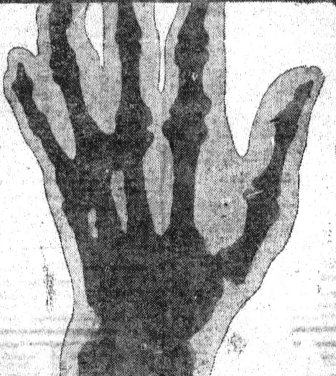
James “Deacon” McGuire caught more than 1600 games in a career that spanned parts of 26 seasons between 1884 and 1912.  He broke every finger on both hands and suffered thirty-six separate injuries to his left hand.  In 1906, his x-ray was acquired by the New York papers after yet another injury.

The New York World said doctors were “amazed to see the knots, like gnarled places on an old oak tree, around the joints, and numerous spots showing old breaks.”

Deacon McGuire

Deacon McGuire

“The Worst Bone Play Ever Made in Baseball”

16 May

The Pacific Coast League pioneer and all-star self-promoter Mique Fisher spent his later years as a near-constant source of material for west Coast sports writers.

In 1937 William Lair Hill Gregory, who wrote for The Portland Oregonian for nearly 60 years wrote about a play in 1904 that Fisher called “the worst bone play ever made in baseball;” it involved pitcher James Marcellin St. Vrain, and happened when Fisher was managing the Tacoma Tigers to a pennant; winning both halves of the 1904 Pacific Coast League season:

“On the Tigers was a southpaw pitcher named Jimmy St. Vrain.  In a close game one day, St. Vrain singled and with two outs was on second.  The batter lashed a line drive out of the shortstop’s reach, but right over St. Vrain’s head.

“’What did that left-hander do when he should have been scoring the winning run,’ complains Mique, ‘but reach up and catch the ball! Of course he was out…hit by a batted ball.’”

Jim St. Vrain

Jim St. Vrain

St. Vrain is also known for another boneheaded play alleged to have happened during his brief, 12-game career as a pitcher for the Chicago Orphans.  The story was first told The Detroit Free Press in 1906 by Tigers outfielder Davy Jones, who had been St. Vrain’s teammate in Chicago; Jones later told the same story to Lawrence Ritter in the great baseball book “The Glory of Their Times.”  The version in the book—aided by another 50-years of telling the story, and more colorful—is included below.

 “He was a left-handed pitcher and a right-handed batter. But an absolutely terrible hitter — never even got a loud foul off anybody.

“Well, one day we were playing the Pittsburgh Pirates and Jimmy was pitching for us. The first two times he went up to bat that day he looked simply awful. So when he came back after striking out the second time Frank Selee, our manager, said, “Jimmy, you’re a left-handed pitcher, why don’t you turn around and bat from the left side, too? Why not try it?”

“Actually, Frank was half-kidding, but Jimmy took him seriously. So the next time he went up he batted left-handed. Turned around and stood on the opposite side of the plate from where he was used to, you know.  And darned if he didn’t actually hit the ball. He tapped a slow roller down to Honus Wagner at shortstop and took off as fast as he could go … but instead of running to first base, he headed for third!

“Oh, my God! What bedlam!  Everybody yelling and screaming at poor Jimmy as he raced to third base, head down, spikes flying, determined to get there ahead of the throw. Later on, Honus told us that as a matter of fact, he almost did throw the ball to third.

“‘I’m standing there with the ball in my hand,” Honus said, looking at this guy running from home to third, and for an instant there I swear I didn’t know where to throw the damn ball. And when I finally did throw to first, I wasn’t at all sure it was the right thing to do!'”

Davy Jones

Davy Jones

“I Have a Profound Contempt for the Game”

29 Apr

Samuel Porter Jones was one of the country’s most prominent Evangelists from the late 1870s until his death in 1906—the Ryman Auditorium in Nashville, home of The Grand Ole Opry, was originally called The Union Gospel Tabernacle and was built for Jones’ ministry.

Jones was not a baseball fan.

Speaking at a tent revival in his hometown of Cartersville, Georgia in 1885 Jones stirred up a crowd with his attack on the game.

Evangelist Samuel Porter Jones

Evangelist Samuel Porter Jones

According to The Atlanta Constitution, Jones read a note from one of the flock which said, “Our children have often gone off to the baseball grounds during this meeting and grieved our hearts,” and asked Jones for his opinion.  The preacher first said he’d hold his comments about the game for a later date, and then proceeded to give his views:

“In this town this year one poor wretch went into the baseball business regularly neglected his work and finally stopped doing anything whereby he could make a living.  His wife had to go to her father’s to get something to eat.  Yes, my views on the baseball question are very clear, and I intend to give those views with a vengeance at some future time.”

And then he continued again:

“I have a profound contempt for the game.  All that agree with me say ‘amen.’”

The Constitution said there were several ‘amen’s’ repeated in the tent:

“It is all very well for little boys under ten years of age to play baseball, but for men it is a crying shame and an abominable sin.  Why, I would not get mad with a man if he should kill my dog if he found him on a baseball ground.  My boy can play baseball until he is 10-years-old, but after that time I will give a hundred lashes every time he plays. ..If this meeting breaks up baseball in this town it will do well; if it does nothing else.  In three years no decent man will be found in the baseball business, if the game is carried on as it is now.”

The evangelist, and others who railed against the game in the late 19th Century did little to curb the growing popularity of the game..

Jones is buried in Cartersville.

Cartersville’s other connection to baseball is seven time American League all-star Rudy York, who played for the Detroit Tigers, Boston Red Sox, Chicago White Sox and Philadelphia Athletics.  York’s family moved there in his teens, and he played ball on a company team at the local textile mill and for the Atlantic Transportation Company team in nearby Atco, Georgia, before being signed for the Tigers by scout Eddie Goostree in 1933.

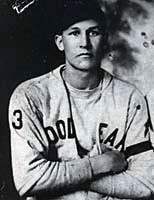
Rudy York, circa 1930, with local textile mill team.

Rudy York, circa 1930, with local textile mill team.

York died in 1970 and is buried four miles away from Jones in Cartersville.

Eddie Goostree, signed York for the Tigers

Eddie Goostree, signed York for the Tigers

More Superstitions

25 Apr

Billy Evans, “The Boy Umpire,” joined the American League staff at the age of 22.  Before becoming an umpire, Evans was a reporter for The Youngstown Vindicator and continued to write occasional, syndicated newspaper articles throughout his career.

Billy Evans

Billy Evans

In a 1907 article he wrote about superstitions:

“Baseball players are the most superstitious class of people in the world.  There are many superstitions in general in which all members of the profession have implicit confidence and nearly every player has some pet belief that is all his own.”

Evans mentioned one of the most superstitious players of all-time, Detroit Tigers pitcher “Wild Bill” Donovan, who as mentioned in an earlier post, believed that striking out the first batter he faced was bad luck.  According to Evans he also had a strange belief about the first game of the season:

“Donovan has a dread of working in shutout games on his first appearance.  He believes it a season hoodoo and would do almost anything to prevent it.”

Evans worked as an umpire in Donovan’s first start of the 1907 season, and the pitcher took a shutout into the ninth inning:

“I happened to be working back of Donovan that day and noticed that he seemed to let up in the ninth , also that he used nothing but a straight fast ball.  A pass, an error and a cracking hit by Charley Hickman sent a couple of tallies over the pan.”

Evans said he asked Donovan after the game if he “(lost his stuff,” in the ninth, Donovan said no:

“I have no desire to win a shutout game right off the reel…shutouts on your debut are not lucky.”

Bill Donovan

Bill Donovan

Evans said Fred “Lucky” Glade, a St. Louis Browns pitcher who had just been traded to the New York Highlanders, had a phobia of pitching if the sun wasn’t out:

 “According to Glade, he has never during his career won a game on a dark day.”

The pitcher also “started each inning…by tossing a ball to (Browns first baseman) Tom Jones.  Next year he will have to use (Highlanders first baseman) Hal Chase

Chase must not have been an adequate substitute; Glade struggled with arm and stomach problems, posted an 0-4 record in five starts for the Highlanders, before returning home to Nebraska in June.  He signed a contract for 1909, but never reported and never pitched again.

Fred Glade

Fred Glade

Ty Cobb had numerous superstitions; one had to do with the “position of the broom with which the umpires use to dust off the plate.”  Evans said:

“The umpires find it handy to keep the broom to the left of the plate, while Cobb, when at the bat, always desires it to the right.  Whenever he steps to the plate Cobb always picks up the broom and tosses it to the right side of the batter’s box.”

Additionally:

“When in a batting slump Cobb always makes three crosses as he takes his position at the plate.  When Cobb reaches first base on his journey from right field to the bench he always gives the bag a terrific kick in the direction of the plate…Cobb insists that the short distance he moves the bag toward the plate with his kick often is the means of winning a close decision at first for his team.’

Ty Cobb

Ty Cobb

Evans said of superstitions in baseball:

“No doubt a close investigation would reveal that every player from the smallest bush league up has his pet theory.”

Lost Advertisements—Old Underoof Whiskey, 1909 World Series and 1910 A.L. Race

11 Apr

oldunder1909ws

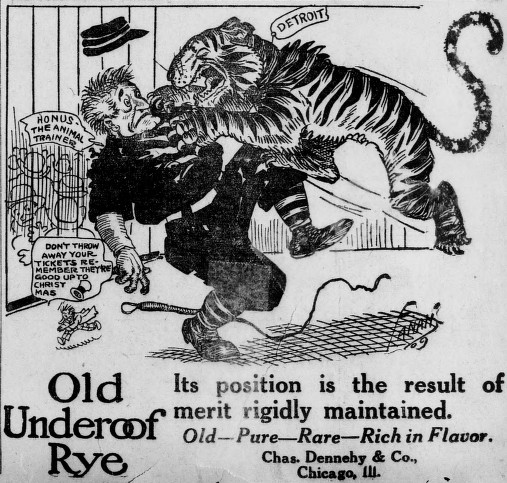
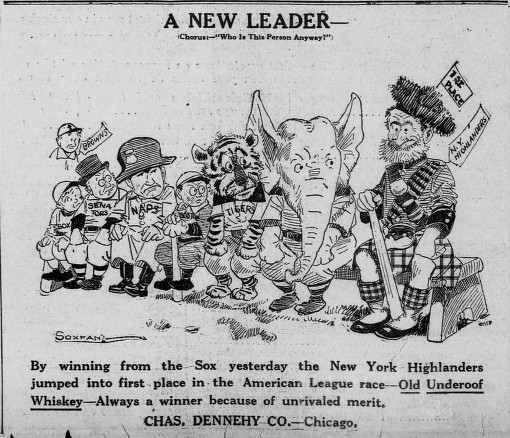
During the first decade of the 20th Century cartoon ads from Chas. Dennehy & Co., distributor of Underoof Bourbon and Rye Whiskey appeared regularly in Chicago newspapers.  Most focused on the Cubs and White Sox, the two featured today do not.

The ad above appeared after game 4 of the 1909 World Series when the Detroit Tigers evened the series with the Pittsburgh Pirates at two games apiece on George Mullin’s a five hitter;  Pirate star Honus Wagner, who would hit .333 for the series was held hitless by Mullin.  The Pirates would go on to win the series in seven games.

The one below was published on June 6, 1910 when the New York Highlanders, after winning two of three in a series with the White Sox, moved into first place.  The Philadelphia Athletics quickly overtook New York and would win the American League Pennant by 14 1/2 games.


oldunder1910Highlanders

Lost Advertisements—Old Underoof Whiskey, Cubs and White Sox

26 Mar

oldunder1910cubssoxmayDuring the first decade of the 20th Century cartoon ads from Chas. Dennehy & Co., distributor of Underoof Bourbon and Rye Whiskey appeared regularly in Chicago newspapers.  Most focused on the Cubs and White Sox, but other teams were featured as well.  The ads above and below are from 1910.

The first ad appeared on May 2;  The White Sox beat the Detroit Tigers 4-3. the Cubs beat the Pittsburgh Pirates 2-1.

The second appeared three days later after the White Sox lost 4-0 to Detroit and the Cubs were beaten 8-3 by the Pirates.

oldunder1910cubssox

Lost Advertisements–Bread at Every Meal

22 Mar

???????????????????????????????

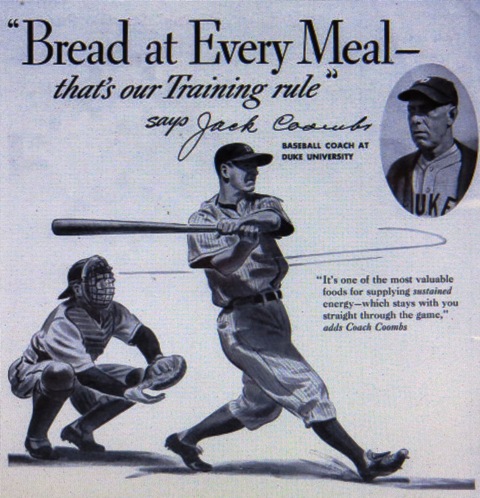
“‘Bread at Every Meal–That’s our Training rule’ says Jack Coombs Baseball Coach at Duke University.  ‘It’s on of the most valuable foods for supplying sustained energy–which stays with you through the game,’ adds Coach Coombs.”

Coombs was best known for pitching a 24-inning complete game for the Philadelphia Athletics against the Boston Americans as a rookie in 1906, and for beating the Chicago Cubs three times in the 1910 World Series.

Coombs, who never played a game in the minor leagues, finished his career with the Detroit Tigers in 1920.

He was coach at Williams and Princeton before arriving at Duke where he coached from 1929-1951, compiling a 382-171 record.  Twenty-one future Major League played for Coombs, including Billy Werber, Dick Groat, and his nephew Bobby Coombs.

Duke’s Jack Coombs Field is named for him.

Ernie Diehl

18 Mar

Ernest Guy “Ernie” Diehl’s entire professional career consisted of less than 60 games.

Every year from 1900 to 1911 he was offered contracts by professional teams and despite his time with two National League teams and two minor league teams he never earned a penny as a ballplayer.

By the time the 25-year-old Diehl made his first professional appearance with the Pittsburgh Pirates in May of 1903, he was already a well-known player. Diehl was the star of the perennial powerhouse Avondale team in Cincinnati’s semi-pro Saturday League, which The Sporting Life called “a fast, clean league.”

diehl

Ernie Diehl

Diehl was born in Cincinnati in 1877, the scion of a Cincinnati distillery empire; His father Adam G. Diehl had made a fortune in the whiskey business with his brother-in-law; together they founded The Edgewood Distilling Company.

He attended the University of Cincinnati and established a reputation as one of the area’s best athletes.  Perhaps even better at tennis than baseball, Diehl was a prominent amateur tennis player during the first decade of the 20th Century.

In May of 1903 when the Pirates arrived in Cincinnati for a series, the team was decimated with injuries and Diehl joined the team for one game, playing left field on May 31, he went 1 for three in a 3-2 pirate victory.

Despite being offered a contract with Pittsburgh, Diehl chose to return to the distilling business and the Saturday Baseball League.

In 1904, with several Pirate players hurt, Diehl was again asked to join the team; this time for 12 games.  The Pittsburgh Gazette said Diehl also spent time with the Pirates in Hot Springs, Arkansas that spring.

The Baltimore American ran a story before the Pirates arrived in New York in August:

“New Yorkers who attend the games between the Brooklyn and Pittsburgh teams will be treated to an opportunity of seeing the work in the field of a millionaire ballplayer.”

While he hit just .162 for the Pirates in 1904, that did not diminish Pirate owner Barney Dreyfuss’ desire to sign Diehl.

Before the 1905 season Dreyfuss told The Pittsburgh Press:

“The one player I would like to get on the team is beyond my reach… His name is Ernest Diehl…He is one of the best baseball players I ever saw.”

Dreyfuss also called Diehl “One of the best all-around athletes,” he had seen.  The Press said that although Diehl was required to sign a contract for his time with the Pirates in 1903 and ’04:

“Diehl never received a penny of salary from President Dreyfuss.”

Barney Dreyfuss

Barney Dreyfuss

Dreyfuss, and every other owner who offered Diehl a contract was unsuccessful in securing him for the 1905 season; Diehl spent the season playing in the Saturday League and in several tennis tournaments across the country.

He again played tennis and semi-pro ball in 1906, until August when the Boston Beaneaters came to Cincinnati. Shortstop Al Bridwell was injured, and Diehl was signed (again for no salary) to play for Boston in the three-game series.

The Associated Press reported:

“’Ernie’ Diehl, a wealthy young distiller of this city, an enthusiastic athlete, long known as a brilliant baseball player on local amateur teams, distinguished himself in the series just played…He played three games in the Boston ranks…He made five hits in eleven times at bat…Diehl could not afford to enter professional ball if he desired, at the highest salary paid in the organization, on account of his business, but is delighted and satisfied with his experience…Besides his heavy batting, his fielding was strictly up to the professional standard.”

Just as he had in Pittsburgh, Diehl turned down an offer to stay with Boston for the remainder of the 1906 season.

In 1907, Diehl appeared in 21 games for the Toledo Mud Hens in the American Association, hitting .405.  The Toledo News-Bee said Diehl was spending “His vacation…helping out the Toledo club.”  The Associated Press said that as in the past, “Diehl is wealthy and refused to accept pay for his services.”

In addition to his business interests, amateur tennis and baseball career, and professional baseball “vacations,” Diehl also served on Cincinnati’s city council from, roughly, 1906-1910.

In 1909 Diehl played in one game of a doubleheader for the Boston Doves on August 12 against the Reds, he was 2 for 4 with a double—it would be his last in the National League

Diehl then joined the eventual American Association champion Louisville Colonels, at the request of his friend and fellow Cincinnatian, manager Heinie Peitz.  (Baseball Reference lists a player as “Diehl,” with no first name on the 1909 Louisville roster, with a .226 average in 20 games).

The Sporting Life said Diehl “figured very prominently in Louisville’s winning the championship of the A.A. will again be in Colonel garb,” in 1910; Diehl did not play for Louisville, or any other professional team again.

In 1911 The Associated Press and Cincinnati newspapers said the 33-year-old Diehl had a deal in place with Reds manager Clark Griffith to join the team at some point during the season; as with Louisville, that deal never materialized either.

Diehl was briefly mentioned as a candidate to replace Griffith as Reds manager in 1912, the job eventually went to Hank O’Day.

Diehl’s career was summed up well in a 1914 Baseball Magazine article by William A.  Phelon:

“For ten years it has been a tacitly accepted fact, around the big leagues and whenever players or managers assembled, that Ernie Diehl was not only of major league quality, but what might be called super-quality—the Wagner-Lajoie-Cobb variety.  He could hit, run, and break up a defense with anybody, and was a versatile artist in five or six positions.  Business held him; there never was a chance for him to spend a full season in the game; year after year, in short vacation frolics, he showed the professionals what he could do—and now, getting on in years, with business still gripping him, he sadly gives it up, and lays aside the bat and glove he never had a fair chance to use.”

Diehl’s Edgewood Distilling Company seems to have been dissolved sometime around 1918, and he eventually settled in Miami where he died in 1958.