Tag Archives: Eastern League

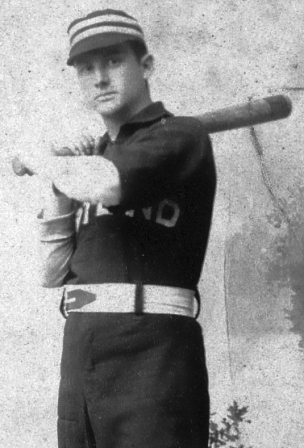
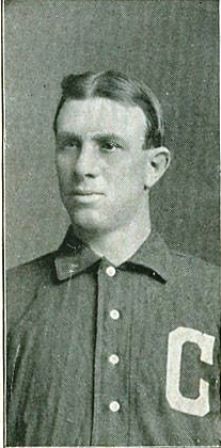
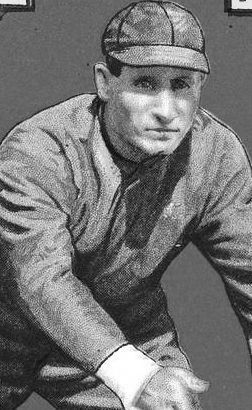
Bad Bill Eagan

6 Oct

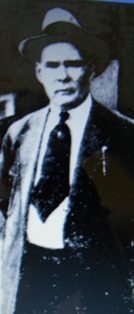
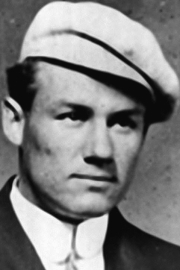
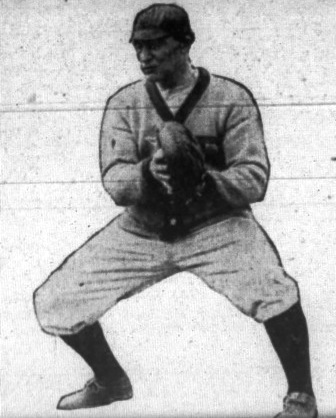
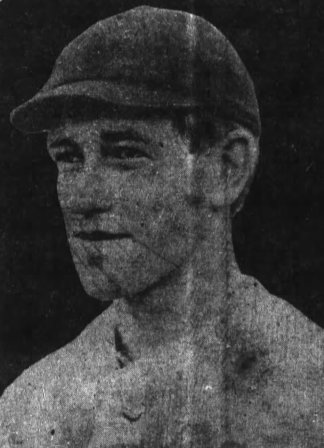
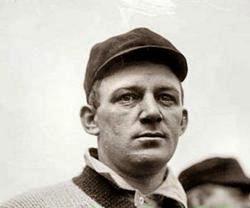
William “Bad Bill” Eagan was just 35-years-old when he died from tuberculosis in 1905, but many people didn’t believe it when the news was first reported. The hard-living Eagan’s demise had been predicted and reported several times. In 1901, the year after his professional career ended, The Fort Wayne Sentinel said:

“’Bad Bill’ Eagan who died two or three times last year, is running a poker room in Detroit. Eagan dies on the average of three times a year and is about due for the first of this year’s series. Eagan captained and played first base for Youngstown before his second demise last season.”

Bad Bill
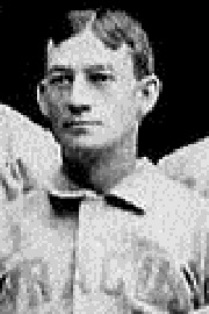
Bad Bill

In 1899 Connie Mack told The Philadelphia North American:

“Eagan would be one of the best second basemen in the business if he would keep in condition.”

He quickly wore out his welcome during all three of his brief stints in the big leagues. The first, with the St. Louis Browns in the American Association in 1891, ended, according to The Syracuse Standard after an incident with team owner Chris von der Ahe:

“(Eagan) was a jolly fellow and not afraid of discipline. The Browns got on a train at St. Louis to come East…von der Ahe’s nasal organ was rather large and red for its age and ‘Bad Bill’ determined to have some sport.

“Walking up to his employer, he caught the nose between his fingers, and said: ‘Say, Chris, how much did it cost to color that?’

“The owner of the cerise nose was furious with rage. He released Eagan at once. The train was ninety miles east of St. Louis, and at von der Ahe’s order the conductor put the nose twirler off the train.”

Two years later Eagan joined ‘Cap’ Anson’s Chicago Colts. Hugh Fullerton told the story of how he wore out his welcome there after just six games:

“Anson was a quick thinker on the ball field, but once he released the best second baseman that ever wore a suit for thinking a little quicker than anybody else on the nine.

“The second baseman in question was “Bad Bill’ Eagan. Everybody who remembers ‘Bad Bill’ will admit his supremacy on the second bag. When the play we celebrate came up there was a base runner on second. Chicago was one run to the good, and it was in the last half of the ninth inning.

(Bill) Dahlen was playing third base for Chicago. The man hit a sharp liner down to second. ‘Bad Bill’ started for it and at the same instant the man started for third base.

Bill Dahlen

Bill Dahlen

“The liner was a clipper and the ball struck ‘Bad Bill’s’ hands and bounded out. It struck the ground ten feet away, with ‘Bill’ right after it. Once he got his hands on it and without stopping to look where he was throwing. ‘Bill’ let the ball fly to third base.

“Most ball players after fumbling the ball would have tossed it to the pitcher or thrown it home if, after looking around, they saw that the base runner had started to try to score.

“In this case the base runner, after touching third, went on for twenty feet and then stopped for an instant to see what had become of the ball. He saw it coming straight as a die for third base, and went back there like a flash. But the ball beat him by ten feet. Unfortunately for the game, and also for “Bad Bill,’ Dahlen had taken it for granted that Eagan would throw the ball to the home plate, and was not looking for it to be thrown to him. Consequently the ball went by him, going within four inches of his nose, and striking the grand stand far behind.

“The result was that both base runners got safely home before Dahlen recovered himself and the ball, and the game was lost to Chicago.

“Anson was furious and immediately after the game gave ‘Bad Bill’ his release for making that throw. As a matter of fact, it was the best possible play under the circumstances, and Dahlen, rather than “Bad Bill’ was to blame for it not coming out as planned. If ‘Dal’ had thought as quickly as ‘Bill’ the game might have been settled right then and there.”
Eagan received one more trial with a major league team in 1898. He started the season on the bench for the Pittsburgh Pirates, but was given the opportunity to start when regular second baseman Dick Padden left the team over a dispute with Manager Bill Watkins in May.

Eagan hit .328, but committed 10 errors in 19 games. He was sold to Louisville Colonels on June 5. The Louisville Courier-Journal said:

“He is a clever fielder, a fair batsman, extremely aggressive and absolutely fearless (and will) certainly strengthen the team in one of its weakest spots.”

But he never appeared in a game for Colonels. The following day The Courier-Journal said the deal was off, and Manager Fred Clarke would only say, via telegram:

“Called deal for Eagan off for good reasons.”

The Colonels passed on Eagan despite being a team badly in need of a regular second baseman—Clarke tried nine different men there during the season, and his primary second baseman, Heine Smith hit .190 and committed 16 errors in 26 games.

Eagan finished the 1898 season with the Eastern League’s Syracuse Stars, where he had played from 1894 to 1897. He finished the year of 1898 in jail in his native Camden New Jersey.

That story Wednesday
“This Fellow has about as much Judgment of Balls and Strikes as a Six-year-old Kid”

10 Sep

Umpire baiting was an art form for managers like John McGraw.  In 1906 Tim Murnane wrote in The Boston Globe about the way McGraw, and his players, intimidated a first-year umpire named John Conway during a game between the New York Giants and Boston Beaneaters.

On May 1 the Giants had defeated the Beaneaters 7 to 5, and according to Murnane:

“I was very much interested with the tactics of the Giants in a game here, when they found the clever Irvin Young in the box, and knew it would take extra work to defeat the local team.

“Umpire Conway was behind the bat in this game, and the New York boys went after the young umpire from the first ball pitched until the last man went out.  Conway was consistently giving Young the small end of the decisions on balls and strikes, and yet the New York men tried to make it appear that he was giving them a terrible roast.  The Giants worked like sailors, never letting up;  in fact, their good work with the stick and on the bases was commendable in every way, and what they were saying to the umpire could only be heard in the front seats, and perhaps that was a good thing for the game.”

Tim Murnane

Tim Murnane

Murnane said the actions of the Giants were reminiscent of those of McGraw and other members of the Baltimore Orioles in the 1890s, but “this time it was umpire and not their fellow players,” who were the target:

“As each man passed the umpire they would make some remark, until finally (Dan) McGann, (Roger) Bresnahan and McGraw were put out of the grounds by Conway.  Note the four names, all of Celtic origin, every man out for a salary, the umpire doing his best to please, and doing it certainly in a fair way to the visitors, and yet the trio must be doing something for effect, perhaps to give the umpire something to think of when he went to New York, or perhaps to affect his work in the next game.  There was an object in the uncalled-for nagging.  The result was that Pitcher Young was actually affected, and put up a weak all-round game as the contest went along, the Giants finally winning out as a result of his poor work.”

The Giants doubled-down on their harassment of Conway after the game was over.  Murnane said Fred Knowles, the Giants Secretary,

“(I)nformed me that the New York players complained of Conway’s breath, saying that he had been drinking and was under the influence of liquor during the game.  What are the honest facts?  A friend of mine at the same hotel with Conway and Bob Emslie (the other umpire) told me that he was with the umpires the night before, as well as that morning, and heard them refuse to take a drink of any kind.  I was speaking to Conway just before the game, and took pains to note if he had been drinking, and I can say positively that he had not.”

Murnane’s comments are curious, given that he said Knowles informed him of the accusation after the game, yet he claims he “took pains” to confirm whether Conway was drinking before the game began.

“Now, doesn’t it seem unfair to pass around cold-blooded lies about an umpire doing his duty, to a management who naturally listens to stories of this kind, and then tries to make it easy for players?  I could forgive every act of the New York men, as they are out for blood, and are fine ballplayers, but I must pass up players who will try to harm a good, honest fellow, for Conway is a good umpire and had the nerve to pick the big fellows out, and no two men in the business need the call-downs that McGann and Bresnahan do.”

Murnane’s Boston colleague, Jacob Charles Morse of The Herald, called the Giants actions “reprehensible,” but said the umpire was partially to blame:

“Had Conway started in at the very first a lot of trouble might have been obviated, but it was not until he had allowed the New Yorks to kick at strikes and decisions, to leave their places, something strictly forbidden by the rules, and to bellow like bulls.  Bresnahan could be heard all over the field telling the umpire to ‘get out.’  Early in the game a bunch gathered around the umpire without the least expostulation, and went back to their places when the seemingly felt like it.”

Despite McGraw, McGann and Bresnahan receiving three-game suspensions for their actions, Morse said “The penalty imposed for the actions of the individuals was ridiculously light; not at all commensurate with the gravity of the offense.”

Things did not get any easier for Conway.

He had another run-in with the Giants at the end of June which resulted in another McGraw ejection.

He was also assaulted by two different St. Louis Cardinals; William “Spike” Shannon in June, and Mike Grady in August.  The August incident, during a game in Boston, required police to escort Conway from the field and resulted in a three game suspension for Grady.

Mike Grady had two altercations with Conway

Mike Grady had two altercations with Conway

After a second incident with Grady; this time in Pittsburgh on September 4, The Pittsburgh Press took the side of the Cardinals catcher, and harshly criticised Conway:

 “Umpire Conway officiated the game at Exposition Park yesterday afternoon.  To be more exact, a man named Conway attempted to imitate a real umpire, but the attempt was a failure…this fellow has about as much judgment of balls and strikes as a six-year-old kid, and he makes some of the weirdest mistakes ever seen.  To make matters worse, Conway thinks he is funny and laughs at his poor decisions…The Press never condones umpire baiting, but Conway called one strike on Grady that was not within two feet of the plate, and it is little wonder indeed that Michael was exasperated.

“It is to be hoped that Conway’s career as an umpire in the National League will end with the present season.  There are a score more competent men umpiring in the minor leagues today.  Conway is not fit for the position he occupies.  He takes trouble with him wherever he goes, owing to his inefficiency.”

National League President Harry Pulliam apparently agreed; Conway was not retained for the 1907 season.

He joined the Eastern League in 1907, but trouble continued to follow him.  In June he was assaulted by Toronto Maple Leafs second baseman Tim Flood—which resulted in Flood serving 10 days in jail.

Tim Flood

Tim Flood


Less than a week later, after the Jersey City Skeeters scored a run in the ninth inning to beat the Newark Sailors 2 to 1, Conway was attacked by fans in Newark’s Wiedenmayer Park.  The New York Times said:

 “A mob waited after the game until Umpire Conway left the dressing room on the grounds for the train, and when he appeared in the street the mob hooted, hissed and threw mud at him.”

He was escorted to the train station by “a squad of policemen.”

Just weeks into the 1908 season Conway decided he had enough, and resigned.  The Sporting Life said he “quit umpiring to go into business.”

Conway never worked a professional game again, although he worked several Ivy League games before giving it up all together in 1910.  He died in Massachusetts in 1932–the same year McGraw, too ill to continue baiting umpires, resigned as manager of the Giants.

“The Dream of an Ardent Baseball Fan and Admirer brought to Realization”

8 Sep

The Associated Press (AP) reported the same day that Hall of Famer Joe McGinnity was released by the New York Giants that he, along with a partner had purchased an Eastern League franchise, the Newark Indians, for $50,000—more than $1.3 million in current dollars.

Joe McGinnity

Joe McGinnity

The following month, The AP told how McGinnity and his co-owner, Chicago businessman Henry Clay Smith, came to be partners:

“There is an interesting story connected with the deal whereby Joe McGinnity and H.C. Smith of Chicago purchased the Newark club of the Eastern League, which reveals the identity of Mr. Smith and portrays the rise of a penniless man to a millionaire, who remained true to his first love in the baseball world.

“H.C. Smith is now a leading member of a Chicago manufacturing company, was station agent for the Chicago & Alton Railroad at Auburn, a little town south of Springfield, IL., working on a modest salary, with nothing better in view, 12 years ago…it was in those days that he learned to admire McGinnity as a ballplayer.

“That was the time when McGinnity earned the sobriquet of ‘Iron Man.’ He would work six days a week, pitching for country teams all over central Illinois, and on Sunday he would go to Springfield and play with the Springfield team.”

One of McGinnity’s teammates on that semi-pro team in Springfield was Dick Kinsella, who would become a minor league magnate and confidant of John McGraw:

“(Kinsella) remembers the connection between H.C. Smith and Joe McGinnity in the olden days.

“Smith was one of Joe’s staunchest and most consistent admirers, and from the time he first knew him until the present day, his admiration has not abated.  In 1895 Smith left Auburn and went to Chicago, where he became engaged in the brokerage business, at which he prospered.  Later he became connected with his present company, gradually working his way to the top, until he was a man of wealth.

“Learning that the New York Giants were going to release McGinnity, Smith at once arranged with Joe to get hold of some team, for which Smith would furnish the money.  The result was the purchase of the Newark club, the dream of an ardent baseball fan and admirer brought to realization, and a home assured the famous Joe McGinnity, all through the regard, which a station agent in a country town felt for a ballplayer whom he considered the best he had ever known.”

McGinnity

McGinnity

The 38-year-old McGinnity started 46 games and posted a 29-16 record with a 1.66 ERA for the 2nd place Indians during his first season as co-owner and team president.

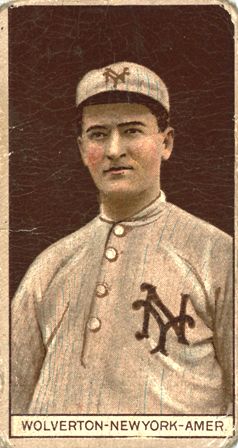
Harry Wolverton, who had been hired as manager by the previous ownership was retained by McGinnity and Smith.

Harry Wolverton

Harry Wolverton


There are several versions of the story of how McGinnity came to replace Wolverton as manager late in the season—some say Wolverton was let go for trying to remove McGinnity from a game, others say Wolverton took another position.  The real story, based on contemporaneous accounts in The Newark Evening News, was simply that Wolverton was injured before the team’s final road trip, and McGinnity took over.  In the winter of 1909 Wolverton purchased his release and McGinnity became the team’s full-time manager.

McGinnity and Smith owned the Newark Tigers through the 1912 season.  McGinnity managed the team to a second place finish in 1910 and a seventh place finish in 1911.  The team joined the International League in 1912 and finished third.

McGinnity won 87 games and lost 64 in 151 starts during his four seasons in Newark.

He and Smith sold their shares in the club after the 1913 season.

A Goat and a Dog

9 Jul

Edward John “Goat” Anderson played just one season in the major leagues, hitting .205 for the Pittsburgh Pirates in 1907.  He also played 10 seasons in the Central, Eastern and Western Leagues.

Described as eccentric, he made an impression on The Fort Wayne Sentinel in 1903, his first professional season with the South Bend Greens:

“’Goat’ Anderson who made it a rule during the games here to leave his post and come into the infield to argue every point raised by the umpire’s decisions, has stamped himself as the prize rowdy of the association.”

The Pittsburgh Leader said Pirate outfielder Tommy Leach had recommended the team sign Anderson, and told a reporter in the spring of 1907 that Anderson made the team because he was willing to stand up to Manager Fred Clarke while training in Hot Springs, Arkansas:

“(Clarke) had told Anderson to bunt at the signal from a man on first…The ball was pitched five feet outside, and of course, the catcher flagged the man going to second.  Anderson made no move to bunt or even to strike at the ball.  Clarke started to call him.  ‘Shut up,’ you don’t know all there is in the books,’ Anderson replied.  The answer made Clarke gasp…’All right, son,’ grinned Clarke.  ‘I guess you haven’t got stage fright when you can give it to your manager that way.’”

Edward John “Goat” Anderson

Edward John “Goat” Anderson


His excellent fielding, .343 on base percentage and 27 stolen bases with the Pirates impressed the local press, if not the fans.  George Moreland of The Pittsburgh Press said:

“Some fans are of the opinion that “Goat” Anderson, the hustling little right fielder of the Pittsburgh team, is not much of a general use to the Pirates, and that a good move would be made to get another man for the job.  These same fans are the ones who believe that a ballplayer is not worth his salt unless he is a slugger of the Wagnerian stripe…Manager Fred Clarke knows how to win games, and he also knows where to place a player in the batting order to get the most out of him.  That is the reason that the ‘Goat’ has been put at the top of the list to lead off.  It is not that Anderson makes a large number of hits.  Even when he does hit, he has difficulty in getting the ball out of the diamond.  But, somehow or other he manages to get to first base just about as often as any of them and when he does get there he is not slow about getting around the circuit.”

The Leader was even more enthusiastic about the new outfielder:

“The way little Goat Anderson has been hitting the ball and running bases insures him a permanent berth in the outfield.  Anderson has proved one of the finds of the season.  If there ever was another Wee Willie Keeler it is Anderson.  He is a ‘drop hitter’ of the Keeler style, and can run bases and bunt with the star of the New York Highlanders.  As a matter of fact, Anderson is of more value to the team than Keeler, because the latter’s star seems to be sinking.”

Despite the praise, Anderson was sold to the Rochester Bronchos of the Eastern League in January of 1908.

While with Rochester, Anderson attempted to get a patent on a sliding pad he invented; there is no record of a patent being awarded.  He also suggested a novel idea for improving his batting average.

The Lexington Herald said Anderson, who trained in Kentucky with the Bronchos before the 1909 season made this recommendation:

“Cut down the size of the home plate and I’ll hit .500 as long as the season lasts.  Where the front of the home plate is seventeen inches wide make it 10 or 12.  Then the batter will be able to get an even break with the pitcher, who now has everything in his favor.  With a home base half its present size a pitcher would need perfect control to get the ball over.  All this business of cutting across the inside and outside would be a thing of the past.  There wouldn’t be enough of the plate to give the pitcher the advantage of feeding outside low ones that can only be hit into someone’s hands…With a home base ten inches wide the ball would have to look pretty good right from the start, and if it didn’t a batter could easily pass it up.  There would be more bases on balls at the start, and that would mean a base on balls or a hit, or a hard liner that would bring a fine fielding play.  A smaller plate seems to me to be the thing.”

The small plate was the wish of a man who hit .222, .201 and .138 from 1908-1910 in Rochester.

Goat Anderson saved his greatest moment for his final season in professional baseball.  As the manager and leftfielder for the Terre Haute Terriers (or Terre-iers) in the Central League, he filed one of the most unusual game protests in history.

Goat Anderson (2), with the Terre Haute Terriers.

Goat Anderson (2), with the Terre Haute Terriers.

The Terriers were leading the Fort Wayne Champs 6 to 0 in the bottom of the seventh inning during the first game of a doubleheader.  Fort Wayne had a runner on first base with no outs with catcher Harry Martin at the plate.  The Fort Wayne Daily News picks up the story:

“Martin poked a drive into left field.  The ball rolled almost to the club house with ‘Goat’ Anderson in full cry after it.  Then came the cause for the protest in the person of Don.”

“Don” was a Great Dane who belonged to a Fort Wayne man named Ed Longfield.

“Don can’t bite, and wouldn’t if he could, but Anderson didn’t for sure know that, so ‘Goat’ hesitated a second in chasing the ball and Martin got a triple, Ted Anderson scoring. “

Fort Wayne went on to score six runs in the inning to tie the game and scored a run in the 10th to win 7 to 6.

The Fort Wayne Journal Gazette said:

“Toothless Don, Ed Longfield’s dog, is supposed to be harmless.  Goat Anderson, Terre Haute manager and left fielder evidently doesn’t think so and because dog Don jumped at him during the seventh inning romp in the first game yesterday Goat will file a protest with President (Louis) Heilbroner, requesting the game be played over.”

Heilbroner ruled against Anderson’s protest saying the play did not have a sufficient impact on the outcome of the game, but he did order that Don would no longer be allowed on the field during games.

Terre Haute finished fifth in the six-team league with 60-79 record.  Anderson was rumored to be considering offers from Federal League teams for 1914, but never signed with a team and his career was over.

He returned to his home in South Bend, Indiana.  He died of stomach cancer 10-years later at age 43.

“There is a Constant fear that Someday the Men will Decline to go on the field.”

31 Mar

The St. Louis Maroons were a big league franchise for just three seasons.  After winning the inaugural (and only) Union Association championship in 1884, the team was absorbed into the National League and was a dismal 36-72 in 1885, and 43-79 in 1886.

The club disbanded after the ’86 season and throughout the winter there was speculation about whether the franchise would end up in Kansas City (where local businessmen were looking to replace the Cowboys, who also went broke after the ’86 season) and Indianapolis.

The deal was finalized on March 8 when the franchise and nine players were sold to Indianapolis.  The Indianapolis News announced on the front page:

The Base Ball Deal

It Is Finally Completed

The story said:

“There is general rejoicing about the city over the certainty of having a league baseball club here.”

The team would be called the Hoosiers, and play at the Seventh Street Grounds, a ballpark owned by local businessman John Tomlinson Brush.

John T. Brush

John T. Brush

Brush was the driving financial force behind the deal and had been involved in local baseball in Indianapolis for several years, first having financed and organized a local amateur league in the city in order to promote his business—the When Store, and later the When Clothing Company—he was also an investor in the short-lived 1884 incarnation of the Hoosiers who struggled through one twelfth-place (29-78) season in the American Association.

The Hoosiers first year was unsuccessful and chaotic.

The first manager was George Walter “Watch” Burnham, who had been a National League umpire for 41 games in 1883 and one in 1886.  His role in the effort to acquire the franchise, his selection as manager, and the manner in which he acquired his nickname, gave some pause about the seriousness of the Indianapolis operation.

"Watch" Burnham

“Watch” Burnham

The Chicago Tribune said:

“The promoter of the Indianapolis movement is George W. Burnham, known as “Watch” Burnham.  At Cleveland, in 1883, while acting as a league umpire, he endeavored to establish himself in the public esteem by buying a watch, having ‘Presented to George W. Burnham by his friend and admirers’ inscribed on it, then having it sent out to him on the field during the progress of the game.  It is not surprising that some of the league people are suspicious of the Hoosier effort.”

Brush was not the team’s original president, that duty fell to a local attorney named Louis Newberger who spent his entire two-month tenure in the position complaining that he had no time to run the team; Brush took over as president in late May.

The Hoosiers limped to a 6-22 start—no doubt aided by 22 straight road games from May 5 through May 30.  Burnham resigned once, just five games into the season, but returned a few days later.  By mid May, as the team struggled through their endless road trip, The Chicago Tribune said a mutiny was expected:

“The dissatisfaction on the part of the players with Burnham, the manager, amounts almost to insubordination and there is a constant fear that someday the men will decline to go on the field.”

The Tribune said Burnham had fined “the entire team,” and Captain Jack Glasscock “said he would be black-listed before he would play again under the management of Burnham, but was finally prevailed upon to do so.”

Jack Glasscock

Jack Glasscock

Upon the team’s return to Indianapolis Burnham was replaced with team secretary Fred Thomas.  Thomas, like Burnham, had no professional experience as a player or manager, and his tenure was not much more successful.  The club lost 18 of 29 games with him at the helm.

The team’s third manager also had no previous professional experience.  Horace Fogel was a sportswriter for The Philadelphia Press when he was tapped to be the third manager.  The Indianapolis News said hopefully:

“Mr. Horace Fogel, the new manager, is a good-looking young man, and makes a favorable impression on a stranger.  He is evidently very anxious to make the club a winner.”

The same July day The News opined on Fogel the paper also noted that maintenance of the ballpark had also angered some fans:

“Very unwisely the management had the chairs in the gallery varnished recently and yesterday several ladies had their dresses ruined.”

Things were no better under Fogel.  The Hoosiers went 20-49 under their third manager, and finished their inaugural season in eighth place with a 37-89 record.

The News said:

“Staring out under unfavorable circumstances…with inefficient management throughout the season, and many more defeats than victories, the club nevertheless, was accorded a generous support.”

The 1888 season became a matter of civic pride for the team’s ownership, local businesses and the newspaper.

In January it was announced that the Hoosiers would have a manager with at least some experience.  Harrison “Harry” Spence had played and managed in, among others, the Eastern, Northwestern and New England Leagues.  The News said of the new manager:

“A number of ball players of various clubs, who know Harry Spence…speak very highly of him.  Sam Thompson says he is a thorough gentleman, well liked by the players, and a fine manager.”

The News said the success of the Hoosiers was necessary for the future Indianapolis:

“Business and professional men are all interested in it, for, aside from the pleasure they derive from witnessing the games, they recognize the fact that the club is of great benefit in advertising the enterprise and prosperity of the city.”

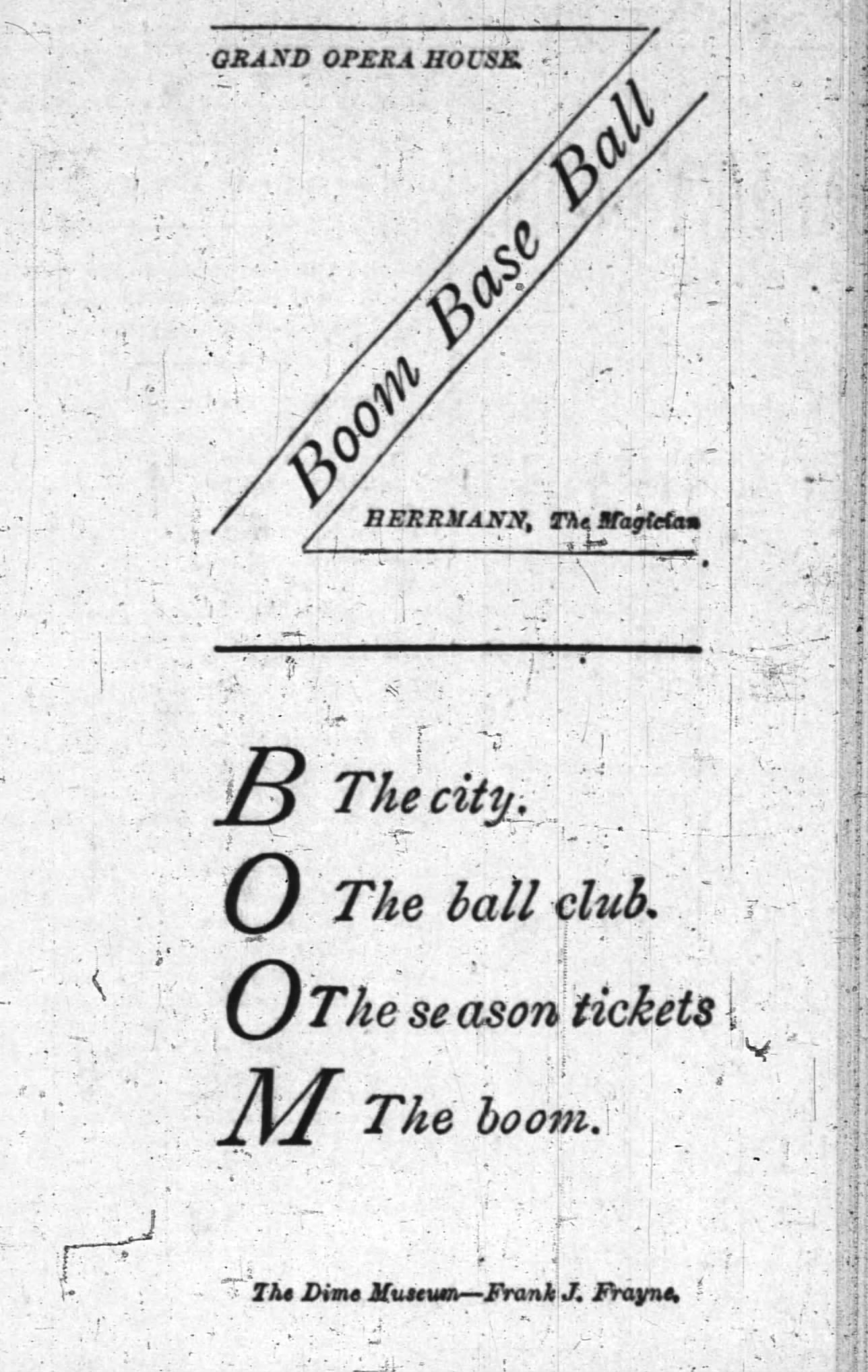
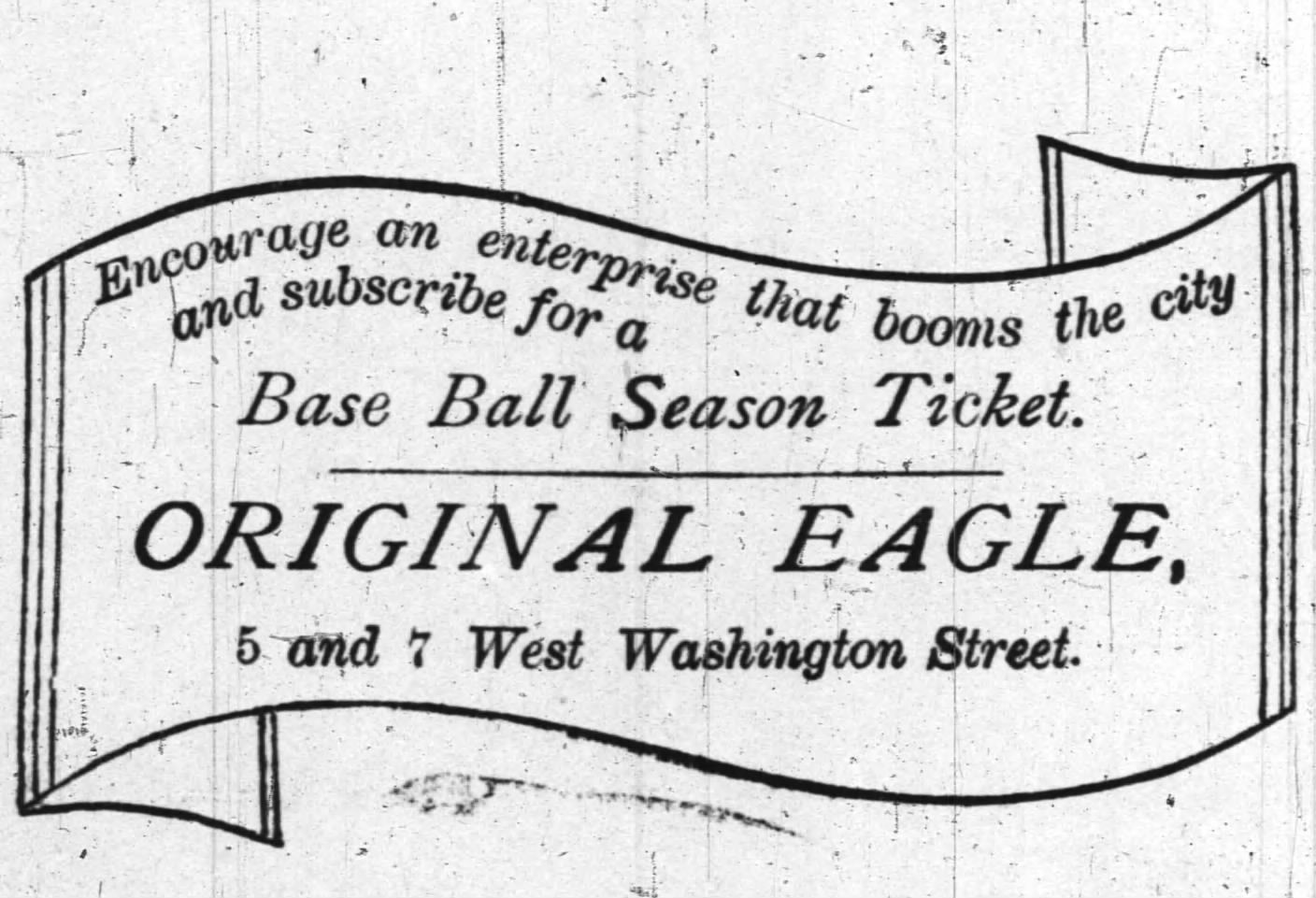
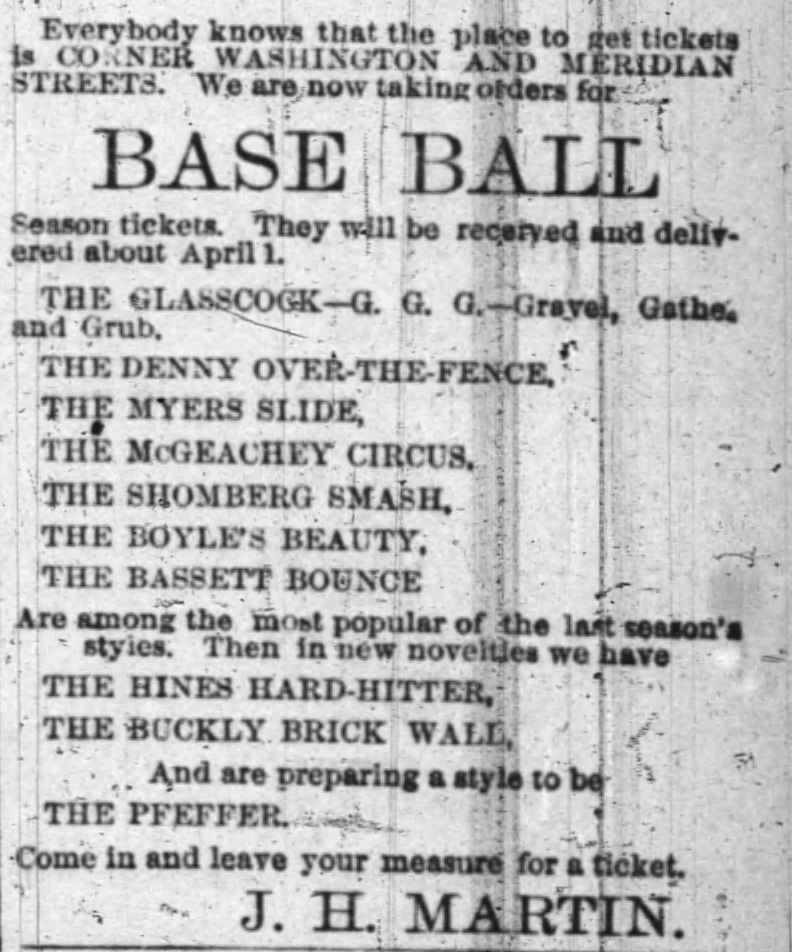
The paper organized a campaign called “Boom for Baseball.”  Sixty-eight local businessmen “representing the leading establishments in the city,” donated their advertising space back to the newspaper “for the purpose of setting forth the advantages that will accrue to the city, from the maintenance of a National League Baseball Club here.”

Brush told the paper:

“We want at least five hundred subscribers for season tickets, and with this as a guarantee, we can get the money we want.  If any such player as (Fred) Pfeffer or (Larry) Twitchell can be bought we can and will buy him, and we can get the club in first-class shape for opening the season.”

Season tickets were sold for $25 each, and Brush said “We will have a grandstand that will be a beauty, with all the latest improvements, so that there will not be one uncomfortable seat in it.  Then we will have a space set aside for carriages and a special department for ladies and their escorts.”

88indy4 88indy2

Some of the advertisements from Indianapolis' "Baseball Boom"  campaign

Some of the advertisements from The Indianapolis’ News’ “Baseball Boom” campaign

Most importantly, Brush assured the people of Indianapolis that they “would have a ballclub here that nobody would be ashamed of.”

He was wrong.

While not as bad as 1887, the Hoosiers got off to a 2-11 start, and struggled to a 50-85 seventh place finish, 36 games behind the champion New York Giants.

By 1889 Indianapolis had all but given up.  The team nearly went under before the season started.  In January a headline in The News said:

The Ball Club Gone

With debts of more than $5,000, the paper said Brush would “surrender the franchise” to the league.  Brush was able to raise enough capital to keep the club operating for one more sub .500 season (59-75), and another seventh place finish.  The only highlights for Indianapolis in 1889 was the arrival of 18-year-old Indiana native Amos Rusie, who posted a 12-10 record, and Jack Glasscock who hit .352, for the Hoosiers.

The team was dropped after the 1889 season, but not because of money.  The National League bought out Brush’s Hoosiers and the Washington Nationals.  Brush received a reported $67,000 for the team, he also received stock in the New York Giants as payment for former Hoosier players.  One year earlier when The News reported that Brush was on the verge of losing the team, the paper claimed “the franchise is now worth $15,500 cash.”  While that figure might have been low there was no doubt that Brush did well on the deal.  A year later he was president and majority stock holder of the Cincinnati Reds.

Indianapolis would only be a major league city one more time; in 1914 the Hoosiers were champions of the Federal League, but were relocated the following season, becoming the Newark Peppers.

“The fans make us the ‘goat’ for Everything”

21 Nov

Chicago Orphans Manager Tom Burns suspended pitcher Bill Phyle without pay in August of 1899, even after Burns was replaced by Tom Loftus, Phyle remained in limbo.

Tom Loftus

Tom Loftus

In January Hugh Fullerton said in The Chicago Tribune that Loftus “probably will give him a chance.”  But in early February The Chicago Inter Ocean said even though Phyle had met with team President James Hart nothing had been resolved.  Phyle told the paper he was offered a contract but was “in no hurry to sign.”

Phyle finally signed at the end of the February, but The Tribune said Chicago would most likely trade him “although Loftus thinks highly of him.”

The team trained in West Baden Springs, Indiana, where according to The Tribune Phyle was “sarcastically called ‘Lucky,’ because of his proverbial hard luck, (he) rarely escapes a day without being hurt.”  He also managed to alienate his new manager.

After several days of poor weather in Indiana, Loftus decided to take the team further south, to Selma, Alabama on March 18.  According to The Tribune Phyle was not on the train:

“Phyle may not be with the team in Selma.  He left Friday (March 16), announcing he was going to see the fights in Chicago.  Manager Loftus hunted up the pitcher before he departed and told him it was a bad plan to start the year in such a manner.  Phyle then said he was ill and was making the journey in order to consult a physician in Chicago.”

Phyle did return from Chicago (where he claimed he had an unspecified operation), and joined the team on the trip south.  Upon his return he continued to suffer a series of illnesses and injuries, which included a bad reaction to a vaccination and a being hit in the knee with a thrown bat, both of which kept him inactive for several days.

Phyle was left in Chicago when the team opened the season in Cincinnati, and his imminent trade or release was speculated upon nearly daily in the Chicago press; he was finally traded to the Kansas City Blues in the American League with Sam Dungan and Bill Everitt for John Ganzel on May 18.  Phyle refused to report to Kansas City and spent the season playing for Chicago City League teams and a semi-pro team in DeKalb County, Illinois.  He was also a regular attendee at Chicago’s boxing venues and was said to own a piece of featherweight contender Eddie Santry.

Phyle returned to the National League in 1901 posting a 7-10 record for the New York Giants.  In 1902 he went to the California League as an infielder and never pitched again.  After his controversial exit from Memphis in 1903—and the aftermath—he continued to play until 1909.

Phyle worked as a boxing referee and as an umpire for more than 20 years in the Canadian, Eastern and Pacific Coast and International  Leagues, and was involved in two final controversies.

Bill Phyle, 1913

Bill Phyle, 1913

In 1920 a grand jury was impaneled in Los Angeles to investigate charges of game fixing in the Pacific Coast League.  Players Harl Maggert, William “Babe” Borton, Bill Rumler and Gene Dale were implicated.  While all criminal charges were eventually dismissed, the four were banned from baseball in 1921.

Phyle was called to testify in front of the grand jury, and said umpires were often blamed when players were crooked:

“The fans make us the ‘goat’ for everything that goes on during the ball game.  How many times we have suffered to suit the whims of a ballplayer who might have been working with the gamblers will never be known.  They just slough us around, call us whatever names they please and yell murder when we happen to fire them out of the game or have them suspended.

“An umpire should have the same authority as a referee has in the prize-ring.  If he believes a ballplayer isn’t giving his best toward the game, he ought to have the privilege of ousting him without taking the manager into confidence.”

In July of 1923 Phyle was working an International League game between the Baltimore Orioles and Rochester Tribe.  Phyle called a Rochester runner safe at first, then immediately reversed his decision.  He was dismissed the following day by league President John Conway Toole.

As a result of the dismissal, four other umpires resigned in sympathy.  Toole, who was attending the game, claimed he had not released him because of the blown call, but because Phyle had failed to work a double hitter he was assigned to earlier in the month.   The decision was upheld, and within three days the four other umpires withdrew their resignation.

Phyle ended his career back in the Pacific Coast League in 1926, and died in Los Angeles in 1953.

“I Consider him a Weak, Foolish Talker”

13 Nov

Bill Phyle was a no-show.  He failed to appear before Southern Association President William Kavanaugh at the league’s hearing regarding his charges that the end of the 1903 season was fixed.  After the league suspended him he failed to appear in St. Louis to defend his charges in front of the National Association of Professional Baseball Leagues (NAPBL).  He claimed he was too ill to attend either meeting.

As a result he was expelled from organized baseball in October of 1903.  His appeal was denied in December.

Phyle had very few supporters by the time his fate was settled by the NAPBL, but he still had at least one—kind of:  Milwaukee Brewers Manager “Pongo” Joe Cantillon, the man who sold Phyle’s contract to the Memphis Egyptians.

Joe Cantillon

Joe Cantillon

Cantillon told William A. Phelon of The Chicago Daily News that his former player wasn’t too bright, but that he also wasn’t wrong:

“I consider him a weak, foolish talker, who opened his head when it did not do him any good.  Just the same, Billy Phyle had cause for the charges which he made, and I got it good and straight that there was work done in the Southern league last season which was on the scandalous pattern.”

Cantillon stopped short of saying the season was fixed—but not very far short:

“Understand I do not say, neither does Phyle charge, that any games were sold, or that either manager or club owners were in on any such deals.   Even though there are thousands who say—apparently with mighty good reason—that the league is crooked, always has been crooked since it started, and always will be crooked—I do not accuse anyone of selling out.”

Cantillon then came pretty close to accusing Atlanta of selling out:

“This is the way the thing was done—and if anybody wants to howl I’ll show the goods and produce the names.  When Memphis was playing Atlanta it was a case of anything to beat out Little Rock.  The Atlanta players, knowing that their only chances had gone glimmering, were anxious to help their friend’s to beat Mike Finn’s gang (Little Rock).  There was no sell out and there were no intentional errors—nothing so gross and coarse as that.  But a couple of the best regulars on the Atlanta team were laid off; a couple of substitutes were put in their places; a raw, unseasoned amateur was sent in to pitch, and then, to make assurances doubly sure, the Atlanta catcher told each Memphis batsman just what to expect as he came to the plate.”

Cantillon also said the Birmingham Barons were “trying to help (Little Rock) along,” and:

“Every player in the league was dead wise to the whole situation, but Billy Phyle was the only man who was foolish enough to open his face, and he got soaked proper.”

Cantillon claimed to “positively know” that Phyle had been sick, and that was the only reason he failed to appear to substantiate his claims in front the league and the NAPBL.  Regardless, he said Phyle would have had a difficult time:

“Even if he had been able to attend, what show would he have had, with every manager determined to clear his own skirts and swat Bill for the squeal he made?”

Cantillon challenged anyone in the Southern Association to refute his allegations.

In February of 1904 Cantillon cancelled a scheduled spring tour of the South and Phelon said in The Daily News that Southern Association teams had refused to play against Brewers.

The following month Clark Griffith, who was in the South with the New York Highlanders, told The Atlanta Constitution that Cantillon was “ a nice fellow,” who “had been misquoted and had not authorized the interview, and in fact knew nothing of it until it appeared in the press.”

Cantillon himself never directly denied his statement, but The Constitution, content to keep the focus of Southern wrath on Phyle was happy to give the Milwaukee manager a pass:

“(Griffith’s claim) puts a new light on the question and it is very probable that he has been judged too harshly in the south…Phyle as a baseball issue is now dead.  Any effort to revive him and bring him forward on the stage either as a hero suffering persecution or a sick man worrying his life out by the blacklist hanging over him, will meet with the opposition of every paper in the south.”

Phyle went to Toledo and spent the spring and summer wiring Southern Association President Kavanaugh asking for reinstatement so his contract could be assigned to the Mud Hens.  After his application was rejected in May, and again in July, Phyle joined the independent Youngstown Ohio Works team.  The team played exhibition games that summer with the Brooklyn Superbas and Pittsburgh Pirates—both National League clubs were fined $100 for playing against the blacklisted Phyle.

(Some sources list Phyle as a member of the 1904 Johnstown Johnnies in the independent Pennsylvania League, but several Pennsylvania newspapers, including The Williamsport Gazette and The Scranton  Republican said in August “Phyle turned down a $225 per month offer from Johnstown.”)

Phyle became part of another scandal in 1905.

Bill Phyle

Bill Phyle

Youngstown joined the newly formed Ohio-Pennsylvania League, and needed to submit a roster to the NAPBL for approval.  Phyle’s name did not appear on the submitted list, but he played third base for the club all season, including an exhibition with the Cincinnati Reds on August 31. Youngstown was fined $500 in mid September and ordered to release Phyle.  Cincinnati was fined $100.

Phyle was finally reinstated in February of 1906, after he submitted a letter to the directors of the Southern Association retracting all of his 1903 allegations.

His contract was assigned to the Nashville Volunteers who sold him to the Kansas City Blues in the American Association.  After hitting .295 in 72 games, Phyle got one last trip to the National League.  He was traded to the St. Louis; he hit just .178 for the Cardinals.  He retired after playing three years in the Eastern League with the Toronto Maple Leafs from 1907-1909.

More than twenty years later Joe Cantillon was apparently forgiven in the South.  He managed the Little Rock Travelers to back-to-back eighth place finishes in 1926 and 1927.

The rest of Bill Phyle’s story next week.

“The Longest Hit in the World”

10 Oct

Walter “Judge” McCredie, longtime Portland Beavers player, manager and president said the longest home run he ever saw was hit by Otis L. “Ote” Johnson when Johnson played for him:

“The drive of Ote Johnson’s at Los Angeles (in 1909) was the longest clout I have ever witnessed.  Out in center field they had a pavilion 150 feet long.  Hits at Chutes Park in Los Angeles had never come within fifty feet of the pavilion…Johnson put the ball clean over the pavilion and the ball bounced into the bandstand for what I call the longest hit in the world.”

By the time he hit that ball in Portland he had already been called “Home run” Johnson for at least five years, a name earned in the Texas League when he hit 22 home runs in two seasons for the Dallas Giants—he finished third with 12 in 1903 and led the league with 10 in 1904.

Otis "Ote" Johnson

Otis “Ote” Johnson

Johnson was born in Fowler, Indiana in 1882, and grew up in Muncie.  The Dallas Morning News said fellow Indianan Claude Berry recommended Johnson to Dallas.  Primarily a shortstop, Johnson also played first, third and outfield, and appeared in more than 30 games as a pitcher during his professional career.

Johnson was sold to the Little Rock Travelers near the end of the 1904 season; he remained with Little Rock through 1906 but hit just .210 against “A” class Southern Association pitching.  He was sold to the Charleston Sea Gulls in the class “C” South Atlantic League before the 1907 season and hit .263, leading the team in doubles (27), triples (13) and home runs (10).

His performance in Charleston earned him another shot in the Pacific Coast League (PCL) when his contract was sold to Portland.  After a slow start at the tail-end of the 1907 season, Johnson regained his form, hitting .280 with 10 home runs in 1908 and .293 with 13 home runs (including his “longest hit in the world”) in 1909.

McCredie said the day Johnson hit his home run against Los Angeles scouts from the New York Highlanders was in the stands:

“(A)fter the battle they asked me to put a price on Ote.  I did, and a few days later the deal was consummated.”

The price was $4,000.

As Johnson prepared to join the Highlanders and manager George Stallings for spring training in Georgia, the New York press was excited about the team’s new prospect who was spending the winter in Muncie working and playing goalie Muncie’s professional roller polo team.  The New York Globe said:

“There is a ‘terrible Swede’ coming to New York next season.  He is a glass blower and makes from $6 to $7 a day in a factory at Muncie, Ind., and in the summertime he makes his living at swinging a large club and gathering bad and good bounders on the baseball field…The boy we’re harping about is Ote Johnson, who will be a member of the New York Americans. (In the PCL) he is known as ‘Home Run’ Johnson.  They say he has driven many a pitcher to the bench.”

George Stallings

George Stallings

Phil Cooney, a New Yorker, who played with Johnson in Portland, told The Globe:

“They seem to think that this boy Johnson can’t hit a curve ball, but Stallings will find out that he can hit any kind.”

On March 23 Stallings told The New York American that Johnson, who was playing third base and shortstop, “couldn’t hit.” Two days later The American said:

“Ote Johnson this afternoon gave an apt illustration of a home run and for the first time since he reported to Stallings the Portland demon found his batting eye.  But for the most daring burglaries on the part of (William) Birdie Cree, the big third sacker would have hit for 1.000 during the afternoon.  As it was he had a single and a homer in three times at bat.  His single might have been a homer had not (2nd baseman) Earle Gardner sprang into the air and retarded its progress by a blind stab.  But the four-base smash was beyond reach.

“Johnson got to one of (Dick) Carroll’s choicest curves and knocked the ball further than any had ever before traveled in Georgia.  Birdie Cree was playing deep for the big fellow.  The ball went so far that Cree had not gotten to it by the time Johnson crossed the home plate, and he only jogged from second.  The ball rolled to the fence, which is fully 300 yards from the plate.”

As late as April 1 it looked like Johnson might stick with New York.  The Trenton Evening Times said:

“The latest ‘phenom’ to be discovered is Otis Johnson, the New York Americans’ third sacker.  This recruit has been playing sensational games around the last station since he joined the club…Johnson is also quite a slugologist.  In the last few games the youngster has been batting like a Tyrus Cobb.  In a recent game at Athens, Ga., he made four hits in as many times at bat.  Among them was a home run.  Manager Stallings says he thinks Johnson will make a great name for himself this season.”

Despite the build up, and the reports of his prowess at the plate, Johnson did make Stallings’ club.  His contract was sold to the Jersey City Skeeters in the Eastern League.

The (Portland) Oregonian said New York “farmed out” the former Beaver star despite the fact that:

“New York critics credit Ote, nevertheless, with having more promise than some of the players retained by Stallings.”

Johnson hit just .223 with 9 home runs (second in the league) with Jersey City, but would benefit from unrest in the New York clubhouse.  Manager George Stallings accused his star first baseman, Hal Chase, of trying to throw a game in St. Louis (the first of what would become many accusations against Chase). Stallings said he would resign if Chase wasn’t let go; Highlander owner Frank Farrell sided with Chase and forced Stallings out in September; Chase was named manager.

Hal Chase

Hal Chase

After the season ended the New York papers said Johnson would on Chase’s club the following season, either at third base in place of Jimmy Austin (who was rumored to be on the market, and eventually traded to the St. Louis Browns), or to play shortstop in place of John Knight  who would be moved to second base to replace Frank LaPorte (also on the market, and also eventually traded to St. Louis with Austin).

More Otis Johnson on Monday.

Jimmy Rogers

16 Sep

In January of 1897 owner Barney Dreyfuss and the directors of the Louisville, Colonels met to determine the future of the club.  The Louisville Courier-Journal said:

“The most important meeting in the history of the Louisville Base-ball club was held last night at the Louisville Hotel.  It was marked by more liberality than had been shown by the club during all the years since it became a member of the big league.”

No one was surprised that Dreyfuss’ protégé, team secretary Harry Clay Pulliam was named team president, nor was it surprising that Charles Dehler was retained as vice president.

But no one had predicted the Colonel’s choice to replace Bill McGunnigle as manager.

McGunnigle had succeeded John McCloskey, and the two combined for a 38-93 record and a twelfth place finish.

James F. “Jimmy” Rogers would be a first-time manager; three months short of his 25th birthday and only 110 games into his major league career.  The Courier-Journal knew so little about the new manager that the paper got his age and place of birth wrong, and also reported incorrectly that he had minor league managerial experience.

While he had only played 72 games with Louisville in 1896 and only 60 at first base, The Courier-Journal called Rogers “the best first baseman the Colonels ever had.”  Even so, the paper acknowledged that “as a manager he is yet to be tried.”

Just why was he the right man to manage the team?

“One of the chief reasons Rogers was selected was that he is sober.”

Jimmy Rogers

Jimmy Rogers

Despite being “the best first baseman the Colonels ever had,” Rogers opened the season as the team’s starting second baseman; thirty-five-year-old minor league home run king Perry Werden, acquired from the Minneapolis Millers of the Western League played first base for Louisville.

The team won five of their first seven games, and then went 12-22 through June 16 when Rogers was fired as manager and released; he was hitting .144 and made 16 errors in forty games at second base.

Rogers was replaced as manager by Fred Clarke; the future Hall of Famer was two weeks shy of his 24th birthday.

The Cincinnati Post said the outgoing manager was not only to blame for the team’s poor performance but also for center fielder Ollie Pickering’s slump; Pickering hit .303 after joining Louisville in August of 1896 but was hitting .243 on the day Rogers was let go:

“The claim is made that Jimmy Rogers is responsible for the decline of Pickering.  The Virginian created a sensation last fall, but “Manager Jimmy” tacked the title “Rube” to Pick, and it broke his heart.”

Ollie "Rube" Pickering

Ollie “Rube” Pickering

Pickering was released in July, signed with the Cleveland Spiders, and apparently recovered from his broken heart, hitting .352 in 46 games for Cleveland.

Rogers would never play another major league game.  He was signed by the Pittsburgh Pirates the day after Louisville released him, but became ill with the flu and never played for them.  A month later he joined the Springfield Ponies in the Eastern League and finished the season with them.  Rogers played for East Coast minor league teams until in August of 1899 when he became ill while playing with the Norwich Witches in the Connecticut League.

In January of 1900, Rogers died at age 27.  Two different explanations for his death appear in various newspapers; both may be wrong.  The Courier-Journal and several other newspapers said his death was the result of the lingering effects of “being struck on the head by a pitched ball several years ago while playing in the National League.”

The New Haven (CT) Register repeated the story about Rogers being hit by a pitch, and said that while that injury contributed to his death, he had died of Bright’s disease—a kidney ailment now referred to as nephritis.

Rogers’ Connecticut death certificate listed the cause of death as a bacterial inflammation of the brain.

“The Disappearing Oakland Infielder”

7 Aug

James Ernest “Jimmy” Frick began his career with the Iola Gasbags in the Missouri Valley League in 1904, hitting .331 in 106 games.  While Frick began the 1905 season with the Oklahoma City Mets in the Western Association, a “C” level league, press reports said he could have played at a higher level and The Sporting Life said St. Louis Cardinals, Hall of Famer pitcher Charles “Kid” Nichols “cannot understand why Jimmy Frick of Oklahoma City persists in hiding out it the bushes when he can make good in fast company.”

Frick was hitting above .300 in July when he was sold to the Seattle Siwashes in the Pacific Coast League; he hit .252 in 18 games until August 18 when The Associated Press said Frick “disappeared mysteriously.”

Four days later The Seattle Star said Frick who “was very popular” with local fans had jumped the Siwashes and rejoined Oklahoma City having been promised “$1000 and a chance to manage the team next year.”

Whether the reported deal was actually promised to Frick is unknown.  While he returned to Oklahoma City he never joined the Mets and finished the season with the Wichita Jobbers.

At the end of the 1905 season multiple teams laid claim to him.  The Associated Press said:

“The case of J. Frick who was claimed by Indianapolis, Wichita, Seattle and Oklahoma City was referred to Secretary (John) Farrell (of the National Association).”

In February of 1906 Frick was awarded to Wichita then immediately traded to the Toronto Maple Leafs in the Eastern League.  He spent the next five and a half years in the Eastern League with Toronto, the Baltimore Orioles and the Newark Indians.

On July 16, 1910, while with Baltimore, Frick was hit in the head with a pitch.  In August The Sporting Life said he had not yet returned to the lineup:

 “(Frick) is in a bad way in this city, as the result of being hit on the head by a pitched ball during the last home series of the Birds. Although the accident happened at least three weeks ago, Frick’s head is still in bad condition, his face is swollen and dizziness seizes him on the slightest provocation. It is doubtful if Frick will play again this season.”

He did return at the tail end of the season, but only appeared in a few games.  In 1911 he was sold to Newark, and after hitting just .200 in 28 games he was sold to the Troy Trojans in the New York State League.

Jimmy Frick

Jimmy Frick

Before the 1912 season, Harry Wolverton, third baseman and manager of the Oakland Oaks in the Pacific Coast League, was named manager of the New York Highlanders in the American League.  Oakland hired Bayard “Bud” Sharpe to manage the team; one of his first moves was to purchase Frick from Troy to fill the void Wolverton left at third.

By March 7 The Associated Press said Sharpe was “somewhat exercised about infielder Frick.”  The new third baseman had arrived in Oakland by train several days earlier, but had not arrived at the Oaks training camp in Livermore, California and had not been heard from him.  Sharpe showed up the following day, but it was reported he had spent several days in an Oakland hospital—it was not reported why he was hospitalized.

Frick began the season as the Oaks starting third baseman, but after hurting his foot in April, August “Gus” Hetling filled in and Frick never returned to the regular lineup.

On September 17, with Oakland in a battle for the pennant with the Vernon Tigers, the team was in Los Angeles when Frick, according to The Associated Press left his room at the Hotel Rosslyn and “dropped from sight.”

The Los Angeles Examiner said the Oakland team and the Los Angeles Police Department had looked for Frick for more than a week and found no sign of the infielder.  The Associated Press said “all of Frick’s haunts have been searched,” and that the disappearance “may hurt Oakland in their fight for the pennant, as he is considered the best utility infielder on the team.”

Herb McFarlin, Secretary of the Oaks, said:

“Frick has always been a steady player, not inclined to drink or run around.  He always has been absolutely dependable.”

On October 4 The Associated Press said “the disappearing Oakland infielder” had been found by his wife:

“He had been ill in a Los Angeles Hospital, assuming an alias so that he would not be bothered.”

As with his spring disappearance there was no mention as to why Frick was in the hospital.

On October 5 he was with the Oaks in Portland for a game with the Beavers, he did not play, but was “out on the coaching line rooting for his team.”

Frick was with the team on October 27 when they took both games of a double-header in Los Angeles; Vernon won both games of a doubleheader from Portland, and Oakland took the pennant with a winning percentage of .591 to Vernon’s .587.

Frick saw little action in the final weeks of the season, his replacement Hetling hit .297 and was awarded a Chalmers Automobile as the league’s most valuable player.

Gus Hetling, Frick's replacement at third

Gus Hetling, Frick’s replacement at third

Frick and his wife went to Portland at the end of the season, and in late November planned to leave for Oklahoma City where they owned a farm.  On November 20 Mrs. Frick went to pick up tickets for the trip, when she returned home, she found Jimmy Frick dead.  He committed suicide by drinking carbolic acid. (Baseball Reference incorrectly lists his date of death as November 18),

The Portland Oregonian said Frick had been “ill and despondent,” and said he was suffering from “brain fever.”  (Brain fever is an antiquated and vague term used for inflammation of the brain).

None of the stories about Frick’s suicide and “brain fever” mentioned the severe injury he had received when he was hit in the head in 1910, so  it’s impossible to determine whether it contributed to the erratic behavior that year, hospital stays, or death of the disappearing Oakland infielder.”