Tag Archives: Honus Wagner

Ernie Diehl

18 Mar

Ernest Guy “Ernie” Diehl’s entire professional career consisted of less than 60 games.

Every year from 1900 to 1911 he was offered contracts by professional teams and despite his time with two National League teams and two minor league teams he never earned a penny as a ballplayer.

By the time the 25-year-old Diehl made his first professional appearance with the Pittsburgh Pirates in May of 1903, he was already a well-known player. Diehl was the star of the perennial powerhouse Avondale team in Cincinnati’s semi-pro Saturday League, which The Sporting Life called “a fast, clean league.”
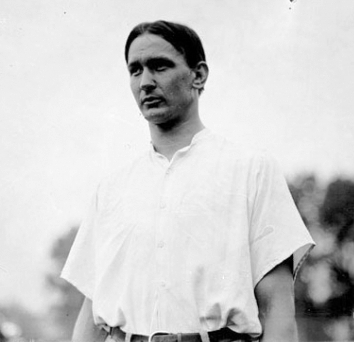
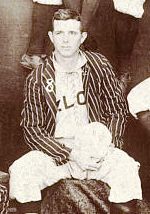
diehl

Ernie Diehl

Diehl was born in Cincinnati in 1877, the scion of a Cincinnati distillery empire; His father Adam G. Diehl had made a fortune in the whiskey business with his brother-in-law; together they founded The Edgewood Distilling Company.

He attended the University of Cincinnati and established a reputation as one of the area’s best athletes.  Perhaps even better at tennis than baseball, Diehl was a prominent amateur tennis player during the first decade of the 20th Century.

In May of 1903 when the Pirates arrived in Cincinnati for a series, the team was decimated with injuries and Diehl joined the team for one game, playing left field on May 31, he went 1 for three in a 3-2 pirate victory.

Despite being offered a contract with Pittsburgh, Diehl chose to return to the distilling business and the Saturday Baseball League.

In 1904, with several Pirate players hurt, Diehl was again asked to join the team; this time for 12 games.  The Pittsburgh Gazette said Diehl also spent time with the Pirates in Hot Springs, Arkansas that spring.

The Baltimore American ran a story before the Pirates arrived in New York in August:

“New Yorkers who attend the games between the Brooklyn and Pittsburgh teams will be treated to an opportunity of seeing the work in the field of a millionaire ballplayer.”

While he hit just .162 for the Pirates in 1904, that did not diminish Pirate owner Barney Dreyfuss’ desire to sign Diehl.

Before the 1905 season Dreyfuss told The Pittsburgh Press:

“The one player I would like to get on the team is beyond my reach… His name is Ernest Diehl…He is one of the best baseball players I ever saw.”

Dreyfuss also called Diehl “One of the best all-around athletes,” he had seen.  The Press said that although Diehl was required to sign a contract for his time with the Pirates in 1903 and ’04:

“Diehl never received a penny of salary from President Dreyfuss.”

Barney Dreyfuss
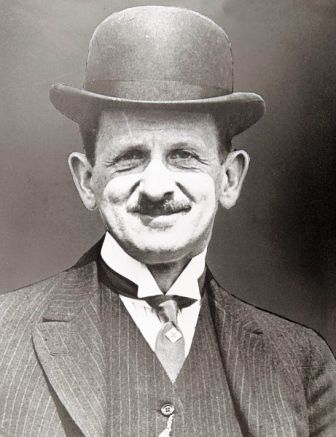
Barney Dreyfuss

Dreyfuss, and every other owner who offered Diehl a contract was unsuccessful in securing him for the 1905 season; Diehl spent the season playing in the Saturday League and in several tennis tournaments across the country.

He again played tennis and semi-pro ball in 1906, until August when the Boston Beaneaters came to Cincinnati. Shortstop Al Bridwell was injured, and Diehl was signed (again for no salary) to play for Boston in the three-game series.

The Associated Press reported:

“’Ernie’ Diehl, a wealthy young distiller of this city, an enthusiastic athlete, long known as a brilliant baseball player on local amateur teams, distinguished himself in the series just played…He played three games in the Boston ranks…He made five hits in eleven times at bat…Diehl could not afford to enter professional ball if he desired, at the highest salary paid in the organization, on account of his business, but is delighted and satisfied with his experience…Besides his heavy batting, his fielding was strictly up to the professional standard.”

Just as he had in Pittsburgh, Diehl turned down an offer to stay with Boston for the remainder of the 1906 season.

In 1907, Diehl appeared in 21 games for the Toledo Mud Hens in the American Association, hitting .405.  The Toledo News-Bee said Diehl was spending “His vacation…helping out the Toledo club.”  The Associated Press said that as in the past, “Diehl is wealthy and refused to accept pay for his services.”

In addition to his business interests, amateur tennis and baseball career, and professional baseball “vacations,” Diehl also served on Cincinnati’s city council from, roughly, 1906-1910.

In 1909 Diehl played in one game of a doubleheader for the Boston Doves on August 12 against the Reds, he was 2 for 4 with a double—it would be his last in the National League

Diehl then joined the eventual American Association champion Louisville Colonels, at the request of his friend and fellow Cincinnatian, manager Heinie Peitz.  (Baseball Reference lists a player as “Diehl,” with no first name on the 1909 Louisville roster, with a .226 average in 20 games).

The Sporting Life said Diehl “figured very prominently in Louisville’s winning the championship of the A.A. will again be in Colonel garb,” in 1910; Diehl did not play for Louisville, or any other professional team again.

In 1911 The Associated Press and Cincinnati newspapers said the 33-year-old Diehl had a deal in place with Reds manager Clark Griffith to join the team at some point during the season; as with Louisville, that deal never materialized either.

Diehl was briefly mentioned as a candidate to replace Griffith as Reds manager in 1912, the job eventually went to Hank O’Day.

Diehl’s career was summed up well in a 1914 Baseball Magazine article by William A.  Phelon:

“For ten years it has been a tacitly accepted fact, around the big leagues and whenever players or managers assembled, that Ernie Diehl was not only of major league quality, but what might be called super-quality—the Wagner-Lajoie-Cobb variety.  He could hit, run, and break up a defense with anybody, and was a versatile artist in five or six positions.  Business held him; there never was a chance for him to spend a full season in the game; year after year, in short vacation frolics, he showed the professionals what he could do—and now, getting on in years, with business still gripping him, he sadly gives it up, and lays aside the bat and glove he never had a fair chance to use.”

Diehl’s Edgewood Distilling Company seems to have been dissolved sometime around 1918, and he eventually settled in Miami where he died in 1958.
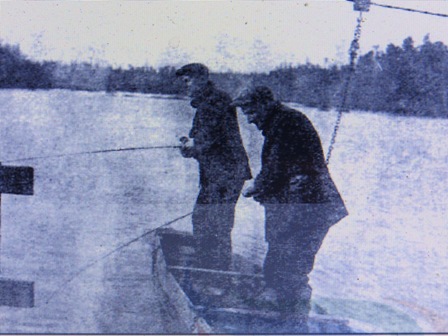
A Thousand Words–Honus Wagner and Claude Hendrix

1 Feb

???????????????????????????????

Honus Wagner participating in his 2nd favorite sport with pitcher Claude Hendrix.

William A. Phelon, poet and sportswriter for The Chicago Daily News, Chicago Tribune, New York Morning Telegraph, Cincinnati Times-Star and St. Louis Star—where this poem about Honus Wagner appeared in 1904.

 Hans Wagner, Hans Wagner, we see you lead once more

The Sluggers of the National League—if leather spher’s had gore

The blood of many a fractured globe would dew the faces where

Your mighty whacks, from shoulder swung, went whizzing through the air!

Hans Wagner, Hans Wagner—how oft we’ve felt the shivers

To see you striding to the plate, to knock our hopes to shivers!

How oft we’ve heard the call, “Two strikes,” to make us yelp and smile,

And then our blood was frozen up—you’ve smashed the thing a mile!

Hans Wagner, Hans Wagner, whene’er that ball you spank

We wonder if you think about the coin you’ve placed in bank?

For every time a mighty drive brings roaring cheer on cheer,

You’ve added to your chances for a boost in pay next year!

Hans Wagner, Hans Wagner, your habits are the best—

You never store bad whiskey in the space beneath your vest—

The midnight jag attracts you not—you murmur “Aber nit—

If I should get von chag dis nacht, zu morgen I’d not hit!”

Hans Wagner, Hans Wagner, you’ve saved a load of dough

The products of the scheme by which you give the slabman woe!

You’ve made a record that will live, you’ve gained tremendous fame—

A slugger of the A1 class—a credit to the game.

Elton Chamberlain

17 Dec

Elton Chamberlain (for the last thirty years always referred to by the nickname “Icebox,” but that name was not in common use for him contemporaneously; although he was called Iceberg fairly often.) was primarily known for two things: A righthander, he pitched ambidextrously in at least one game, and on May 30, 1894 he gave up four home runs and a single to Bobby “Link” Lowe—17 total bases, a record which stood for 60 years.

He was also embroiled in one of the early controversies over gambling while playing for the Cincinnati Reds in 1893 when he was accused by his manager, Charles Comiskey, of throwing the first game of a July 4 doubleheader against the Philadelphia Phillies.

The Cincinnati Enquirer said:

“Pitcher Elton Chamberlain of the Cincinnatis is accused of throwing the game to the Philadelphias yesterday morning. He is charged with being in league with Joe Brill, a local gambler.”

The story said Comiskey, notified of the allegation:

“(D)ecided to investigate (and) after a consultation with a club official, put Chamberlain in for three innings to watch him. Chamberlain’s pitching was very bad and be was taken out of the game in the third inning.”

Chamberlain’s teammates Jim Canavan and Silver King quickly came to his defense. King said he thought he would be the starting pitcher, not Chamberlain, until just before the game started; therefore Brill and Chamberlain could not have conspired.

Chamberlain said of the story:

“It was cruel and cowardly to try to ruin a man like that.”

The Sporting Life ripped The Enquirer and Comiskey:

“This is not the first time The Enquirer has accused ball players of dishonesty, and once it got into and lost a libel suit with Tony Mullane for accusing him of crookedness. Comiskey in his time has also made similar charges and Insinuations against guiltless players.”

The New York Herald said “The whole affair was so silly,” and seemed to have Comiskey in mind with this statement:

“The club official who suspends a player on the charge of dishonesty should be made to prove his charges or himself be forever barred from further connection with any club.”

The Herald also recommended that steps be taken to officially clear Chamberlain and punish those who accused him:

“The National Board should at once take up pitcher Chamberlain’s case and investigate it beyond the limit of doubt and when they reach the facts, whatever the facts; someone should be made to suffer.”

Cincinnati’s management, Comiskey included, quickly repudiated the charges that appeared in The Enquirer, although from all indications they were directly responsible for the charges being reported in the first place.

Elton Chamberlain

Elton Chamberlain

The headlines of July faded by August; there was no official investigation and no one was “made to suffer.”

Charles Comiskey

Charles Comiskey

Chamberlain finished the season with a 16-12 record and his 3.73 ERA led the Reds’ pitching staff. The following year was his last full season in the Major Leagues.

In 1895 he played for the Warren (PA) franchise in the Iron and Oil League. The team won the pennant behind the pitching of Chamberlain and another former Major Leaguer, Tom Vickery.

They also had a 21-year-old shortstop named Honus Wagner.

No statistics survive for that season, but forty years later Wagner, writing for The Pittsburgh Press, said Chamberlain “Seldom lost a ballgame for us,” and that Chamberlain and Vickery “gave out plenty of their knowledge to us youngsters.”

Chamberlain bounced around minor and semi-pro leagues after one last Major League trial with the Cleveland Spiders in 1896. In 1898 he accepted, then rejected, an offer to serve as a National League umpire. After turning down the umpire job Chamberlain, a Buffalo native, said he would become a professional boxer and challenged a local middleweight named Jack Baty to a fight that would include a $500 side bet. Baty’s fight record indicates the bout did not take place.

Chamberlain attempted to resume his baseball career with the Buffalo Bisons in the Western League in 1899—by July he was released and The Sporting Life reported that Chamberlain, a rabid horse player “is once more following the races.”

Chamberlain Died in Baltimore in 1929.

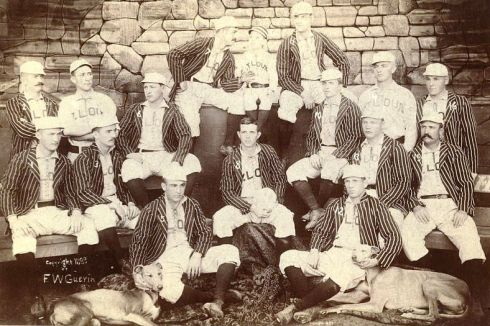
Chamberlain and Comiskey as teammates with the St. Louis Browns.  Chamberlain is 5, Comiskey 8.

Chamberlain and Comiskey were also teammates with the St. Louis Browns. Chamberlain is 5, Comiskey 8.

Lost Advertisements: Honus Wagner, 1908 Coke

27 Nov

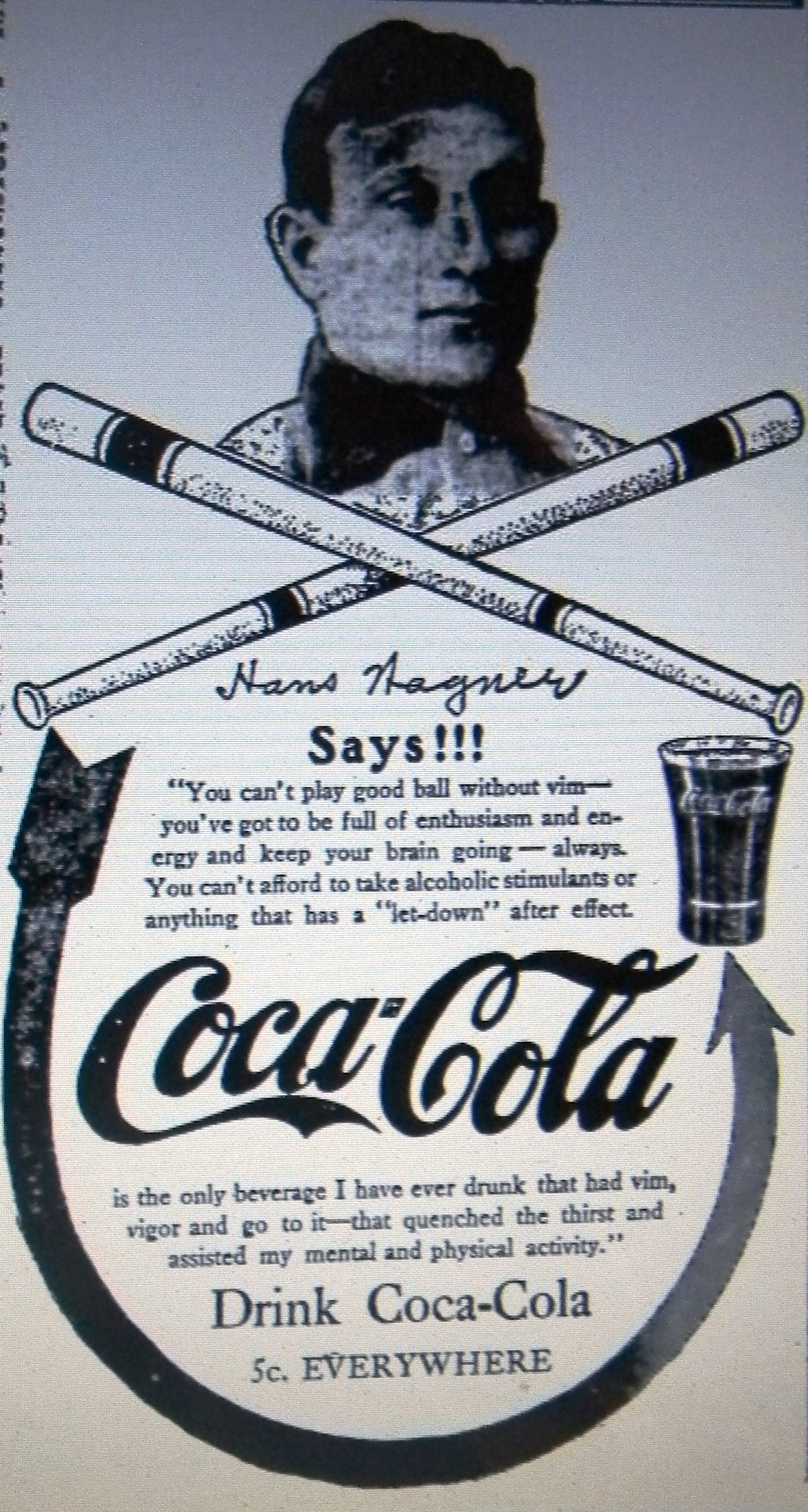
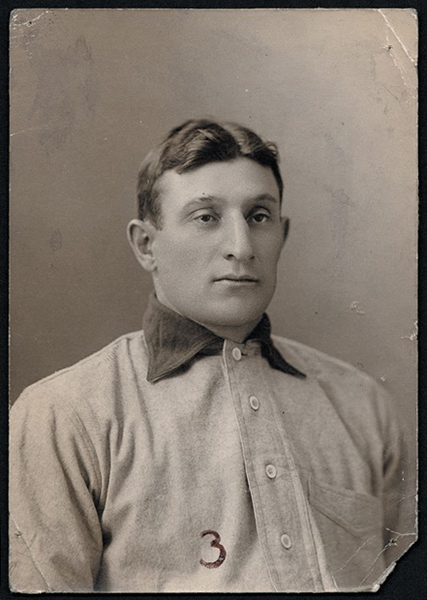
A rare 1908 Coca-Cola Honus Wagner advertisement– featuring Wagner the picture taken in 1905 by Carl Horner, the one on the famous 1909 T206 card.

Original 1905 Carl Horner photo of Honus Wagner

Hans Wagner says:

“You can’t play good ball without vim–you’ve got to be full of enthusiasm and energy and keep your brain going.”

T206 Wagner